 California buckeye, Aesculus californica, is an enigma. How does it survive while defoliated for so much of the year? Not all are so mysterious. Those that live in sheltered or forested situations behave like normal deciduous trees, by defoliating in autumn, and refoliating in spring, after a brief winter dormancy. Those that are more exposed in warm and windy situations make us wonder.
After their brief winter dormancy, exposed California buckeye trees refoliate early in spring, as they should. Then, only a few month later, they defoliate through the warmest and most arid part of summer, which might be a few months long! As the weather cools and the rain starts, they refoliate briefly for autumn, only to defoliate in time for their winter dormancy. They are ‘twice deciduous’.
How do they photosynthesize enough to survive? It seems like they would consume more resources in this process that they could generate. They obviously know what they are doing, since they survive quite nicely in the wild. Furthermore, they are not the only species that can do this. Sycamores sometimes do it if the weather is just so, or if they get infested with anthracnose too severely.
Most deciduous plants defoliate only in winter because that is the worst time to try to photosynthesize. There is less sunlight available while the days are shorter, and the weather is cloudier. Frost, wind and snow would cause much more damage if deciduous plants retained their foliage. Defoliation is how they accommodate the weather. It is no different for plants that defoliate in summer.
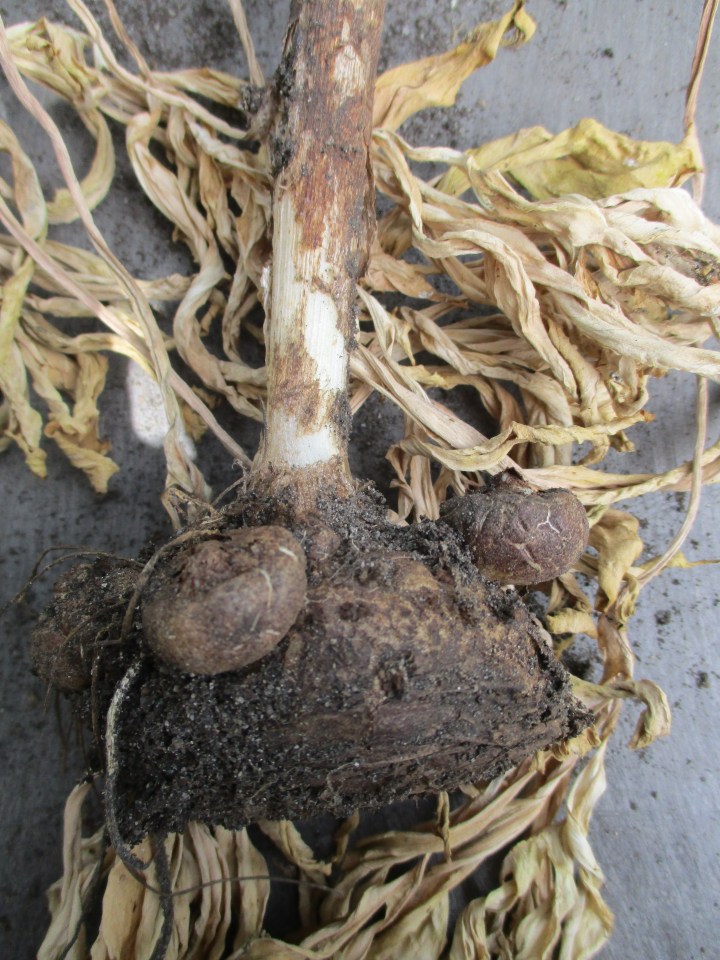
Much of California is within chaparral or even desert climates. Native plants, as well as plants that are from similar climates, know how to live here. If they happen to be in a hot and dry situation, some may go dormant until the weather improves, even if they do not go dormant through the mild winters. This is why wild arums and some unwatered acanthus have died back to the ground, and why naked lady amaryllis will remain naked until the first rains in autumn.
 Tony Tomeo
Hey Tony, what bulb do you call Naked Ladies? it’s Lycoris squamigera in the South.
LikeLiked by 1 person
Amaryllis belladonna. The name may have changed. They are related to Lycoris, and may have formerly been a species of such.
LikeLiked by 1 person
OK, tried those here. Haven’t seen any!
LikeLiked by 1 person
You tried growing them or were unable to locate any?
LikeLiked by 1 person
Bought, planted, nothing.Sugar sand, nematodes I don’t know.
LikeLiked by 1 person
Oh my! Those things are very tough!
LikeLike
I guess it’s the same story with most eastern woodland wildflowers, which emerge in spring and go dormant at some point in summer.
LikeLiked by 1 person
I had always thought of this as something that happens only in Californian chaparral and desert climates, but have found that it is more common than I thought, and in other climates that are neither chaparral nor desert.
LikeLiked by 1 person