Juniper Turns A New Leaf

Hollywood juniper was formerly overly popular.

Juniperus, which is the entire genus of juniper, had been languishing in a bad reputation for too long. The problem likely began nearly three quarters of a century ago. More people than ever were enjoying leisurely suburban gardening. Many appreciated the resiliency of juniper cultivars. At that time, a few species of juniper were gaining popularity. Evolving cultivars sustained new demand.

Unfortunately, these modern and once distinctive cultivars of juniper eventually became passe and too common. As practical and resilient as they truly are, they collectively shared the stigma of a minority that were problematic. Their problems were disproportionately evident merely because of their commonness. Many matured at the same time, so developed problems at the same time.

Realistically though, the majority of the garden varieties of juniper that grew during that time were quite practical. Those that started in the 1950s, but developed problems in the 1990s, performed satisfactorily for four decades. Not many other types of plants perform as reliably for as long. Many problems resulted from selection of cultivars that were inappropriate for particular applications.

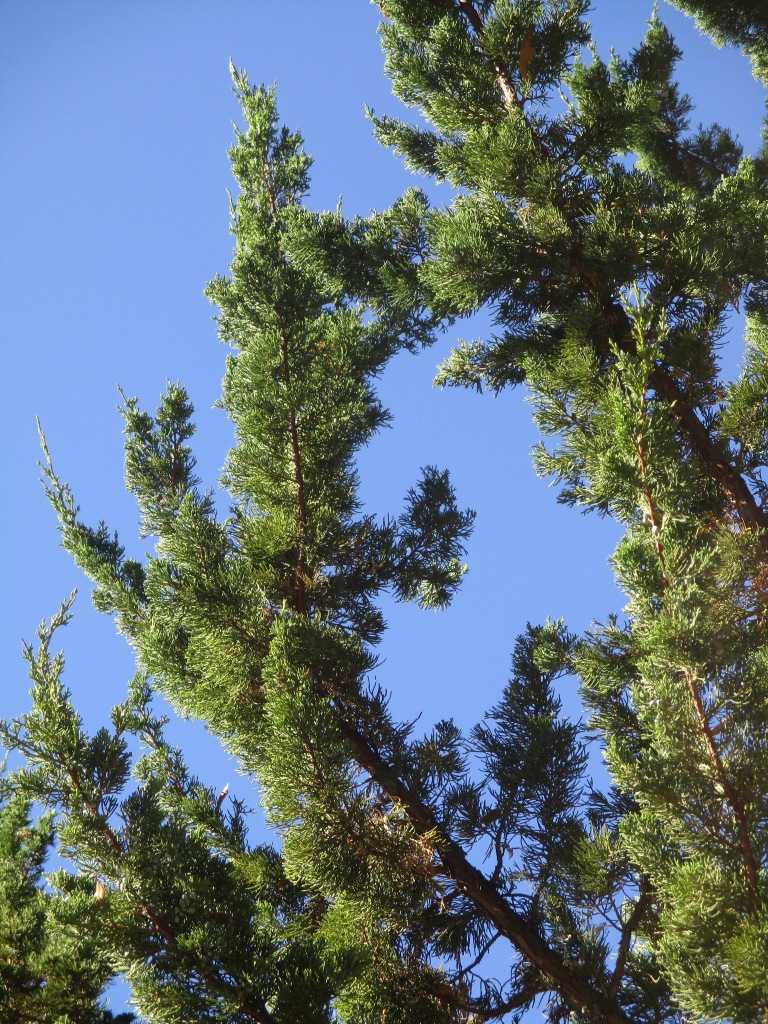
Although all junipers are evergreen foliar plants that provide no obvious bloom, they are remarkably diverse. The most popular sorts are low and dense shrubbery. Others are lower and sprawling ground cover. Some are small trees. A few species grow more than thirty feet tall! Branch structure is mostly densely compact, but can be sculpturally irregular, rigidly upright or gracefully arching.

Foliage is generally rich deep green. Some cultivars exhibit yellowish new foliage that fades to green through summer. A few are variegated with creamy white. Several popular cultivars are gray or bluish gray. Leaves of almost all popular cultivars are scale like. Some have needle like leaves. A few have both. Even without prominent bloom, a few cultivars produce appealing tiny berries.

It is time for the many cultivars of juniper to grow beyond their former bad reputation and turn a new scale or needle.

Six on Saturday: Revelation II

Conditions here have certainly improved.

1. Ash regularly reminds us of how close the fire got. There is not as much as there was two weeks ago, but it still lingers in sheltered spots and on sticky foliage. At least no new ash is falling.

2. Smog also lingered early in the week. The sun looked like one of the moons of Tatooine. I worked inside for the early part of the week. It was not a good time for working out in the garden.

3. Then, this happened. The entire sky was this color for a while. The air still tastes like smoke, and remains rather toxic. It is a bit hazier now. Regardless, it was easier to resume gardening.

4. The redwoods and firs on the ridge in the background behind the utility pole are just outside of the fire zone. Everything beyond them is within the fire zone. The forest does not look very different from how it looked prior to the fire. Only a few brown spots can be seen from here. The fire must have burned only underbrush in this region. I know it was much worse elsewhere.

5. Horticulture is SERIOUS business here. (Actually, this is just parking for a cabin that happens to be named ‘Acorn’.) Vegetation management is a priority at cabins that are now residences for some who lost their homes to the CZU Lightning Complex Fires. The Conference Center has been closed because of the other ‘situation’ anyway. Firefighters stayed in some of the lodges.

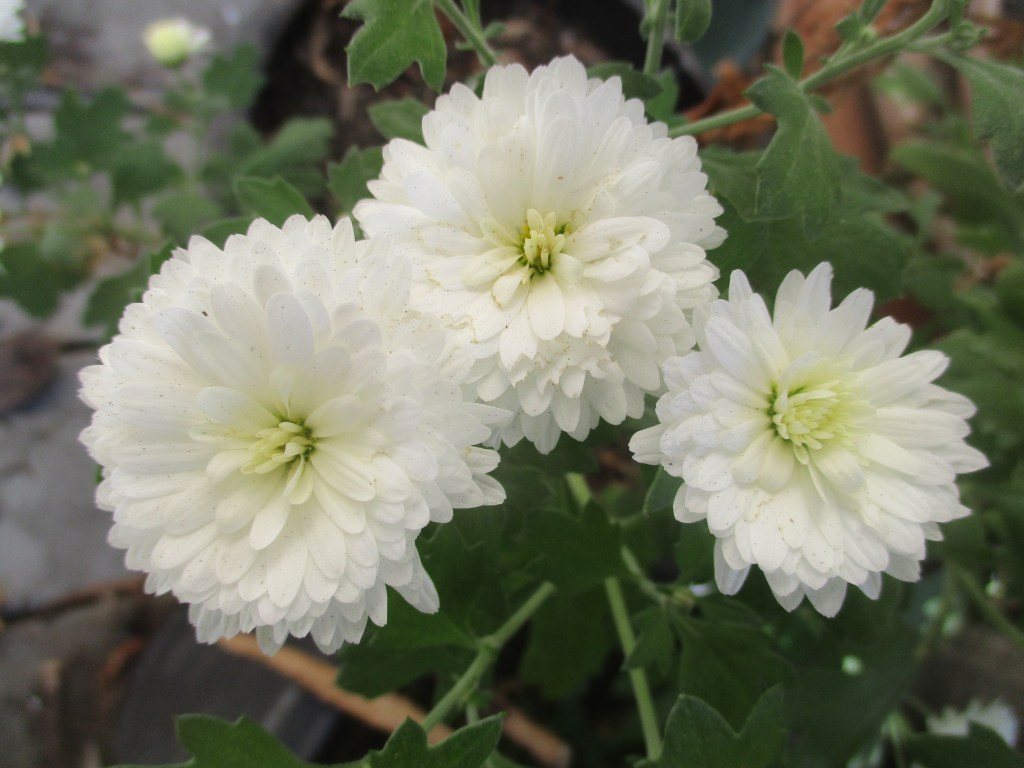
6. White chrysanthemums are in order. After, all this ‘should’ be a gardening blog. These bloomed on old plants that were left behind after a wedding in the chapel here more than a year ago.

This is the link for Six on Saturday, for anyone else who would like to participate:

https://thepropagatorblog.wordpress.com/2017/09/18/six-on-saturday-a-participant-guide/

Glossy Abelia

50916
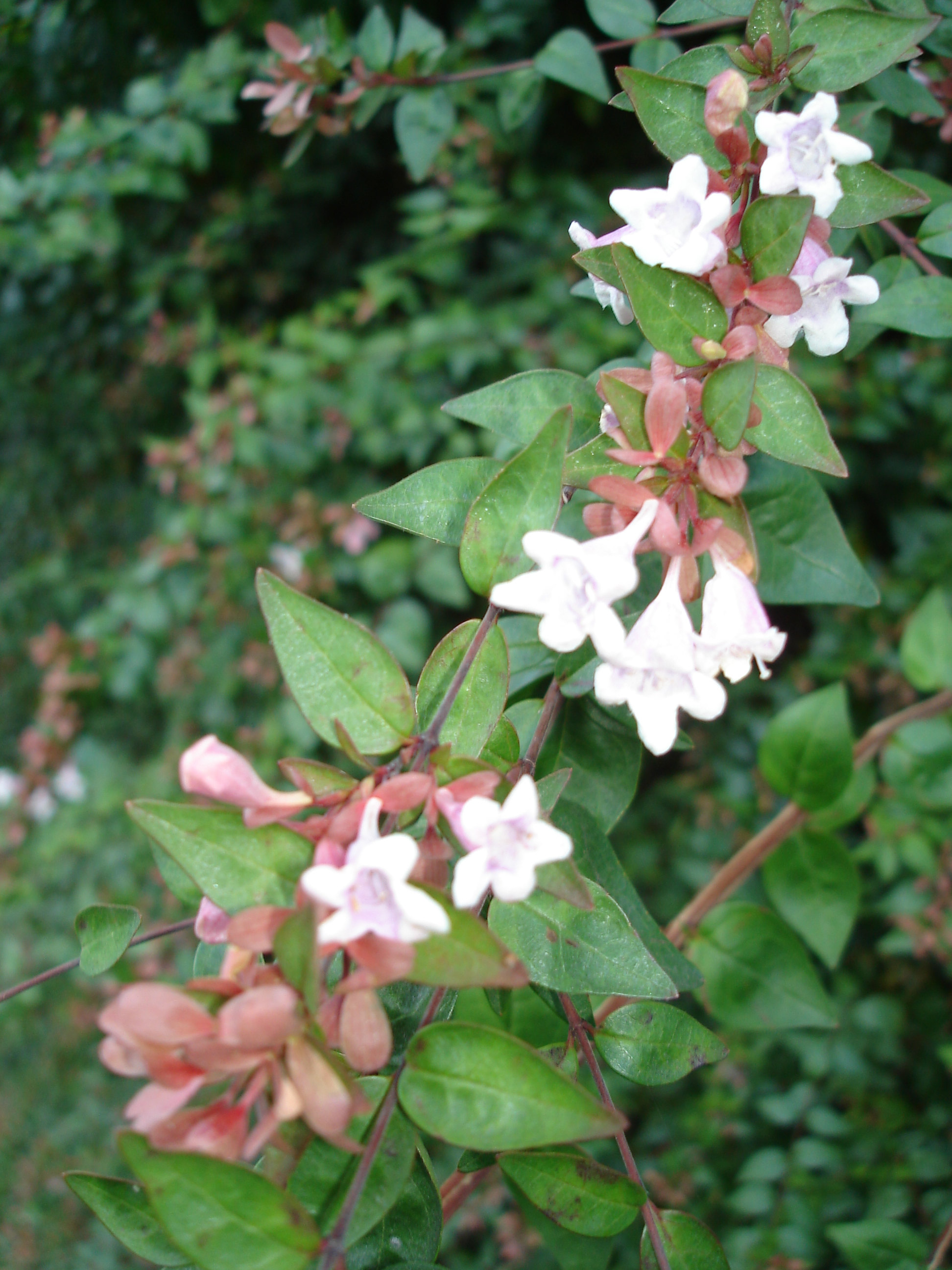
Arching boughs of pink abelia blossoms.

With indiscriminate pruning, glossy abelia, Abelia X grandiflora, will never develop its natural form, with elegantly long and thin stems that arch gracefully outward. Sadly, almost all get shorn into tight shrubbery or hedges that rarely bloom. If only old stems get selectively pruned out as they get replaced by fresh new stems, mature shrubs can get eight feet tall and twelve feet wide.

Against their bronzy green foliage, the tiny pale pink flowers that bloom all summer have a rustic appeal. In abundance, they can be slightly fragrant. The tiny leaves are not much more than an inch long. Vigorous young canes that shoot nearly straight out from the roots slowly bend from the weight of their bloom and foliage as they mature.

Partial shade is not a problem for glossy abelia, but will inhibit bloom somewhat. Young plants want to be watered regularly. Old plants are not nearly so demanding, and can survive with notably less water. If alternating canes is too much work to restore old and neglected plants, all stems can be cut back to the ground at the end of winter. New growth develops quickly.

New Canes Replace Old Canes

50916thumb
Well groomed canes are not overgrown.

Heavenly bamboo, or simply ‘nandina’, is one of those many plants that almost never performs like it should. The intricately lacy foliage is so appealing while plants are young, and changes color with the seasons. The red berries can be comparable to those of holly. Unfortunately, healthy plants grow, and then ultimately get shorn into globs of disfigured leaves and stems.

The same abuse afflicts Oregon grape (mahonia), mock orange (philadelphus), forsythia, lilac, abelia and all sorts of shrubby plants that really should be pruned with more discretion. Their deteriorating older stems should be pruned to the ground as new stems grow up from the roots to replace them. It is actually not as complicated as it seems.

This pruning process, known as ‘alternating canes’, prunes the plants from below. It is a standard pruning technique for maximizing production of blackberries, raspberries and elderberries. It is similar to grooming old stalks from bamboo and giant reed, even if it does not prevent them from spreading laterally.

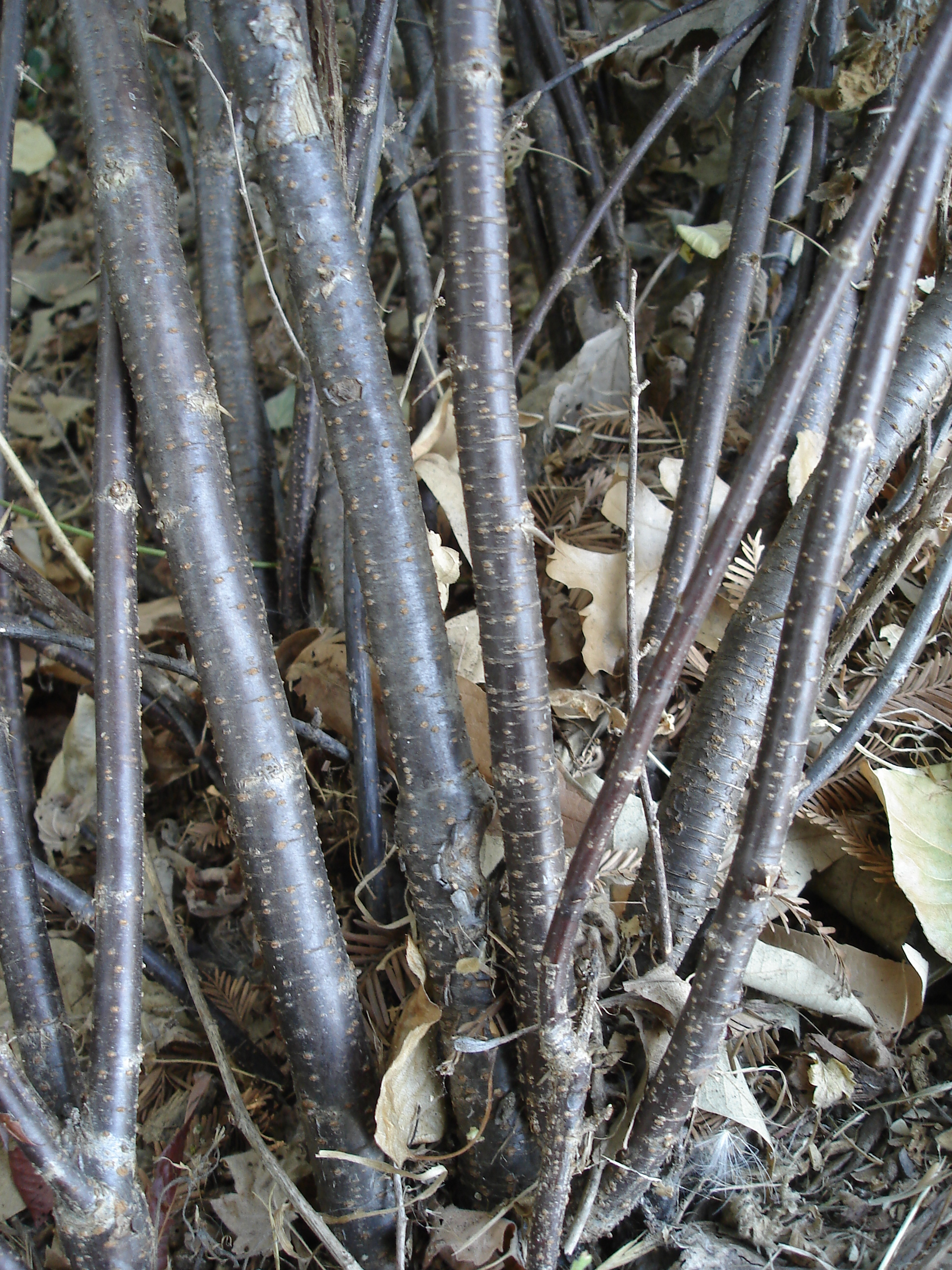
The deteriorating older stems, or ‘canes’, are easy to distinguish from newer growth. Old canes of Heavenly bamboo and Oregon grape become heavy on top, and flop away from the rest of the foliage. Old canes of mock orange and lilac get gnarled and less prolific with bloom. Aging abelia and forsythia canes become thickets of crowded twigs.

The newer stems are likely a bit lower, but are not so overgrown. Since the foliage is not so crowded, it is displayed on the stems better. Their blooms or berries are more abundant. By the time new growth becomes old growth, there will be more newer growth right below it. In fact, the regular removal of aging canes stimulates growth of new canes.

This is the time to prune Heavenly bamboo and Oregon grape, just because the oldest foliage is as bad as it will get after the warmth of summer. Mock orange, forsythia and lilac should get pruned while dormant through winter, but are commonly pruned just after they finish bloom early in spring. Abelia should probably wait until spring because new growth can look sad through winter.

Quince

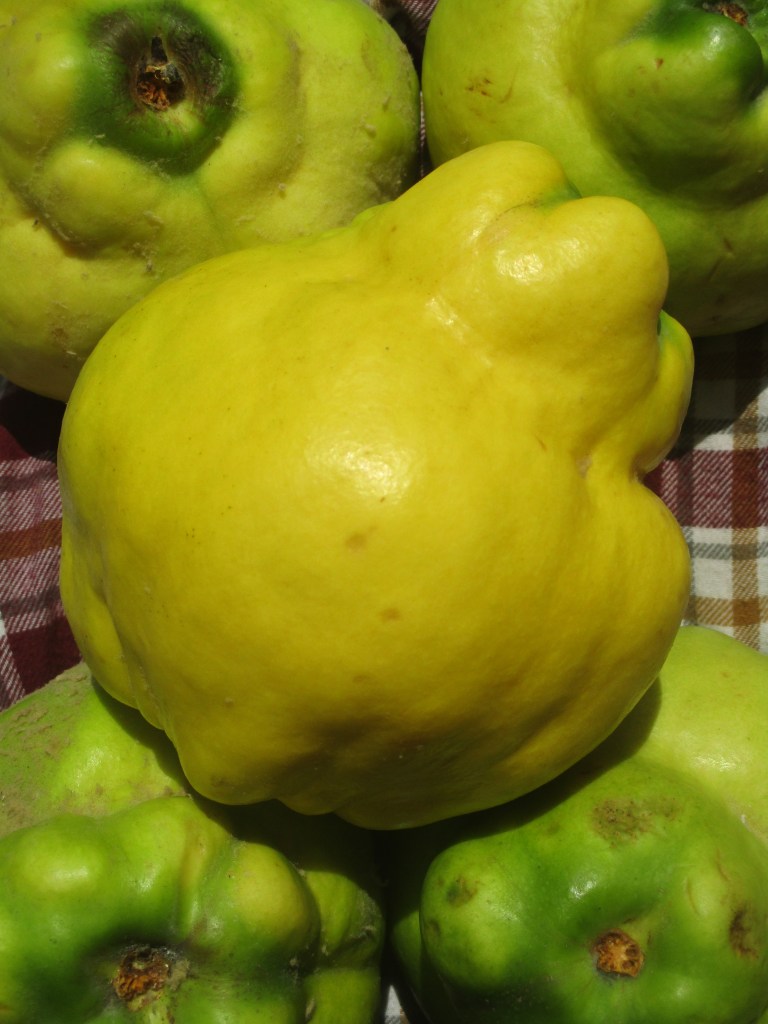
Quince fresh from coastal Santa Cruz!

The function of this formerly popular fruit tree has changed significantly to adapt to modern horticulture. The big but hard fruit of quince, Cydonia oblonga, is less perishable than the firmest pears or apples. Without canning or freezing, it lasts through winter in cool cellars. It also provides pectin for jellies of fruits that lack it. However, quince fruit is too hard to eat fresh, so should be cooked.

As food storage became less important, quince became less popular than more flavorful apples and pears, which are edible while fresh. Pectin is obtainable from apple cores and skins, or from supermarkets. However, quince are not completely absent from home gardens. They are now the unseen but common dwarfing understocks that limit the size of pear trees for suburban gardens.

The big lemony yellow fruits that are ripening now may look like very lumpy pears or apples. The largest sorts get as big as small cantaloupes. Developing fruit and new foliage are distinctly fuzzy. Fuzz can be polished off of alluringly aromatic mature fruit. Delightfully pale pink flowers are mostly obscured by new foliage in spring. The deciduous rounded leaves are two or three inches long.

The biggest of quince trees, which are very different from ornamental flowering quince, might get as high and wide as twenty feet.

Pomes Produce Better Than Palms

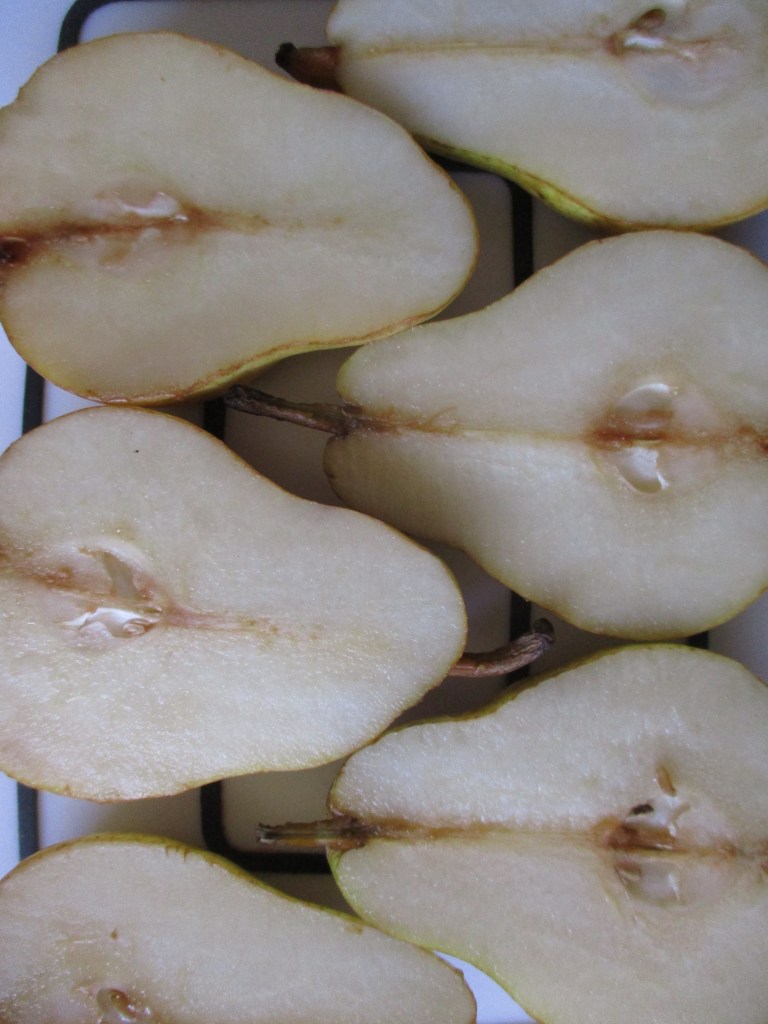
Pear season continues late into October.

Dates, coconuts, acai berries and palm oil grow on palm trees. All are rare in local home gardens. The palms that are popular in much of California are almost exclusively ornamental. Very few of them produce useful fruits. Despite the similar pronunciation, such palms are not at all related to pomes. Some of the more familiar fruits happen to be pomes, which are also known as pommes.

Apples and pears are the most popular examples of pomes. Quinces, which were very popular decades ago, are now rare. Quinces are so closely related to pears that they work well as dwarfing understock for home garden pear trees. (Orchard pear trees use other understocks that are not dwarfing.) Actually, most quince trees grew secondarily from roots of dead or removed pear trees.

Saskatoons (serviceberries), chokeberries (aronias) and medlars are locally rare pome fruits that are slowly gaining popularity. Productively fruiting cultivars of loquat are now more available than those that were primarily ornamental. Some flowering quinces may produce a few small fruits. Mayhaws and mountain ashes (rowans) are berry-like pomes that are more familiar in other regions.

The earliest cultivars of apple might be in season by late July, before stone fruit season finishes. (Some peaches, the largest of the stone fruits, ripen in September!) The latest will be ready in late November, at least a month into citrus season. Pear season extends from August into October. So, this is the middle of apple and pear season. Most but not all other pomes are already finished.

Like stone fruit trees, the trees and shrubs that produce pomes need very specialized pruning while dormant through winter. Without annual pruning to enhance structural integrity and concentrate resources, apple and pear trees are unable to support all of their fruit. Shrubby quince trees become thickets without pruning for grooming and confinement, although they may not need it annually.