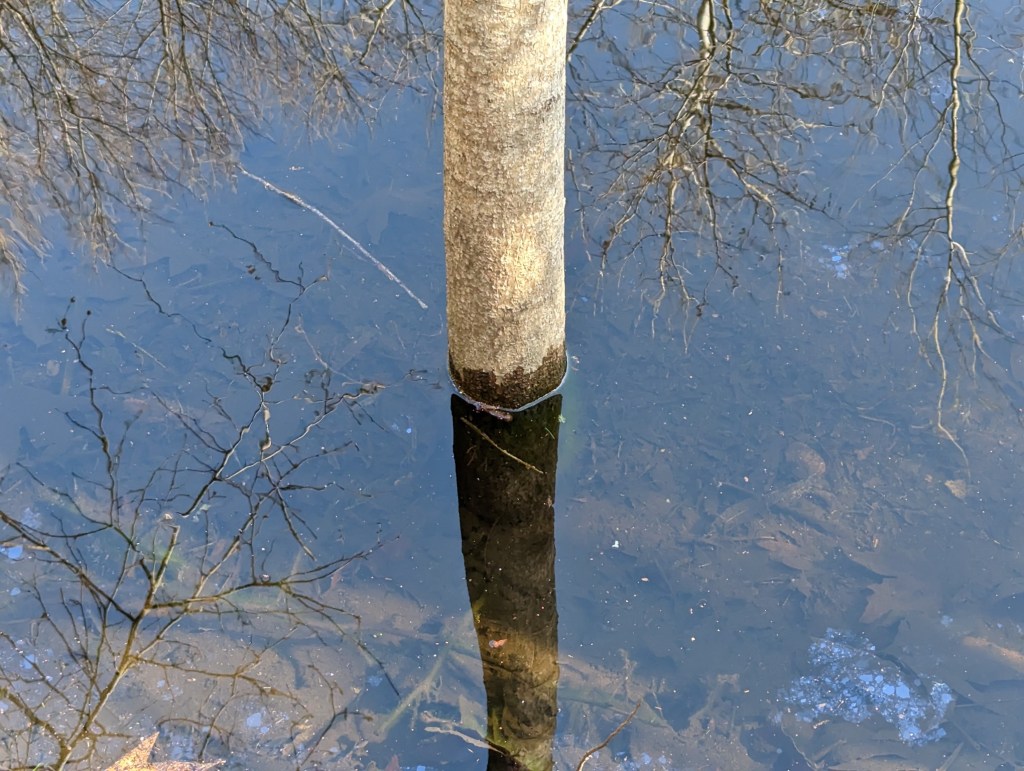
Remember when the Brady Bunch went to the Grand Canyon? Mrs. Brady read aloud from a brochure about how the Grand Canyon was formed by erosion of the Colorado River. Peter then commented, “Wow! No wonder you tell us not to leave the water running.” Too much watering in the garden certainly will not cause a canyon to form, but can cause all sorts of other big problems.
Roots rot if the the soil is constantly too wet. If the soil stays saturated, roots suffocate from the lack of aeration. Trees that survive saturation of deeper soil strata will disperse their roots shallowly near the less saturated surface, and will consequently be unstable. Besides, excessive watering is wasteful.
There are too many variables, such as exposure, drainage, humidity and temperature, to prescribe irrigation schedules that work for every site. Just remember that most plants like the soil to drain enough for the surface of the soil to at least look somewhat dry before getting watered again. Moss on the surface is an indication that things are too wet. Plants that like more water, like azaleas, rhododendrons, fuchsias, ferns and impatiens, do not mind if the soil stays somewhat damp, but only if the soil is porous and drains enough to also be aerated.
The most drought tolerant plants, which are generally also the most sensitive to excessive irrigation, ironically like to be watered somewhat regularly for the first few months after getting planted. This is because they are so reliant on well dispersed root systems. They need less, if any, watering once their roots get dispersed.
Watering should be done in the morning so that plants can soak in the water during the day, and the area can dry somewhat before the following evening. It is also better to water less frequently and a bit more generously than to water too frequently. This allows time for drainage and promotes deeper rooting. Fungal organisms associated with rot and foliar diseases proliferate overnight if the ground is damp at the surface and the air is humid.
Except for the few plants that like humidity, and those that need to be rinsed of aphid and honeydew, there is no need to wast water on foliage where it is simply lost to evaporation. Water should be applied to the soil where it is needed.
 Tony Tomeo