Rats, mice, squirrels, racoons, opossums, skunks, deer, pigeons and more; it just never ends! There are so many other life forms who often enjoy our gardens more than we do. While visiting my colleague in Los Angeles, his garden became overrun by a swarm of bees! Fortunately, they did no damage and left the same day.
The worst problem in his garden is cats. His neighbor hoards ‘unaltered’ feral cats that have proliferated into a substantial herd. Instead of exterminating rodents from the neighborhood, the overfed cats ignore the droves of rats that are drawn to the cat food left out on the porches. The rats attract opossums. Fleas are everywhere!
All this wildlife brings all sorts of other problems. The well kept domestic cats that live inside the home of my colleague are frequently afflicted with illness transmitted by the sickly feral cats. Flat roofs and basement crawl spaces of several adjacent homes have become litterboxes. The overpowering aroma is horrendous.
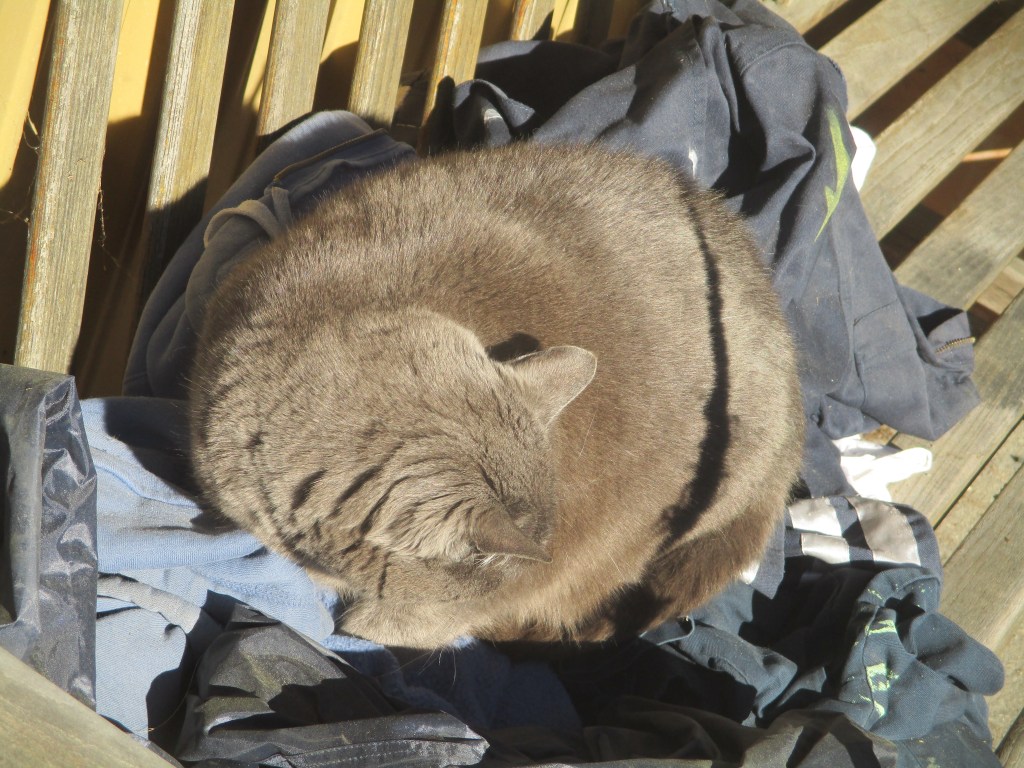
Fortunately, such proliferation of cats is rare. Most of us do not mind when a neighborhood cat, or even a few cats, visit the garden. However, when cats become a problem, they are nearly as difficult to remedy as vermin.
Although most municipalities have limited the number of domestic cats that can reside at individual residences, feral cats come and go freely, so are considered to be wild animals who are exempt from such limits. Besides, no one wants to enforce such ordinances with their neighbors, even if the problematic cats happen to be domestic house cats. All we can do is try to limit the problems in our own gardens and homes.
Flat roofs sometimes get used as litterboxes because they commonly have gravel on them and tend to accumulate a bit of other debris. If this is a problem, and if possible, access to flat roofs should be obstructed. Tree limbs and vines should be pruned back.
Basements and crawl spaces are easier to obstruct access to by simply repairing vent screens and exterior basement access. Cats like to use crawlspaces as litterboxes because the soil is always dry and dusty. Around the garden, dry spots are less attractive to cats if sometimes watered, even if there are no plants present. Adding spreading plants is even better. In a small dusty area behind the garage, I spread out a bit of firewood over the soil. By the time the firewood gets used, it will be raining and too muddy for cats.
 Tony Tomeo
That sounds like a nightmare. I did rescue a feral kitten and she became a very good house cat and lived for 21 years.
LikeLiked by 1 person
Oh, it was. Fortunately, it is not as bad as it had been for many years. I could not think of a worse neighbor for Brent, since his garden is so exemplary.
LikeLiked by 1 person