
Pollarding and coppicing are very unfortunately vilified here. I just wrote an article about these topics for the gardening column. Arborists are taught that they are comparable to topping, and that they cause irreparable disfigurement.
It is unfortunate because both procedures have very practical application. Both are still commonly practiced in other regions. If performed properly, both are quite sustainable, and can actually maintain some specimens of a few species longer than they typically live naturally. I use both techniques to a minor degree at work, and will likely do more of both within my home garden.
However, I almost never recommend either technique. Because they are so vilified, arborists do not learn about them. Consequently, it is nearly impossible to find an arborist who can perform either technique properly. Trees and shrubbery can very easily be ruined by either technique if performed improperly.
In fact, I am hesitant to allow reliance on pollarding and coppicing by trees and shrubbery at work because I am concerned that no one else will want to repeat the processes after my retirement or resignation, which could be at any time. Coppicing carpet roses should be no problem for whomever performs it in the future, but I can not be certain. Pollarding is a bit more specialized, so concerns me more.
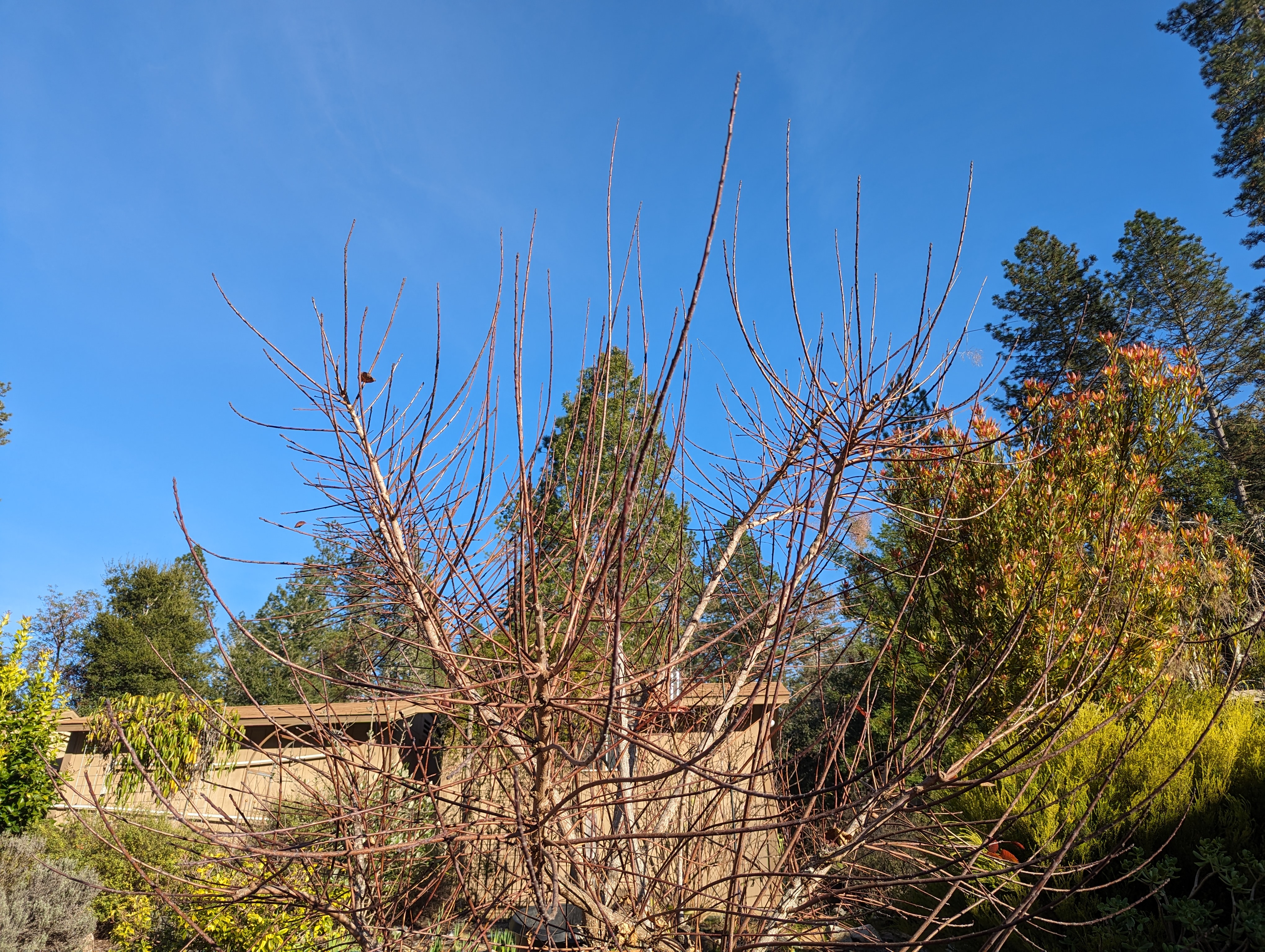
This smoke tree was initially pollarded for renovation. It was previously distressed and weak, but is now quite vigorous. Its purple foliar color is more vibrant through summer. So is its autumn foliar color. I previously believed that it bloomed only on year old stems, so would be unable to bloom on exclusively new canes after being pollarded. Instead, it blooms better on vigorous new stems that it on distressed year old stems.
It is not forming knuckles though. New stems emerge from all over the permanent stems, so leave pruning wounds that do not compartmentalize as efficiently as they would on knuckles. Also, without terminal knuckles, some permanent stems die back an inch or two annually. Although pollarding successfully renovated this smoke tree, it is not as sustainable as I would like it to be.
So, because the procedure is not sustainable for this particular specimen for very long, and I suspect that no one will want to repeat the process annually in the future, I will likely encourage more natural form. I left a few extra new canes for this year. For next year, the twiggy interior growth may be thinned, while upper and outer growth is allowed to develop into a more permanent canopy.
 Tony Tomeo