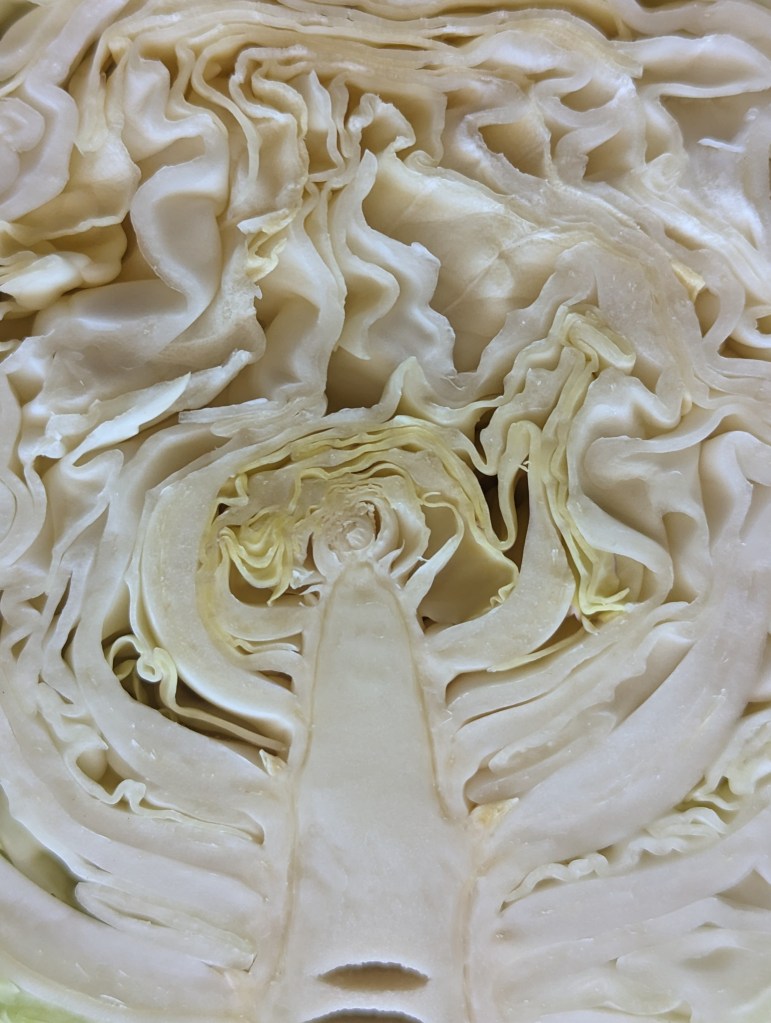
Resemblance to lettuce is merely coincidental. Cabbage, Brassica oleracea, is instead a close relative of very dissimilar vegetables. Brussels sprout, broccoli and cauliflower are different varieties of the same species. So are collard, kale and kohlrabi. All are winter cole crops. (Cabbage comprises the varieties of capitata, tuba, sabauda or acephala.)
Cabbage became seasonable last autumn. Its last phase is now maturing. It grows most easily from cell pack seedlings. Alternatively, it can grow from seed, which starts about a month and half earlier. Cabbage is biennial, so will go to seed if it stays in the garden too late. Warm weather initiates and accelerates the process, which ruins flavor and texture.
Green cabbage is the most popular type. Red cabbage is the second most popular type. Dutch white cabbage often classifies simply as a pale type of green cabbage. A mature cabbage weighs about a pound or two. Its loose outer foliage can be a foot to nearly two feet wide. Within more ideal climates, some varieties grow slower but significantly larger. With rain through winter, irrigation is probably unnecessary. Soil should be organically rich.
 Tony Tomeo