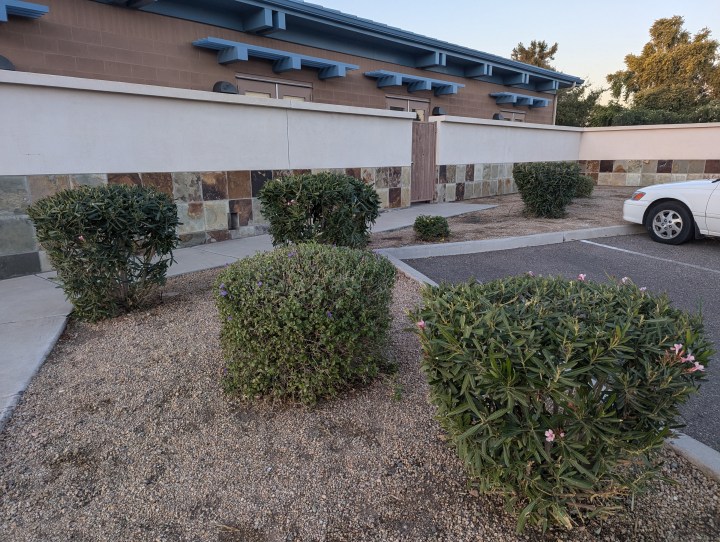
Back before gardening was cheapened to the degree that it is now, and before most of everything within reach was shorn into submission, many plants were pruned, or not pruned, as necessary to enhance their naturally appealing characteristics. New Zealand flax got planted where it had room to reach out, and only got ‘plucked’ as shoots ventured too far from the center. Lily-of-the-Nile got ‘chopped’ where it crept too far, and ‘thinned’ where it got too crowded to bloom.
Only hedges were shorn; and they were shorn properly, to be slightly narrower on top. Trees actually grew as trees above, and got pruned for clearance below. Vines were selectively groomed, but allowed to climb their trellises. Deciduous fruit trees got the specialized pruning that they require in winter.
Many different kinds of plants that produce generally vertical stems from the base were maintained by a pruning technique known as ‘alternating canes’. This procedure is almost opposite of removing watersprouts or suckers (watersprouts that develop below a graft union) to favor a primary stem. It is actually the removal of primary stems as they get replaced by their own basal watersprouts.
For example, glossy abelia is naturally rather limber with upright growth that spreads outward. Without pruning, it can become an overgrown mounding thicket. However, shearing deprives it of its naturally appealing form, and interferes with bloom. Instead, the technique of alternating canes removes older canes as they begin to deteriorate, allowing new canes to grow more vigorously, arching gracefully outward from the center.
Elderberries and pomegranates may not actually require regular pruning, but are easier to manage if some basal stems are allowed to mature and replace tall and awkward older trunks. The newer growth is more productive (after the first year), easier to reach, and simply looks better. Alternating canes also promotes bloom while preventing thicket growth of mock orange and lilac, particularly since they produce such abundant basal growth.
Heavenly bamboo (Nandina spp.) and real bamboo are two completely different and unrelated plants that both benefit from alternating canes. Heavenly bamboo likes to get its deteriorating or floppy older stems cut to the ground, to allow more space for fresh new foliage to unfurl. Bamboo simply needs old canes cut out as they die.
 Tony Tomeo
Your photo reminds me of the people here who shear their azaleas into neat little pompoms. If they do it at the right time, they have little fuchsia pompoms blooming in the spring–which is ridiculous enough. But if not, they have partially blooming pompoms, which is even crazier.
LikeLiked by 1 person
So-called ‘gardeners’ here shear them so frequently that they never get a chance to bloom at all.
LikeLiked by 1 person
Oh dear. That’s really egregious!
LikeLiked by 1 person
Yes, but common.
LikeLike