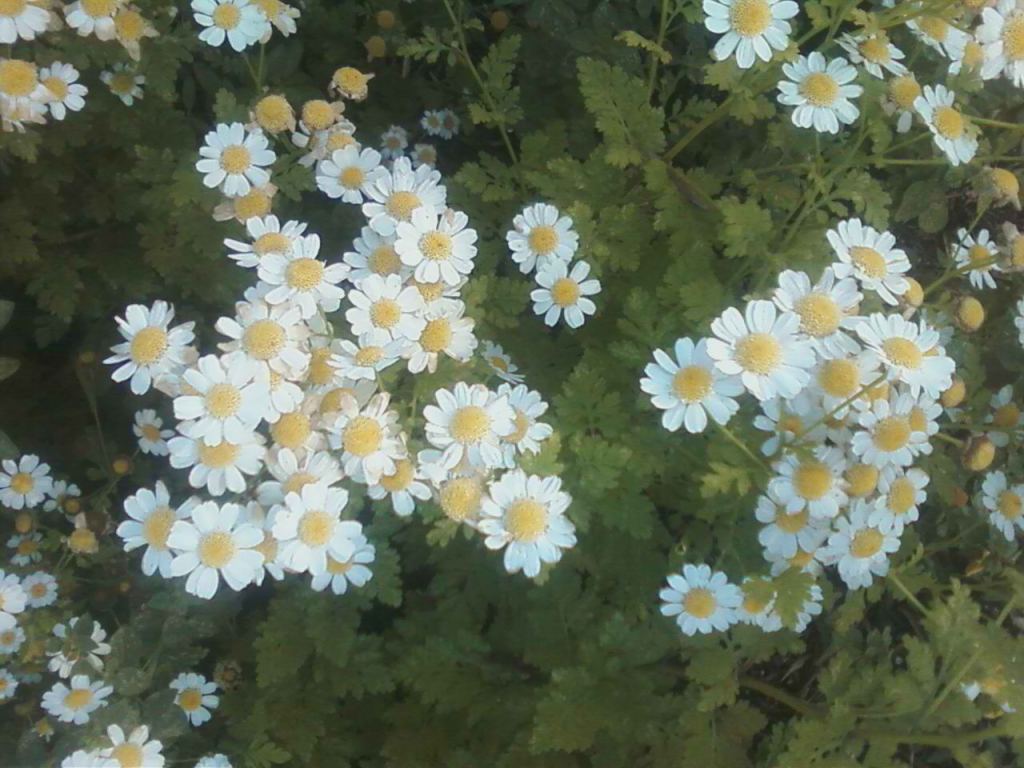
Once naturalized in the garden, chamomile, Matricaria recutita, can get to be too much of a good thing. Seed sown in at the end of winter or early in spring typically does very well in the first year. The new plants bloom abundantly by the middle of summer and eventually become rampant and sparse enough to get cut back by the end of the following winter. The largest and most productive plants can die at the end of their first year, but are only replaced by the formerly smaller plants that survive getting cut back through winter to get an early start the following spring. Self sown seed can fill in where last year’s plants do not, and can migrate into places where no one would have thought to plant them!
The finely divided, lacy foliage stands nearly two feet tall, and more than half as broad on somewhat floppy stems. The inch wide daisy flowers that are white around the edges of big yellow centers can be dried to make chamomile tea.
‘Snowball’, ‘Golden Ball’ and ‘White Stars’ are actually varieties of related Chrysanthemum parthenium that are sometimes sold as chamomile. Feverfew, chamaemelum nobile, stays dense and low, and can be a nice ground cover for small areas. I grew my favorite traditional chamomile (as well as feverfew) from seed from Renee’s Garden.
 Tony Tomeo