Horticulturists are by nature, nonconforming. I happen to find it difficult to conform to what makes us nonconforming. Trends are fleeting. Old technology that has worked for decades or centuries is still best. Although I am not totally against chemicals, I find that almost all are unnecessary for responsible home gardening. Pruning is underappreciated, and fixes many problems.
Tasmanian tree fern is more tolerant of significant frost than Australian tree fern is.
The trunk of a tree fern is really just tough compressed roots growing downward through dead organic material left behind by earlier growth. The foliage and terminal shoot high on top is just like any other fern that never leaves the ground. Because such a trunk is porous, it is ideal for epiphytic plants that, in the wild, mostly cling onto trees instead of growing on the shadier forest floor. Even though most epiphytic plants are able to cling to just about anything, many prefer tree fern trunks because they can actually root into them.
The shaggy trunks of Tasmanian tree fern, Dicksonia antarctica, take decades to grow tall enough for smaller plants to be visible below the lush foliage, but are plump enough to host a rowdy party of clinging epiphytes. Most get only about four or five feet tall, with the foliage standing a few feet higher, although some old specimens in Golden Gate Park are more than fifteen feet tall, and very old specimens in their native Tasmania can get nearly fifty feet tall.
The big lacy leaves spread about six feet wide, and can reach twice as wide in shadier spots. Shade also makes the foliage darker rich green. Like almost all ferns, Tasmanian tree fern like relatively rich soil and regular watering. Unlike other tree ferns though, it tolerates frost.
Kalanchoe is a popular houseplant here, but grows wild in Madagascar.
The plants grown as houseplants may have serious disadvantages that prevent them from being happy in the garden, but have other advantages that help them survive indoors. They tolerate the lack of direct sunlight, the lack of humidity, the minimal fluctuations of temperature and the confinement to pots that they must endure for a domestic lifestyle. Their main difficulty in the garden is most are from tropical climates, so can not tolerate cold winter weather.
However, even happy houseplants like to get out once in a while. Even though most can not survive the coldest winter weather, the mildest winter weather is actually the best for them to get supervised outings. During clear and warm summer weather, sunlight can easily roast foliage.
Houseplants with glossy tropical foliage occasionally like to be rinsed of dust and whatever residue that they accumulate in the home. (African violets and plants with fuzzy leaves do not want water of their foliage!) Foliage can be rinsed in a shower or with a hose, but are more gently rinsed by very light drizzly rain.
Timing is important. Unusually cold or heavy rain should be avoided. Plants should be brought in before the sun comes out. It is probably best to not leave plants out overnight when it gets colder and they are not likely to be monitored. While the plants are outside, mineral deposits can be scrubbed from the bases of the pots.
The rain needs to fall this time of year anyway, so it may as well go to good use in as many practical ways as possible. It may be a while before it flows into the aquifer and gets pumped out to come back later for use around the home and garden.
So much of the water that gets used around the home has the potential to be used again. With modifications to plumbing and the sorts of soaps and detergents used around the home, used water, politely known as ‘greywater’, can be redirected, collected and distributed to the garden. Water may not be so important in the garden this time of year, but a Greywater Workshop happens to be coming up next week; and advance registration is required.
The Guadalupe River Park Conservancy’s Adult Greywater Workshop (for ages eighteen and up), ‘Greywater Basics: Reusing Household Water in your Landscape’, will be from 9:00 a.m. to noon on February 18th. The Workshop will be at the Guadalupe River Park and Gardens Visitor and Education Center at 438 Coleman Avenue in San Jose. Admission is $15, or $10 for members. More information is available, and reservations can be made, at www.grpg.org or by telephoning 298 7657.
No, that is not backward. It refers to a legendarily disastrous incident with artificial turf at the Morgan Hill Outdoor Sports Center. Prior to about 2010, while I was the only horticulturist on a big staff of a big so-called ‘landscape’ company that expressed almost no interest in horticulture, I was summoned to the site to investigate an ‘issue’. I was told nothing about artificial turf.
Upon arrival, it became immediately obvious that this was no horticultural issue. Wind was generating waves in the recently installed artificial turf that were taller than the unfortunate guy who was scurrying about in an futile attempt to nail the turf surf to the ground. I was dismayed. I know nothing about artificial turf. Why was a so-called ‘landscape’ company even involved?
I suppose I should not have been too surprised. It was not as if many…
Bloom should probably be most profuse for late spring or early summer. In actuality, New Zealand tea tree, Leptospermum scoparium, blooms whenever and however it wants to. Now that it seems to be blooming prematurely, it might continue to bloom in phases until autumn. Minor bloom phases might even continue randomly through autumn and winter.
Floral color is white, pink or red, including deep ruby red. The tiny flowers are sometimes sporadic but sometimes quite profuse. A few cultivars have plump double flowers. Foliar color is olive drab green or bronze green. The finely textured evergreen foliage is slightly scratchy. Its tiny leaves have pointed tips. The fibrous brown bark is handsomely shaggy.
New Zealand tea tree works very well as a blooming informal hedge. Frequent shearing of formal hedges compromises both bloom and natural form. Elimination of lower growth exposes appealingly sculptural trunks supporting little trees. Some modern cultivars will not reach first floor eaves. Some reach second floor eaves. All demand sunny exposure.
Dormant pruning is the best pruning. It happens while the subject plants that benefit from it are dormant and unaware of such procedures. Such procedures would be significantly more distressing to plants while they are vascularly active. In comparison, spring pruning may seem to be cruel and tortuous. Nonetheless, it is justified for particular applications.
For most plants that benefit from dormant pruning, the worst time to prune is immediately after the best time. Such plants are most vascularly active while blooming and refoliating during early spring. They become more resilient to pruning as they finish bloom and their foliage matures. This generally applies to plants that benefit from spring pruning as well.
The primary difference between plants that prefer dormant pruning and plants that prefer spring pruning is their primary purpose. Several plants that benefit from dormant pruning produce fruit. Plants that benefit from spring pruning merely produce profusion of bloom. Dormant pruning concentrates resources. Spring pruning allows maximum spring bloom.
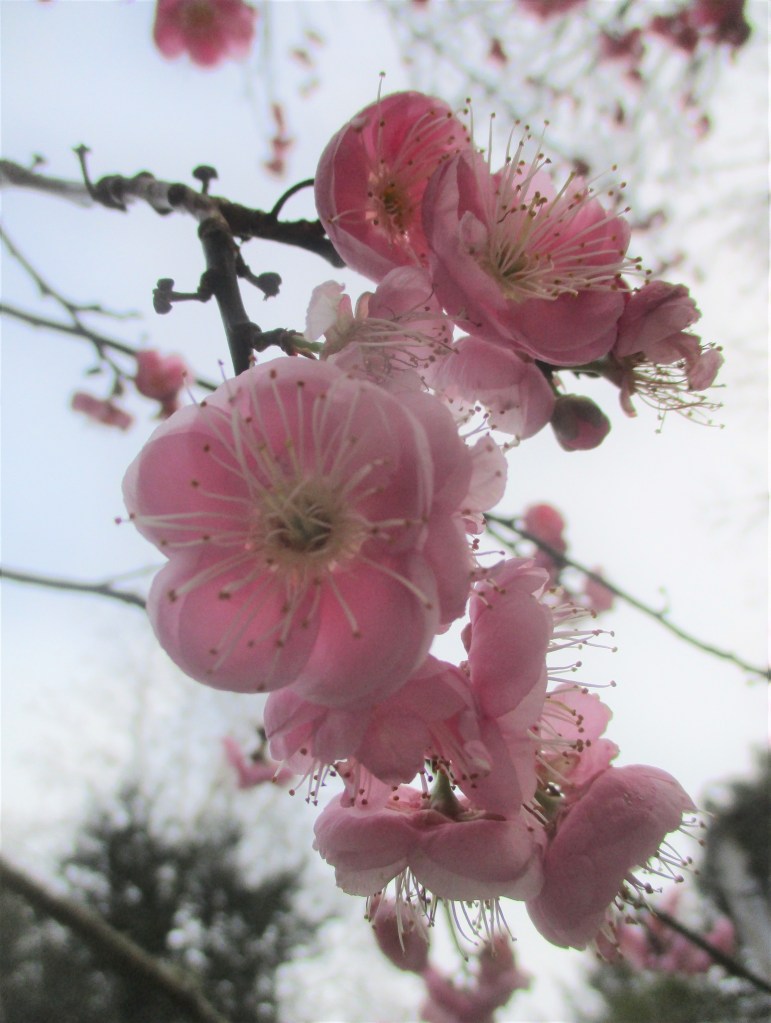
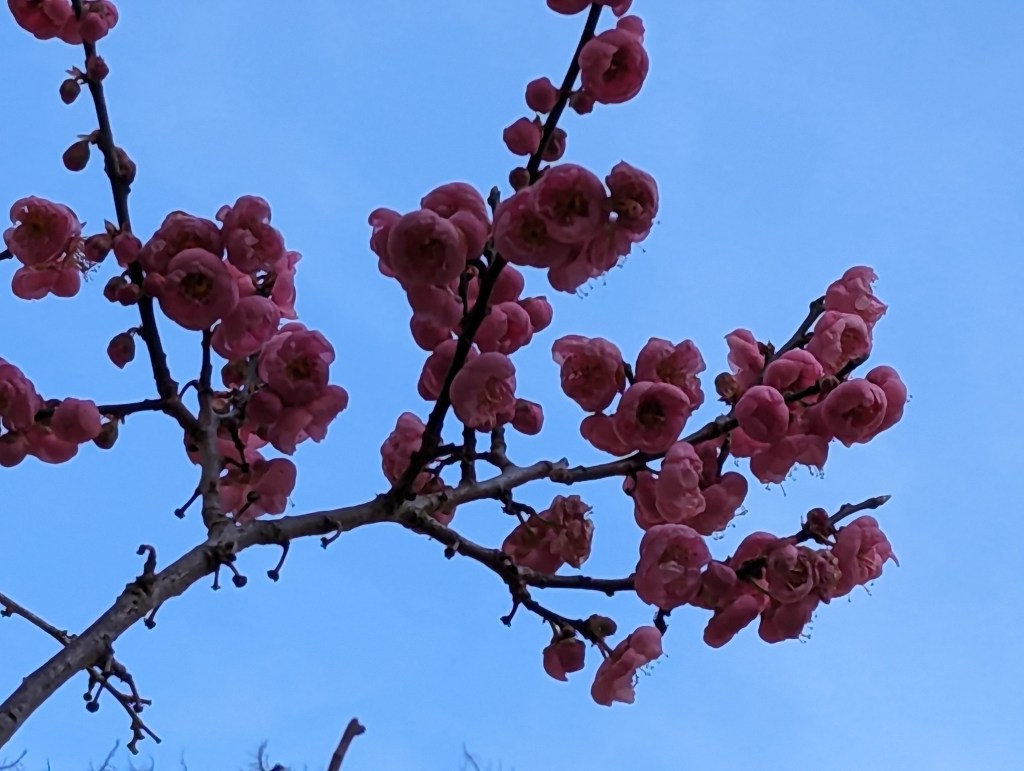
For example, flowering plum is like a sterile but prettier version of fruiting plum. It merely blooms impressively without subsequently fruiting. There is no need for dormant pruning to concentrate resources into fruit, or to compensate for fruit weight. When and if pruning becomes necessary, it can happen after any unwanted growth has contributed to bloom.
Flowering cherry, flowering crabapple and flowering quince may actually prefer dormant pruning like their fruitful relatives do. However, like flowering plum, they also bloom more abundantly prior to spring pruning. Unrelated dogwood, redbud, forsythia and even New Zealand tea tree likewise benefit from spring pruning, which is the same as late pruning.
In moderation, blooming stems of plants that get either dormant or spring pruning can be delightful as cut flowers. A few unpruned stems can remain after dormant pruning for that purpose. They only need proper pruning when harvested or after bloom. Likewise, plants that get later spring pruning after bloom can likely spare a few stems while still blooming. Alternatively, such stems should be conducive to forcing.
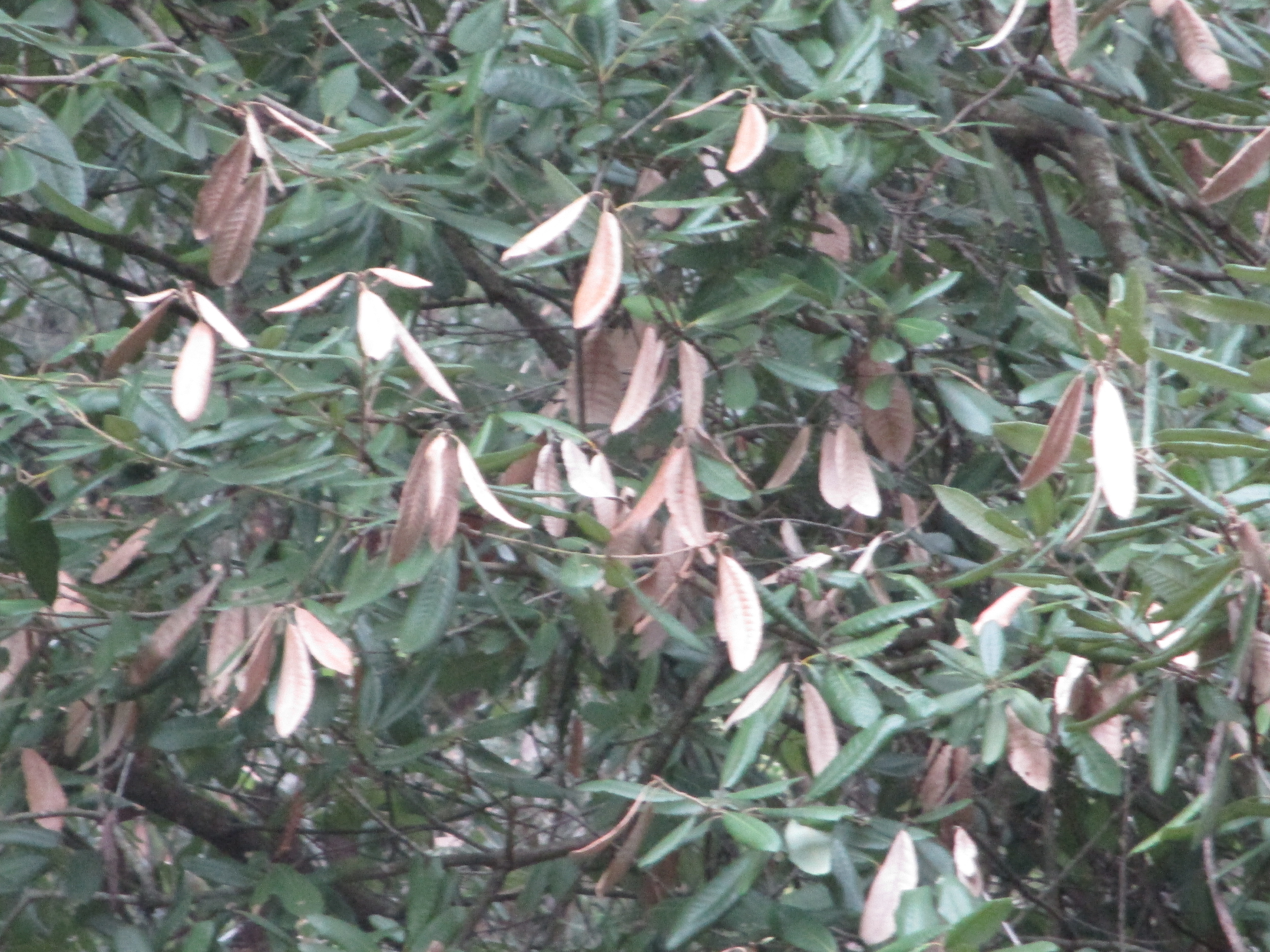
Flagging (sudden necrosis of distal foliage) used to indicate the beginning of a sudden end.
Phytophthora ramorum is the pathogen that initiates Sudden Oak Death Syndrome, which is known simply as SODS. Monarthrum scutellare, which are known as ambrosia beetles, and are the secondary pathogen associated with the syndrome, infest and kill tanoak and coast live oak that are infested with Phytophthora ramorum, about as quickly as symptoms are observable.
Hypoxylon thouarsianum is a tertiary but merely opportunistic pathogen associated with the syndrome. By the time it gets established within galleries excavated by the ambrosia beetles, the affected trees are almost completely necrotic. That first ‘S’ in SODS is there for a reason. It is an efficient process. Death occurs too suddenly for affected trees to drop any of their leaves!
Each of these three pathogens causes distinct symptoms. Phytophthora ramorum causes trees to bleed black tar-like fluid…
Trails here are closed because of damage incurred by the earlier torrential rain. It will be a while before the damage is repaired. I have not seen this particular portion of the trail in a long time, so I do not know what condition it is in now. I know that it was very vulnerable to erosion.
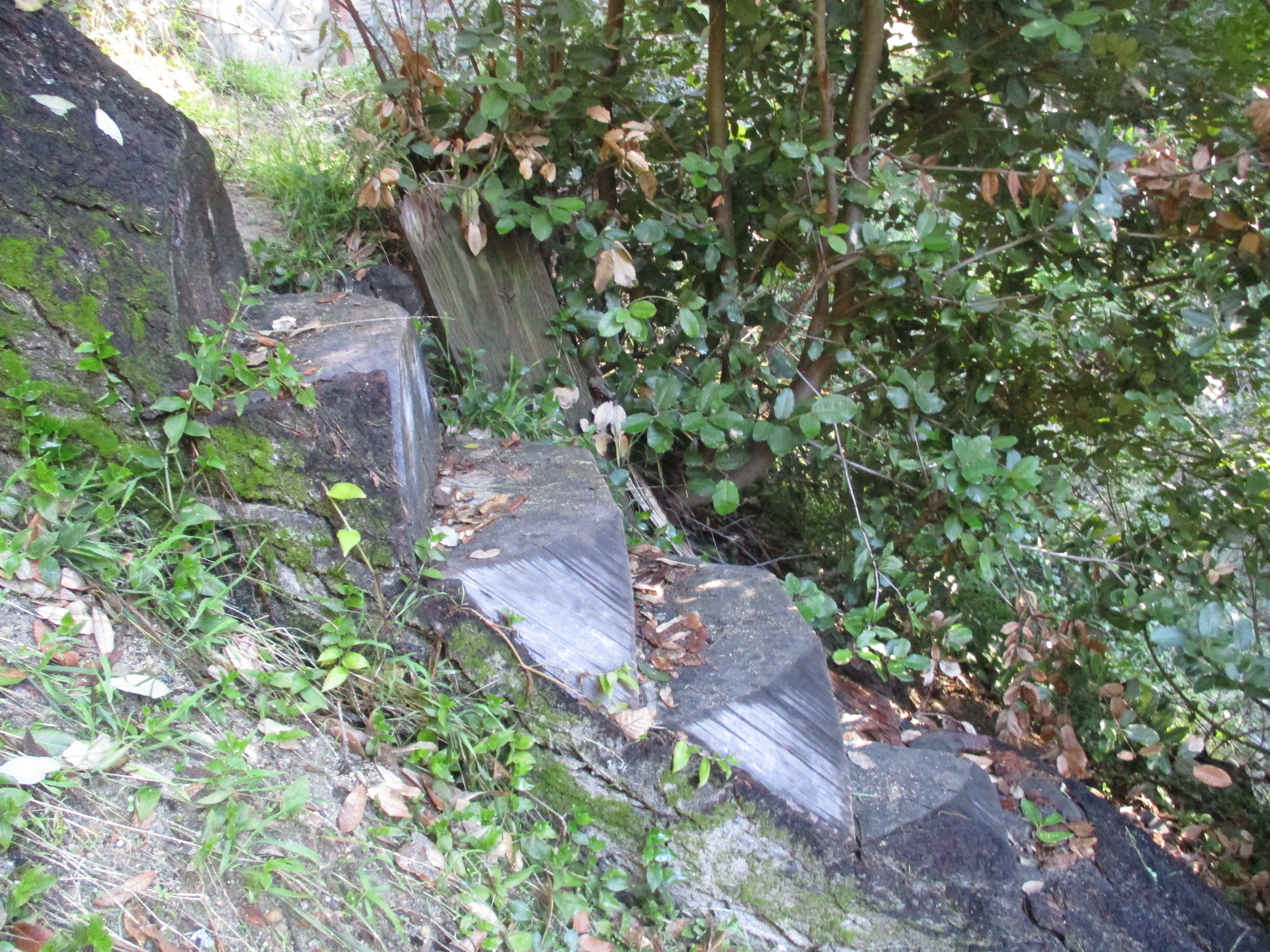
If a tree falls in a forest, . . . it might get recycled.
Exploitation of the vegetation here involves so much more than collecting seed from old bloom, dividing overgrown perennials, or processing cuttings from pruning scraps. It goes beyond the reassignment of lauristinus, canna, African iris, deodar cedar and perhaps others that I wrote about earlier. Flowers, fruits, vegetables and herbs are mundanely obvious assets.
The landscapes and forests here do so much more than beautify and provide shade. When a tree falls in a forest (and makes a sound even if no one is there to hear it), it might get processed into firewood or lumber. Some of the foliage that falls in landscaped areas goes to the compost piles. Even debris that gets removed from here gets recycled as greenwaste somewhere else.
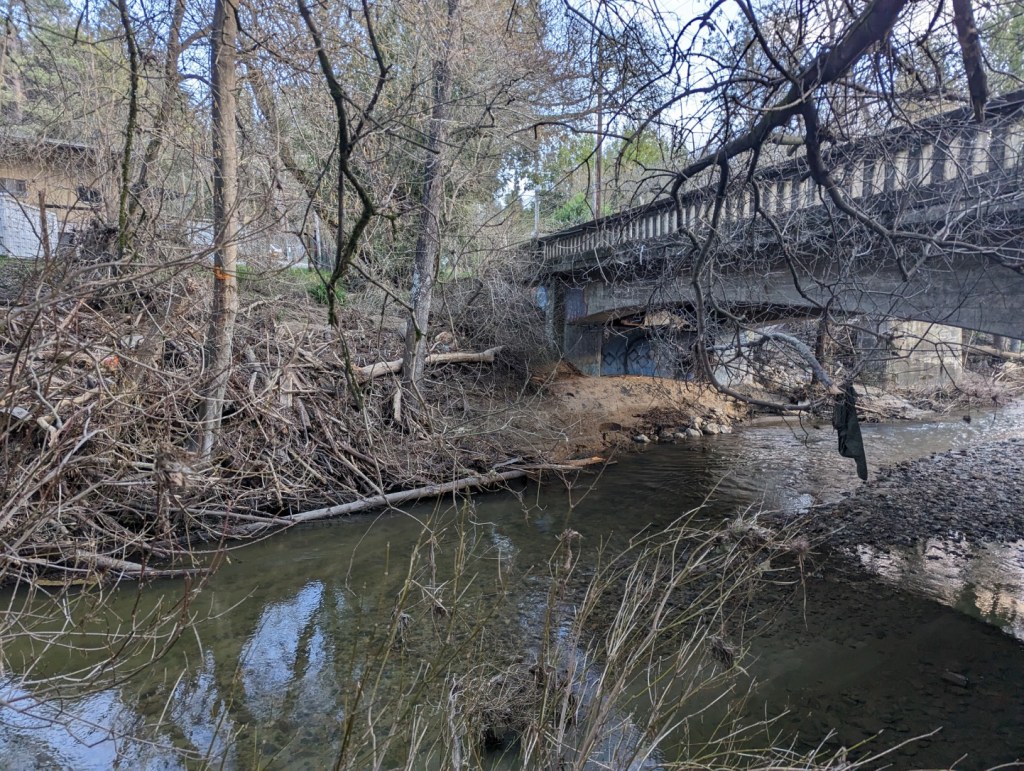
Rain is expected for today and Sunday. It rained a bit yesterday morning. This is normal for winter here. It will not prevent us from resuming seasonal work that was interrupted by the not so normal and epically torrential rain and associated flooding earlier. A bit of the mess associated with that earlier extreme weather remains, but is not so much of an encumbrance. Spring flowers such as daffodil have been blooming for a while. Flowering cherry buds are plumpening. One flowering cherry and the only flowering apricot are in full bloom. Meanwhile, other crews work to keep the power on.
1. Debris of all sorts remains on the banks of Zayante Creek downstairs. This might be a futon. I hope that it came from an exterior patio, and not from within a home upstream.
2. Zayante Creek is right where it should be now. It was slightly above the arch just prior to midnight of New Year’s Eve. The crew’s galley is inside the windows to the upper left.
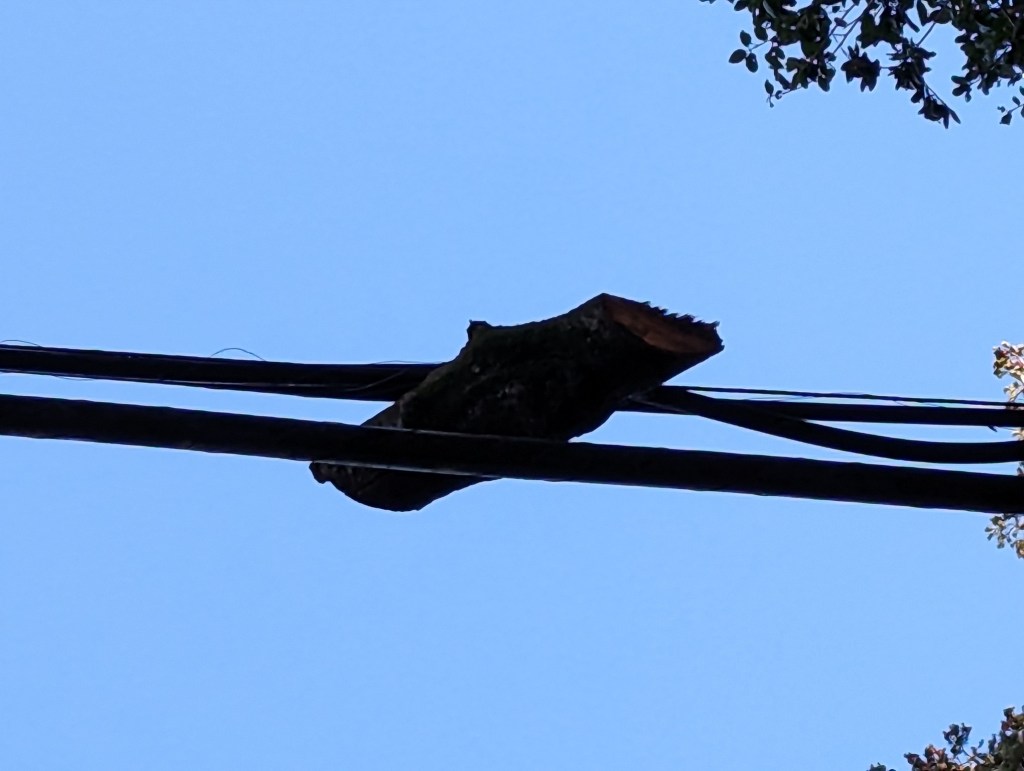
3. After all that torrential rain, another crew came to prune trees for clearance from new utility cables. The work was not bad, but they could not remove this log from the cables.
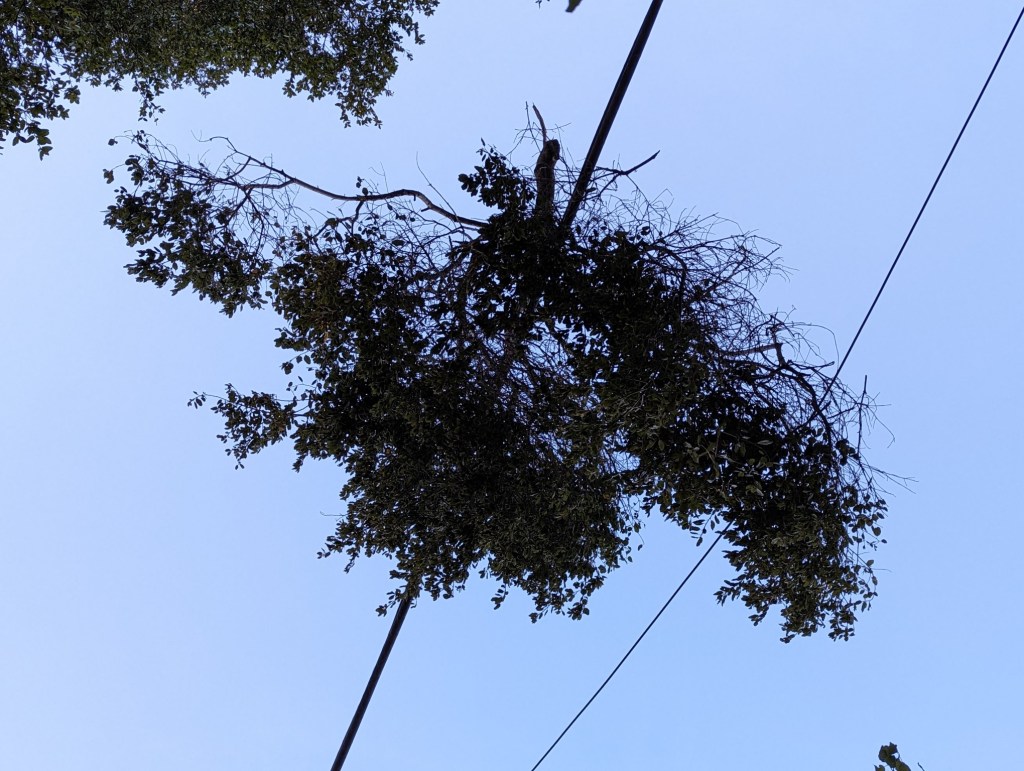
4. After the crew finished pruning a particularly large coast live oak that survived all that torrential rain, the big oak fell. Yes, it fell AFTER the storms, and AFTER it was pruned.
5. As if that were not bad enough, it left this big limb hung precariously on the new cable that they installed immediately prior to the rain! It is heavy and hooked by a small stub.
6. Landon’s Tree blooms as if none of this drama ever happened. It is a flowering apricot that grew from the understock of a purple leaf plum that was cut down several years ago.
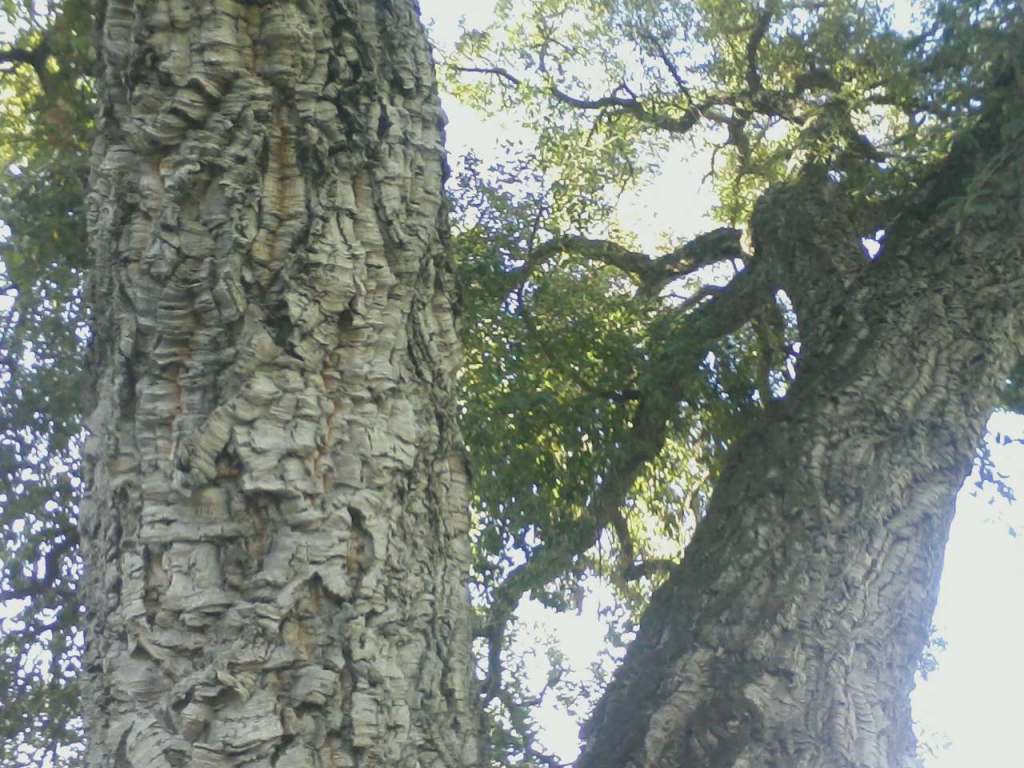
Cork oak develops sculptural trunks and branch structure with striking bark texture.
Portuguese neighborhoods in San Jose and other big cities might be identifiable by the presence of the otherwise rare cork oak, Quercus suber. After all, they are native to Portugal, as well as Spain, Sardinia, Corsica, Sicily and the coast of the Mediterranean Sea as far east as the eastern tip of Italy on the north, and the northwest corner of Libya on the south.
Like redwoods, cork oak is one of the few species of trees that survive forest fires by being less combustible. Their foliage and small twiggy stems may burn, but larger limbs and trunks are insulated by very thick cork cambium (bark). Most other trees that are adapted to burning either disperse their seeds as they burn in order to get a head start at reforestation afterward, or simply resprout from their roots.
Ironically, this bark that is intended to help the trees survive was actually the reason why trees on the north coast of Algeria were so extensively and detrimentally harvested during French colonialization. Corks made from the bark were needed for the wind industry in France. Fortunately, cork in Algeria is now harvested like it is in other regions, without harming the trees that produce it.
Compared to other oaks, cork oak is not too large. It can get a bit more than fifty feet tall and nearly as wide, but takes a century or more to do so. It can actually stay proportionate to urban landscapes for a very long time. Roots are mostly complaisant. The main problem with cork oak is that it drops its evergreen foliage constantly, and drops floral debris and acorns for a few months.
Gnarly trunks and limbs with spongy bark are the main appeal. The one and a half or two inch long leaves are not so interesting. They are barely convex, often with a few blunt lobes, and dull grayish green from below.
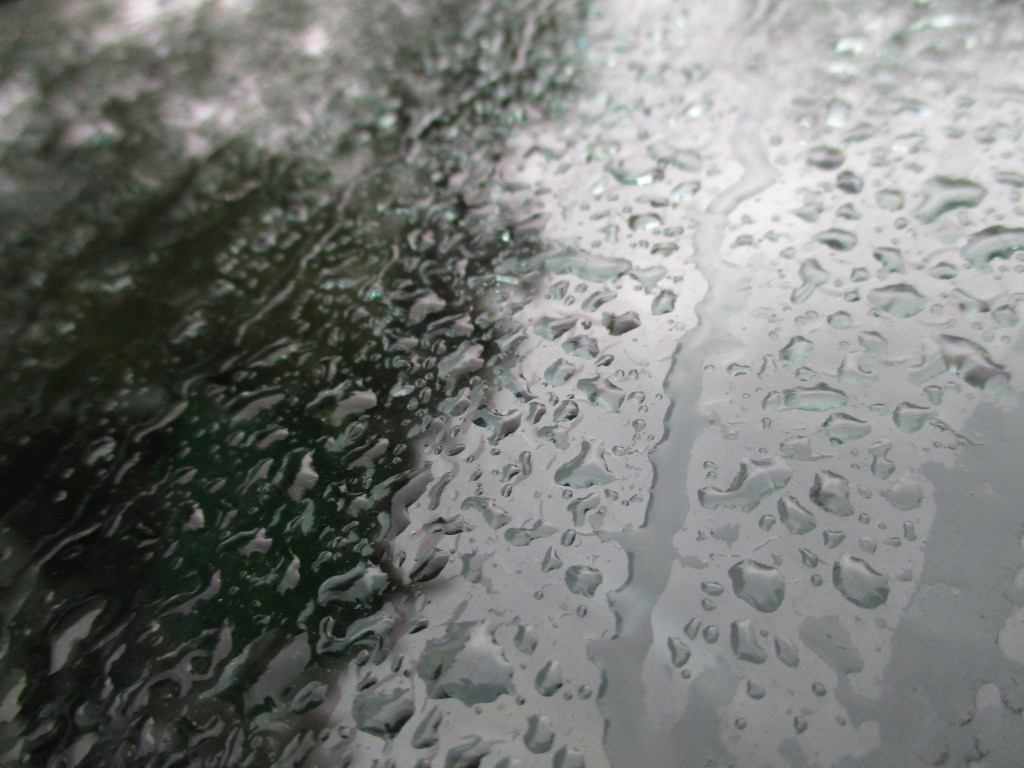
More than a week ago, many of us were astonished to witness countless drops of water miraculously falling out of the sky! What could this be? Where did this water come from? It is actually not such a mystery. These unfamiliar falling drops of water are merely a type of weather known as “rain”. “Rain” is actually nothing new, and happens every winter. Typically, there should have been an abundance of “rain” by this late in winter.
The problem with “rain” is that it is wet. Whatever it encounters also becomes wet, and often messy. Wet dirt becomes mud. Wet roads are hazardous to traffic. It is uncomfortable to go outside to do any gardening when everything is wet and muddy.
However, “rain” is very important to everyone’s survival. It is what moves water from the oceans back onto land, so that it can be collected and used for the many things that water is needed for. “Rain” also brings needed water to gardens, landscapes, and even the forests outside of urban areas. In one way or another, every living thing needs “rain”.
But wait! There’s more! “Rain” so efficiently waters gardens and landscapes that no other watering is needed! Most watering systems should therefore be turned off as long as there is enough “rain” to keep everything wet. Even when the “rain” stops, cooler temperatures and higher humidity keep things from drying as efficiently as they would during warm summer weather. Consequently, most watering systems can remain off until after winter, when the “rain” stops until next winter, and the weather gets warmer.
Actually, the only plants that may want water are those that are sheltered from the “rain”, and perhaps a few large potted evergreen plants that continue to lose enough moisture by evaporation from their foliage to get a bit dry between periods of “rain”. Even these sheltered and potted evergreen plants use less moisture this time of year because they are less active, and evaporation from their foliage is limited by the weather.
Remember; for plenty of moisture that is one hundred percent natural and absolutely free, try “RAIN”!


 Surfing should be done in the ocean.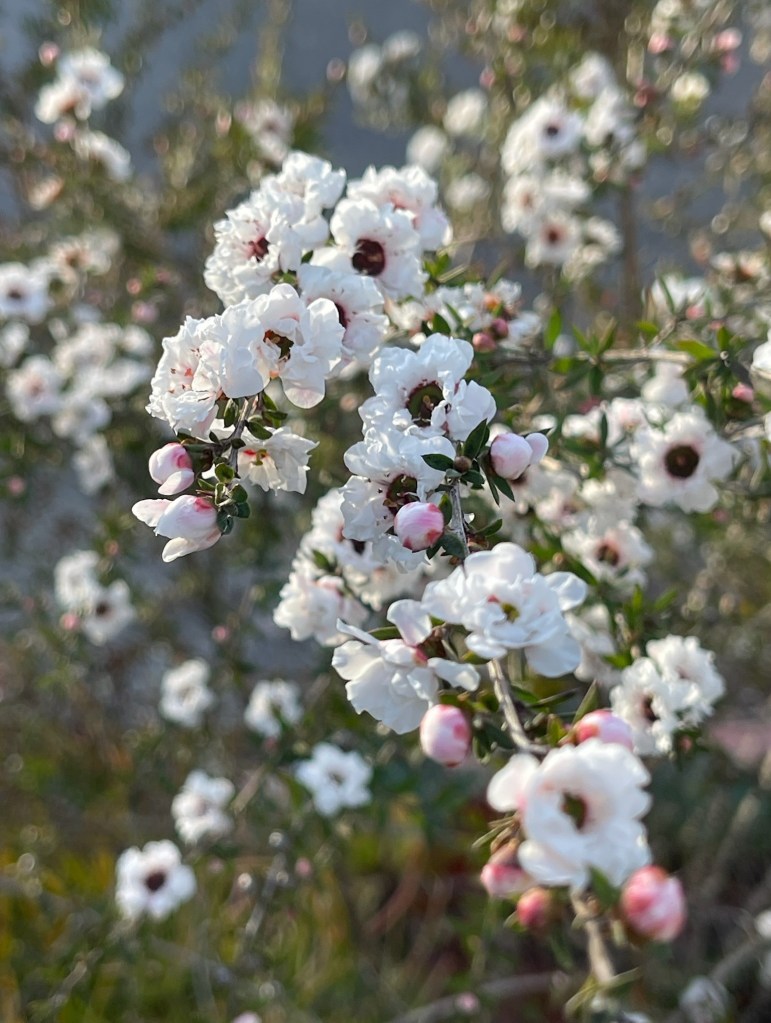
 Flagging (sudden necrosis of distal foliage) used to indicate the beginning of a sudden end.
  If a tree falls in a forest, . . . it might get recycled.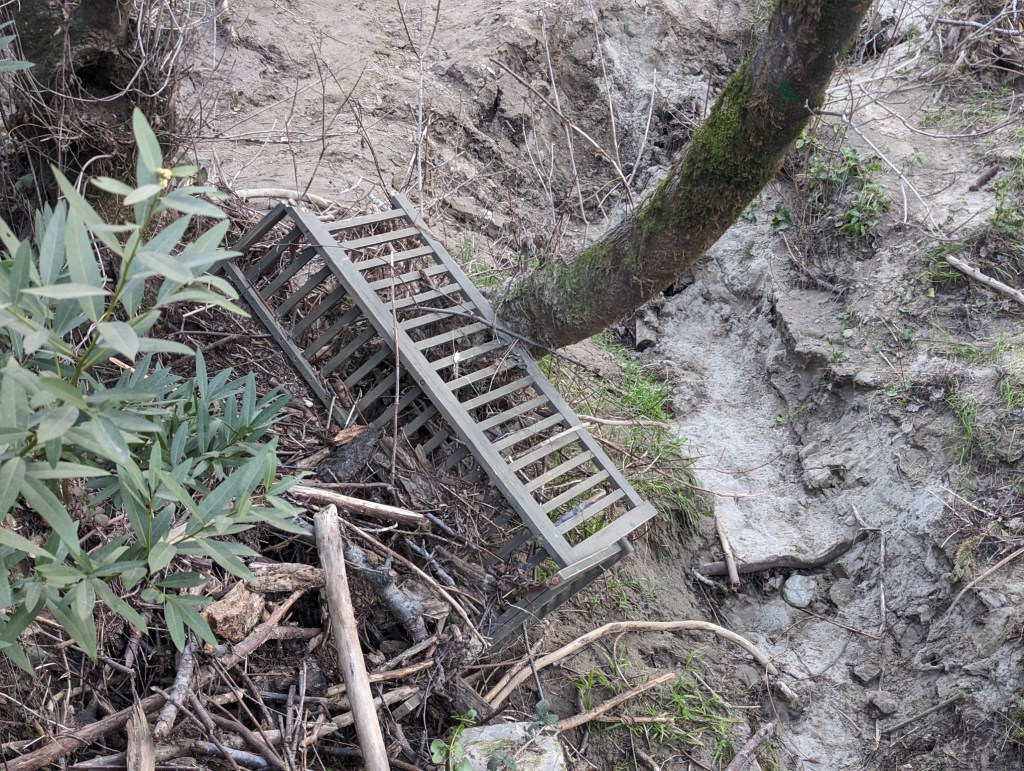

 Tony Tomeo