Horticulturists are by nature, nonconforming. I happen to find it difficult to conform to what makes us nonconforming. Trends are fleeting. Old technology that has worked for decades or centuries is still best. Although I am not totally against chemicals, I find that almost all are unnecessary for responsible home gardening. Pruning is underappreciated, and fixes many problems.
California poppy, sky lupine and many favorite coastal wildflowers are annuals. Douglas iris, Iris douglasiana, blooms with the best of them as a perennial. It is persistent enough to be a noxious weed within rangelands. Of course, that is only because it competes with forageable vegetation. Douglas iris is actually tame enough for cultivated home gardens.
Douglas iris bloom is mostly the color of faded blue denim. It can alternatively be slightly richer lavender blue or very pale bluish white. Purple with yellow centers is rare. Flowers stand only about a foot to a foot and a half tall. Their deep green foliage is about as high. Individual leaves are narrow and arching. New leaves displace deteriorating old leaves.
Wild Douglas iris colonies can be impressively expansive. They generally mingle nicely with other low vegetation and wildflowers. With occasional irrigation, they can get dense enough to exclude most other vegetation. However, such colonies are not evenly dense, so develop bare zones. They crave good sun exposure, but tolerate a slight bit of shade. Excessive fertilizer might inhibit bloom. Excessively frequent or generous irrigation might cause rot.
Weeds are weeds simply because they grow so aggressively where they do not belong. They begin before the weather gets warm enough for desirable plants to grow. Some are already blooming and dispersing seed. This is why weeding is presently very important. Weeds innately compete with desirable vegetation for space, water and other resources.
Weeding should ideally eliminate target weeds before they disperse seed. Some weeds are sneaky. They bloom and disperse seed while young and seemingly innocent. Some conceal their bloom and seed with their lush foliage. They seem to know to do so during rainy weather that discourages weeding. They effectively provide their own replacement.
Some weeds regenerate vegetatively. They grow from stolons, rhizomes, bulbs, corms or other dromant storage structures. Many of these structures were dormant through winter. Some were dormant even longer. They are aware that winter is becoming spring, so now begin to grow. As they do, they generate more of the same structures, perhaps with seed.
Weeding is easiest as soon as weeds are big enough to grip. Their young roots separate easily from their soil before more thorough dispersion. Also, their soil remains thoroughly damp and soft from winter rain. However, it may be easier to eliminate a profusion of tiny seedlings by tilling. Weeding bulkier weeds, such as pampas grass, can involve digging.
Only a few weeds are woody vines, shrubs or trees. More weeds are perennial. The vast majority of weeds are annual. Regardless, the most substantial weeds are woody. Some can regenerate persistently from their stumps. Therefore, weeding of such weeds should involve removal of their entire stumps. It is important to dig rather than cut oak seedlings.
Few native species proliferate undesirably. Therefore, most weeds are exotic. Most were originally desirable, but naturalized. English daisy, periwinkle, pampas grass and broom were formerly popular flowers. Blue gum eucalyptus formerly provided wood pulp. Other weeds formerly grew as vegetables, fruits or grain. Many weeds were once forage crops.
This is the third spring that I got picture of this pair of flowering cherry trees in bloom. I took several pictures last year, ranging from closeup pictures of the flowers, to pictures taken from a distance like the picture above. Fewer pictures were taken during the previous spring of 2018, before these trees were groomed of copious necrosis. Sadly, this picture will be one of the last.
The trees will be cut down this year. They stayed just long enough to bloom this one last season, but will not likely be here much longer. They are deteriorating at such a rate that if I were to prune the necrosis away after bloom, there would not be much remaining. The tree to the right in this picture would be only a rotten stump with a few limber twigs protruding from the top.
This tank could use some greenery . . . or maybe not.
The scrub palm incident should have reminded me that there is such a thing as too much of good thing. By the way, I do intend to grow every single seedling that germinates and somehow find homes for them all. I suspect that almost all will live in my own garden, but at least I know they will live in a good home. I have grown surpluses before, and I actually plan to do it again.
For examples, that big herd of cedar seedlings that was partly reassigned into landscapes is just too numerous for all seedlings to be accommodated. Most of what remains will get canned to be installed into landscapes later. Since we planted about as many as we possibly can here, most will likely go to Los Angeles, and installed onto embankments of the Santa…
Etcetera is the important part here We must adhere to a schedule. As mentioned earlier, this winter generated the only snow for most regions here since 1976, and more flooding since 1982. By local standards, this winter was severe. It seemed to continue longer than it should have, as if to delay spring and the chores that come with it. I managed to prune a disfigured lemon tree, perhaps more than I wanted to, but effectively so. It was a good reminder of what time of year this really is. The weather is presently pleasant. More rain is expected for tomorrow, Tuesday and Wednesday. However, it is not expected to be as torrential as it had been. No more frost is expected.
1. Snow looks silly on top of a Mexican fan palm, Washingtonia robusta. This was weeks ago and hundreds of miles to the south, but is amusing nonetheless. Brent sent it to me.
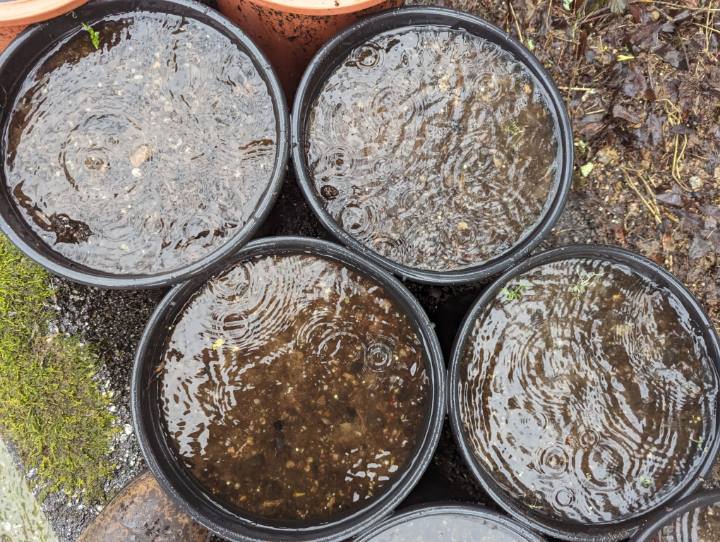
2. Rain fell faster than it could drain through the recently canned Canna. Their drainage holes are likely in the middle of the bottoms of these cans, rather than around the edges.
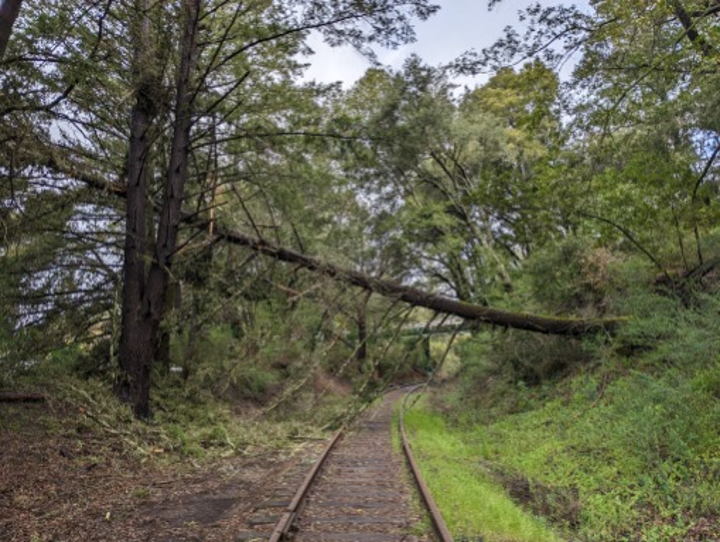
3. Wind blew limbs and trees down all over. Then, after it stopped blowing, this Douglas fir, Pseudotsuga menziesii, fell across the Roaring Camp Railroad behind the barn here.
4. Frost should be done for the year. So, I pruned the structurally compromised Eureka lemon, Citrus limon ‘Eureka’, and processed a few of the scraps into ungrafted cuttings.
5. Lemons were another byproduct of pruning. Most are not yet completely ripe though. Several ripe lemons are always available, but the primary phase should ripen about now.
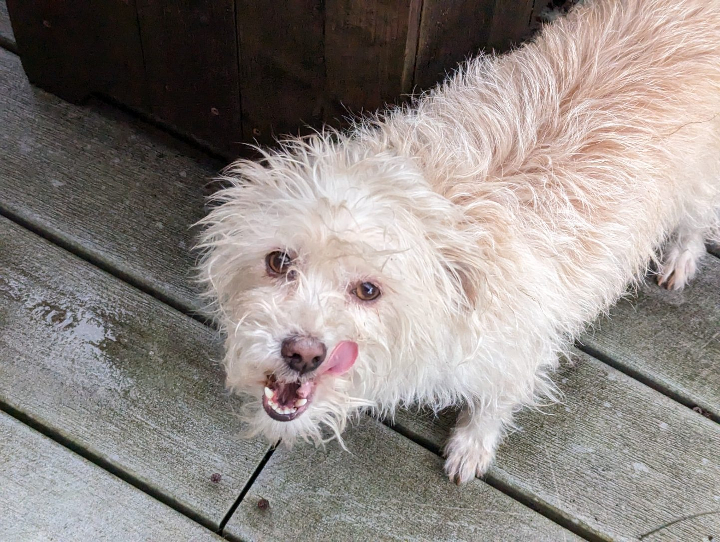
6. Rhody has been a good sport through all the unusually wintry weather this winter. He is pleased to get outside more now. We got a similar but cuter picture for next Saturday.
These sorts of primrose almost seem to be synthetic because of their bright but simple color.
The cartoon shades of red, yellow, blue, purple and nearly orange of primrose, Primula acaulis (or Primula vulgaris) are still partying strong. They do not seem to be aware that, although perennials that could regenerate next autumn, they are likely to be replaced with warm season annuals soon. The cute flat-topped trusses of half inch to inch and a half wide flowers are short, but stand up above the even shorter two to five inch long leaves.
Modern gardens are shadier now than they ever have been. Ranch houses that were popular through the middle of the last century had those classic big eaves that shaded wide margins close to the homes. Prior to that, tall Victorian houses made big shadows. Modern houses though are even bigger. To make matters worse, lots and garden spaces are smaller and surrounded by ominously tall fences; so there is less space that is not shaded by something sometime during the day.
This is why small trees, sometimes known as ‘micro-trees’, are so popular. They are all that fit into some small gardens without creating too much shade for other plants. Large shrubbery, like some of the larger types of pittosporum, and some of the smaller types of podocarpus, often function quite nicely as small scale trees. Where not too shaded, pineapple guava and New Zealand tea tree are just as effective. They only need to be allowed to develop upper canopies with adequate clearance, while their lower limbs get pruned away, instead of getting pruned to stay down low as shrubbery typically does.
Camellia, hydrangea, aucuba, Japanese aralia, Oregon grape and Heavenly bamboo (Nandina spp.) are appealing shrubby plants for shady locations. Camellias and hydrangeas of course provide impressive blooms during their respective bloom seasons. Camellias also have the advantage of excellently glossy dark green foliage all year; but hydrangeas are bare and need pruning in winter. Oregon grape and Heavenly bamboo, which are actually related, are more subdued but look more woodsy in bloom, and sometimes provide interesting berries afterward. Aucuba and Japanese aralia do not need showy flowers because their foliage is so bold. Japanese aralia has bigger and bolder leaves, but common types of aucuba are spotted with gold.
Balsam (Impatiens spp.), which is already one of the most popular warm season annuals that is beginning to get phased in as the weather gets warmer, is not quite as colorful in the shade as it is with better exposure, but can be impressive nonetheless. Cyclamen takes shade as well, but will actually be getting phased out through late spring and summer. Cyclamen is actually a perennial that can stay in the garden (if it is not in the way of anything else) to regenerate next autumn. As weather gets warmer in spring, caladiums and coleus can provide remarkably colorful foliage for shady spots through summer and early autumn.
Various types of ferns, although devoid of flower color, provide distinctive and often bold form and foliar texture. Australian tree ferns can actually get quite large and eventually function as small trees. Baby tears is a finely textured perennial ground cover that spreads as far as it has moisture. It can actually get to be invasive.
Wow, I forgot how big this lemon tree was. It got pruned down during the past three years, partly for containment, and partly to repair structural damage.
Almost all of the fruit trees that I encounter are or were neglected to some degree.
Many were planted a long time ago by someone who was able to maintain them at the time, and perhaps for many years, but then relocated, passed away, or just got too elderly as the trees grew and required more work.
Many were planted by those who simply enjoy gardening around their homes, and wanted to grow some fresh fruit, but were not aware of how intensive the maintenance of most of the fruit trees is, or how to execute such maintenance properly.
Many were planted by so-called ‘gardeners’ or so-called ‘landscapers’ who had no intention of actually ‘maintaining’ them, or believed that they could ‘maintain’ them with motorized hedge shears and a blower . . . just like they ‘maintain’ everything else.
Pecan is the State Tree of Texas. Bluebonnet is the State Flower of Texas. Less natively, jalapeno pepper, Capsicum annuum, is the State Pepper of Texas. It is naturalized there from Central and South America. Jalapeno pepper is merely one of countless varieties of the species though. Furthermore, it comprises several and various culinary subvarieties.
Jalapeno pepper typically grows as a warm season annual vegetable. It has potential to be perennial. Overwintering is likely more work than annual replacement though. Mature plants can grow almost three feet tall. They may produce nearly two dozen fruits through summer. They crave sunny and warm exposure, rather rich soil, and consistent watering.
Mature fruits, or jalapeno chile peppers, are firm and crisp. They should be between two and four inches long, and as wide as an inch and a half. Their smooth and glossy skin is deep green, but can ripen to red, orange or rarely yellow. Red fruit is preferable for some culinary application. Jalapeno pepper may be the most familiar of the ‘hot’ chile peppers.
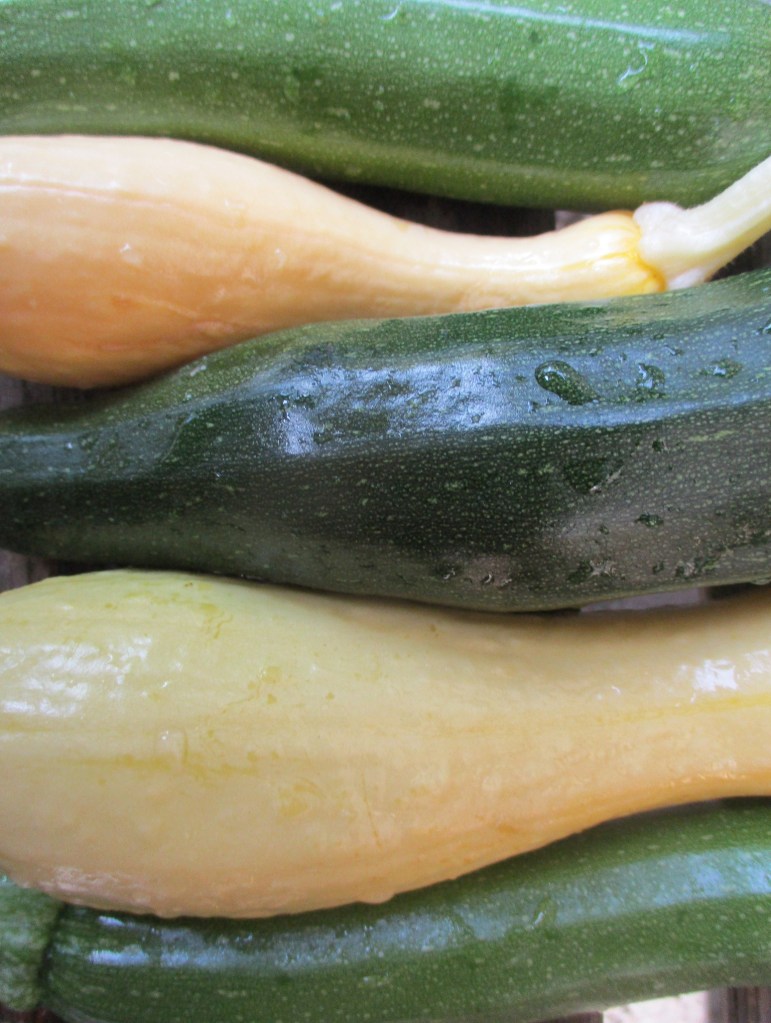
Squash eventually depletes particular soil nutrients.
Maya Angelou likely enjoyed gardening. She said, “In diversity there is beauty and there is strength”. That is how the healthiest of ecosystems, including home gardens, function. Vegetable gardens are generally diverse. However, each group of a particular vegetable is rather homogenous. Crop rotation can compensate with diversity through the seasons.
Crop rotation is growing different vegetables in particular places from season to season. It is the same as growing particular vegetables in different places from season to season. Distinctly consumptive vegetable plants should relocate each season. Less consumptive sorts may perform adequately in the same place for years. Diversity makes it interesting.
Each type of vegetable plant consumes particular nutrients from the soil. Eventually, they can deplete their soil of these particular nutrients. Crop rotation allows them to utilize the nutrients they need from undepleted soil instead. Meanwhile, other vegetable plants can grow in the vacated soil. These different types of plants utilize different types of nutrients.
For example, tomato plants notoriously deplete the soil of particular nutrients. Corn does the same. However, each depletes different nutrients. Therefore, corn can be satisfied in soil vacated by tomato plants. Likewise, tomato plants can be satisfied in soil vacated by corn. Furthermore, each promotes the restoration of the soil nutrients needed by the next.
Crop rotation also disrupts proliferation of several pathogens that infest vegetable plants. Dormant spores of bean rust disease overwinter in the soil beneath infested bean plants. They efficiently infest any receptive bean plants to occupy the soil during the next spring. However, they can not infest plants that are not related to beans, such as pepper or okra.
Summer vegetables should be situated accordingly as they return to vegetable gardens. Tomato, pepper and eggplants are related, so should not grow where any grew last year. The same applies to bean and pea. Squash and cucumber are related also, but are less consumptive. They may perform adequately within the same soil for more than one year. Several summer and winter vegetables are related.

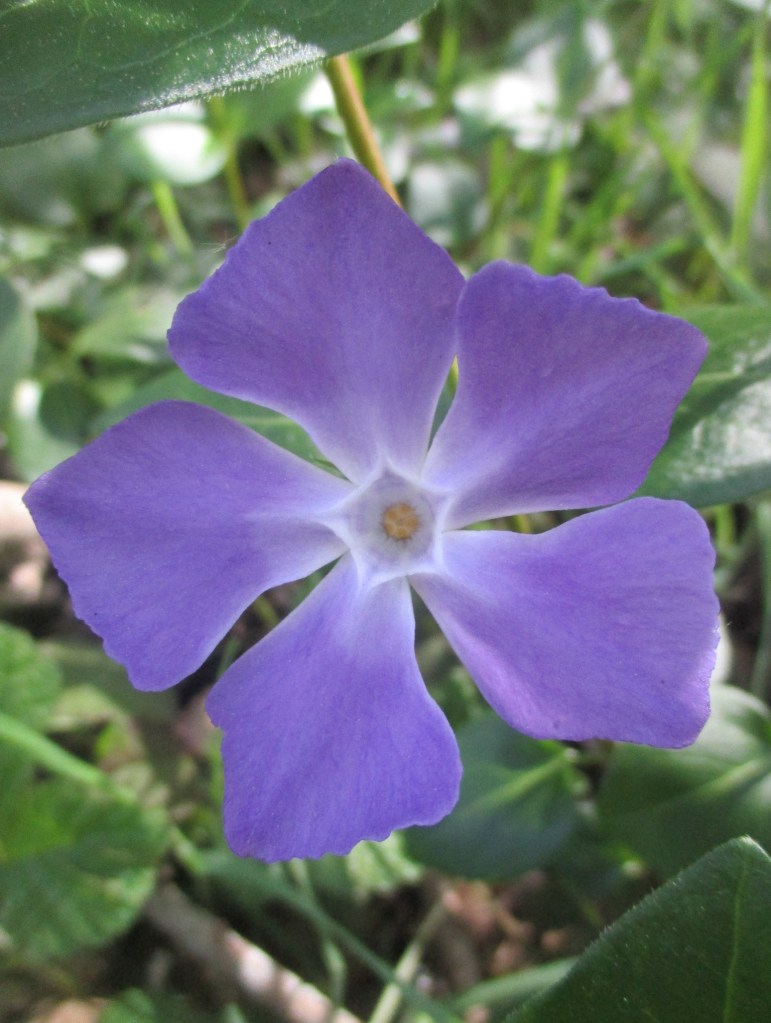

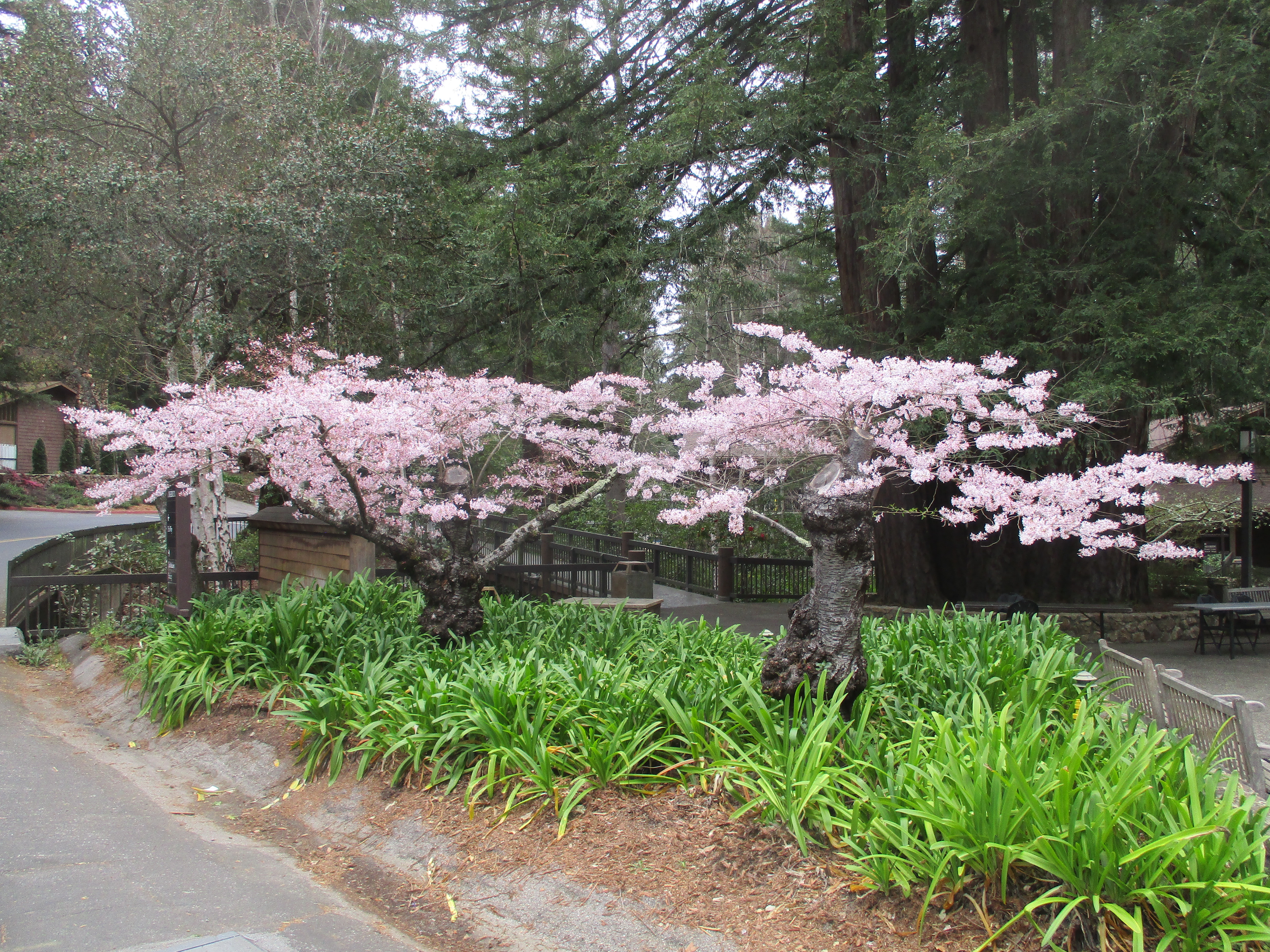 They still bloom spectacularly.
 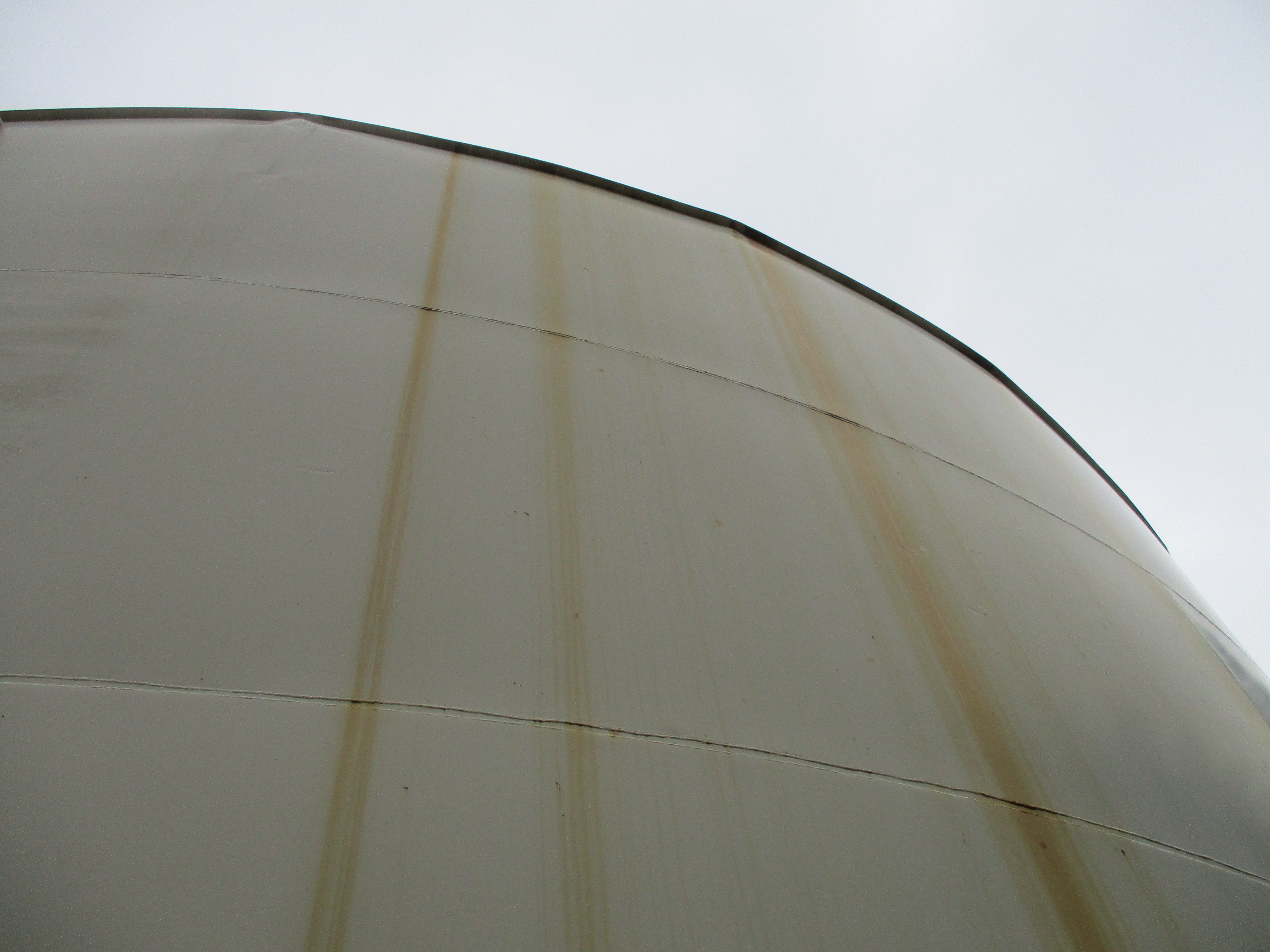 This tank could use some greenery . . . or maybe not.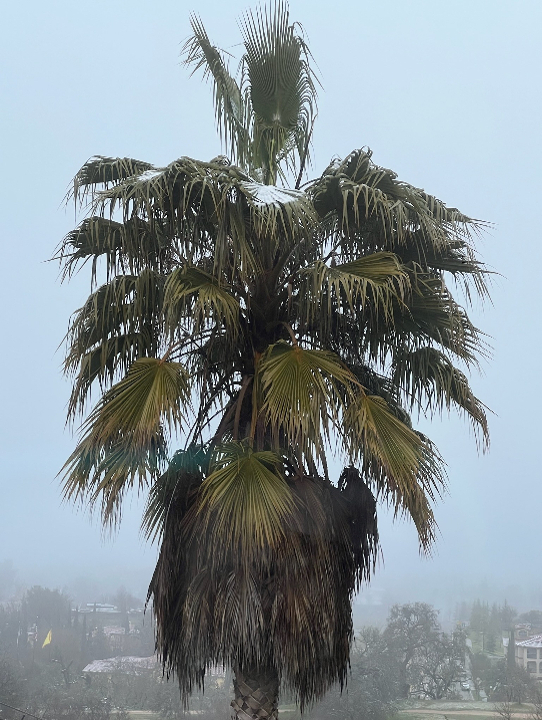



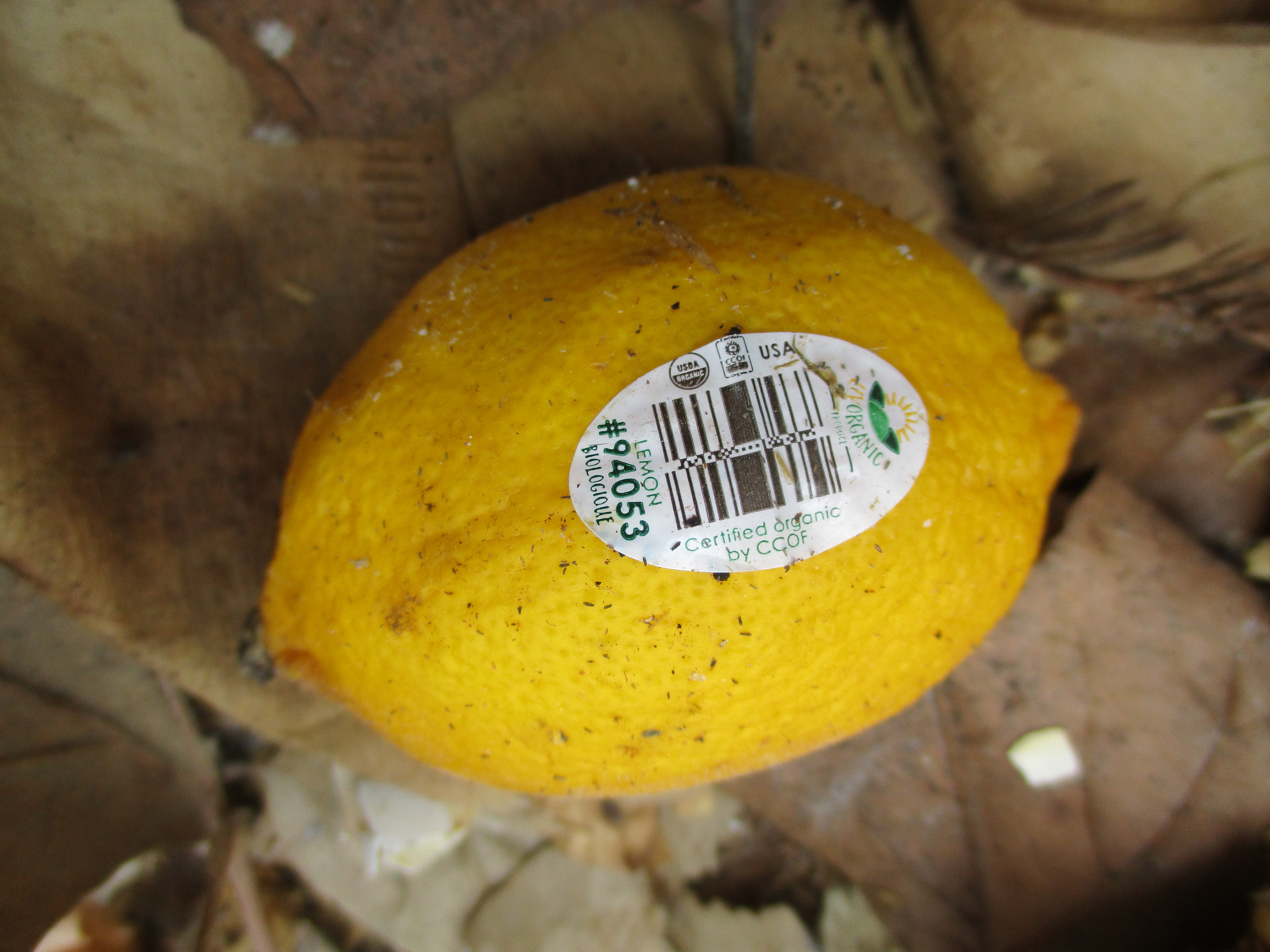 “Hello – my name is LEMON.”