Horticulturists are by nature, nonconforming. I happen to find it difficult to conform to what makes us nonconforming. Trends are fleeting. Old technology that has worked for decades or centuries is still best. Although I am not totally against chemicals, I find that almost all are unnecessary for responsible home gardening. Pruning is underappreciated, and fixes many problems.
Grecian bay does not get as massive as the native bay laurel.
The native bay laurel should not be confused with the Grecian or sweet bay. Despite the similarities, the native bay laurel grows into a large tree. The foliage can be used as seasoning like Grecian bay, but has a very different and much more pungent flavor. It can often be found fresh in markets, labeled as Grecian or sweet bay, and has likely ruined all sorts of recipes.
Grecian or sweet bay, Laurus nobilis, stays much smaller much longer. It takes many years to grow to thirty feet tall, often with many trunks flaring out from the center. Trees that are nearly twice as tall are ancient. Because of slow growth, Grecian bay can be happy in large containers as long as it is pruned to stay proportionate to the confined root system.
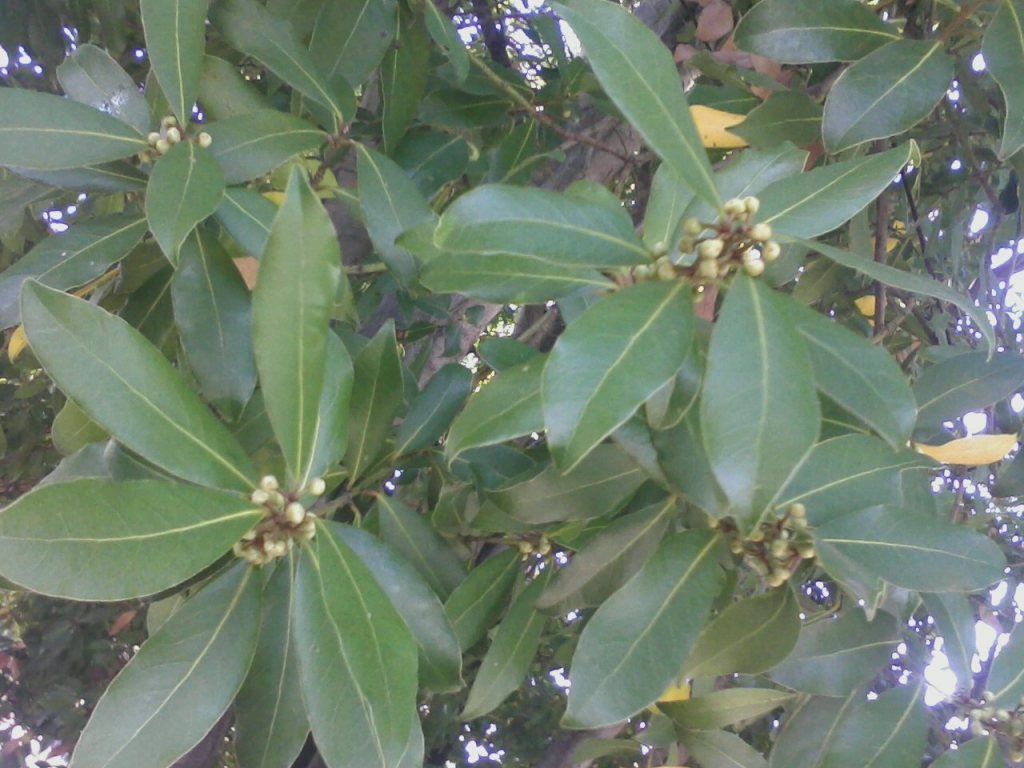
The three or four inch long, and inch or so wide leaves of Grecian bay can be difficult to distinguish from those of bay laurel. The minor differences are that Grecian bay leaves have slightly undulate margins with a few small and sometimes barely perceptible serrations (teeth) that bay laurel lacks. The leaf apexes of Grecian bay leaves are typically a bit more blunt. For culinary purposes, it is important to be aware that dried leaves and fresh leaves have very different flavors.
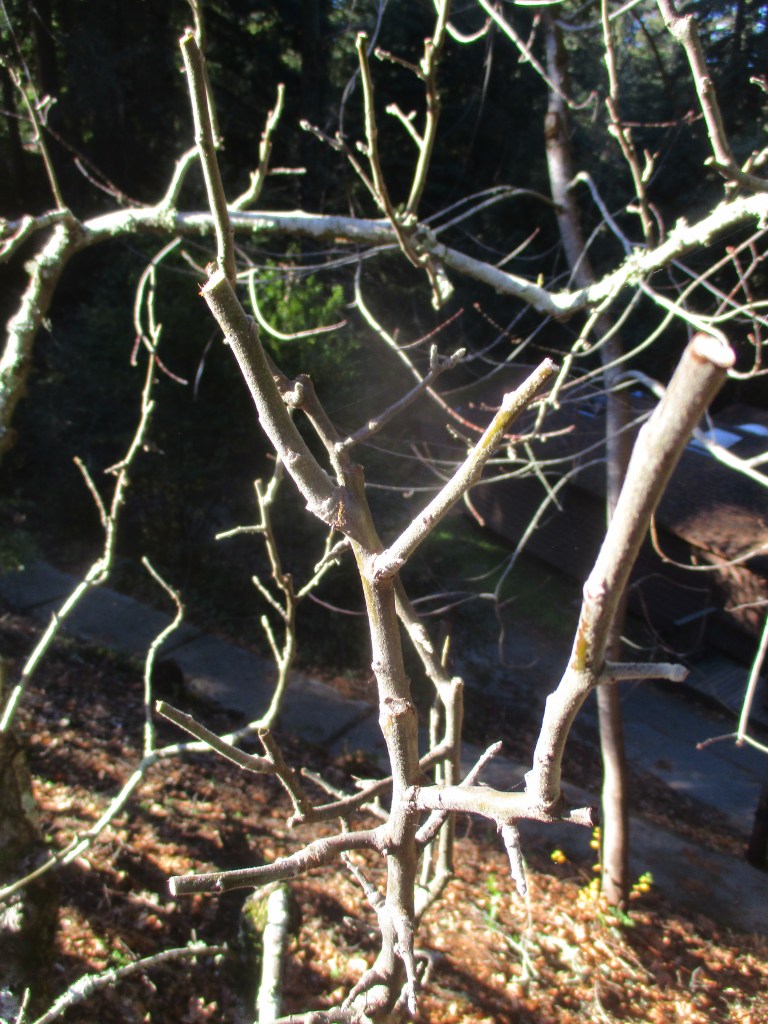
Apple and other pomme fruit trees are pruned very differently from stone fruit trees.
It seems unfair that so many deciduous fruit trees are available without warnings that they need such specialized maintenance. They are certainly worth growing. Otherwise, not many of us would grow them. Yet, those of us acquiring fruit trees for the first time should be aware that, with few exceptions, deciduous fruit trees need specialized and meticulous pruning while dormant every winter.
The pruning these trees require is too specialized to explain in a few short paragraphs; but can be researched for each particular type of fruit tree. Sunset publishes an excellent book about ‘Fruit Tree Pruning’, that illustrates and explains the different types of pruning that each different fruit tree needs. Pruning is the sort of thing that gets better with experience; so even though the pruning gets more involved over the years as the trees grow, the procedure becomes more familiar.
Without pruning, deciduous fruit trees produce more fruit than they can support, which disfigures and breaks branches as the fruit matures and gets too heavy. Even if limbs do not break, overabundant fruit is often of inferior quality because the trees that produce it exhaust their resources. Fruit of well pruned trees may not be as abundant, but is typically better. Besides, pruning is good arboricultural hygiene, keeping trees vigorous and more resistant to disease.
The stone fruits probably need the most severe pruning. These are fruits like apricots, plums, prunes, nectarines and peaches, that have hard pits or ‘stones’. They develop fruit on stems that grew during the previous year. Generally, these stems need to get cut back short enough to support the weight of the fruit that will develop in the next season. Dead, dying, damaged and diseased stems, known as the four ‘D’s, should be pruned out completely.
Cherries and almonds are the exceptions to the generalization about severe pruning for stone fruit, since the trees can support the weight of the fruit. They only need pruning to eliminate the four ‘D’s and to limit height. Because almonds get shaken from their trees instead of picked, they are often allowed to get quite tall, and can even function as small shade trees. Peaches are the opposite extreme since their fruit is so large and heavy, necessitating the harshest pruning.
Pomme fruits like apples and pears need similar but somewhat different pruning, which preserves stunted ‘spur’ stems that produce fruit low on older stems for many years. Like cherries, certain pears may not need much pruning. Certain apples need more pruning than others. Again, the needs of particular trees are best learned from experience.
Memorial trees should be remembered . . . right? I mean, they are planted to remind us of . . . something, or . . . someone. They are typically trees that will be around for a long time, because that is how important memories should be. Redwoods and oaks work nicely. Most get outfitted with plaques to remind everyone what the trees are there to remind us of.
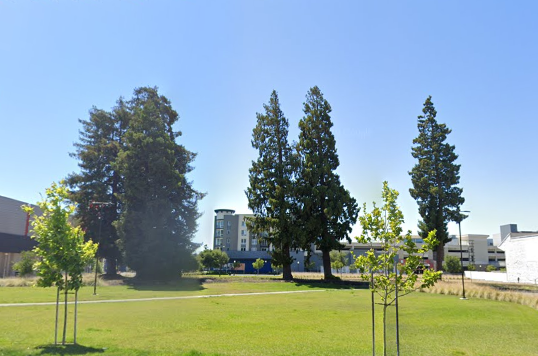
The old original Sunnyvale City Hall was landscaped with several memorial trees. The most prominent were redwoods and cedars that were mostly planted as memorials for local veterans of various wars. They accumulated over several decades and a few wars. City Hall seemed like a good place for them, where they could live for a long time without bother.
However, City Hall was demolished in the late 1970s, and replaced with a big mall. The larger redwood…
Even if never as overly indulgent in bloom as when new, Kalanchoe blossfeldiana is one of the more sustainable of popular blooming florist plants. Forced bloom remains colorful for quite a while. By the time it deteriorates enough to necessitate grooming, new foliage may already be developing. Sporadic subsequent bloom is more natural in appearance.
Ultimately, Kalanchoe blossfeldiana becomes more of a succulent foliar houseplant that occasionally blooms, rather than a spectacular floral plant. Individual plants may survive for only a few years, but are likely to generate basal pups that grow as new plants during that time. Also, they are very easy to propagate by succulent stem and even leaf cuttings.
Mature Kalanchoe blossfeldiana do not get much more than a foot high and wide. Some may stay half as tall. Their lower leaves can get three inches long, with crenate margins. Minute yellow, orange, red, pink or creamy white flowers bloom for late autumn or winter. Garden plants require shelter from chill through winter and hot sunlight through summer. Most are houseplants that appreciate copious sunlight.
Poinsettias are very popular blooming potted plants for about a month prior to Christmas. Then, most quietly disappear prior to spring. A few become foliar houseplants. Fewer go into home gardens to likely succumb to frost or neglect. Very few survive for more than a few years. It is not easy to recover from the procedures that forced them to bloom so well.
Forcing bloom is stressful. It provides unnaturally indulgent doses of stimuli that optimize floral performance. It involves any combination of deceptive environmental and chemical manipulation. Optimal bloom is the primary objective. Sustainability or even survivability after bloom is irrelevant. Forced plants are barely more than cut flowers with potted roots.
For example, poinsettias receive much more than the nutrition they require for exemplary growth and bloom. The greenhouses that they grow in maintain optimal temperature and humidity for them. Shading shortens their daylength to deceive them into believing that it is the season for bloom. Transition from such decadence to natural conditions is difficult.
Almost all fancy blooming potted plants that are available from supermarkets and florists, and several from nurseries, are forced to some degree. These include poinsettia, orchid, chrysanthemum, hydrangea, azalea, a few types of roses and various bulbs. Such bulbs include lily, narcissi, crocus, hyacinth and tulip. Some exhaust their resources by bloom.
Many forced plants are cultivars that are distinct from more common landscape cultivars. For example, many florist hydrangeas bloom with huge and very abundant floral trusses on short stems. They are spectacular in pots, but might not be so practical for landscape situations. Landscape hydrangeas support bloom higher over the ground on taller stems.
Their potential for inferior performance after their potentially difficult recovery from forcing should not necessarily disqualify forced plants from salvage. Short florist hydrangea can be delightful accessories to bigger landscape hydrangea. Moth orchids are impressively adaptable. Premature doubting of possible ultimate results can be more effort than trying.
Since posting this recycled article, I actually procured a few copies of my first Montbretia that I found growing wild in Montara in the early 1980s, and did so ‘intentionally’. Furthermore, I canned a few copies of the Montbretia that grows in the downtown planter box, just in case I want to put them somewhere else.
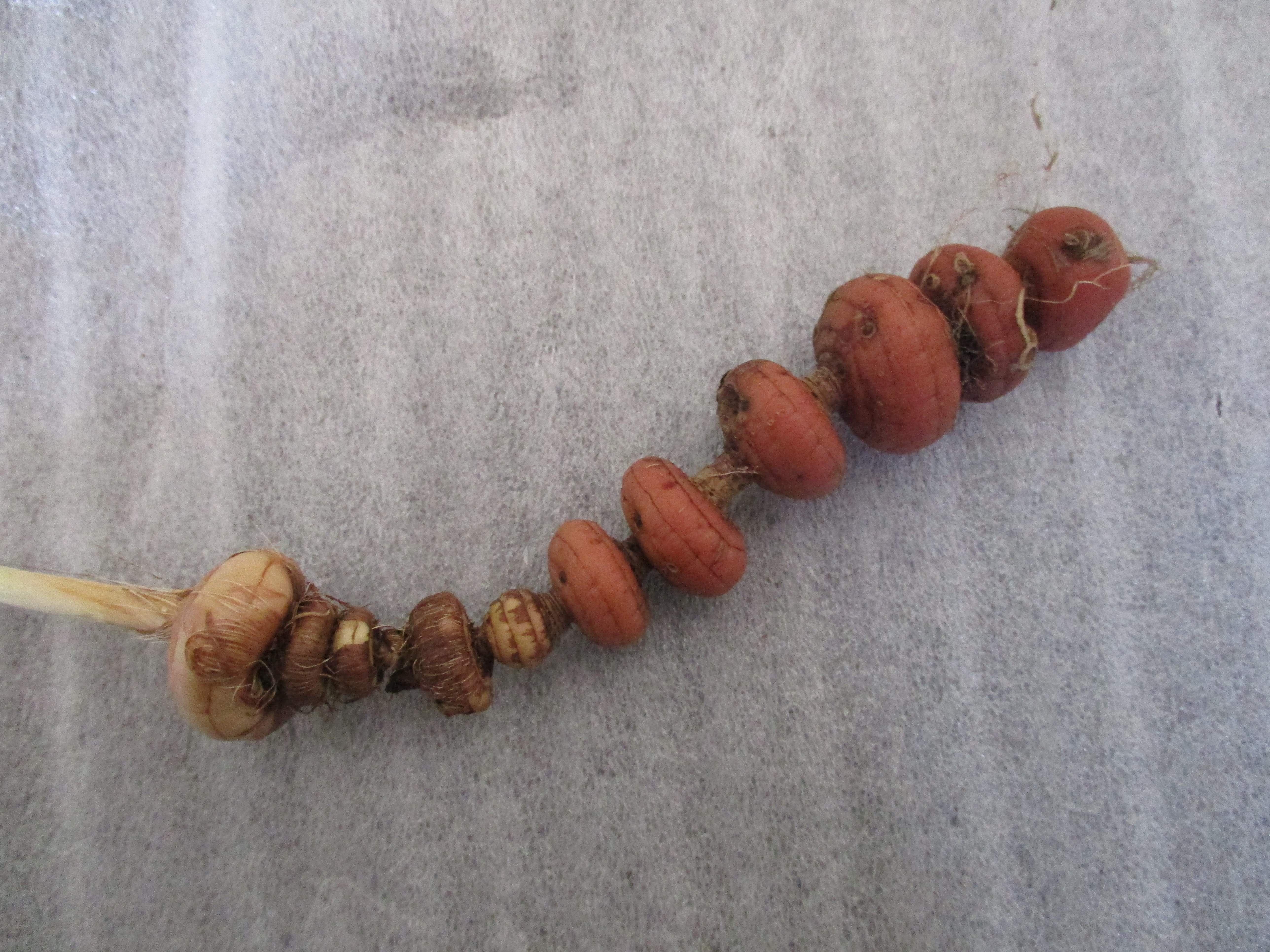
Montbretia showed up here several years ago. Of course, it did not take long for it to get very established. It is too shady for bloom, but not shady enough to inhibit vegetative proliferation. Those nasty stolons get everywhere, and grow into corms. They are so aggressive that they exclude English ivy! Seriously, they are the only species we know that can crowd out English ivy!
Some consider Montbretia to be the the genus name. Some consider it to be a common name for the genus of Crocosmia, or for a particular intergeneric hybrid. What is now so aggressively naturalized here might be Crocosmia paniculata. I really do not know. The few rare and sporadic blooms look like what I am familiar with in other landscapes, with branched inflorescences.
Now, I am aware of how aggressive their stolons are…
‘Six on Saturday‘ is a meme that I participate in on Saturday morning. The link below explains that participants post pictures from our gardens, landscapes, greenhouses, or wherever we find subjects of horticultural interest. You might post six of your own.
I posted this second set of six this afternoon both because these six pictures will be outdated by next Saturday, and because they are more relevant to horticulture than the six that I posted this morning.
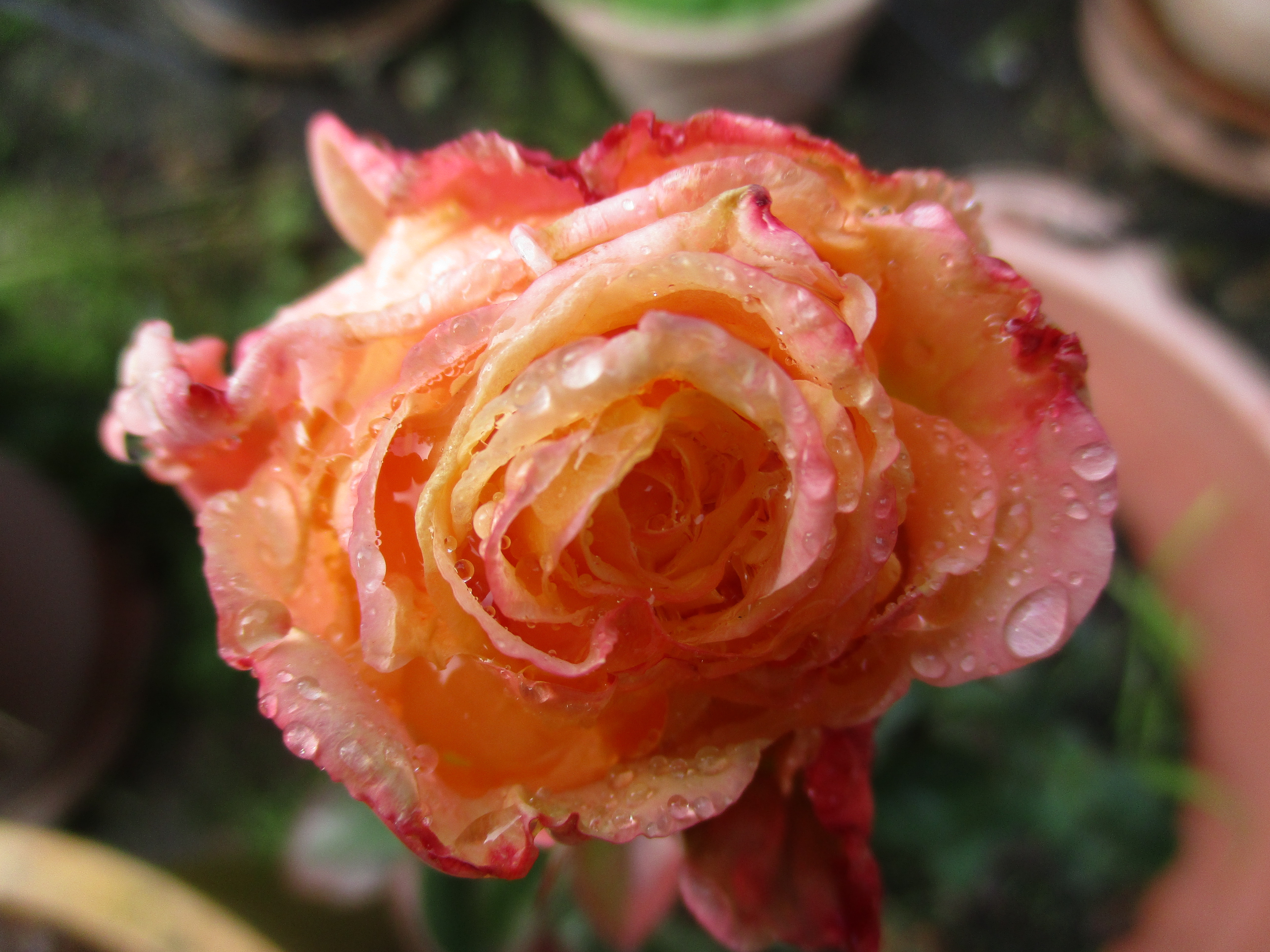
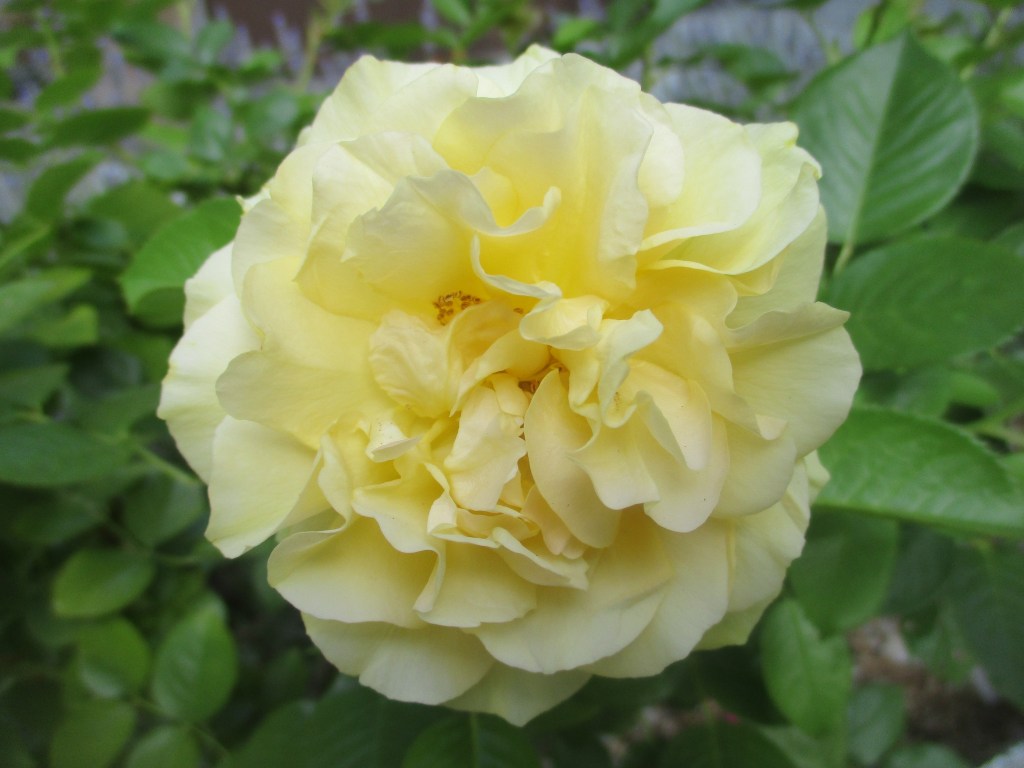
1. Rose – Unless there is a rose out there somewhere that I neglected to prune, this is the last rose bloom of last year. It got pruned after I got this picture. Even here, roses get to hibernate.
2. Wallflower – Does it look like it cares that it is the middle of winter? Actually, from a distance, it is more obvious that sporadic bloom is somewhat subdued. It just…
Unusually rainy weather here has been quite a problem. Flooding, mudslides and falling trees have kept us all very busy at work. They have also interfered with the utilities, such as electricity, cable and internet service. A message on my telephone informed me of the service interruption that prevented me from sending pictures to myself to share here on Six on Saturday. I intended to simply share pictures that were illustrations for my other blog, but as I was writing about them, I realized that I already shared them on Christmas Eve. I therefore have no more than these recycled pictures. More pictures from here are in the news.
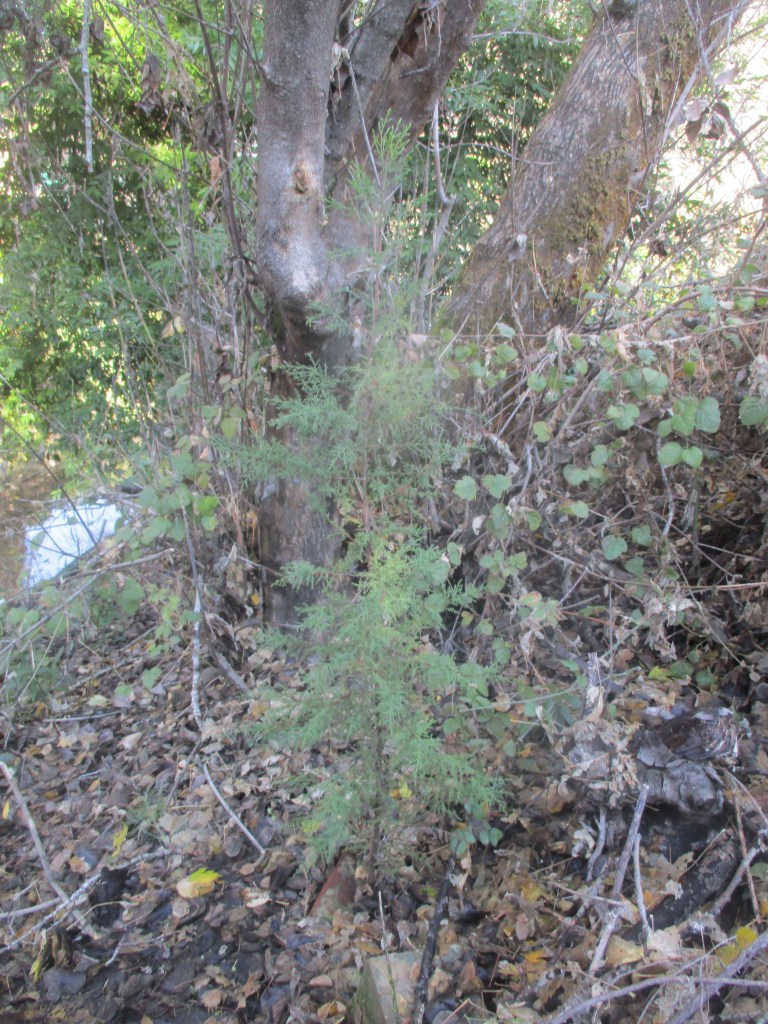
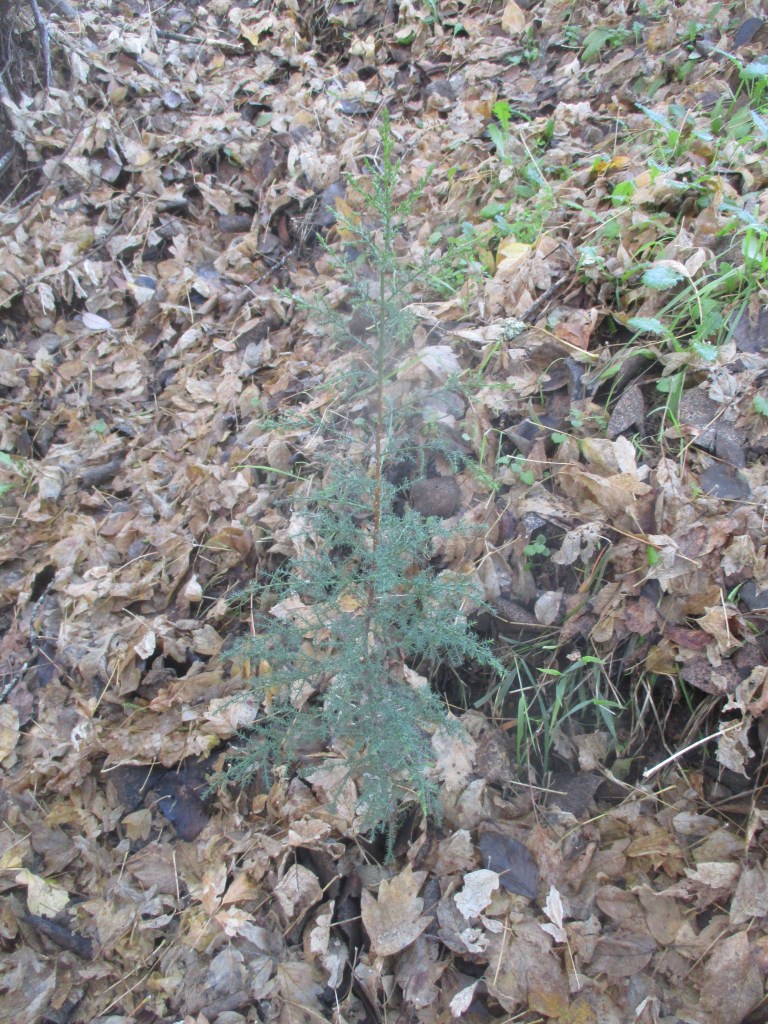
1. The Steven Michael Ralls Memorial Tree was planted two and a half years ago, so it is the oldest Monterey cypress within this Memorial Grove, and is now almost six feet tall.
2. The David Noel Riddell Memorial Tree was installed with #3 below, only about a year ago. It is the smallest of the three cypress trees, and is only slightly taller than three feet.
3. The David Fritiof Lindberg Memorial Tree was installed a few days after David Fritiof Lindberg passed away on November 13, 2021, with #2 above. It is only four feet tall now.
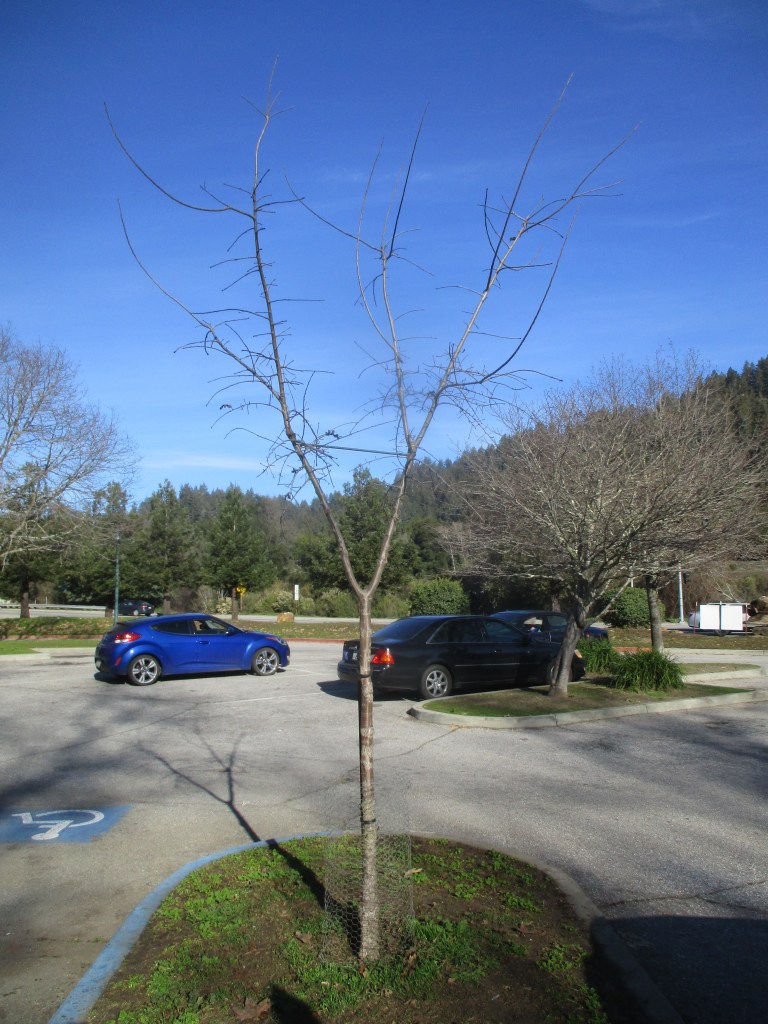
4. The Memorial Tree in Felton Covered Bridge Park is actually one of several Memorial Trees within its landscape. It is doing well, but needed a bit more pruning for clearance.
5. It looks scrawny after pruning, but will fluff out splendidly through spring. It may not need pruning for clearance again for quite a while. By that time, it will be too big for me.
6. Sunny weather is finally in the forecast. Rain is normally appreciated in our chaparral climate, but has been excessive for too long. It has not rained this much in four decades.
The fifty or so specie of yucca that are native to North and Central America are horticultural nonconformists. Like most of the related agaves and aloes, they are classified as succulents; but none have succulents leaves. Their stems store moisture, but are about as succulent as trunks of palm trees. Actually, many are classified as trees because they develop heavy and sculpturally branched trunks, but they are really just big herbaceous perennials that get very old.
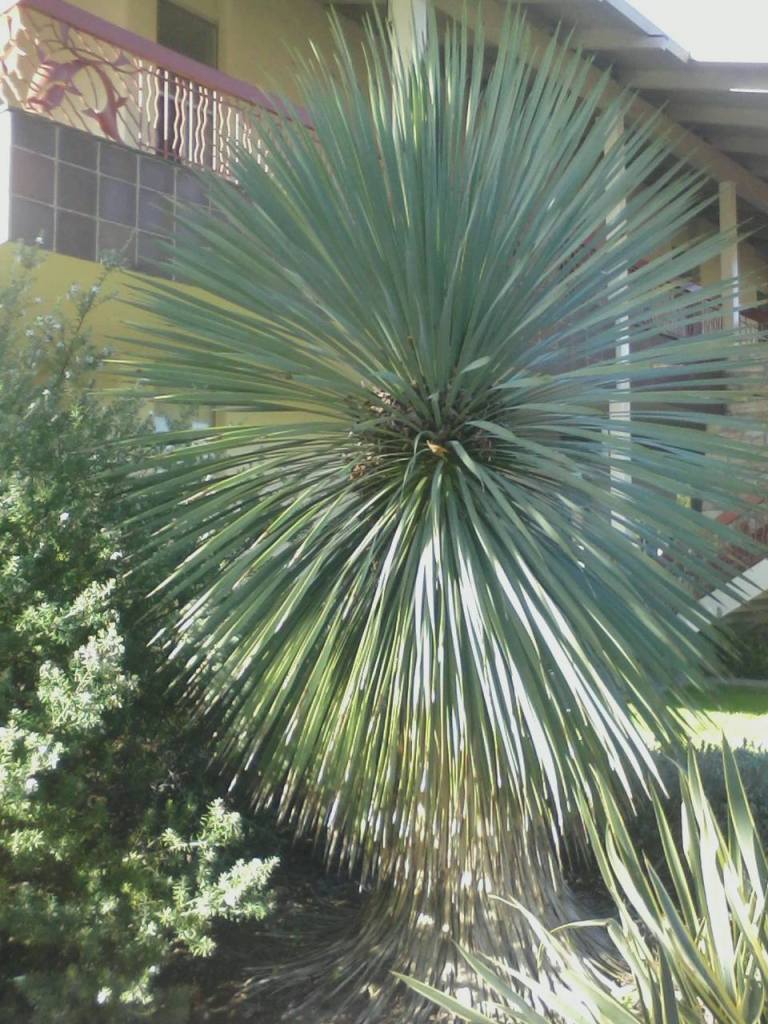
From the Big Bend region of Texas and adjoining Mexico, beaked yucca, Yucca rostrata, happens to be one of the yuccas that develops a trunk, but grows so slowly with such billowy foliage, that it respected more as a striking foliage plant. The largest and oldest plants get no larger than fifteen feet tall and rarely develop one or very few branches. Most are less than ten feet tall with single but bulky symmetrical foliar rosettes. The individual grayish leaves are limber and narrow, but very abundant. ‘Sapphire Skies’ has even more striking bluish foliage.
As if the excellent foliage were not enough, mature beaked yucca blooms with small white flowers on big spikes nearly two and a half feet tall. Spikes can appear through winter and are typically finished blooming by spring, before summer dormancy, but do not seem to be too devoted to any particular schedule.
Beaked yucca is less common than it should be; perhaps because it is difficult to grow in nurseries. Besides, they are not for every garden, and are very likely to rot where they get watered as frequently as most other plants get watered. They do not mind if watered perhaps a few times through summer, but are more than satisfied with what they get from rainfall.
(This article posted in 2012, so much of its information is now outdated.)
How could so many public gardens throughout the area get all the work that needs to be done in winter? There are roses to prune in both of the Rose Gardens of San Jose. Fruit trees in the Historic Orchard of Guadalupe Gardens need to be pruned. Even Village Harvest of Palo Alto needs to collect citrus fruits that ripen through winter. All this works gets done only because there are so many generous volunteers to help.
The gardens of Filoli are fortunate to get so many volunteers through the year. Nonetheless, the extra pruning that the deciduous fruit trees need in winter reminds us that more volunteers are often welcome. Not only are there big collections of modern and classic apple and pear trees at Filoli, but many are espaliered onto trellis-like supports. (‘Espalier’ trees are pruned onto trellises, fences, walls or other lateral supports, so that they can attain considerable width without much depth from front to rear, conserving space.)
The New Volunteer Recruitment Open House at Filoli is not until January 21. However, those interested in attending must register in only the next few days, before 4:00 p.m. on January 13! Registration can be arranged at volunteer@filoli.org or by telephoning 650 – 364 8300 extension 300, and leaving one’s name and daytime telephone number. The New Volunteer Recruitment Open House will be from 9:30 to 11:30 a.m. on January 21, at the Visitor and Education Center of Filoli, located at 86 Canada Road in Woodside.
Guests will learn about the many different opportunities to volunteer. More than 1,200 volunteers presently help sustain Filoli in areas such as house and garden self guided docents, member services, visitor services, the Ambassador Program, the Cafe and the Garden Shop.
Besides the sixteen acres of English Renaissance gardens that display an expansive horticultural collection, the 654 acre Filoli property includes a 36,000 square foot residence furnished with an extensive collection of 17th and 18th century English antiques, and is recognized as one of the finest remaining country estates of the early 20th century. More information can be found at http://www.filoli.org.

 Where are the cedars?

 Is this part of the secret to their success?