Horticulturists are by nature, nonconforming. I happen to find it difficult to conform to what makes us nonconforming. Trends are fleeting. Old technology that has worked for decades or centuries is still best. Although I am not totally against chemicals, I find that almost all are unnecessary for responsible home gardening. Pruning is underappreciated, and fixes many problems.
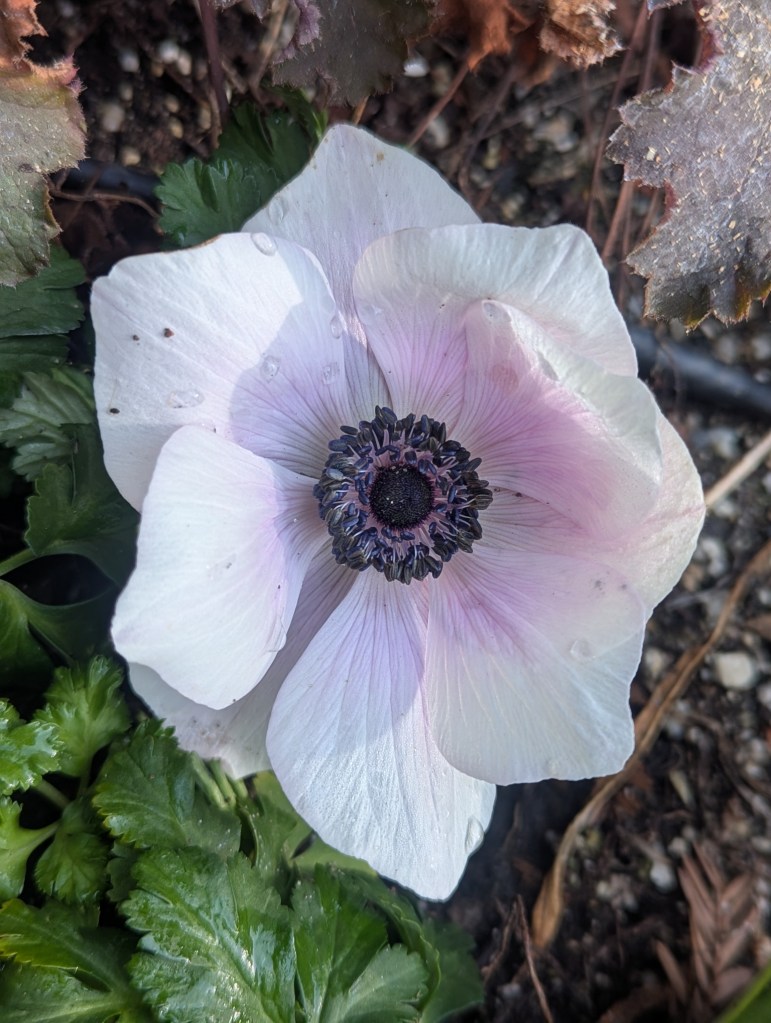
This is not a typical warm season annual. Nor is it a typical cool season annual. Actually, there really is nothing typical about Anemone, Anemone coronaria. It is a spring bulb that is really a tuber that goes into the ground in autumn. Yet, it is more available blooming in four inch pots in spring. It functions as a spring annual because it blooms as winter ends.
Anemone are quite diminutive. Basal rosettes of only a few deeply lobed leaves are less than eight inches tall. Flowers of taller sorts stand above their foliage, but less than a foot high. They can bloom between March and May. Nursery stock blooms earlier than plants that grow from bulbs in a garden. Growth eventually slows as weather warms in summer.
Floral color ranges through red, white, blue, pink and purple. Flowers mostly have black centers. White flowers may have green centers. Some varieties bloom with semi-double or double flowers, or flowers with two colors. Most flowers are about three inches wide or slightly wider. Anemones are good cut flowers; but cutting deprives the garden of bloom.
Cool season annuals will probably finish sooner than they typically do this season. They do not enjoy the unseasonably but pleasantly warm and dry weather. It accelerates their brief life cycles. Fortunately, warm season annuals, or summer annuals, will be happy to replace them. They are the bedding plants that provide seasonal color until next autumn.
It is still too early for some types of warm season annuals. Several prefer to wait for more sustained warm weather with warmer nights. Petunia and sunflowers can wait until April or even May. This is only the beginning of the season, when the process of replacement begins. Some cool season annuals will not require replacement until petunias are ready.
For those who grow warm season annuals from seed, the season began notably earlier. Some seed starts within a greenhouse, two or three months prior to planting in a garden. For example, seed for petunias that go into the garden in April should be started already. Some annuals, such as nasturtium, should grow from seed sown directly into the garden.
Otherwise, the most popular warm season annuals begin in cell packs. Lobelia, alyssum and wax begonia are already available. Petunia and impatiens will become available as the season progresses. Many warm season annuals are available but more expensive in four inch pots. For substantial areas of bedding, cell pack annuals cover more uniformly.
Many warm season annuals are actually perennials that deteriorate through winter. Wax begonia can actually survive through winter to regenerate about now. Some cool season annuals can similarly survive through summer. There is no need, for example, to remove English primrose from mixed plantings. They can bloom late, and regenerate for autumn.
The same marigold that were popular for autumn are popular again for the end of winter. Ageratum may also be available already. Zinnia and annual salvias should be available a bit later in the season. So should cosmos and celosia. Bedding dahlia and calibrachoa may become available later, but in four inch pots. Coleus is a foliar warm season annual. Gomphrena and annual vinca have become uncommon. Ranunculus and anemone can perform as annuals.
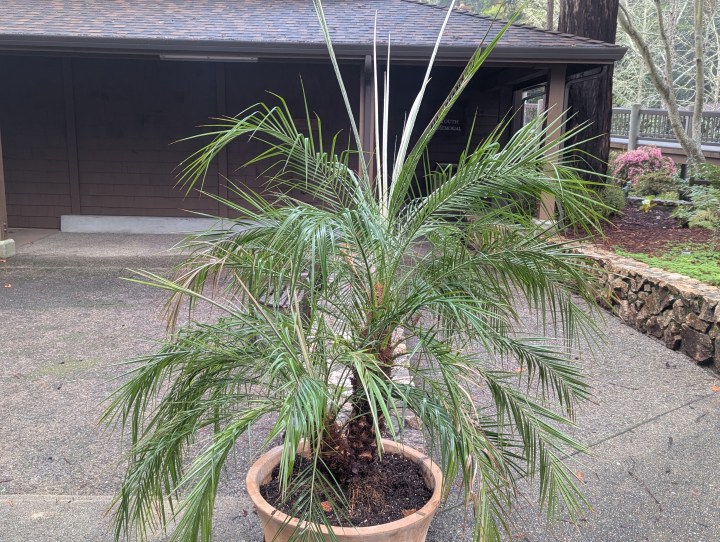
No theme was planned for these six random pictures that I took last Wednesday after we relocated the pygmy date palms. Daphne, pigsqueak and azalea were featured somewhat recently already.
1. Phoenix roebelenii, pygmy date palm, which is one of a pair, is included in my six this week only because relocating them, in their large and heavy pots, was such a major task.
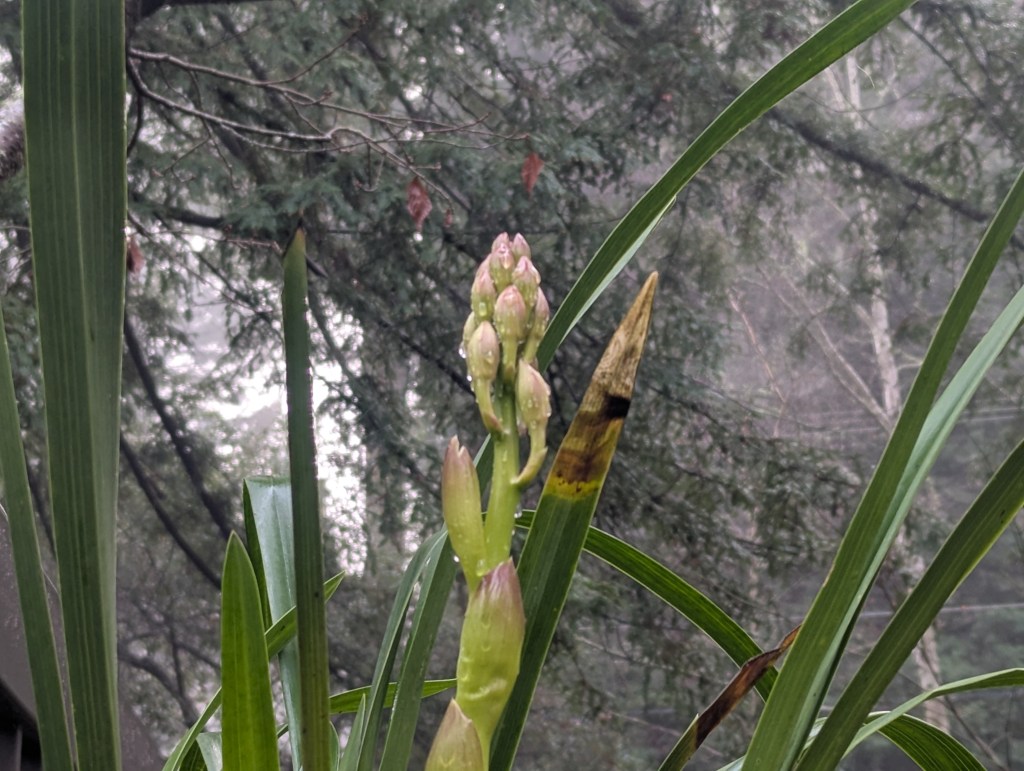
2. Cymbidium spp., orchid is not blooming yet, but is working on it. No such bloom was expected, since this formerly large specimen was divided thoroughly after its last bloom.
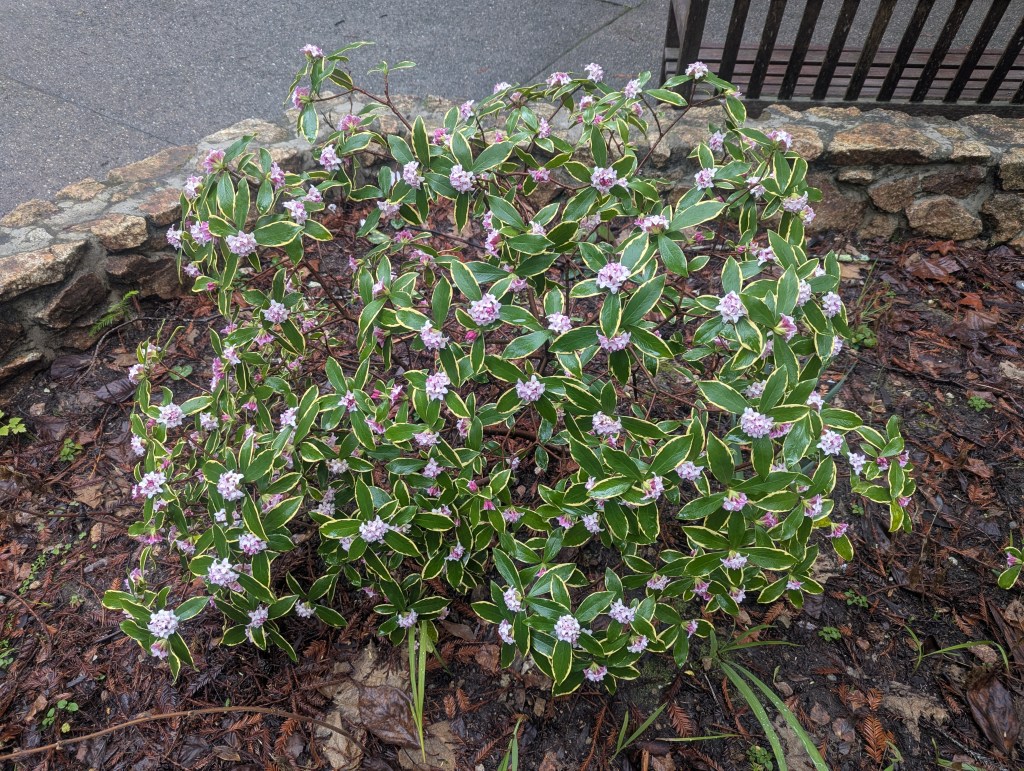
3. Daphne odora ‘Variegata’, daphne was featured in my Six on Saturday earlier, but this picture demonstrates how large one of several specimens is. It is apparently happy here.
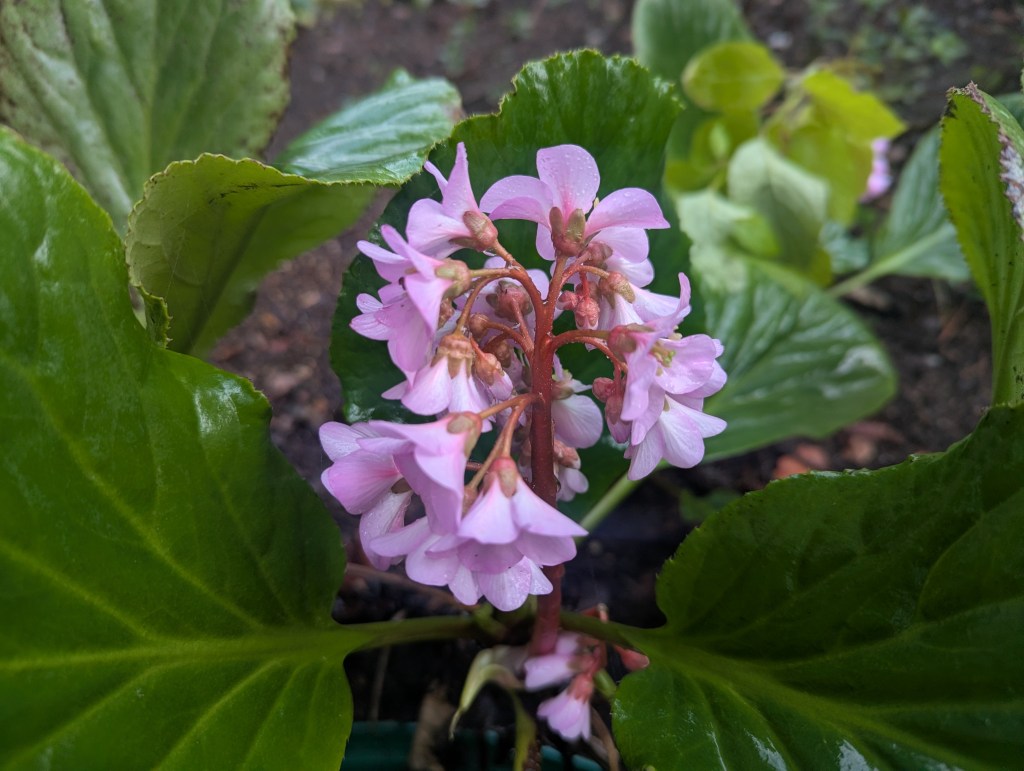
4. Bergenia crassifolia, pigsqueak bloomed with a few premature flowers for December, but is blooming more on time now. The flowers are nice whenever they choose to bloom.
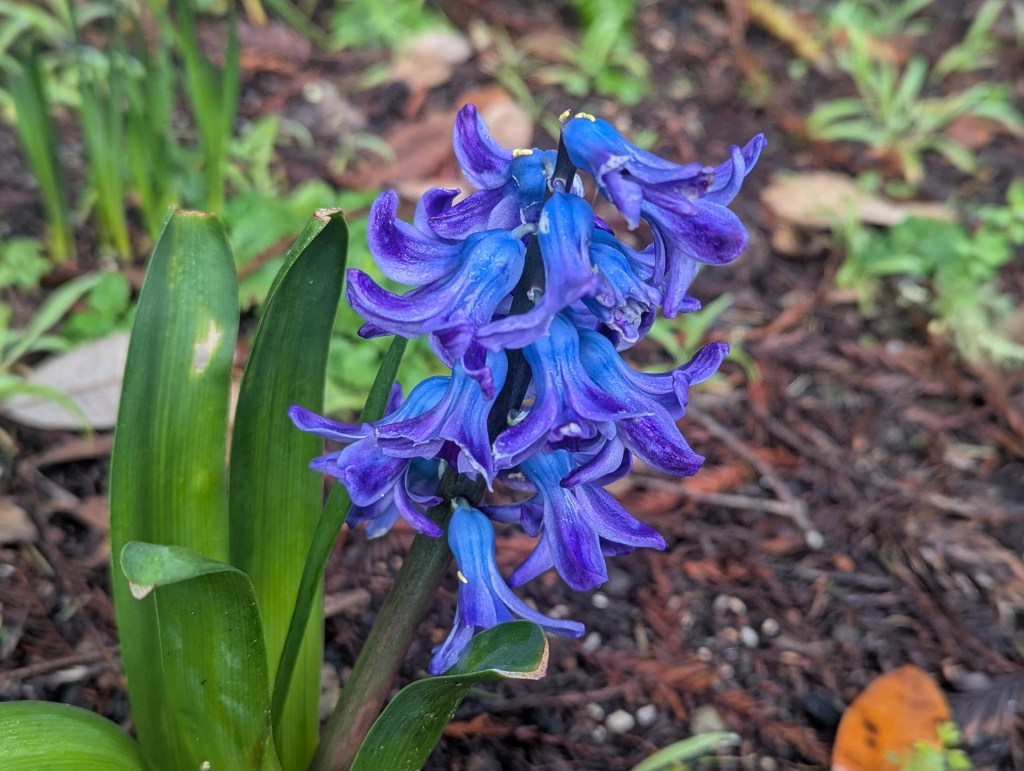
5. Hyacinthus orientalis, hyacinth has been reliably perennial for several years, which is impressive. The winter chill here does not seem to be adequate for it to bloom so nicely.
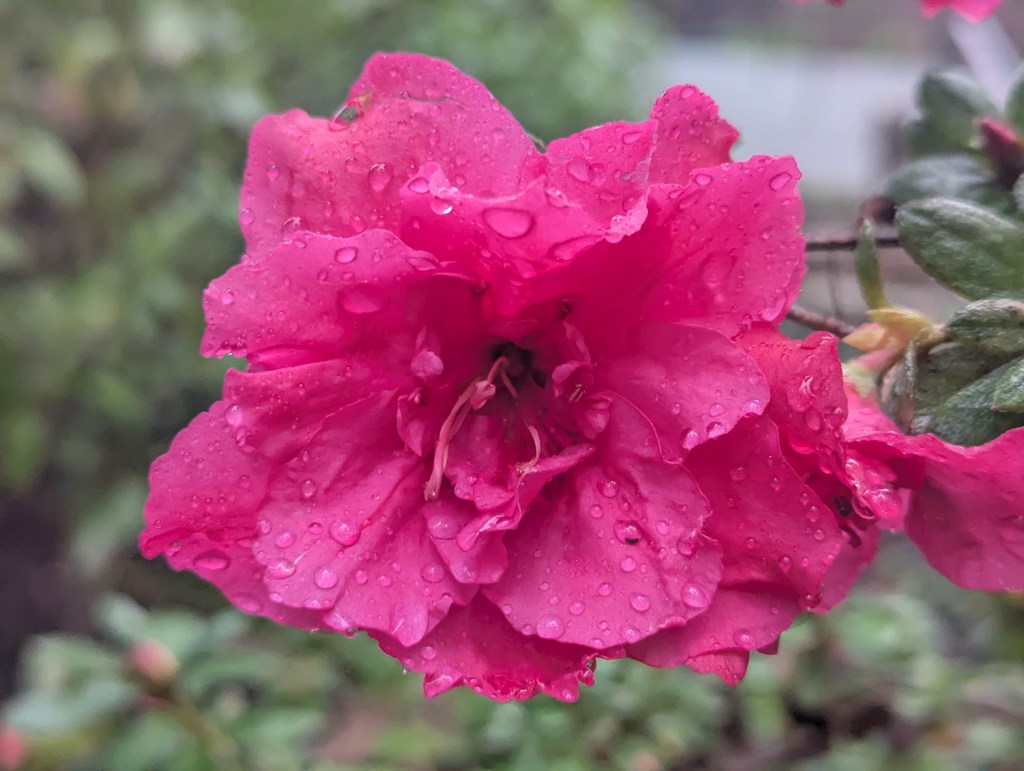
6. Rhododendron spp., azalea started blooming prematurely nearly two months ago and continues to bloom through winter. Its bloom duration compensates for its off schedule.
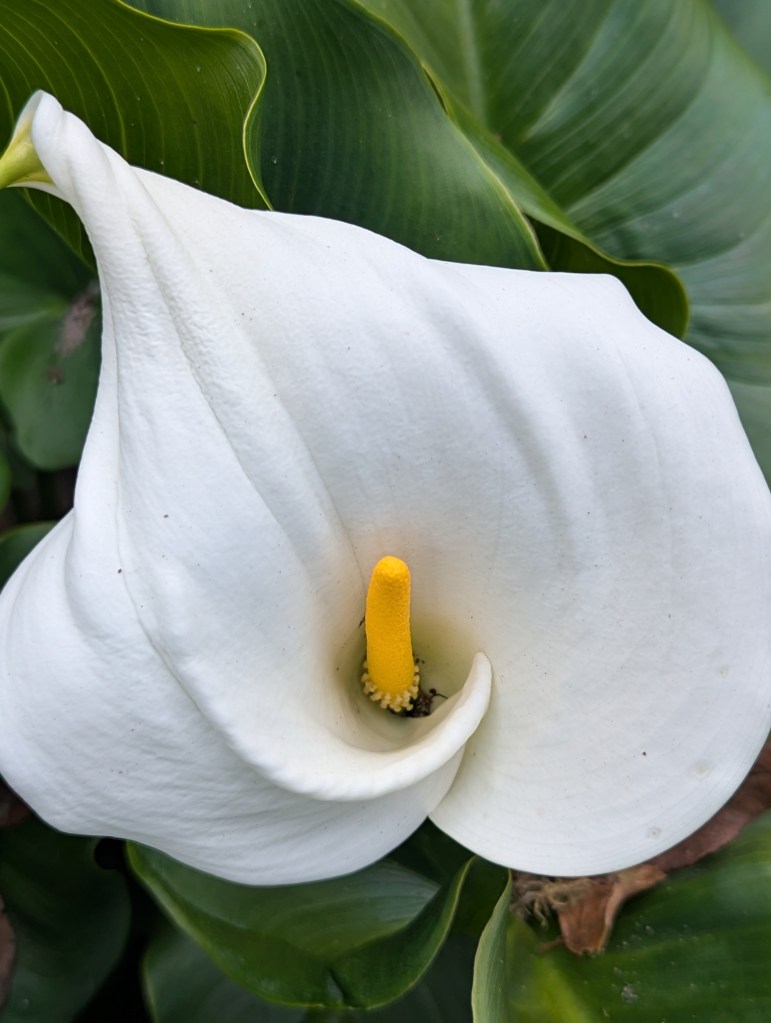
With few exceptions, common calla, Zantedeschia aethiopica, blooms exclusively white. ‘Green Goddess’ blooms with green stripes on bigger and more open blooms. ‘Pink Mist’ blooms with a pale pink blush at the bases of its blooms. More colorful summer calla are Zantedeschia elliotiana, which is a different species. Cultivars of common calla are rare.
Calla is an herbaceous perennial that grows from thick rhizomes. It can be invasive, and difficult to eradicate once it gets established. Its basal leaves stand two or three feet high or a bit higher if shaded. More than the lower half of their height is petiole. The upper leaf portion is broad and arrow shaped. All growth is rather spongy and soft, and tears easily.
Callas bloom mostly sporadically for spring, summer and autumn. Mature colonies often bloom with more profuse phases. New rhizomes do not bloom for a few months, though. Individual blooms consist of a solitary flaring spathe surrounding a spike shaped spadix. Compressed flowers adhere tightly to the yellow spadix. Callas are splendid cut flowers.
Spring bulbs go into their gardens through autumn because they enjoy the chill of winter. Summer bulbs do not. They instead prefer to wait until after the coolest of winter weather. If they start too early, some might decay in cool and damp soil before they begin to grow. Some may grow while the weather is warm only to incur damage from later cool weather.
However, they should not wait for too long. Summer bulbs dislike winter but enjoy spring. Those that start about now will be ready for it. By the time their new growth emerges from the soil, there will be no concern of frost. Although most generate only vegetative growth through spring, they bloom for summer. Many continue until frost or the following autumn.
Summer bulbs, like spring bulbs, are merely dormant perennials. Only a few are actually bulbs, though. Most are corms, rhizomes or tubers. They produce new foliage and bloom while the weather is warm. Then, they go dormant as the weather cools for the following autumn or winter. Once in the garden, several types can stay and perpetuate indefinitely.
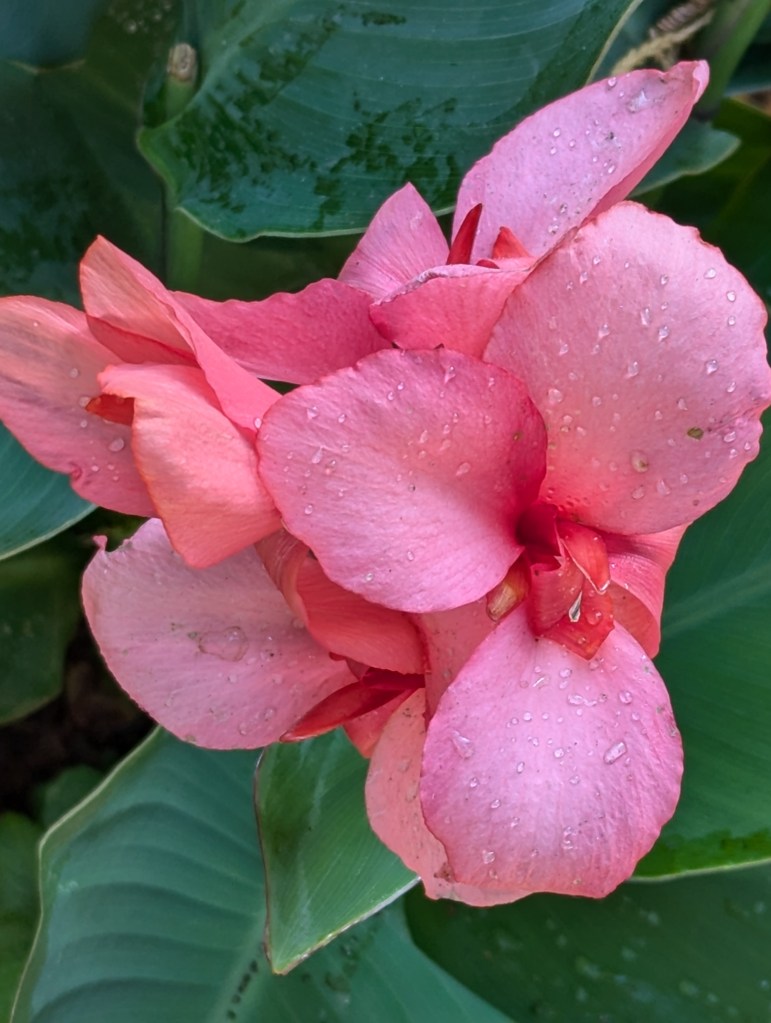
For example, new canna rhizomes might rot if they go into the garden too early in winter. However, after their first summer, they can survive in the garden through their next winter. Dahlias might also survive winter dormancy in the garden. However, they are more likely to survive if dug and stored for winter. Their tubers might return to the garden about now.
Summer bulbs that are actually bulbs or corms, such as gladiolus, generally bloom once. Dahlias grow from tubers, so bloom for a more extensive season. Summer bulbs that are rhizomes, such as gingers, may bloom once or sporadically. Gingers and crocosmia can eventually become invasive. However, gladiolus is rarely as sustainable as it should be.
Summer bulbs become available from nurseries as it becomes time to plant them. Some are available now, and more will become available as their season progresses. Dahlias, cannas and callas should be available growing in pots after early spring. Summer bulbs that proliferate a bit too much are easy to share. Many propagate very easily by division. Most perform as well within large pots and planters as they do in the soil.
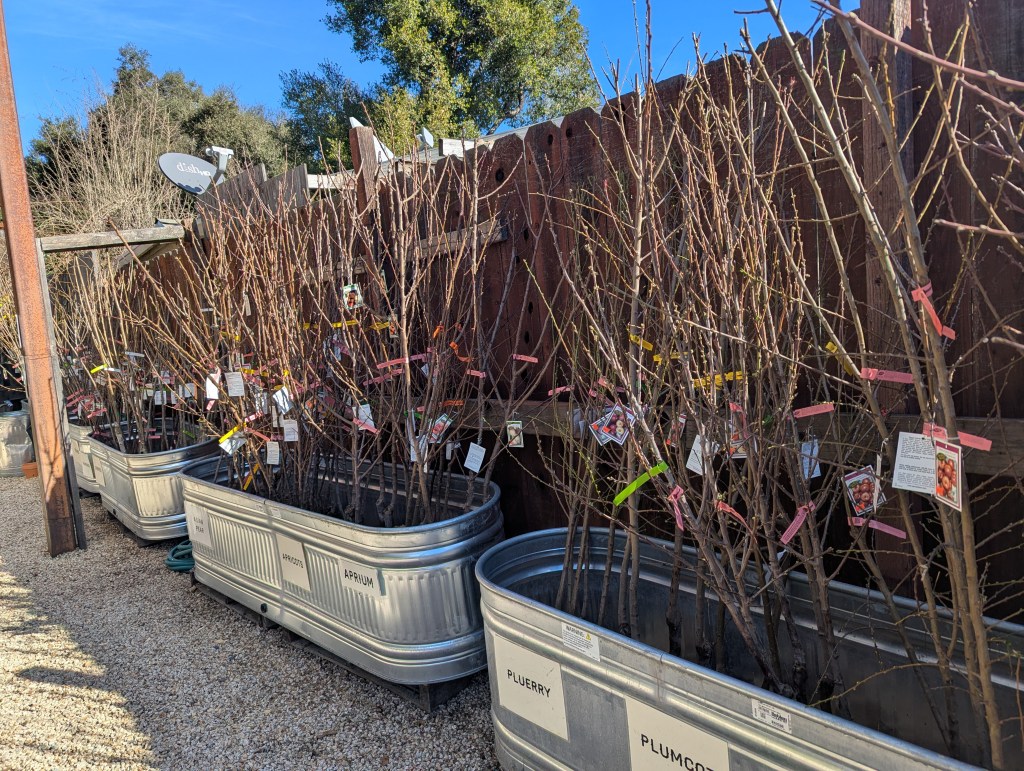
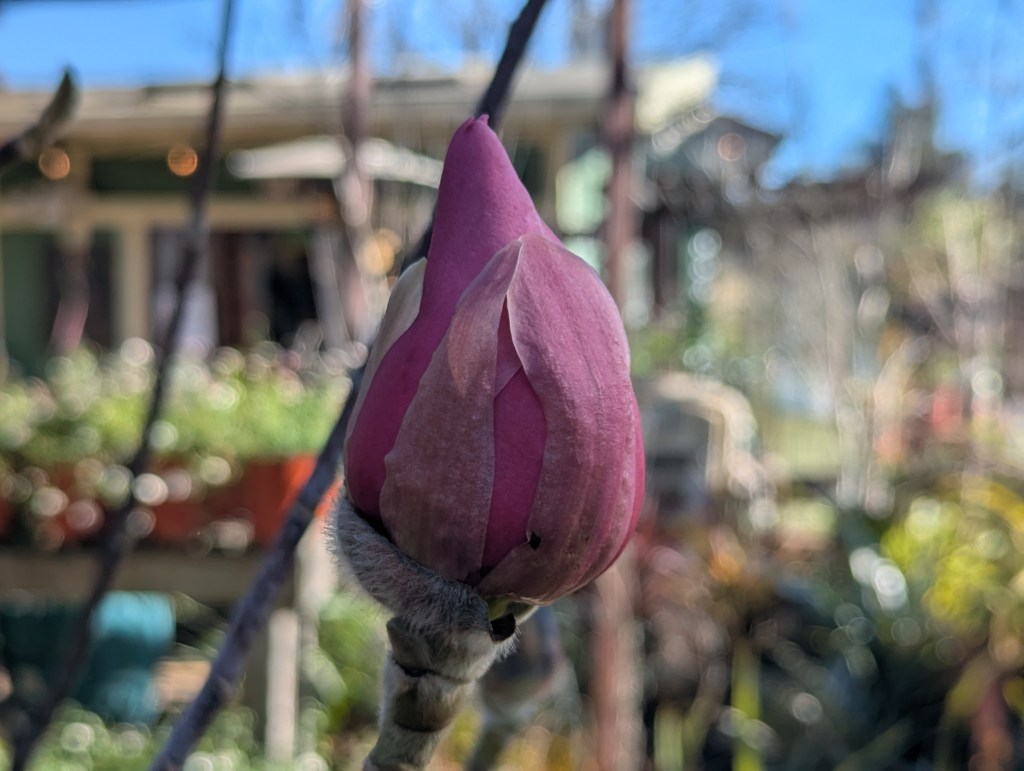
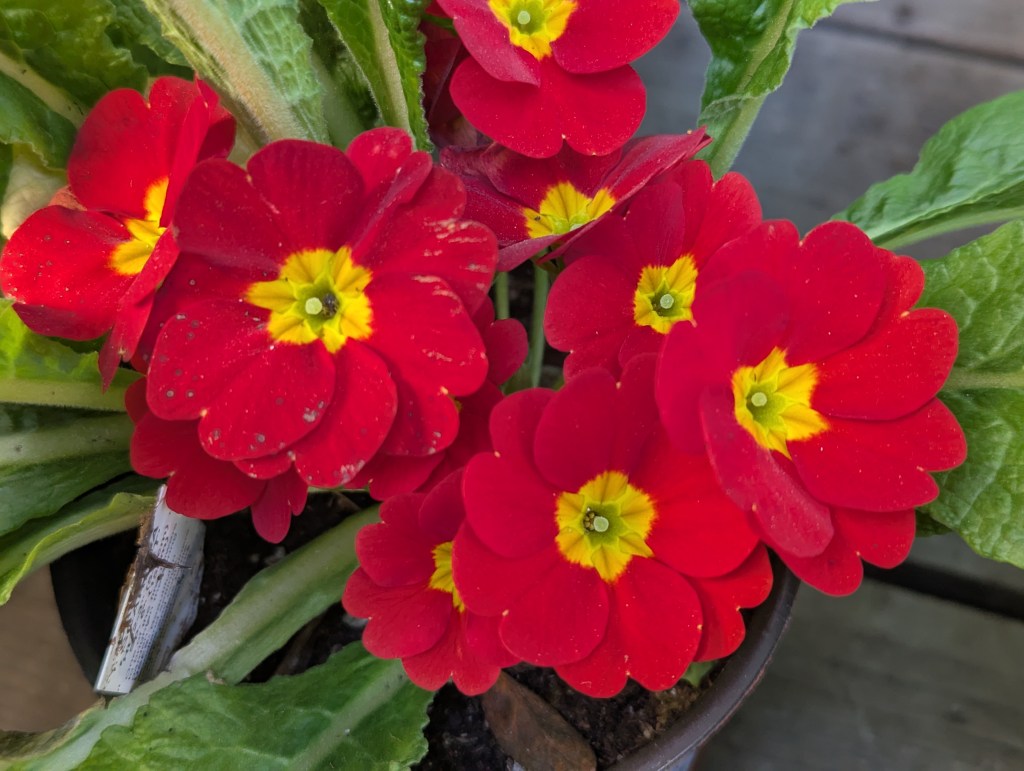
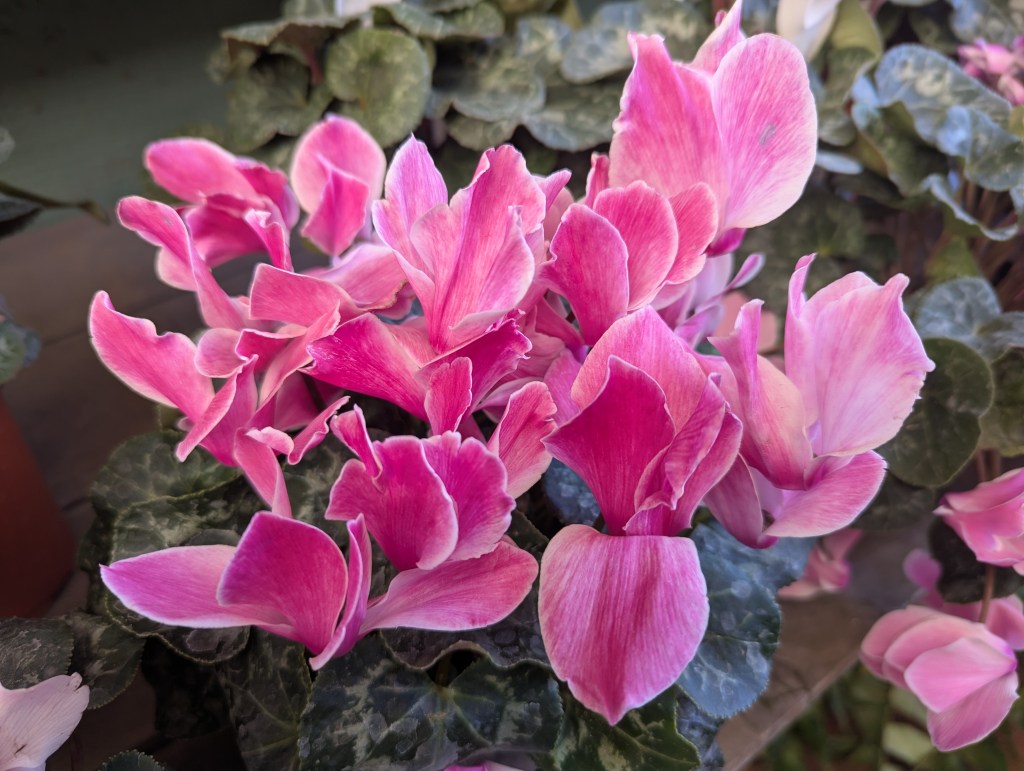
It is a long story, but to be brief, while waiting for a neighbor to finish at another errand, I visited a nursery and took these few pictures.
1. Bare root stock is too tempting. I must resist. I already have all of the fruit trees that I want. Almost all remained canned from last winter because I did not clear their orchard.
2. Magnolia soulangeana, saucer magnolia looks like it will be blooming soon. I suspect that these trees were field grown in heavy soil in Oregon. I refrained from investigating.
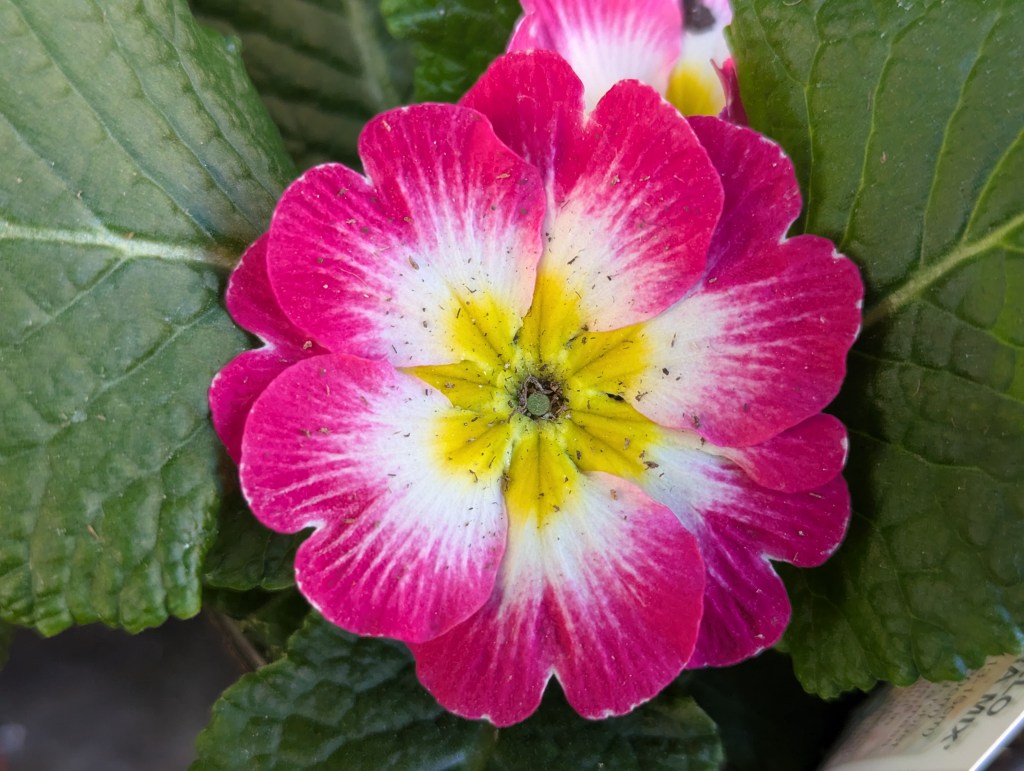
3. Primula vulgaris, English primrose no longer seems to be as common as its botanical name suggests. Perhaps I can learn to appreciate it again. Their colors are so cartoonish.
4. Cyclamen persicum, florist’s cyclamen is also easier to appreciate again when it is less cliche than it is as garish red and white Christmas decor. White is still my favorite color.
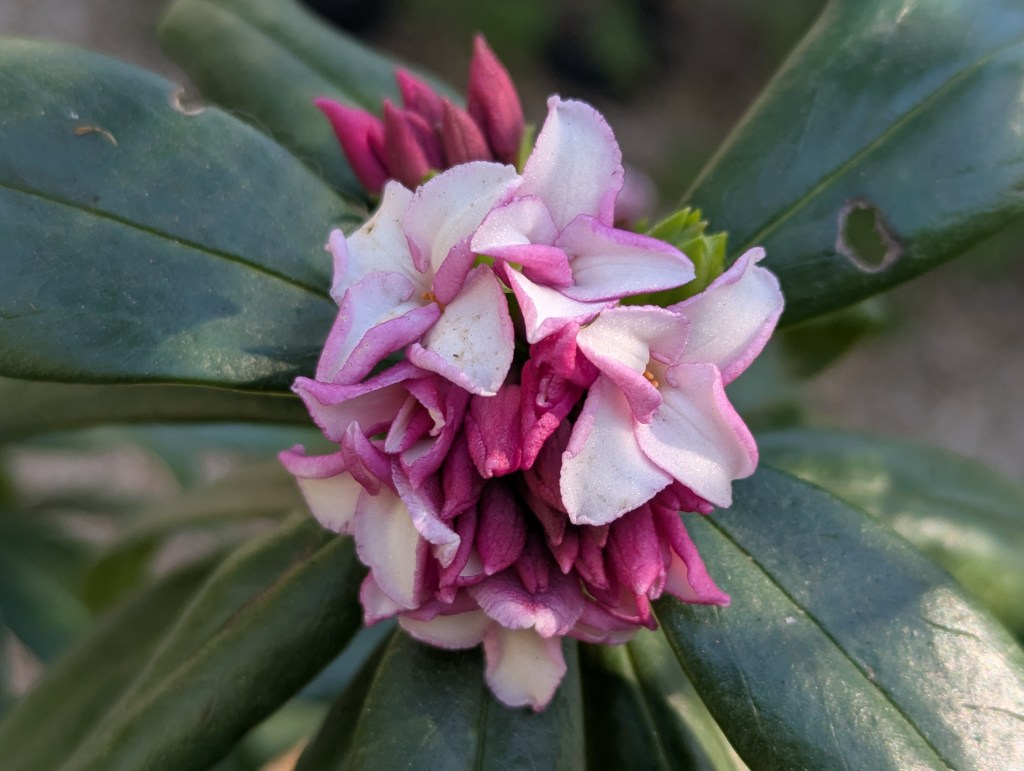
5. Daphne odora, daphne caught my attention initially by fragrance, and then by its lack of variegation. I wonder if it grows any more vigorously without variegation than with it.
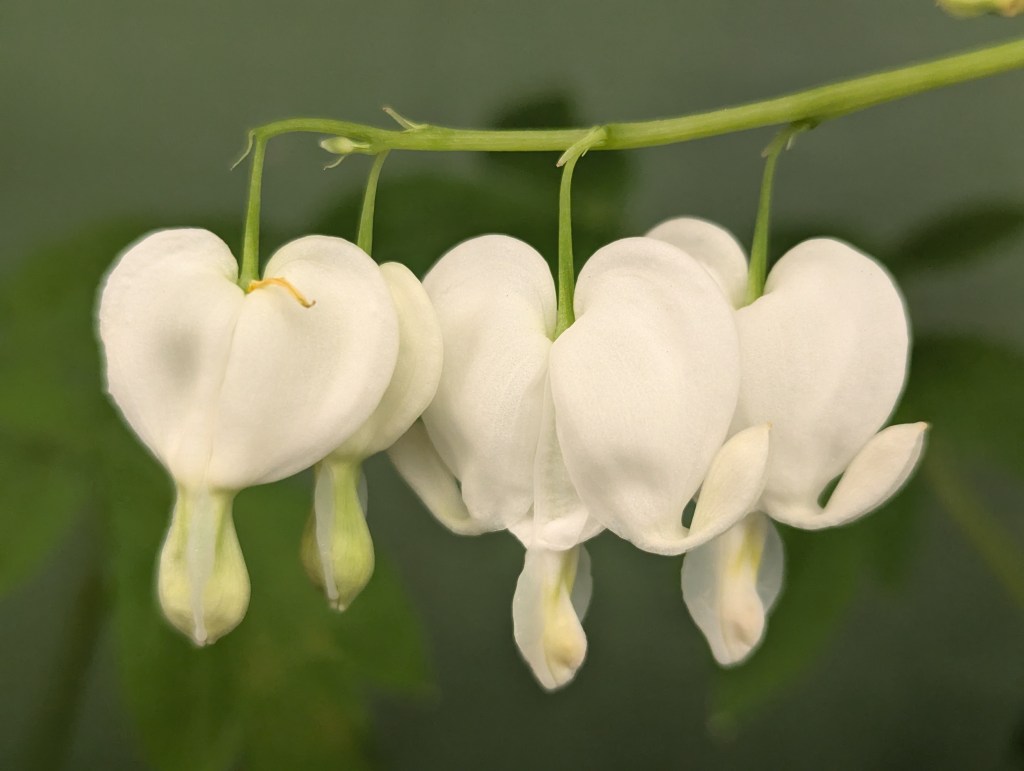
6. Lamprocapnos spectabilis, bleeding heart is not cliche in white like florist’s cyclamen is. I know nothing of this species, but I get the impression that it tolerates a bit of shade.
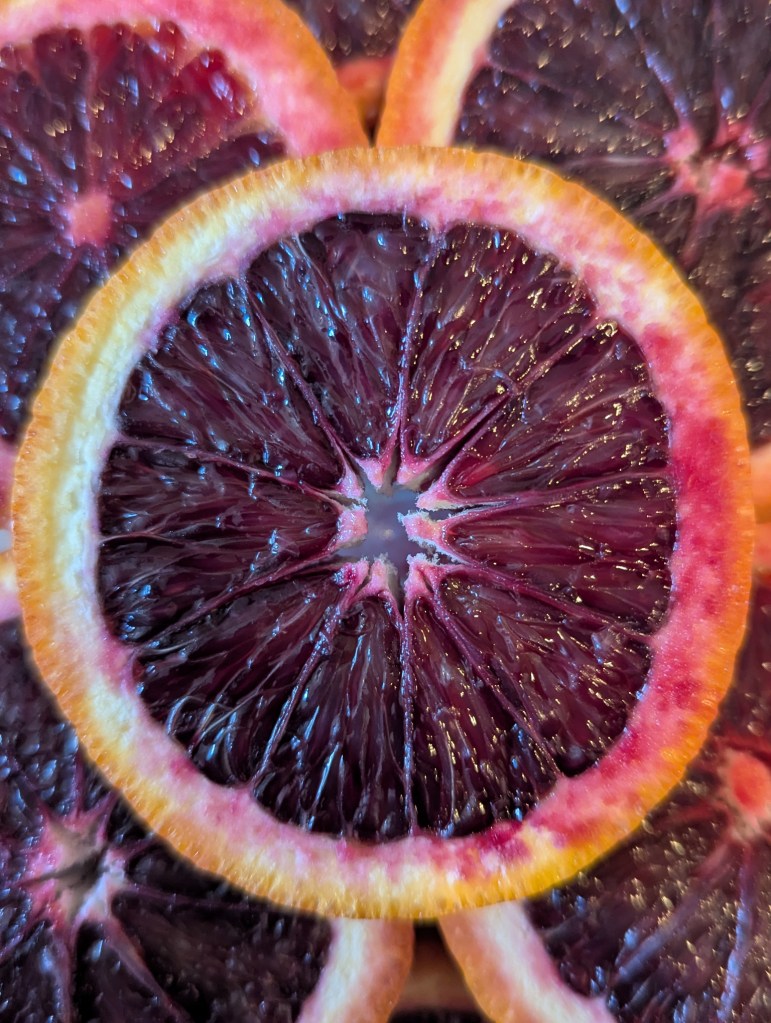
As weird as they seem, blood oranges are a class of common orange, Citrus X sinensis. Their fruit may resemble common sweet oranges externally, or may be blushed with red. Internally, the flesh exhibits red streaks or blotches, or is more uniformly garnet red. Cool autumn weather enhances red fruit color. ‘Tarocco’ may not develop any red color locally.
‘Sanguinelli’ is likely the most popular cultivar here. It produces relatively small fruits with peachy external blush. Their trees are relatively large and upright. ‘Moro’ produces larger unblushed fruits with darker and more uniformly red flesh. Their trees are relatively broad and low. While ‘Sanguinelli’ is more of a juicing orange, ‘Morro’ is more a dessert orange.
Blood oranges are quite popular in Europe, particularly within the Mediterranean region. Their flavor is more tart and berry-like than that of sweet oranges which are popular here. Blood orange trees are quite happy with the climates and soils here. They prefer regular irrigation while young, but become less demanding as they mature. Dwarf trees are most proportionate to gardens.
Planting and pruning of deciduous fruit trees are priorities for winter. Evergreen fruit trees are not as much of a concern. For them, planting and pruning should happen after winter. However, most citrus trees are most productive with their summerish fruit through winter. Oranges, lemons, limes, Mandarin oranges, grapefruit and more are ripening about now.
With the exception of Mandarin oranges, most citrus fruits are impressively durable. Most can last for months on their trees, which is likely why they seem so summerish. Mandarin oranges have loose skin, which causes them to oxidize faster than the others. ‘Valencia’ oranges, though, can linger for a year after ripening. They actually sweeten as they age.
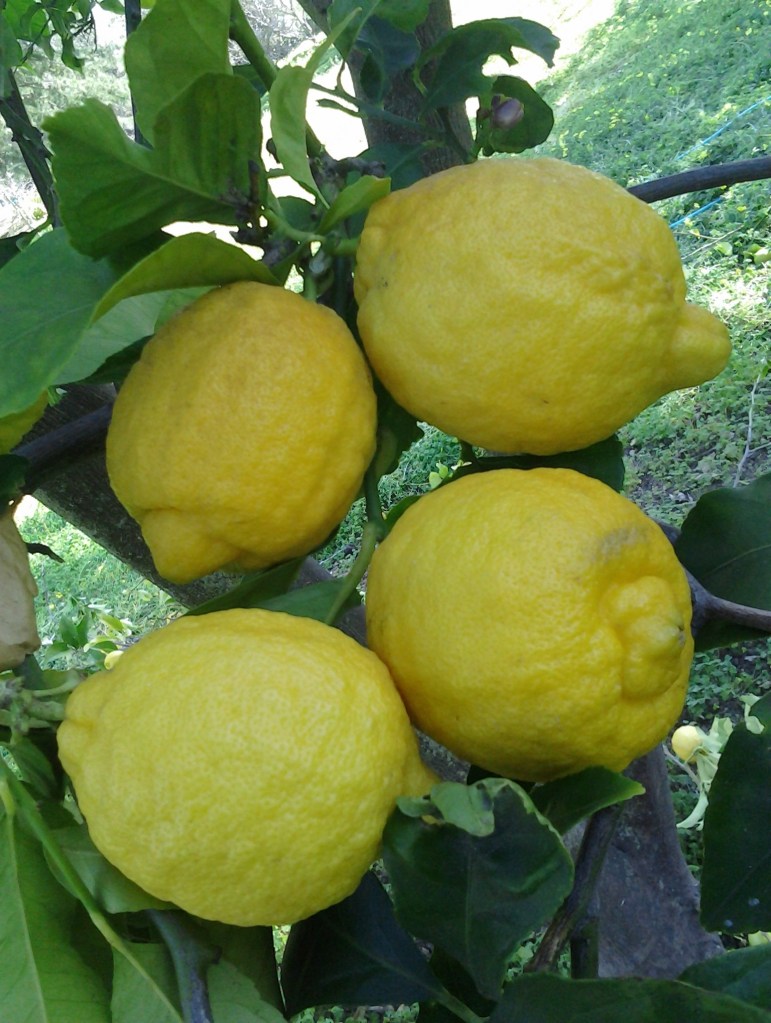
Also, some cultivars of citrus extend their production with sporadic fruiting. While ‘Lisbon’ lemon fruits only for winter, ‘Eureka’ lemon fruits more sporadically. ‘Eureka’ is actually a cultivar or cultivated variety of ‘Lisbon’. Although a bit less productive in season, ‘Eureka’ produces several fruits out of season. It rarely disappoints by failing to provide a few fruit.
Oranges and lemons are the most familiar of citrus. They are surprisingly diverse though. ‘Meyer’ lemon is almost as acidic as other lemons, but with a richer flavor like an orange. Most oranges are dessert oranges for eating out of hand, but ‘Valencia’ is for juice. Blood oranges are for juicing, but ‘Moro’ is a dessert orange. Sour oranges are for marmalades.
Mandarin oranges that developed in the Americas formerly classified as tangerines. Now they seem to qualify as Mandarin oranges, like more traditional Mandarin oranges. They collectively might be the most diverse class of popular citrus. More cultivars of Mandarin orange are available than the others. ‘Rangpur’ lime is actually a sour Mandarin orange.
There is so much variety among citrus. Besides oranges, lemons and Mandarin oranges, there are too many to list. Grapefruit, limes kumquats, pomelos, calamondins and citrons are a few examples. Limequats are hybrids of limes and kumquats. Tangelos are hybrids of grapefruit and Mandarin oranges. Orangequats are hybrids of oranges and kumquats.
 Tony Tomeo