Horticulturists are by nature, nonconforming. I happen to find it difficult to conform to what makes us nonconforming. Trends are fleeting. Old technology that has worked for decades or centuries is still best. Although I am not totally against chemicals, I find that almost all are unnecessary for responsible home gardening. Pruning is underappreciated, and fixes many problems.
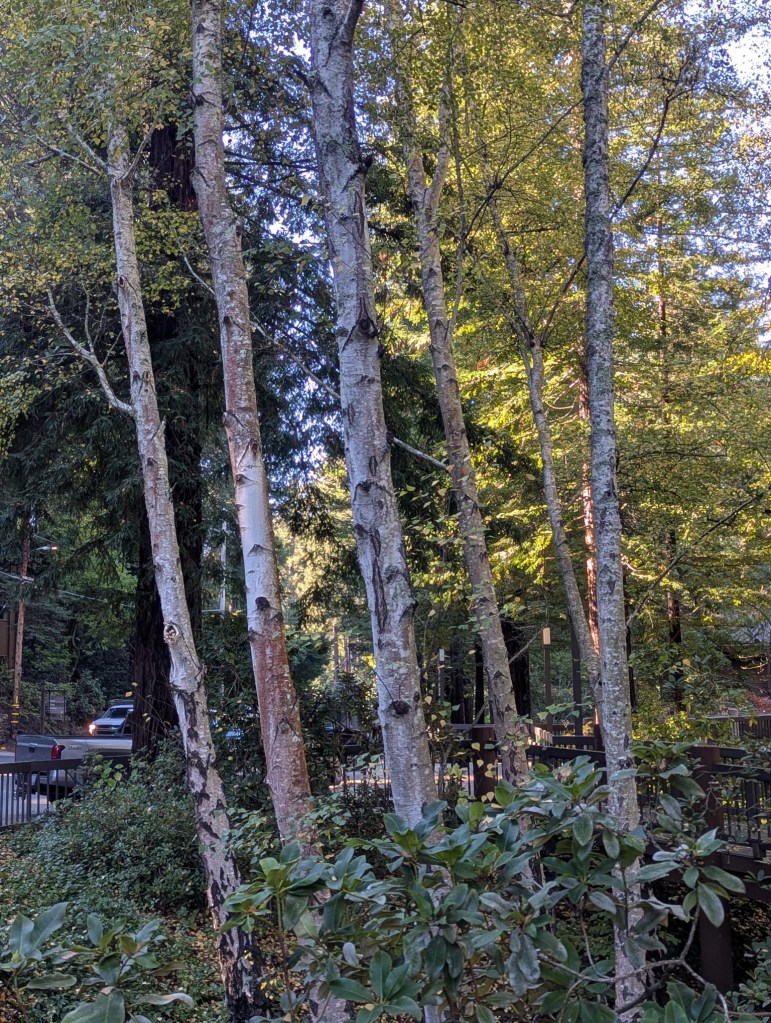
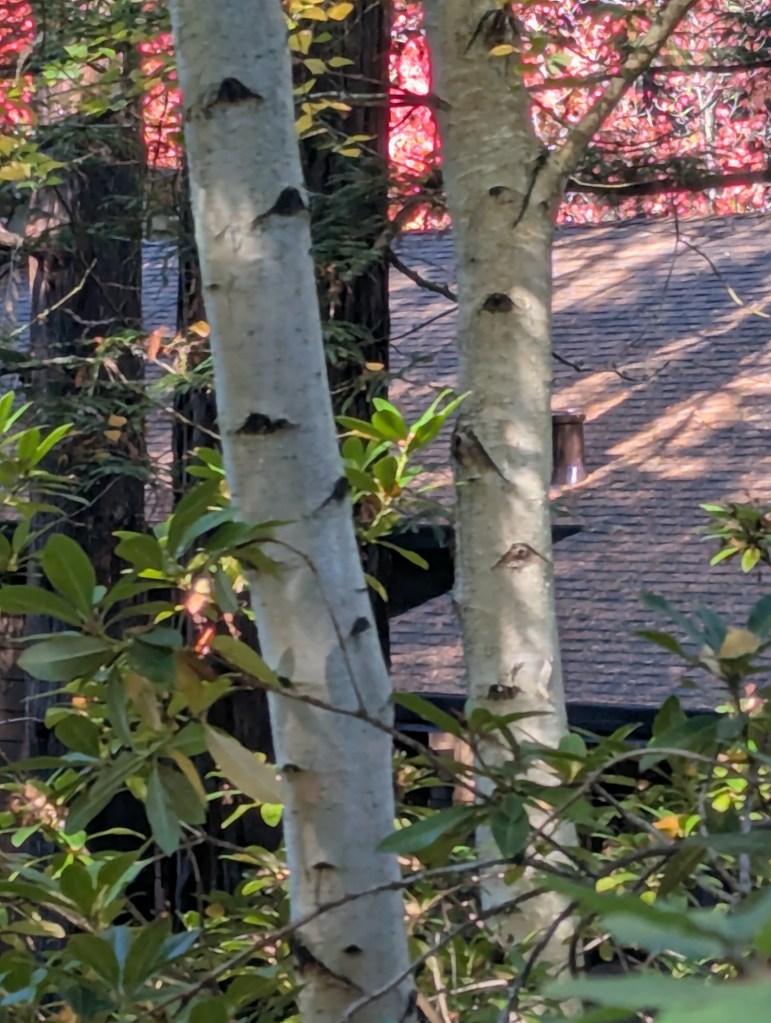
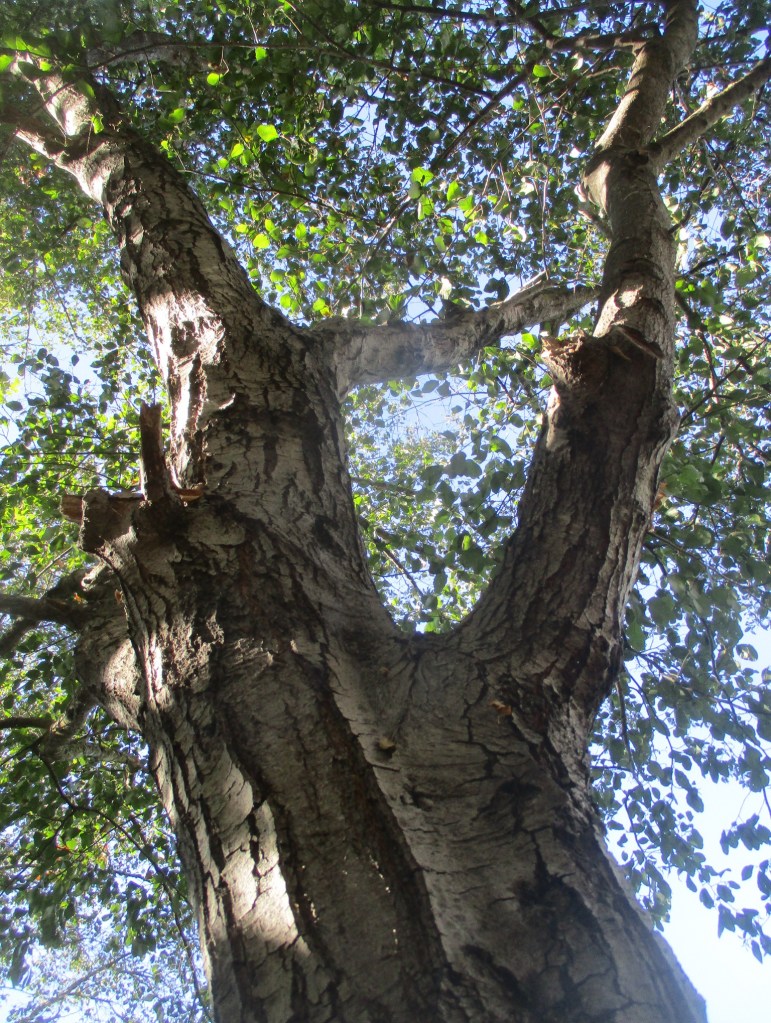
European white birch, Betula pendula, is a team player. It usually inhabits landscapes in groups rather than singly. Some trees have two, three or more trunks. After all, its primary allure is its strikingly white trunks. Because its foliar canopies are not overly broad, a few can fit into limited space. It is an informal and relaxed tree with nicely pendulous growth.
Mature European white birches are not much more than fifty feet tall here. They can grow taller where winters are cooler. Their slender trunks are mostly less than a foot and a half wide. They generally lean with prevailing winds and away from shade. Their smooth and white bark develops rough and black furrows with age. Their little leaves are deciduous.
European white birch appreciates regular irrigation, so should perform well within lawns. It produces only moderate shade. ‘Laciniata’ has intricately lobed foliage and a narrower form. ‘Youngii’ is so pendulous that it needs staking to stand upright. It can not grow very tall. ‘Purpurea’ has bronzed foliage and somewhat tan trunks, but has become very rare. European white birch might self sow.
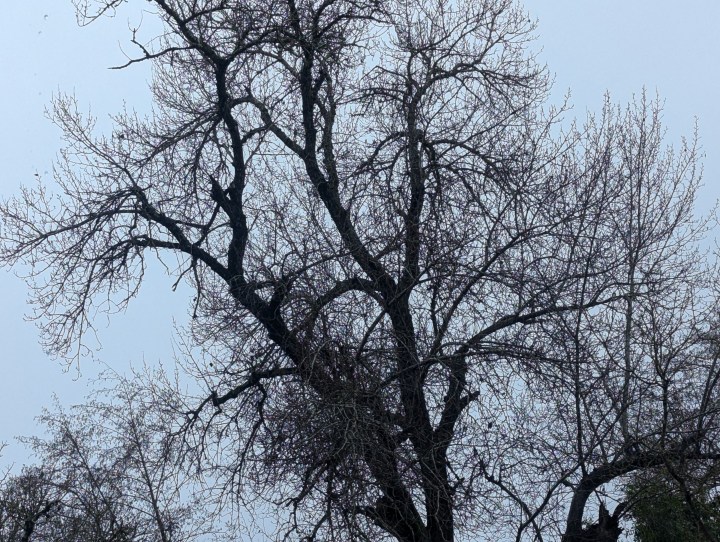
Autumn foliar color does not seem to last long enough. As it dissipates, though, it reveals silhouettes of bare deciduous trees. Some are delightfully sculptural, with strikingly pale bark on their trunks and stems. Others develop distinctively reddish twigs. Some display interesting bark textures or patterns. Color, texture and patterns are remarkably variable.
Of course, for most species, bark does not change much throughout the year. It becomes more prominent now merely because defoliation increases its exposure. In fact, some of the most distinctive bark belongs to evergreen species. Some belongs to flowering trees, fruiting trees or arboriform shrubbery. The sources are as variable as the characteristics.
European white birch is likely the most familiar tree with white bark. Jacquemontii birch is even whiter. California sycamore is a massive tree with mottled light gray and tan bark. Crape myrtle, which is more proportionate to home gardens, is more mottled. Some elms exhibit elegant tan trunks and limbs. European beech trunks develop metallic gray color.
Melaleucas are evergreen trees with distinctively shaggy trunks. Eucalyptus are likewise evergreen, but generally with pale and smooth trunks. Lemon gum is particularly tall and elegant. However, red ironbark eucalyptus has dark and notably rough trunks and limbs. ‘Marina’ madrone develops smooth trunks and limbs with brown and cinnamon red color.
Coral bark Japanese maple and osier dogwood display colorful bark differently. Theirs is on small twigs rather than trunks and main limbs. Color actually develops in response to autumn chill and defoliation. Coral bark Japanese maple develops, pinkish orange color. Osier dogwood is more brownish red, although some cultivars are orangish or yellowish.
Trees that exhibit distinctive bark are subject to the same constraints as all other trees. In other words, they must be appropriate to their particular landscapes. California sycamore for example, is much too large for compact urban gardens. Osier dogwood can grow as a thicket without intensive maintenance. Any new tree or shrubbery should be sustainable.
It is looking a bit more like autumn as a few more species respond to cooling weather by discoloring or deteriorating before defoliation.
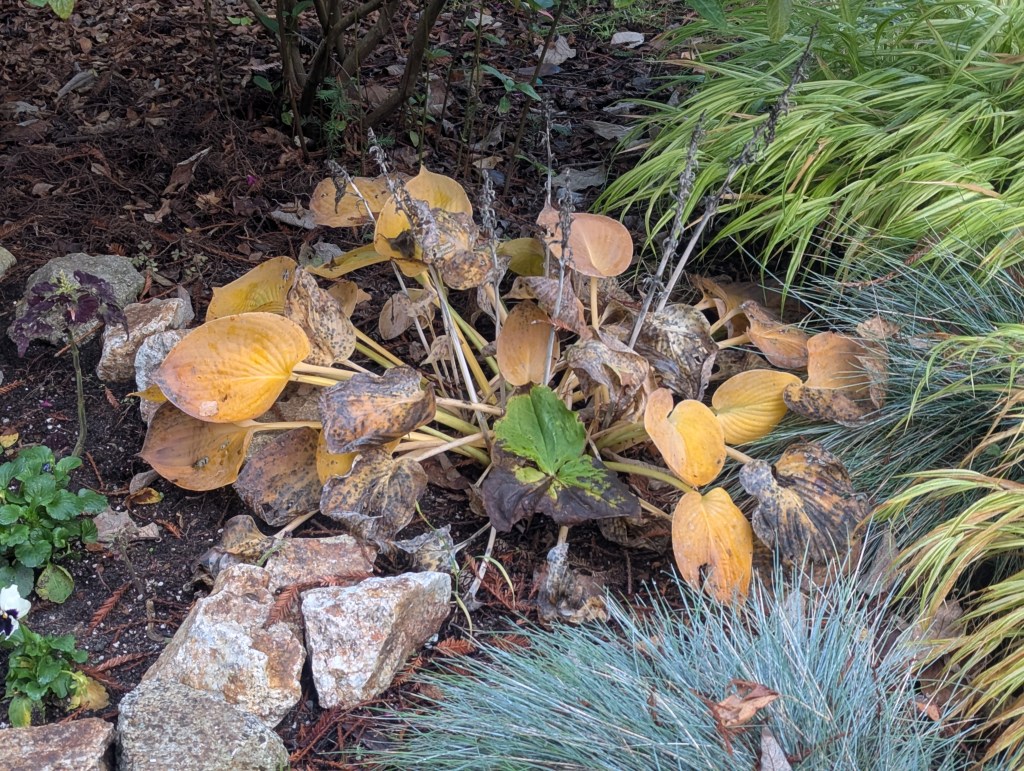
1. Hosta plantaginea, hosta is really looking shabby now. Actually though, it never really looked all that good. The difference is that this shabbiness is because of cooling weather.
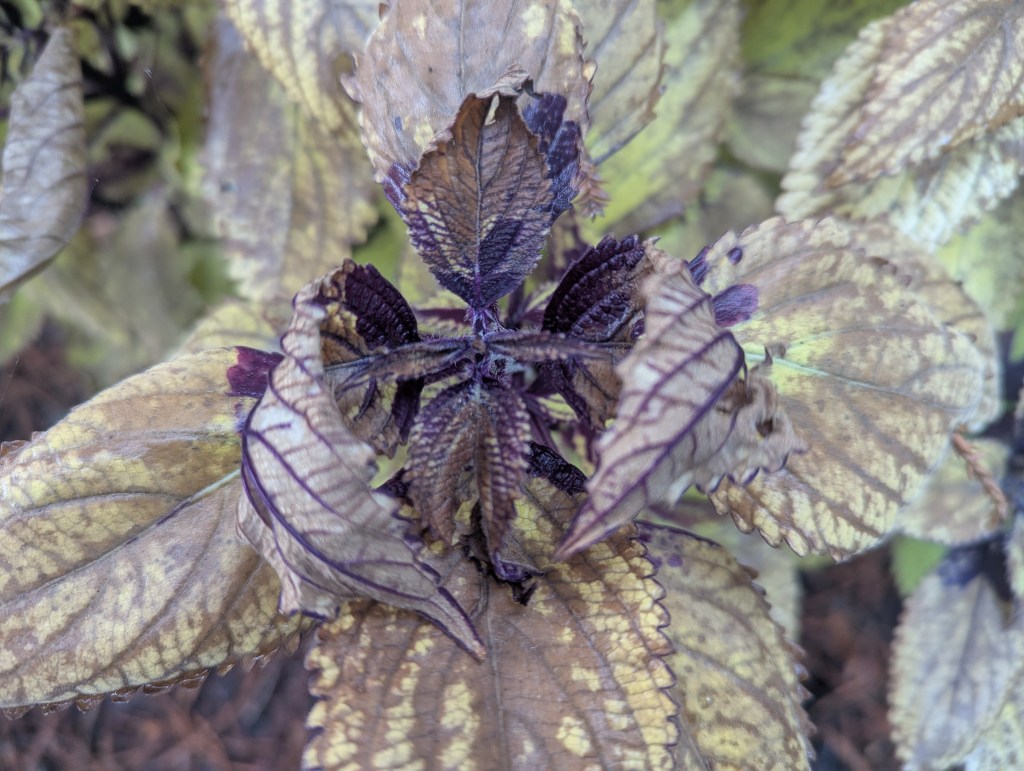
2. Plectranthus scutellarioides, coleus, which looked so splendid for Six on Saturday two weeks ago, is beginning to succumb to cooling weather, as is typical for this time of year.
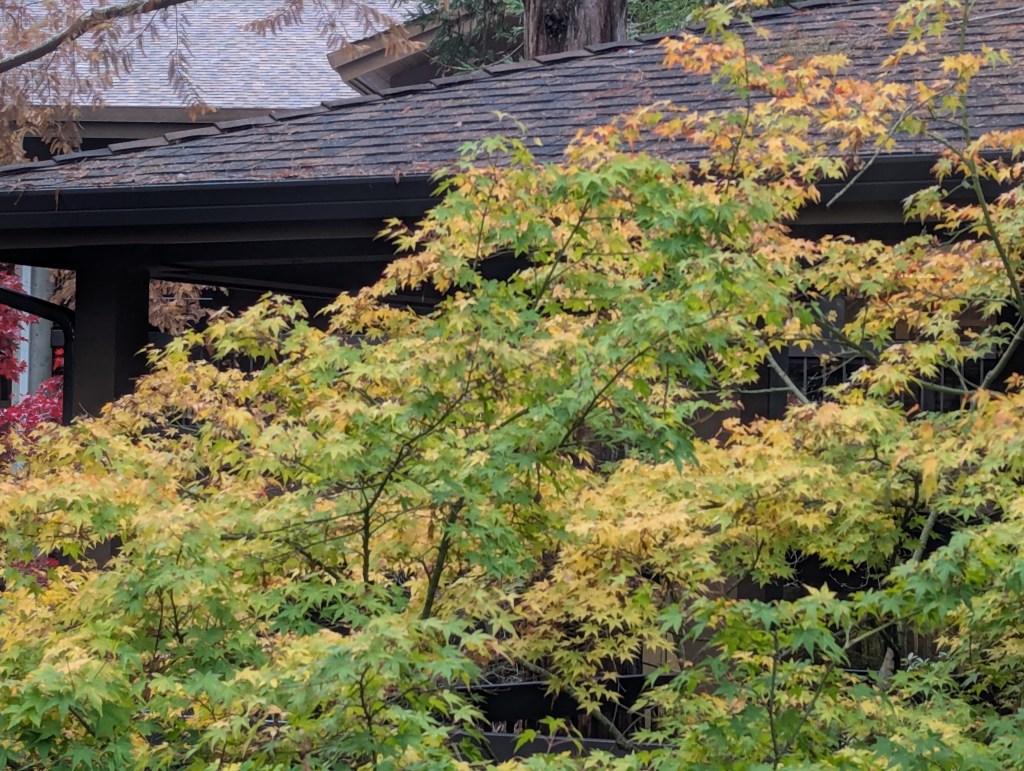
3. Acer palmatum, Japanese maple, which was still green for Six on Saturday two weeks ago, is now beginning to yellow in response to cooling weather, as it should for autumn.
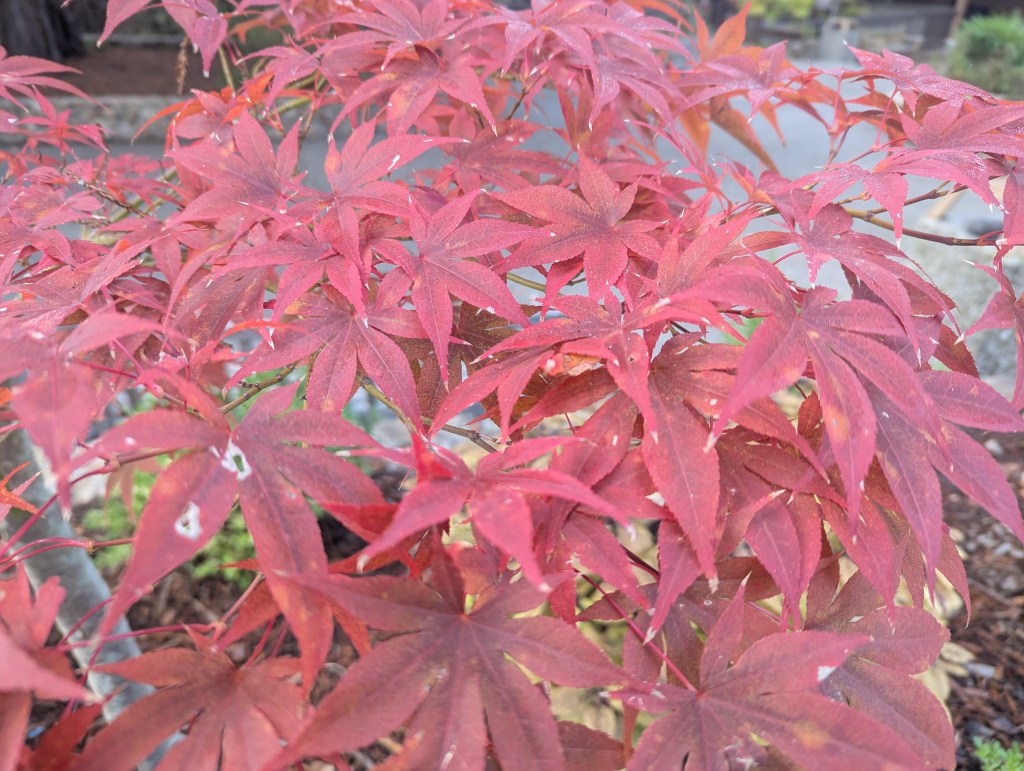
4. Acer palmatum ‘Bloodgood’ Japanese maple was already bronzy red, but is beginning to turn a bit brighter red because of the cooling weather. Its color may linger for a while.
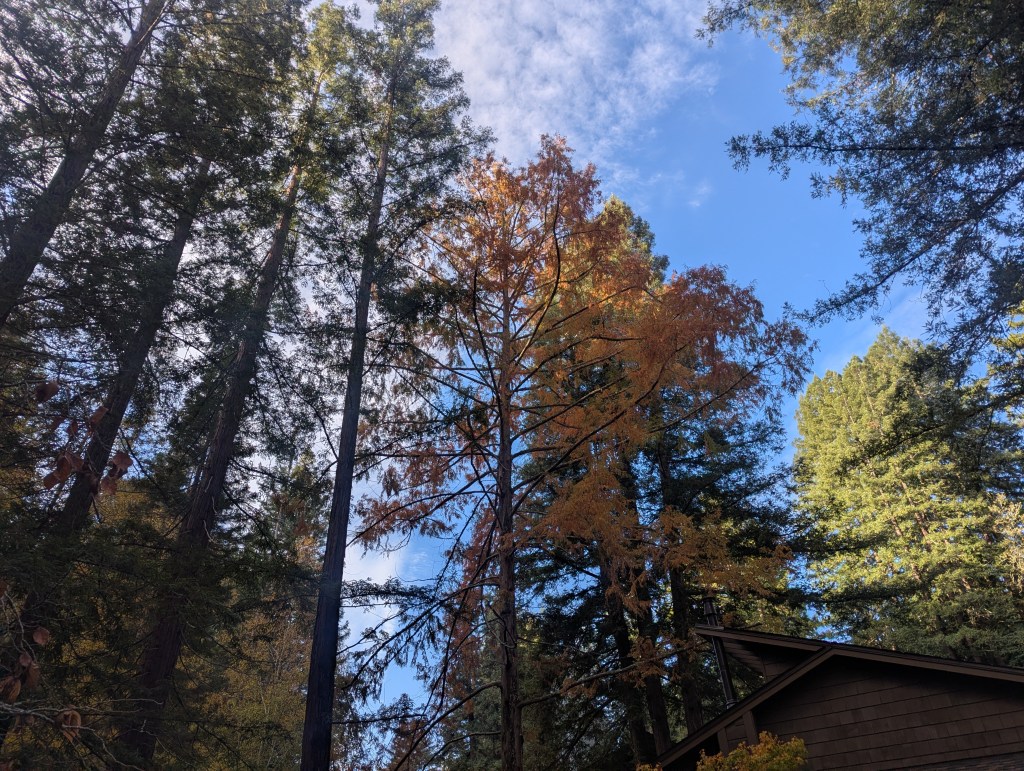
5. Metasequoia glyptostroboides, dawn redwood is likewise beginning to yellow because of cooling weather. It eventually turns brown while all the other redwoods remain green.
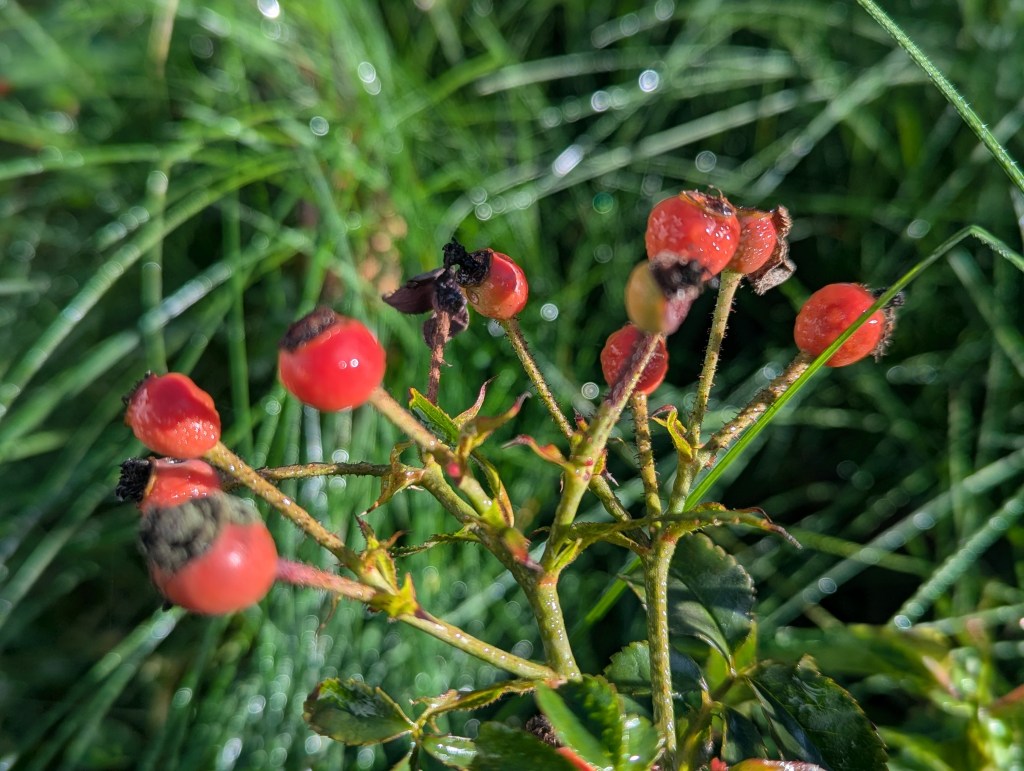
6. Rosa, carpet rose is the only one of these six that is not responding to cooling weather as it produces a few rose hips. I did not expect this. Rose hips are rare in our landscapes.
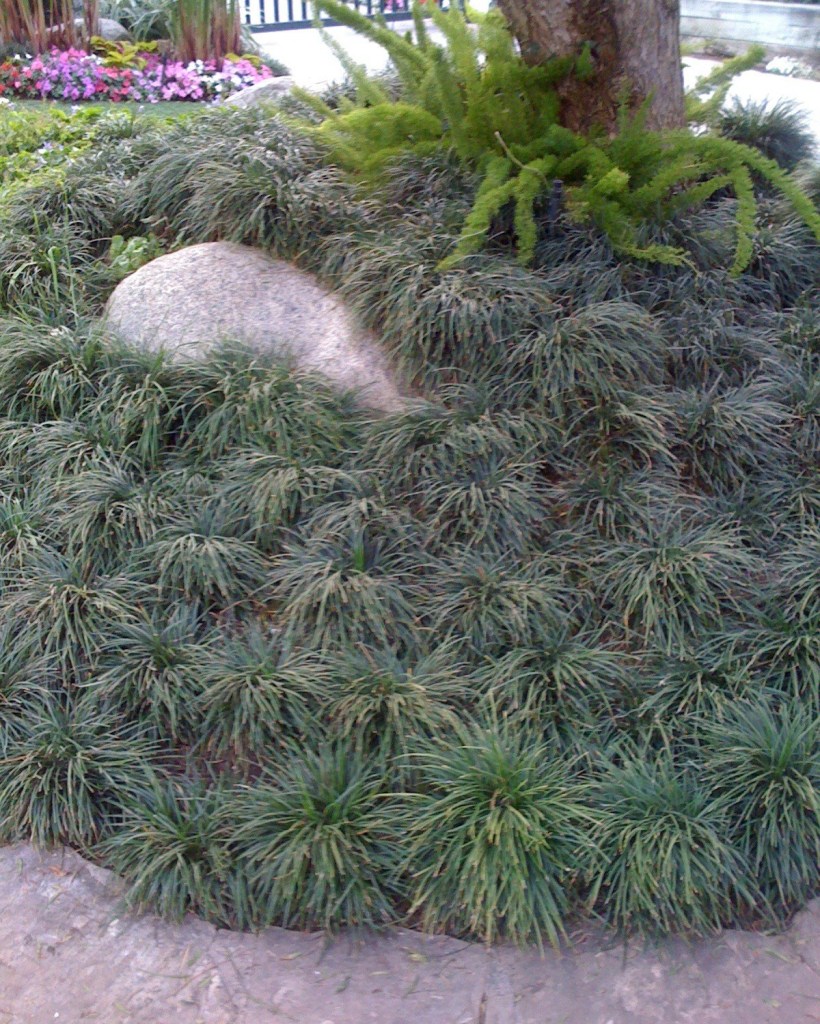
The thick clumps of evergreen grass-like foliage of mondo grass, Ophiopogon japonicas, make a nice lumpy ground cover for small spaces. Because it is rather tolerant of shade, and actually prefers partial shade to full sun, it works nicely under Japanese maples or highly branched overgrown rhododendrons. It gets only about half a foot deep. Narrow stems with small pale purplish blue flowers that bloom in summer are not too abundant, and are generally obscured below the foliage, but can actually get taller. ‘Silver Mist’ is variegated with white.
New plants are easily produced by division of large clumps. Overgrown or tired looking clumps can be shorn down at the end of winter, before new growth begins. Slugs and snails can be problematic.
Pasadena sustained the worst of the damage caused by the strongest Santa Ana Winds in three decades. Huge piles of debris from broken trees are much more than can be removed any time soon. Falling debris and trees damaged many roofs, cars and anything else that happened to get in the way.
Other towns and neighborhoods throughout the area, particularly those at the base of mountains, also sustained major damage. At the same time, severe winds ravaged the San Francisco and Monterey Bay Areas as well, particularly in the Santa Cruz Mountains and the hills of the East Bay.
Some of the damage caused by wind in urban areas might have been less disastrous if trees had gotten the respect and attention that they deserve. Some trees develop structural deficiencies that need to be corrected by pruning, either to eliminate the problems, or at least to decrease the strain exerted onto the structurally deficient parts. A few trees that become unstable as they mature may likewise need to be pruned or even removed.
It is not always possible to prune trees to remove all structural deficiencies without damaging the affected trees more, or causing more structural problems to develop. For example, major pruning to remove all parts that may get blown down by wind, such as pollarding or ‘topping’, may seem to be effective for the short term, but actually stimulates the development of vigorous secondary growth or watersprouts that are disproportionately heavy and even more likely to tear off from the older limbs.
Structural pruning more often involves thorough reduction of weight and wind resistance. Weight of foliage and stems directly applies leverage against unions where smaller stems are attached to the larger stems from which they originate. Wind resistance adds more leverage as foliage gets blown about by wind. Thinning obviously removes significant weight, and also decreases wind resistance to allow wind to blow though the affected canopies.
Besides helping to compensate for structural deficiency, structural pruning is also beneficial to potentially unstable trees for the same reasons. However, unstable trees typically need even more reduction of weight and wind resistance. Some of the most unstable trees and those that are deteriorating need to be removed because their instability cannot be accommodated.
During winter, while deciduous trees are bare, evergreen trees are more susceptible to wind damage, obviously because they retain their weight and wind resistance through winter while the weather is the most severe. Unstable trees become even more destabilized as rain softens the soil. Regardless of the potential for susceptibility to wind damage, this would be a good time of year to get any needed tree maintenance done, prior to any more windy and rainy winter weather.
Arborists certified by the International Society of Arboriculture are the most qualified to identify potential structural problems or instability, and to prescribe corrective procedures. A list of certified arborists can be found at the website of the International Society of Arboriculture at http://www.isaarbor.com.
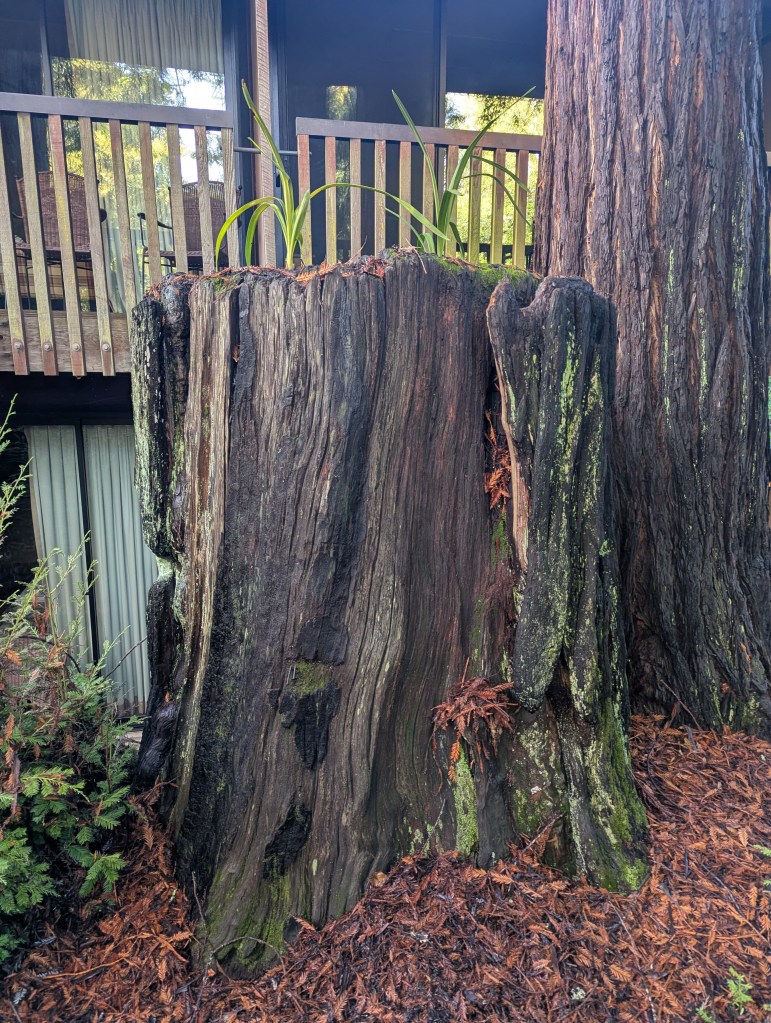
Redwoods give new meaning to stumperies. Their stumps are massive, and remain intact for decades. After all, coastal redwoods are among the largest trees in the world, and their wood is famously resistant to decay. Although redwoods had been harvested here for a very long time, most were harvested soon after 1906 to rebuild San Francisco after the Great San Francisco Earthquake and Fire. The stumps of some of them were subsequently hollowed by forest fire in the 1950s. An outhouse at home was built on top of one such hollow stump. A showers was built within another. A third is big enough to be built into a guest cabin. Stumps at work are not so useful, so remain only as monolithic garden sculpture. One short stump was planted with Billbergias a few years ago. More recently, we installed a few Cymbidium orchids on one short stump and one taller stump. The taller stump is about five feet wide and about eight feet tall, so looks rather silly with a pair of relatively small orchids protruding from the top. The orchids could be happy there, though. They should fill out and become more proportionate to the stump that they inhabit.
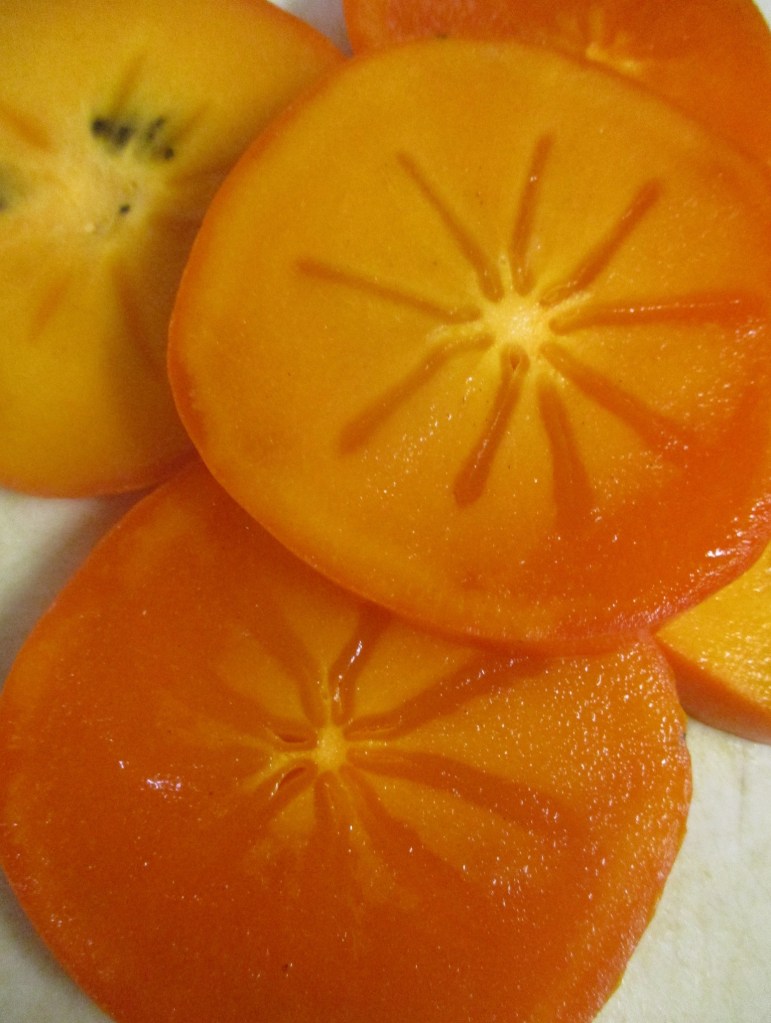
It lacks the spectacular spring bloom of the other deciduous fruit trees, but compensates. Persimmon, Diospyros kaki, performs double duty with fall color. Its autumn foliar color is impressively fiery orange. Then, it defoliates to reveal plump, abundant and comparably fiery orange fruit. So, it is spectacular with both autumn foliar color and autumn fruit color.
Persimmon trees are tempting. Some cultivars can grow twenty feet tall to become small or even mid sized shade trees. However, if they do so, much of their overly abundant fruit is unreachable. Aggressive and strategic pruning limits their production with most of their fruit in reach. Although undemanding otherwise, this major dormant pruning is important.
Persimmons are self fruitful without a pollinator. However, they supposedly provide more fruit of better quality with another cultivar. Fruit is unfortunately inedible before thoroughly ripe, but then all ripens simultaneously. That is an incentive to share with neighbors and friends. With a bit of effort, fruit is conducive to drying and freezing, although not canning. Ripe fruit is very perishable.
Arboriculture becomes more of a concern at this time of year. Although winter is a month away, the weather is becoming increasingly stormy. Wind and rain can dislodge limbs or destabilize entire trees. Some trees may benefit from winterization prior to even stormier weather in the future. Some may need the specialized services of professional arborists.
Dormant pruning of deciduous fruit trees is, incidentally, not the same as winterization. It happens later in winter, after the subjects have been dormant for a while longer. Besides, after proper dormant pruning last year, they should not need winterization now. However, if subjects are defoliated, they should not mind early pruning. They are already dormant.
Ironically, the trees that are more likely to require winterization are evergreen. Deciduous species perform almost all of their own winterization naturally. They defoliate to eliminate most of their resistance to wintry winds. In other words, they become more aerodynamic. Defoliation also eliminates most of the surface area to accumulate heavy water from rain.
Evergreen species are generally more resilient to wind than foliated deciduous species. However, as deciduous species defoliate, evergreen species can not. Evergreen foliage therefore becomes less aerodynamic and more vulnerable to wind. Also, it absorbs more heavy rainwater. The added weight of rainwater causes limbs to sag and perhaps break.
Rain does more than cause foliage to become heavier. It also saturates soils, which can potentially compromise root stability. The timing could not be worse, since wind typically accompanies rain. This is also more of a problem for evergreen species than deciduous species. However, some storms arrive early, and some deciduous species defoliate late.
Winterization pruning is as variable as the trees that benefit from it. Large trees will likely need specialized services that only arborists can provide. Japanese maples may require only minor clipping of stems that have extended too far. Many trees require nothing at all. Ultimately, such techniques should help limbs and trees survive eventual wintry weather.