Horticulturists are by nature, nonconforming. I happen to find it difficult to conform to what makes us nonconforming. Trends are fleeting. Old technology that has worked for decades or centuries is still best. Although I am not totally against chemicals, I find that almost all are unnecessary for responsible home gardening. Pruning is underappreciated, and fixes many problems.
Goodness, I can not remember the last time I went to the beach. I might have gone more often when I lived a bit farther away. Now that I am a bit closer, it is easier to ignore.
Between here and Hawaii, there is a whole lot of water. Between Hawaii and Australia, there is a whole lot more. Everywhere to the west and southwest of California, there is a lot of water. Unfortunately, none of this huge volume of water is useful for gardening. It is saline. It would kill plants.
Of course this is not just any water. It is the Pacific Ocean. Although the water within it is useless directly, it is what feeds the weather that provides the precipitation that becomes the water that makes gardening and everything else possible. Rain fills local aquifers. Snow in the Sierra Nevada fills reservoirs as it melts.
The weather that the Pacific Ocean feeds gets shared over a very large area. Weather that does not make rain here might make rain or snow in Nevada, or Oklahoma, or really anywhere the weather wants to go to. In…
It is still the first week of February as I schedule this recycled article to post on the last day of February. I do not know what the weather will be like then (which is now). However, I can guess that after such pleasant weather earlier, there has been some cooler and rainier weather, and it may be cool and rainy now (at the end of the month). Cool and rainy weather is not a problem in February. The pleasant weather in between is what can be a problem for plants that prefer more of a winter.
It is certainly not as cold as it is in other regions at or north of this latitude. Nor is it unusually cold for this time of year. It is not stormy. We got only a few heavy but brief rain showers with a bit of small hail. A slight bit of snow fell only on the Summit of the Santa Cruz Mountains
The problem is that the weather had been so mild earlier, and at times, downright warm. Many plants were coerced into premature bloom. Some started to generate new spring growth. When the weather suddenly became more seasonably cool, many of the flowers and new growth got frosted and ruined.
Fortunately, most of the deciduous fruiting trees seemed to know what they were being set up for, and abstained from bloom. So far, even the early blooming apricots, cherries, almonds prunes and plums are safe. The wild American…
Winter is brief here. There is no snow, and only occasional mild frost. Chill is insufficient for many plants that need it. Rain can be copious during storms; but storms are not as frequent as in other climates. Many flowers typically bloom slightly earlier than they do in other regions. Of course, every season is unique.
1. English holly may have bloomed on time last year, but the berries are lingering late this year. The birds who eat them must have found something else to be more appealing. This is an odd cultivar that is neither as prickly nor as dense as common English holly elsewhere in its garden. Incidentally, it resides in the Santa Clara Valley, not here. I have no idea who the pollinator is.
2. Winter daphne should bloom in . . . well, winter. What I mean is that is should have bloomed a bit earlier in winter. Surprisingly, the foliage lacks variegation. All daphne here is variegated!
3. Calla should bloom in summer. This one is so late that that it is early. I mean that it is closer to next summer than it is to last summer. Really though, it blooms whenever it wants to here.
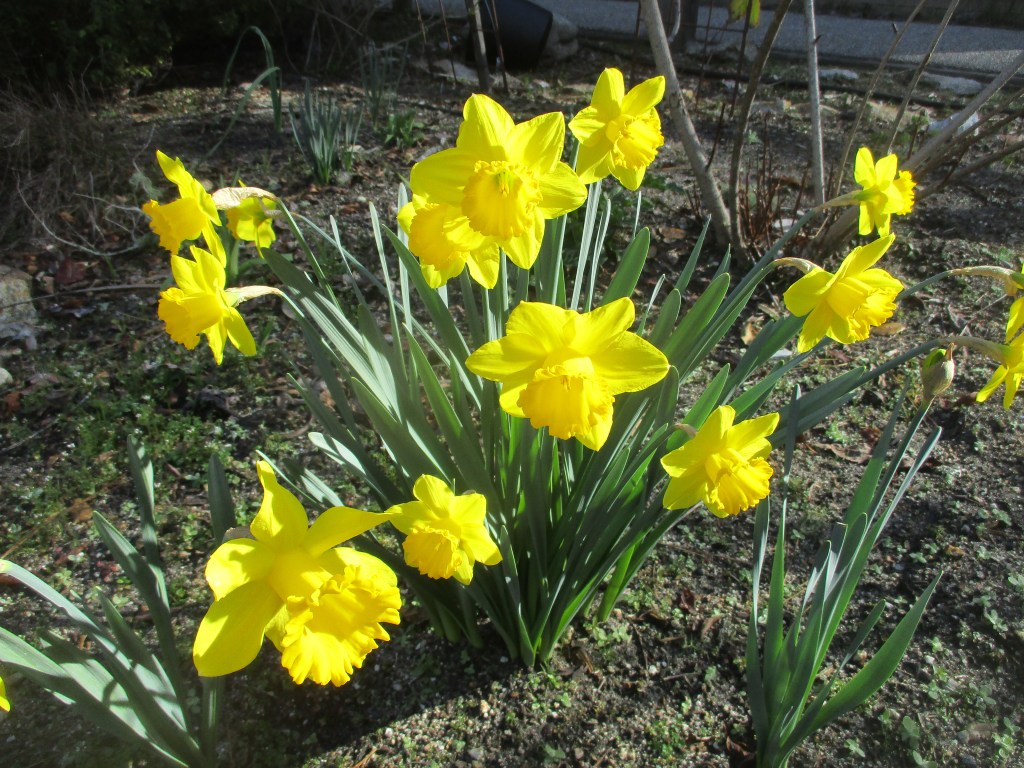
4. Daffodil continues to bloom in some locations. There are actually a few varieties blooming in this same area, with at least one colony that is only beginning to bloom. This late bloom is nice.
5. Narcissus continue to bloom late also! I believe that this is the only colony of paperwhite narcissus here. It is my favorite though, both because it is white, and also because it is so fragrant.
6. Rhody is always the most popular topic of my Six on Saturday. I do not know why he took a momentary interest in the camera. I just quickly exploited the opportunity to take his picture.
This is the link for Six on Saturday, for anyone else who would like to participate:
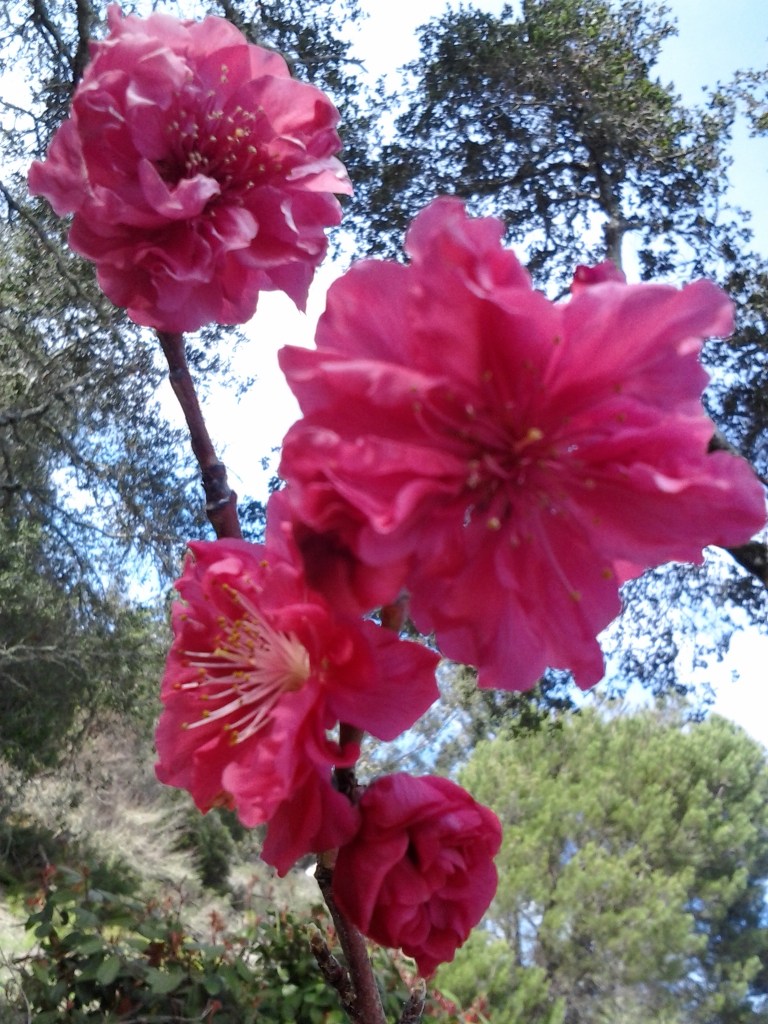
Since it does not produce an abundance of cumbersome fruit, flowering peach, Prunus persica, does not need the aggressive pruning while dormant through winter that fruiting peach requires, and can get significantly larger. However, tip pruning after bloom instead promotes shrubbier growth that blooms more prolifically the following spring. The fluffy double flowers are clear white, bright pink or rich pinkish red. ‘Peppermint’ flowering peach has red and white flowers, with a few flowers that are only white, and sometimes a few that are only red.
All of the popular fruit trees produce flowers. Otherwise, they could not produce fruit. The stone fruits, such as almond, apricot, cherry, peach, plum and prune, bloom very impressively this time of year. (Stone fruits have single large seeds known as stones. Almonds are the large stones of small fruits that resemble peaches.) The pomme fruits, such as apple and pear, bloom about as prolifically shortly afterward, followed lastly by related but rare quince.
The difference between these trees and their counterparts known as ‘flowering’ trees is not so much the flowers, but the fruit. ‘Flowering’ is something of a euphemism for trees that might otherwise be known as ‘fruitless’, since they produce either uselessly small fruit, or no fruit at all.
This may seem silly to those who enjoy growing fresh fruit in the garden. However, fruit trees require so much pruning in winter, and can be so messy if the fruit does not get completely harvested. The flowering trees are happy to provide the profuse bloom without so much maintenance and potential mess. Because they were developed as ornamental trees, their flowers are more impressive, with many more shades of pink, as well as white. Many types bloom with big and fluffy double flowers.
Flowering cherry and plum are probably the most popular of the flowering stone fruit trees. Most flowering plums have purplish foliage, so are more commonly known as purple-leaf plum. Flowering almond, apricot, prune and peach are relatively somewhat rare. Most flowering stone fruit trees are completely fruitless, but some purple-leaf plum can produce messy and sour plums as they mature.
Flowering pear is probably not recognized as such because it is more often known as fruitless pear. Ironically, it can produce enough tiny pear fruit to be messier than other flowering fruit trees. Flowering pear blooms only white, and is not as florific as the other flowering trees, but grows large enough to be a mid-sized shade tree, and has the advantage of remarkable foliar color in autumn. Evergreen pear is an entirely different sort of tree that only blooms well if the weather is just so, and lacks fall color (because it is semi-evergreen).
Flowering apples are known as flowering crabapples. Unlike the other flowering trees, many flowering crabapples develop a sloppy branch structure if not pruned almost like trees that produce fruit. Yet, the weirdest of the flowering trees is the flowering quince, which is not even the same genus as fruiting quince. It develops into a thicket that blooms before everything else. Fruiting quince instead matures into a rampant tree, and blooms after the other fruit trees.
Nature has been getting by just fine for a very long time before humans started to interfere. It has survived all sorts of catastrophes literally longer than anyone can remember. It was here when dinosaurs were exterminated by a meteorite or comet or vulcanism or whatever catastrophic yet natural event finished them off. In fact, Nature was here for all of the few mass extinction events of the very distant past, including the Permian – Triassic Extinction, which only about 4% of life on earth survived! We all know that “It’s not nice to fool with Mother Nature.”, or serve her margarine that tastes like real butter; but we should also realize that it is rather presumptuous to think that we can be more efficient with correcting all environmental damage. Very often, it is best to let nature do what nature does best.
Almost everyone on the West Coast of California has encountered silver wattle, Acacia dealbata. Some of us know how resilient it is to most methods of eradication. The more fortunate enjoy its magnificently bloom from a distance. It is almost never planted intentionally. It is an aggressively naturalized exotic species. Most grows wild near roadside ditches. Some invades home gardens.
The profuse and bright yellow bloom of silver wattle is spectacular while most deciduous trees remain bare late in winter. Big and billowy trusses of smaller round floral structures obscure most of their slightly grayish foliage. The many individual staminate flowers within this impressive bloom are actually minute. Their hearty floral fragrance is appealing to some, but objectionable to others.
Silver wattle lives fast and dies young. Some trees are so vigorous while young that they are unable to support their own weight. Without appropriate pruning, they simply fall over. Even stable and structurally sound trees deteriorate after about thirty years. Few survive for fifty. They seed prolifically though! Mature trees can get forty feet tall. The finely textured foliage is bipinnately compound.
Aggressively invasive exotic species become weeds.
With few exceptions, the most aggressively invasive weeds here are exotic. In other words, they are not native. They came from other regions where they were likely compliant participants of their respective ecosystems. At home, where they must compete with other members of their ecosystem, they may not be so aggressively invasive. Ecology is the opposite of a home field advantage.
Exotic species become invasive weeds in foreign ecosystems for a variety of reasons. For some, the climate is more favorable. Some grow and proliferate more freely without diseases, insects and animals that troubled them back home. There are also several that simply compete more aggressively for space and resources than native species are accustomed to. It is a jungle out there.
Most invasive exotic species are annuals. Many are biennials or perennials. Some are vines, shrubs or even trees. Most were imported intentionally, for a variety of reasons, and then naturalized. Forage and cover crops were some of the earliest of exotic species to become invasive. Other invasive species escaped from home gardens. Blue gum eucalyptus was imported for wood pulp.
Regardless of their origins or physiological forms, invasive species are weeds. They compete for the same resources that desirable plants use. They impede on the aesthetic appeal of gardens and landscapes. Some types of weeds become hazardously combustible. Even if not directly problematic, invasive weeds disperse seed that can be problematic nearby. Many disperse stolons.
Most weeds start early and grow fast to get ahead of their competition. They are more active at this time of year than at any other time. They are also vulnerable. While the soil remains damp from winter rain, they are relatively easy to pull intact. They have not yet dispersed seed for their subsequent generation. Later, they are likely to leave behind seed and bits of roots that can regenerate.
It is important to pull or grub out seedlings of unwanted shrubbery and trees, as annual weeds. They are likely to regenerate if merely cut.
Three or four might be better than two. Perhaps that is what this queen palm was thinking when it decided to get extras.
This is not a good picture, and the tree is a bit too shaggy with old foliage to see what is going on inside clearly. To the left, a secondary limb is curving downward and away from the main trunk, before curving back upward as a secondary canopy. Another limb is developing immediately above this secondary canopy, and another is visible to the right of the main trunk. It is hard to say how many individual canopies are within the collective canopy of this single specimen.
What is weird about this development is that the popularly available palms do not form branches. Think of it. When was the last time you saw a palm tree with a limb or branches? Before you answer that, yuccas (such as…
There are so many big trees in the Santa Cruz Mountains that keep most of us looking up. It is easy to miss much of the understory plants that grow on the forest floor.
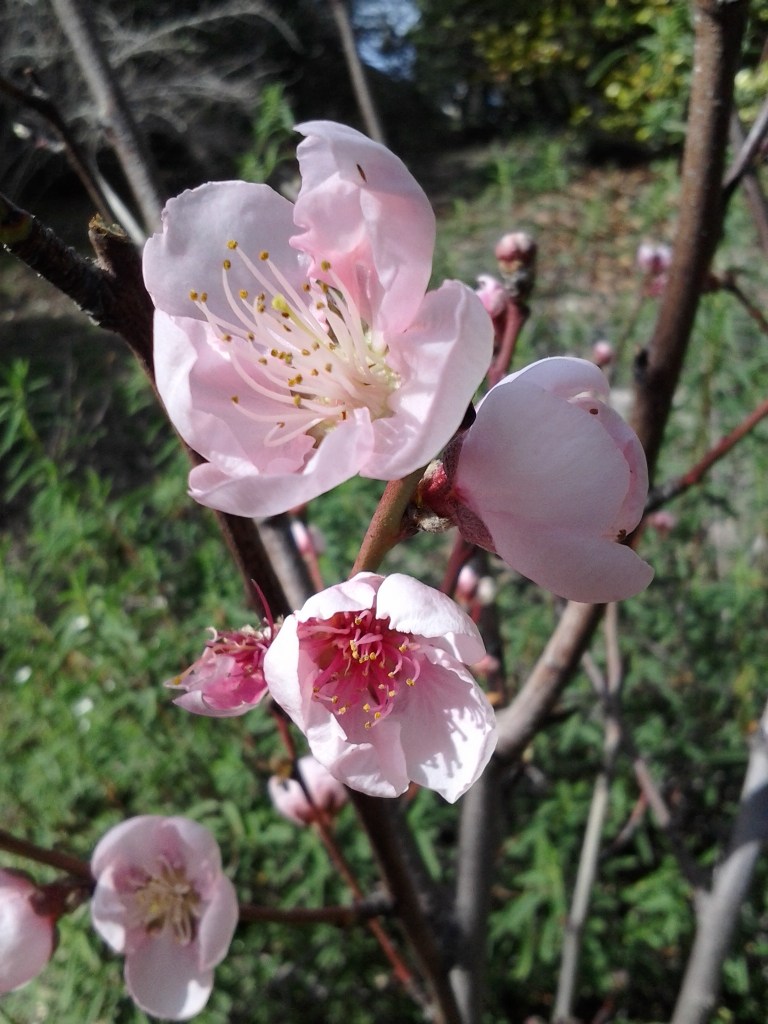
While getting the pictures for the ‘Six on Saturday’ article posted earlier, I happened to notice these few small pale flowers that contrasted more with their own dark green foliage than they would have if they were more brightly colored. Perhaps that is a technique to get the attention of pollinators. It certainly got my attention.The flowers were not completely white. They were very pale hues of pink. The wood sorrel in the last picture was slightly more pinkish than the unidentified cruciferous (of the family Cruciferae) flowers of the first two pictures. Pale flowers, particularly those that seem to be adorned with barely perceptible patterns, are typically those that use infrared and ultraviolet color…

 Between here and Hawaii, there is a whole lot of water. Between Hawaii and Australia, there is a whole lot more. Everywhere to the west and southwest of California, there is a lot of water. Unfortunately, none of this huge volume of water is useful for gardening. It is saline. It would kill plants.
 It is certainly not as cold as it is in other regions at or north of this latitude. Nor is it unusually cold for this time of year. It is not stormy. We got only a few heavy but brief rain showers with a bit of small hail. A slight bit of snow fell only on the Summit of the Santa Cruz Mountains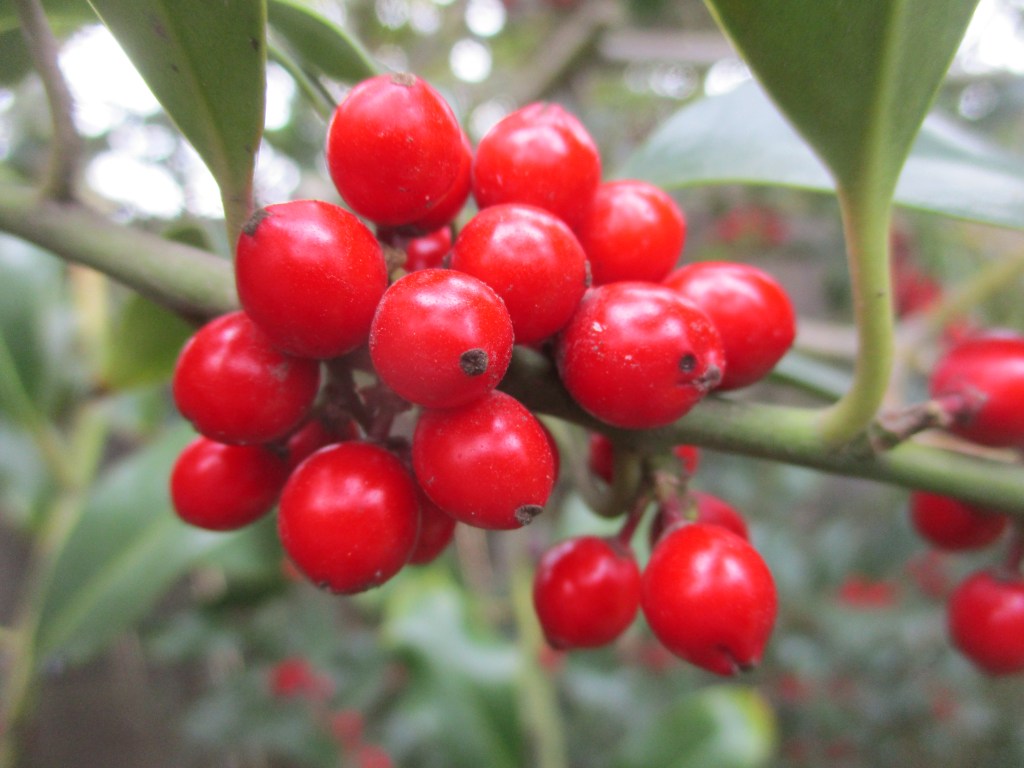




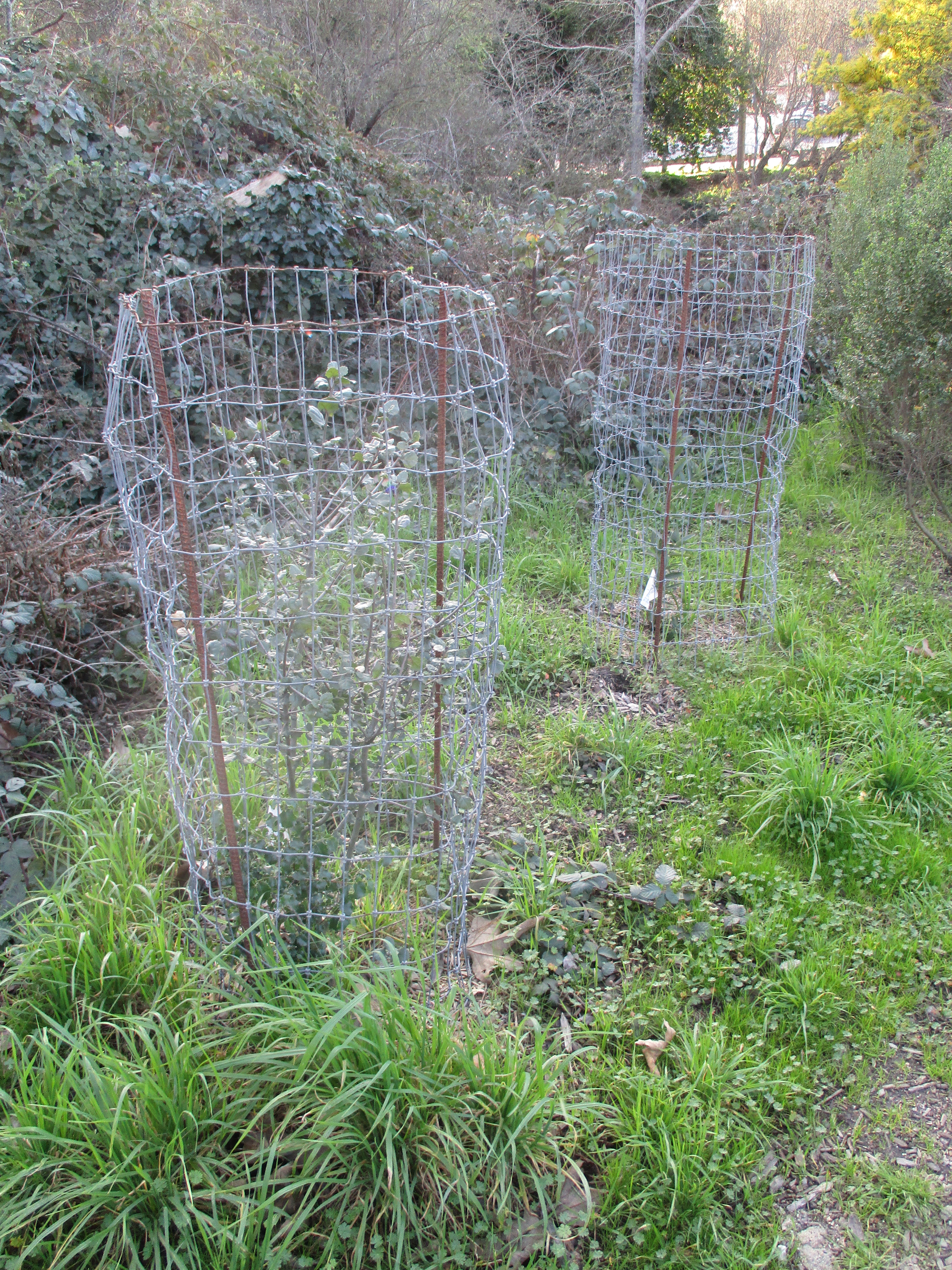 Nature has been getting by just fine for a very long time before humans started to interfere. It has survived all sorts of catastrophes literally longer than anyone can remember. It was here when dinosaurs were exterminated by a meteorite or comet or vulcanism or whatever catastrophic yet natural event finished them off. In fact, Nature was here for all of the few mass extinction events of the very distant past, including the Permian – Triassic Extinction, which only about 4% of life on earth survived! We all know that “It’s not nice to fool with Mother Nature.”, or serve her margarine that tastes like real butter; but we should also realize that it is rather presumptuous to think that we can be more efficient with correcting all environmental damage. Very often, it is best to let nature do what nature does best.
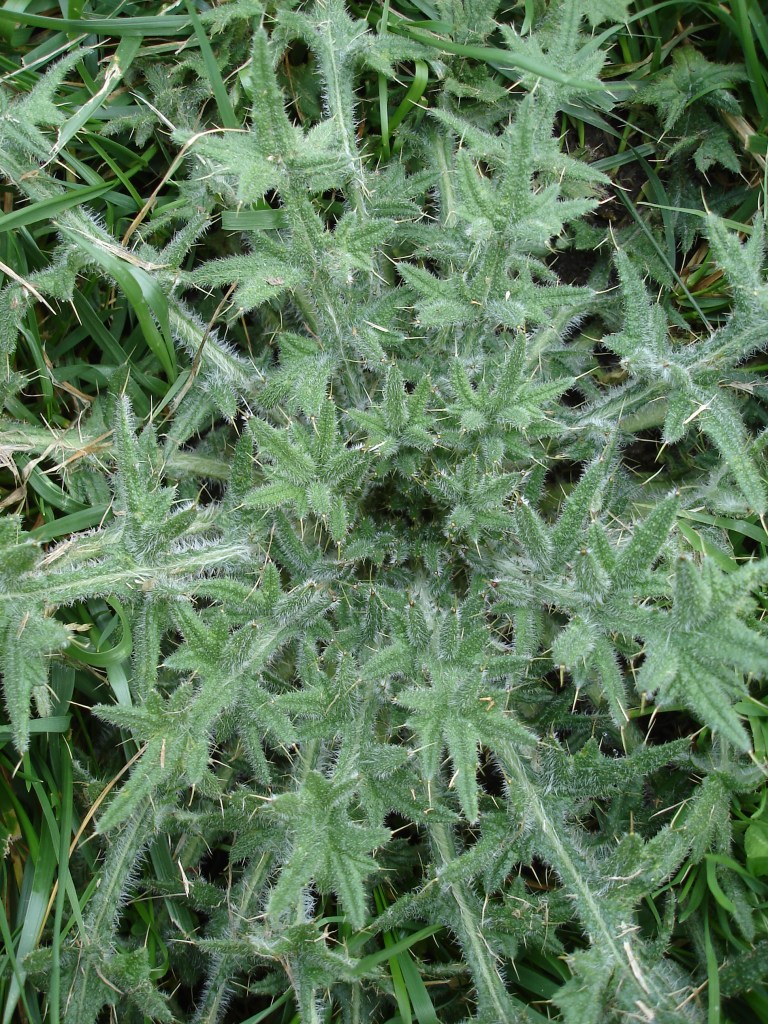
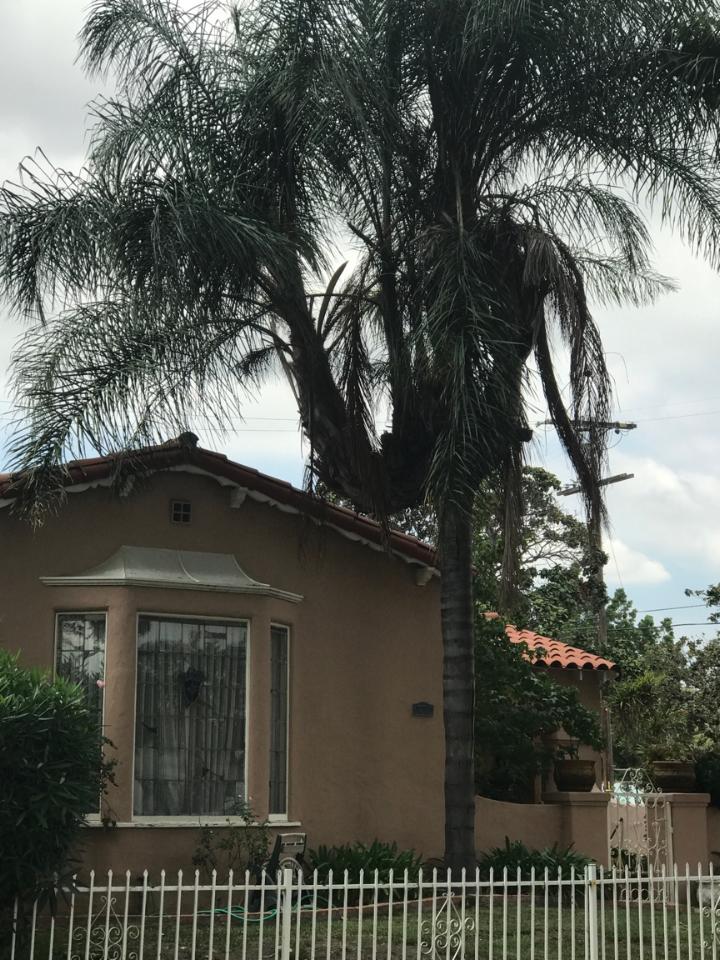 Three or four might be better than two. Perhaps that is what this queen palm was thinking when it decided to get extras.
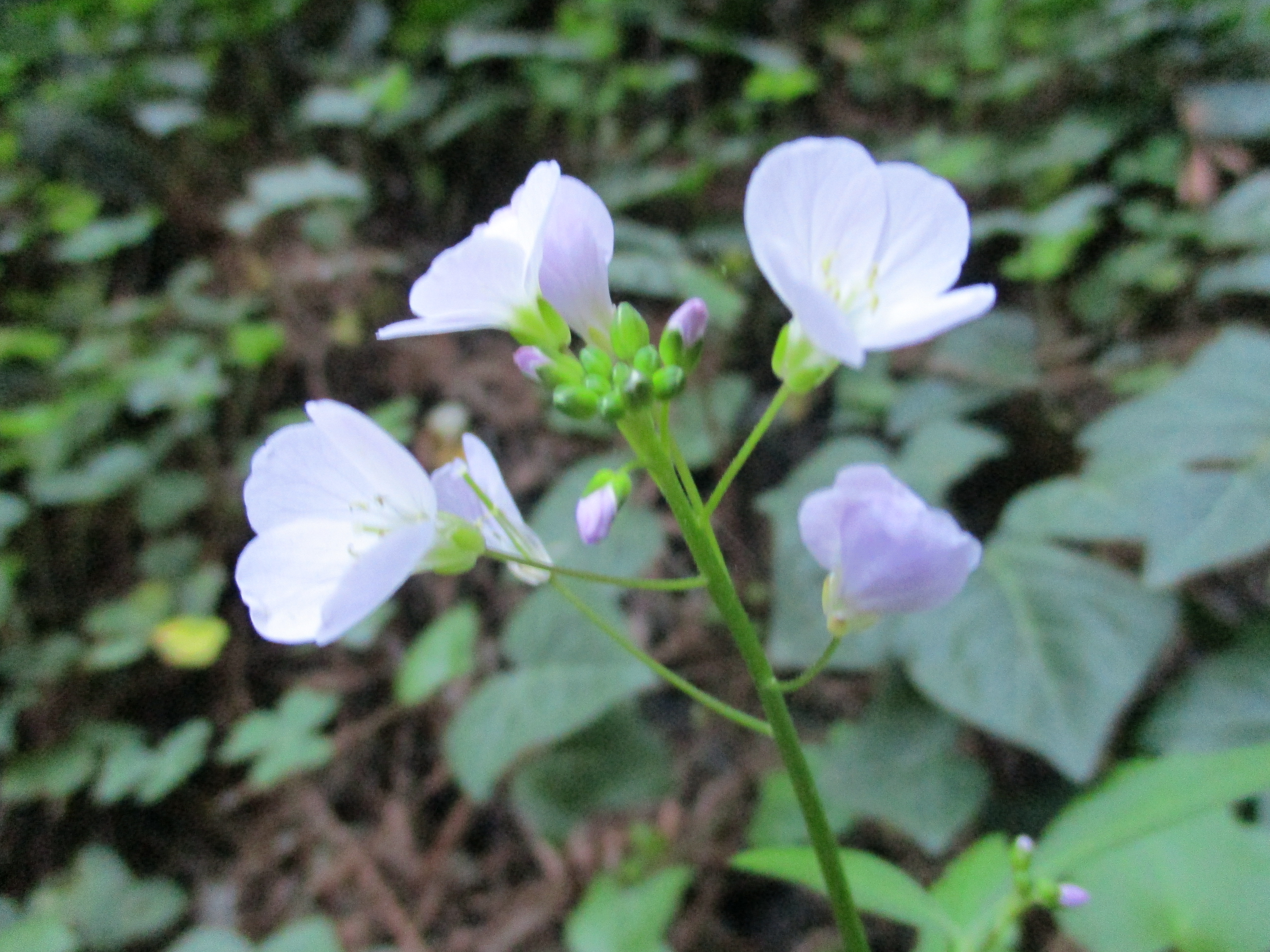 There are so many big trees in the Santa Cruz Mountains that keep most of us looking up. It is easy to miss much of the understory plants that grow on the forest floor.
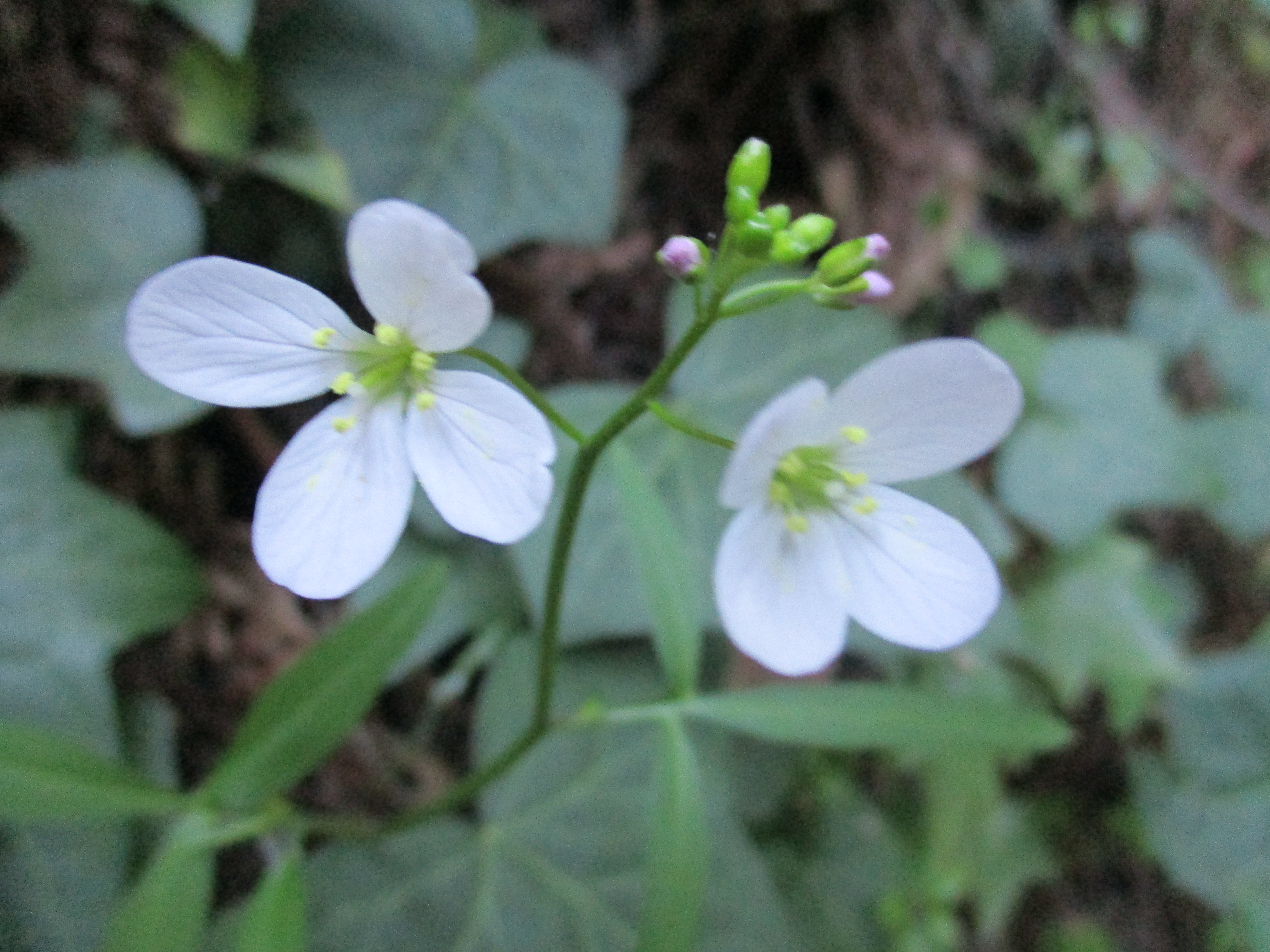 The flowers were not completely white. They were very pale hues of pink. The wood sorrel in the last picture was slightly more pinkish than the unidentified cruciferous (of the family Cruciferae) flowers of the first two pictures. Pale flowers, particularly those that seem to be adorned with barely perceptible patterns, are typically those that use infrared and ultraviolet color…
