Stick

‘Beurre d’Anjou’

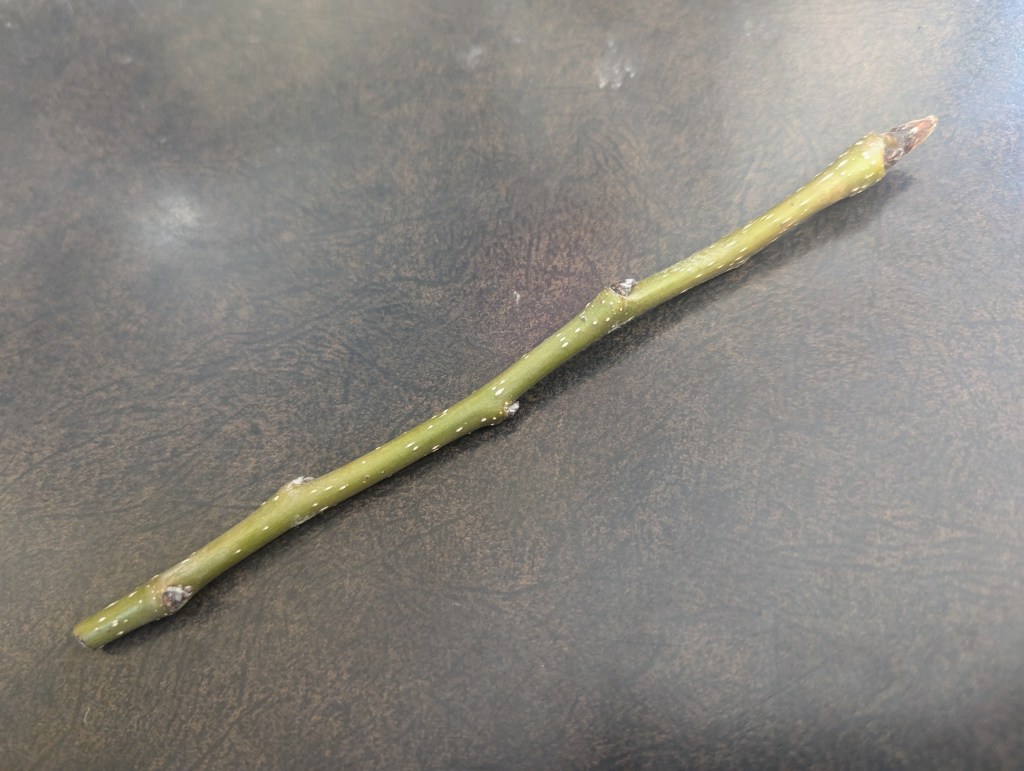
Here it is. The stick! I paid $7.79 for it with delivery from San Leandro, and waited a few days for its arrival last Wednesday. Since then, it was processed into two scions and a cutting, each with two buds. The terminal bud of one of the scions is actually accompanied by a few smaller buds. The scions were grafted, and the cutting was plugged, last Thursday, less than a day after the Stick arrived. I am very pleased with the results, and hope to be even more pleased with their favorable performance in the future. Ultimately, the finished product will be at least one pear tree. More specifically, it will be a ‘Beurre d’Anjou’ pear tree, which is more often known as ‘d’Anjou’ or ‘Anjou’. It and ‘Seckel’ were the only two cultivars of pear that I wanted to acquire this winter. After obtaining scions for ‘Seckel’ pear from the Scion Exchange of the Monterey Bay Chapter of the California Rare Fruit Growers on the first of February, ‘Beurre d’Anjou’ remained elusive. Every pear tree that I could get scions from was either another cultivar, or not identifiable by cultivar. I really thought that the process would be simpler. I could have purchased a tree from bare root stock at a nursery, but that would have been comparable to cheating, and would have cost about $40. The well rooted quince understock for grafting was already here and waiting. I grew a few specimens of it from suckers of an established pear tree, and already used one for the previously acquired ‘Seckel’ scions. Because I was so confident that I would eventually acquire the only pear cultivar that I craved more than ‘Seckel’, I retained the biggest and best of this understock for these recently acquired scions of ‘Beurre d’Anjou’.

Summer Squash

Zucchini are the most familiar squash.

Zucchini is the most familiar variety of summer squash, Cucurbita pepo. It is not the only one, though. Several are varieties of Cucurbita moschata. These species are so variable that they seem to be many more than two. Some varieties are winter squash, which also develop through summer, but ripen for winter. Their fruits are plumper but less numerous.

Some summer squash can grow to be very big also. They can likewise remain intact into winter. However, they are best if harvested while small and tender. Frequent harvest that prevents squash from maturing diverts resources to more squash. Some summer squash can almost be too productive. Production should continue until foliage withers with frost.

Yellow crookneck is probably the second most popular summer squash. It can be almost as productive as zucchini. Pattypan squash has firmer texture, which is an advantage for stews and freezing. All summer squash enjoy organically rich soil and frequent irrigation. Their coarsely foliated vines can get almost aggressively vigorous with summer warmth. Seed from mature squash fruits is typically very variable. Only seed from reliable sources is consistent.

Warm Season Vegetables Start Early

Tomatoes are the favorite summer vegetable.

Warm season annuals that are becoming more available in nurseries are a clue. As they become seasonal, so do warm season vegetables, or summer vegetables. After all, they also perform as annuals within their respective seasons. It may still be too cool for many to inhabit the garden directly. However, several that grow from seed can start about now.

Many more varieties of warm season vegetables are available from seed than as plants. Vegetable plants are available in cell packs or four inch pots. They occupy more nursery space than racks of many more varieties of seed. Many more varieties are available from online catalogs. Several true to type varieties can provide seed for subsequent seasons.

Furthermore, many warm season vegetables grow better from seed than from transplant. Corn, beans, squash and root vegetables grow very efficiently from seed. However, they do not recover so easily from transplanting. Root vegetables are particularly susceptible to deformity from such handling. Seed for many root vegetables is ready for sowing now.

Seed is also an advantage for warm season vegetables that grow from many plants. For example, one packet of beet seed can provide more than enough beets. One cell pack of beets costs about as much, but provides only six possibly wimpy beets. A solitary tomato plant might provide plenty of tomatoes, though. Besides, tomato plants transplant easily.

Seed for corn, beans and squash should wait for warmer weather for their direct sowing. So should seed for many warm season vegetables that do not really need direct sowing. However, those that do not require direct sowing can start now inside or in greenhouses. They are easy to transplant from flats, cell packs or small pots later with warmer weather.

The season for warm season vegetables is only now beginning. Ideally, such vegetables arrive as cool season vegetables relinquish their space. Successive phases can replace the last of cool season vegetables. Eventually, cool season vegetables will reclaim their garden space. Currently new warm season vegetables should be finished with it by then.

Six on Saturday: Late Winter Color

Color is relatively scarce as spring bloom is only slowly beginning. A bit of winter bloom remains. Not all flowers bloom earlier here than in other regions. Some could actually be a bit later than expected.

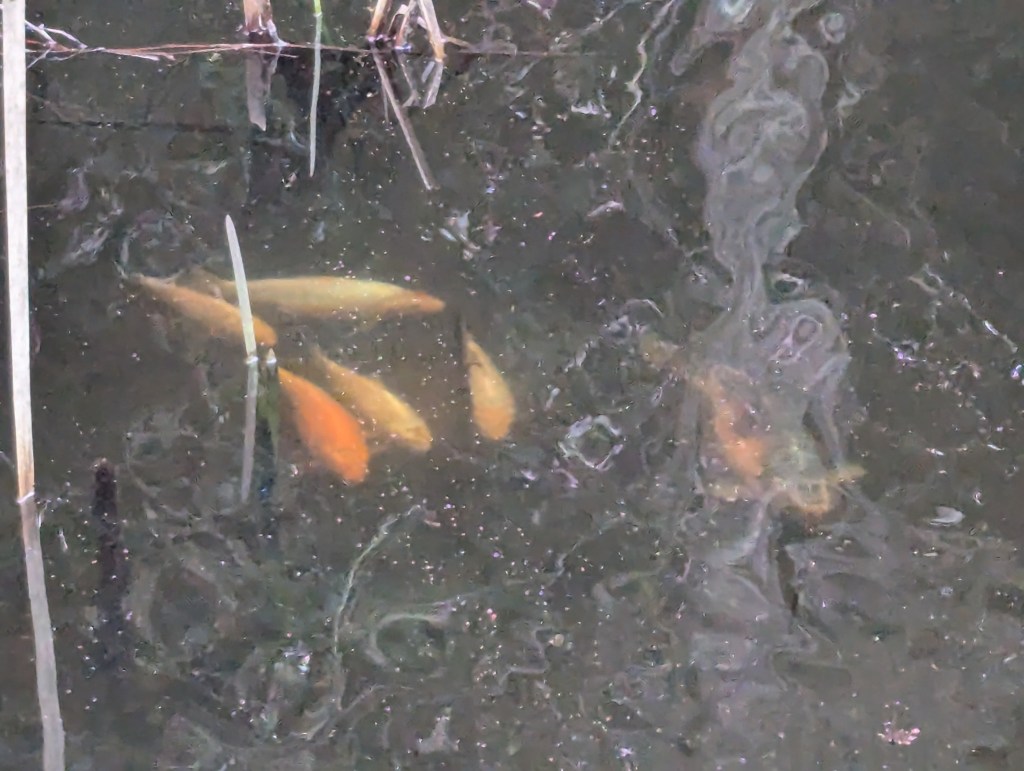
1. Lemna minor, duckweed does not grow much during cool winter weather, but lingers until sloshed by rain. After surviving through a dry January, it finally succumbed to rain during early February. Its monochromatic green revealed this more vibrant color below.

2. Viburnum tinus, laurustinus is not among my favorites. I seriously do not understand why it is as popular as it is. Nonetheless, several feral specimens inhabit some of the less refined landscapes. I do appreciate how the white bloom of this specimen is not blushed.

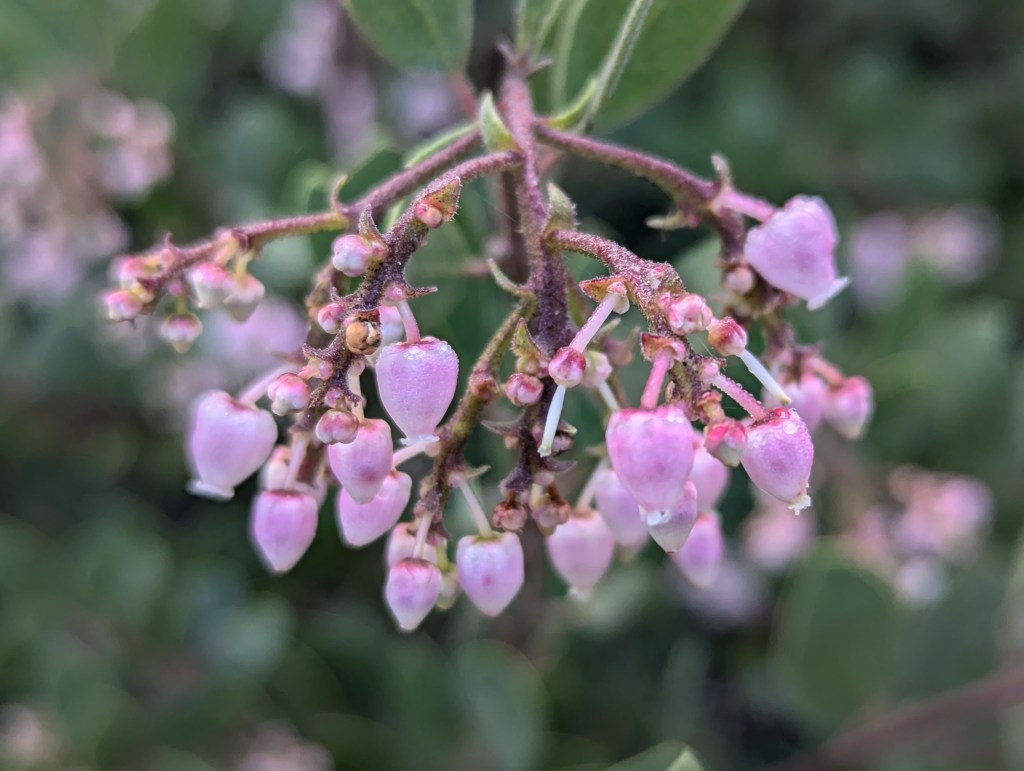
3. Arctostaphylos X densiflora ‘Howard McMinn’ manzanita qualifies as a locally native species, but is actually an unnatural hybrid of two species that, although native close by, are not locally native. I should not be so critical. It performs well within our landscapes.

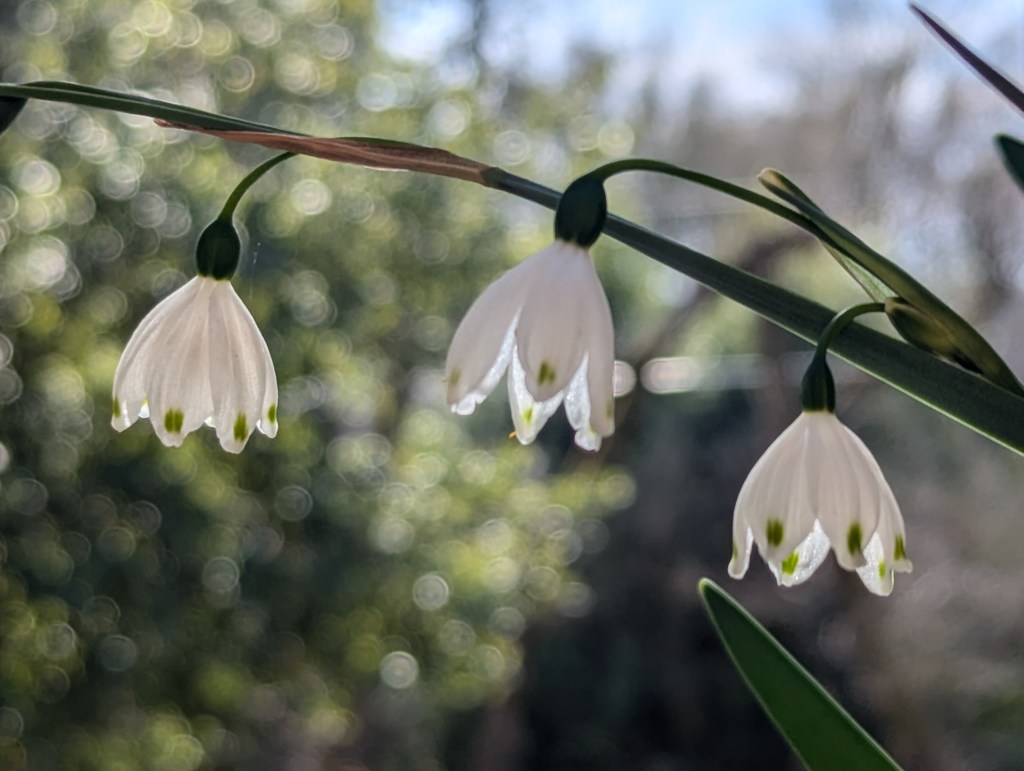
4. Leucojum aestivum, summer snowflake does not wait for summer to bloom. We know it as snowdrop because it blooms when real snowdrop, Galanthus nivalis, would bloom. There is no confusion since real snowdrop is very rare here. I have actually never seen it.

5. Iris X germanica ‘Rosalie Figge’ bearded iris is redundant to a similar picture two and a half months ago, but continues to bloom. I am beginning to wonder if it ever stops now that it has been doing so continually for so long. Fortunately, no one is bored with it yet.

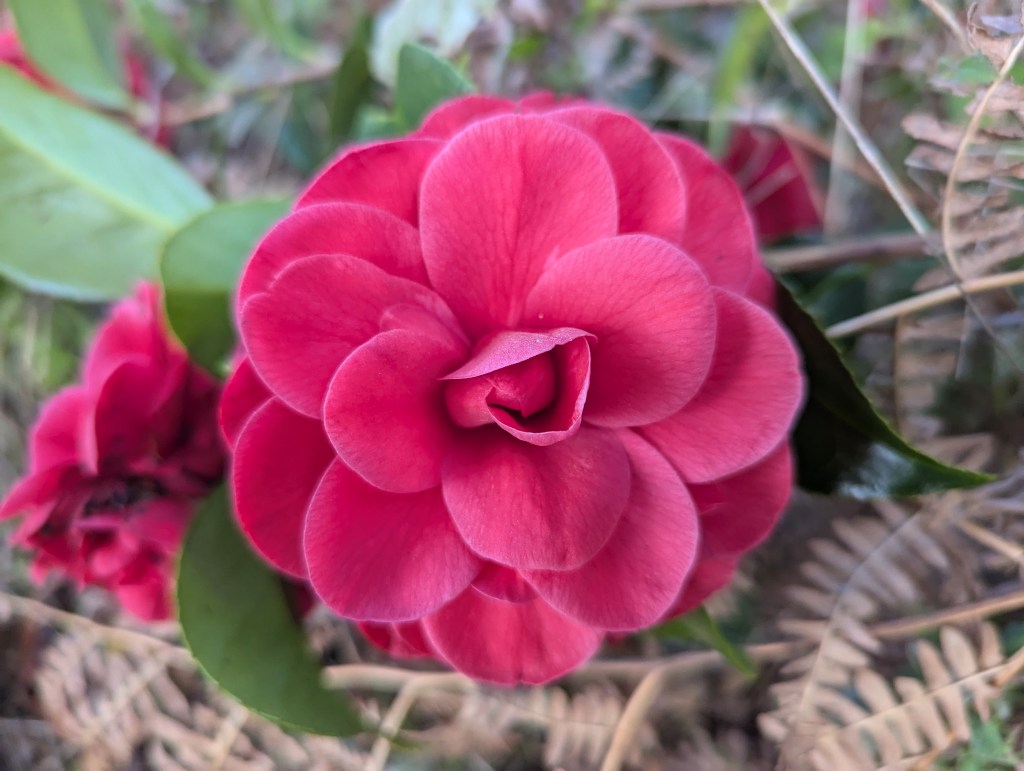
6. Camellia japonica, camellia is a different unidentified cultivar than that which posted with ‘Rosalie Figge’ bearded iris two and a half months ago, so is not so redundant. Most camellias were not blooming then, and even now, many are only beginning their bloom.

This is the link for Six on Saturday, for anyone else who would like to participate: https://thepropagatorblog.wordpress.com/2017/09/18/six-on-saturday-a-participant-guide/

Purple Leaf Plum

Purple leaf plum bloom is more colorful than its purplish foliage.

There are actually several different purple leaf plums, Prunus cerasifera, to provide colorful white or pink bloom sometime between the middle of winter and the middle of spring, followed by colorful bronzy or purplish foliage through summer. Some also provide good fruit, which can unfortunately be messy if it is not harvested. Most stay quite compact, less than twenty feet tall and broad, so are proportionate to small garden spaces. ‘Hollywood’ is the largest, but rarely gets more than thirty feet tall, and not quite as broad. Prunus X cistena does not get much more than six feet tall and broad.

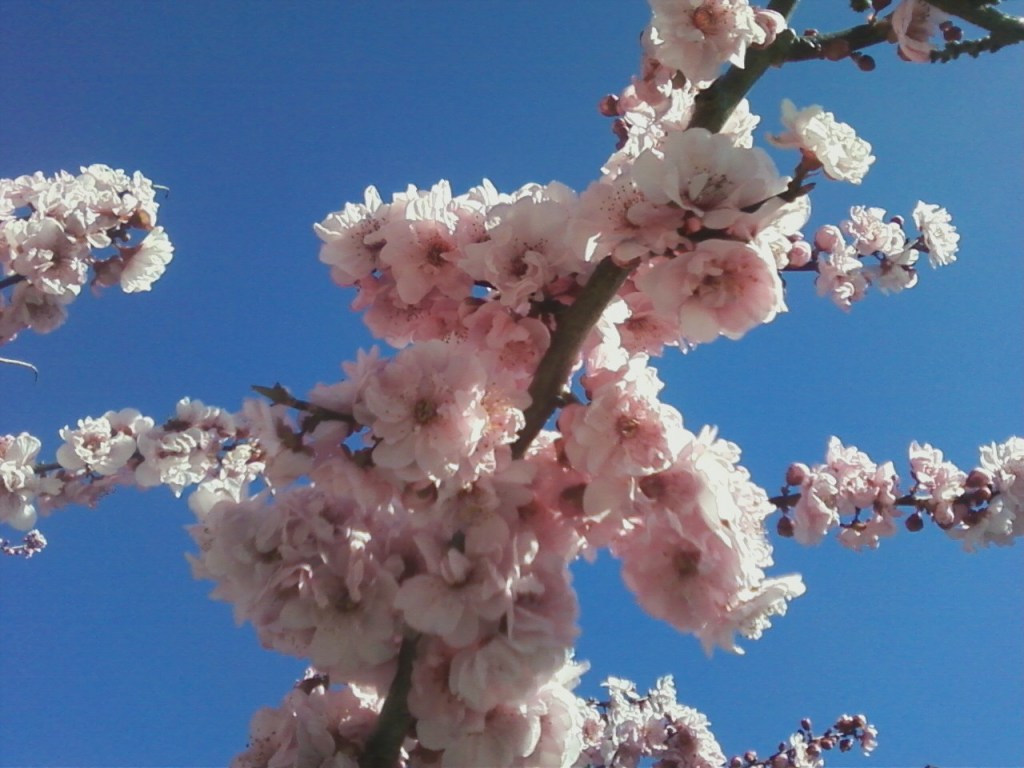
Because each cultivar has a distinct personality, it is important to match trees when adding or replacing trees in a grove. The fruitful ‘Atropurpurea’ has single white flowers in spring, followed by bronzy red new growth that turns purplish in summer and reddish brown in autumn. ‘Krauter Vesuvius’ has single pale pink flowers and the darkest foliage, but lacks fruit. ‘Thundercloud’ has similar or paler flowers, lighter or more bronzy foliage, and sometimes produces tangy red fruit about an inch wide. Prunus X blireiana (illustrated) fades to bronzy green by summer, but has handsome branch structure and double pink flowers that are slightly fragrant. Unlike plums that are grown for larger and more abundant fruit, purple leaf plums do not need much pruning.

Installing Bare Root Cane Berries

Blackberry canes are not at all “low maintenance”!

The fruits of summer are still a few month away. The work necessary to produce them needs to get done now though. Just like bare root trees, bare root raspberry canes get planted while dormant in winter, and later require intensive specialized pruning to keep them in control and to promote abundant production. Canes that are already established need to get pruned now and every winter.

New plants should be planted about two or three feet apart, and then cut back so that only a single bud is visible above ground. Root barriers should keep them from venturing under fences and into neighbor’s gardens, particularly since south or west facing fences are ideal spots to grow raspberries. Alternatively, raspberries can be planted in sunken #15 cans (15 gallon nursery pots), with or without the bottoms cut off. Cans should be buried up to their rims because any exposed black vinyl collects warmth from the sun, which is uncomfortable for the roots within. Mulch should insulate the soil until new foliage provides shade.

The few new canes that should develop during the next few months should be able to support their own weight, but may be easier to work with if tied to a fence or trellis. The popular everbearing types, like ‘September’, ‘Heritage’, ‘Summit’, ‘Golden Summit’ and ‘Fallgold’ may produce fruit on top of their new canes by autumn. The tops of these canes should get cut down as low as fruit developed during the following winter. The remaining lower portions of canes that did not produce fruit in the first year should produce fruit by the second summer, and should be pruned to the ground as the fruit finishes.  

As the spent canes get removed, about five to ten of the best new canes should be selected and tied in place if desired. All other canes should be cut to the ground. Like the canes of the previous year, the selected canes should develop fruit on top in autumn and get pruned as they finish in winter, and then develop more fruit down low before getting pruned out during the following summer. This process should be repeated annually.

‘Willamette’, ‘Tulameen’ and ‘Canby’ are traditional summer bearing raspberries. They do not produce in their first year, and will need to be pruned to about five feet tall during the following winter. As these canes develop fruit, many new canes emerge below. Every winter afterward, about five to ten of the new canes should be selected and pruned to about five feet as spent canes and unneeded canes get cut to the ground.

Horridculture – Common Names

Snowdrop is Galanthus nivalis. Snowflake is Leucojum vernum. Snowdrop is the rarer of the two. I have seen it only in pictures from other regions. The potential for consequences of its misidentification are therefore quite minimal. That is fortunate. I learned Leucojum vernum as snowdrop. Locally, no one ever corrected this transgression, probably because no one here was aware that it was a transgression. Most likely learned it the same as I did. Similarly, we learned heaths as heathers. Since heathers are very rare here, there is not much to compare heaths to. Fortunately, snowdrop, snowflake, heath and heather all have botanical names, which are universally the same everywhere. Well, at least they should be. During the past few years, I have noticed that the tree that I leaned as Eucalyptus pulverulenta is now Eucalyptus cinerea, and what I knew as Eucalyptus cinerea is now Eucalyptus pulverulenta. It is as if the two have simply traded names. Now that more information than ever in history is so readily available online, it is amazing what information is unavailable. I can confirm the identity of neither species of Eucalyptus! Many modern cultivars, particularly hybrids, lack species names between their genus name and cultivar name, as if such designations are no longer important. In that regard, their botanical names are no more defining than their common names. At least some of the common names are entertaining, such as pig face, pig squeak, chicken liver plant, brazen hussy, naked lady, twisty baby, mother-in-law’s tongue, sneezewort, shaggy soldier, corpse flower, sticky monkey flower, bear’s breeches, sticky willy, turkey tangle frog fruit, laurel-leaf snail seed, love in a mist, love in a puff, dead nettle, butter and eggs, teasel, fleabane and yesterday, today and tomorrow. Goodness, that is a big list, and it could go on.

Stock

Stylishly colorful stock is alluringly fragrant.

Marigold is a warm season annual that gets more popular later than earlier in its season. It is prominent for autumn but does not last for long into winter. Stock, Matthiola incana, is a cool season annual for the opposite extreme of the year. It is popular for late winter and spring but may not perform well into summer warmth. It is unreliable as a perennial here.

Stock bloom can be white, or rich shades or pastels of purple, red, pink, yellow or cream. Most bloom is double, but some is single. Floral fragrance is alluringly rich and complex. It resembles that of carnation, but is notably stronger. The narrow leaves are oblong with pastel grayish green color. Removal of deteriorating bloom promotes subsequent bloom.

Garden varieties of stock are quite different from florist varieties. For home gardens, most popular stock is relatively compact, and blooms freely. Florist stock is taller, and tends to bloom abundantly but at about the same time. In home gardens, florist stock may require staking if it grows as tall as three feet. Home garden stock may grow no taller than a foot.

Warm Season Annuals Start Early

Nasturtium grows best directly from seed.

Cool season annuals that started late last summer should be finishing soon. A few might have potential to continue as perennials. However, about as many are done or decaying. Now, warm season annuals, or summer annuals, should eventually start to replace them. If it seems early, it typically does for such bedding plants before their respective seasons.

Some annuals can not decide if they are cool season annuals or warm season annuals. Stock is actually a cool season annual but becomes more popular now for spring bloom. Wax begonias might have survived through winter to resume growth for another season. Primrose is a cool season annual that rarely gets too warm locally to continue blooming.

These indecisive annuals can actually be an asset to home gardens. Stock, for example, can replace old pansies while it is still too early for petunias. It compensates for cool and warm season annuals with more definite seasons. Petunias will be ready before stock is done. Some garden enthusiasts replace seasonal annuals for each of their four seasons.

Warm season annuals, like all annuals, are contrary to sustainability. Although many can perform as perennials, few actually do. Those that truly are annuals complete their entire life cycles within one year. Their main purpose is to provide floral or perhaps foliar color. Texture and form are also assets. Annuals are popular because they serve this purpose.

The most popular of warm season annuals grow from cell packs. Those that start earliest are already available, including wax begonia and lobelia. Petunia, impatien and annuals that crave more warmth will become available later. Four inch potted annuals are bigger than those in cell packs, but more expensive. They are even more expensive in quantity.

Many more varieties of warm season annuals are available as seed. Countless more are available online than from nurseries. However, seed requires more effort. Most must start early. Although most grow well in flats or cells, some prefer direct sowing. Sunflower and nasturtium are very vulnerable to the distress of transplanting. Seed is the logical option. Many seed are less expensive than six cell pack seedlings.