Candelabra Tree

Candelabra tree resembles cacti, but is not related.

The weirdly sculptural succulent stems of candelabra tree, Euphorbia ingens, dark green but devoid of any real foliage, are striking in the right situation. These stems resemble those of unrelated cactus, with longitudinal ridges topped with spines. Although botanically interesting, the minute greenish yellow flowers that bloom in autumn and winter on the ridges of the upper portions of the upper segments are not much to look at. Deep red seed capsules that turn purple as they ripen sometimes develop in milder climates after the flowers are gone, but are almost never seen locally.
Good exposure is preferred. Candelabra tree are better structured and more prominent standing alone away from other larger trees and shrubs. Cool winters and occasional frosts limit their height to not much more than fifteen feet; and unusually cold frost can actually kill big specimens back severely. However, in sheltered areas and milder climates, candelabra tree can get twice as tall. Soil should drain very well and get dry between watering. Regular watering can cause rot, particularly in dense or rich soil.
The main problem with candelabra tree is the remarkably caustic latex sap, which can be dangerous to children, chewing dogs or even those who need to prune the stems. Fortunately, candelabra tree needs very little attention, and only needs to be pruned where the stems get in the way or start to lean against fences or roofs. The caustic sap prevents insect problems.

‘The Wise Old Owl’

Filoli

(This article is several years old, so contains outdated information.)

The sixteen acres of gardens of Filoli are spectacular and horticulturally compelling throughout the year. However, the weather through winter, although more pleasant than other places in the world, is not always quite so compelling or conducive to garden tours. At Filoli though, this is not a problem. More than six hundred volunteers and the Filoli staff merely bring the outdoors indoors, by selecting materials from the garden to adorn the interior of the 36,000 square foot Filoli residence for ‘The Wise Old Owl’, the annual fund raising Holiday Traditions Boutique.

While perusing The Wise Old Owl merchandise, guests can enjoy how so much more than flowers can be brought in from the garden to deck out the home. Bare stems, gnarly limbs, evergreen foliage, pine cones, bark and all sorts of bits and pieces of the autumn and winter garden demonstrate the potential for alternatives to traditional cut flowers that we may not even recognize as useful materials in our own gardens. Of course, there will be no shortage of the less abundant flowers that bloom through the season and decoration that are not out of the garden, as well as live music to enhance the display. Regardless of horticultural interest or boutique merchandise, the grand residence at Filoli is worth visiting even on the least eventful day of the year.

There are too many events within the Event to describe here. Guests can visit http://www.filoli.org to plan ahead and make reservations for buffet lunches and evening bistro dining, as well as an elegant Saturday Evening Dinner Party with dancing in the Ballroom. Children six to twelve years of age can enjoy a Children’s Tea on the finale of The Wise Old Owl on December 3.

The Wise Old Owl begins in only a few days on November 25, and continues through December 3. The hours of operation and admission are variable relative to the various events throughout the main Event. Reservations for specific events can be arranged and more information can be found online

Tickets can be purchased online, by fax or by telephoning Filoli weekdays between 9:00 a.m. and 4:00 p.m. At 650 – 364 8300 X 508. Order forms for fax transactions can be downloaded from the website and sent to 650 – 503 2090. Admission is limited; and tickets get exhausted somewhat early. Tickets are neither refundable nor exchangeable. Filoli is located at 86 Canada Road in Woodside (94062).

Autumn Fever

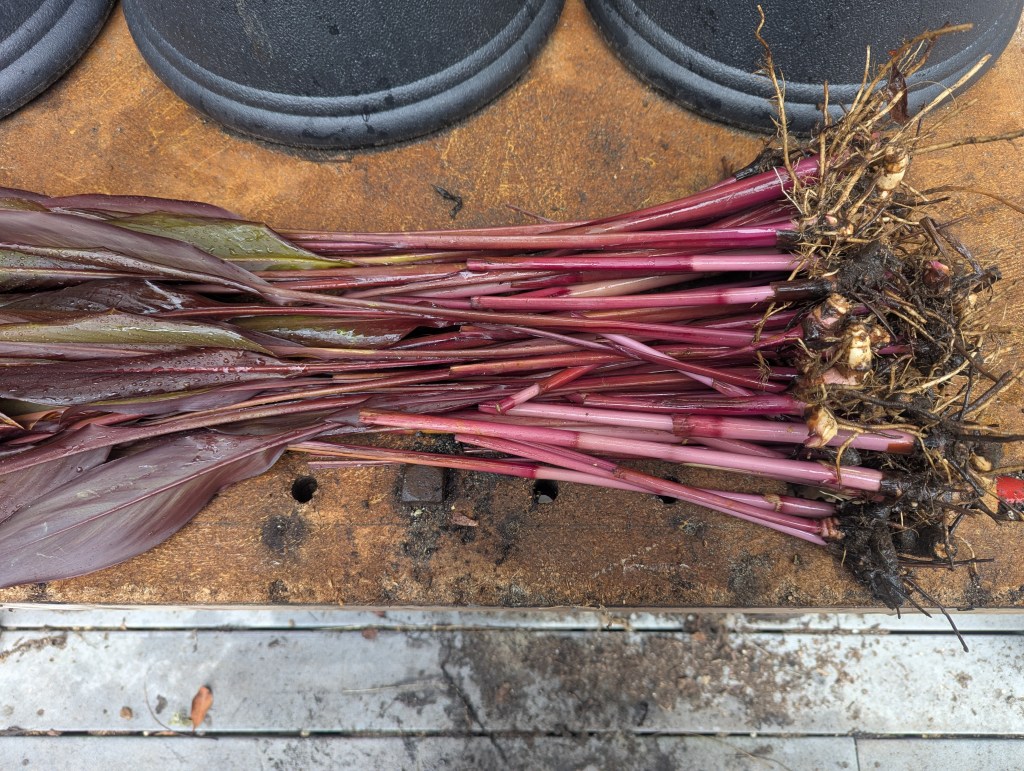
‘Purple Ribbon’ sugarcane has been growing like a weed, but should go into the garden.

Autumn is the time for planting. So is winter. It is difficult to resist new acquisitions for the garden. However, there is already so much in the nursery that needs to be planted into the garden that I should not consider acquiring more.

I like to think that I purchase almost nothing for the garden. I grow just about everything that I want to grow from bits and pieces from other gardens. I purchased sugarcane, though, because I could not find any of a cultivar that I wanted in another garden. Now that it has been growing like a weed here, I returned to the online catalogue of one of the nurseries that sells sugarcane to see what else I want.

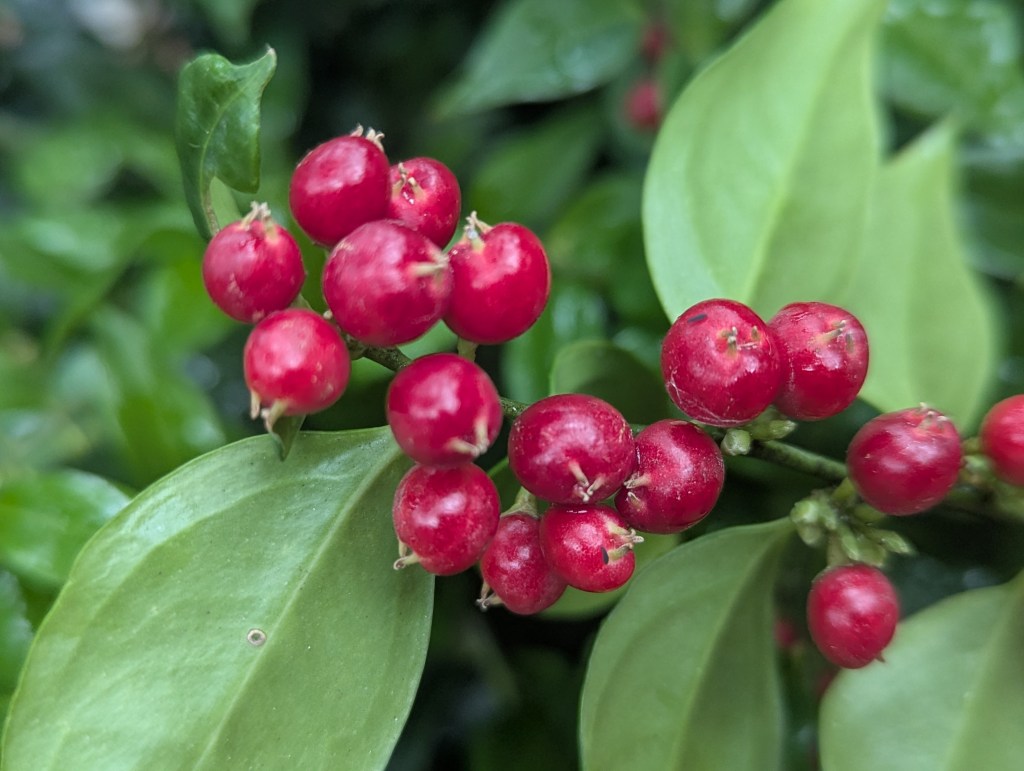
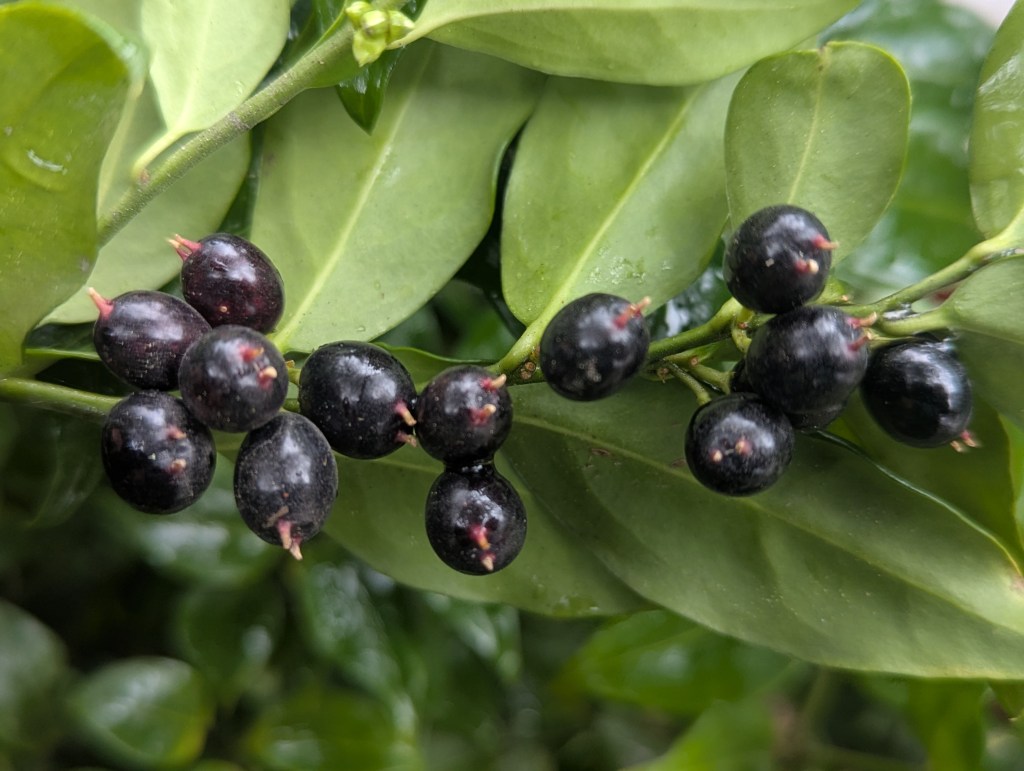
Planting Justice grows and sells many fruit and vegetable plants that I want to purchase. Because the primary nursery is in Oakland, only about an hour and a half away, I could purchase directly, rather than by delivery. My wish list from them includes medlar, yacon, currant, sunchoke, lingonberry, moringa, kangaroo apple, raisin tree, earth chestnut, chestnut, cinnamon vine, tree collard, sea berry, aronia and highbush cranberry. The twenty items that I want cost only $316, but are contrary to my tradition of purchasing almost nothing for the garden. Fortunately and unfortunately, I will most likely refrain for another year, when I expect the garden to be refined enough to accommodate them.

Freeman Maple

Red maple combines with silver maple.

It combines the autumn foliar color of red maple with the lacier foliar form of silver maple. Freeman maple, Acer X freemanii, is a hybrid of the two. It occurs naturally where ranges of its parents overlap. However, most modern garden cultivars are products of intentional hybridization. Like silver maple, it does not need much chill to exhibit autumn foliar color.

Freeman maple inherits other attributes from both its parents. It combines rapid growth of silver maple with structural integrity of red maple. Although it gets bigger than red maple, it is not as imposing as silver maple. It develops high branches like silver maple, but also is symmetrical like red maple. Big roots are about as complaisant as those of red maple.

Mature Freeman maple trees can grow about forty feet tall and broad. Autumn foliar color is vivid orange and red, and lasts longer than that of red maple. Since Freeman maple is a hybrid, it is mostly sterile. It can not generate an annoying abundance of seed. Nor can it naturalize in favorable climates. It is an exemplary maple for mild climates such as this.

Rain Will Increase Until Late Winter

The weather is about to change.

Defoliation is the colorful beginning. It indicates that the weather is getting progressively cooler. It then gets messy with the first rain. This is inevitable at this time of year. After all, it is late autumn. Storms will become more frequent as weather simultaneously becomes cooler. So, while gardens are getting wetter, they also take longer to dry between storms.

Ironically, vegetation uses much less moisture while it is so abundant. Deciduous foliage can not perform any evapotranspiration after it defoliates. Evergreen foliage is much less vascularly active while cool. Roots can not utilize all the moisture that autumn and winter rain provides. Soil in some areas might stay moist from now until next spring or summer.

Conversely, summery weather is innately arid and warm. That is how the Mediterranean climate here operates. Moisture is either scarce or abundant. Rain will eventually stop in spring, and then not resume until next autumn. Summer thundershowers are uncommon. Gardening could likely be easier with a bit less rain for winter, and a bit more for summer.

With more rain expected, irrigation needs seasonal adjustment. Such adjustments might need to be incremental, since weather changes incrementally. Manual irrigation might be either less frequent or less voluminous, or both. The same applies to automatic systems, which have a disabling ‘rain’ option. It turns irrigation off without modifying the schedule.

Besides necessitating modification of irrigation, rain can also be messy. It dislodges and accelerates the deterioration of defoliating deciduous foliage. It causes even formerly dry soil to become muddy. A bit too much rain can cause erosion. Cleaning up such mess is less pleasurable while the weather is wet and cool. Then, the weather gets messy again.

Rain can not postpone all gardening. Spring bulbs must get into their garden soil prior to winter chill. Dormant pruning happens later in winter, prior to spring. Fortunately though, gardening is less involved than it is during spring and summer. Maintenance of tools and sorting seed can be indoor tasks for rainy days. So is shopping online for seed, plants or garden tools.

Six on Saturday: Autumn Or Not?

Some vegetation is responding to cooler autumn weather as it should while some refuses to concede. Autumn foliar color is not so spectacular this season.

1. Canna musifolia, canna foliage is beginning to discolor in response to cooling autumn weather. I will groom such foliage out through the season until there is nothing left of it.

2. Plectranthus scutellarioides, coleus is not so easily convinced that it really is autumn. It is as vigorous now as it was for summer. I suspect that it will not last for long like this.

3. Cornus florida, flowering dogwood is already defoliated, and it did so quickly without much color. Others were somewhat more colorful, and were retaining their color better.

4. Acer palmatum, Japanese maple, like coleus, is not convinced that it really is autumn. This particular specimen is as green as it was for summer. Others are beginning to color.

5. Strelitzia nicolai, giant bird of Paradise supposedly blooms randomly. However, ours prefers to bloom through summer and finish about now, so is actually right on schedule.

6. Impatiens hawkeri, New Guinea impatiens, like coleus and Japanese maple, is not yet convinced that it is autumn. It will likely succumb to autumn chill when the coleus does.

This is the link for Six on Saturday, for anyone else who would like to participate: https://thepropagatorblog.wordpress.com/2017/09/18/six-on-saturday-a-participant-guide/

Eastern Red Cedar

Eastern red cedar is actually a juniper.

One of the less common and certainly least familiar of junipers happens to be the most culturally and environmental significant juniper in North America, even though it is not even known as a juniper. Juniperus virginiana is instead known as the Eastern red cedar. It has a vast range, including every state east of Colorado, as well as Quebec, Ontario and even Oregon to the west. In some areas within and near the natural range, fire suppression has allowed Eastern red cedar to become invasive.

Mature trees are mostly less than fifty feet tall, but are the biggest evergreen trees in Kansas nonetheless. The largest Eastern red cedars can get almost ninety feet tall. Most are well branched from top to bottom unless pruned for clearance. The fibrous bark is ruddy brown, but not often seed from the outside.

Foliage and fruit are rather variable. The prickly juvenile leaves of young plants and interior stems of mature plants can be rather annoying. The scale-like adult leaves are more typical of junipers. Male trees produce pollen that can be a significant allergen. Female trees produce sporadic, small berries in blue or purplish black, that are quite popular with certain birds through winter.

Prior to the discovery of the incense cedar in the west, Eastern red cedar was the common aromatic cedar that was used to make pencils and to laminate cedar chests and closets to protect woolens and natural fibers from moths. Since it is so repellent to insects and decay, it is commonly used as fence posts. Native American Indians also used posts of Eastern red cedar, painted red with blood of the animals they hunted, to mark the boundaries of their hunting ranges. The name of Baton Rouge, which means ‘red stick’, was actually derived from such marking posts.

During the Dust Bowl drought of the 1930s, and before becoming known as a potentially invasive species, Eastern red cedar was promoted by the Prairie States Forest Project as a resilient wind break. They tolerate drought, harsh exposure and inferior soil. They can be planted close together to fill out and gain height more efficiently. More information about Eastern red cedar can be found where I got much of this information, at the Great Plains Nature Center.

Chimney Clearance

Combustible debris accumulates in gutters and behind chimneys.

There are several reasons why fireplaces are not nearly as commonly used as they once were. Modern building regulations have prevented construction of newer fireplaces (except pellet stoves). Many fireplaces that were ruined by the Loma Prieta Earthquake were never replaced; partly because there are other more efficient sources of heat, and partly because of the concern of air quality. The fuel that was once relatively easy to obtain from orchards that were getting removed to relinquish their land for urban development has been exhausted.

Regardless, those of us who use fireplaces need to be certain that they do not become overwhelmed by trees or climbing vines. Cypress, cedars, pines and some fan palms are remarkably combustible and hazardous when they get too close to chimneys, particularly if the roofs below are covered with old fashioned cedar shingles.

All trees and vines should be pruned away from chimneys so that they are out of reach of sparks and heat. The more combustible trees should get more clearance than deciduous trees (that are bare through winter) need. Nearby Monterey pines, Cypress and any trees that tend to accumulate debris should be groomed of debris, even if their limbs are already pruned back for sufficient clearance.

Trees should also be pruned for clearance from roofs and gutters; and any accumulated debris should be removed. Even before the weight becomes sufficient to cause damage, the motion of limbs in the wind is abrasive to roofs. Older roofs, particularly cedar shingles, will deteriorate under any accumulation of organic debris, particularly as it gets wet from rain.

Why Bother?

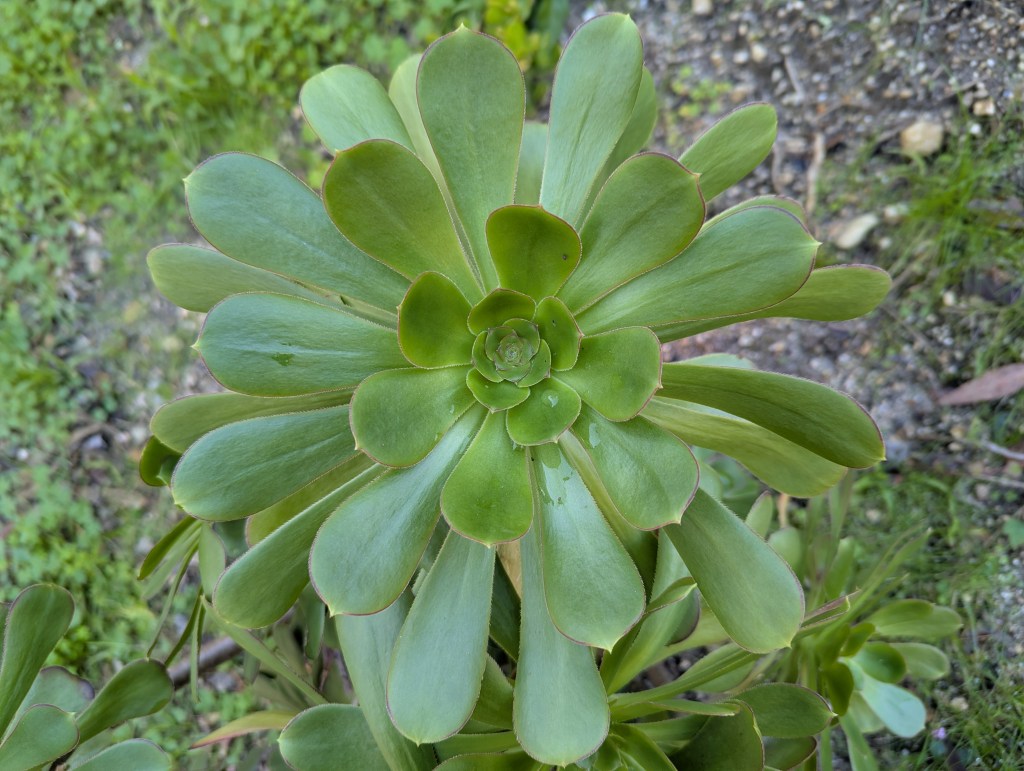
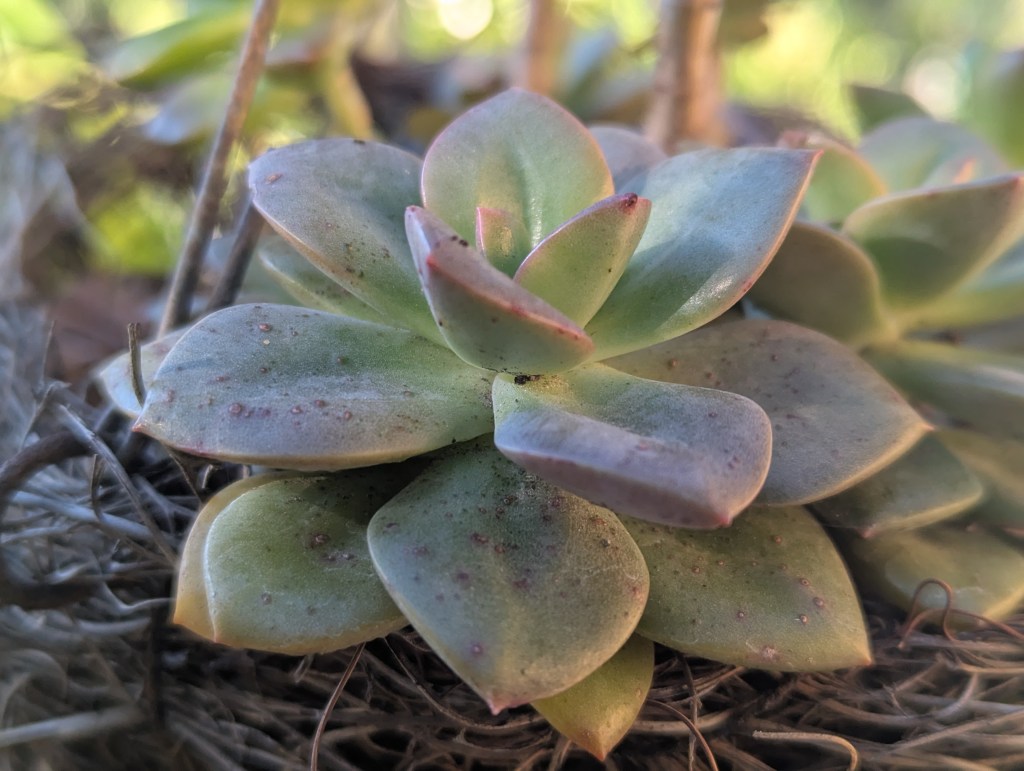
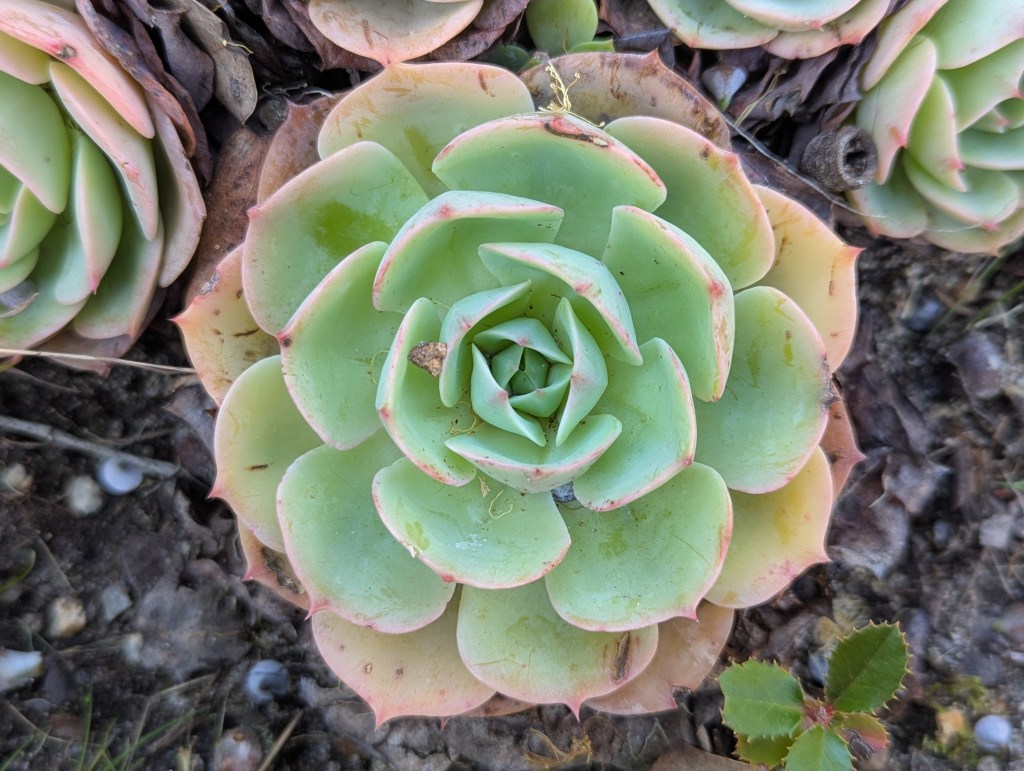
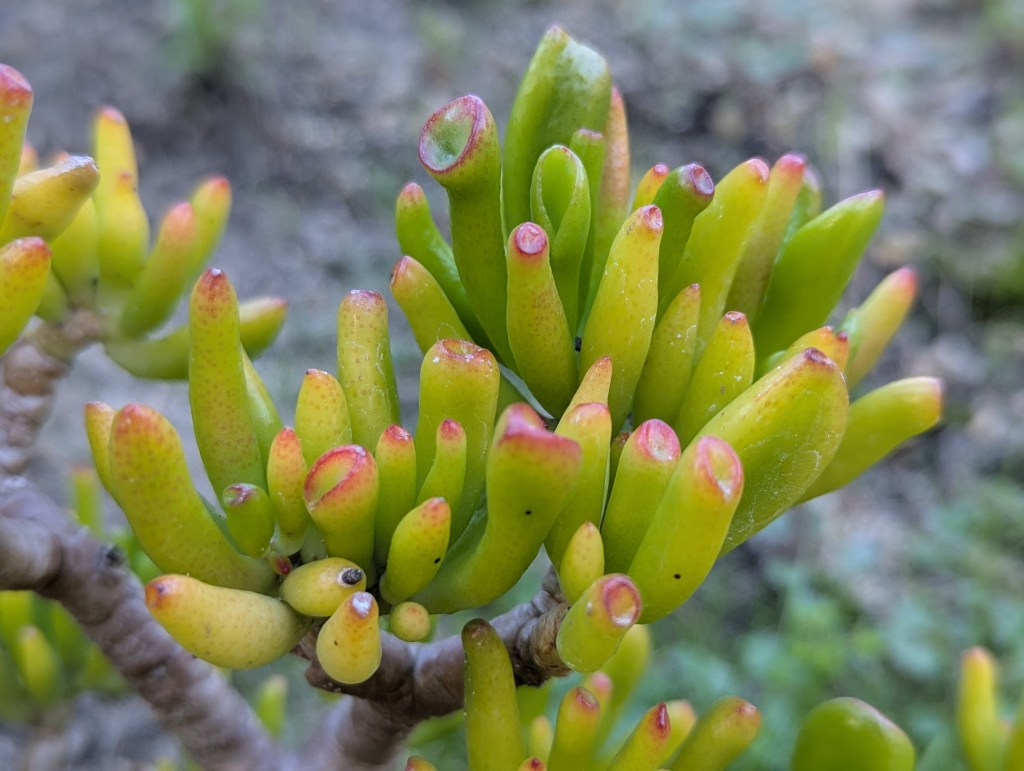
Nasturtiums were a good choice for my downtown planter box, or so I thought. I know that people pick flowers from such planter boxes. I figured that nasturtiums bloom so abundantly that no one could possibly pick all the flowers from them. Technically, I was correct. Technically, not all of the flowers were picked. However, there were times when only a few of the abundant flowers remained. I replaced them with some sort of compact aeonium like perennial that I can not identify. It forms dense mounds of yellowish green succulent foliage that I figured no one would bother. I do not mind when I notice a few pieces missing. There is enough to share. What I do mind is that someone clear cut harvested enough to leave this bald patch. The left half of the picture demonstrates what it should look like. What is worse is that there is so much of it extending outside of the railing that would not have been missed if it had been taken. Also, as the picture below shows, the more prominent common aeonium is not exempt from such pilferage. So, why do I bother? Well, I still enjoy my downtown planter box.