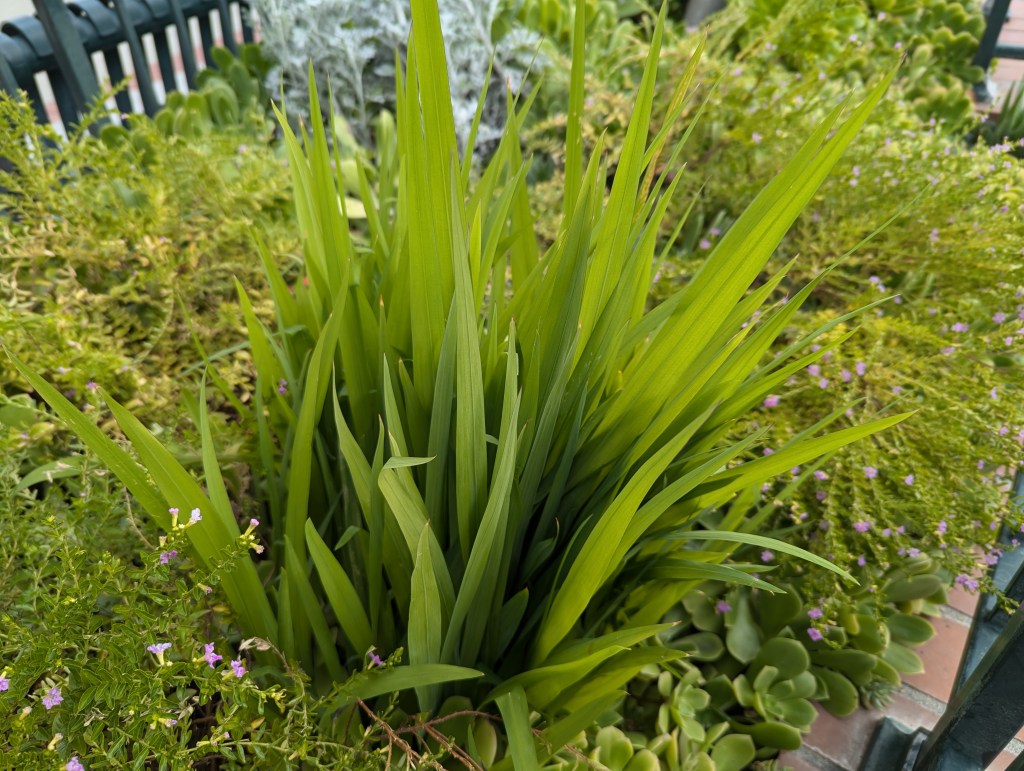
Many exotic species that became aggressively naturalized here escaped from home gardens and landscapes before anyone who enjoyed growing them was aware of how invasive they could be. Although I am aware of this, I was not particularly concerned with it while I lived within a suburban area in town through the 1990s. If I chose to grow something there that had potential to be invasive, it had no place to escape to. I mean that, from my suburban home garden, it could not migrate into a natural ecosystem to naturalize into it. Even if seed from something managed to get into the suburban drainage system, which flows into Los Gatos Creek, it would not be the first. I mean that anything that could naturalize there had likely already done so from seed from the countless other home gardens and landscapes in town. I have not lived within that suburban neighborhood for a very long time, though. I need to be more careful with what I select to inhabit my home garden. For example, the yellow flag iris and montrebetia that I enjoy growing at work can not inhabit my home garden, from which each has potential to escape and naturalize into the wild. The montbretia seems to be sterile and noninvasive, and I have been acquainted with it since childhood, but I just do not trust it. Another variety of montbretia that has inhabited my downtown planter box since before my time, and that I have been acquainted with for many years, also seems to be sterile and even less invasive than my first variety. After all this time, it was tediously slow to migrate outwardly, and provided me with only a few spare bulbs. Nonetheless, I can only enjoy it within the confinement of the downtown planter box.