Frisee

Frisee is a type of endive.

Many popular salad greens are somewhat discriminating about the seasons here. Some dislike even a minor chill during winter. Several more dislike arid warmth during summer. Frisee is a sub variety of curly endive, Cichorium endivia var. crispum, that dislikes both. It prefers weather from late summer through autumn, and from late winter through spring.

Frisee is related to chicory, which includes radicchio, puntarelle and Belgian endive. It is less closely related to dandelion. Because it is relatively unfamiliar locally, some know it as chicory or curly endive. It is typically a component of fresh green salads. Alternatively, it sautees nicely, or mixes with other cooked greens. Frisee is apparently quite versatile.

Frisee may be unavailable as seedlings in cell packs from nurseries. Because individual plants are small, it is most practical to grow them from seed anyway. Seed germinates in about a week. Seedlings mature in about a month and a half. Mature frisee is only a foot wide. It requires full sun exposure with frequent watering. Phasing prolongs productivity.

Cool Season Vegetables For Autumn

Tomatoes need warmth to be productive.

Warm season vegetables will be productive until autumn. Several will produce until frost. Those that grew slowly during mild weather through last spring are performing well now. Summer does not end until later in September. Summery weather may not end until a bit later. Several climates never get frost. Yet, cool season vegetables are now seasonable.

This does not require productive warm season vegetables to relinquish their space. Most should stay until they finish. It only means that it is likely too late to grow any more warm season vegetables. Also, it is time to start growing any cool season vegetables that grow from seed. Transitioning between seasons begins prior to the actual change of seasons.

It is most efficient to sow seed for most vegetables directly into the garden. However, It is more practical to plug seedlings of some big vegetables somewhat later. Because only a few cabbages are adequate, there is no need to sow many of their seed. Instead, two six packs of seedlings may be sufficient. They are not very much more expensive than seed.

This applies to broccoli, cauliflower and many other large cool season vegetables. Their plugs or seedlings are available from nurseries while seasonable. Alternatively, they are easy to grow in cell packs or flats, from seed, in a home garden. This technique is useful for quantities that are expensive in cell packs. Also, more varieties are available as seed.

Of course, it is not much more effort to sow their seed directly into a garden. The problem with doing so is that warm season vegetables are not yet done. Sowing seed below and between them is an option, but interferes with later cultivation. Any relinquished space is necessary for smaller cool season vegetables. These really should grow only from seed.

Baby lettuces and small greens must be too numerous for plugging. Therefore, they must grow from seed. Peas are both too numerous and too sensitive to transplant for plugging. Transplanting damages cool season vegetables that are roots. Therefore, it is necessary to sow seed for beet, carrot, radish, turnip, and parsnip directly. Some can wait a bit later. Most cool season vegetables comply with phasing.

Jungle Update

New foliage is already beginning to replace older foliage.

Strelitzia nicolai, giant bird of Paradise is growing! It is not much growth, but it is more than expected. The specimens were heeled in about a month ago to begin the slow process of recovery from division and relocation. Within the damp soil of their temporary situation, they should begin to develop rudimentary roots without actually dispersing them too remotely prior to another relocation to their more permanent landscape after the beginning of the rainy season of autumn. In other words, the roots should begin to grow, but not grow too much.

They can grow more when they get settled within their permanent situation. This is done in two separate processes because the specimens are easier to monitor and irrigate prior to rain within the confined space where they are heeled in. Besides, they would not be very appealing within their permanent landscapes until they begin to recover. Once they begin to recover, they should grow faster, so will not be too unappealing for too long, and even if they are, it will be through winter, when fewer people are here to notice.

Anyway, while they begin the process of recovery and development of rudimentary roots, foliar growth is expected to be minimal. It was expected to stagnate for at least a month or so, and then to slowly resume as the minimal foliage that was retained deteriorates. Like root growth, foliar growth should accelerate after final relocation.

Instead, foliar growth is already accelerating, perhaps as a response to removal of so much of the original foliage while foliage is necessary to sustain rudimentary root growth. Perhaps these specimens actually are as healthy and as vigorous as they seem to be. Although this fresh new foliar growth will be more vulnerable to frost through winter, it is nonetheless gratifyingly encouraging.

Proud Land

Proud Land

‘La France’, in 1867, was the first hybrid tea rose to be hybridized. ‘Peace’, in 1945, was the first hybrid tea rose to be classified as a hybrid tea rose. Yes, it took quite a while.

Afterward, hybrid tea roses became very popular both for the cut flower industry and home gardens from the 1950s through the 1980s. Because of their single bold flowers that bloom on tall and sturdy stems from spring until autumn, they are still very popular as florist flowers. However, more florific floribunda roses became more popular for home gardens through the 1990s. Since the turn of the Century, all sorts of simpler shrubby roses, such as carpet roses, became more popular than all of the other types of roses. Hybrid tea roses and other types that produce comparably exemplary cut flowers require more specialized maintenance than most people want to commit to. Sadly, hybrid tea roses are now passe.

‘Proud Land’ was the first of the hybrid tea roses that I installed into my mother’s new rose garden in 1984. It came from Jackson & Perkins while Jackson & Perkins was still based out of Medford in Oregon. Unfortunately, it suckered so profusely during its first season that I wrote a letter to Jackson & Perkins about it. Jackson & Perkins generously replaced it for the following season. Also, my mother, who was unaware of the replacement, purchased another replacement. As if that were not enough, I managed to abscise all sucker and burl growth from the original while it was dormant for the following winter. So, three individual specimens of ‘Proud Land’ bloomed at the center of the small rose garden for 1985, which was the year that I graduated high school.

Technically, hybrid tea roses are at their best after about five years, but should probably be replaced before about ten years. ‘Proud Land’ continued to perform though, with no indication of deterioration, until I finally removed them in 2020. They live here now. I grew a few ungrafted copies from their pruning scraps. I should properly graft a few copies also. Realistically, there is no need to retire the originals.

Some consider hybrid tea roses to be passe. I consider them to be historical.

Six on Saturday: You Get What You Pay For

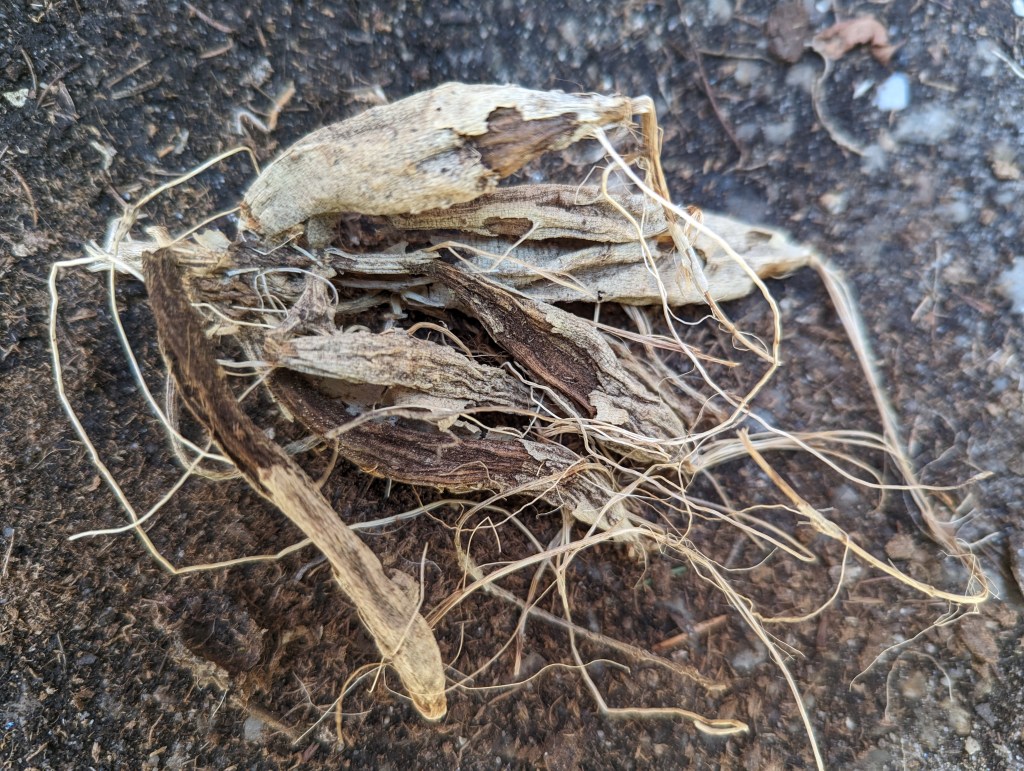
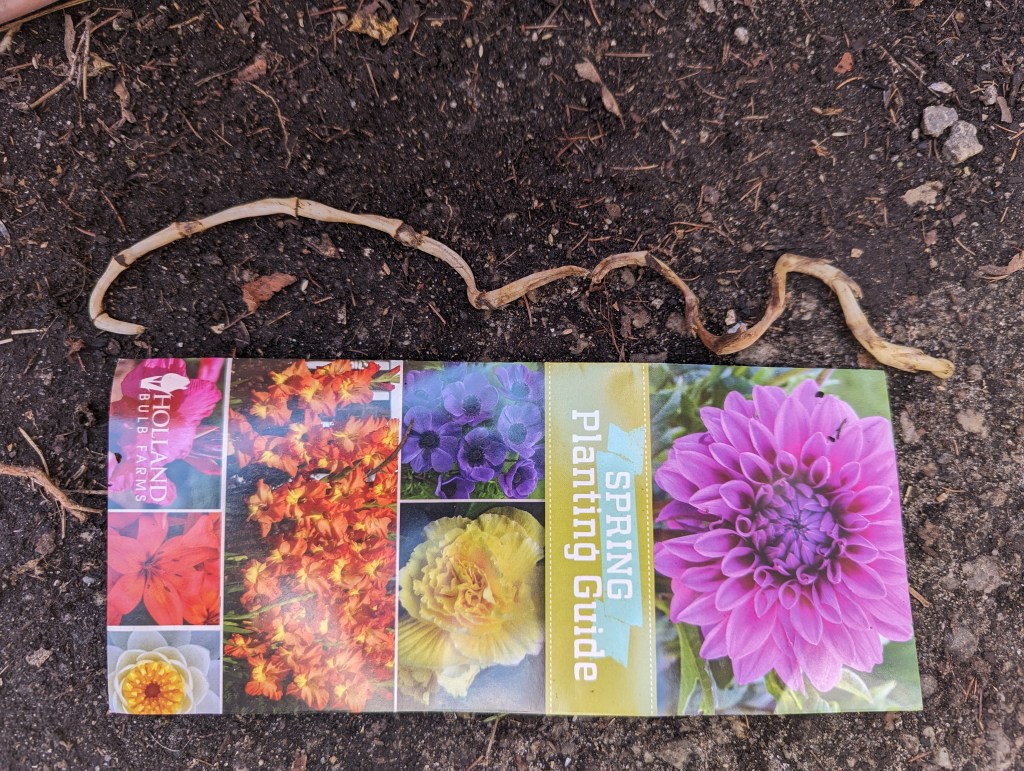
It all started when I succumbed to the temptation of cheap but out of season bulbs. They were actually canna rhizomes that did not work out so well. The supplier gave me credit, which I used to purchase cheap but out of season dahlia tubers. I suppose that I can not blame the supplier twice. I should have known better from the beginning than to violate my most basic rule against purchasing plant material, even if I try to justify doing so for work. Contrary to the title of these Six, ginger, elderberry and a dinky lime tree that cost nothing are working out quite nicely.

1. Dahlia X pinnata, mixed dinnerplate dahlias were purchased with the credit that I got for the ‘Red King Humbert’ Canna that were both virused and not ‘Red King Humbert’. I again fail to be impressed. I canned any that were not completely desiccated, but do not expect any survivors. I should have requested a total refund after the primary purchase.

2. Dahlia X pinnata, mixed dinnerplate dahlias grow through spring for summer bloom. I figured that, even without enough time to bloom, they could grow enough to replenish their resources before winter dormancy, and then grow and bloom next year. I assumed that tubers that are available this late had been refrigerated to maintain their dormancy. Instead, a few diligently tried to grow earlier, but could not escape from their packaging.

3. Zingiber officinale, ginger is not so limited by seasons. It grows whenever it wants to.

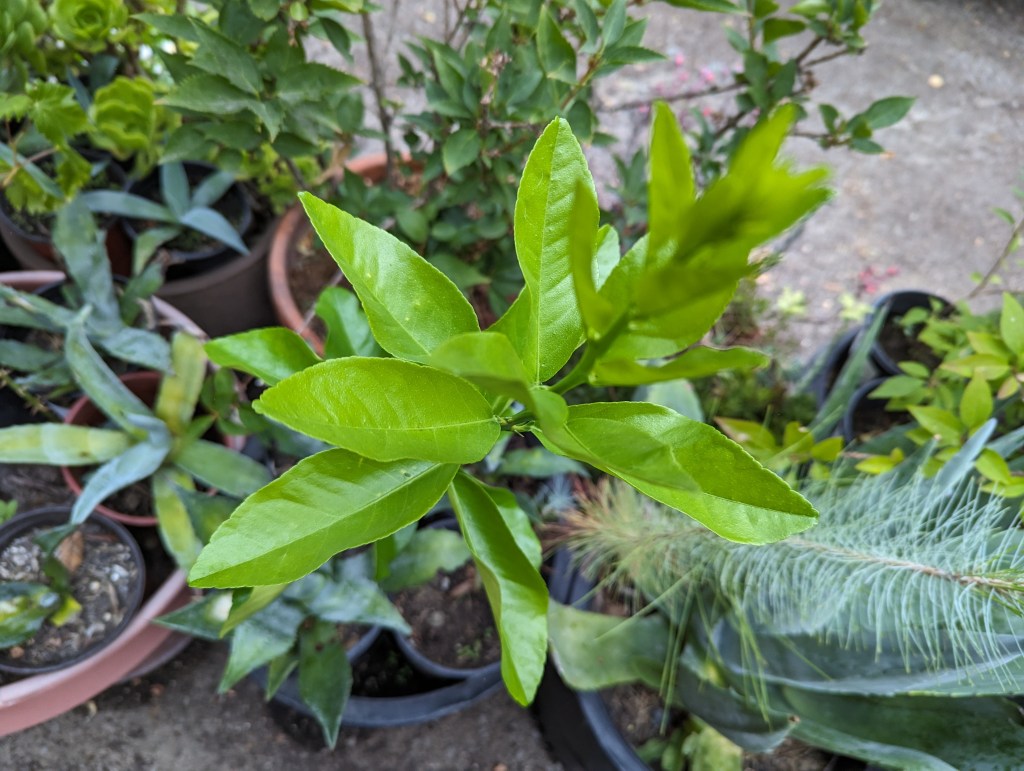
4. Citrus X latifolia ‘Bearss’, Persian lime grew from the stump of a tree that I pulled out of a neighbor’s yard. It cost nothing, but will eventually be worth more than I paid for it.

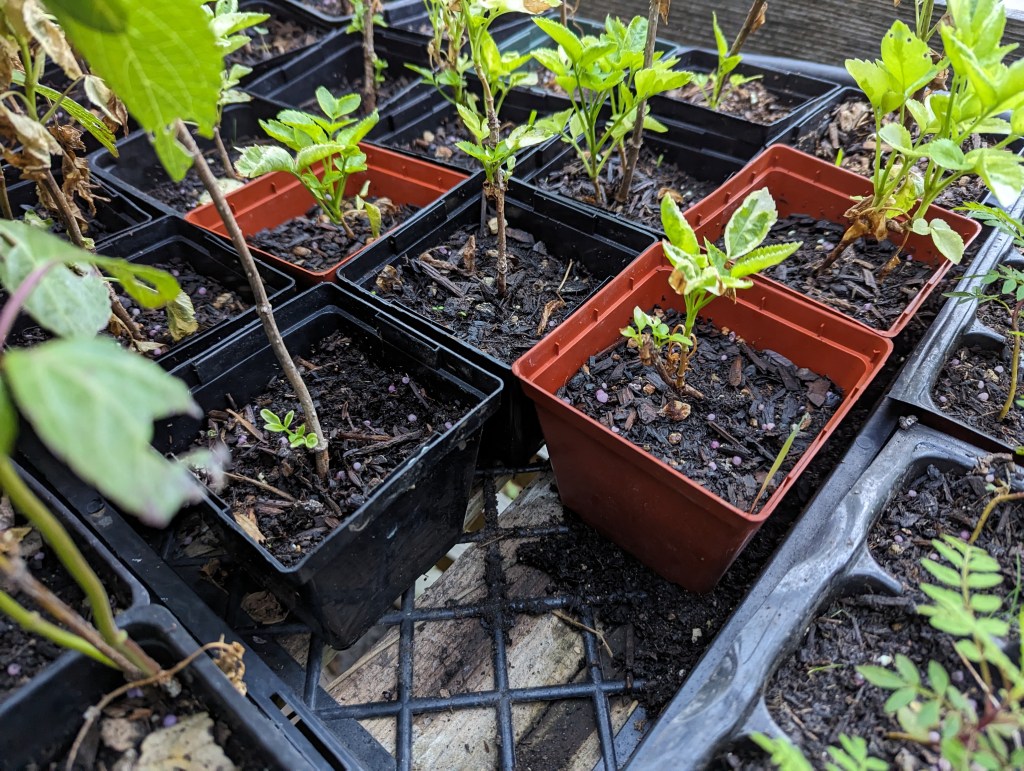
5. Sambucus nigra ‘Madonna’, European black elderberry likewise cost nothing, and for a while, it looked as such. It provided sixteen copies though, and the first found a home.

6. Rhody is irrelevant to the previous five of these six, but everyone wants to see Rhody.

This is the link for Six on Saturday, for anyone else who would like to participate: https://thepropagatorblog.wordpress.com/2017/09/18/six-on-saturday-a-participant-guide/

Garden Phlox

Garden phlox is delightfully fragrant.

In eastern North America where it grows wild as a native, garden phlox, Phlox paniculata, is modest but classic perennial that gets more than four feet tall with pinkish lavender flowers from late summer through early autumn. Modern garden varieties are mostly somewhat more compact with pink, red, light purple or white flowers. Many have fragrant flowers; and some have flowers with lighter or darker centers. Butterflies and hummingbirds dig them all.

Locally, garden phlox probably looks best with slight shade or among other lush plants, only because humidity is so minimal. Otherwise, it would be just as happy out in the open. In well watered gardens with rich soil, it sometimes self sows a bit, but rarely naturalizes continually enough to revert to a more natural (wild) state like it can in gardens on the west coast of Oregon and Washington. Garden phlox can be propagated by division of mature plants either after bloom in autumn or in spring.

Deadheading Can Enhance Bloom

Without deadheading roses divert resources from continued bloom to fruiting and seeding.

It takes quite a bit of effort for flowers to bloom. It takes even more effort and resources for pollinated flowers to produce seed and the fruiting structures that contain the seed. If the seed of certain aggressive plants get dispersed, we need to put even more effort into pulling up the seedlings. It just never seems to end!

Removal of deteriorating flowers, commonly known (even by those of us who missed that generation) as ‘deadheading’, can eliminate so much of this extra work. Not many plants benefit from deadheading; but most that do are really grateful for it. Others that do not care one way or the other simply look better without their deteriorating flowers.

It is of course impossible to deadhead large flowering trees or vast areas of ground cover. Regularly shorn hedges should never need deadheading because they never get the opportunity to bloom or develop fruit. Plants that are appreciated for the ornamental quality of their fruit should of course not be deadheaded.

Most roses get deadheaded as they bloom because the development of their fruiting structures, known as ‘hips’, takes enough resources to compromise subsequent bloom. Removal of these hips therefore promotes bloom. Only the few types of roses that are grown for their showy hips should not get deadheaded. Phlox, daisies, zinias, dianthus and all sorts of plants with long continual bloom seasons likewise benefit from deadheading.

Some types of iris that produce seed perform better with deadheading, not because they will bloom again during the same season, but because they can divert resources to vegetative growth (like rhizomes and foliage) that will sustain bloom during the following year. Most bearded iris (that do not produce seed) and lily-of-the-Nile do not seem to care if they get deadheaded, but are generally more appealing without their finished flower trusses.

Four o’ clocks can not be deadheaded without also removing developing flowers, so can only be allowed to bloom and throw their invasive seed all over the garden. It is easier to pull their seedlings later. We have a bit more control over crocosmia. Even though they do not need to be deadheaded, they are less invasive and more appealing without their scraggly brown stalks and seed capsules.

Horridculture – Nice Trellis

Heard but not seen it through the grapevine.

This is such a visually appealing trellis at the Cavallaro Transit Center in Scotts Valley. It is so very visually appealing that no one wanted to obscure its visual appeal with the two vines that it was intended to support. It is very well designed also. Neat holes were left in the concrete pavement for the two vines that were not planted. Capped terminuses of the irrigation system that was intended to provide the absent vines with water are ready for installation of emitters. The otherwise exposed ground was covered neatly with gravel. It is all well executed.

All that is missing is the vines.

Realistically though, who notices? It really is a visually appealing trellis. Vines would be visually appealing also, but would also clutter the landscape more. Besides, they would require more maintenance, and the surrounding landscape already lacks adequate maintenance. The empty trellis actually seems to be an asset to the otherwise bland landscape. I only notice the absence of vines because I am a horticulturist.

I will say that I am not so keen on such structures in other landscapes. Most are overbuilt. Many such as this are within situations that trees would be more practical.

I have encountered several similar structures, but with single pillars, in downtown Livermore. Grapevines climbed them to form inadequately and improperly pruned grape trees to flank the main streets. Honeylocusts that flanked the same streets would have been more than adequate alone. The grapevines were intended to commemorate the formerly vast regional vineyard that were replaced by equally vast tracts of home, but their shabbiness was too insulting.

Landscape designers and architects should realize that vines require significant specialized maintenance. Architects rely on landscape designers to select vines for their trellises. Landscape designers rely on gardeners to maintain their vines.

What a splendid hole in the concrete!

Daylily

Each flower lasts about a day.

Each flower lasts for only a day. That is why the common name of Hemerocallis is simply daylily. Each floral stalk provides several flowers that bloom continually for several days. As one flower deteriorates, another replaces it. Because floral stalks shed so continually, they are not very practical as cut flowers. They are splendidly colorful in gardens though.

Most popular daylily cultivars are products of breeding that is too extensive to document. That is why almost all lack species names. Their cultivars names generally suffice. Most daylilies bloom for a month or so. Also, most bloom best for early summer. A few bloom a bit earlier. Some bloom as late as autumn. Some can bloom randomly or twice annually.

Daylily bloom can be yellow, orange, red, pink, almost purplish or combinations of these. Yellow or pink can be so pale that it seems to be almost white. Flowers can stand as tall as three feet, on bare stem. Their arching grassy foliage stays somewhat lower, in dense mounds. Most cultivars are evergreen. Some are deciduous. They propagate by division. Some migrate by vigorous stolons.

Humid Weather is Atypical Here

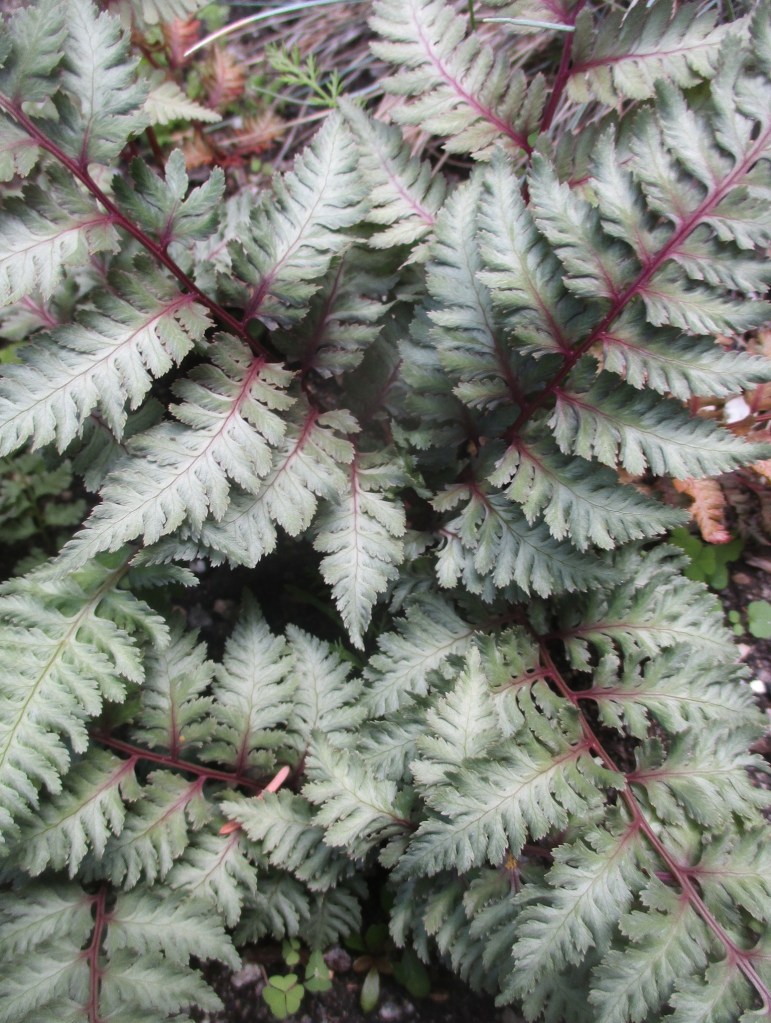
Ferns generally appreciate humidity with warmth.

Aridity is the opposite of humidity. It is why summer warmth is not as unpleasant here as in humid climates. It does not get so much consideration though. Most of the populace of California inhabits arid chaparral or desert climates. Aridity is so typical that any absence gets more attention. Humid warmth is both uncomfortable and relatively uncommon here.

Hurricane Hilary recently demonstrated how unusual humid weather can be here. It was merely a tropical storm as it left Mexico, but was significant nonetheless. Humidity briefly remained elevated after torrential rain in Southern California. It may have lingered longer in regions that lacked rain in Northern California. It caused warmth to seem a bit warmer.

This humidity would have been more horticulturally influential if it had lasted a bit longer. Obviously, irrigation is temporarily unnecessary for saturated landscapes. Some flooded. Some simply absorbed rain. Less obviously, landscapes that received no rain need a bit less water with humidity. Humid weather reduces evaporation from active foliar surfaces.

Humidity also reduces the volatilization of floral fragrance. Fragrant flowers are therefore more fragrant during humid weather. Delicate floral structures also last a bit longer. Many flowers are more turgid and colorful with humidity. All sorts of foliage, particularly tropical foliage and fern foliage, is more lush. After all, most vegetation is from less arid climates.

Humidity influences allergens also, both positively and negatively. Some allergens, such as fungal spores, are more abundant with humid weather. Some allergens, such as dust and pollen, are more abundant with less humidity. That is why humidifiers are helpful for dust or pollen allergies. It is also why dehumidifiers are helpful for fungal spore allergies.

Spontaneous limb failure can be another consequence of humid warmth. It is hazardous because it occurs very unexpectedly without wind. Warmth accelerates vascular activity, which increases foliar weight. Humidity with slow air circulation inhibits evaporation from foliage. If unable to shed enough weight, foliage becomes too heavy for limbs to support.