White Perennial Pea

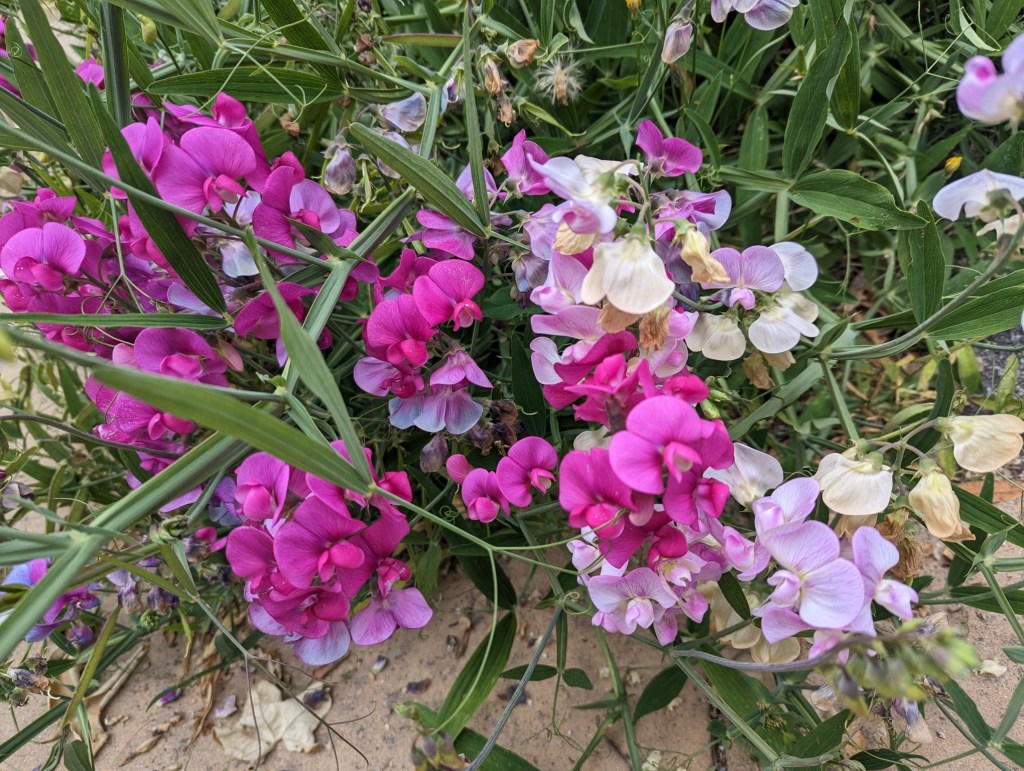
Bright pink, light pink, but no white here.

Perennial pea is a somewhat naturalized exotic species here. It may not be aggressively invasive enough to be classified as a weed though. However, I would classify some of it that I can not exterminate from at least one of our landscapes as weeds. Once it gets established, it is very persistent.

It seems to prefer to grow on roadsides or fences. It is not so common in flat open spaces. It rarely gets big enough to overwhelm or otherwise damage other vegetation. It dies back when the weather gets too inhospitable for it. It regenerates when the weather is more comfortable.

Perennial pea certainly is pretty. Almost all of it blooms with typical bright purplish pink flowers. A few uncommon specimens bloom with variations of lighter pink. White is even more rare. Only red is more rare than white. I have never seen it growing wild. Although seed for red perennial pea is available, I know of no one who has actually grown it.

Therefore, until someone can prove that red actually exists amongst naturalized perennial pea, white is the rarest color. It might also be my favorite. I can not decide. White is my favorite color. Also, perennial pea happens to look great in white. Yet, the familiar obnoxiously bright pink is so typical of the species. It is the color that everyone expects to see growing wild on local roadsides.

I was fortunate to find a specimen at work that blooms white. I grew a few copies of it, but kept them canned. I shared some with colleagues in other regions until only two remained here. I was not too alarmed when these last two were overwhelmed by other vegetation and died, since I thought I could grow more copies from the original specimen. That was until I found that the original was destroyed by excavation to mitigate erosion from last winter!

I believe that another specimen that blooms white lives nearby. Its particular colony has already finished bloom for the season. I must therefore wait for it to resume bloom, or look for errant bloom through winter. After getting so involved with it, perhaps it really will be my favorite.
Muskogee?

This is not a color I had expected.

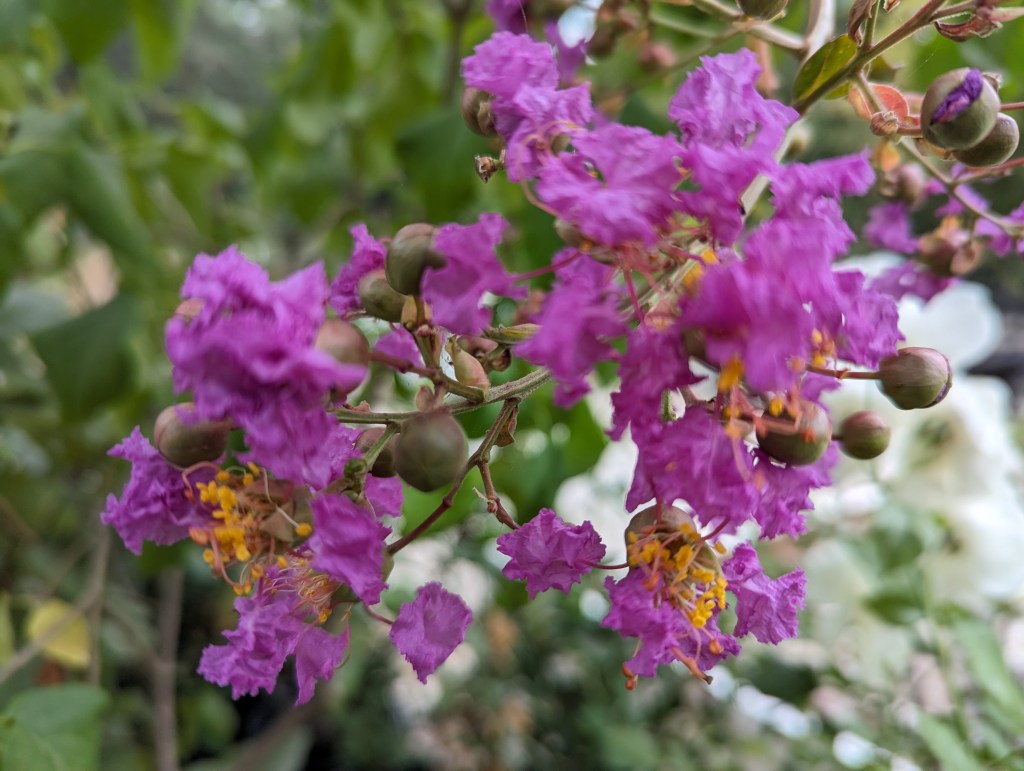
What cultivar of crape myrtle is this?! I realize that this picture is blurred, which is why it was not included within my ‘Six on Saturday’ post this morning, but it is the floral color that is important. Is it purplish pink, or just bright pink? What cultivar does it look like?

I expected this crape myrtle to be one of the old reliable cultivars because it was a gift from the Arbor Day Foundation. The primary old reliable cultivar that blooms with similar floral color is ‘Muskogee’. Yet, even with my limited ability to discern color quality, this floral color seems to be a bit too rich. I sort of expect a milder and scarcely purplish pink from ‘Muskogee’. I suppose that the Arbor Day Foundation can also grow modern cultivars like the rest of us.

Regardless of its identity, it is certainly pretty. The foliar color during autumn is comparable to that of old reliable cultivars. Because neighbors like it, I grew a few copies for them. We would like to incorporate more crape myrtles into the landscapes at work. The abundance of spring color from other species there mostly finishes prior to the summer bloom of crape myrtle. Summer is the busiest season, so justifies flashy color.

Embarrassingly though, I am still none too keen on crape myrtle. If I did not typically spell ‘crape’ as ‘crepe’, I would prefer to spell it without the ‘e’ at the end. I was impressed with it when I first started to notice it through the 1980s, but then realized that it was becoming too common through the 1990s. That was long after Brent told me that it had become too common throughout the Los Angeles region significantly earlier. Decades later, it is still too much of a good thing.

Six on Saturday: ?

So much of the vegetation that we work with is unidentified. I know most of the species, but not all. Cultivars and varieties are more difficult to distinguish. There are too many! I am completely unfamiliar with some of the most modern of them. Of my Six this week, only the second might be a cultivar. The others are likely straight species. I am uncertain of their identities though, because I am unfamiliar with them. Actually, the third is not as labeled! That is because I thought it was something else until it foliated last spring. This Six on Saturday is about six questions of identity. I hope that someone might identify #1 for me.

1. Opuntia littoralis, prickly pear came from the Bat Cave in Los Angeles County, where a few other species of this genus are also native. I do not know if I identified it correctly.

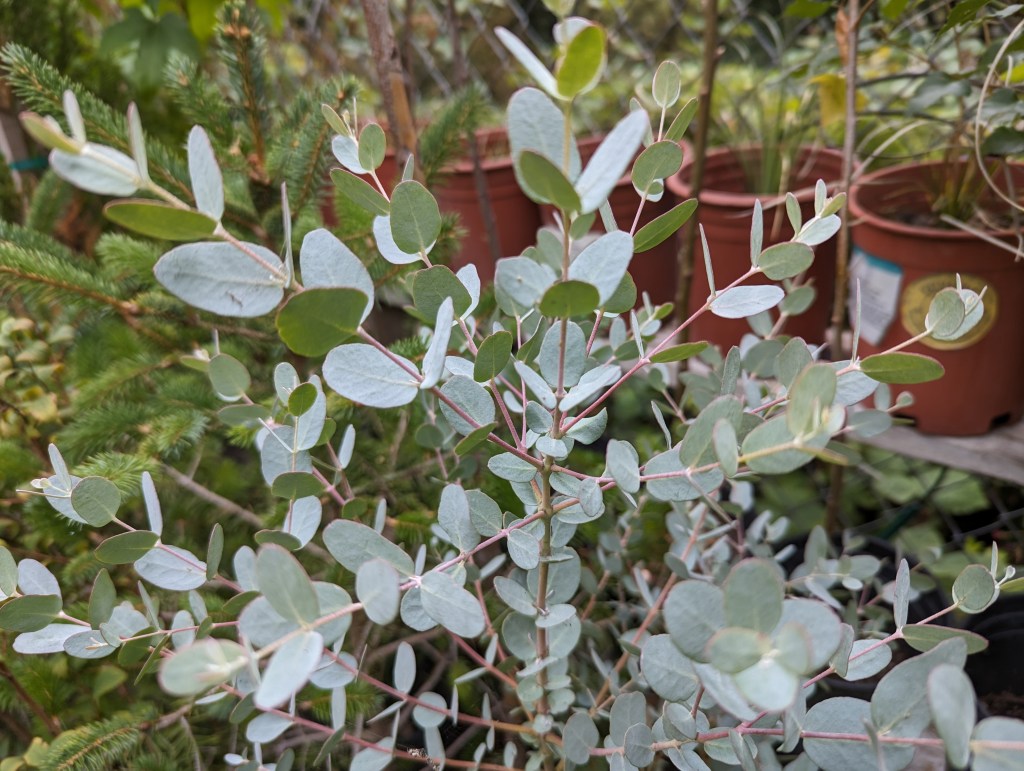
2. Eucalyptus gunnii, cider gum looks just like this while young, but so does the juvenile foliage of a few other species. Adult foliage and associated bloom is easier to distinguish.

3. Vitus californica, California grape looks nothing like this. I brought this here from the roadside while it was defoliated for winter. I hoped that it would be the California grape.

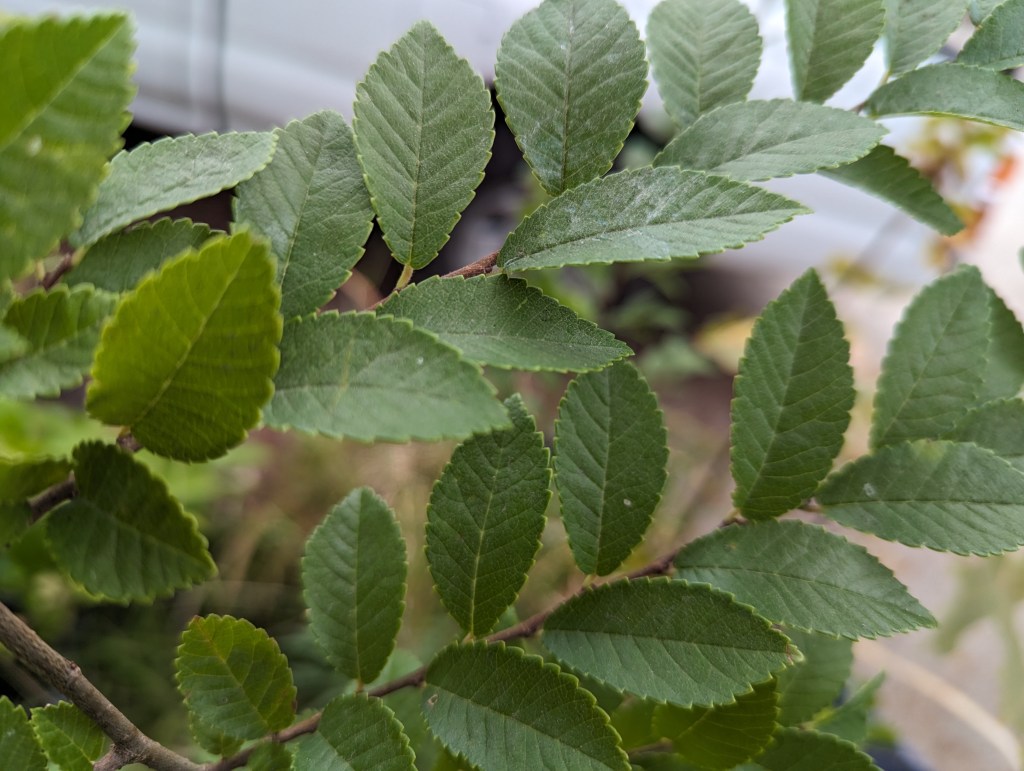
4. Ulmus parvifolia, Chinese elm was common when I was a kid. Only modern cultivars and hybrids are available nowadays. If this is common Chinese elm, it is now quite rare.

5. Populus alba, silver poplar is what I believe this might be. I grew it from cutting from a tree that I met in San Jose a few years ago. I am unfamiliar with this particular species.

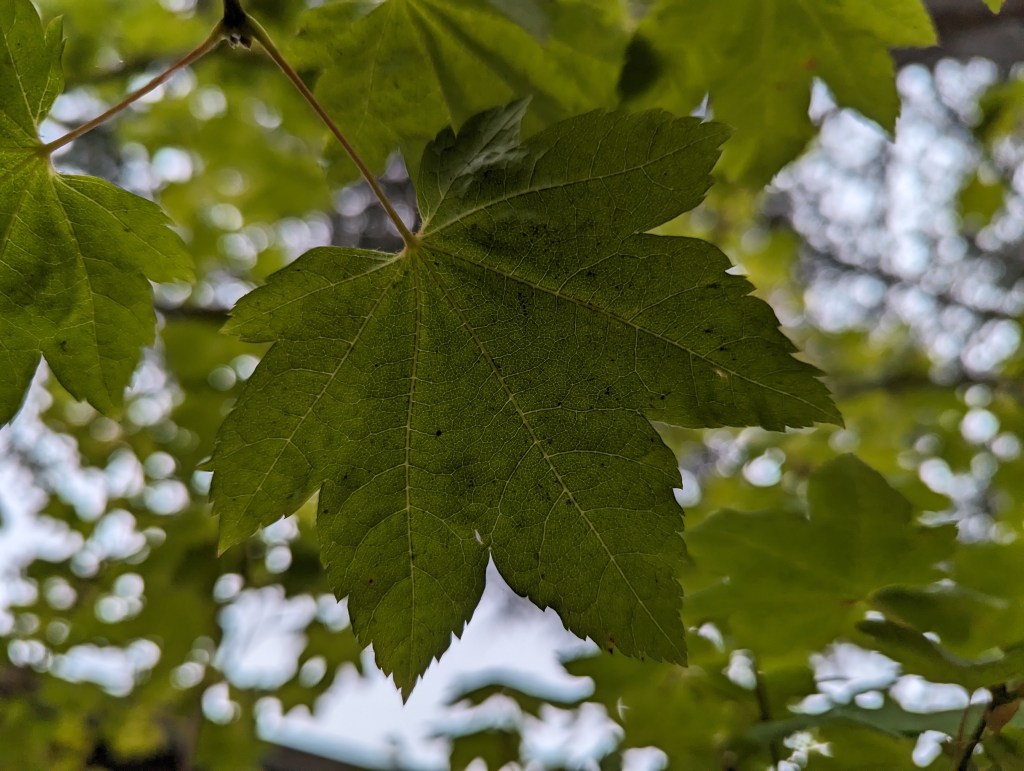
6. Acer circinatum, vine maple should be a gratifying alternative for another ubiquitous Japanese maple. I could be disappointed if this is merely another passe Japanese maple.

This is the link for Six on Saturday, for anyone else who would like to participate: https://thepropagatorblog.wordpress.com/2017/09/18/six-on-saturday-a-participant-guide

Sweet Alyssum

Sweet alyssum has potential to naturalize.

My neighbor describes sweet alyssum, Lobularia maritima, as a ‘polite’ weed. It naturalized over an area of her vegetable garden that was not in use at the time, but was easy to get rid of when the space was needed for something else. A few plants that were left in the perimeter bloom almost continuously and fill in other unused space between herbs and perennials without interfering with them.

As a bedding planting, sweet alyssum is most often planted from cell packs like most other annuals. Yet, seed is so easy to sow in bare spots among mixed annuals or perennials. Naturalized sweet alysssum sows seed so abundantly that new plants replace old plants before the old plants deteriorate.

Bloom is most often white, but can be shades of pink or purple. However, naturalized sweet alyssum eventually reverts to classic white. The minute, sweetly fragrant flowers form small, round clusters over the delicate mounds of finely textured and sometimes sparse foliage. The tiny leaves are only about an inch long and quite narrow. The largest naturalized plants are not often more than a foot tall.

Sustainability Is More Than A Fad

Vegetation that survives within untended gardens is truly sustainable.

Sustainability is a good idea gone bad. It is so often used as a marketing gimmick by those who actually have the least to gain from it. Really, landscapers and gardeners would not have much business if landscapes really were sustainable and able to function without their help. The best landscapes probably compromise between being as sustainable as possible with a few more conventional but less sustainable features to make them functional.

For example, lawn happens to be among the least sustainable of landscape features. It needs ridiculous volumes of water and continual maintenance, typically with gasoline powered mowers. Many lawns are gluttons of fertilizer. Yet, almost all landscapes have lawn of some sort. Lawns are certainly justifiable for children and dogs.

The trick is to use lawn like rugs for the landscape instead of like wall to wall carpeting. If possible, it should not be an all purpose ground cover for whatever area is not landscaped with something else. It should cover only areas that will get used as lawn.

Bedding annuals are likewise far from sustainable. They need too much water and work, and get replaced seasonally. Even those that sometimes naturalize where a bit of water is available, like sweet alyssum, godetia and nasturtium, really do not perform quite like more pampered bedding plants do.

The best way to see sustainability in action is not in the pretty pictures in the brochures of landscape companies with something to sell, but in the worst of landscapes. Plants that survive in abandoned landscapes where lawns and bedding plants have died off are obviously more sustainable.

Bottlebrush, oleander and various junipers and yuccas may be stigmatized as ‘gas station’ plants, but earned that stigma by being so resilient and sustainable. The many types of cotoneaster, manzanita, wild lilac and rockrose are also worth investigating, (although wild lilac and rockrose do not live as long as the other shrubbery does.) Redwood, California laurel, strawberry tree, incense cedar and many types of eucalyptus, oak , cypress and acacia are among the more sustainable of trees.

Horridculture – Post Office

Even after mentioning several times that I must discontinue blogging and reblogging, I feel terribly guilty about not posting anything for today. However, for the first time, there is nothing more than a few of the most recent articles to reblog, and nothing new to post. So, here is one of the recent aticles.

Gaura

Gaura seems to be a wildflower.

Although not native, gaura, Oenothera lindheimeri, can almost naturalize as if it were. All it needs is occasional watering through summer. It performs better with regular watering. Individual specimens live for only about four years. Some may last for only a single year. However, their abundant progeny are likely to replace and perhaps overwhelm them first.

Gaura prefers sunny and warm exposure. Shade causes sloppy form. Naturalized gaura has potential to become weedy or invade other vegetation. Seedlings relocate efficiently. Cutting back old growth as it deteriorates through winter promotes vibrant spring growth. Concurrent removal of the shabbiest old specimens favors vigorous younger specimens.

Collective growth is mostly less than five feet deep, with wispy and lightly foliated stems. Basal leaves are bigger than tiny upper leaves. Airy flowers are only about an inch wide. Floral color is mostly pale pink. Seedlings of cultivars with white or richer pink bloom are not necessarily true to type. Neither are seedlings of cultivars with richly bronzed foliage. Bloom continues from very early spring until cooler wintry weather.

Irrigation Technology Can Get Complicated

Modern irrigation does not age well.

Old fashioned irrigation systems were quite thorough, and technically sustainable. They broadcast generous volumes of water over any vegetation that required it. Their systems were too simple to need much adjustment. Their metallic composition was very resilient. That is why so many old systems were in service for so long. Some continue to function.

However, such old fashioned irrigation systems were not perfect. Their consumption was not as sustainable as their plumbing. They wasted water on vegetation that needed less, and pavement. Some of the broadcast water evaporated before reaching any vegetation. Without automation, old irrigation systems operated when convenient for their operators.

Modern irrigation systems are typically more efficient. Automation allows them to operate prior to sunrise to limit evaporation. Most modern systems apply water directly to the soil. This leaves no irrigation water to evaporate from foliar or other surfaces. Also, it prevents evaporation from airborne broadcast irrigation water. Evaporation innately wastes water.

Of course, modern irrigation systems are no more perfect than old systems. Groundcover and lawns still rely on broadcast irrigation. Such systems still waste water on pavement. Automation can actually waste water if not adjusted manually for rain and other weather. Only the most modern automation adapts to weather. No system responds to vegetation.

Consequently, irrigation can become either deficient or excessive as vegetation matures. Many native species need regular irrigation only as they disperse roots after installation. They are likely to rot with the same irrigation as they mature. Many tropical species need more water as they grow. Some vegetation, as it grows, can obstruct broadcast irrigation.

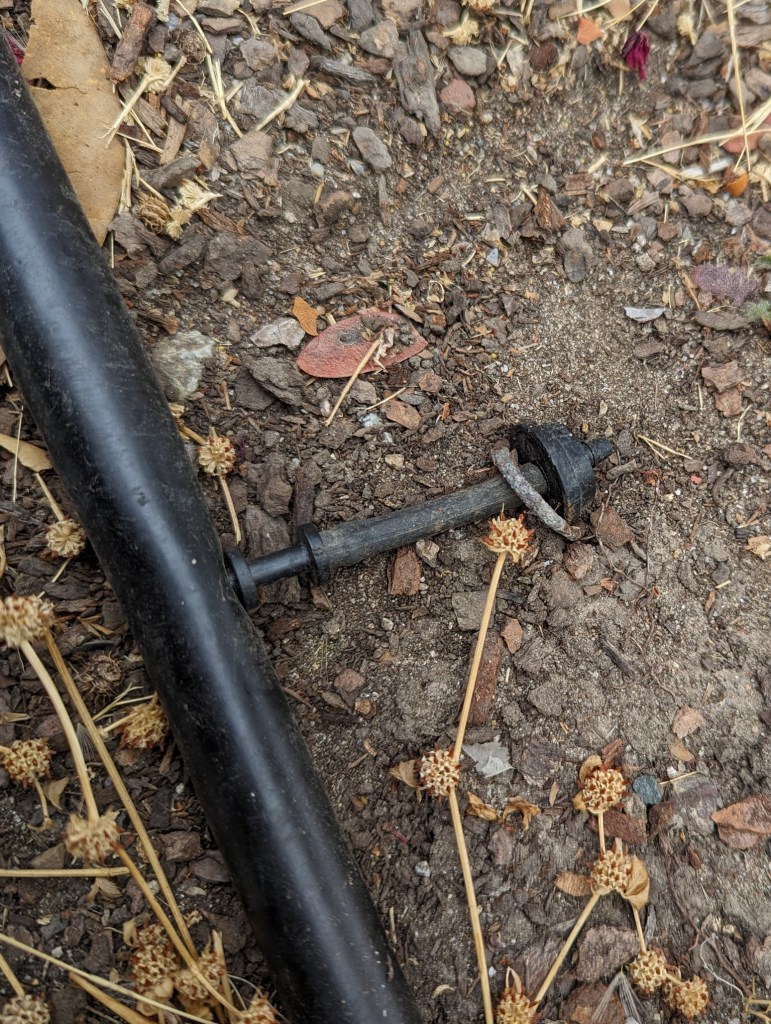
The complexity of modern irrigation systems complicates their maintenance. Automation is merely one component of the infrastructure. Emitters of drip irrigation sometimes need relocation or replacement. They are sometimes difficult to find below healthy vegetation. Because components are plastic, they are not as durable as old fashioned components.

Hurricane Hillary

Rain is expected to start about six or seven in the morning in Brent’s neighborhood.

California is so big that, from here, it extends about four hundred miles to the north and four hundred and fifty miles to the south. That is where San Diego County is, in the southwestern corner of California. It is so far away that the weather there can be very different from here, as it is now that Hurricane Hillary is coming up from the coast of Baja California. While a tropical storm warning is in effect there, typical summer weather is expected here.

Typical summer weather here is dry. Not much rain happens after early spring. Not much happens prior to late autumn. Every few years, a single odd and brief thunderstorm goes through in the middle of summer, leaving no evidence of its downpours two days later. If it were to happen this year, it should happen about now, like it is in Southern California.

Forecasts for the weather in Southern California are quite unpleasant. A friend in Palm Springs was filling sandbags today. Floods and mudslides are expected through a huge area. This is the first tropical storm in California since 1939, and the first ever tropical storm warning. Yet, we will miss it completely here.

I try to remind myself that the historically torrential rain of last winter was no fun. Flooding was a mess, and caused significant damage even in this neighborhood. Nonetheless, even native Californians can start to miss rain late in summer.

Brent will likely telephone at about seven in the morning. It might be raining by that time. It should finish by noon on Monday. Realistically, it will not rain for long. The problem is that rain will be torrential, especially at high elevations out in the deserts, which do not absorb much water. It will be interesting to see what transpires.

Is Phlox A Weed?

Phlox seems to be right at home here now.

When it first appeared within one of the landscapes at work four years or so ago, I was not sure of its identity. I guessed that it was some sort of phlox only because it resembled phlox that I had seen in mail order catalogs many years earlier. No one knows where it came from or how it got there. Some sort of Campanula arrived within the same garden only a year or so earlier, and worked out nicely. Therefore, we decided to give what we thought was phlox the same chance to perform.

It performed splendidly! It matured rather quickly, and happened to fill a prominently bare spot. Its bloom is pure white and delightfully fragrant. After getting cut back for winter, it regenerated for spring.

Then, we started noticing that it had seeded while no one noticed. A few seedlings were appearing nearby. At first, we were pleased, but also concerned that it could become invasive. I pulled a few seedlings up from where I did not want them to grow, and was able to relocate them to better situations, but was not sure if I should have done so.

Fortunately, like the campanula, this new plox seemed to want to cooperate. After getting established, it did not seem to be invasive.

Now, it is one of my two favorite perennials within its particular landscape, along with Gladiolus papilio. I am confident that we can allow it to bloom fully without dispersing too many seed afterward. I am very fond of the strikingly bright white bloom and its rich fragrance. It would be great if more feral species developed as assets to their gardens instead of as weeds. I am pleased that we gave this phlox its chance to perform, and will likely relocate more to other landscapes.