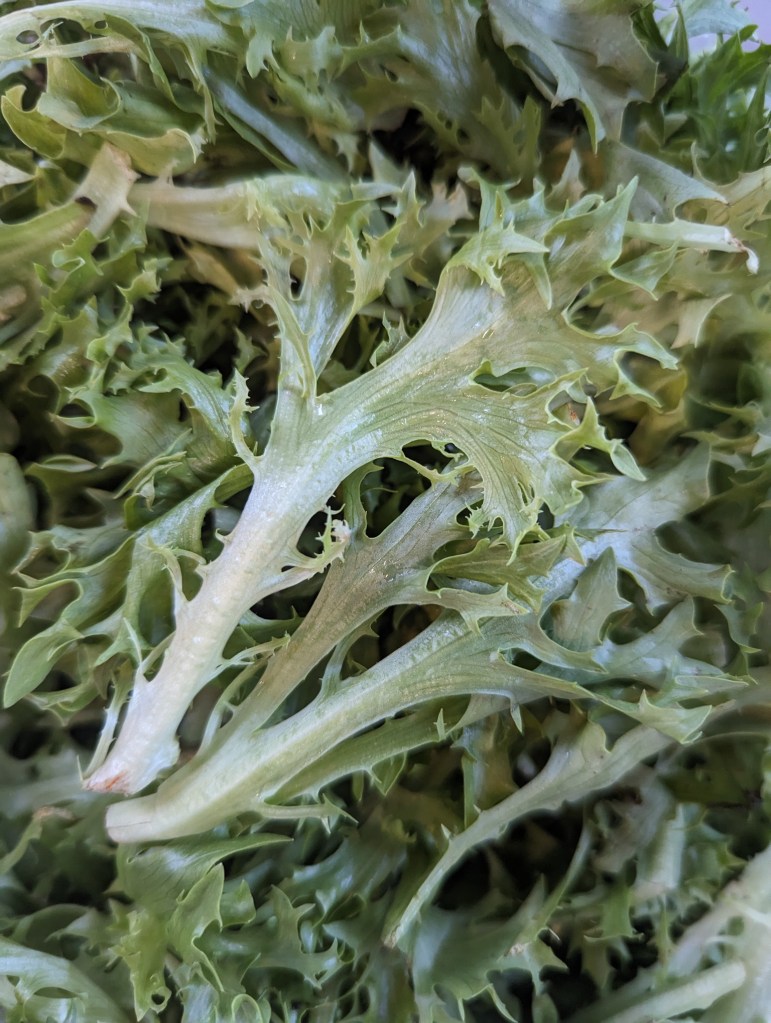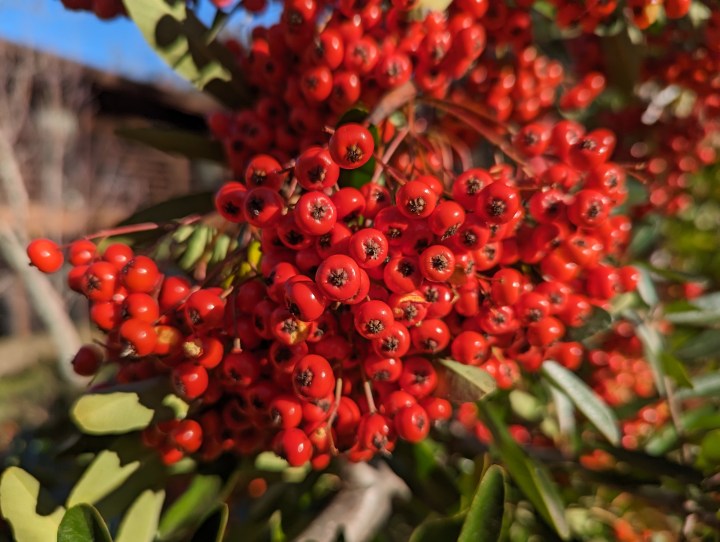
Village Harvest redirects surplus from home gardens to those who can use it.

Surplus need not go to waste.

(This article is several years old, so some of the information within is likely outdated.)

Those who witnessed the event know that it actually happened. During citrus season a few years ago, a crew of volunteers descended upon, or should I say, ascended ladders into the legendary and monstrously large King Grapefruit Tree in a gallant but hopeless attempt to harvest the fruit. Our caravan of an assortment of smaller pickups and my full sized Ford that we drove out to confront this aberration of nature where it resided was completely full by the time we had harvested only about a third of the fruit. We left happy with our plunder, but unexpectedly defeated by the abundance left behind. I have seen many fruit trees throughout my career, but have never seen so much fruit in a single tree! 

It may have watched us leave exasperated with our mud-flaps dragging, but the King Grapefruit Tree was not solely victorious. We Village Harvest volunteers and the many beneficiaries of Village Harvest enjoyed its fruit for weeks! Village Harvest arranges for community fruit harvesting events to collect fruit that might otherwise go to waste so that it can instead be distributed to people in the community who can use it. The fruit of the King Grapefruit Tree was donated, and more was harvested later, so that it would not become an unwanted mess for the residents of the nearby home.

This is just one of many examples of how Village Harvest community fruit harvesting events benefit everyone involved. Those who donate their surplus fruit get it harvested and taken away before it becomes messy. Village Harvest volunteers get to take a bag or so of the fruit that gets harvested during the event. The clientele of the local food agencies that distribute the produce get fresh home grown fruit from the Santa Clara Valley; which is, as we all know, the best in the world.

Although citrus season is still several months away, five community fruit harvesting events are scheduled to collect summer fruit through July. On July 18 and again on August 1, two Mountain View community harvesting events will be from 9:00 a.m. to 12:30 p.m.. Two Central San Jose community harvesting events will be from 8:30 a.m. to 12:30 p.m. on both July 20 and July 27. The Sunnyvale community harvesting event will be from 8:00 a.m. to noon on July 26. Locations to meet for each event can be determined when making reservations.

Information about volunteering for any of these and other events, or how to arrange for donation of fruit, can be found at the website, www.villageharvest.org, or by telephoning 888 – 378 4841. Because admission is limited, it is advisable to make reservations for any event early, either online or by telephone. (It may be too late for the July 18 event.) Parking is also limited, so participants should carpool if possible. Pickups and station wagons to help transport fruit are very helpful. So is a grocery bag to share in the harvest afterward. Covered shoes (not sandals) are important. Layered clothing is more comfortable for cool mornings that get warmer closer to noon.  

Weed Abatement Beyond Refined Gardens

Dry weeds can be very combustible.

Gardening involves weeds. Gardening outside of refined gardens involves more weeds. A few of such weeds are native species which grow where they are undesirable. Most of the most aggressive are naturalized exotic species. Collectively, they are an unpleasant consequence of unmanageable external biodiversity. They necessitate weed abatement.

Weed abatement is a standard procedure within refined gardens. Most know it simply as weeding. Ideally, it is harmless to desirable vegetation. It may be a relatively simple task where desirable vegetation excludes weeds. Also, weeds are less abundant where they lack sources of seed to regenerate. Timely weeding should eliminate much of their seed.

Unfortunately, no garden is isolated from external influences. Weed seed sneaks in from uncultivated spaces, adjacent gardens or beyond. Suburban and rural gardens might be close to wildlands or forests. Many of such weed seed sources are beyond the control of their victims. Some are merely easy to ignore because they are out of view or not in use.

For some unused or unseen areas, weed whacking can be more practical than weeding. It entails cutting undesirable vegetation almost to grade with a motorized weed whacker. Manual weed whackers, although rare, are not extinct. Weed whackers are not selective. They can sever desirable annuals or perennials that mingle with undesirable vegetation.

The primary advantage of weed whacking is that it is fast and efficient. With good timing, it eliminates bloom or developing seed prior to dispersion of seed. Diminishment of seed inhibits subsequent proliferation, and is much safer for pets. Foxtail seed are notoriously hazardous. Besides, overgrown weed vegetation becomes a fire hazard as it desiccates.

Viable basal stems and roots that remain after weed whacking are not much of an asset. Many types of perennial and biennial weeds regenerate from such growth. However, to a very minor degree, such vegetation may contribute to healthy biodiversity. It may sustain some beneficial insects and soil microorganisms. Also, it can inhibit surface soil erosion.

Seemingly Complicated Latin Names Simplify Nomenclature.

Tecoma stans has only one Latin name, but a few common names; esperanza, yellow bells, yellow elder, yellow bignonia and trumpet bush.

If I remember correctly, it was Wednesday evenings when my three college roommates and I would gather in the parlor of our apartment on Boysen Street in San Luis Obispo to watch Star Trek: the Next Generation. One of my roommates, who has since returned to Cal Poly as a professor of rangeland resource management, traditionally made cornbread for the occasion . . .  with butter and honey . . . mmm. So, for half an hour each week, we learned more about the remotely futuristic cultures of planets many light years away than about our studies.

Thanks to a contraption referred to only on rare occasion as the ‘universal translator’, nearly everyone in this quadrant of the galaxy will be able to understand each other within the next four centuries. No matter what language is spoken, it will all be perceived as the same universal language. Unfortunately, the ‘universal translator’ has not yet been invented. The many languages used on this single planet will consequently continue to interfere with accurate communication.

This is why horticulturists, biologists, and many other professionals who may interact with colleagues who speak other languages or even slightly different regional dialects use Latin to identify, among other things, biological organisms. Latin names may be cumbersome to pronounce and daunting to spell, but are universal to those of us who use them. This is important because the ‘common names’ are so regionally variable. 

For example, some of the European maples that we know as maples here are known as sycamores in England, but are known everywhere by their Latin name of Acer. (Latin is traditionally italicized.) Similarly, North American sycamores that are known as maples, planes or plane trees in various regions are all likewise known everywhere by their Latin name of Platanus. With few exceptions, the universality of Latin names facilitates accurate identification.

Latin names are therefore very helpful when researching plants. A tree known simply as a ‘cedar’ might be a calocedrus, arborvitae, juniper, cypress, chamaecyparis or a true cedar just to name a few. Knowing that this particular tree is more specifically a ‘red cedar’ perhaps limits the possibilities to arborvitae or juniper. (Differentiation between ‘Eastern’ and ‘Western’ red cedars is often neglected in the East and West where the respective cedar is predominant.) Identifying the tree as a Juniperus virginiana will help us find the most accurate information about it, even though it is not really a cedar at all, but a juniper.   

Insect Pathogens Prefer Less Biodiversity

Wildflowers and even weeds promote biodiversity.

Weeds grow, bloom, disperse seed and die a natural death without much trouble. This is especially frustrating while insect pathogens destroy desirable vegetation. Weeds seem to be more resilient to insect infestation and damage. Many actually are. They use nature to their advantage. Cultivation of desirable vegetation interferes with natural biodiversity.

Those who enjoy gardening do not want to consider it to be unnatural. Nonetheless, it is. It involves many exotic species that are not natural components of regional ecosystems. Breeding to improve their performance unnaturally compromises their vigor. They rely on unnatural irrigation and perhaps fertilization. They sustain many exotic insect pathogens.

Most species within home gardens could not survive for long without cultivation. Several that can unfortunately become invasively naturalized. In the process, most that benefited from breeding revert to a feral status. Some eventually enjoy more biodiversity in the wild than in cultivation. They rely on naturally beneficial insects to mitigate insect pathogens.

Insect pathogens are quite often more problematic than weeds. However, generally, they are less problematic than they were years ago. This is partly a result of improvements of modern horticulture. Strangely though, it is also partly a result of sloppier gardening. Old fashioned monoculture for big areas is passe. Biodiversity became an incidental benefit.

More species of vegetation sustain more insect species. This might not have qualified as an advantage years ago. Now, garden enthusiasts are more aware that some insects are predatory of others. Predators may not eliminate all insect pathogens, but they often limit infestations. With adequate limitation, damage is likely to be tolerable or inconspicuous.

This is one of two primary reasons that insecticides are less common now. Besides their potentially hazardous toxicity, they are simply less necessary. When they are necessary, modern insecticides target more specific insects. They can kill pathogens without hurting beneficial insects. Vegetation that too frequently needs insecticides becomes unpopular.

Container Gardening

These containers are almost completely obscured by their contents.

Container gardening is one of those trends that I could do without in my own garden. Even though I know that it is actually very practical for several reasons, I prefer to grow as much as I can directly in the ground because I do not want to take care of contained plants. However, even with only minimal potted plants around my garden, the steep embankment above my driveway has reminded me of one of the many reasons why people like to grow plants in large or hanging pots, elevated planters or window boxes. There are just so many plants that look so good cascading out of containers.

The lily-of-the-Nile that I planted on top of part of the embankment to hold the soil together actually look really cool leaning over the top edge, and would look just as good in large planters. The smaller ‘Peter Pan’ lily-of-the-Nile is more proportionate to smaller urns. Since these do not hang over the edges too far, they look even better mixed with more pendulous plants like trailing rosemary, verbena, ivy geranium and dwarf periwinkle. Upright plants like fuchsia and smaller types of New Zealand flax in the middle of mixed plants add good contrasting form. Dracaenas (Cordyline spp.) were traditional vertical accent plants of Victorian gardening.

Low planters and pots, as well as many hanging pots, are very often best outfitted with traditional cascading annuals like lobelia, sweet alyssum, petunia, portulaca and my favorite, nasturtium. Even if annuals that do not cascade are the central features of mixed planters, cascading plants around the edges really maximize the show by spreading even more flower color over the exteriors of the containers. Colorful perennials like fibrous begonias, busy Lizzie, campanula, fleabane, scaevola and dusty miller may not cascade as well as the annuals, but add width, and probably cascade adequately for ‘artfully’ designed pots that are too appealing to obscure completely.

In sheltered lanais and porches, spider plant, burro tail and wandering Jew are classic solitary perennials for hanging pots. What orchid cactus lacks in form and foliage, it makes up for with bold flowers.

The largest pots and planters can benefit from simple ground covers like shore juniper and English ivy, perhaps dressed up with flowering annuals. Gazanias can provide their own flowers, so can instead be dressed up with the colorful and textural foliage of blue fescue or another grassy perennial. Asparagus densilforus has such bold texture and form alone that it does not necessarily need the color of annuals.

Electrical Cables Necessitate Arboricultural Atrocities

Trees can not mix with electricity.

Electrical cables are hazardous! There is no need to elaborate. That is why high voltage electrical cables are either subterranean or aerial. Subterranean electrical cables remain safely out of reach underground. Aerial electrical cables remain safely out of reach about thirty feet above ground. However, electricity is always dangerous regardless of location.

Excavation can inadvertently expose subterranean electrical cables. Pruning large trees can similarly involve minimal proximity to aerial electrical cables. Home gardening rarely involves such deep excavation. However, it commonly involves arboriculture, or pruning, of big trees. When it does, the most eager of garden enthusiasts must know their limits.

Clearance pruning eliminates obstructive vegetation. Ideally, it prevents it from becoming obstructive before it does so. It is useful for roadways, walkways and chimneys, and also protects roofs from damage. Yet, it sometimes necessitates the service of professionals. For example, pruning trees over major roadways is likely too hazardous for anyone else.

Pruning trees over high voltage electrical cables is even more hazardous. However, it is also necessary. That is why electrical service providers employ professionals to perform such tasks. Unfortunately, proper arboricultural technique is not a priority. Reliability and safety of electrical service are. It is efficient, but can severely damage any involved trees.

What is worse is that such damage is also dangerously close to utility cables. Corrective procedures also require the services of specialized arborists. Utility service providers do not assume any associated expenses. Removal might be more practical than salvage for the most severely mutilated trees. Salvage of decapitated palm tree trunks is impossible.

Selection of appropriate trees can limit such problems in the future. With few exceptions, palms are inappropriate within aerial utility easements. Almost all grow only upward with solitary terminal buds. Conversely, some large shrubbery is conducive to pruning to stay lower than cables. So are a few compact trees. Several stay lower than cables naturally.

Many Pruning Techniques

Proper pruning enhances performance rather than compromise it.

If gardeners can reach it, they will most likely shear it. They do not mind if it was intended to be a shade tree, a flowering shrub or even a sculptural succulent. Few will take the time to prune and groom properly. Ironically, formal hedges that actually need to be shorn are rarely shorn properly! 

Most of us fortunately are not gardeners, but merely enjoy our gardens. We know the importance of proper pruning, and that various plants need different pruning techniques. The main difficulty is determining which techniques are best for each type of plant in our gardens.

Shearing is primarily for hedges; which by the way, should be slightly narrower up high, and slightly wider down low in order to optimize sun exposure to all parts. Generally, plants that are grown for their flowers, fruit or natural form should not be shorn regularly.

Fruit trees and modern roses need the most specialized pruning while dormant in winter, so are not recommended for ‘low maintenance’ gardening. Their specialized pruning thins out superfluous growth, concentrating resources for fruit and flower production. Pruning also removes suckers (from below graft unions) and the ‘four Ds’; which are Diseased, Damaged, Dying and Dead stems. 

Most trees eventually need some sort of pruning to direct their growth. Limbs that are too low need to be pruned away to maintain adequate clearance from roadways, sidewalks, chimneys, roofs and anything else that they should keep their distance from. Lighting, road signs and views from cars coming out of driveways should not be obstructed. As larger trees mature, they eventually need the attention of professional arborists to maintain their health, stability and structural integrity.

Small trees like Japanese maple, Hollywood juniper and pineapple guava look much better with selective pruning and thinning to expose their natural forms. If they become obtrusive, such trees are very often pruned back for confinement. They should instead be pruned to direct their growth up and out of the way, so that lower obtrusive stems get removed, and upper growth can develop naturally.

Nandina, abelia, various bamboos, old fashioned lilac and other plants that produce new stems from the ground benefit from another type of thinning known as ‘alternating canes’. This involves cutting older canes to the ground as they begin to deteriorate or become overgrown. Alternating canes without any other pruning allows nandina to keep its distinctive foliar texture, and abelia to develop its distinctive arching branch structure.  

Layering Can Copy Favored Flora

Ivy can grow roots almost anywhere.

Seed is the most familiar method of propagation. However, some popular plants produce no viable seed. Some produce seed that is genetically very different from its parents. For many plant varieties, only vegetative propagation reliably produces similar copies. Such copies can grow from division, cuttings or layering. They are genetically identical clones.

Layering is uncommon for nurseries because it is generally insufficiently productive. It is unpopular for home gardening because it seems complicated. It is actually more reliable for many species than cuttings are. Also, layering is quite practical if merely a few copies are sufficient for home gardening. Realistically, it is not as complicated as it seems to be.

Layering is simply the development of roots where stems lay on the soil. All sorts of flora does it naturally without intervention. For example, ivy vines notoriously develop roots as they extend over the ground. Tips of raspberry canes develop roots where they leap over to reach the ground. These rooted tips grow replacement canes that repeat this process.

With a bit of intervention, several species that do not commonly layer can do so also. For some, it can be as simple as pressing a lower stem into moist soil. Application of rooting hormone to exposed cambium accelerates layering for most. Gouging into the underside of the buried portion of stem exposes its cambium. Tip growth must remain above grade.

For most species, the buried portions of layering stems should be a few inches in length. Extra stem length is no problem. Actually, if stems are long enough, they can be situated into their permanent locations. Stems can layer right below grade, but they prefer to be a few inches deeper. While their roots develop, they require irrigation for evenly moist soil.

The few inches of foliated tip growth above grade sustains actively layering stems. Also, remaining intact cambium provides sustenance from the original plant. Only a few stems can layer simultaneously, but that is enough for most gardens. Hydrangeas, azaleas and camellias layer quite easily. Pines, oaks and eucalyptus do not. Layers should develop quite a few roots before separation.

In The Zone

Climate is regional.

We all know how excellent the local climate is for gardening. As we travel around the area though, we also realize that there is more than one climate. Locally, there are at least three of the standardized ‘Sunset’ garden zones, with several more within only a few miles. There are countless microclimates too.

Elevation, terrain, latitude and the proximity of the ocean or large bodies of water all influence the climate. Even though the Santa Cruz Mountains are not very high, they sometimes get snow on top because higher elevations are a bit cooler. When the Summit and Santa Clara Valley floor are cold in winter, the slopes in between are not quite as cold because cold air drains away downhill. The areas closest to the San Francisco Bay stay much cooler through summer because of the insulating quality of the water. 

More localized variables like forests, lakes, direction of slopes and infrastructure affect microclimates. Older neighborhoods with mature trees are shadier and cooler than newer neighborhoods with smaller trees. The west facing slopes to the east get warmer than the east facing slopes to the west. In Downtown San Jose, tall buildings create cool and shady microclimates to the north; and some reflect enough solar radiation to significantly warm areas to the south and west.

It is important to know what climate zone any particular garden is in to be able to select appropriate plants. Besides that, it is important to know the microclimates within the garden to know where each plant will be happiest. Tropical plants that would be happy in Los Angeles might succumb to even mild local frosts. However, plants that might succumb to frost if too exposed may be safe in sheltered microclimates.

Generally, Campbell, most of San Jose, southern Sunnyvale, northeastern Cupertino, northeastern Los Gatos and Union City are all within Sunset Zone 15. Most of Saratoga, southwestern Los Gatos, southwestern Cupertino and Mission San Jose are in Zone 16. Santa Clara, Alviso, Milpitas, northern Sunnyvale and western Fremont are in Zone 17.

None of these zones are too severe. Because of the marine influence of the San Francisco Bay, Zone 17 can actually be relatively boring and not so great for plants that want winter chill or summer warmth. Zone 16 is very similar to Zone 15, but comprises hillside thermal belts where cold air drains away in winter, and also gets a bit warmer in summer. Above and below Zone 16, Zone 15 gets cool enough for plants that want winter chill, but may not get warm enough in summer for plants that crave heat. The Sunset Western Garden Book not only describes the climate zones in detail, but also specifies what zones every plant is adaptable to.

Feral Vegetation Inherits Natural Advantages

Feral alyssum is limited to white.

Most vegetation within home gardens is better than it was naturally in the wild. For many, systematic selection isolated the best from average populations. Selective breeding and hybridization improved many others. Some are too genetically compromised by breeding to produce viable seed. Feral progeny of those that are not demonstrate the divergences.

Such feral progeny are generally not true to type. They are, to varying degrees, more like their ancestors than their direct parents. Some can revert directly to a natural state in the first generation. Some do so slower through a few generations. Feral progeny of hybrids are still hybrids but may be more primitive. Many hybrids produce no viable seed though.

‘Jewel Mix’ nasturtium, for example, blooms with many shades of yellow, orange and red. Several are pastels. Some are dark enough to be almost brown. A few are bicolors. Their progeny though, blooms with less light, dark and red colors. Bloom becomes exclusively bright yellow and orange as feral plants replace originals. It reverts to more natural color.

That is because nature is efficient. By human standards, innately unnatural breeding and selection improve plant life. They produce better fruits, vegetables, flowers and anything that grows on plants. However, they interfere with natural function such as reproduction. Seedless limes, which are preferable within home gardens, would go extinct in the wild.

Plants that revert to more natural feral states are merely trying to survive. Sterile pampas grass is only sterile because it is exclusively female. Naturalized Andean pampas grass can pollinate it from a distance, though. Their hybrid but nonsterile feral progeny may be as invasive as their Andean parent. They are detrimental to their ecosystem, but survive.

Not all feral flora grows from seed. Seedless and thornless honeylocust are grafted onto wild honeylocust understock. Seedy and thorny suckers can grow from such understock below its grafts. They commonly develop after removal of original grafted trees. By some standards, they become aggressively invasive. By other standards, they are sustainable.