Some Exotic Annuals Self Sow

Periwinkle can naturalize a bit too aggressively.

It is impossible to say how long native wildflowers have adorned the natural landscape of California. Various lupines, California poppy and evening primrose had always been the most colorful wildflowers locally until they began to be displaced by exotic (non-native) plants only in the past two centuries or so. Although natives are remarkably resilient to dry summers and occasional wildfires, they are not very competitive with more aggressive and prolific invaders. What the natives and exotics have in common though is that they are so well adapted to local environmental conditions that they are able to perpetuate without much help.

Lupines, poppies and evening primrose, as well as native yarrow, godetia, and fleabane, may unfortunately need a bit of help if exotics want to move into their territory. In areas that are regularly or even only sometimes watered, weeding to remove more aggressive exotic plants helps the natives stay in control. They should otherwise do well on their own. Although without irrigation their growing season is much shorter, natives are slower to be displaced, since so many of the otherwise competitive exotics are not adapted to dry summers.

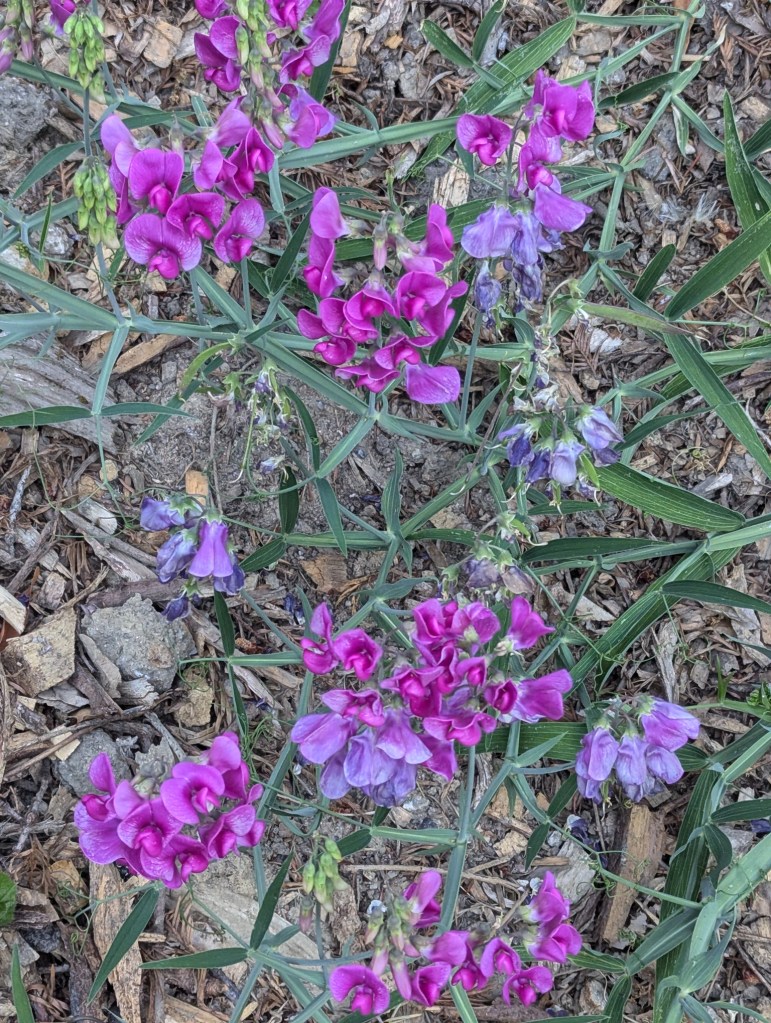
Many exotic flowering annuals are prolific enough to almost become naturalized, but are not quite aggressive or adaptable enough to get very far from cultivated landscapes. Cosmos, nasturtium, alyssum, catchfly (silene), four o’clock, gaura and foxglove self sow so readily that they are considered by some to be invasive. Some of us instead consider them to be ‘reliable’. They can be useful for unrefined parts of the garden that we do not mind watering, but otherwise do not want to put much effort into.

However, foxglove and even nasturtium can actually become noxious weeds in coastal areas not too far from here. I think that forget-me-not, feverfew, baby tears and English daisy can be problematic anywhere that they get enough water. Also, most annuals eventually revert to more genetically stable forms; which is why all varieties of dwarf nasturtium eventually bloom with the same yellow or orange single flowers. Yet, if we can distinguish between the plants that we can appreciate for their reliability and those that can be too invasive, native and exotic wildflowers and not so wild flowers can make gardening a bit easier.

Mediterranean Climate Is Quite Californian

New Zealand natives perform well here.

“Mediterranean” translates from Latin to “middle of land”. The Mediterranean Sea is in the middle of the land of those who named it. Other regions were either unimportant or unknown to them until the Sixteenth Century. Nowadays, most people of the World are aware of many other regions. A few of such regions also enjoy a Mediterranean climate.

Such climates are obviously not confined to the regions of the Mediterranean Sea. They merely resemble such climates. Some extend eastward into Western Asia. Others are in eastern and southern Africa, southwestern South America and Columbia. Larger regions of such climate are in southern Australia. The closest are here in western North America.

Even these limiting regional designations are debatable. Many horticulturists consider climates of New Zealand to be typical Mediterranean. Such climates are mostly between thirty and forty five degrees north and south. However, some might exist within northern India and southern China. Ultimately, climate is meteorological rather than geographical.

Mediterranean climates receive almost all of their rain during winter. Rain is very minimal through summer. Even if it is twice as abundant in other similar climates, it conforms to a similar schedule. Although winter chill is adequate for many species that need it, frost is mostly minor. Locally, summer weather does not often become too uncomfortably warm.

Native species know what to expect from local climate. So do exotic species from similar climates. Some may prefer more or less winter rain, summer heat or winter chill. Almost all can tolerate warm summers without rain, though. Such weather conditions are normal for them. Therefore, the most adaptable exotic species locally are from similar climates.

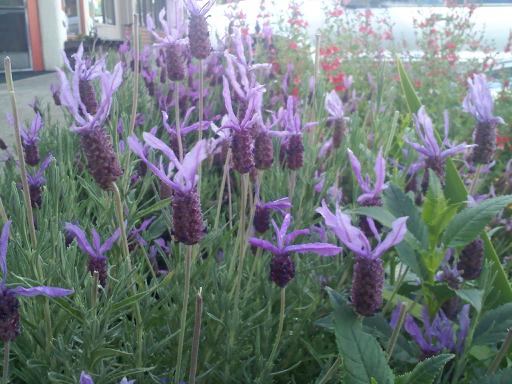
This includes species of Eucalyptus, Pittosporum and Callistemon from Australia. Aloe, Agapanthus and Morea are from South Africa. Phormium and Leptospermum are from New Zealand. Oleander and the various species of Lavandula are truly Mediterranean. In the past, a few exotic species adapted too efficiently to become invasively naturalized. Horticulturists are now careful to not import such potentially aggressive species.

Improper Pruning Is More Work Than Proper Pruning

Vine maples should be small trees, not . . . this.

In the short time it took me to run to the back yard to get some big stakes and something to pound them into the ground with, the unfortunate deed had been done. I had come home to find that one of my neighbor’s new Canary Island pine trees had blown down. I also noticed that the gardeners were there; so I wanted to get the tree staked properly before the gardeners got to it. Sadly, as I returned with stakes, ties and a mallet, I found that the gardeners were faster. Instead of standing the small tree up and staking it, they had already shorn the formerly well structured canopy into a globular mound that was about the same size and shape as most other items throughout the landscape, for no other reason than it was within their reach.

This same landscape had egg shaped African iris ‘bushes’ that only rarely bloomed if they happened to get an errant flower stalk out between shearings, and short, round trumpet vine ‘bushes’ in front of hefty  but bare trellises that they were never allowed to climb. Everything that was within reach was shorn, even the underside of an elegant Chinese elm that really should have been pruned properly by an arborist. The landscape was actually well designed, but could not perform as planned because of the shear abuse.

I really do not mind proper shearing of particular shrubbery that is intended to be shorn. I actually like old fashioned privet or boxwood hedges. However, even hedges need to be shorn properly; and realistically, not much else should be shorn as often. If it needs to be shorn regularly, but is not a hedge, it is probably not the right plant material for the job.

Properly selected plant material is proportionate to its particular application. This certainly does not mean that it does not need to be pruned. Most deciduous fruit trees and roses need to be pruned aggressively every winter, and almost all plant material needs to be pruned in some manner at one time or another. The difference is that shearing is indiscriminate pruning of outer growth without regard for foliage, bloom or branch structure. This is fine for hedges, but disfigures many other plants, and deprives them of their blooms and natural foliar textures that they were planted for.

For example, wisteria is an abundantly blooming robust vine that becomes a gnarled shrub that cannot bloom if shorn. Heavenly bamboo (nandina) is grown for its graceful and colorful foliage, but becomes a grungy rigid thicket of tattered leaves and stems with shearing. Although some shrubby junipers can make nice low hedges, frequent shearing deprives them of their feathery texture.   

This is why it is so important to know what the various plants in the garden need. They can only perform as intended with the proper care and maintenance, which includes proper pruning. Hedges may only need to be properly shorn, but almost everything else needs to be selectively pruned, thinned, elevated (raised), divided, groomed, trimmed, trained or even cut back. 

Colorful Foliage Without Colorful Bloom

Barberry can be bronze or gold.

Floral color gets most of the attention within home gardens through spring. It should. It is the most copious and most colorful of color. Though, it is not the only color. A few species that provide floral color, and more that do not, provide colorful foliage. Similar to Olympic Medals, this foliage can be bronze, silver or gold, or variants of such. Some rivals bloom.

Colorful foliage is not the same as foliar color of deciduous foliage as it sheds in autumn. Much is evergreen. Most is most colorful while it grows through warming spring weather. Actually, most fades through summer, and some becomes simpler dark green by autumn. Afterward though, some deciduous colorful foliage also develops foliar color for autumn.

The most popular colorful foliage is variegated. This means it is partly green with stripes, margins, blotches, spots, patterns or blushes. The color range of such variegations is as variable as its pattern range. Some foliage is variegated with a few vividly distinct colors. New Zealand flax, coleus, croton and caladium are some of the more familiar examples.

Of all unvariegated colorful foliage, bronze foliage is the most variable. It includes foliage that is brown as well as reddish, purplish or perhaps dark orangish. Some emerges pink before developing a darker shade. New photinia foliage is reddish bronze only briefly as it matures as dark green. Purple leaf plum and smoke tree are famously purplish bronze.

Silver foliage is the most useful colorful foliage in the wild. At high elevations, where sun exposure is harshly intense, it is selectively reflective. It absorbs sufficient sunlight for its photosynthesis, but not enough to succumb to scald. It is how Arizona cypress and some agaves survive in the high desert. Such foliage may be gray, pallid blue or almost white.

Many species with gold foliage are the same as those with bronze foliage. New Zealand flax, smoke tree, barberry and elderberry can be either bronze or gold. Since gold foliage contains less chlorophyll than green foliage, it is a bit less vigorous. Unlike silver foliage, it serves no natural practical purpose. It survives in landscapes for visual appeal.

Snail Season

Very fresh escargot

The problem with escargot that is too fresh is that it grazes – a lot! Snails, as well as slugs, lurk in our own gardens, waiting for nightfall, or sometimes not, to emerge and devour any tender plant parts that appeal to them. They tear apart large leaves and fresh flowers, and eat seedlings completely. They are particularly problematic this time of year, while the garden is still damp, but the weather is getting warmer, and especially since there is so much fresh new vegetation for them to eat.

The most effective means of controlling these troublesome mollusks is to eliminate their hiding places where they camp out during the day. This involves pulling large weeds and removing any debris that may be laying about the garden. Leave no stone unturned. Of course, this is not so easy in lush gardens with abundant or overgrown foliage, and features like large pots and statuary. In such situations, cunning and diligence are in order.

I have found bare copper wire wrapped around pots, planters and tree trunks to be an effective deterrent. Copper tape sold in nurseries and garden centers is probably better since it is wider. It can be self adhesive, or stapled to wooden containers or shelves. Snails can get past the copper though, on any plant parts than hang over where the snails can reach. Wire should be removed from tree trunks after ‘snail season’, or wrapped in a manner that accommodates for trunk expansion. For example, an ‘S’ shaped curve in the circling wire set flatly against a tree trunk provides enough slack for a bit of expansion.

It is also good to hunt snails as they come out after dark or before they go in for the morning. They are neither elusive nor fast. They are merely objectionable to handle. Laying a piece of cardboard or similar material out for them to hide under, and then surprising them during the day is a sneaky trick, but effective. Putting small puddles of beer out in shallow containers, such as saucers for potted plants, is more work, but not often as effective. It is sneakier though, since it entices the snails to stay out drinking until they die in the sunlight.   

Floral Color Communicates To Pollinators

Flowers attract their pollinators with color.

Bloom is bountiful for spring. It is more abundant now than it will be at any other time of year. Early bloom has more time to produce more seed prior to autumn and winter. Also, it can most efficiently exploit its pollinators who are also most active in spring. The most prominent blooms appeal to such pollinators with floral color. Their effort is remarkable.

Most bloom within most natural ecosystems here relies on wind for pollination. Although very efficient, it lacks prominence. Some grasses seem to produce seed without evident bloom. Because such vegetation does not rely on pollinators, it has no need to advertise. Toyon produces tiny but prominently profuse flowers for both wind and insect pollination.

Most species within home gardens rely on pollinators rather than wind for pollination. At least their ancestors did. They originally developed both floral color and floral fragrance to attract pollinators. Extensive breeding enhanced color and fragrance, but also caused sterility for some. Others are not true to type. Their visual appeal became less practical.

Obviously, such visual appeal and associated practicality are subjective. Although less practical for procreation, enhanced bloom is more practical for home gardens. Most who enjoy flowers appreciate enhanced floral color and enhanced floral fragrance. They are unconcerned with how species that provide such bloom procreate. Looks are everything.

Besides, some pollinators can still enjoy most enhanced floral color. A few flowers are so genetically modified that they confuse some pollinators. A few insects die of exhaustion while trying to gain entry. Generally though, most get what they came for or safely leave without it. Many who enjoy gardening also enjoy pollinating insects and hummingbirds.

Ultimately, floral color is personal. Many garden enthusiasts prefer specific color ranges or specific colors. Many prefer an abundance of color. Some prefer more subdued floral color. Some prefer specific types of flowers to provide floral color. Bloom season may be another concern. Some want more winter bloom while nearby gardens lack floral color. Many prefer major spring bloom. Some like random bloom through the year.

Spring in Guadalupe Gardens & Wildflower Show (2010)

(This article is from 2010, so contains irrelevantly outdated information.)

Now that the world renowned San Francisco Flower and Garden Show is over, it is time for an even more important horticultural event; Spring in Guadalupe Gardens, on April 24, between 10:00 a.m. and 3:00 p.m.. This celebration of Guadalupe Gardens, Earth Day and the Great Outdoors may not be as big and as fancy as some of those ‘other’ shows, but it is so much more important because it is local, centered around the Guadalupe Gardens Visitor and Education Center, which is located at 438 Coleman Avenue in San Jose.

My favorite part of Spring in Guadalupe Gardens is all the vendors of unusual plants. In past years, I found several fuchsias, aloes, cacti and weird tomato plants at Spring in Guadalupe Gardens. I never know what to expect until I get there. I hope to find unusual fig trees this year.

Spring in Guadalupe Gardens is also a great opportunity to meet with representatives of all sorts of gardening clubs. Gardening questions can be brought by the Master Gardeners of Santa Clara County’s Gardening Advice booth, where I will be working throughout the day. There will be workshops and lectures, music and entertainment, as well as fun activities for children.

Spring in Guadalupe Gardens happens to be at the same time as the peak of bloom in the Heritage Rose Garden, which is the largest public garden in the United States of America dedicated to the preservation of old roses. There will be tours in other gardens and trail walks too. If I did not need to work at the Gardening Advice booth, I would want to tour the Historic Orchard, which is literally a tree museum of the many fruit trees that once filled the vast orchards of the Santa Clara Valley.

Earth Care Recycling will host a free electronic waste drop off at the Visitor and Education Center to collect all sorts of computers, keyboards, monitors, televisions, stereos, radios, printers, fax machines, telephones, cell phones, DVD players and VCRs. (I thought mine was the last of the VCRs!) Proceeds benefit the Guadalupe River Park Conservancy.

Admission and parking are free. Just follow the signs from Coleman Avenue or West Taylor Street. More information about Spring in Guadalupe Gardens can be found at www.grpg.org or by telephoning 298 7657.

The unfortunate news about the Wildflower Show organized by the Santa Clara Valley Chapter of the California Native Plant Society and the Mission College Biological Sciences Department is that it will be at the same time (with another hour until 4:00 p.m.). The fortunate news is that it will continue the following day on April 25, so we all can attend both events! The Wildflower Show will be at Mission College in Santa Clara. Parking in lot C and admission are free.

More than four hundred specie of wildflowers and native plants will be displayed and accurately labeled. There will be free classes for native plant identification and wildflower gardening, and nature activities for children. Books, posters, seeds and note cards will be available for purchase. More information can be found at www.cnps-scv.org, or by telephoning 650 – 260 3450.

Shade Tolerant Species Genuinely Shine

Some species actually prefer partial shade.

Home gardens are getting shadier as bigger modern homes occupy smaller modern lots. Bigger homes make bigger shadows. So do their bigger fences that compensate for their minimal proximity to each other. Less space within their smaller gardens extends beyond their shade. Consequently, shade tolerant species have become more popular than ever.

Also, small trees have become more popular than large trees for small modern gardens. However, more of them are evergreen to partially obscure obtrusively close homes. Their shade lasts throughout the year, and is likely darker than that of deciduous trees. It could be too dark in some situations even for shade tolerant species. Even they need sunlight.

Realistically, shade tolerant species merely require a bit less sunlight than most species. No real vegetation can survive without any sunlight. Like it or not, artificial turf can be the most practical option for the shadiest of lawns. Some potted plants can cycle around the garden, to take turns in shade and sunlight. If so, they may not need to be shade tolerant.

Most shade tolerant species perform differently with shade than with better exposure. For example, some rhododendrons that tolerate shade bloom better with more sunlight. Most species with colorful or variegated foliage are more colorful with more sunlight. Likewise, sunlight enhances autumn color for some deciduous species. Shade is merely tolerable.

Also, some shade may be dynamic. Garden space below deciduous trees can be shady for summer, but sunny for winter. Below high evergreen trees, sunlight might get through at a lower angle through winter. Major pruning or removal of vegetation can improve sun exposure if necessary. Many shade tolerant species are adaptable to such modifications.

Most shade tolerant species are understory species. They naturally live below canopies of higher vegetation. Some have big leaves and dark foliar color to maximize absorption of sunlight. Ferns are famously tolerant of shade, although tree ferns can reach above it. Kaffir lily, cast iron plant and hosta tolerate shade also. Rhododendron, azalea, camellia, andromeda and hydrangea tolerate shade as well, but need a bit of sunlight to bloom.

Irrigation Resumes With Drier Weather

Spring gets progressively drier and warmer.

Spring, in several regards, is like autumn in reverse, or vice versa. Bloom increases for spring but decreases for autumn. Foliage increases for spring but decreases for autumn. The two seasons are in opposition. In this chaparral climate, the rainy season that began last autumn ends now. Irrigation that became redundant then becomes necessary now.

Diminishing rain is not the only reason that irrigation becomes more important for spring. Spring weather also becomes warmer and more arid, or less humid. Warmth and aridity increase evaporation of moisture that rain deposited not long ago. Increasing day length, intensifying sunlight and warmth accelerate plant growth. Such growth consumes water.

This need for moisture is progressive, though. Vegetation certainly requires more water as the weather becomes warmer and drier. However, it does not yet require as much as it will require later during summer. By then, the weather will be even warmer and drier, and the days will be even longer. Irrigation should increase accordingly in regard to weather.

Unfortunately, there are no simple formulas to determine how much irrigation is needed. Some vegetation with shallow roots may require frequent but moderate irrigation. Some vegetation with deep roots may prefer less frequent but more copious irrigation. Rain is possible at any time. It can briefly interfere with the most efficient of irrigation schedules.

Soil also affects irrigation. Sandy soils drain efficiently, but do not retain much moisture. This may not be a problem for some species that tolerate occasionally dry soil. It may be more of a concern for species that prefer more regularly moist soil, though. Dense soils retain more moisture, but do not drain as efficiently. Soil amendments can improve soils.

Manual irrigation is easier to monitor than automated irrigation, but can be tedious. That is why most irrigation is automated nowadays. Automation is more likely to be excessive than insufficient. Desiccation, wilting and other symptoms of insufficiency of irrigation are obvious. Symptoms of saturation may not become obvious until too late for remediation.

Weeding Season

Weeds pull up relatively easily while the soil is still damp from winter rain.

My garden may lack the sort of ‘riot of color’ that landscapers like to promote to achieve the other popular cliché of a ‘tranquil garden retreat’, but is the victim of a different kind of violence. The desirable plants and undesirable weeds are about as compatible as the terms ‘riot’ and ‘tranquil’ are. Recently, the weeds have been gaining ground in the ongoing battle between the two. In another heroic effort to help the plants that I want in my garden, I will soon venture onto the battlefield to do what I can to defeat the weeds. The native sky lupine, California poppy, California fescue and some sort of native iris would otherwise be displaced by the invading oat grass, oxalis, burclover and sowthistle.

Different weeds invade other areas. Perennial weeds like nutsedge, dandelion, Bermuda grass, bindweed and brambles (blackberry) are among the worst in most areas. Annuals like purslane and spruge can be just as troublesome though. I really dislike the various twining vetches, even though they are good for the soil. Pampas grass, giant reed, blue gum eucalyptus, black acacia and Acacia dealbata are the largest weeds and the most difficult to battle.

All of the weeds that I need to contend with pull out easily while the soil is still damp from winter rains. If I do not pull them now though, they will be difficult to pull as the soil dries. Broom, the nastiest weed in my garden, comes out relatively easily now, but is ridiculously hard to pull from dry soil. Brambles and poison oak also come out easier now like the rest of the weeds, but are of course always difficult to handle.

Sometimes, if I do not have enough time to pull all the weeds in an area, I at least like to keep them from spreading if possible. If I cut annual oat grass down with a weed whacker before it blooms and sets seed, it is unable to reproduce to replace itself before it dies at the end of its season. This also works for sowthistle. Dandelion is perennial, so does not die at the end of its season, but will not spread so aggressively without its flowers or seed.

This has not worked so well with other weeds. Spurge sets seed before I catch it. Yellow oxalis and nutsedge reproduce more profusely by offsets than by seed. Bermuda grass is a creeping perennial that does not mind if it loses its seed. Burclover and bindweed are so low to the ground that pulling them is the only option. Broom and the various weed trees may initially be deprived of their seed, but are harder to pull when they regenerate after getting cut back.

Regardless of what it takes, this is the best time of year to get weeds under control. Later in the season, they will have had time to set seed or get more established. As the soil dries and gets baked by the sun, pulling weeds, or in some cases, digging them, becomes more difficult.