Wintry Weather Can Damage Trees

(This posted in 2011.)

Wind brings out the worst in trees.

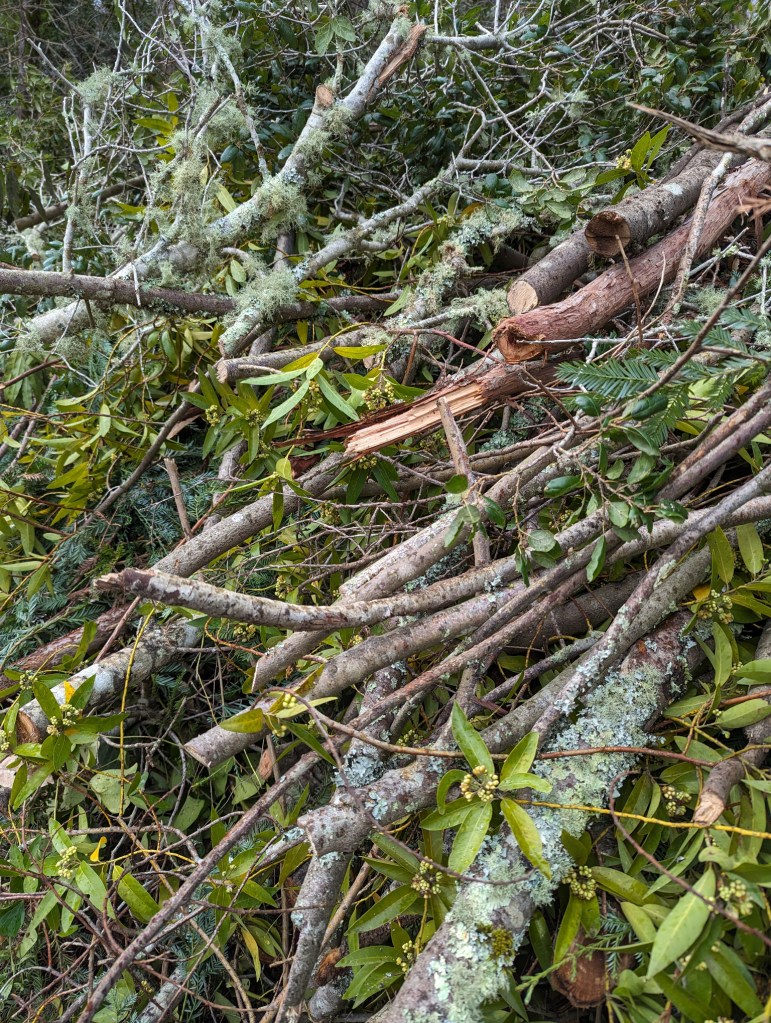
Pasadena sustained the worst of the damage caused by the strongest Santa Ana Winds in three decades. Huge piles of debris from broken trees are much more than can be removed any time soon. Falling debris and trees damaged many roofs, cars and anything else that happened to get in the way.

Other towns and neighborhoods throughout the area, particularly those at the base of mountains, also sustained major damage. At the same time, severe winds ravaged the San Francisco and Monterey Bay Areas as well, particularly in the Santa Cruz Mountains and the hills of the East Bay.

Some of the damage caused by wind in urban areas might have been less disastrous if trees had gotten the respect and attention that they deserve. Some trees develop structural deficiencies that need to be corrected by pruning, either to eliminate the problems, or at least to decrease the strain exerted onto the structurally deficient parts. A few trees that become unstable as they mature may likewise need to be pruned or even removed.

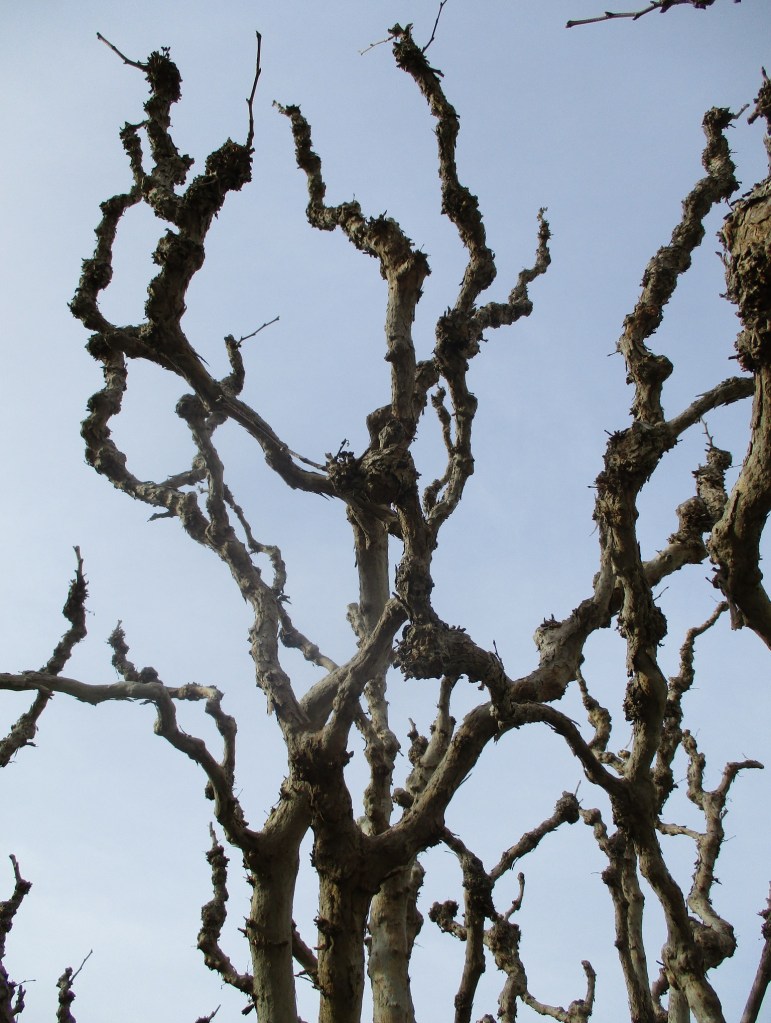
It is not always possible to prune trees to remove all structural deficiencies without damaging the affected trees more, or causing more structural problems to develop. For example, major pruning to remove all parts that may get blown down by wind, such as pollarding or ‘topping’, may seem to be effective for the short term, but actually stimulates the development of vigorous secondary growth or watersprouts that are disproportionately heavy and even more likely to tear off from the older limbs.

Structural pruning more often involves thorough reduction of weight and wind resistance. Weight of foliage and stems directly applies leverage against unions where smaller stems are attached to the larger stems from which they originate. Wind resistance adds more leverage as foliage gets blown about by wind. Thinning obviously removes significant weight, and also decreases wind resistance to allow wind to blow though the affected canopies.

Besides helping to compensate for structural deficiency, structural pruning is also beneficial to potentially unstable trees for the same reasons. However, unstable trees typically need even more reduction of weight and wind resistance. Some of the most unstable trees and those that are deteriorating need to be removed because their instability cannot be accommodated.

During winter, while deciduous trees are bare, evergreen trees are more susceptible to wind damage, obviously because they retain their weight and wind resistance through winter while the weather is the most severe. Unstable trees become even more destabilized as rain softens the soil. Regardless of the potential for susceptibility to wind damage, this would be a good time of year to get any needed tree maintenance done, prior to any more windy and rainy winter weather.

Arborists certified by the International Society of Arboriculture are the most qualified to identify potential structural problems or instability, and to prescribe corrective procedures. A list of certified arborists can be found at the website of the International Society of Arboriculture at http://www.isaarbor.com.

Frost Is Simply Too Chill

Some minor frost damage is acceptable.

Chill can be good. Frost can be bad. The difference is thirteen degrees Fahrenheit. Chill is at or less than forty-five degrees. Frost is at or less than thirty-two degrees. Chill helps some flora to maintain its seasonal schedule. Frost causes some flora to freeze. Both are limiting factors of home gardening. Both are weather patterns that are limited by climate.

Many species from climates with more pronounced seasons rely on chill. They know that it occurs only during winter, and that they should bloom afterwards. Duration of such chill is more important than temperature. Any temperature at or less than forty-five degrees is equally sufficient. Within that, different species require different durations, or ‘chill hours’.

This limits the selection of many species, like various fruit trees. Citrus orchards formerly grew within the San Fernando Valley. They require no chill. Stone fruit orchards formerly grew within the Santa Clara Valley. They require a bit of chill. Pomme fruit orchards grow in the Willamette Valley. Many cultivars of pomme fruit perform best with significant chill.

Frost also limits the selection of many species. Pomme fruits do not mind it. However, if it happens late, it can ruin stone fruit bloom or developing fruit. It might damage citrus trees whenever it happens. Some climates here experience frost annually. Some experience it only rarely or mildly. Several coastal climates experience merely minor chill without frost.

Many garden enthusiasts grow a few species that are vulnerable to frost. Of course, such species are safe within frostless climates. Elsewhere, they may need shelter during cold weather. Potted vegetation may benefit from seasonal relocation. Temporary tenting can shelter imobile vegetation in the ground. Some vegetation is too large to shelter, though.

Vegetation that sustains frost damage is unsightly. However, it is best to delay pruning or grooming until subsequent frost is unlikely. Damaged outer growth insulates undamaged inner growth. Besides, pruning stimulates new and more vulnerable growth. Some types of vegetation should want only superficial grooming. Others might require major pruning.

Christmas Trees Grow On Farms (2011)

Christmas trees grow on farms rather than forests, but some farms are in forests.

(This is an old article from 2011, so much of the information within is no longer relevant.)

Douglas, grand, white and Noble firs, as well as sierra redwoods, Monterey pines and at least fourteen other varieties of Christmas trees can be found and cut at Santa’s Tree Farm and Village near Half Moon Bay. Certainly, no one needs that many Christmas trees; and most select only one. Yet it is good to know that somewhere within such a vast selection, there is the perfect Christmas tree. Santa’s Tree Farm and Village also provides wreathes, garlands, tree stands, flocking, fire retardant and delivery.

On weekends, Sleighbells Gift Shop is open from 9:00 a.m. to 4:00 p.m.; and through December 18, Santa Visits between 9:30 a.m. and 4:30 pm.. For $2, children from two to ninety-two and older can ride the train from 9:30 a.m. to 4:00 p.m., as weather allows. Younger children ride for free. Santa’s Tree Farm is open between 8:00 a.m. and 5:00 p.m. on weekends (except for closing at 1:00 p.m. on Christmas Eve), and from 9:00 a.m. to 5:00 p.m. on weekdays.

Except for trees on the Diamond lot and pre-cut trees, prices range from $46 to $69. VISA and Mastercard and leashed dogs are welcome. Santa’s Tree Farm and Village is at 78 Pilarcitos Creek Road at Highway 92, six and a half miles from Highway 280 on the way to Half Moon Bay. Coupons, showtimes (yes, ‘showtimes’) and more information can be found at the website http://www.santastreefarm.com, or by telephoning 650 – 726 2246.

Atlantic cedar, Austrian pine, Arizona cypress, Leyland cypress Scott’s pine, sugar pine, white fir, as well as many other varieties of Christmas trees can also be obtained from Crest Ranch Christmas Tree Farm, located in the Santa Cruz Mountains west of the San Lorenzo Valley. Douglas firs, pines, cedars and cypress are $37 up to five feet tall, and $7.40 for each additional foot. White and Greek fir varieties are $42 up to five feet tall, and $8.40 for each additional foot. All sales are cash or check. An ATM is available.

The beautifully scenic picnic area is a good excuse to bring lunch, or at least get something at the snack bar. Leashed dogs are welcome. More information can be found at the website http://www.crestranch.com or by telephoning 831 – 426 1522. Crest Ranch Christmas Tree Farm is open from 8:00 a.m. to 5:00 p.m. until December 20, and is located at 12200 Empire Grade outside of Felton.

Berries Get Colorful For Winter

Firethorn berries are very reliably abundant.

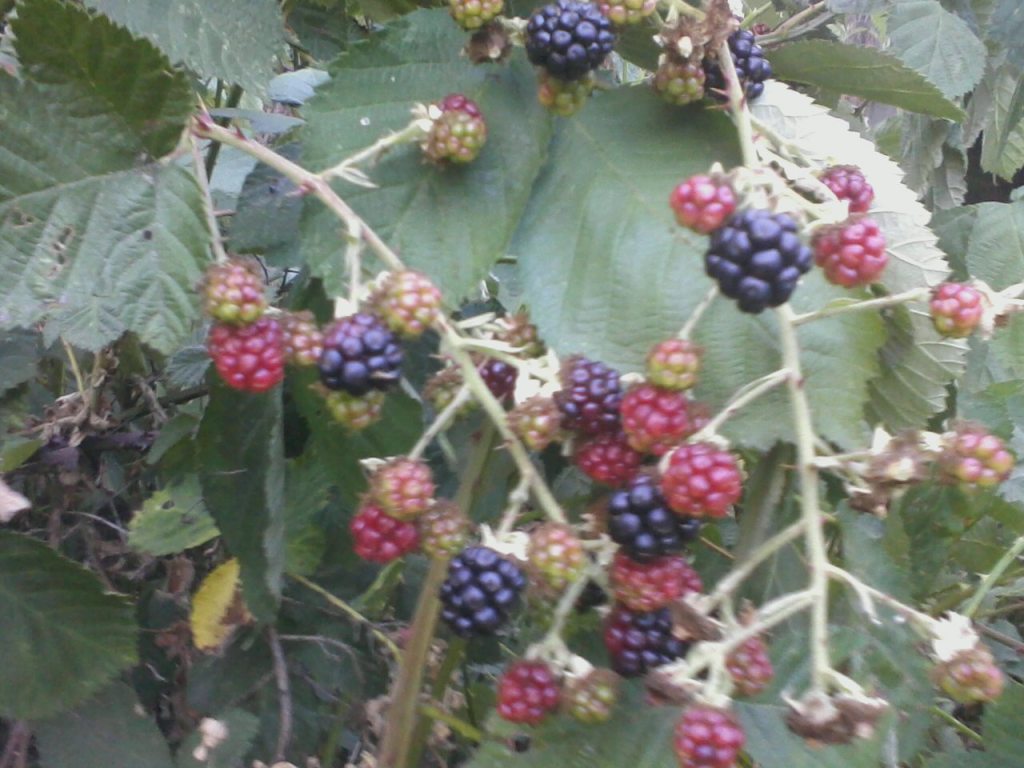
Some vegetation excels at exploitation of wildlife. All sorts of flowers use color and floral form to attract pollinators. Many flowers rely on fragrance or flavorful nectar for this same purpose. Many flowers employ a combination of such techniques. After pollination, many species produce fruit to draw wildlife to disperse their seed. This includes winter berries.

Just as flowers appeal to particular pollinators, fruits appeal to particular consumers. Big fruits appeal to animals who eat them, perhaps sloppily, but drop the seed within. Acorns and nuts appeal to squirrels who bury more than they can retrieve. Winter berries appeal to birds who do not digest the seed within. The birds deposit the seed wherever they go.

It is a mutually beneficial arrangement. Birds, whether migratory or overwintering, eat as many berries as they want. Vegetation that provides winter berries benefits from efficient dispersal of its seed. Naturally, such fruits ripen as birds are fattening up for winter. They are brightly colorful to attract hungry birds. They are small enough for birds to eat whole.

This is convenient for home gardening. It provides some color after defoliation of autumn foliar color, and prior to spring bloom. It is actually more appealing where cooler weather accelerates defoliation. Also, such color contrasts more prominently against snow within a stark landscape. Within any climate though, such berries last only until birds find them.

For some, birds and squirrels who come for winter berries are welcome. Some prefer the color of winter berries. Ultimately though, the wildlife determines how long winter berries linger. Anyone can cultivate vegetation that produces winter berries. Very few can protect such fruit from wildlife that craves it. Berries rarely last long enough to rot through winter.

Firethorn produces the most colorful winter berries. Various cotoneasters are similar, but with somewhat subdued rusty red color. Toyon develops larger but looser clusters of fruit. English hawthorn fruit resembles that of cotoneaster, but on bare stems. Hollies produce only a few berries. They are dioecious, so need male pollinators which are rarely nearby.

Deciduous Foliage Is Efficient

Maple foliage only seems to be messy because it all falls at once.

(Horridculture will resume on Friday.)

Contrary to popular belief, most deciduous trees, those that drop all their leaves in autumn, are not as messy as most evergreen trees. There are of course a few exception; such as cacti that lack foliage completely, or Italian cypress that drop their finely textured foliage straight down within a very narrow drip-zone, where it decomposes and disappears unnoticed. Very few leaves fall from a big silver maple through winter, spring and summer, so that almost all of the raking is done when almost all the leaves get shed in autumn. However, a big Southern magnolia generally drops leaves throughout the year, so that raking is always necessary.

The problem is that when deciduous trees get to be messy, they are very messy. Also, they get to be messy at the worst time of year, when their leaves mix with rain to clog drains and gutters. Unraked leaves become hazardously slippery when they get wet and start to decompose. It is amazing how something that can be so appealingly colorful through autumn can so quickly become such a nuisance.

Leaves of deciduous trees somehow seem to be better for composting than those of some of the evergreen trees. Anyone with a Southern magnolia knows how slow the foliage is to decompose. Foliage of camphor, bay, carob and various eucalyptus certainly decompose slower than various maple, ash, poplar and birch. Many of us outfitted with green waste bins or curbside collection of green waste prefer to recycle the less desirable evergreen foliage, and compost primarily deciduous foliage. Those of us who do not compost but need to rake under large or many deciduous trees may fill bins for several weeks, or leave very big piles of leaves at the curb.

Small leaves, such as those of most elms, or finely textured compound leaves, such as those of silk tree, jacaranda or locust, may not need to be raked if they fall onto lower shrubbery or ground cover. Small leaves or the small leaflets of disintegrating compound leaves simply sift through the lower plant material to decompose below. However, large elms may produce such an abundance of foliage that some may need to be removed. Maple and other large leaves are not so easy to ignore. They can shade lawns, ground cover or bedding plants, so need to be raked as they fall.

Dormancy Facilitates Survival Through WInter

Deciduous vegetation defoliates for winter dormancy.

Dormancy is not exclusive to vegetation. Many animals are dormant while they hibernate through cold winter weather. Some animals are dormant while they aestivate through hot and dry weather. Fungi and bacteria can maintain dormancy for many years or centuries. Dormancy is a technique for avoiding unpleasant situations, such as cold or hot weather.

Like some animals, fungi and bacteria, some vegetation is dormant through dry weather. This is evident within local chaparral climates and nearby desert climates. Even within a few coastal forests, buckeye defoliates during summer. Such vegetation resumes activity in response to late autumn rain. However, most vegetation here prefers winter dormancy.

Such winter dormancy is especially evident among deciduous species. Many evergreen species merely halt or decelerate their growth, but without defoliation. Several evergreen species defoliate only partially. A few only shed their old foliage as new foliage replaces it during the following spring. Few species prefer to grow most vigorously through winter.

There are a few advantages to defoliation for winter. Wintry wind blows much more freely through defoliated canopies. Evergreen canopies are therefore more vulnerable to wind. In other harsher climates, defoliated canopies do not accumulate much snow. Evergreen canopies might accumulate more snow than they can support. Some get heavy with rain.

Foliage is not as useful through winter as it is through summer anyway. The sun is lower to the south. Consequently, less sunlight gets through more of the atmosphere. Days are shorter while nights are longer. Furthermore, cooling autumn and winter weather inhibits photosynthesis. For deciduous species, foliage becomes less of an asset than a liability.

Dormancy, whether it involves defoliation or not, facilitates a few horticultural techniques. Bare root stock becomes available at the beginning of winter. Transition from its farms to home gardens is much less stressful during dormancy. So is the aggressive pruning that roses and deciduous fruit trees require. Most pollarding is safest during winter dormancy.

Rainy Weather Begins With Autumn

Weather changes with the changing seasons.

Rain is at least as relevant as temperature is to the seasons here. Temperature does not change as much. The warmest of summer weather does not seem to be terribly hot. Low humidity helps. The coolest of winter weather is not too terribly cold. Some local climates lack frost. The difference between dry weather and rainy weather is much more obvious.

After all, rainy weather ends during spring, and does not resume until about now. Almost no rain occurs during the extensively arid summer season. This includes late spring and early autumn. Summer thundershowers are uncommon. Therefore, almost all rain occurs during winter. Some also occurs somewhat variably during late autumn and early spring.

This is quite normal for local chaparral climates. Comparatively to other climates, it might be both an advantage and a disadvantage. It is why most landscapes, particularly lawns, rely on irrigation. It is also why the growing season is so long here. This climate provides more pleasant weather to facilitate more gardening. It also necessitates more gardening.

Recent rainy weather is likely the beginning of the rainy season. If so, it is obviously also the end of the dry season. Transition from one season to the next is not on a very precise schedule, though. Dry weather could potentially resume for a while. Conversely, El Nino has potential to promote rainy weather. This winter could be even rainier than last winter!

Even if rainy weather does not resume for a while, irrigation requires seasonal reduction. This includes frequency and duration of automatic irrigation. Vegetation consumes much less moisture while dormant through winter. Less moisture evaporates from soil while the weather is cool. Rain may provide most of the garden with more moisture than it can use.

Unfortunately though, rain is also potentially messy. It makes soil muddy, and can cause erosion. It dislodges deteriorating deciduous foliage, especially in conjunction with wind. Colorful deciduous foliage is much less appealing on pavement or lawn than in its trees. Raking fallen leaves, and all other gardening, is less pleasurable during rainy weather of autumn.

Rodents Also Enjoy Home Gardens

Cats can not exterminate all rodents.

Spring is when most rodents are most active. Although they do not hibernate locally, they are a bit less active through winter. Their activity increases with warming spring weather. Their progeny increases their population. Assorted fresh vegetation that sustains them is most abundant. Their activity decelerates slightly through summer because of predation.

Although they may be no more active now than they had been, their activity is changing. Rodents are aware that it is now autumn, and that they must prepare for winter. They eat seeds and fruits that are naturally available at this time of year. Some rodents store food. It is no coincidence that vegetation naturally provides what they need, when they need it.

For example, oaks exploit the natural activity of squirrels for the dispersion of their seed. Annually, they produce acorns to sustain a particular population of squirrels. Then, every several years, they produce too many for the squirrels to eat. The squirrels naturally bury more acorns than they can retrieve later. The surplus acorns remain buried to germinate.

Similarly, rodents consume autumn fruit, such as apples and pears, and store their seed. They are likely less numerous than they were earlier in the year, but consume more now. They naturally fatten up so they may eat less while food is less abundant through winter. Also, they naturally migrate from gardens into warmer and drier home interiors for winter.

This is one of several reasons why sanitation within the garden is so important. Removal of unharvested fruit makes gardens less attractive to rodents. They may find sustenance on compost piles, but may not dig too deeply into them. Deteriorating pruning scraps can provide them with shelter from weather and predators. Cleanliness is a deterrent to them.

Deterrent is safer than eradication. Traps and poisons are potentially dangerous for pets and people. Poisoned rats and mice may poison predators or scavengers who eat them. Cats are very efficient at both deterrent and eradication of rodents. However, they require major commitment for many years. They can do nothing outside if confined to their home.

Wood Still Warms Many Homes

Trees recycle quite naturally into fuel.

Fireplaces and wood stoves are not completely obsolete. They are merely less common than they were years ago. Modern building codes prohibit them within new construction. For some that incur damage from earthquakes, removal is more practical than repair. Not many people use fireplaces and wood stoves nowadays anyway. Nonetheless, a few do.

Sources of firewood have also changed. Displacement of orchards and forests by urban developments had been reliable sources. Such orchards are now gone. Forests are now farther away, and protected from harvest. Instead, most wood fuel is now obtainable from the tree service industry. Scrap from tree maintenance and removal converts to firewood.

Unlike uniform firewood from former orchards, scrap wood is variable. Orchards produce only one type of firewood from their unvaried trees. Firewood from forests involves only a few species that may remain separate for sale. Scrap wood can include any species that a particular tree service encounters. Except for larger volumes, separation is impractical.

The tree service industry provides less firewood than displaced orchards and forests did. However, nowadays, less firewood is necessary. There are many more homes here than years ago, but very few consume wood for heat. Residents who choose to burn firewood are now generally less selective. Yet, some might separate mixed firewoods accordingly.

Tree services prefer to leave firewood where it lands. They charge for removal of excess firewood. They typically cut logs to firewood lengths, but do not split them. Neighbors are therefore sometimes pleased to share wood from removed trees. Tree services sell wood that they must remove, after splitting and seasoning it. They typically charge for delivery.

Firewood for this winter must have seasoned by now. Most types should have sufficiently seasoned if cut and split before last spring. Fresh firewood can not season so late during increasingly cool and damp weather. Scrap from winter pruning can become firewood for next winter. Palms and other monocots do not produce actual wood that burns efficiently.

Beyond Fresh Cut Flowers

Palm fronds are striking cut foliage.

Most flowers bloom in spring. Many bloom a bit later and though summer. Not nearly so many start to bloom in autumn or though winter. This time of year, there is more to clean up from fading blooms than there are fresh blooms to cut and bring in.

Much of the color in the garden through autumn is provided by colorful foliage or foliage that gets colorful as the weather gets cooler. Later in winter, some plants have colorful bark and stems that gets revealed by winter defoliation. Coral bark Japanese maple, red twig dogwood and some arctic willows have remarkably colorful twigs.

Blooms of a few plants are sometimes cut and recycled after they fade because their dried flowers, flower stems or seed pods are appealing. Hydrangeas are not so attractive as they deteriorate out in the garden, but can be cut and hung upside down to dry to substitute for fresh flowers later. If done quickly, many types hold their color somewhat. Those that do not hold their fresh color may turn an appealing shade of brown.

Queen Anne’s lace can likewise be a nice dried flower, but is not so easy to hide in the garden while it dries. If cut and hung to dry, individual stems should be hung separately, since they bend and are difficult to separate if hung in clusters. Their flat-topped flower trusses curve inward as they dry, so they look nothing like they do fresh.

The rigid flower stems of New Zealand flax are rather sculptural protruding from their softer foliage. These same stems can be cut, plucked of seed pods, and like dried hydrangeas, used as cut flowers when there is not much else to get out of the garden. Ironically, New Zealand flax flowers sometimes get cut before they bloom, since not everyone appreciates their contrast against their own softly textured foliage.

Years ago, New Zealand flax flower stems were actually dried and spray painted! For those daring to try this technique, it also works well with lily -of-the-Nile flowers stems and trusses (plucked of their seed pods), Heavenly bamboo flower stems, and even dried pampas grass blooms. However, pampas grass blooms are deprived of their fluffiness and most appealing quality by spray paint. Bird-of-Paradise leaves twist interestingly as they dry, to provide texture with or without paint.

Fronds (leaves) of some fan palms can provide bold cut foliage. Mediterranean fan palm is difficult to handle because of the nasty teeth on the stalks, but has nice rounded leave that fan out nicely behind other flowers. They can be cut into smaller fans, or even other not so rounded shapes. Windmill palm is much easier to handle, but is a bit larger, so is more likely to need to be trimmed to shape. All are easy to cut with common scissors, and can be dried and spray painted.

There is probably more in the garden to substitute for cut flowers than would be guessed. Useful plant parts can be found in the least expected of places.