Fern Foliage Is Softly Bold

Ferns provide distinctive and bold foliage.

Ferns are foliar perennials. They provide neither floral color nor fragrance. They provide neither fruits nor vegetables. With few exceptions, they provide no shade. The very few that are deciduous are not impressively colorful for autumn here. Ferns can not grow as hedges. Nor can they become lawns. They exclusively provide distinctive fern foliage.

They do so splendidly! Most produce the sort of distinctively lacy fern foliage that ferns are famous for. Some exhibit even more finely textured and airy foliage. A few exhibit a relatively coarse foliar texture. Almost all ferns are rich and deep green. Some are lighter or slightly yellowish green. A rare few are silvery gray, or display an intricate silver lining.

Almost all ferns that are popular within home gardens are evergreen. Most benefit from occasional grooming to remove deteriorating old foliage. Some produce new growth on top as old growth lies down below. Several grow most lushly after removal of all foliage prior to their growing season. A few deciduous types of fern defoliate for their dormancy.

Ferns do not develop stems or trunks like most other vegetation does. They sprawl over the ground with rhizomes, which are fleshy stems. Rhizomes grow only in length, but not in diameter. Tree ferns grow upward as their rhizomes deteriorate below. Roots that grow through the deteriorating rhizomes form what seems to be trunks. Fern roots are fibrous.

Leaves of ferns are fronds. Such fronds of most ferns divide into pinnae, which are like smaller leaflets. Pinnae of some ferns divide into even smaller pinnae. Rachi are central stalks that suspend the pinnae within individual fronds. Ferns reproduce by spores, so lack flowers. Most ferns propagate efficiently by division of preferably dormant rhizomes.

Because of their fibrous root systems, ferns are complaisant to confinement within pots. Most ferns are naturally understory vegetation, so are innately tolerant of partial shade. Ferns that tolerate aridity as well as shade and confinement are delightful houseplants. Most ferns are very tolerant of relocation, although some must replace foliage to adapt.

Mild Weather Inhibits Summer Growth

Vegetative growth might be atypically slow.

The weather this year has been a cold hot mess! Both the worst frost since 1990 and the worst storms since 1982 occurred in one winter. Then, cold wintry weather lingered into spring to inhibit spring bloom. Now, cool and mild weather of spring lingers into summer to inhibit summer growth. This particular climate is innately mild, but this is a bit too mild.

Technically, the solstice on June 21 is the beginning of summer. Locally though, summer warmth typically begins about the middle of spring. It typically continues into the middle of autumn. Sometimes, it begins significantly sooner or continues significantly later. This is why the warm growing season here is so extensive. It is also why winter is rather brief.

Unseasonably mild weather obviously has a few distinct advantages. It is comfortable for those who are not so fond of summer warmth. It limits the need to increase irrigation that compensates for aridity and lack of rain. Bloom, although potentially late, stays fresher a bit longer with mild weather. A bit less spring bloom becomes a bit more summer bloom.

Unseasonably mild weather also has a few disadvantages though. Less gardening work is needed to manage desirable vegetation. However, more gardening work is needed to manage undesirable vegetation. Weeds generally need less warmth to grow, bloom and seed. Some desirable vegetation is still too complaissant to compete without assistance.

A few other pathogens likewise exploit this unseasonably mild weather. Slugs and snails hide from arid warmth. They must stay within cool and damp situations through midday. Mild weather allows them to stay out later, and emerge earlier. Their favorite vegetation still grows too slowly to recover from their damage. Tropical foliage is most susceptible.

Fungal disease is similarly more problematic with unseasonably mild weather. A primary difference is that fungal pathogens are about as inhibited as vegetation is. They gain an advantage only because soil stays continuously damp longer. Even without automated irrigation, cool soil dries slower than warm soil. Roots consume less moisture while cool. Roots that consume minimal moisture are generally more vulnerable.

Nature Is Competitive

Silver wattle has a weird but effective means with which to clear space for its seedlings.

Why do forests seem to be so peaceful? Perhaps it is because most of what goes on there happens in slow motion . . . very slow motion. It is difficult to see how violent and competitive the various plants are to each other as they grow. Ironically, by bringing the serenity of a forest into our own gardens, we also bring in a certain degree of the natural violence that we are not so aware of.

Vines are some of the nastiest of plants in the forest. Only a few, like bougainvillea, manage to climb to considerable heights by simply leaning harmlessly onto taller trees for support. However, vines like the various ivies and creeping fig, grip tightly to the trunks of the trees that support them. Once such a vine reaches the top of a tree, it develops its own supportive trunk while simultaneously strangling and shading out the tree that supported it.

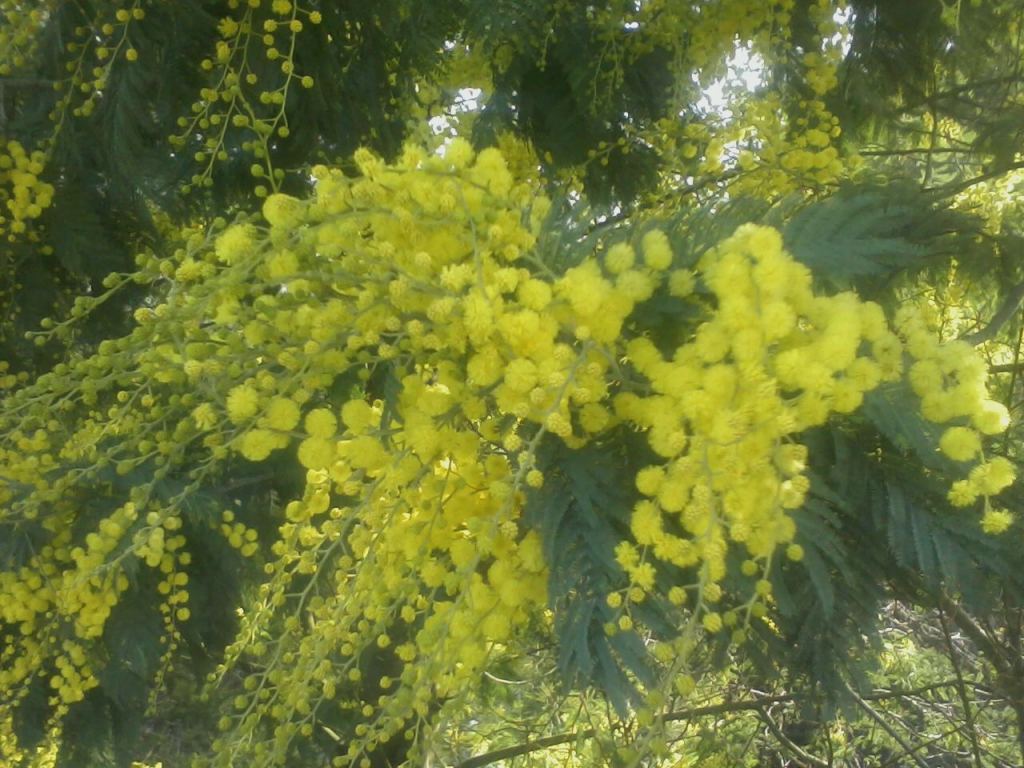
Some acacias and some willows have figured out how to take out some of their competition simply by clobbering them. For example, Acacia dealbata grows fast and big, but is innately unstable and does not live very long. Old trees invariably fall onto other trees, which clears patches of forest for their own seedlings.

All sorts of cypress, pine and walnut, as well as many eucalypti control their competition by overwhelming seedlings of other plants with foliar debris that leaches herbicidal chemicals into the surrounding soil. Their own seedlings do not seem to mind much, so are able to germinate and grow where space allows.

Monterey cypress, Monterey pine, California fan palm and Mexican fan palm use an even nastier technique, by incinerating their competition during forest fires. They retain as much of their own foliar debris as possible, so that during a forest fire, they burn hot enough to kill other plants and their seeds. Their own seeds though, survive the fire in protective fruiting structures. Monterey pine cones merely get cooked in a fire, and then open to disperse their seed as they begin to cool after a fire.

Like it or not, most gardens include at least some plants that are not as peaceful as they seem to be. Some have the potential to be downright violent. That is why is is important to know how the various plants behave and what they are capable of.

For examples, although bougainvillea can be trained up into arbors and trellises, creeping fig should not be allowed to climb into trees or any structures that might get damaged by its griping and strangling habits. Beards of dead fronds should be pruned from fan palms that are close enough to structures to be hazardous if they burn. Knowing our plants and maintaining them accordingly will promote the sort of harmony that we all want in the garden.

Hedge Pruning Straight And Narrow

Hedges should not overwhelm their landscapes.

There are rules to hedging. Many hedges violate some of such rules. Formal hedges are the most egregious offenders. Their uniformity, symmetry and form require compliance to relatively strict standards. Relatively relaxed standards of informal hedges or screen are standards nonetheless. Almost every hedge eventually needs maintenance of some sort.

The primary difference between formal and informal hedges is uniformity. A formal hedge involves only a single variety of a species. Spaces between individuals of such a hedge are all the same. An informal hedge can involve more than one species. Spacing may be variable, even if for a single variety. Informal pruning is less strict than formal shearing.

Both types of hedges are generally utilitarian, as well as aesthetically appealing. Many provide privacy. Many obscure undesirable scenery. Some divide gardens into distinct spaces. Size and shape is very relevant to how effectively a hedge serves its purpose. Unfortunately, most hedges are significantly larger than necessary. Many are obtrusive.

This happens because their depth, from front to back, is easy to ignore. A healthy facade of dense foliage conceals wasted space within. It can slowly expand outwardly as each subsequent shearing procedure allows. Expansion is faster above than below, which is why so many hedges are wider on top. Distended tops shade and inhibit lower growth.

Obtrusive hedges are difficult to restore. Most require removal of their appealingly dense foliar facades. Such a procedure exposes unappealingly bare stems within. This should be temporary for most hedges. They efficiently refoliate to develop new facades with less depth. Such renovation is impractical for junipers, which can not refoliate so efficiently.

Renovation of obtrusive hedges is unpleasant and temporarily unsightly. However, it can recover formerly useless space. A hedge that was six feet wide can be as effective if only a foot wide. There is no need for it to extend over usable spaces, such as walkways and patios. Other vegetation will likely appreciate better exposure to sunlight. Mild weather delayed but did not eliminate the need for seasonal maintenance of hedges.

Wind Pollinated Flowers Are Worse For Allergies

Have you ever wondered why it is sometimes difficult to know which flowers cause the worst allergies at any particular time? It is for the same reason that it can be difficult to find the flowers that produce the most fragrance. They simply do not need flashy colors to attract pollinators. Fragrant flowers instead use fragrance to attract pollinators. Flowers that are the worst for allergies simply put less effort into attracting pollinators, since they prefer to get their pollen delivered by wind. Yes, wind; it is one hundred percent natural and absolutely free.

Pollen than is designed to be dispersed by wind seems to perform just as well without it, by floating through the air, which is like ‘diet wind’. Unlike the pollen of big colorful flowers that is heavy and sticky in order to adhere to pollinators, pollen that is designed to be dispersed by wind (or diet wind) is extremely finely textured and abundant. Since it is not so directly and efficiently delivered between flowers, it gets everywhere and into everything, with the hopes that some of it, if even just a few particles, will reach the flowers that it wants to pollinate.

Pollen that primarily relies on wind for dispersion is like all those millions of bulk mailing fliers that get mailed out to everyone so that one or two or perhaps a few might reach someone who might actually be interested in getting one. Pollen from big flashy flowers are more like fancy Christmas cards that we send directly to friends, family and neighbors, but would be too expensive to send to millions of uninterested people. The problem is that like so much junk mail that clogs mailboxes, wind dispersed pollen is too abundant, which makes it a serious problem for those who are allergic to it. There is no escape when it fills the air.

The many wind pollinated plants that bloom in secret are the worst for pollen production. Unremarkable flowers of pines, cypress and cedars are among the worst. Acacias and eucalyptus are nearly as bad; but at least some have colorful bloom. Although hedged privets are not often able to bloom (because their flower structures get shorn off), privets that are allowed to grow into trees produce wicked pollen, even at a young age. Wild grasses may not seem like they would be much of a threat in urban landscapes, but their pollen travels for many miles to find victims.

Unfortunately, there is no way to control all the plants that produce objectionable pollen. We can only contend with those in our own gardens and be aware of what else is out there in the neighborhood.

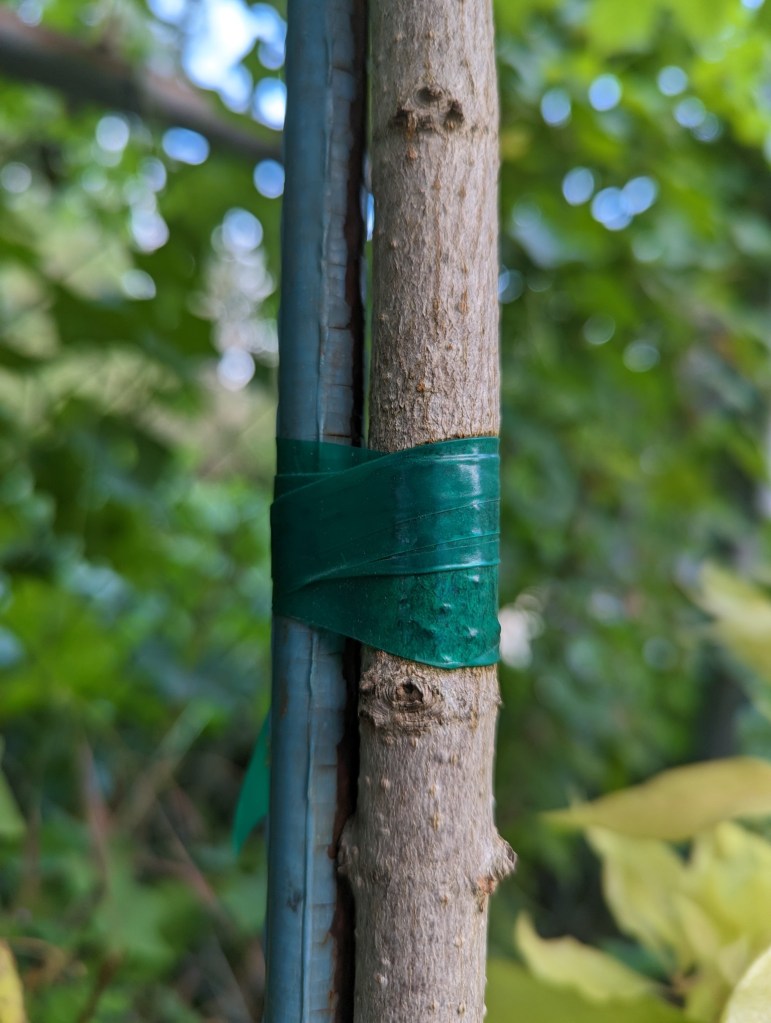
Stakes And Binding For Trees

Binding merely straightens developing tree trunks.

Few trees that inhabit home gardens begin their residency as nature intended them to. Most are exotic, from other ecosystems, regions and climates. Almost all initially grew in nurseries, with their roots confined to cans of soilless media. Most rely on pruning and binding to develop straight and tall trunks. In the garden, most rely on stakes for stability.

Nursery stakes are different from landscape stakes. They support the developing trunks of young trees as they grow in nurseries. They can do the same for very young trees that grow directly into home gardens. Such stakes do not stabilize trees. Within confinement of nursery cans, they can not extend into the soil below. They guide trunk development.

Some young trees with very limber trunks rely on constrictive binding to nursery stakes. Most trees need only loose binding. Ideally, binding should be as loose as possible, and is only temporary. Trunks that move with wind are less reliant on support as they mature. Once straight trunks develop, temporary nursery stakes should no longer be necessary.

Landscape stakes stabilize new trees after installation into a garden. Most of such trees lack stability while their roots are initially very confined. Root dispersion stabilizes trees as they mature. Landscape stakes are only temporary during this process. They should not be so constraining that trees rely on them for support. They must be sturdy though.

As important as it is for many trees, staking can interfere with trunk development. It limits motion from wind that stimulates trunk expansion and root dispersion. Timely removal of stakes when no longer needed promotes healthier development. Yet, some very limber trees may briefly need both nursery and landscape stakes. Timing of removal is critical.

Small trees may need only a single landscape stake after installation. Larger trees may need a pair of stakes. Some stout trees may need no stake at all. Ties that loosely attach trees to stakes should cross over between the trees and stakes. This forms a figure eight pattern that limits abrasion between trees and stakes. Short nails can hold ties in place.

Arid Weather Increases Water Consumption

Chaparral vegetation naturally tolerates arid weather.

Superbloom is brief for two main reasons. It involves native species that know to bloom quickly before arid weather of summer. Also, wildflowers in the wild receive no irrigation to sustain bloom through arid weather. With irrigation, some of such species are capable of prolonging bloom. A few can disperse seed for subsequent generations to bloom later.

That is why California poppy blooms for a longer season within home gardens. It easily performs through much of summer with irrigation. Also, with irrigation, it might regenerate to bloom for autumn after summer dormancy. Seed from earlier spring bloom might grow to also bloom for autumn. Some godetias and lupines perform similarly within cultivation.

Most species within home gardens are exotic though. In other words, they are not native. Those that are native to a similar mediterranean climate respond similarly to cultivation. Generally, some from desert climates do so also, although many dislike extra irrigation. The majority of exotic species actually rely on some degree of cultivation and irrigation.

Such species are native to climates with cooler and less arid weather through summer. Rainfall here is too limited to winter to sustain them through summer. Minimal humidity and warmth increase the need for moisture while it is least available. Cooling summer breezes actually accelerate desiccation. Arid weather certainly has its disadvantages.

As spring relinquishes to warmer and drier summer, irrigation becomes more important. Frequency and duration of automated irrigation must adjust to increasingly arid weather. Shallow root systems, such as those of turf grass lawns, require more frequent irrigation. Deep root systems, such as those of maturing trees, require more voluminous irrigation.

However, irrigation should not be so excessive that soil remains saturated. Many mature trees and shrubs need none at all. Some receive enough from what adjacent vegetation does not consume. Some are satisfied with only occasional irrigation. Turf and annuals require the most frequent irrigation. Yet, even they can rot if their soil is always saturated. Calibration of irrigation requires diligence.

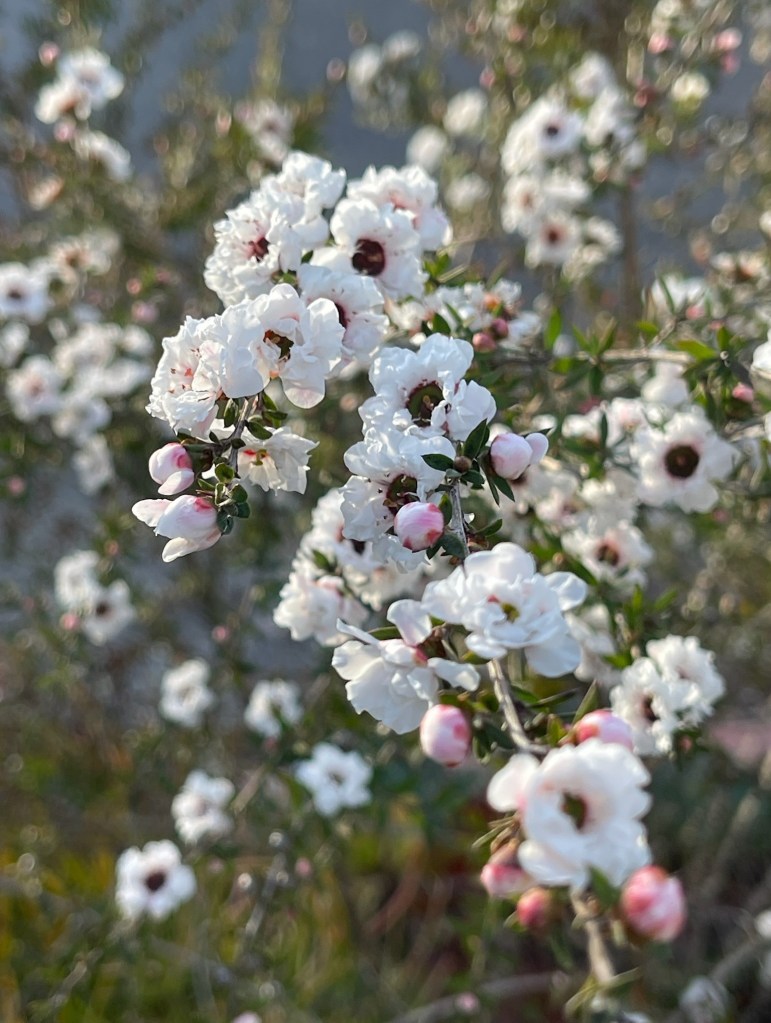
Fragrance Lacks Color

Mock orange compensates for its lack of flashy color with alluring fragrance.

Remember the smell of the neighbor’s kitchen that met you on the sidewalk as you occasionally walked by when you were young? Whether it was Momma Tomeo’s gnocchi, Mrs. Panagakos’ fresh bread or Mrs. Adam’s black eyed peas, it was so alluring, even from considerable distance. Fragrant flowers may not compare to black eyed peas (mmm), but they certainly can be alluring even without being seen.

Because flowers prefer to be efficient at their work of attracting pollinators, they tend to be either colorful or fragrant, but not both. Those that attract pollinators with color do not need to also use fragrance. Conversely, those that use fragrance to impress pollinators do not need flashy colors. Most fragrant flowers are pale shades of white, and bloom for a short time. However, there happen to a few flowers that are both fragrant and colorful.

Black locust is one of the most fragrant of trees, despite its many other problems. (It is invasive and weedy.) The flowers are bright white, and abundant enough to be quite impressive. Southern magnolia has a distinctive but more subdued fragrance. The flowers are impressively large and bloom randomly through the year, but pale and not very showy among the bold evergreen foliage.

Of the many shrubs with fragrant flowers, mock orange (Philadelphus spp.) has rampant growth with a good display of elegant and remarkably fragrant white flowers. Daphne produces a strongly sweet fragrance with clusters of small pale pink flowers. Both lilac and angel’s trumpet, although very different from each other, have the advantage of impressively fragrant flowers that are quite colorful. Roses offer a better variety of color, but not many are as fragrant.

Wisteria is an aggressive vine with flowers and fragrance like those of the black locust, with all the colors of lilac. Despite the advantage of a longer bloom season, fragrant honeysuckle lacks impressive color.

Earlier in spring, bulbs like freesia, hyacinth, lily, narcissus and some iris bloomed with some of the most fragrant flowers available, in all sorts of colors. Alyssum and flowering tobacco are nice fragrant annuals that bloom longer than most others. Sweet pea may not last as long as weather gets warmer, but compensates with richer and more varied fragrances.

Ornamental Foliage Augments Spring Color

Variegation contrasts nicely with darker foliage.

Spring bloom is the most colorful color in the garden here. It is not the only color though. Some deciduous foliage will provide color at the opposite end of the year. Bark can add a bit of color, particularly while deciduous trees defoliate for winter. So can colorful fruit. Furthermore, ornamental foliage, both deciduous and evergreen, can contribute color.

Ornamental foliage is not the same as deciduous foliage that is colorful only for autumn. The distinction is that it is colorful from the beginning. Generally, it is most colorful while fresh during spring. If both deciduous and colorful for autumn, it changes from one color scheme to another. If evergreen, it may remain more or less colorful throughout the year.

Ornamental foliage of this sort displays various colors and patterns. Variant colors might be yellow, orange, red, purple, blue, pink, bronze, white or gray. They can be variegation such as stripes, margins, blotches, spots, patterns or blushes. Alternatively, they can be monochromatic. Most fade to some degree during the warm and dry weather of summer.

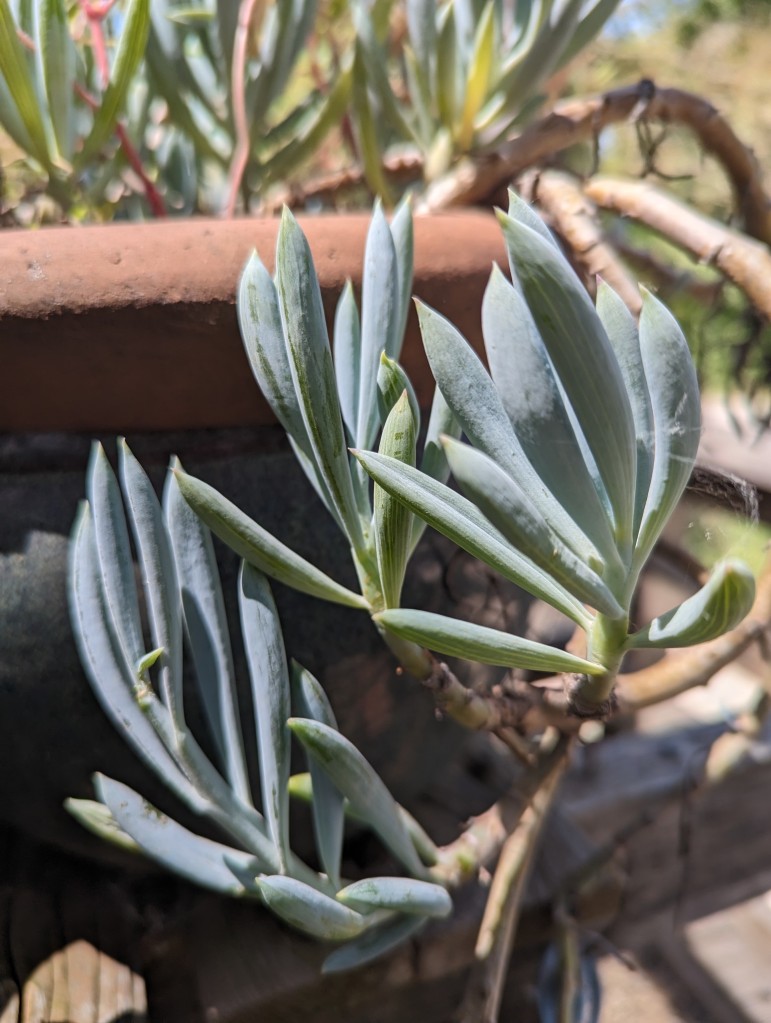
The colors of ornamental foliage are not as vibrant as floral color. They are not intended to attract pollinators. In fact, most of such color serves no practical purpose. Blue, gray or white foliage mostly originates from high altitudes or harsh desert climates. It reflects a bit of excessive sunlight to avert scorch. Most other ornamental foliage is mere mutation.

In the wild, such mutant foliage is generally a disadvantage. White portions of variegated leaves contain less chlorophyll. Consequently, they can not photosynthesize as much as green portions. Such foliage only perpetuates unnaturally within cultivation because it is appealing. Some mutant ornamental foliage can revert to more vigorous greener growth.

Ornamental foliage can be annual, perennial or woody. New Zealand flax, canna, coleus and caladium are the most variably colorful. Coprosma and various pittosporum are a bit more limited. Euonymus, hosta and ivy display white or yellow variegation. Smoke tree, redbud and some maples are surprisingly diverse. Agave blue spruce and some junipers can contribute gray and blue. There are too many options to mention.

Mixing Things Up

Annuals are nice, but so are a few more substantial or perennial plants.

Large pots, urns and planter boxes filled with ridiculously colorful blooming annuals are certainly nothing new. However, more small perennials and even a few small shrubs and trees are being planted along with the annuals, and allowed to stay indefinitely as fewer annuals get replaced around them as the seasons change.

These plants only need to be tolerant of confinement, regular watering and the comings and goings of the annuals around them. Upright plants should go in back, behind the lower annuals. Cascading and ground cover type plants should go in front.

Small forms of New Zealand flax and trunkless dracaena palms (Cordyline spp.) add texture, form and motion to large planters, but may eventually get too big if not properly pruned. Larger shoots can be pruned out to allow smaller shoots to take over. Alternatively, overgrown plants can be removed and put out in the landscape when they get too big.

Hollywood and Rocky Mountain junipers have striking form if pruned to show it off, and are easier to contain with selective pruning than reputed. Even without the interesting branch structure of junipers, arborvitaes are appreciated for their similar finely textured foliage and their rich green or yellow color. ‘Blue Rug’ juniper, a grayish ground cover juniper, cascades nicely from large planters.

Large succulents that tolerate water, such as good old fashioned jade plant and various aeoniums, offer bold texture and form in the background. They are easy to prune as they grow, and do not have aggressive roots. Low clumping aloes do the same in front.

Euonymus fortunei, English ivy, various iceplants and other ground cover plants do well cascading over the edges of large planters.

There really is not much limit to the variety of perennials and small shrubs and even trees that play well with others in planters of blooming annuals, and do not mind the confinement and regular watering. Annuals are still the best for flashy floral colors. Yet, the other plants excel in form, texture, foliar color and motion in the breeze.