Shade Imposes Limitations On Gardening

Hosta is tolerant of moderate shade.

Home gardens are becoming shadier. Modern homes are taller to fit closer together. Modern fences are taller to compensate. Densely evergreen trees and large shrubbery compensate more. Taller homes and fences, and denser vegetation, shade more of their smaller modern parcels. Not much sunlight can reach the soil of modern home gardens.

Portions of a garden that are too shady for gardening are not necessarily useless. During warm weather, patios, sheds and workspaces are cooler with shade. Koi generally prefer shade to sun exposure most of the time. Compost piles and woodpiles need no sunlight. Such utilization of shady areas leaves more sunny areas available for actual gardening.

Deciduous trees that let warming sunlight through for winter are less practical nowadays. They do not always obscure undesirable scenery as trees in modern landscapes should. Warming winter sunlight is not so useful to energy efficient modern homes anyway. It is useful for gardening though. That is why smaller evergreen trees are now more practical.

Such trees or large shrubbery can do what they must without creating too much shade. If they get only high enough to hide nearby windows, they should not shade solar panels. Nor should they fill eavestroughs with debris. Perhaps more importantly, they allow more sunlight through than larger trees would. Lower vegetation appreciates what it can get.

Some plants tolerate more shade than others. Some of the most tolerant are understory species. They naturally live within the partial shade of larger plants. Many have big dark green leaves to maximize sunlight absorption. Fern are familiar shade tolerant plants, but have finely textured foliage. Coleus and hosta have exquisitely colorful variegation.

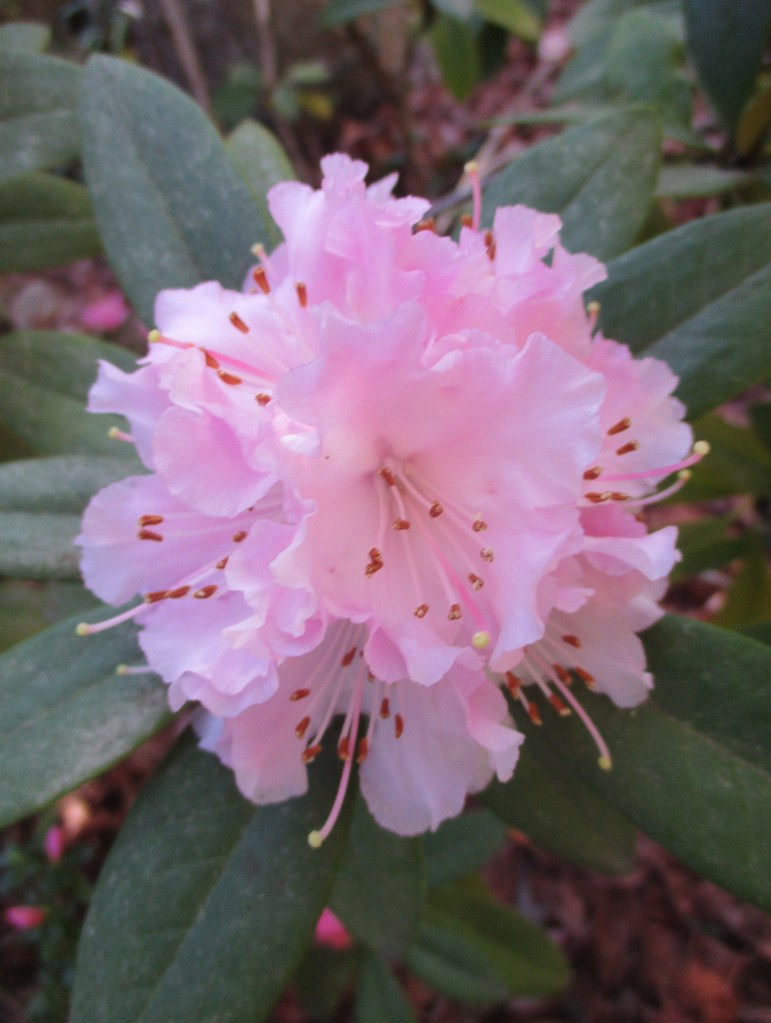
Because most plants enjoy sunlight, the selection of plants for shade is limited. Rhododendron and azalea have a reputation for tolerance of shade. However, too much shade inhibits their blooms. Camellia and hydrangea tolerate a bit more shade, with less inhibition. Cast iron plant is a famously shade tolerant foliar perennial. Kaffir lily tolerates almost as much shade, and blooms splendidly.

Some Weeds Were Not Always Weeds

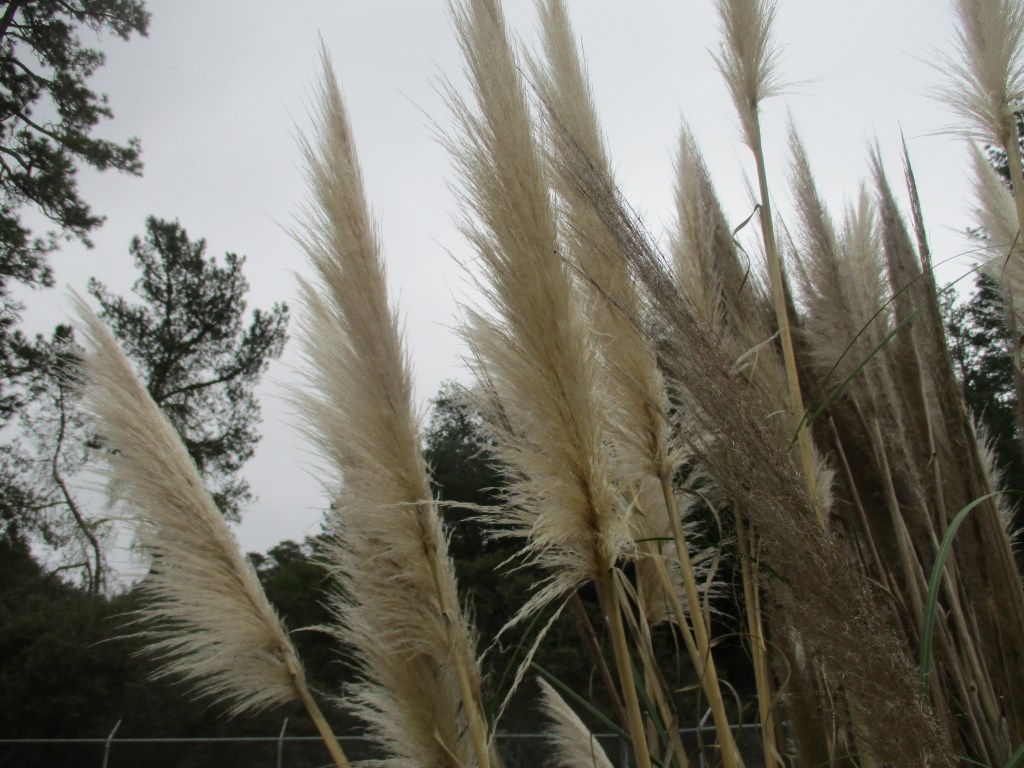
Pampas grass was planted intentionally a long time ago, but then became a weed.

Weeds can be so very sneaky; getting into the weirdest places, and taking on all sorts of forms. They are mostly annuals or perennials that infest lawns and beds, but can be shrubs, vines and even big trees that grow among desirable plants, in untended areas, in cracks in pavement and even in roof gutters and on flat roofs. Many look appealing at first, but then later get out of control and displace the plants around them, or wreck whatever fence, pavement or building they encounter. Heck, I even suspect that it was a weed that stole my neighbor’s Pontiac!

While the soil is still damp from earlier rain, the most common annual weeds that are just developing are easiest to pull. They will put up more of a fight later, after they have dispersed roots, and the soil has gotten a bit more firm. Perennial weeds that were already established before winter will be considerably more stubborn, but not as stubborn as they will be as the soil dries later. Bermuda grass and crabgrass are always nasty.

The biggest, sneakiest and most stubborn weeds are ironically descendents of substantial perennials, shrubs and trees that were once actually planted in gardens. They are sneaky because they look as pretty as their parents when they first appear, in order to dissuade us from pulling them. The problems are that they are often too abundant, and very often get into spots where they will be problematic as they grow.

For example, Acacia dealbata and black locust are rather appealing trees while they are young, especially when they bloom. This is why they were originally planted in local gardens. It is tempting to allow self sown seedlings to grow instead of pulling them when they first appear. However, because they were not actually planted strategically where they can necessarily be accommodated, they grow in random situations, too near to pavement, fences or eaves, or in areas that are already landscaped. As they mature, they can damage these features or the plants around them.

Privet, pampas grass, castor bean and a variety of palms, acacias, ivies and several other plants that do a bit too well in local gardens have certain potential to become invasive or aggressive big weeds. Tree of Heaven, giant reed, the various brooms and the most invasive of acacias  have not been available in nurseries for many years because they are so problematic, but continue to be some of the most invasive and aggressive weeds in California.

Vernalization Enhances Bloom And Growth

Unusually wintry weather enhances some bloom.

Some gardens continue to recover from the exceptionally wintry weather of last winter. Frost damaged some plants, and killed a few. Wind damaged trees. Excessive rain caused erosion and saturation. This collectively unpleasant weather inhibited some from maintaining their gardens. Yet, some plants that require vernalization are performing splendidly.

It seems like an odd juxtaposition. Bloom of some plants is so unusually robust amongst remaining weather damage. Some bloom is noticeably late while most is precisely on schedule. It is not so odd to the plants who seem to behave so oddly though. Whether they appreciate vernalization or dislike frost, they respond to the weather.

Vernalization is merely attainment of sufficient chill to convince plants that it is winter. Many plants that are endemic to climates with cooler winters appreciate such reminders. It initiates their dormancy and resets their respective schedules. They know that subsequently warmer weather initiates their growing or seed germination season.

Plants that are endemic to climates with mild winters are less reliant on vernalization. Some of such plants are vulnerable to frost. Canna are tropical plants from mountainous regions that sometimes experience frost. They die back harmlessly if frosted, and remain dormant until safely warmer weather. They react to chill, but do not require it seasonally.

Spring bulbs, forsythia and flowering cherries have already bloomed atypically boldly. Later flowering cherries, as well as purple leaf plum, lilac and wisteria continue to do so. Peonies are likely to bloom better than typical a bit later. They are rare locally because of their reliance on typically unreliable vernalization.

Some cultivars of apple and pear are likewise unreliable within locally mild climates. Those that normally perform well here may perform better this year. After early warmth to initiate bloom, stone fruit bloom can succumb to late frost. Last winter though, frost was continuous enough to delay bloom until after the last frost. Extra vernalization may instead enhance production.

Arborists Are Horticulturists Of Trees

Arborists work with the big trees.

Landscapers and gardeners are only the two most familiar of horticultural professionals. There are also landscape designers, horticulturists, greenskeepers and various nurserymen, just to name a few. Each of the many distinct horticultural professionals works within a specific horticultural industry; like each of the many different types of physicians works within a specific medical industry, even though many might work together in the same hospital.

Arborists are the horticultural professionals, or even horticultural ‘physicians’, who work specifically with trees. In fact, they had historically been known as ‘tree surgeons’  because they perform what might be considered to be surgery on trees. After nurserymen grow trees in nurseries, and landscapers install trees in landscapes, arborists take over to care for the same trees like gardeners take care of landscapes below the trees.

Arboriculture, or the horticulture of trees practiced by arborists, is important because trees are so different from other plants in the landscape. Obviously, trees are larger than anything else. Structural problems or instability can have devastating consequences, not only to the affected trees, but also to anything around them that might be damaged by falling limbs or even entire trees. Some trees are large enough, or even have limbs that are large enough to crush an entire home.

Arborists who are certified by the International Society of Arboriculture, or ISA, have passed an examination of their arboricultural expertise, and maintain their certification by attendance to educational seminars, workshops and other relevant ISA approved events. Certified arborists are the most qualified to assess the health, stability and structural integrity of trees, and prescribe any necessary arboricultural procedures. Such matters should not be trusted to other horticultural professionals who specialize in other aspects of horticulture.

The website of the ISA at www.isaarbor.com is the best resource for finding certified arborists and the tree service businesses that they are affiliated with. Arborists can be found within particular regions by city or ZIP code, or directly by name. The website also features all sorts of information about trees that is useful to anyone who lives with them or wants to add more to the landscape.

Of course, there is more to gardening than trees. For those who missed reading about it already, it is nearly time for the most locally grown of horticultural events. Spring in Guadalupe Gardens will be April 28, from 10:00 a.m. to 3:30 p.m., in the Guadalupe River Park and Gardens between Taylor Street and Coleman Avenue in San Jose. More information can be found online at www.grpg.org or by telephoning 298 7657.

California Native Plants Grow Wild

Some natives are difficult to domesticate.

California native plants seem like they should be very appropriate for home gardens. In the wild, they require neither irrigation nor maintenance. They are quite satisfied with local climate and soil. Of course, gardening with natives is not so simple. Home gardens are very different from wild ecosystems.

Furthermore, wild ecosystems here are very different from wild ecosystems elsewhere. California is a very big place, with many different ecosystems. Some alpine species from the Sierra Nevada would be unhappy on the coast. Some coastal species from Del Norte County would be unhappy in the Mojave Desert. California native plants should be regionally appropriate.

Therefore, chaparral species are generally most appropriate for local chaparral climates. Many riparian species perform satisfactorily here as well, but expect more irrigation. However, appropriateness to a climate is not the same as appropriateness to a garden. Actually, many chaparral species are unappealing within home gardens. Some are difficult to domesticate.

A few species of California lilac are native here. Any of them are pleased to inhabit local home gardens. However, some grow quite large, and then die after only ten years or so. They may not last even that long with typical irrigation. Few respond favorably to pruning. They prefer to grow wild. Such big, awkward and temporary plants are undesirable within many compact and refined home gardens.

Combustibility might also be a concern for chaparral plants. Some chaparral ecosystems rely on fire for periodic renovation. In the wild, some such ecosystems may burn as frequently as every few decades. After burning, fuel begins to accumulate for the next fire. Even if not copious enough to be hazardous, such accumulation can be unkempt.

Only a few specialty nurseries provide wild California native plants. Most nurseries provide cultivars of such plants that are more adaptable to home gardens. ‘Carmel Creeper’ is a densely sprawling California lilac that gets only a few feet tall. It is commonly available. The original species can get more than fifteen feet tall, with open branch structure.

Spring in Guadalupe Gardens

(This information is now outdated.)

Spring in Guadalupe Gardens, a celebration of healthy living, gardening and the environment, will be here in little more than two weeks, on April 28! The 5 kilometer Fun Run that begins at 9:00 a.m., an hour before anything else, makes its way through the park and back to the main event, where there will be various health professionals to share information about healthy living, and for health screenings. Other exhibits will feature information about the environment and green technology, including presentations about solar energy and worm composting. Recyclable electronic waste can be dropped off free of charge. There will be all sorts of lectures, workshops, activities for children and even dancing and live bluegrass music.

But honestly, the main reason that most of us who read this column attend Spring in Guadalupe Gardens is all the gardening goodies! There will be an abundance of all kinds of plants from all kinds of specialty nurseries. Spring in Guadalupe Gardens has always been a great source of rare and unusual plants, as well as some of the more familiar plants, at reasonable prices.

Not only will there be plenty of plants to buy, but experts and some of the nurserymen who grew many of the plants will be available for advice on selection and cultivation. Representatives from the American Fuchsia Society, the John. E. Stowell Dahlia Society and the South Bay Heritage Rose Group will be there selling their plants, and sharing their expertise and information about membership. It is not too late in the season to select warm season vegetable plants, including heirloom varieties, from the extensive assortment that will be available.

Besides the shopping, Guadalupe River Park Conservancy and Greenwaste will be giving away one free bag of compost to each household. The San Jose Heritage Rose Garden, which is the most extensive public collection of old-world roses in the Western Hemisphere, will be in full bloom and open for tours.

Spring in Guadalupe Gardens will be from 10:00 a.m. to 3:30 p.m., in the Guadalupe River Park and Gardens between Taylor Street and Coleman Avenue in San Jose. There is no charge for admission or parking. More information can be found online at www.grpg.org or by telephoning 298 7657. Registration for the Fun Run, which begins an hour earlier at 9:00 a.m., can be arranged at www.grpg.org/FunRun.shtml.

Utility Clearance Can Disfigure Trees

Utility cables need clearance from trees.

Last winter was a doozy! It involved historic frost, snow, rain, wind, floods and mudslides. A few roads remain closed in some regions. Major electrical outages were too numerous for prompt repair. Weather alone did not cause such outages though. It merely dislodged vegetation that did so. This demonstrates the necessity for utility clearance maintenance.

Utility pruning is a specialized but very often unpleasant sort of arboriculture. It maintains necessary clearance between vegetation and utility cables. Its unpleasantry derives from its harsh efficiency. Clearance is the priority. Proper arboricultural technique is not. There is no compromise. Trees that encroach too closely to cables are likely to regret doing so.

Proper arboricultural procedures are too expensive to justify for utility clearance pruning. Otherwise, electricity and other utilities that utilize cable would be much more expensive. Besides, for many trees within utility easements, proper arboriculture is impossible. They can not accommodate necessary pruning without disfigurement. Several can not survive such disfigurement.

Palms, for example, can not survive without their single terminal buds. They lack limbs to divert growth to. Removal of a terminal bud that encroaches too closely to utility cables is lethal. Palms generally grow only upward. Those that grow tall rapidly can not live below utility cables for long. Very few palms remain low enough to maintain minimal clearance.

Excurrent trees are generally more vulnerable to disfigurement than decurrent trees. The single central trunks of excurrent redwoods and spruces do not adapt to redirection. The several main limbs of decurrent oaks and elms are more cooperative. Compact trees that are unlikely to reach cables are least problematic. Of course, many trees are unplanned.

Arborists can repair some minor clearance pruning damage or disfigurement. They might prevent some damage by timely pruning for containment. Unfortunately, some damage is neither repairable nor preventable. Also, such procedures are too dangerous for anyone who lacks qualification for them. Typical garden enthusiasts must avoid electrical cables!

Warm Up To Warm Season Annuals

Sweet alyssum can seem to be perennial, but bloom best during warm weather.

The common and almost stigmatized nasturtium has always been my favorite of the flowering annuals. It is technically a warm season annual that gets its seed sown at the end of winter so that it can grow and bloom with bright yellow, orange and sometimes even red flowers all spring and summer and into autumn. However, because winters are so mild here, the foliage is appealing even while bloom is inhibited by cool winter weather. By the time older plants die out, seedlings are already maturing to replace them; so they function like perennials. Nasturtiums are so easy to grow that many garden enthusiasts consider them to be weeds, or too cheap and common to bother with. Yet, their carefree nature is precisely why so many of us enjoy them so much.

Sweet alyssum shares the same reputation that causes it to be shunned by some but appreciated by others. It can be white, pink or purple when initially planted, but eventually reverts to white as it naturalizes. (Pink and purple types produce white blooming seedlings.) Like nasturtium, it blooms less over winter, but never really goes away, since seedlings are always there to replace older plants. It is easy to grow from seed sown late in winter, or can be planted from cell packs after winter for more immediate results.

All sorts of warm season annuals that are now available in nurseries are ready to replace the cool season annuals that bloomed through winter. Busy Lizzy (impatiens) and petunias are the most popular as well as the most colorful. French marigold has the best yellows and oranges, as well as bronze. Lobelia is a classic companion for sweet alyssum or marigold, providing all kinds of blues, as well as purple, purplish rose and white (although white is rather redundant to alyssum). Cosmos blooms in many shades of pink, from very pale to almost red, as well as white. Most varieties stay quite low while others get a few feet tall.

The less popular warm season annuals are sought by those who like their unique colors or other appealing characteristics. Floss flower blooms pale blue or lavender with funny fuzzy flowers. Cockscomb are mostly the colors of marigold as well as red, but with unusual plume-like blooms. Verbena and moss rose may not fill in soon enough to work as bedding plants, but have rich colors that look great with other assorted annuals or perennials. Although statice, pincushion flower (scabiosa) and zinnia can function as bedding plants, they are more often grown singly, in small groups or as borders around more homogenous bedding plants.

Winter Weather Lingers Into Spring

Late wintry weather delays early bloom.

Winter was epic! Snow was more abundant than since 1976. Rain was more continuous than since 1982. Frost was colder than since 1990. All of this happened within this same winter! Californians generally appreciate rain and snow, and tolerate typically minor chill. Chaparral and desert climates here rarely get much. However, this weather is excessive!

Furthermore, such excessively cold or wet weather was unconducive to gardening. Most of us wanted to stay inside. Home gardens consequently endured neglect in conjunction with extreme weather. Regardless of the current weather conditions, winter is technically done. Now that it is spring, gardens should begin their systematic processes of recovery.

This may entail more effort for those who enjoy gardening than for the associated plants. Most plants are resilient to harsher winter weather than they endured here recently. That is how they survive other less temperate climates. Some may respond favorably to more thorough than typical grooming. Some might prefer later grooming while they regenerate.

Chill can actually enhance performance of some plants that prefer cooler winter weather. For example, some cultivars of apple are barely satisfied with the more typical local chill. They may perform better this year, after a cooler chill. Flowering cherry, purple leaf plum, lilac, wisteria, and many others may do the same. Stone fruits might be more productive.

Several plants do succumb to frost though. Some that typically die back but then recover may not recover this year. For some, the unusually cold frost was lethal. Others rotted as a result of lingering cool dampness. Kaffir lily that is blooming well now may succumb to rot later. Canna that grew early only to succumb to later frost should recover well though.

Some plants that endured frost and saturation last winter might delay their spring bloom. Roses could bloom better but also later, both as a result of cooler than typical chill. Some early spring bulbs that bloomed when they should suffered for it. Rain and wind knocked them into the mud. Later bulbs might avoid a similar fate by delaying their bloom slightly. Fewer conform to a comparably strict schedule.

Variegated Foliage Adds Color And Brightens Shade

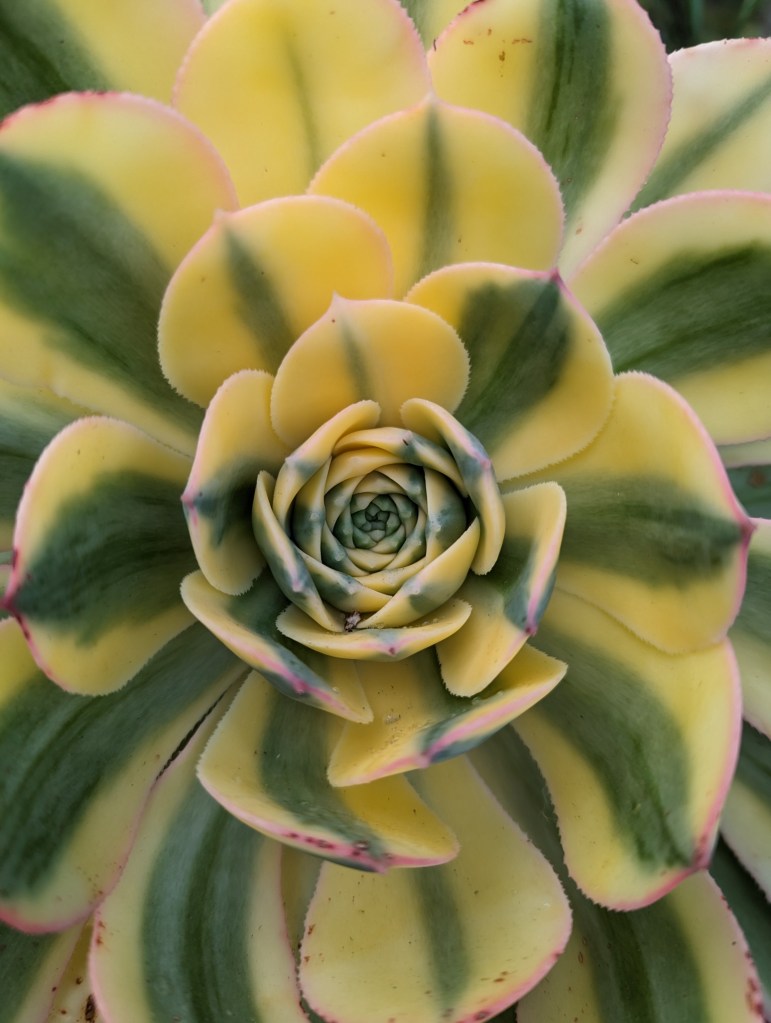
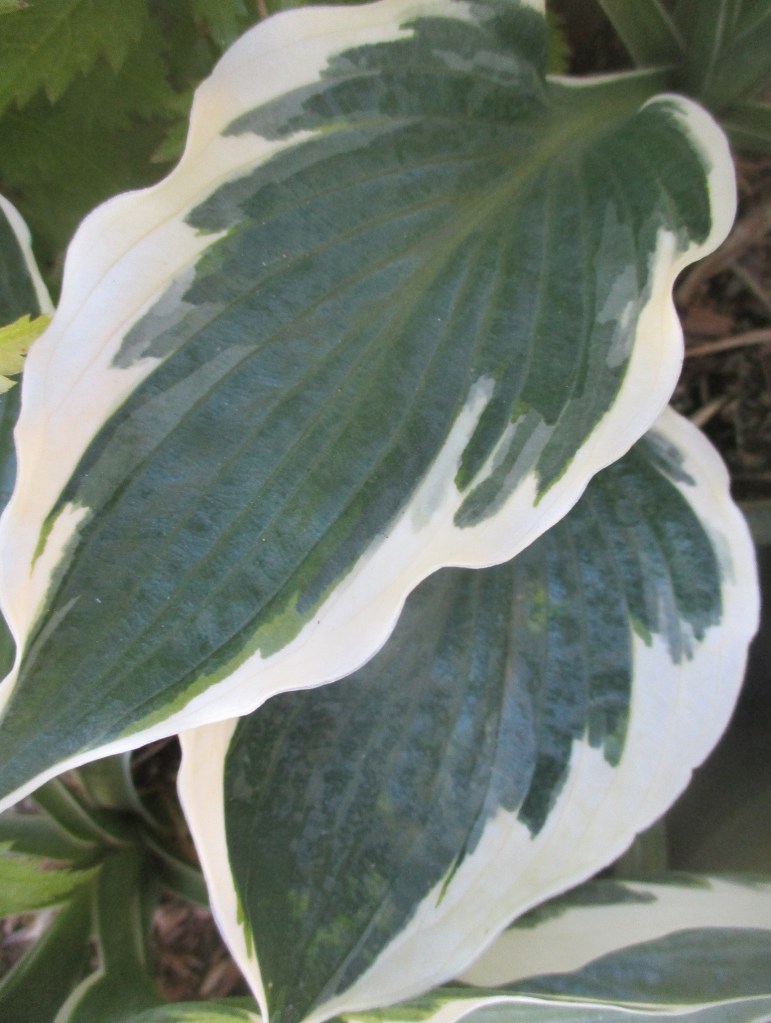
Variegation can be neatly symmetrical, or strikingly irregular like this.

With spider plant, croton, pothos, dracaena and the various ficus, variegated foliage seems to be very popular among house plants. Remember the wildly colorful variegations of coleus when it was a popular houseplant in the 1970’s? Variegation is most commonly white or some sort of yellow; yet can be just about any color.

In the landscape, variegated shade tolerant plants brighten shady spots even without bloom. Variegated acanthus, Japanese aralia, andromeda, hydrangea, aucuba and angels’ trumpet show up nicely, especially when they can contrast with the darker green of other plants; although andromeda and hydrangea do not bloom as well in darker shade. Variegated periwinkle and English ivy are nice ground covers, (but potentially invasive).

Variegated trees, like tulip tree and certain maples, stay smaller than their unvariegated relatives, so can be proportionate to large atriums that could use their brighter foliage. Some of the variegated pittosporums likewise function like the unvariegated forms used for informal hedges, but work better in tighter spots.

Even if there is no need to brighten areas that are already sunny, variegated holly, lily-of-the-Nile, bougainvillea, pampas grass and silverberry add nice contrast where there is an abundance of rich green foliage. (However, some people who grow variegated pampas grass are not too impressed by it.) New Zealand flax presently happens to be one of the most popular variegated perennials, with many different personalities of color to choose from. Variegated varieties of several specie of agave and yucca are striking big perennials for the sunniest and even inhospitably hot spots, as long as they are kept at a safe distance. (Many have dangerous spines and teeth!)

Some variegated plants, particularly New Zealand flax, andromeda, Pittosporum tobira and the various maples, try to produce unvariegated mutant growth that grows faster and bigger, and overwhelms the desirable variegated parts. It is therefore important to watch for and prune out unvariegated growth as it appears. For New Zealand flax, this involves diligent digging and splitting to removed unvariegated shoots from the variegated parent plants.