Forced Bloom Is Not Sustainable

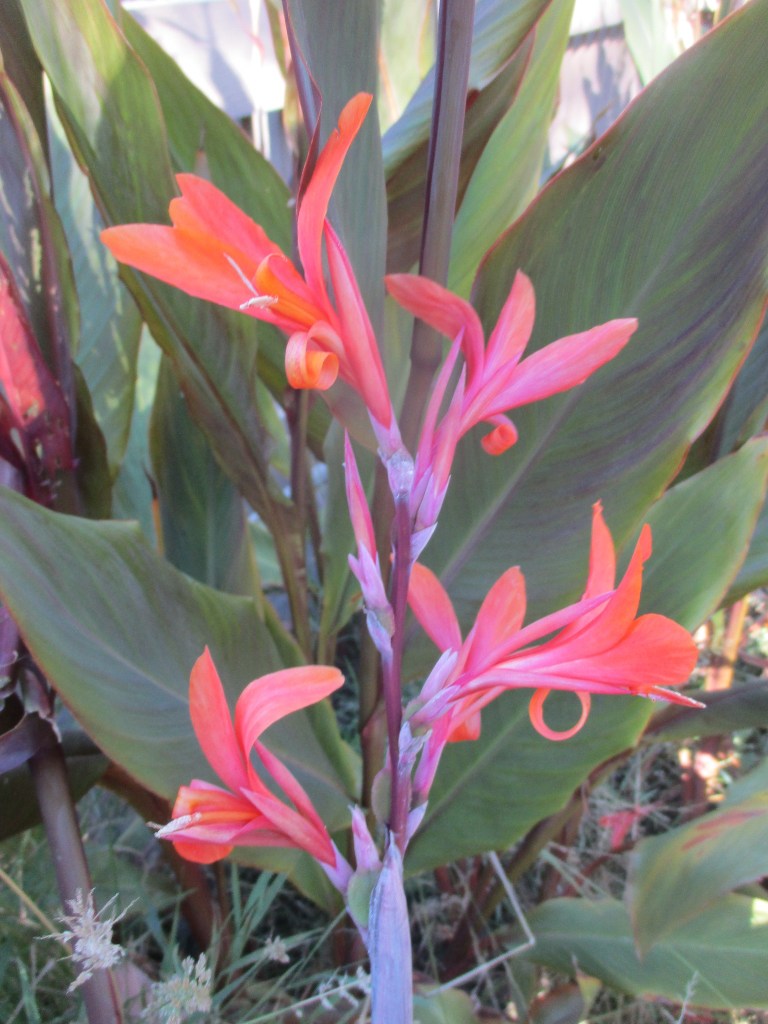
Moth orchids are grown for bloom.

Poinsettias are very popular blooming potted plants for about a month prior to Christmas. Then, most quietly disappear prior to spring. A few become foliar houseplants. Fewer go into home gardens to likely succumb to frost or neglect. Very few survive for more than a few years. It is not easy to recover from the procedures that forced them to bloom so well.

Forcing bloom is stressful. It provides unnaturally indulgent doses of stimuli that optimize floral performance. It involves any combination of deceptive environmental and chemical manipulation. Optimal bloom is the primary objective. Sustainability or even survivability after bloom is irrelevant. Forced plants are barely more than cut flowers with potted roots.

For example, poinsettias receive much more than the nutrition they require for exemplary growth and bloom. The greenhouses that they grow in maintain optimal temperature and humidity for them. Shading shortens their daylength to deceive them into believing that it is the season for bloom. Transition from such decadence to natural conditions is difficult.

Almost all fancy blooming potted plants that are available from supermarkets and florists, and several from nurseries, are forced to some degree. These include poinsettia, orchid, chrysanthemum, hydrangea, azalea, a few types of roses and various bulbs. Such bulbs include lily, narcissi, crocus, hyacinth and tulip. Some exhaust their resources by bloom.

Many forced plants are cultivars that are distinct from more common landscape cultivars. For example, many florist hydrangeas bloom with huge and very abundant floral trusses on short stems. They are spectacular in pots, but might not be so practical for landscape situations. Landscape hydrangeas support bloom higher over the ground on taller stems.

Their potential for inferior performance after their potentially difficult recovery from forcing should not necessarily disqualify forced plants from salvage. Short florist hydrangea can be delightful accessories to bigger landscape hydrangea. Moth orchids are impressively adaptable. Premature doubting of possible ultimate results can be more effort than trying.

Volunteer At Filoli

Rose gardens require significant effort.

(This article posted in 2012, so much of its information is now outdated.)

How could so many public gardens throughout the area get all the work that needs to be done in winter? There are roses to prune in both of the Rose Gardens of San Jose. Fruit trees in the Historic Orchard of Guadalupe Gardens need to be pruned. Even Village Harvest of Palo Alto needs to collect citrus fruits that ripen through winter. All this works gets done only because there are so many generous volunteers to help.

The gardens of Filoli are fortunate to get so many volunteers through the year. Nonetheless, the extra pruning that the deciduous fruit trees need in winter reminds us that more volunteers are often welcome. Not only are there big collections of modern and classic apple and pear trees at Filoli, but many are espaliered onto trellis-like supports. (‘Espalier’ trees are pruned onto trellises, fences, walls or other lateral supports, so that they can attain considerable width without much depth from front to rear, conserving space.)

The New Volunteer Recruitment Open House at Filoli is not until January 21. However, those interested in attending must register in only the next few days, before 4:00 p.m. on January 13! Registration can be arranged at volunteer@filoli.org or by telephoning 650 – 364 8300 extension 300, and leaving one’s name and daytime telephone number. The New Volunteer Recruitment Open House will be from 9:30 to 11:30 a.m. on January 21, at the Visitor and Education Center of Filoli, located at 86 Canada Road in Woodside.

Guests will learn about the many different opportunities to volunteer. More than 1,200 volunteers presently help sustain Filoli in areas such as house and garden self guided docents, member services, visitor services, the Ambassador Program, the Cafe and the Garden Shop.

Besides the sixteen acres of English Renaissance gardens that display an expansive horticultural collection, the 654 acre Filoli property includes a 36,000 square foot residence furnished with an extensive collection of 17th and 18th century English antiques, and is recognized as one of the finest remaining country estates of the early 20th century. More information can be found at http://www.filoli.org.

Citrus Fruit Brightens Wintry Gardens

Summery citrus fruit ripens during winter.

Chilled lemonade certainly is nice when the weather gets warm during summer. Orange juice also seems to be more appropriate to warm weather. In fact, most citrus fruit seems to be more summery than wintery. Yet, most of it ripens through winter. Mandarin oranges are more perishable than most other citrus fruit, so are best long before warmer weather.

Citrus trees are defiantly contrary to the deciduous fruit trees that produce fruits of spring and summer. Not only does their fruit ripen during opposite seasons, but they also prefer pruning during opposite seasons. Many need no pruning or only minor grooming as they age. Any necessary pruning should happen after the last cool or frosty weather of winter.

Citrus fruit is not as perishable as spring and summer fruit are. Mandarin oranges oxidize within a month or so only because their rind is so loose. Other citrus fruit remains fresh in the garden for months, even through warm weather. Some actually improves with a bit of aging. For fruit that lingers late, vermin are more likely to be a problem than deterioration.

Slow deterioration is a major advantage for such abundant citrus fruit. There is less rush to collect more after collecting too much. For more sporadic production, many cultivars of citrus bloom sporadically prior to and after their primary season. ‘Eureka’ lemon is not too overwhelmingly productive in season, but before and after, provides a few more lemons.

Citrus fruit are remarkably diverse. Many are best simply for fresh eating. Many are better for juicing. Some are best for other culinary applications. Mandarin oranges and oranges are basically sweet. Lemons and limes are basically sour. Grapefruits are basically bitter. Citrus fruit exhibits a prevalence within combination of these three basic flavor elements.

Citrus trees are as variable as the citrus fruit that they provide. Almost all are dwarf trees, which stay more compact than standard orchard trees. However, ‘Eureka’ lemon, ‘Marsh’ grapefruit and ‘Sanguinelli’ blood orange can eventually get as big as small shade trees. ‘Meyer’ lemon, kumquats and most Mandarin oranges remain much lower and shrubbier. Some are thornier than others.

Defoliation And Dormancy Are Justifiable

Wind blows freely past defoliated stems.

Defoliation and dormancy begin early for quite a few species within desert and chaparral climates. California buckeye can defoliate during the driest summer weather, refoliate for autumn, and then defoliate again for winter. They do what they must to avoid desiccation within their arid climate. Many more species do what they must to survive through winter.

That is why so many plant species are deciduous while they are dormant through winter. They shed their foliage when it is more likely to be a liability than an asset. Like summer dormant plants, they respond to inevitable and potentially detrimental weather. Moreover, they respond to seasonal changes of sunlight as well. Plant species are very perceptive.

With few exceptions, deciduous plants are nonconiferous or broadleaf species. More are endemic to regions to the north and south of tropical regions than within tropical regions. They know that sunlight is less intense and daylength is shorter while the sun is at a low angle during winter. Their defoliation coincides with the least usefulness for their foliage.

Most deciduous plant species are also aware of the sort of weather that they are likely to encounter during winter. Cold and stormy weather with wind and rain or perhaps snow is probably familiar to them. They know that foliage is not only vulnerable to damage, but is also burdensome to associated stems. In colder climates, it can accumulate heavy snow.

Foliage is the source of almost all wind resistance within foliar canopies that suspend it. Such wind resistance causes wind to dislodge limbs or blow vegetation over, particularly while soil is moist from rain. Defoliation eliminates much of such risk prior to the windiest and therefore riskiest storms of winter. Bare stems are more aerodynamic than foliage is.

Defoliation seems to happen at the best time, immediately prior to wintry weather. It even increases warming sunlight exposure during the darkest and coolest season of the year. However, defoliation is also messy while the weather is unpleasant for those who go out to rake it away. Without prompt raking, it clogs drainage of rain while it is most important.

Winter Is Bare Root Season

Plant a bare root peach tree now for peaches like this later.

Now that nurseries and garden centers are no longer selling Christmas trees, they have plenty of room for bare root stock. All sorts of deciduous fruit trees, a few deciduous shade trees, shrubs and vines, and even a few perennials can now be purchased while dormant and without the cumbersome media (soil) that the roots need at all other times of the year. Not only is bare root stock easier to handle and transport in small cars, but it is also much less expensive than canned stock (that has roots contained in media, which is contained in nursery cans). Bare root stock typically costs about a third of what canned stock costs.

Bare root stock also has the advantage of adapting to new garden easier, since it does not need to leave the comfort zone of the media that it would have grown into (within a can) in order to venture out into unfamiliar soil. Instead, it starts to disperse roots into the new home soil immediately as it emerges from dormancy in late winter. Without cans, bare root stock can not get root bound. Instead of developing branch structure that is appealing to nursery marketing, bare root stock can get an early start on developing branch structure that is most practical and efficient for the gardens that it gets installed into.

It seems that all of the ´stone’ fruit can be found as bare root stock. These include apricot, cherry, plum, prune, peach, nectarine, almond (which is the seed, or ´stone’, of a peach like fruit) and the odd hybrids of these. The pomme fruits, apple, pear and quince, are perhaps the second most popular of bare root stock, although quince is still rather rare. Ornamental trees, shrubs and vines include flowering crabapple, flowering cherry, flowering quince, alder, poplar, willow, lilac, forsythia, wisteria and clematis. Perennials include rhubarb and artichoke.

Bare root stock can be purchased as soon as it becomes available, but does not do much until it starts to grow in spring. It should get planted quickly and soaked in, but will get more water than it needs from rain afterward. It should not need water again until after it blooms or gets new leaves in late winter or early spring. Despite guarantees of fruit in the first year, none should be expected. The few fruit trees that might set fruit will probably produce only useless underdeveloped fruit because new plants are busy producing new roots and growing. Actually though, this apples to canned stock as well, except only for citrus, olives and other evergreen fruit trees.

Dormant Pruning Enhances Fruit Production

Dormant pruning may not be pretty.

Adding new fruit trees to a garden is reasonably easy. Maintaining them properly as they mature is more of a challenge. Centuries of extensive breeding to enhance production of such trees has also increased their reliance on horticultural intervention. Most deciduous fruit trees consequently need specialized dormant pruning during their winter dormancy.

Without adequate dormant pruning, most deciduous fruit trees are unable to support their unnaturally large and unnaturally abundant fruit. Dormant pruning actually enhances the size and quality of fruit. However, it also limits the weight of excessiveness, and confines it to sturdier branch structure. It concentrates resources into fewer fruit of superior quality.

Dormant pruning, or winter pruning, likewise concentrates resources into more docile but healthier vegetative growth. It eliminates or at least diminishes the 4 Ds, which are dead, diseased, damaged and disfigured growth. Confinement of potentially rampant stems not only improves structural integrity, but also limits wasteful production of unreachable fruit.

Almost all deciduous fruit trees, and most nut trees, require specialized dormant pruning. So do grapevines, kiwi vines, berry canes and roses. Evergreen fruit trees, such as citrus and avocados, are exempt for now though, since such pruning promotes new growth that is vulnerable to frost. Most of such trees do not require such aggressive pruning anyway.

Almonds, apricots, cherries, nectarines, peaches, plums, prunes and all their hybrids are stone fruits of the genus Prunus. Almonds are actually seeds, or stones, of leathery fruits that are merely hulls. Various stone fruits need various degrees of similar pruning. Heavy peaches need aggressive pruning. Lightweight cherries might need only minor trimming, or no pruning at all.

Apples, pears and quinces are pomme fruits that, like stone fruits, need various degrees of similar pruning that conforms to their distinct characteristics. Persimmons, mulberries, pomegranates and figs each need specific types of pruning as well. Familiarity with each of the dormant pruning techniques that each fruit tree in the garden requires is essential.

Live Christmas Trees Eventually Grow Up

Small coniferous trees do not stay small for long.

One of the problems with driving my favorite vehicles that were old long before I learned to drive them is that I spend considerable time waiting for a bus or walking. The cool thing about that is that I get to seem so much scenery that I would otherwise drive past. While waiting nearly an hour for a bus at the Cavallero Bus Terminal in Scott’s Valley, I went across the street to see the landscape of the somewhat new Post Office, which has actually been there for many years now.

The landscape is a bit sparse in front (I think because of architectural modifications after the landscape was designed), so was outfitted with recycled live Christmas trees. Although none of these particular trees seem happy in the local climate or sandy soil, I had wanted to get better acquainted with them for some time. They are an odd assortment of spruce and fir that are rare here.

The more typical concern with the more common live Christmas trees is not that they are not well suited to local climates and soils, but that they actually do too well and grow much larger than expected. Except for the small rosemary, holly and English ivy ‘trees’, most coniferous evergreen live Christmas trees are young pines that get remarkably large; and some waste no time doing it! The most common live Christmas trees are Italian stone pines, which happen to be the two very large and broad trees in Blaney Plaza in downtown Saratoga!

Canary Island pines, which had been more common than they are now, do not get quite as broad, but do get very tall and messy. Years ago, Aleppo, Eldarica and Monterey pines all took their turns being popular live Christmas trees. Each of them grows large enough to require significant garden space.

This is of course not a problem for the few live Christmas trees that happen to get planted where they have plenty of space. However, those that get planted where they do not have room to grow can cause serious problems. Because they seem so cute and innocent while they are young, and are so often expected to stay cute and innocent, many often get planted dangerously close to houses, where they can displace porches, walkways and even foundations! Large pines, particularly Italian stone pines, are also too messy and potentially combustible (if not pruned and groomed regularly) to be too close to houses.

Sadly, large pines do not like to stay in containers too long. They can be pruned for a few years, but eventually get congested roots. (Bonsai techniques of root pruning can maintain even the largest types of pines in containers indefinitely, but not many of us know these techniques.) Small pines, like Austrian black, Japanese black and Scott’s pine (which has no relation to Scott’s Valley), as well as other small coniferous evergreens, like certain junipers, can stay in containers much longer, but these are the sort that are small enough to get planted in the garden, so do not necessarily need to stay in containers anyway.

If space is not sufficient, pines and other live Christmas trees that eventually get too large really should be given to friends and neighbors who have space to accommodate them. Fortunately, most do not require much attention once they get established after two years or so.

Bare-Root Stock Arrives For Winter

Bare roots might fail to impress.

Spring is overrated. It is obviously the best season for planting warm season vegetables and bedding plants. It is the most colorful season with more flowers in bloom. There is so much more to gardening though. Most plants prefer autumn planting. Some prefer winter planting. That is why this present bare-root season will be so relevant all through winter.

Dormancy is an advantage to stressful procedures such as planting. Spring bulbs prefer autumn or early winter planting while they are most dormant. For the same reason and to avoid late frost, summer bulbs prefer later winter planting. It should be no surprise that so many deciduous woody plants likewise prefer dormant planting during bare-root season.

Bare-root season is simply when bare-root stock becomes available for planting through winter. Unlike more familiar canned (potted) stock, bare-root stock lacks the medium that it grew in. Their roots are literally bare. Most bare-root stock awaits purchase at nurseries with its roots resting within damp sand. Roots of some are bagged within damp sawdust.

Bare-root stock is innately more practical than typical canned stock. It is significantly less expensive. It is much less cumbersome, and therefore easier to transport from nurseries. Planting is easier within much smaller planting holes. Formerly bare roots disperse new roots into their garden soils more efficiently than crowded formerly canned root systems.

Deciduous fruit trees and roses are the most popular of bare-root stock. Most of such fruit trees are stone fruits and pomme fruits. Stone fruits include almond, apricot, cherry, plum, prune, peach and nectarine, as well as their unusual hybrids. All stone fruits are species of the genus, Prunus. Pomme fruits include apple, pear, Asian pear and perhaps quince.

Fig, pomegranate and persimmon trees should also be available. So should grapevines, currants, gooseberries, blueberries and various cane berries. Strawberries, rhubarb and asparagus are perennials that are available bare-root. Except for almond, most nut trees, including English walnut, pecan, filbert or chestnut, may be available only by mail order. Most mail order catalogs are online now.

Arborists Are Physicians Of Trees

This specimen would be a challenge for an arborist.

(This article is recycled from a decade ago.)

Pasadena sustained the worst of the damage caused by the strongest Santa Ana Winds in three decades. Huge piles of debris from broken trees are much more than can be removed any time soon. Falling debris and trees damaged many roofs, cars and anything else that happened to get in the way.

Other towns and neighborhoods throughout the area, particularly those at the base of mountains, also sustained major damage. At the same time, severe winds ravaged the San Francisco and Monterey Bay Areas as well, particularly in the Santa Cruz Mountains and the hills of the East Bay.

Some of the damage caused by wind in urban areas might have been less disastrous if trees had gotten the respect and attention that they deserve. Some trees develop structural deficiencies that need to be corrected by pruning, either to eliminate the problems, or at least to decrease the strain exerted onto the structurally deficient parts. A few trees that become unstable as they mature may likewise need to be pruned or even removed.

It is not always possible to prune trees to remove all structural deficiencies without damaging the affected trees more, or causing more structural problems to develop. For example, major pruning to remove all parts that may get blown down by wind, such as pollarding or ‘topping’, may seem to be effective for the short term, but actually stimulates the development of vigorous secondary growth or watersprouts that are disproportionately heavy and even more likely to tear off from the older limbs.

Structural pruning more often involves thorough reduction of weight and wind resistance. Weight of foliage and stems directly applies leverage against unions where smaller stems are attached to the larger stems from which they originate. Wind resistance adds more leverage as foliage gets blown about by wind. Thinning obviously removes significant weight, and also decreases wind resistance to allow wind to blow though the affected canopies.

Besides helping to compensate for structural deficiency, structural pruning is also beneficial to potentially unstable trees for the same reasons. However, unstable trees typically need even more reduction of weight and wind resistance. Some of the most unstable trees and those that are deteriorating need to be removed because their instability cannot be accommodated.

During winter, while deciduous trees are bare, evergreen trees are more susceptible to wind damage, obviously because they retain their weight and wind resistance through winter while the weather is the most severe. Unstable trees become even more destabilized as rain softens the soil. Regardless of the potential for susceptibility to wind damage, this would be a good time of year to get any needed tree maintenance done, prior to any more windy and rainy winter weather.

Arborists certified by the International Society of Arboriculture are the most qualified to identify potential structural problems or instability, and to prescribe corrective procedures. A list of certified arborists can be found at the website of the International Society of Arboriculture at http://www.isaarbor.com.

Rain Initiates The Rainy Season

Weather generally conforms to the seasons.

Seasons here may seem to be less extreme than they are within other climates. Summer warmth is rarely too hot, and when it is, it does not continue for too long. Winter chill may be insufficient for some plants that rely on it to sustain their winter dormancy. Autumn and spring are as notable for the first and last seasonal rain as for colorful foliage and bloom.

This is actually very relevant within local chaparral climates. Rain and lack of rain define seasons here as much as extremes of temperature. Where the traditional four seasons of winter, spring, summer and autumn merge so softly, the rainy season and the dry season generally do not. Rain begins abruptly in autumn, and ends almost as abruptly in spring.

Consequently, home gardens can get inhospitably dry without adequate irrigation during more than half of the year. Then, they may require no irrigation for almost half of the year. Warm weather that coincides with the dry season enhances aridness. Cool weather that coincides with the rainy season enhances dampness. Mild climates can get extreme too.

Recent rain ended both the dry season and the fire season, and began the rainy season. For many plants, irrigation will be unnecessary until the dry season resumes next spring. Plants that continue to require irrigation will require much less, and only as their soil gets dry during prolonged lapses of rain. Therefore, automated irrigation requires adjustment.

Potted plants, bedding plants and young plants with minimal root dispersion will be more likely to want watering during warm lapses of rain. Substantial foundation plants beneath eaves generally extend roots beyond sheltered soil, but some do not. Also, potted plants under eaves of porches are unable to reach rain moistened soil with their confined roots.

While diminishing the need for irrigation, rain can be messy. It is, of course, wet. It makes soil muddy. Runoff can cause erosion. Stormy weather, which typically involves both rain and wind, dislodges copious foliar debris. Such debris accumulates while no one wants to go outside during stormy weather to rake it. Inconvenient timing seems to be a pattern. Yet, rain is undeniably gratifying.