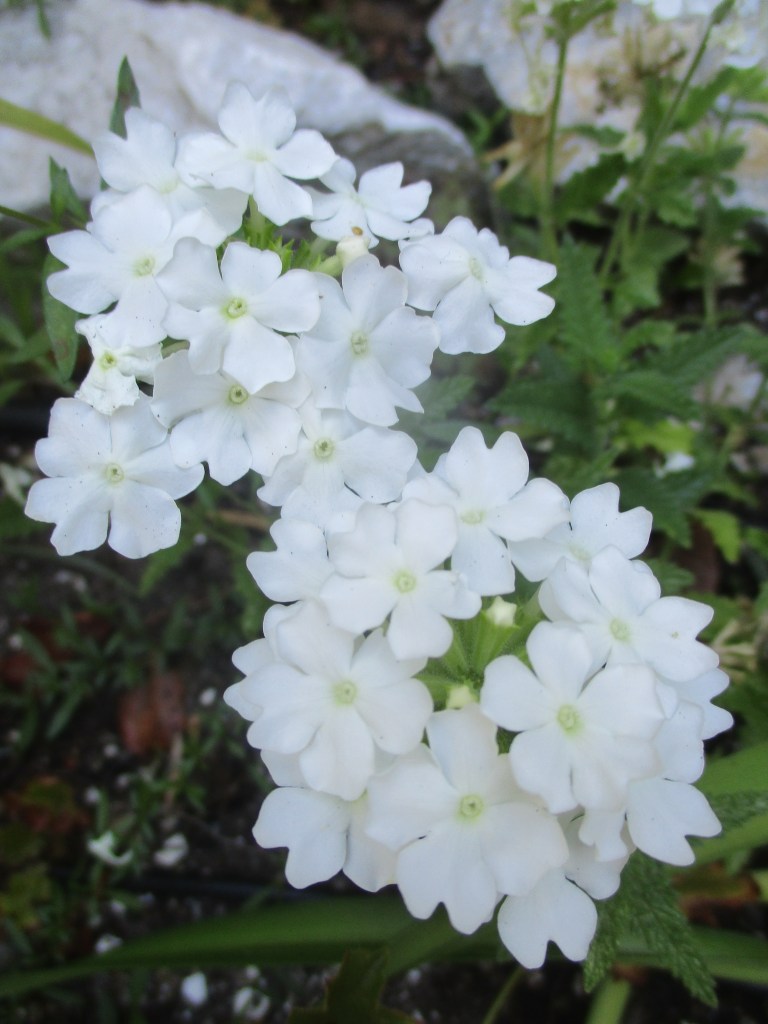
White Bloom Brightens Cool Shade

White might be an acquired taste.

White and black are supposedly opposites. White is a combination of all wavelengths of visible light. Black is a complete absence of such light. In other words, white is a mixture of all colors, while black is the absence of any color. This seems contrary to the common perception of white as a complete lack of color, and black as a complete mix of all colors.

It actually makes sense. The two really are opposites of both each other and themselves. This is about horticulture though, rather than physics. Black is quite rare as a floral color. White is not. The vast majority of flowers do not rely on color to attract pollinators, so are green or brown. Otherwise, most other prominent flowers in many ecosystems are white.

Like inconspicuous green and brown flowers, many white flowers exploit wind more than pollinators. Such flowers are generally profuse, but mostly diminutive and unimpressive. Other flowers that appear to be white utilize infrared or ultraviolet colors that are invisible to people, but colorful to nocturnal pollinators. Some of them are pale during the daytime.

Otherwise, the majority of white flowers that are popular within home gardens are just as flashy as their nonwhite associates. For many types of flowers, such as roses, camellias, azaleas and the countless types of annuals, floral color is more variable than floral form. White is simply another option for color. It serves various specific and practical purposes.

While brightly colorful annuals are appealing within sunny and exposed situations, white flowers brighten darker situations. They contrast nicely with dark green foliage and richly colorful flowers. Petunias that might be a bit too deep purple for a particular situation can mix with similar but white petunias to be more harmonious. White can be a buffering tint.

Colors should preferably be appropriate to their particular applications. Such selection is more aesthetic than horticultural. Some plants, such as gladiola, petunia, calla, oleander and some lily, excel at white bloom. Bougainvillea and crape myrtle excel at richer color.

Deadheading Conserves Resources

If not deadheaded, roses can put a lot of resources into production of seed and hips.

It takes quite a bit of effort for flowers to bloom. It takes even more effort and resources for pollinated flowers to produce seed and the fruiting structures that contain the seed. If the seed of certain aggressive plants get dispersed, we need to put even more effort into pulling up the seedlings. It just never seems to end!

Removal of deteriorating flowers, commonly known (even by those of us who missed that generation) as ‘deadheading’, can eliminate so much of this extra work. Not many plants benefit from deadheading; but most that do are really grateful for it. Others that do not care one way or the other simply look better without their deteriorating flowers.

It is of course impossible to deadhead large flowering trees or vast areas of ground cover. Regularly shorn hedges should never need deadheading because they never get the opportunity to bloom or develop fruit. Plants that are appreciated for the ornamental quality of their fruit should of course not be deadheaded.

Most roses get deadheaded as they bloom because the development of their fruiting structures, known as ‘hips’, takes enough resources to compromise subsequent bloom. Removal of these hips therefore promotes bloom. Only the few types of roses that are grown for their showy hips should not get deadheaded. Phlox, daisies, zinias, dianthus and all sorts of plants with long continual bloom seasons likewise benefit from deadheading.

Some types of iris that produce seed perform better with deadheading, not because they will bloom again during the same season, but because they can divert resources to vegetative growth (like rhizomes and foliage) that will sustain bloom during the following year. Most bearded iris (that do not produce seed) and lily-of-the-Nile do not seem to care if they get deadheaded, but are generally more appealing without their finished flower trusses.

Four o’ clocks can not be deadheaded without also removing developing flowers, so can only be allowed to bloom and throw their invasive seed all over the garden. It is easier to pull their seedlings later. We have a bit more control over crocosmia. Even though they do not need to be deadheaded, they are less invasive and more appealing without their scraggly brown stalks and seed capsules.

Pups Of A Horticultural Nature

Pups are copies of their parents.

Pups of the most familiar type are canine. Most are puppies of domestic dogs. Some are foxes or wolves. A few are seals, otters or various other animals. Garden variety pups do not get much consideration though. They develop into new progeny of plants rather than animals. Unlike animal pups, they are genetically identical clones of their single parents.

Pups of the horticultural sort generally develop from subterranean stems, such as corms, tubers or rhizomes. Most emerge from formerly dormant buds. Some grow adventitiously from roots. Pups appear as basal sideshoots against or close to their parent plants. They efficiently disperse their own roots to eventually survive as new and independent plants.

Most plants that produce pups are perennials. Some are so proficient with the technique that they grow into substantial colonies of genetically identical clones. For some, it is the primary method of replication. They actually prefer to replicate vegetatively than by seed. Some trees and woody plants do the same, but their clones lack the same classification.

For many perennials, propagation by division is merely the separation of pups from their parent plants. Most types of banana trees eventually generate a few surplus pups. Some types generate an abundance of pups to share with anyone who wants them. Separation of their pups is very similar to division of the smaller rhizomes of canna or lily of the Nile.

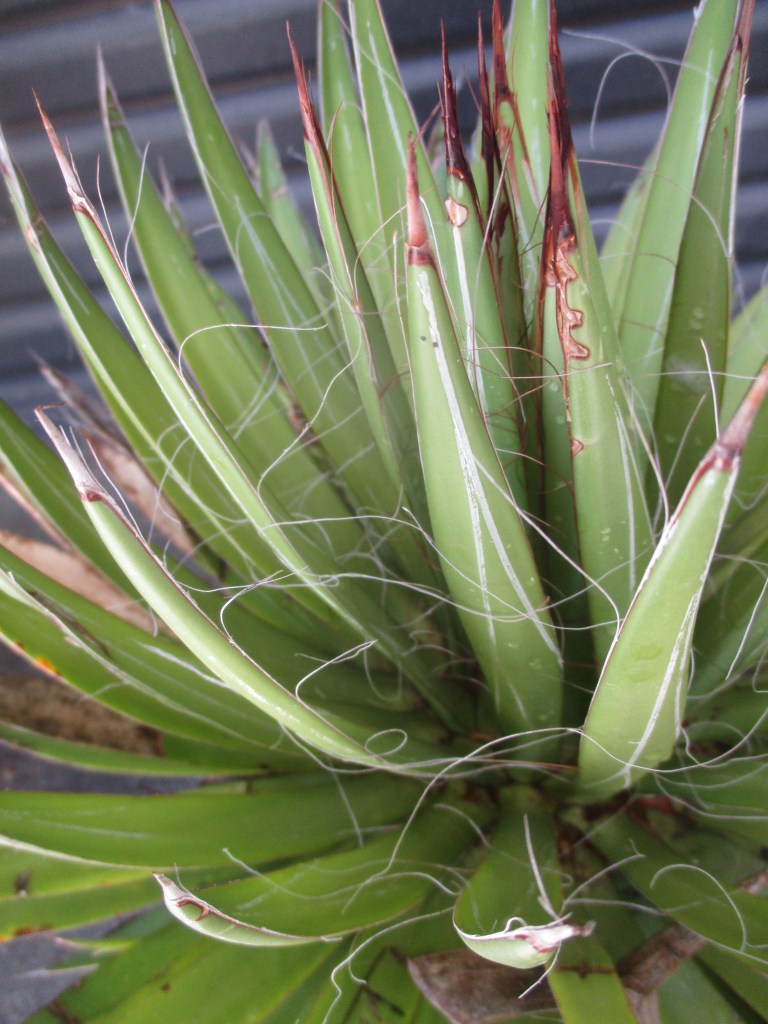
Individual rosettes of various species of Agave and a few terrestrial species of Yucca are monocarpic. In other words, they die after blooming only once. However, instead of dying completely, most generate several pups prior to bloom. Some produce pups excessively! Such pups can be difficult and hazardous to separate, but can replace their own parents.

Mediterranean fan palm is one of only a few palms here that generates pups. That is why it develops multiple trunks. Surplus pups can survive separation to grow as distinct trees. However, because of their densely fibrous roots, separation of intact pups can be difficult or impossible. Sago palms, which are not actually palms, are more compliant to division, even for rootless pups that develop on their stout trunks.

Delay Some Gardening Between Seasons

Plants are still going to seed.

For gardening, this is one of those in between times of year, when summer chores are under control, but it is a bit too early for much of the work that will need to be done in autumn. Automated watering systems have already been adjusted for the longest and warmest days of summer, so will only need to be adjusted the other way as days eventually get cooler and shorter. Growth of most plants slows; and some of the plants that will later be the earliest to show fall color begin to fade from bright green to paler green.

The last of the summer fruits should be gone, leaving the trees that produced them looking somewhat tired. The weight of large fruit, particularly peaches, might have pulled stems downward where they may now be obtrusive. Pruning a few minor stems should not be a problem. However, trees are still too vascularly active for major pruning. That needs to wait for dormant pruning while trees are bare in winter.

A few plants with sensitive bark are susceptible to sun scald if pruned to expose too much bark on interior stems while the sun is still high and warm. This is not so likely to be a problem if pruned during winter because the sun is lower and cooler, and foliage grows back before the following summer. Actually, that is why English walnut and various maples are able to defoliate during winter, even though their smooth bark needs to be shaded.

Pruning of plants that are potentially sensitive to frost should likewise be delayed. Otherwise, pruning is likely to stimulate development of tender new growth that will be even more sensitive to frost during winter. Besides, new growth develops slower this time of year, so plants look freshly pruned for a longer time than if pruned late in winter, just prior to spring.

Some types of pittosporum are more susceptible to disease if pruned in late summer or autumn because their open pruning wounds heal slowly and stay open to infection during rainy winter weather. However, slow recovery from pruning can be an advantage to formally shorn hedges that are not so sensitive to frost or disease, such as the various boxwoods, or glossy or wax privets. If shorn now, they might stay trim until spring.

The dried foliar remains of any summer bulbs that are finished blooming can now be plucked and disposed of. Gladiolus and montbretias that are still green can be deadheaded (pruned to remove deteriorated flower stalks), but should be allowed to turn completely brown before getting plucked. Watsonias are not so easy to pluck without also pulling up the bulbs, so should instead get their dried foliage pruned off.

Weeds outside of landscaped areas may not seem to be a problem, but many are now producing seed that gets blown into the garden. Even if such weeds do not need to be pulled, their flowers and seeding stalks should still be cut off and removed if possible.

Cover Ground With Ground Cover

Trailing rosemary eventually gets somewhat deep.

Within the outdoor rooms of home gardens, shade trees are ceilings, shrubs and hedges are walls, and turf and ground cover plants are floors. That is why the selection of plants for such purposes is as important as the selection of paint and carpet for indoors. Among ground cover plants, durable turf grasses for lawns are the most common and functional.

There are so many more types of ground cover plants besides turf grasses though. A few of the lower, denser and more resilient types of ground cover plants can function as turf if necessary. Many more function as mulch to control erosion, contain dust or conceal mud. Many inhibit proliferation of weeds. Some retain a bit more moisture than they consume.

Appropriate ground cover plants most definitely have many advantages. They also have certain disadvantages. Although most require less maintenance than the weeds that they exclude, they require more maintenance than simple mulch. Also, most require irrigation. They might be trailing perennials, sprawling shrubbery, or unsupported wandering vines.

Trailing gazania, Hottentot fig (freeway ‘ice plant’) and various ice plants are some of the more popular perennial ground cover plants. They and others migrate by trailing stolons or rhizomes. They are among the lower and more compact types of ground cover plants. Some need no more pruning than edging. Many propagate easily by division or cuttings.

Sprawling sorts of juniper, ceanothus, cotoneaster, myoporum and rosemary are shrubby ground cover plants. They get significantly deeper than perennial plants, and some sorts can eventually get too overgrown to be practical. Rosemary, myoporum and cotoneaster are conducive to shearing as they mature. Ceanothus and juniper need significant area.

English ivy, Algerian ivy and star jasmine are vining ground cover plants that should stay rather low if properly maintained. However, they can climb into shrubbery and trees, and even buildings. The ivies are famously aggressive, and spread indefinitely by rooting as they migrate. Severe pruning can renovate some overgrown vining ground cover plants. Bougainville gets rather shrubby and deep, even without support.

Not All Plants Like Fads.

Ornate pots and planters can be as decorative as the plants within them, and provide extra accommodation for more plants.

Like so many fads too often are, container gardening is overrated, and is actually contrary to the currently most faddish of fads; sustainability. Plants in containers need more regular watering than those that can disperse their roots more extensively into the ground. Those that are so indulged also want fertilizer to be applied more regularly, but are more likely to be damaged if fertilized too generously. Because confinement is stressful, plants in containers are innately more susceptible to disease and pests. Some plants need more pruning for confinement.

Then there are the problems with the containers. If exposed to sunlight, thin plastic containers get warm enough to cook roots within. Pots that do not drain adequately or that sit in their own drainage basins can stay saturated enough to kill roots. Water in drainage basins allows mosquitoes to proliferate. Seepage from large pots can rot decks and stain pavement. Self watering containers work nicely for houseplants (if used properly!), but lack drainage, so can not be used out where they are exposed to rain.

The advantages to container gardening are actually quite limited. Containers are obviously needed for houseplants, and where exposed soil is not available, like on balconies. They are also convenient for plants that want better soil than they can get in the garden, especially if the rest of the garden is responsibly landscaped with sustainably undemanding plants that do not require soil amendment or regular watering. Frost sensitive plants can be moved easily to sheltered locations if contained. Flashy plants like orchids and tuberous begonias that get displayed prominently while blooming can be concealed while not so impressive.

Of course there are many pendulous plants like Boston fern, spider plant, string or pearls and burro’s tail that really are at their best in hanging pots. It is also hard to deny that there are all sorts of artsy containers, like colorfully glazed pots and sculptural concrete urns, which are appealing enough to justify growing plants in them, even if just to show off the fun containers. Bonsai requires containers, but that is another big topic!

Utilitarian Garden Features Became Aesthetic

Nasturtium used to be more utilitarian.

Gardening is fun. Furthermore, gardens are pretty. Some gardens also produce fruits and vegetables. Not very long ago, production of fruits and vegetables was more of a priority for more gardens. Some big gardens generated firewood and a bit of forage for livestock. Contemporary abundances allowed gardening to become more aesthetic than utilitarian.

Such abundance may not seem so apparent while so many of society could benefit from a bit more. People work more than ever to earn resources to purchase produce that they can not grow in their gardens while working so much. It has become more feasible to do so. Landscape maintenance is just another expense that many would prefer to eliminate.

Nonetheless, some popular features within modern home gardens evolved from formerly utilitarian features. Many such utilitarian features were common within the infrastructures of home gardens prior to the development of any modern technology that replaced them. Some were popular only because such technology was either expensive or uncommon.

Shade trees are among the most traditional and perhaps more recognizably utilitarian of landscape features. Although, even they have evolved. With modern air conditioning and insulation, their shade is less important than their aesthetic appeal. Window screens and rain gutters are also modern technologies that made particular garden features obsolete.

Window boxes, which are now mere ornamental features, were originally popularized for aromatic vegetation, to repel insects from windows. Rosemary, nasturtium, ivy geranium and petunia had always been some of the more popular repellent plants for this purpose. They do not obscure much sunlight as they cascade delightfully outward and downward.

Foundation plantings, which now merely soften the perpendicularity of vertical walls and horizontal garden spaces, were also utilitarian features. Compact and resilient shrubbery or perennials inhibited erosion caused by rain falling from eaves above. They obstructed splattering mud from below also. Indian hawthorn and lily of the Nile were quite effective. They could survive through summer without much irrigation, but then survive excessive moisture through winter.

Catch Weeds Before They Go To Seed.

Seed pods not only look unkempt and inhibit continued bloom, but can disperse too many seeds of otherwise worthy plants.

It may seem futile to pull certain weeds this late in the season. Those in unrefined parts of the garden that get little or no irrigation might be so dry that they only deteriorate and scatter their abundant seeds when pulled. The soil may be so dry that roots are difficult to extract, especially since the drying foliage now separates from the roots so easily. The only hope is that removal of dying weeds might eliminate at least some of the seeds for the next generation of weeds.

Foxtail and burrclover are not only annoying, but are also dangerous to dogs and cats as their seeds mature and dry. After all, the seeds rely on animals for dispersion, so intentionally stick to fur. The problem is that seeds can get stuck in more than fur, and sometimes get into ears, eyes, nostrils and elsewhere. Seeds from a few other weeds can do the same.

Cheeseweed is not a dangerous weed, and is relatively easy to eradicate. The roots even stay attached to the stems when they get pulled. The problem with leaving them to mature is that they become infested with rust (a fungal disease) that spreads to other desirable plants. Saint John’s wort, snapdragons and roses are particularly susceptible to rust.

Feral Jupiter’s beard and montbretia that grow where they were not intentionally planted are often allowed to bloom before getting pulled. However, after bloom, stems separate so easily from roots that most of the roots remain to regenerate as soon as they are able. If left long enough after bloom, both Jupiter’s beard and montbretia sow seeds to infest even more.

Fortnight lily (or African iris) are not often a weed, but can get that way if their seed capsules are not removed before they mature and pop open. Besides, development of these capsules diverts resources from continued bloom. It is best to remove the capsules before they get floppy, and to remove as much of the finished flower stem as possible without removing stems that have not yet bloomed.

Both dusty miller and coleus are grown for their distinctive foliage but not their bloom. Flowering stems stretch and exhibit inferior foliar color and texture, so can actually get snipped before they bloom.

Mulch Retains Moisture And Insulates

Mulch helps to insulate the soil.

Nature is smart. It should be. It has been operating efficiently since the beginning of time. That is certainly longer than anyone has been gardening in defiance of nature. Imported plants that need unnatural watering and soil amendment continue to benefit from nature. Some assets, such as weather, are direct from nature. Some, such as mulch, are copied.

Summers are long, dry and somewhat warm here. Without rain, there is plenty of time for the soil that roots inhabit to become dry. Warmth and aridity increase the consumption of moisture by plant species that are not accustomed to such extensively dry weather. That is precisely why landscapes and home gardens are so reliant on supplemental irrigation.

Because water is expensive, plants that do not require much of it are popular. Automated irrigation systems should operate as efficiently as possible to minimize waste. Since turf grass is very consumptive, lawns should not be overly expansive. Conservation of water is common here. There are several techniques for doing so. Mulch is one of the simplest.

Although adding mulch to a garden is unnatural, it works like the natural detritus within a forest. It retains moisture and insulates the surface of the soil. Without mulch, surface soil can become uncomfortably dry and warm for roots. Mulch also inhibits the proliferation of weeds. Because weeds consume moisture, their absence indirectly conserves moisture.

Mulch generally goes into the garden during early spring, before weed seed germinates, and after the removal of the detritus of winter. It can be practical at any time though, even as the soil becomes dry and dusty through summer. Various forms of mulch are available from garden centers. Home compost works splendidly, but costs nothing more than labor.

Alternatively, several types of groundcover can function as mulch. Some types consume more moisture than they conserve, but exclude weeds. Some types, such as ceanothus, lantana and licorice plant, might not crave any more water than the plants they surround. Their maintenance should involve less effort than removal of weeds which they displace. They are more visually appealing anyway.

Squirrels Fear The Unknown Too

Pierre Francois dutifully protects ripening fruit.

It is embarrassing when my mother teaches me a practical gardening technique that I should have known about, especially if the particular technique is as simple and downright silly as what my mother does to protect ripening fruit from squirrels. A friend of hers suggested it; and it seems to be significantly more effective than the few fancier ideas that I recommended.

I should first mention that there is nothing new about repelling animal pests with effigies of other animals that they are afraid of. Scarecrows and stuffed snakes and owls have been around for centuries. As the name implies, scarecrows scare crows who perceive them to be potentially troublesome people. Rats and terrestrial rodents avoid snakes. Squirrels and some birds are afraid of owls.

When I was in about the fourth grade, I remember that National Geographic World magazine (which is now National Geographic Kids) featured a silhouette of a predatory bird that could be cut out and taped to windows to deter birds that might otherwise break their necks as they tried to fly through the clear glass. The associated article explained that the cut-out silhouette was effective because birds instinctively knew what to fear. A silhouette of a harmless seagull would not have been as effective.

However, some deterrents are not so specific, but instead rely on the fear of the unknown. Beach balls outfitted with decals of huge eyes look weird in the garden, but work because so many birds have bird brains that think such contraptions are big, scary and possibly predatory animals. Flash tape and old compact discs work simply because birds do not know what the reflected flashes are.

Scarecrows and other inanimate effigies should be relocated occasionally so they seem to be alive. They should stay near what they are in the garden to protect, and not loiter when it is gone. For example, if protecting ripening fruit, they should leave after the last of the fruit is gone. Otherwise, the target pest animals realize that they are fake or dead. Beach balls, flash tape and compact discs are more animated, so need not be moved so much, if at all, but are too tacky to stay all year.

All this may seem complicated, but can be simple enough for my mother to master with . . . well, allow me to explain.

Pierre Francois is a cute, fuzzy and seemingly French plush toy bunny made in China, who knows all about protecting ripening fruit from squirrels. (‘Stuffed animal’ is no longer politically correct.) After seeing how expensive a fake owl would be, my mother put Mr. Francois in the peach tree. He and his sort are free if borrowed (stolen) from the grandchildren, or very cheap at garage sales or thrift stores. Although cute and soft to us, Mr. Francois is big, intimidating and unfamiliar to squirrels. Before the squirrels get acquainted with him, the peaches will have been harvested, and Pierre Francois will have been reassigned to an apple tree.