Saturation Of Soil Distresses Roots

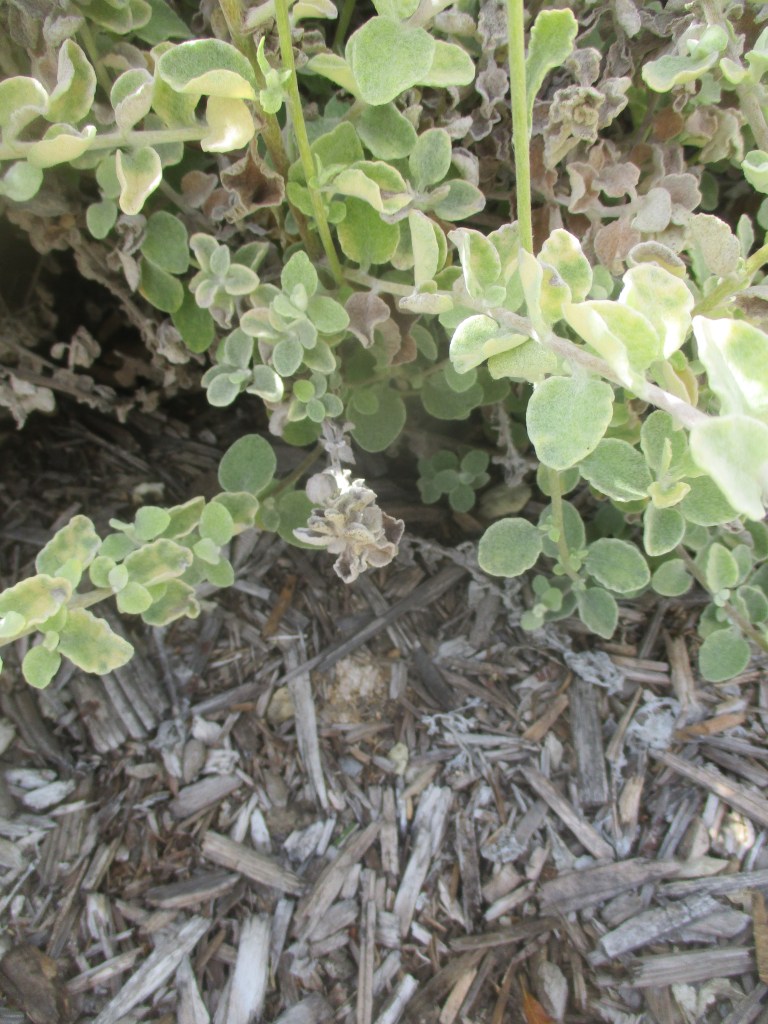
Some riparian plants tolerate soil saturation.

Saturation of the soil should be a rare problem within the local chaparral climates. Water is a limited resource. That is why plants that are not native or endemic to other chaparral or desert climates rely on supplemental irrigation. Many exotic species would not survive through the locally long and dry summers without it. Water is only sufficient during winter.

The unfortunate reality is that soil saturation is among the more common problems within landscapes that rely on gardeners. Although most gardeners are proficient with irrigation, some are not. They would prefer to irrigate too generously than risk desiccation. They do not assume the expense of the water, or of the plant material that succumbs to saturation.

Although significantly less common within home gardens that do not rely on professional gardeners, soil saturation is possible. It occasionally happens within pots or planters that lack adequate drainage, or if the drainage becomes clogged. Saucers that contain water that would otherwise damage decking or flooring might inhibit drainage if constantly full.

Besides within pots and planters, saturation is more likely within dense garden soil than within coarser soil. Downspouts could saturate surrounding soil through the rainy winter season. Leaky plumbing might do the same at any time, even if it is merely irrigation pipe that leaks only while operating. Of course, excessive irrigation produces most saturation.

Saturaturation deprives soil or medium of aeration. Roots avoid soil or medium that lacks adequate aeration. Trees and large shrubbery therefore disperse most of their roots near the surface of saturated soil. Such shallow root dispersion limits stability. The expansion of such shallow roots displaces and fractures pavement and curbs, and heaves lawn turf.

Excessive irrigation causes soil saturation during summer. Excessive frequency is more likely to cause saturation than excessive volumes of water. Unfortunately, it is impossible to prescribe appropriate irrigation schedules and application rates. Climate, soil type and plant material are all relevant considerations. Moisture requirements change seasonally, and from year to year, as plants mature.

Taking It To The Streets

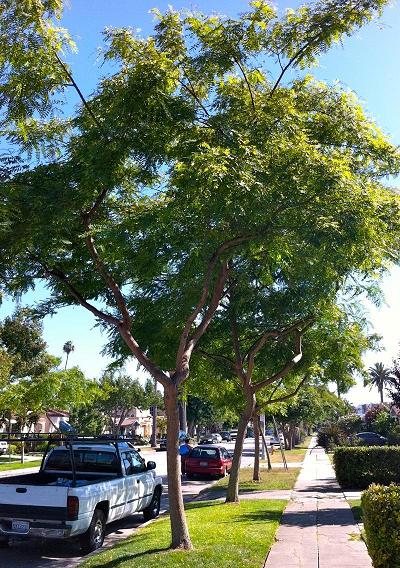
Tipu tree is the topic for tomorrow.

No matter how unique the individual gardens are, conforming street trees really unify a neighborhood. Streets of tract homes are typically planted with a common street tree that is complimentary to the architectural styles of the homes, and is complaisant to the difficulties of life at the curb. Neighborhoods of mixed architectural styles sometimes have difficulty finding a tree that suits every home, so often select two or more options. Older neighborhoods are not quite as selective about conforming street trees because so many various trees get mixed in over the years.

Before selecting a street tree, it is best to inquire with the particular municipality about designated street trees. Home owners associations generally install their own trees where needed, with little or no regard for the preferences of individual residents. Some urban neighborhoods (that are not home owner associations) are nearly as selective, requiring individual home owners to maintain a specific street tree or trees. Others do not require street trees, but limit selection for those who desire them. Selection is very often limited to only a single species.

There are of course many rural and unincorporated neighborhoods without limitations for street trees, and neighborhoods where limitations simply are not enforced. However, selection should still be limited to trees that are appropriate for curbside planting. Such trees should have high branch structure so that they can be pruned for clearance above the largest of trucks that can use the roadway. They should be reasonably clean, and not produce anything that could be messy on cars parked below. Roots should be complaisant with concrete curbs and sidewalks, particularly where space is limited. Foliage and bark must be resilient to harsh exposure and enhanced glare (from surrounding pavement).

London plane (sycamore) and crape myrtle trees are the two most common street trees planted by landscapers, and are the most commonly pre-designated street trees, but are actually not the best of choices. London plane is popular among landscapers because it can survive the neglect that landscapers are notorious for, but has aggressive roots that eventually damage concrete, especially since landscapers waste so much water and keep the soil saturated. Crape myrtle is remarkably colorful both in bloom and with fall color, and has remarkably complaisant roots, but does not get tall enough for adequate clearance, and often gets infested with insects that drop sticky honeydew on parked cars.

This was the topic for yesterday.

Aquatic Plants Are All Wet

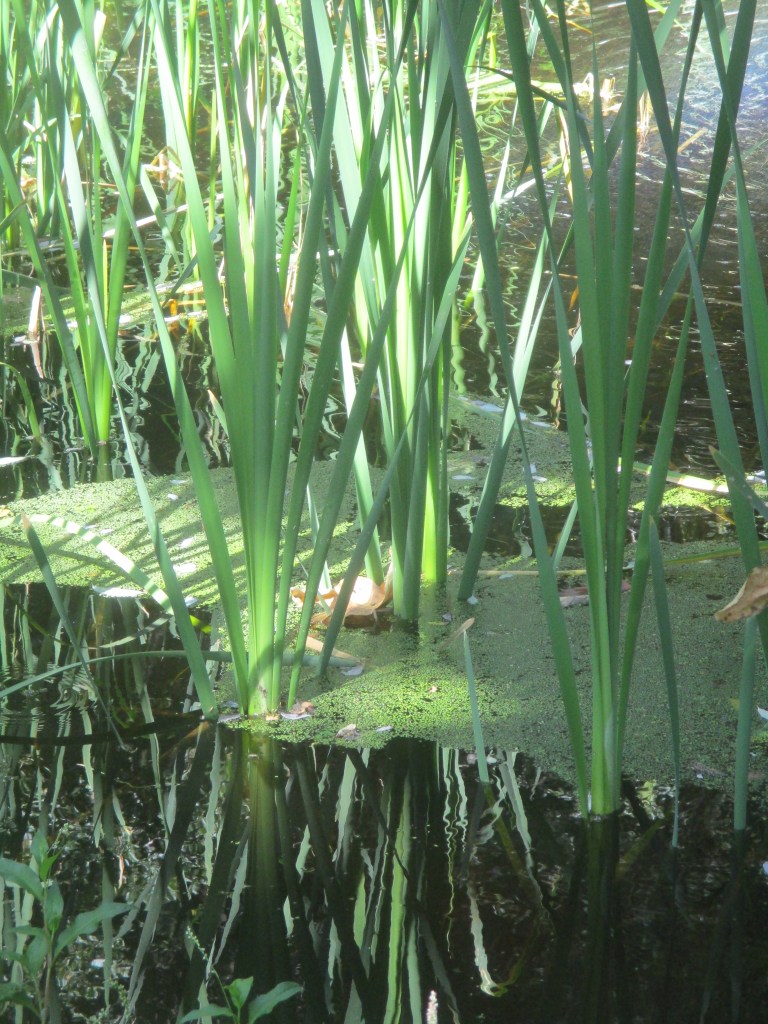
Both cattail and duckweed are native.

Home gardens and landscapes should be compatible with their respective climates. For local chaparral climates, plants that do not need much watering through the long and dry summers are appropriate. Aquatic plants are the extreme opposite. They require regular replenishment of the ponds that they inhabit. Arid warmth increases their need for water.

Aquatic plant can not be ‘drought tolerant’. Several, such as duckweed, water lettuce and water hyacinth, float over the surface of water. Water lily and lotus inhabit the mud below the water, and extend their foliage to float over the surface of the water. Waterweeds stay completely submerged, with or without roots. Aquatic plants need water for their survival.

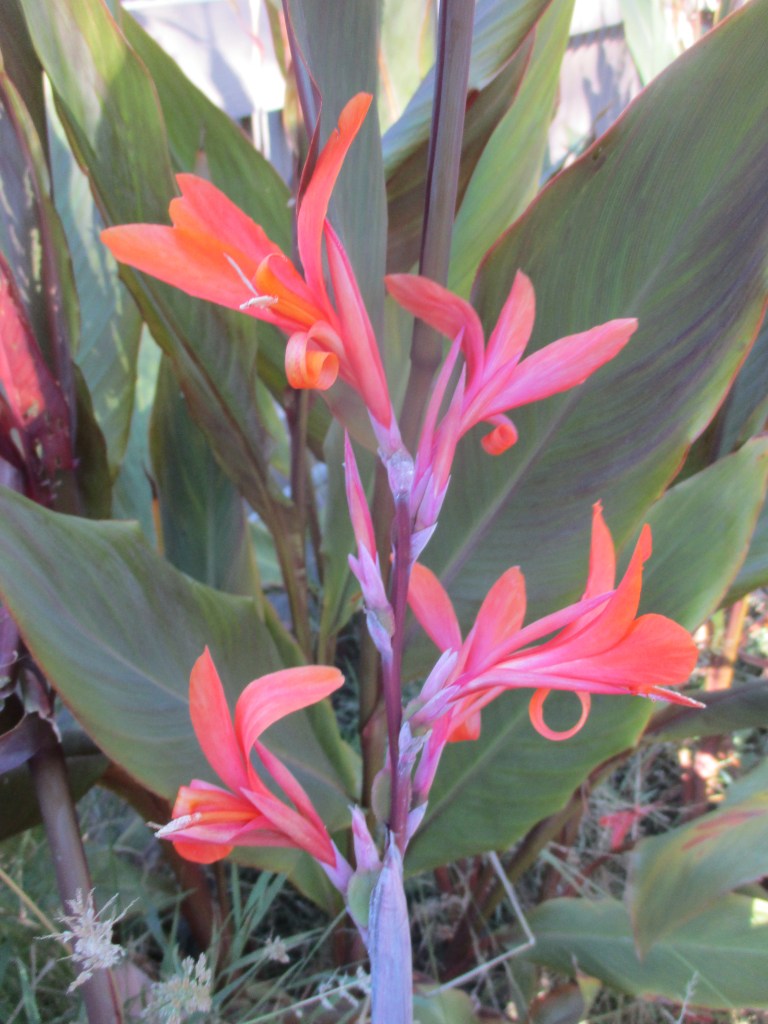
Marginally aquatic plants are somewhat less dependent on water. Cattail and yellow flag iris inhabit shallow ponds and saturated soil, but can survive if their situations drain for a while. If they stay too dry for too long, they can initiate dormancy, and then recover when saturation resumes. Canna inhabits either shores of shallow ponds, or evenly moist soil.

Regardless, all aquatic plants require maintenance that is completely different from what terrestrial plants require. Even those that need only minimal maintenance will eventually necessitate muddy and messy interaction. Much of such interaction is under water that is difficult to see through while murky. Aquatic plants are innately heavy and totally sloppy.

Moreover, some common aquatic plants grow like weeds. Water hyacinth and giant reed are two of the most invasive exotic species in California. So, not only are they sloppy, but they are also voluminous! Because they are very invasive, they should not inhabit ponds that they could escape. Besides, giant reed is too overwhelming for most home gardens.

Few home gardens include natural ponds or water sources to contain as ponds. Garden ponds are therefore mostly contained within some sort of sealed infrastructure, and need replenishment to compensate for evaporation. Fountains aerate the water for a healthier ecosystem, but also increase evaporation. Some tall aquatic plants also consume water, as the foliage that extends above water transpires.

How To Deceive Smart Seeds

Some seeds need help to germinate.

Plants could not proliferate as they do if they were as unintelligent as they seem to be. Actually, much of their activity would be considered quite ingenious if it could be observed in a more ‘human’ perspective. From their exploitation of pollinators to their aggressive tactics for competition with other plants, the behavior of plants is obviously very deliberate and purposeful.

Because they are so reliant on the weather, pollinators and so many other environmental factors, the life cycles of plants are on strict schedules. They must also adapt to diseases and all sorts of other pathogens. Fires and grazing animals are problems for many, but advantages to most.

Most seeds develop during summer and autumn. When they fall to the ground, they need to know to delay germination until spring to avoid frost and the likelihood of getting eaten. Seeds of many plants, particularly those from more severe climates, germinate only after being ‘stratified’ by a specific duration of cold weather. Such seeds need to be artificially stratified by refrigeration in order to germinate any differently from their natural schedule, or where winters are not sufficiently cold.

Many seeds require ‘scarification’ by digestion by animals that naturally eat them, or by the quick heat of a wildfire, to break or soften a hard outer coating that otherwise inhibits germination. Seeds that need to be digested actually rely on animals for distribution. Seed that need heat want to be the first to regenerate after a wildfire, before competing plants recover.

Goldenrain tree, and many maples and pines produce so many seeds that even if less than one percent germinate in the garden, they seem to be prolific. However, for more reliable germination of a majority of seeds, they should be scarified. The seeds of many pines that crave fire can be heated briefly in an already hot oven to simulate fire, just enough to heat the seed coat without roasting the seeds. Some people actually prefer to spread them on a piece of paper, and then burn the paper. Seeds that only need their hard outer coating to be damaged slightly might need only to be sanded lightly on sandpaper. I actually prefer to rub my canna or Heavenly bamboo (nandina) seeds on a brick or bit of sandstone.

Toxic Plants In Home Gardens

Even toxic plants have their attributes.

Oleander that inhabits freeway medians is poisonous enough to be hazardous. Two tons of Buick cruising at sixty-five miles per hour past such oleander has more potential to be hazardous. The risk associated with toxic plants within freeway medians is as limited as their accessibility. Remarkably durable and resilient oleander is therefore quite practical.

Realistically, established oleander is quite practical for many landscapes. (Oleander leaf scorch limits the practicality of new installation though.) It is not the sort of vegetation that is appealing for consumption. Caustic sap should deter anyone who tries. It is poisonous primarily to curious young children or chewing dogs. It is generally safe in their absence.

Foxglove, angel’s trumpet, castor bean, nightshade and poison hemlock are significantly more hazardous because they are easier to consume. The seeds of castor bean and the fruits of nightshade actually seem to be edible. Poison hemlock sometimes mingles with foraged greens. Many diverse toxic plants exhibit hazardously appealing characteristics.

Some toxic plants are appealing enough to come indoors, where cats who never venture outdoors might take an interest in them. Dumb cane (Dieffenbachia) is a popular but very toxic houseplant. Mistletoe, although a parasitic and undesirable weed, is popular as cut foliage at Christmas. Its berries are very toxic. Poinsettia exudes caustic sap if disturbed.

Some toxic plants are toxic only because they are allergens. They affect only those who are allergic to them. Most people are allergic to poison oak. Fewer are allergic to related plants, such as African sumac. Some people are more or less allergic to a few species of Grevillea or Primula. Reaction to such species can be comparable to that of poison oak.

Too many toxic plants inhabit home gardens to list. Some are familiar fruit and vegetable plants, such as elderberry and potato. Some should be removed for the safety of children or pets. Selection of new plants can simply and conveniently omit any concerningly toxic plants. Generally though, with responsible interaction, most toxic plants are not too risky.

Good Neighbors Make Good Fences

Is privacy really worth big fences?

Good old fashioned suburbia will never bee the same. Bigger modern homes on smaller modern parcels leave little space for gardening and trees. What is not shaded by the taller homes is shaded by the taller fences, which are ‘needed’ for privacy since the homes are closer together. Building codes in most municipalities limit the height of fences, but lattice screens are often added on top for extra height.

Because lumber is not of the quality that it was when shorter light duty redwood fences were built decades ago, relatively expensive modern fences do not last nearly as long. They might last longer if they would get repaired instead of replaced when only the posts rot. Green technology seemed to work better before it became trendy.

Ironically, no one wants these bigger and bolder fences that are closer to home to be so prominent in the landscape. We try to obscure them with vines that can tear them apart, or shrubbery that can push them over. Watering these vines and shrubs accelerates rot in the posts.

Shrubbery intended to obscure a fence should not be so voracious that it wants to displace the same fence that it is intended to obscure. Some types of pittosporum work nicely because they support themselves without leaning against other features in their surroundings too much, even if they eventually get quite large. However, they do get quite thick, and can obscure a fence so well that no one would miss the fence if it were to get pushed over! A good hedge without a fence is sometimes a better option.

Many types of vines can be kept much closer to a fence than shrubbery can, but most tend to be more destructive. Star jasmine works nicely if allowed to climb a trellis directly in front of the fence, but should not be allowed to get between planks in the fence, or to get too intertwined in lattice. If it gets too fluffy, it can be shorn back like a light hedge.

Clinging vines like creeping fig can be very appealing on fences, and can be shorn like hedges, but will eventually necessitate the replacement of the fences that they climb. For those who appreciate such a tailored appearance, replacement of the affected fences every few years is a fair compromise.

Perennial Plants Keep On Giving

Can a canna be too perennial?

Many popular annual bedding plants have potential to be perennial if they get a chance. Cyclamen commonly perform as a cool season annual, only until replacement with warm season annuals. However, after summer dormancy, their tubers can generate foliage and bloom again for several following winters. Replacement is just easier than maintenance.

Real annuals complete their entire life cycles, from germination to dispersal of seed and finally death, within a single year. Biennials generate vegetative growth through their first year, and then disperse seed and die during their second year. Perennials perform for at least two years, whether or not they get any opportunities to do so within home gardens.

Home garden culture complicates this classification though. Those who enjoy gardening expect perennial plants to reliably perform for many years or indefinitely. Many perennial plants do so with only minimal intervention. Some are self-sustaining, and might seem to naturalize. That may be why so many smaller or less vigorous types classify as annuals.

Another qualification of perennial plants is that they lack woody stems and roots. In other words, they are herbaceous. Palms and species of Yucca that develop trunks classify as perennial plants also, but for simplicity, the larger types are herbaceous trees. Generally, perennials are terrestrial. A few are epiphytic (live in trees) or lithophytic (live on stones).

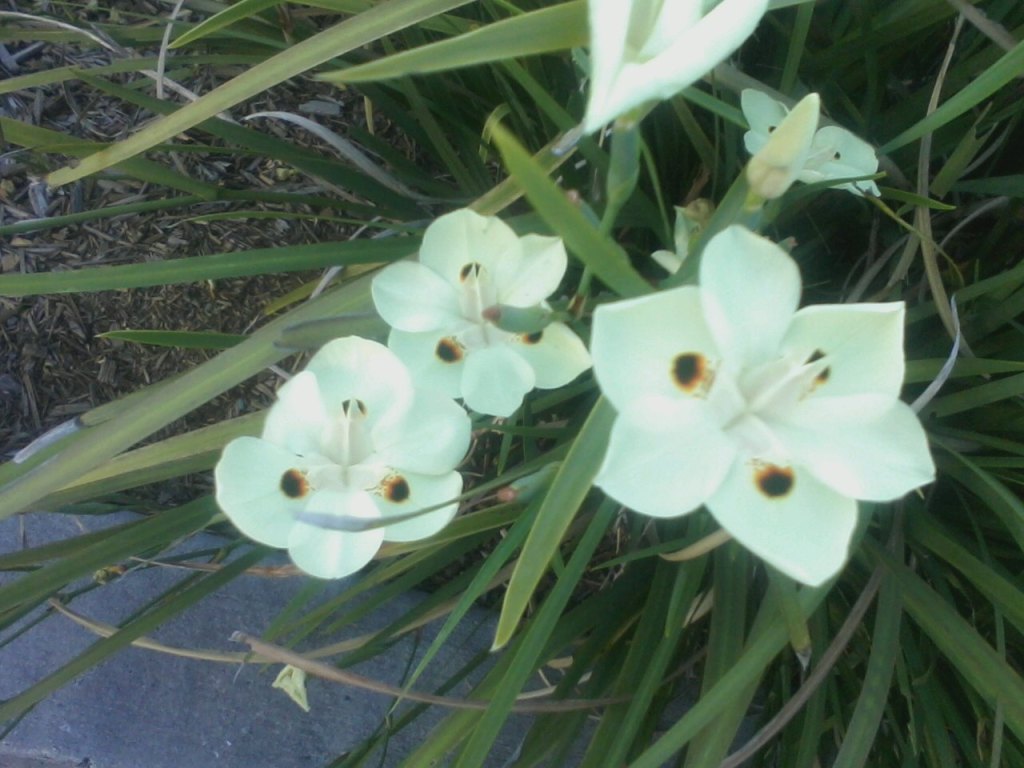
Although several perennial plants can survive indefinitely here without intervention, most perform better with some degree of attention. Most ferns are neater if groomed to remove deteriorated fronds. Many grasses benefit from severe shearing during winter. African iris blooms better in response to regular deadheading to remove developing seed capsules.

Perennial plants are very diverse. It is impossible to generalize about their maintenance. One commonality among many is that they multiply. Lily of the Nile can produce so many individual shoots that it can eventually become too congested to bloom. Division of such shoots every several years or so promotes bloom, as well as propagates more plants for elsewhere in the landscape.

Some Plants Can Go To Pot.

What ever happened to those poinsettias and cyclamen from last Christmas?

Chrysanthemums, hydrangeas, azaleas, callas, kalanchoes and miniature roses can not really be as happy as they seem to be while in full bloom at the florist counter. Then there are all the seasonal blooming plants like Easter lilies and poinsettias. Wrapped in undraining mylar, often with ribbons and bows, they are actually quite humiliated.

All are forced to bloom in artificial greenhouse environments that are nothing like the home environments that they ultimately go to. As they finish bloom, most get retired directly to the garden where many are unable to adapt quickly and efficiently enough to survive for long. Many do not make it that far, but get sent to the compost or the trash by those who prefer to not prolong their agony.

These potted plants (which are actually known as ‘pot plants’ in the horticultural industries) are not like houseplants, since they are not actually expected to survive for long in the home. They are only expected to perform for a limited time while in bloom.

Adapting to the home environment is not the difficult part. Most potted plants can manage that for a while, but eventually want more sunlight. Hydrangeas, roses, Easter lilies and other deciduous plants also eventually want a cool winter for their dormancy. The problem is adapting to exposure to the sunlight and weather that these plants crave. Foliage can get scorched, frozen or desiccated.

As unsightly as plants can be during transition, most can eventually replace their greenhouse foliage with foliage that is adapted to their new environment in the garden if transitioned slowly and carefully. Large ‘forced’ flowers will eventually be shed or can be pruned off as they deteriorate. The more sensitive types of plants should be moved to a sheltered spot on a porch or in partial shade for a few months before being moved to more exposed spots. Once in the garden, they will want regular watering until their roots disperse.

Deciduous plants and bulbs can stay in the sheltered spot until they defoliate for winter. If put into their permanent location while dormant and bare, their new foliage that emerges in spring will be adapted to the new exposure.

Aloes, Christmas cactus and various other succulents are considerably more resilient and adaptable than the more common potted plants. Both rosemary and small olive trees that have become trendy during the past many years can likewise be adaptable if not kept in the home too long. Olive trees can stay potted indefinitely if pruned regularly, or can go into the garden where there is room to grow. Christmas trees are just as adaptable, but do not want to stay potted for long. Sadly though, most get much too big for home gardens.

Dog Days Of Summer Warmth

Every lawn has its dog days.

Summer began more than a week ago. Subsequently, the dog days of summer continue from the third of July to the eleventh of August. These forty dog days are the twenty days prior to and after the twenty-third of July. That is when the Sun aligns with Sirius, the Dog Star of the constellation of Canis Major, or ‘the Great Dog’. Dogs are actually uninvolved.

Nonetheless, dog days actually are a time for dogs to languish through much of the most unpleasantly warm weather of summer. Although local climates are generally mild, warm weather is not rare. It merely seems to be less oppressive than in other climates because of less humidity, and perhaps more of a breeze. Coastal influence is a major advantage.

Dogs drink more water during the dog days of summer because they lose moisture, with warmth, while panting. Vegetation also needs more than typical quantities of moisture to compensate for increasing evaporation from foliar surfaces. Aridity and any wind, both of which render warmth more comfortable for dogs and people, increase such evaporation.

Also, for most exotic (nonnative) vegetation, regular watering helps to sustain growth that warmth stimulates. Lily of the Nile can likely get enough moisture through the local rainy season to survive through the dry season. However, it is healthier and more appealing if occasionally watered to sustain its most vigorous growth during the dog days of summer.

Many plants are native to climates that supply rain in conjunction with warmth. They rely on moisture for normal growth. Various bananas, canna, angel’s trumpet and giant bird of Paradise grow very vigorously with sufficient moisture. Unfortunately though, insufficient moisture is very distressing to them. Drought tolerant species have a distinct advantage.

Turf, bedding plants and vegetable gardens need abundant water during the dog days of summer. Although some can survive with less than others, none are exempt. Most potted plants, especially those in hanging pots, are likewise dependent on systematic watering. Even if the weather is too warm to enjoy other gardening, watering can not be neglected.

Color Outside The Spectral Lines

Infrared and ultraviolet are humanly invisible.

Green is the most common floral color. It only seems to be rare amongst flowers because almost all green bloom relies on wind for pollination. Thus, neither color nor fragrance is useful to get the attention of pollinators. Actually, green flowers do not get much attention at all. They are easy to ignore in the wild, and generally unpopular within home gardens.

Most showy green flowers such as zinnia, chrysanthemum, hydrangea and gladiolus are progeny of unnatural breeding. Showy but naturally green flowers such as hellebore and orchid are merely incidentally green, as they employ infrared or ultraviolet color to attract pollinators. Although people can not see infrared or ultraviolet color, many pollinators do.

After all, flowers bloom only for pollination. Many customize color as well as fragrance to appeal to preferred pollinators. They are merely incidentally appealing to people as well. People breed flowers to be more appealing to people, even if unappealing to pollinators. Nonetheless, even breeding is limited to characteristics that initially attracted pollinators.

It is impossible to identify the most common color among flowers that rely on pollinators. Pollinators are regional. Therefore, red and orange flowers may be more common where hummingbirds who prefer red or orange are more common. Purple flowers may be more common where bees or certain butterflies who prefer purple are the dominant pollinators.

Yellow seems to be the most common natural color of flowers of North America. Red and orange are very common as well. Although common, pink is merely a tint of red, so is not a real color. Neither is brown, which is a shade of orange. Although very common among flowers that rely on wind pollination, it is quite rare among flowers that rely on pollinators.

Blue is the rarest natural floral color. Many flowers that seem to be quite blue are actually purplish. Purple is uncommon, but not as rare as blue. Ultraviolet and infrared get almost no consideration since they are invisible to people. However, both are common amongst most showy flowers, particularly white and maybe red flowers. Red is invisible to insects, though infrared is not.