Deadhead Spring Bulbs After Bloom

Most spring bulbs are done blooming.

Fruiting warm season vegetables that are now in season, such as squash, tomatoes and beans, are more abundant with regular harvest. Plants that produce such fruit respond to their natural obligation to generate seed. Deprivation of the fruit that contains their seed stimulates production of more. Similarly, it is helpful to deadhead some flowering plants.

Deadhead grooming is a type of pruning, even if it does not involve pruning shears. It is, in simple terms, the removal of deteriorating flowers after bloom. For some plants, it only improves aesthetic appeal. For many others, it redirects resources from seed production into subsequent bloom, or vegetative growth that eventually sustains subsequent bloom. 

Now that early spring bulbs are finishing bloom, it is time to deadhead them. Most bloom just once annually, so without the distraction of seed production, will prioritize vegetative growth into new bulbs to bloom for next year. Many of the summer bulbs that bloom later bloom more than once annually, so divert conserved resources into subsequent blooms.

However, many cultivars of spring bulbs are too extensively hybridized to produce viable seed. For them, deadhead grooming merely eliminates unappealingly deteriorated floral carcasses, while their foliage continues to sustain the development of new bulbs for next year. The foliage of most deteriorates slowly through warming spring or summer weather. 

Some extensively hybridized modern cultivars are not sterile though. Some can produce feral progeny that are less appealing than the hybrid parents, but are vigorous enough to displace them. Deadhead grooming eliminates most or all of the unwanted feral seed. Of course, for wild grape hyacinth and snowdrop, seed can be left to develop and disperse.

Established colonies of feral freesias can be allowed to make seed for more of the same. However, hybrid freesia benefits from deadhead grooming to eliminate feral seed. Dutch iris, narcissus, daffodil, tulip, hyacinth and lily can also benefit from deadhead grooming, for a variety of reasons. Some are sterile. Some are not. Some get shabby. Some do not.

There Is Variety In Succulents

It is difficult to believe that this stout trunk outfitted with sharp spines is a euphorb, related to leafier poinsettias.

Cacti have thick, fleshy stems outfitted with nasty spines instead of leaves. Agaves and related aloes have stout, fibrous stems that are mostly obscured by thick, fleshy leaves. (Only a few somewhat rare aloes develop bare trunks and stems.) What they have in common is that they all are succulent plants, collectively known as succulents.

There are all sorts of other succulents. Humongous saguaro cactus have hefty trunks and limbs. Diminutive impatiens (like busy Lizzie) are grown as annuals for their colorful and very abundant flowers. Many succulents have succulent stems. Many have succulent leaves. Some, like the common jade plant, have both succulent leaves and stems. Trailing ice plants, leafy begonias, and sculptural euphorbs (related to poinsettias) are all succulents.

Many succulents store water in their succulent parts because they live in dry climates. Because moisture is such a commodity where they live, cacti protect their succulent stems with sharp spines. Agave protect their leaves with sharp teeth. Euphorbs are equipped with caustic sap, and many also have spines like cactus have. Fortunately, most succulents are not so unfriendly.

Almost all succulents are remarkably easy to propagate from cuttings or by division. In the wild, pieces of prickly pear cactus that fall onto the ground will begin to develop roots through the rainy weather of autumn and winter, and be ready to grow into new plants by spring. In the home garden, cactus cuttings should be left out for a week or more so that the cut ends will ‘cauterize’ (Actually, they just dry out a bit.) and be less susceptible to rot once they get plugged into the ground or pots to grow roots. Alternatively, clumping cactus that develop multiple main stems from the base can be divided, although the spines make handling them difficult.

Most aloes and some agaves produce basal shoots known as pups, that can be split from the main plants to grow into new separate plants. Agaves that do not produce pups while young typically start to produce pups after a few (or many) years, as they mature enough to bloom. Many of the larger types produce an abundance of pups after bloom, since the main shoot dies as flowers deteriorate. If desired, one or more of the pups can be left in place or planted back to replace the parent plant.

Most other succulents are even easier to propagate. Small cuttings can be plugged wherever new plants are desired. Some can even be grown from leaf cuttings!

Moles Are Different From Gophers

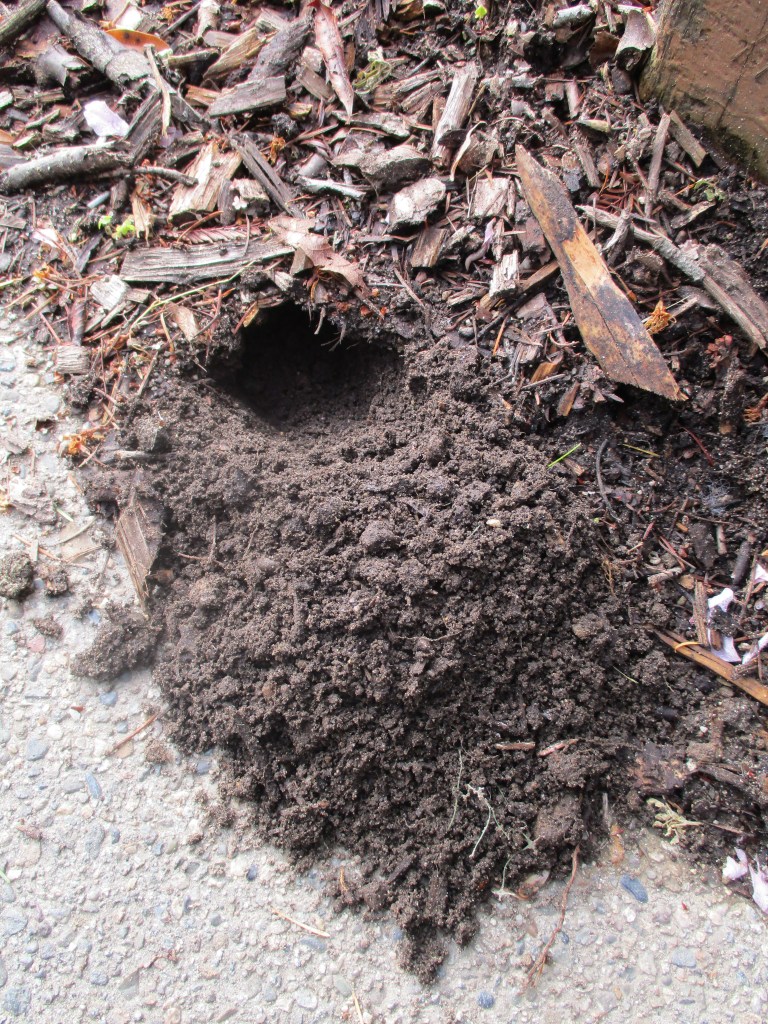
Gophers are more destructive than moles.

Wildlife belongs in the wild. Many of us appreciate it there, and get pictures of it to share with others as if it is rare and unusual. Deer, raccoons, skunks, squirrels, gophers and so many other residents of the wild are not so appealing in home gardens. They all need to eat. None are tactful about it. Some eat foliage. Some eat fruits. Moles eat larval insects.

That seems like it would be beneficial to the garden. In some situations, it is. Not only do moles inhibit the proliferation of grubs that damage roots, but they also aerate dense soil. The problem is that they heave soil as they excavate just below the surface. This activity damages lawns and shallow ground cover. Uninhibited grubs might cause less damage. 

Gophers often take the blame for damage that moles cause. However, gophers are much more destructive. They excavate more substantially, and generate larger mounds. While moles consume mostly detrimental grubs, gophers devour roots and any other plant part within the soil. Gophers do not hesitate to kill the most important plants in the landscape. 

Like gophers and other rodents, moles can not take much time off for hibernation through winter. The weather is just too mild. Although they are less active during cool weather, or while there is less to hunt, they never stop excavating. They merely become more active now because, as the weather warms, they can plan for a family, and find plenty of grubs.

Mole excavation generates distinctive small ‘berms’ of displaced soil within lawns. Such berms extend randomly in no particular direction, but are impressively consistent in form. Mounds of expelled soil are small and sporadic, or may not be evident. Moles often push their way below the surface of firmly rooted turf, without expelling any soil to the surface.

Unfortunately, moles can be about as difficult to dissuade as gophers. The most practical means of repellent is to eliminate the grubs that they crave, which can be difficult without insecticide. Blood meal and bone meal are fertilizers that can supposedly repel moles by their objectionable aroma, but require frequent application. Traps also require diligence, as well as precision.

Palms Need Proper Planning Too

Every species of palm has a distinct personality. All have attributes; but many also have the potential for considerable problems.

California has no more native palms than Oklahoma has with the diminutive dwarf palmetto. The stately California fan palm, which is also known as the desert fan palm, inhabits warm desert regions in southern California. It is what put the ‘Palm’ in ‘Palm Springs’. However, because it likes heat and minimal humidity, it is not so happy away from deserts. The very tall and lean Mexican fan palm is closely related to the comparably stout California fan palm, but is so happy in local climates that it naturalizes and can be invasive.

The queen palm has a leaner trunk, and a broader and more billowy canopy. It rarely self sows, but is so overly popular that it very often gets planted in bad situation where it does not have room to grow. Unlike fan palms that have rounded palmate leaves that radiate outward from the ends of bare petioles (leaf stalks), the queen palm is a ‘feather’ palm, with pinnately compound leaves comprised of narrow leaflets arranged along stiff midribs.

The massive Canary Island date palm is another feather palm, with a broad canopy and bulky trunk. Like Mexican fan palm, it often self sows, so gets into some weird situations. The foliage is so thick that is commonly becomes infested with rats and pigeons. Female trees produce messy fruit that keeps rats and pigeons well fed.

Whether they get planted intentionally or simply appear in the landscape, the main problem with all these and other large palms, is the expense of maintenance, since they can only be maintained by professional arborists who know how to climb such large branchless trees. Without regular grooming, fan palms that are so often allowed to retain long beards of old leaves become fire hazards, and have the potential to drop dangerously heavy sections of their beards without warning. Removal of old deteriorating leaves from the huge canopies of Canary Island date palms is quite an chore!

There are few small palms, like windmill palm and Mediterranean fan palm, that are more proportionate to compact gardens. Windmill palm has a strikingly shaggy trunk and a compact canopy that is easy to groom before it grows beyond reach. Mediterranean fan palm has multiple trunks that grow so slowly that it takes many decades for them to grow beyond reach. Nasty sharp thorns on their petioles make pruning difficult but not impossible.

Selection of a palm that is appropriate to a particular situation is just as important to limiting serious long term problems as the selection of any other tree is.

Exotic Weeds Are The Worst

English daisy gets prolific in lawns.

Exotic species are not native. It is that simple. There is nothing fancy about it. They came from elsewhere to live here. They are not necessarily rare, unusual or innately desirable. Most plant species within most refined landscapes and home gardens are exotic. Native species that inhabit unrefined areas, although trendy, remain unpopular for landscaping.

Not only are exotic plant species not necessary rare or desirable, many are too common or undesirable. With few exceptions, the most aggressively invasive of weeds are exotic. For a variety of reasons, they proliferate faster than native species. Some are aggressive because they are endemic to competitive ecosystems. Most lack natural pathogens here. 

A weed is merely any undesirable plant. Some might be desirable in some situations but not others. English ivy, for example, which is a practical ground cover within landscapes, is also an aggressively invasive weed within coastal forests. Most weeds are annuals or biennials, but others are perennials, shrubbery, vines, aquatic plants or substantial trees. 

An unfortunate reality about exotic weeds is that they are not here by mistake. Generally, their importation was justifiable at the time. Most were ornamental plants for gardens and landscapes. Some came as fruits, vegetables, herbs, cover crops or forage for livestock. Some came as timber. Species that escaped cultivation and naturalized became weeds.

Such weeds compete for the same resources that desirable plants utilize, and are mostly visually unappealing. Some enhance the combustibility of landscapes and forests. A few weeds produce seed structures that are hazardous to pets and wildlife. Even if problems are not directly obvious, weeds disperse seed to share their innate problems elsewhere.

This is typically the best time of year to pull or grub out weeds, although more weeds will grow later. Annual weeds are mature enough to get a good grip on. Soil should be damp enough from winter rain for roots to pull out relatively easily. Weeding will likely require a bit more effort this year because of the extended dry and warm weather since December. 

UTILITY CABLES NEED SPACE

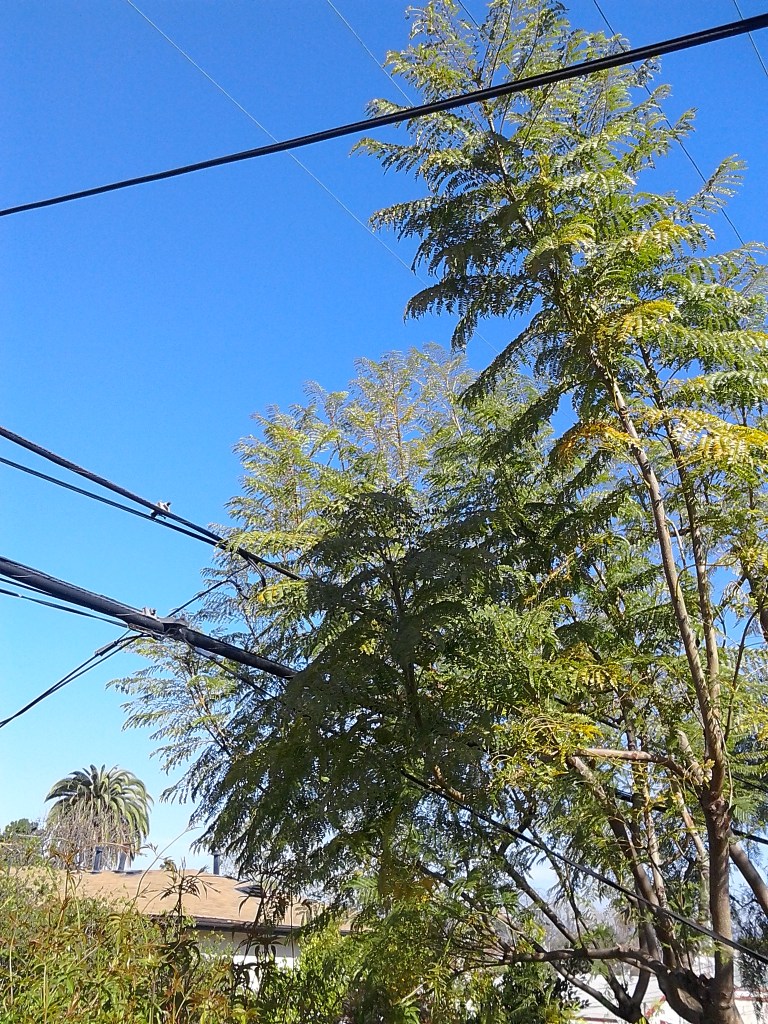
With all the cables coming and going, this unfortunate tree does not have much room to grow without causing trouble.

Since I did not make the drive up or down the coast very often, the rare silvery-gray Bismarck palm that I could see slowly climbing into the skyline near the edge of Highway 101 through Santa Barbara seemed to be slightly taller every time I saw it. It grew slowly, but enough to notice since I only saw it less than annually. Then, when I drove by about a month ago, it was gone.

This exemplary specimen had been quite healthy and happy (even though Bismarck palms are not supposed to be happy on the coast). There was only one problem. It was under high voltage utility cables. As it grew, it got too close to the cables, so needed to be removed in order to maintain the minimal clearance required for high voltage.

Unlike other trees, palms have only single terminal buds that grow upward. They can not develop branches to grow around cables, so only die if the single bud needs to be pruned away. Complete removal is therefore the only option when palms begin to grow into high voltage cables.

Sadly, palms often get planted under utility cables. Many Mexican fan palms grow under cables because birds that eat their fruit drop the seed there. Queen palms are popularly planted around the perimeters of back yards, and along the back fence lines that are very often directly below and parallel to high voltage cables.

Trees that are not palms can get disfigured by pruning for clearance around high voltage cables, but generally survive. Trees with central leaders (single trunks) and strict form, such as spruces and redwoods, can get be so disfigured that removal may be more practical than pruning. Trees with more irregular form, like sycamores and elms, are somewhat easier to salvage. Unfortunately, crews hired to maintain clearance are unable to prioritize the health and structure of trees that get too close to high voltage cables.

Lower cables for telephone, television and house-drops (lower voltage cables that extend from utility poles to homes and other buildings) do not often justify pruning for clearance like upper high voltage cables do. However, these lower priority cables can still be damaged if too many limbs sag onto them or become abrasive as they blow in the wind. Really, it is best to avoid problems with utility cables by selecting and planting trees that are not likely to become too obtrusive. Palms, large trees and trees that are likely to be severely disfigured by pruning to maintain clearance should be kept at safe distances.

Frosted Foliage Is Ugly Foliage

Frosted foliage can be removed now.

Weather is variable everywhere. Climates and seasons are imprecisely regulating. They merely define predictable ranges of the elements of weather, such as temperature, wind, humidity, precipitation and cloudiness. As unusual as weather sometimes seems to be, it generally conforms. Winter weather is mild here, but sometimes leave vegetation frosted. 

Frost was sneaky this winter, by occurring during nights between pleasantly warm days. All elements of the weather were within ranges that are normal for local climate, but their chronology was deceptive. Frost seemed unlikely after such springlike daytime weather. Some foliage was frosted only because protection from frost seemed to be unnecessary.

Frost is now unlikely for most local climates so late in the season. Only climates that are at significant elevation or significantly inland might still experience frost. Coastal and low elevation climates are generally past their last frost dates. Some climates experience no frost at all. Except for within the coolest situations, no more vegetation should be frosted.

Therefore, it is generally safe to prune and groom away unsightly frosted vegetation. It is no longer helpful to insulate undamaged vegetation below. Any new growth that pruning of this nature may stimulate or expose should be safe from frost. Within climates that lack frost, vegetation that gets shabby from chill might also appreciate pruning and grooming.

Pruning and grooming of frosted vegetation can be challenging. Many frosted plants are already actively growing in response to warmer weather. Their new growth mingles with their damaged growth that must be removed. Efficient separation of the two requires a bit of effort and persistence. Fresh and tender new growth is innately vulnerable to damage. 

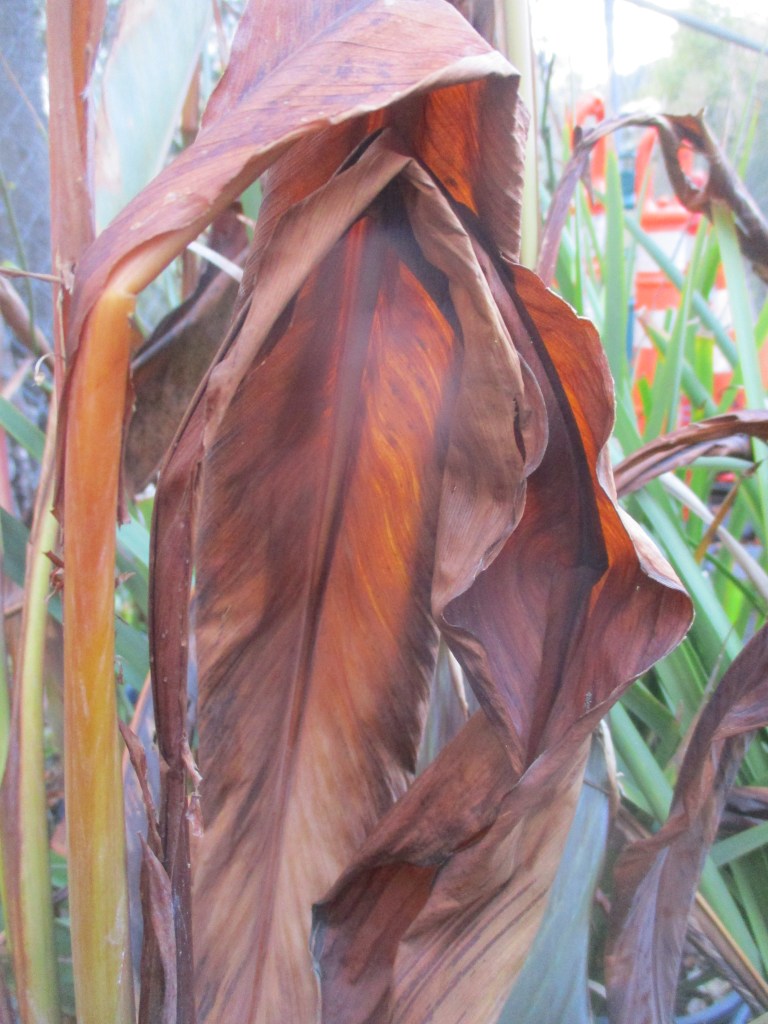
For example, small new shoots of angel’s trumpet break away very easily if bulky frosted stems fall onto or through them in the process of removal. New shoots of several types of canna emerge from the soil among old shoots while it is too early to cut the old shoots to the ground. Grooming is easier where it can happen earlier, or for cannas that grow later. 

FLORAL FRAGRANCE IN THE GARDEN

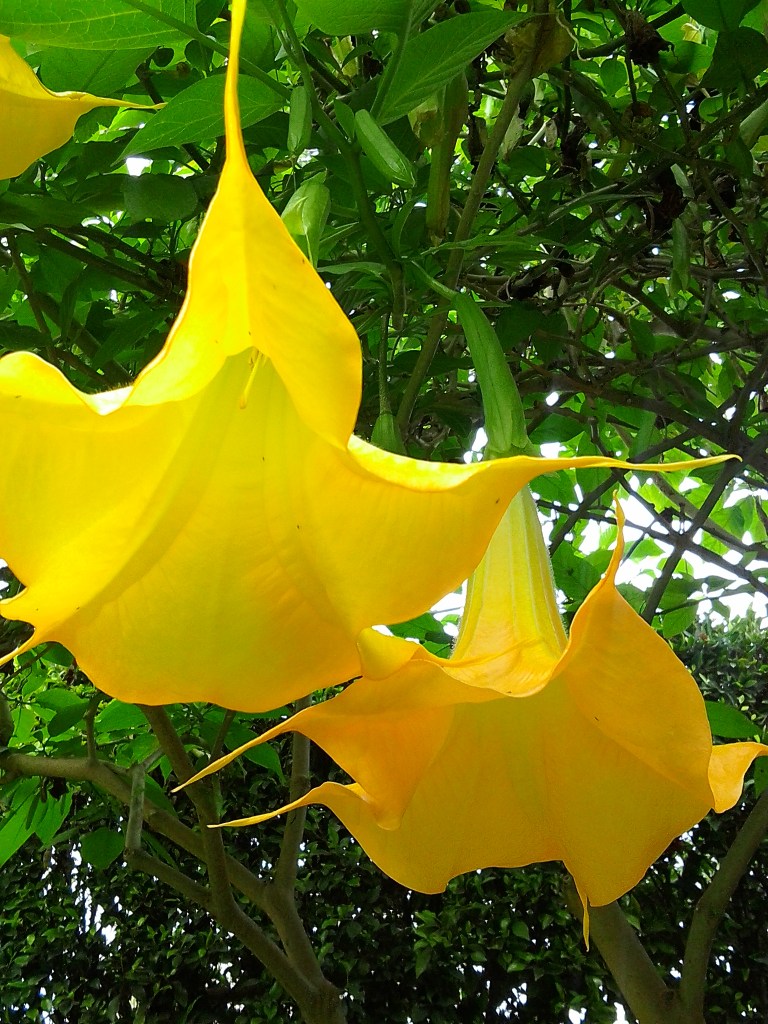
The most fragrant flowers are generally smaller and less colorful than less fragrant flowers. This angel’s trumpet is an exception.

Attracting pollinators is serious business for flowers that do not rely exclusively on wind for dispersion of their pollen. Many flowers attract pollinators with flashy color. Some reward their pollinators with sweet nectar. Many prefer to use fragrance. Most flowers use a combination of two or more of these tactics.

Fragrances are designed by the flowers that use them to appeal to the discriminating taste of specific pollinators. Most are sweet. Some are more perfumed. A few are even quite objectionable to people because they are tailored to flies. Fortunately, flowers with foul fragrances are rare in gardening.

The most fragrant flowers are often less abundant than flowers that rely on wind for dispersion of their pollen, or less colorful than flowers that rely on visual appeal to attract pollinators. Yet, the fragrant flowers of wisteria vines and lilacs are both profuse and colorful. The surprisingly big and fragrant flowers of ‘Charles Grimaldi’ angel’s trumpet are bright yellow.

Mock orange (Philadelphus spp.) conforms to the stereotype of fragrant flowers a little bit better, with somewhat small white flowers that are incredibly fragrant. The small pale pink flowers of daphne are even less impressive and nearly hidden among their foliage, even though their fragrance can not be ignored. The sweetly fragrant flowers of Japanese honeysuckle vines are abundant but not too colorful. Star jasmine vines likewise bloom fragrantly and abundantly, and their bright white flowers contrast better against their glossy green foliage.

Night blooming jasmine is not appealing enough for prominent placement, and is not even fragrant during the day, but will be unbelievably fragrant on warm summer nights. Just as fragrances appeal to specific pollinators, nocturnally fragrant flowers specifically appeal to insects or bats who are active at night.

Freesia, hyacinth, lily,narcissus and some types of iris are very fragrant as well as colorful now that they are blooming for early spring. It is unfortunate that their flowers do not last long, and that there are not any comparable flowers later in the year. The same annual sweet peas and stock that bloom about now can be planted again later for autumn bloom. Sweet peas are easiest to grow from seed. Stock is easiest to grow from cell packs, and since it is actually perennial, sheltered plants can survives through warm summer weather to bloom again in autumn. Annual sweet alyssum can bloom anytime while the weather is warm.

Rotation Improves Vegetable Garden Production

Summer squash are consumptive vegetables.

Vegetable plants are mostly unnaturally productive. Extensive breeding compels them to yield fruits and vegetative parts that are bigger, better and more abundant that what their ancestors produced. Increased production increases their reliance on resources. Without crop rotation, some sorts of vegetable plants noticeably deplete some of what they need. 

Rotation, which is the same as crop rotation or garden rotation, is a technique of growing vegetables where different types of vegetables grew previously. In other words, one type of vegetable does not grow in any one place for too long. Some vegetables may produce well in some types of soil for a few years. More consumptive types prefer annual rotation. 

This technique disrupts the depletion of particular nutrients that particular types of plants crave. It also allows for replenishment of depleted nutrients in the absences of plants that cause such depletion. Furthermore, some soil borne pathogens find this active cycling to be disruptive. Eventually, plants that cycled out can cycle back into a particular situation.

Tomato plants are particularly consumptive, so appreciate rotation in many types of soils. Eggplant and pepper are related to tomato, so crave many of the same resources, even if they are less consumptive. Therefore, they should not cycle directly into soil relinquished by tomatoes. Unrelated vegetables, such as squash, corn or bean, are more appropriate. 

Warm season vegetables that are now returning to the garden might appreciate rotation. A bit of research to determine appropriate placement for them may significantly enhance production. It helps to know which vegetables are related, such as mustard, collard, kale, radish and turnip (of Cruciferae Family), or squash and melon (of Cucubitaceae Family).

Because corn is so high, it should grow to the north of a vegetable garden. Unfortunately, rotation may dictate that it grows to the east for a while, or only in portions of the northern edge that it avoided for a while. Pole beans that like to climb wire fences may sometimes need reassignment to different portions of their fence. Peas should follow their example since they are related.

THE LOWDOWN ON GROUND COVER

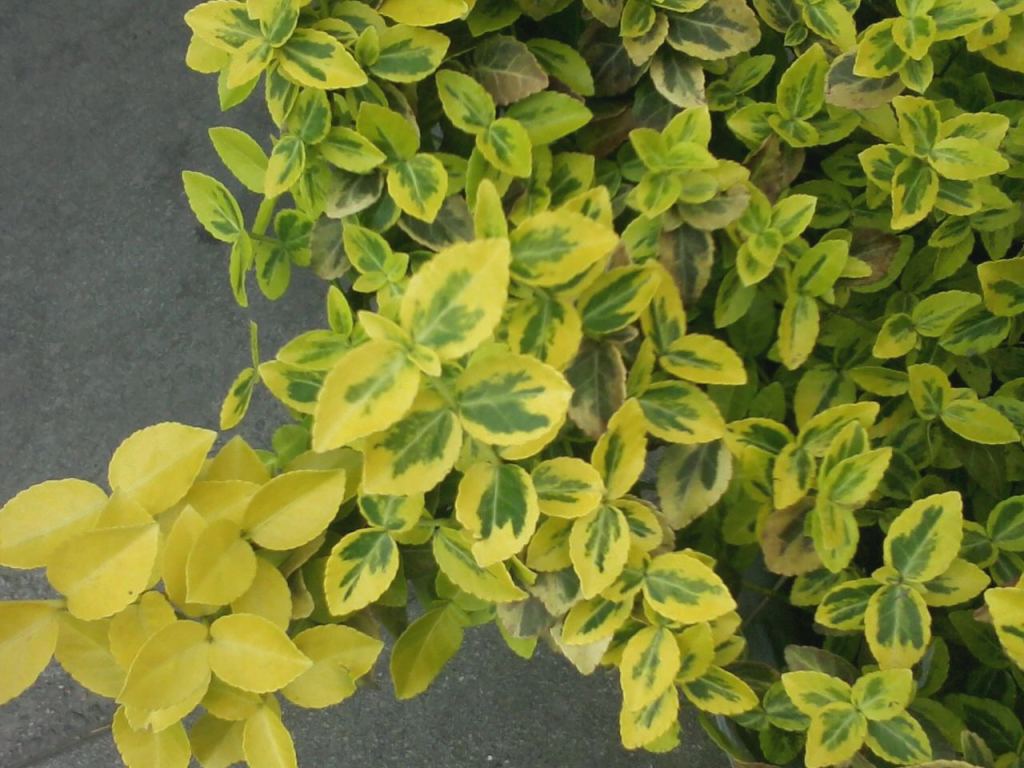
Most euonymus are upright shrubbery. This one though, stays low enough to be useful as a shallow shrubby ground cover.

Of all the functions that the many and various plants in the garden serve, ground covers have the lowliest job description. Well, maybe it is just the lowest job; covering the ground. It is an important job though. Ground covers fill in the space between other desirable plants to obscure otherwise bare soil. They also control weeds. Some ground covers help to limit erosion. Others help to insulate the soil for plants with sensitive roots.

There certainly are all sorts of ground cover. Lawns are the most familiar. Many other ground covers are perennials like gazanias, African daisies and iceplants. Some, like ivies, honeysuckles and star jasmine, are vines. Others are low growing shrubs like certain coprosmas, cotoneasters and junipers. Some lay about as flat as carpeting. Some get a few feet deep.

Many perennial ground covers as well as some of the vines and low growing shrubbery provide colorful flowers. Japanese honeysuckle and star jasmine are not as colorful, but provide delightful fragrance. Some of the cotoneasters have colorful berries in winter. Although not seen, many ground covers are appreciated more for their network or roots that help to stabilize soil that might otherwise erode. One feature that most ground cover plants have in common though, is their foliage that is dense enough to keep weeds out, as well as to obscure the soil below.

Like all other plants in the landscape, ground cover plants need maintenance. Lawns probably need more maintenance than any other ground cover, since they need to be mowed, weeded, fertilized and watered quite regularly. Vine ground covers need to be pruned so that they do not get into trees and shrubbery. Some ground covers look best if mowed annually (typically at the end of winter) or even more frequently. Some of the deeper ground cover shrubs should be pruned down to stay low. Almost all ground covers need to be edged for confinement.

Ground cover plants must be selected for their appropriateness to particular applications. For example, most low growing shrubbery needs space, so is best for larger areas. Smaller iceplants that may not be aggressive enough for big areas are great for tight spots, or for mixing with other perennials. Tough Algerian ivy that is so useful for freeway embankments may be too aggressive for home gardens. As with all plants in the garden, careful selection helps to get the best ground cover plants for each particular situation where ground covers are needed.