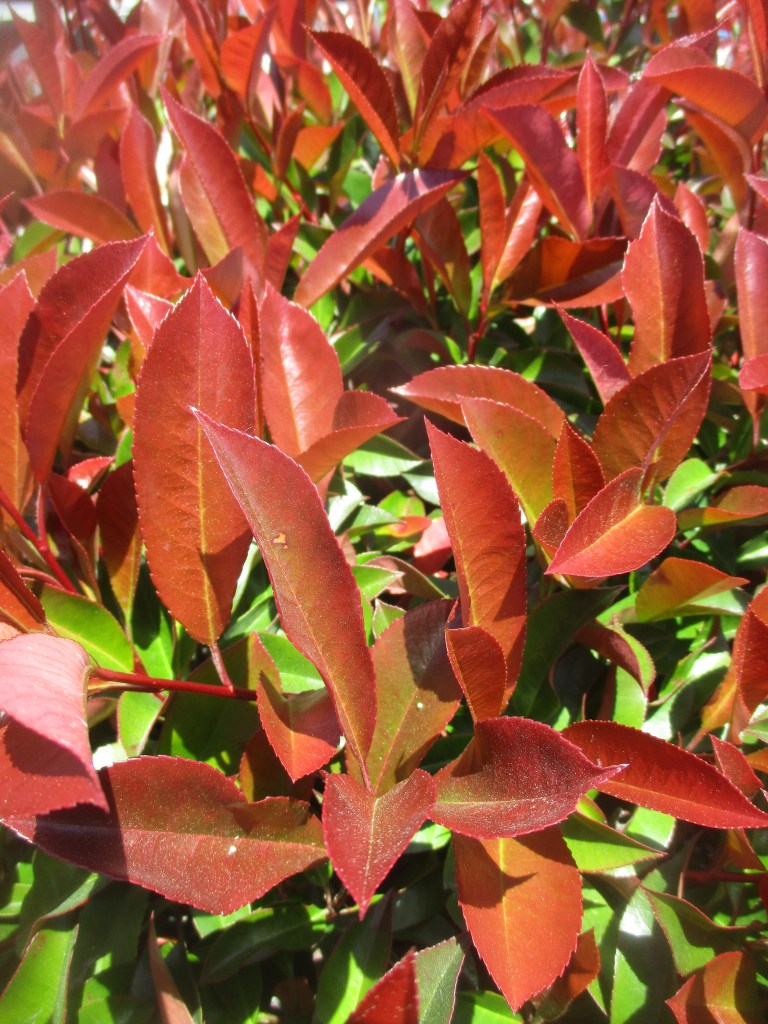
Fall Color To Fall For

Fall color develops with seasonal changes.

Autumn is also fall here. Actually, ‘fall’ is the more popular name. It had been the popular name in England during the Sixteenth Century. The (generally) French name of ‘autumn’ became more common there during the Seventeenth Century. Yet, both names remained in use in the American Colonies. That is why autumn foliar color is more simply fall color. 

The natural fall color in New England, the Appalachian Mountains, the Rocky Mountains and the Great North Woods is famously exquisite. So many of the native deciduous trees develop remarkable fall color in response to local weather conditions. These same trees might not get sufficient chill to develop comparable fall color in milder climates of Florida. 

In most regions of California, natural fall color is limited by the ability of native species to develop such color. Bigleaf maple and the various poplars turn bright yellow with a slight chill, but are not abundant. Even when chilled, the foliage of most other native deciduous trees simply shrivels and falls without much color. Most of the native trees are evergreen. 

Therefore, most of the best local fall color is provided by exotic (nonnative) tree species. Such trees not only develop remarkable fall color, but do so in response to minimal chill. Sweetgum, flowering pear, Chinese pistache and ginkgo are four trees that most reliably develop brilliant fall color where winter weather is mild. None are native. All are popular.

Ginkgo turns brilliant yellow. The other three display various colors that range from bright yellow, to fiery orange, to rich red and burgundy. Their colorful foliage lingers longer than that of other deciduous trees. Sweetgum and flowering pear might retain fall color until it succumbs to rain in winter. Of course, these are not the only options for reliable fall color. 

No tree is perfect. Although very colorful in autumn, sweetgum is notoriously structurally deficient, and produces obnoxiously spiked fruiting structures. Flowering pear is innately susceptible to fire blight. All deciduous trees drop leaves, which need raking. Trees must conform to their situational limitations, as well as their particular landscape applications.

Plants Know What Time It Is

Deciduous trees will eventually begin to defoliate.

Even without significant cool weather, the garden knows that it is now autumn. Most of the late summer blooming flowers are finishing their last bloom phases. Leaves of some of the deciduous trees, shrubs and vines are changing color, and some are already falling. Perennials that are dormant through winter are starting to deteriorate.

One of the several difficulties of living in a climate with so few difficulties is that autumn and winter weather is so very mild. Just as so many warm season annuals and vegetables want to continue to perform when it is time for them to relinquish their space to cool season annuals and vegetables, many other plants that should go dormant in autumn really want to stay awake as long as they can. Some semi-deciduous perennials even start to regenerate new growth before they shed their old growth.

Where winters are cooler, such plants generally shed the growth that developed in the previous year; in other words, they die back. They then stay dormant through the coolest part of winter, to break dormancy and regenerate late in winter or early in spring.

Beard tongue (Penstemon) can really look bad as the last flower spikes deteriorate, and the foliage gets spotty and grungy. It will be tempting to cut them back early. If possible, it is better to prune off only the deteriorating flower spikes, but wait until later in winter for major pruning. Premature pruning stimulates premature development of new growth that does not mature as well or as fast through winter as it would in spring. Such growth can be discolored, sparse and less vigorous until it gets obscured by later growth.

Marguerite daisy, ginger, canna, some salvias, most begonias, the various pelargoniums and all sorts of other perennials will likewise seem to be rather tired this time of year and through winter, but do not necessarily need to be pruned back just yet. Simply plucking or shearing off deteriorating flowers should be enough for now. Ginger and canna should not need to be pruned back until the foliage deteriorates enough to be almost unsightly. Begonias and pelargoniums, particularly common zonal geraniums, will be better insulated from potential frost damage through winter, and may not produce so much sensitive new growth if not pruned early.

Early Bulbs Start Even Earlier

Daffodils for next spring start now.

Crocus, daffodil and narcissus are among the earliest of the popular early bulbs to bloom at the end of winter. Hyacinth, tulip, freesia, anemone, ranunculus and some types of iris bloom shortly afterward. That process should begin in February or so, about five months from now. Early bulbs are seasonable now though. This is when they go into the garden.

Early bulbs, or spring bulbs, take commitment. While dormant, they are not much to look at. There is less to look at after their internment into shallow graves, where they disperse their roots secretly through winter. They will not make an appearance until they bloom in spring. Fortunately, their performance is more than adequate compensation for the effort.

Early bulbs go into the garden now because they take time to get ready for spring bloom. While dispersing roots, they also begin to develop foliage and floral stems. Such growth remains safe and invisible below the surface of the soil until the weather is warm enough for it to emerge. Until then, chilly and rainy weather helps bulbs adhere to their schedule. 

Whether they are true ‘bulbs’, or they are corms, rhizomes, tubers or tuberous roots, early bulbs are specialized storage structures. They contain what the particular plants need to grow to maturity and bloom within their preferred season. They should resume dormancy afterward, to repeat the process as perennials. However, few modern cultivars will do so. 

Realistically, extensive breeding for the development of the more extravagant of modern early bulbs has compromised their vigor. Consequently, some are not reliably perennial. Some simpler crocus, daffodils and narcissus can naturalize as perennial in comfortable situations. Otherwise, more of the later bulbs, like canna, cala and dahlia, are perennial.

Whether they naturalize or not, most early bulbs bloom just once annually. Planting them in phases prolongs bloom. Ideally, a subsequent phase begins to bloom as its preceding phase finishes. The length of bloom determines the frequency of phases. For example, if tulips bloom for a week, phases can be weekly. Winter annuals cover nicely when done.

Not All Plants Like Fads.

Ornate pots and planters can be as decorative as the plants within them, and provide extra accommodation for more plants.

Like so many fads too often are, container gardening is overrated, and is actually contrary to the currently most faddish of fads; sustainability. Plants in containers need more regular watering than those that can disperse their roots more extensively into the ground. Those that are so indulged also want fertilizer to be applied more regularly, but are more likely to be damaged if fertilized too generously. Because confinement is stressful, plants in containers are innately more susceptible to disease and pests. Some plants need more pruning for confinement.

Then there are the problems with the containers. If exposed to sunlight, thin plastic containers get warm enough to cook roots within. Pots that do not drain adequately or that sit in their own drainage basins can stay saturated enough to kill roots. Water in drainage basins allows mosquitoes to proliferate. Seepage from large pots can rot decks and stain pavement. Self watering containers work nicely for houseplants (if used properly!), but lack drainage, so can not be used out where they are exposed to rain.

The advantages to container gardening are actually quite limited. Containers are obviously needed for houseplants, and where exposed soil is not available, like on balconies. They are also convenient for plants that want better soil than they can get in the garden, especially if the rest of the garden is responsibly landscaped with sustainably undemanding plants that do not require soil amendment or regular watering. Frost sensitive plants can be moved easily to sheltered locations if contained. Flashy plants like orchids and tuberous begonias that get displayed prominently while blooming can be concealed while not so impressive.

Of course there are many pendulous plants like Boston fern, spider plant, string or pearls and burro’s tail that really are at their best in hanging pots. It is also hard to deny that there are all sorts of artsy containers, like colorfully glazed pots and sculptural concrete urns, which are appealing enough to justify growing plants in them, even if just to show off the fun containers. Bonsai requires containers, but that is another big topic!

Winter Annuals Are Moving In

Chrysanthemums bloom between summer and winter.

It is inevitable. It begins at about the same time that cool season vegetable plants start to replace warm season vegetable plants. Cool season vegetables are now in season, and will grow during autumn and winter. They replace warm season vegetables of spring and summer. Winter annuals, or cool season annuals, now do the same for summer annuals. 

Some summer annuals, or warm season annuals, are already shabby by the end of their season. Their replacement is not so unpleasant. Those that continue to perform well into the end of summer or autumn are a bit more difficult to evict. No one likes to pull them up while they still bloom colorfully. Besides, new winter annuals may take a while to bloom.

Winter annuals, as well as summer annuals, require replacement because they live only for a single year. Some complete their respective life cycle within only a few months of a year. That is what their designation as ‘annual’ means. Several annuals have potential to survive as perennials, but are too unappealing to salvage through their dormant season.

Marigold and chrysanthemum are popular for autumn, but do not perform as well through winter. Cyclamen, which prefers a late start, is pleased to replace them by then. Although chrysanthemum and cyclamen are both perennials, few get the opportunity to perform as such. It is easier to simply remove and replace them with the next best seasonal annual.

Pansy, viola, Iceland poppy, sweet William, stock and various primrose are all in season now and through winter. Calendula and snapdragon are seasonable for autumn, and will be again for early spring. They survive and can even bloom through the middle of winter locally. Alyssum is technically a summer annual, but might bloom all through winter also. 

Winter annuals are not as easy to grow from seed as summer annuals are. Because they grow during cooler weather, they grow slower. They therefore need to start growing early to be ready for planting now. It is perhaps more practical to plant most types as seedlings from cell packs. Cyclamen and ornamental cabbage commonly grow from four inch pots. These are innately more expensive than other winter annuals.

Cool Season Annuals Are Cool

Warm season annuals are now passé. Cool season annuls, such as these violas, are in.

Now that it is time for cool season annuals, it is difficult to remove warm season annuals if they are still blooming and healthy. that is probably why so many of us prefer mixed plantings, where cool season annuals can be added as needed to replace warm season annuals as they deteriorate. Some warm season annuals that are actually perennials, like wax begonia and busy Lizzie (impatiens), can be cut back and overplanted with cool season annuals, so that some might regenerate next spring as the cool season annuals finish. Petunias may be looking overgrown and tired, but are at least easier to remove without guilt.

Pansies and smaller but closely related violas are probably the two most popular of cool season annuals. They work something like petunias, but for autumn and winter. They are commonly grown in uniform beds, but work just as well in mixed plantings. There are not many colors that can not be found in pansies, although only a few of the more popular varieties can be found at any particular nursery. Some are ‘solid’ colors. The most familiar varieties have those funny ‘faces’ that pansies are known for.

The various primroses require a bit more effort because deteriorating flowers need to be removed. They can also be a problem for the few who are allergic to them (like poison oak). Like the warm season annuals that can survive as perennials through winter, some primroses, particularly English primrose, can survive through summer as perennials. English primrose displays bright cartoon shades of almost any color. Fairy primrose are more commonly pastel shades.

Stock has an intense and distinctively rich fragrance. Taller types are excellent cut flowers, but are not so practical for uniform beds. Even shorter types are probably best in mixed plantings, or in borders with lower flowers in front. The single or double flowers can be white, pink, purple and almost red.

Ornamental cabbage and kale are grown for bold rosettes of colorful pink, white or pink and white foliage. The shades of pink range from soft light pink to rich purplish pink and almost red bright pink. Cabbage provides more color. Kale has more variety of foliar texture. Ironically, both look rather weedy, and should be removed as they begin to bloom in spring.

Chrysanthemum are strikingly colorful cool season flowers, but rarely bloom as uniformly as they do when first planted. Because they bloom so profusely, they need to be groomed frequently. If they get what they want, they can perform for several years, blooming all sorts of shades of yellow, orange, red, pink, purple and white. Chrysanthemum also displays a broad range of flower structures and sizes, from minute to jumbo.

Sweet William, Iceland poppy, calendula and alyssum are also in season. Yellow or orange calendula, with single or double flowers, is best through autumn, but may mildew by winter. Alyssum is white or subdued shades of pink or purple, and is actually good throughout the year, and can self sow indefinitely.

Cooler Weather Is Slower Weather

Cooling weather can damage new growth.

Weather is not quite as warm as it had been. Warm days do not last quite as long as they did earlier in summer. Afterward, the longer nights get a bit cooler. Technically, autumn is only a few days from now. Although seasonal changes are mild, and a bit later here than in other regions, they eventually catch up. Plant activity has already been getting slower.

Seasonal changes keep gardening interesting. Plants that are now growing slower than earlier may need less attention. However, some need more attention, precisely because they are growing slower. Some of the work that was so important through summer should conclude until spring. Some of the work that will be important through winter begins now. 

Although evergreen, photinia and pittosporum hedges do not do much between now and next spring. If shorn too late, new growth develops slowly, and may become shabby as a result of cooler and rainier weather later. Late pruning of citrus stimulates vigorous newer growth that may be sensitive to frost through winter. Lemons are particularly susceptible.

Conversely, dormant pruning can begin as deciduous foliage starts to fall. Although most roses and fruit trees supposedly prefer to wait until winter, they may soon be too dormant to notice if pruning is a bit premature. This is partly why autumn is the season of planting. Mostly dormant plants are more resilient to discomforts than they would be while awake.

New Zealand flax, lily of the Nile, African iris and other rugged perennials are conducive to division now. They will soon be about as dormant as they get, but will want to disperse roots for winter anyway. They resume growth before winter ends, so want to be ready for it. Once rainier and cooler weather resumes, they will need no watering until next spring. 

Fertilizer should be passe soon also. Most plants consume less nutrients through cooler weather. Besides, many nutrients are less soluble, and therefore less available to plants while the weather is cool. Turf, cool season vegetables, cool season annuals, and some small palms are a few exceptions that could benefit from minor applications of fertilizers.

Gardening Has Something In Common With Automobiles.

Buick is the genus. Electra is the species. Buick Electra is universally the most elegant luxury sedan of all time!

Horticulturists, biologists, and many other professionals who may interact with colleagues who speak other languages or even slightly different regional dialects use Latin to identify, among other things, biological organisms. Latin names may be cumbersome to pronounce and daunting to spell, but are universal to those of us who use them. This is important because common names are so regionally variable.

For example, some of the European maples that we know as maples here are known as sycamores in England, but are known everywhere by their Latin name of Acer. Similarly, North American sycamores that are known as maples or plane trees in various regions are all likewise known everywhere by their Latin name of Platanus. The universality of Latin names therefore facilitates accurate identification.

Latin names are very helpful when researching plants. A tree known simply as a ‘cedar’ might be a calocedrus, arborvitae, juniper, cypress, chamaecyparis or a true cedar, just to name a few. Knowing that the particular tree is more specifically a ‘red cedar’ perhaps limits the possibilities to arborvitae or juniper. Identifying the tree specifically as a Juniperus virginiana will help us find the most accurate information about it, even though it is not really a cedar at all, but a juniper. Juniperus is the general ‘genus’ name of all junipers. Virginiana is the specific ‘species’ name of the particular juniper that is known locally as the Eastern red cedar. (‘Genera’ and ‘specie’ are plural for ‘genus’ and ‘species’.)

Latin names work like the names of cars. Buick, Chrysler and Mercury are all like genus names. Electra, Imperial and Grand Marquis are all like species names of particular Buicks, Chryslers and Mercurys. ‘Limited’, ‘Custom’ and ‘Brougham’ are like variety names, like ‘Variegata’, ‘Compacta’, and ‘Schwedleri’.

As universal as Latin names should be, a few sometimes get changed. This can be confusing, and causes some plants to become known more commonly by either their new or old name, as well as the other name as a ‘synonym’. For example, Dietes bicolor and Morea bicolor are the same plant; but not many know for certain which name is more correct. It is like when Datsun became Nissan, but was also known as Datsun for many years afterward.

Thorny Vegetation Is Naturally Repellent

Black locust is painful to handle.

Roses might be more fun to grow and prune without their thorns. Blackberries are easier to pick from thornless canes. Thorny vegetation is simply unpleasant to work with. Some very desirable plants, such as roses and most blackberries, are innately thorny. The only alternative to contending with their thorny condition is to grow something totally different.

Thorns and similar structures are as diverse as foliage, with a few distinct classifications. True thorns are simply modified stems, like those of hawthorn. Spines are modified foliar structures or leaves, such as those of cacti. Prickles, such as those of rose, are modified epidermal structures. Spinose foliar margins, like those of holly, serve the same purpose. 

The purpose that thorny vegetation serves is defense. It intends to inhibit consumption of foliage, fruit or bloom. That is why some trees are thorny only while young and low to the ground, then almost thornless as they grow beyond the reach of grazing animals. Thorny trunks of honeylocust may protect seed pods from bears, so birds can disperse the seed. 

It is therefore no mystery that many of the thorniest plants are endemic to desert regions. The scarcity of edible vegetation in such regions increases the need for protection. Also, it is no mystery that most grazing animals are not too deterred by thorny vegetation to get enough to eat. Otherwise, roses and firethorn would be exempt from the ravages of deer.

Despite its intentions of deterrence, thorny vegetation inhabits home gardens for various reasons. Some produces desirable bloom or fruit, like roses and blackberries. Cacti and agaves develop remarkably striking forms. Such plants should be situated appropriately. Rose canes can be bothersome close to walkway. Agaves can be downright dangerous. 

Thorny shrubbery, such as firethorn, barberry, Natal plum and English holly, is a practical deterrent for unwanted traffic. Firethorn espaliered on the top of a fence is as effective as barbed wire, and is more appealing. Maintenance of thorny plants is more of a challenge than for thornless plants. Otherwise, thorny plants should be more popular than they are.

Ferns Are For Distinctive Foliage

Rich green ferns provide distinctive texture.

Ferns are an odd group. They lack the color or fragrance of flowers, or the branch structure of shrubbery, trees or vines. Very few turn color in autumn. They provide only green foliage. Yet, as simple as this seems, the generally evergreen foliage that ferns provide is some of the most distinctive foliage that can be found in the garden.

With few exceptions, ferns are richly deep green. Only a few are lighter green or almost yellowish. The leaves, which are known as ‘fronds’, can be soft and papery, or coarse and tough. The fronds of most ferns are pinnately divided into neatly arranged leaflets; and many ferns have leaflets that are intricately lobed. Some ferns have leaves with more palmate symmetry. A few ferns actually have undivided leaves.

(Pinnate symmetry involves a central midrib or midvein to each leaf, or a central rachis that supports lateral leaflets. Radial symmetry involves multiple midveins or rachi that radiate outward from the centers of individual leaves.)

The Australian tree fern is the largest of the common ferns. It develops a broad canopy of long fronds on top of a trunk that can launch it as high as a two story home. Both the fronds and trunk of the Tasmanian tree fern are shorter and stouter. Other tree ferns are rare. The trunks are not really stems, but are thick accumulations of roots dispersed through decomposed stem tissue.

The staghorn fern is an epiphyte that naturally clings (nonparasitically) to trunks and limbs of trees. The flared upper fronds collect foliar litter that falls from the trees above to sustain the roots within. In home gardens, it is popularly grown on wooden plaques or hung like hanging potted plants, but without a pot.

Some ferns can be grown as houseplants like the classic Boston fern, which cascades softly from a hanging pot. Maidenhair fern is popular for intricate foliage on wiry rachi (leaf stems). Squirrel foot fern has lacy foliage and interestingly fuzzy rhizomes that creep over the edge of a pot.

Since almost all ferns are understory plants that naturally live on or near a forest floor below a higher canopy of trees, they are generally quite tolerant of shade. In fact, most prefer at least some sort of partial shade. This is quite an advantage for spots in the garden that are too shady for other plants. Also, many ferns can disperse their roots into soil that is already occupied by more substantial plants, even if the more substantial plants happen to also be making the particular spot too shady for other plants. In other words, they play well with others.

However, many ferns are more demanding than other plants are in regard to soil quality and watering. They perform best with rich and well drained soil, and regular watering. Sickly ferns generally respond well to fertilizer; but too much fertilizer can burn foliage. Old leaves may need to be groomed out if they do not naturally get overwhelmed by new foliage.