Planting Bare Root Stock Properly

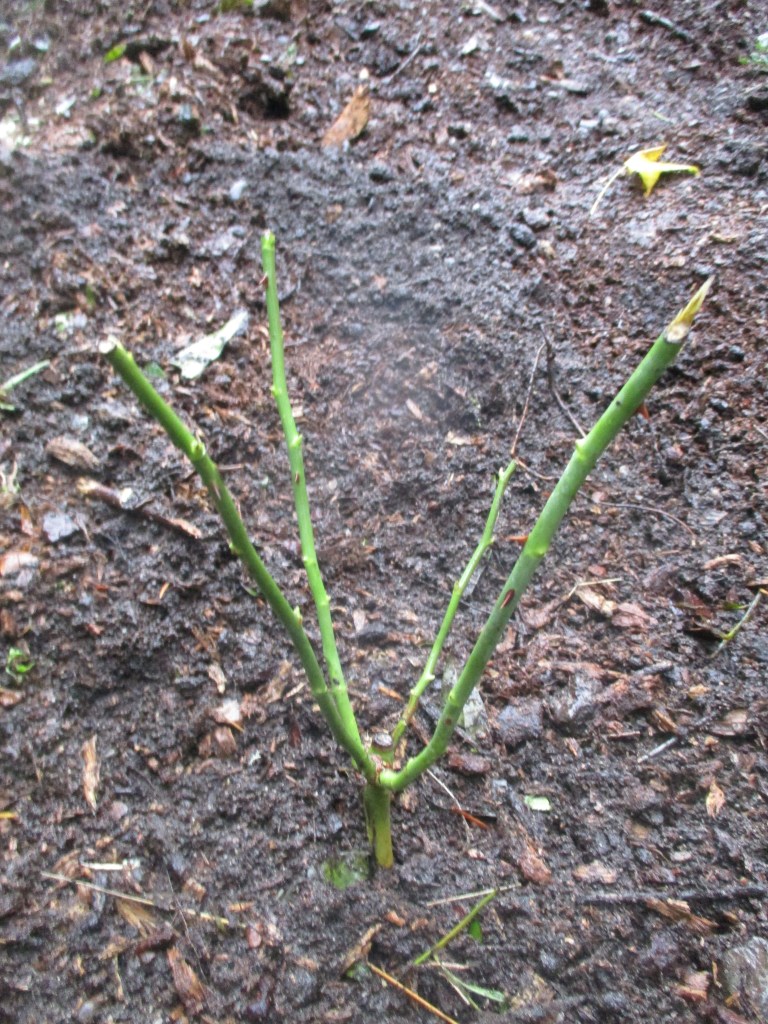
It looks like sticks in mud.

Bare root season began as the Christmas season ended. Literally, as the last Christmas trees relinquished their space in nurseries, bare root stock occupied it. Most of this stock grew in Oregon, where winter weather is cooler, so was ready for digging and relocation prior to arrival. Now that it is here, the season for planting bare root stock is quite limited.

Almost all bare root stock is deciduous. It defoliated through autumn, so the stems are as bare as the roots are. Most bare root stock is fruit and nut trees, such as almond, apricot, cherry, plum, peach, apple, pear, persimmon and fig. Grape, currant, gooseberry, wisteria and rose are ready for planting bare root too. All are dormant, so unaware of the process. 

They do not stay dormant for long though. They must be planted in their new homes prior to the end of winter, when warming spring weather stimulates new growth. They can not sustain such growth if their roots are unable to disperse into soil. This is why the season for relocating and planting bare root stock is so limited to winter. It relies on cool weather. 

Fortunately, planting bare root stock is surprisingly simple. Soil amendment that prompts root growth away from confined root systems of canned (potted) stock is not so important. Since new roots grow directly from formerly bare roots into surrounding soil, amendment is only helpful for soil of inferior quality. Fertilizer will not be helpful until growth resumes. 

A hole for planting bare root stock needs to be just big enough to contain the flared roots. It must be shallow enough to suspend any graft union above grade, without loose soil to settle below. Watering is only needed to soak and settle soil around roots, and will not be needed again until after the rainy season. Pruning removes crowded or damaged stems. 

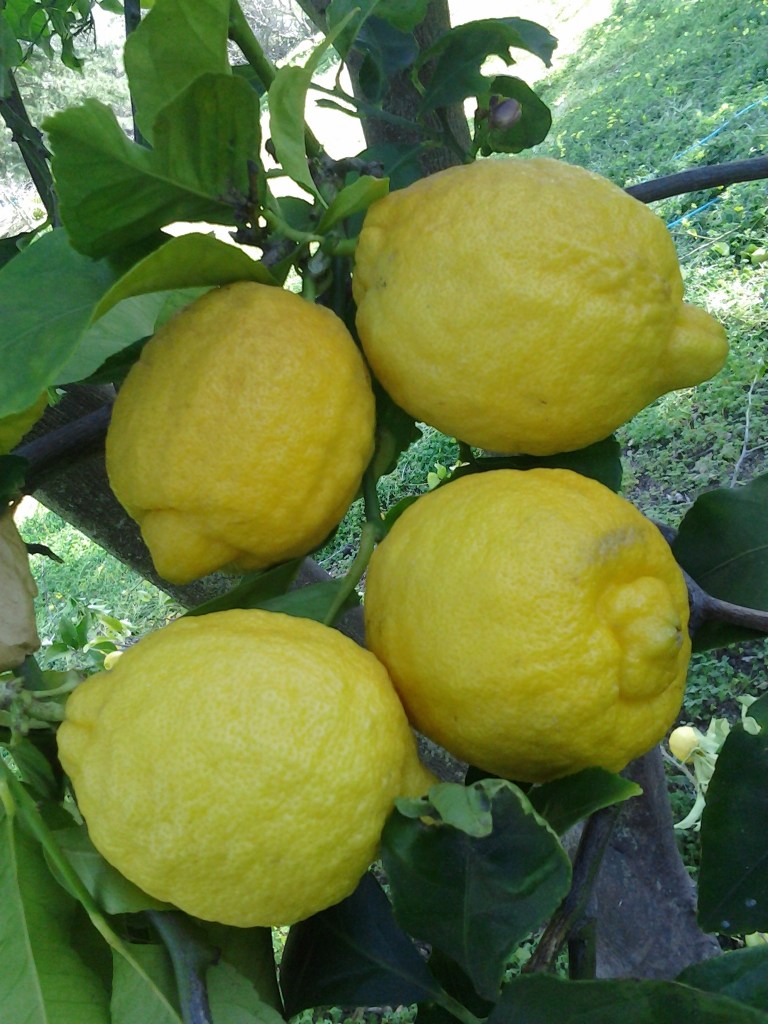
Of course, not all fruit trees are conducive to planting bare root. Evergreen plants are not as dormant during winter as deciduous plants are. Their roots are therefore less resilient to separation from the soil. Pitahaya, avocado and some citrus, which can be marginally vulnerable to frost in some climates, are more vulnerable after autumn or winter planting. 

Even bare trees have style.

This big perennial ‘sticks of fire’ produces a thicket of bright yellowish orange stems that changes shades through the seasons.

Everyone knows that flowers provide color in the garden, particularly through spring and summer. As blooms become less abundant in autumn, fall color of deciduous plants and trees becomes more prominent. After most plants are finished blooming, and most of the fall color is gone, the garden may seem relatively bleak for winter. Only evergreen foliage remains. This is when plants that exhibit colorful bark or bare twigs really get noticed.

Various types of birch trees exhibit striking white bark all year. While the trees are bare in winter, the bark becomes even more prominent, particularly against a backdrop of evergreen trees. English walnut trees are not as striking, but are more sculptural. Fig trees (fruiting types) are more gray than white, so are more reliant on a backdrop of rich evergreen foliage or a darkly painted wall for contrast; but they grow fast enough to become interesting sculptural specimens within a few years. 

Bright white or light gray bark are certainly no substitute for the colors of flowers or foliage, but are striking nonetheless. They exploit the starkness of winter, and the sculptural nature of bare trunks and limbs.

Even without the sculptural structure of birch, walnut or fig trees, the more colorful twiggy growth of coral bark Japanese maple and osier dogwood trees can be quite an advantage in a stark winter landscape. As the name implies, coral bark Japanese maple has pinkish orange twigs. Osier dogwood can be ruddy brown, brownish orange or pale yellow. Frost improves color.

Unlike other Japanese maples that get pruned only lightly to enhance their form, coral bark Japanese maple can get pruned rather harshly just prior to spring growth in order to promote an abundance of the twiggy growth that is so colorful in winter. Osier dogwoods can get pruned down almost to the ground at the end of winter to eliminate tired older stems and promote colorful new stems for the following winter. They lack the colorful bloom that flowering dogwoods provide; so it is no bother that such harsh pruning prevents them from blooming.

Like trees with white or gray stems, coral bark Japanese maples and osier dogwoods are more striking against a backdrop of rich green foliage. Because winters are so mild here, they should be located where they will be most exposed to chill.

Bare Root Stock For Winter

Bare roots might fail to impress.

Dormant pruning happens during winter, while the plants that benefit from it are dormant. Obviously, it would not be dormant pruning otherwise. Such processes are less stressful to plants while they are inactive and essentially anesthetized like a surgery patient. This is also why fresh bare root stock becomes available and ready for planting during winter. 

Bare root stock grows on farms for a few years. Any grafting is part of the process. When stock is sufficiently mature, growers dig and separate its roots from the soil that it grew in. Much of the stock goes to retail nurseries for heeling into damp sand for sale. Some gets neat packaging with damp sawdust around its roots. Some goes out for mail order sales.

Regardless of the process, it all happens quickly and early during winter dormancy. Bare root stock must then get into soil again, quickly and before the end of winter dormancy. It will not survive if it resumes growth without soil to contain new roots. Planting should be as soon as possible, so that roots can settle in with rain, and be ready to grow by spring.

Bare root stock is less expensive than canned (potted) stock because it is so lightweight and easier to process. Since it occupies less space than canned stock in retail nurseries, more varieties of bare root stock are available. Bare root stock is easier to load into a car, and plant into a garden. Once in a garden, it disperses roots quickly and more efficiently.

Deciduous fruit trees are the most popular bare root stock. Of these, most are stone fruits or pome fruits. The stone fruits, of the genus Prunus, include cherry, plum, prune, apricot, peach, nectarine, their hybrids, and almond. Apple, pear, and quince are pome (pomme) fruits. Pomegranate, persimmon, fig, mulberry and walnut are somewhat popular as well. 

So much more than deciduous fruit and nut trees are available as bare root stock. Grape, kiwi, currant, gooseberry and blueberry are deciduous fruiting vines or shrubs, not trees. Blackberry, raspberry and strawberry are evergreens. Rhubarb, asparagus and artichoke are perennial vegetables. Rose, wisteria, hydrangea and so many more are fruitless ornamental plants.

Get Bare In Winter

Besides the popular deciduous fruit trees and roses, several deciduous ornamentals, like these clematis vines, are also available bare root.

It may not seem like the middle of winter is a good time for much gardening, but now that any unsold Christmas trees have been removed from nurseries, bare roots plants are moving in. They should be available through the rest of winter, until warming spring weather prompts bloom and emergence of new foliage.

As the name implies, ‘bare root’ plants have bare roots. They are not contained within potting media (soil) in cans or pots. Some are wrapped in coarse sawdust to keep roots moist and contained without much weight. Others are simply heeled into damp sand at nurseries where they can be dug and wrapped when purchased.

Without cumbersome cans, bare root plants occupy less space in nurseries, so many more varieties of fruit trees, grapes, roses, berries and various ornamentals can be available bare root than could be available as standard canned stock during the rest of the year. Bare root plants have the added advantage of costing about half of what canned stock costs.

The main advantage of bare root plants though, is that they waste no time getting established in the garden. The process of getting dug, transported and replanted is done while plants are dormant. When they wake in their new homes in the spring, they immediately start to disperse new roots into the surrounding soil.

If bare root plants can not go directly into the garden once they arrive home, they should be heeled into damp soil or mulch and watered. If planting will be delayed only for a day or two, they can instead be put in a bucket of water to submerge the roots. Plants that are packaged in bags of damp sawdust can wait for more than a week in the shade.

Planting holes need not be any larger than the roots of the bare root plants. If soil is disturbed too deeply, it will only settle and possibly cause new plants to sink. Graft unions (which are evident as kinks low on trunks of trees, or where rose plants branch) should stay above the surface of the soil. Backfill soil should be amended only minimally, or not at all. Too much amendment inhibits root dispersion. (Roots may not want to leave amended soil.) There will be plenty of rain through winter. However, new plants should be soaked twice after planting to settle soil around the roots.

Finally, damaged or unnecessary stems can be pruned off. Bare root fruit trees come with more stems than they need, for padding in transportation, and to allow more options for pruning.

Dormant Pruning Promotes Fruit Production

Persimmon trees get pruned after harvest.

While they are dormant through winter, deciduous fruit trees require specialized ‘dormant pruning’. Exceptions are rare. Most need major pruning that might seem to be excessive. Without such pruning, fruit trees produce more fruit than they can sustain. Excessive fruit is very likely to be of inferior quality, beyond reach, and heavy enough to disfigure limbs.

Dormant pruning limits the volume and weight of fruit that can develop during a following season. By eliminating structural deficiencies and maintaining compact form, it improves the structural integrity of trees. It eliminates diseased stems, and concentrates resources into healthy stems. Dormant pruning concentrates resources into less but better fruit too.

Dormant pruning is necessary because of extensive breeding to improve the quality and quantity of fruit that fruit trees produce. The ancestors of modern cultivars of fruit produce either smaller or less abundant fruit that they can generally support in the wild. However, even some wild fruit trees will produce better fruit with pruning to concentrate resources.

The many various types of fruit trees need various types of specialized dormant pruning. Unfortunately, such trees, which are so commonly available from nurseries, do not come with instructions. It is important to be aware of the sort of maintenance any particular fruit tree will require, prior to incorporating it into a garden. Some dormant pruning is extreme! 

The various stone fruits are the most popular deciduous fruit trees. They are of the genus ‘Prunus‘. Their fruits contain single large seeds, or ‘stones’. This includes apricot, cherry, nectarine, peach, plum, prune, almond and all their hybrids. They need the most intense dormant pruning. (Almond nuts are stones of leathery fruits that are the hulls of the nuts.)

Although uncommon within the mild coastal climates of Southern California, pome fruits, primarily apple and pear, are very popular too. They require specialized dormant pruning that is very different from what stone fruits need. Likewise, persimmon, pomegranate, fig, mulberry, currant, kiwi, grape and cane berries, each need customized dormant pruning.

The Fruits Of Our Labor

Quince and other fruit used to be much more common in home gardens.

The vast orchards of the Sacramento and San Joaquin Valleys are there for a reason. California is one of the best place in the world to grow fruit trees. However, whether they are in vast orchards or compact urban gardens, even the happiest and healthiest of fruit trees need considerable and specialized attention.

Most of the classic deciduous fruit trees have been bred and selected and bred some more over the past many centuries to produce unnaturally large and abundant fruit. Consequently, most are unable to support the weight of all the fruit that they are capable of producing. This is why it is so important for them to be pruned while dormant through winter.

Pruning improves the structural integrity of fruit trees, and limits the abundance and weight of the fruit produced during the following season. With a bit of planning, pruning can keep much of the fruit within reasonable reach so that those picking it do not need to go dangerously high on ladders. Annual winter pruning also promotes vigorous spring and summer growth that is more resistant to disease.

Apricots, plums, prunes, nectarines, peaches and cherries are all related ‘stone’ fruits (of the genus Prunus), so need various degrees of similar pruning. Peaches need more aggressive pruning because the fruit is so heavy. Cherries and almonds need less pruning because the fruit is lighter. (Almonds can grow beyond reach because the nuts get shaken or knocked from the trees instead of picked.) Regardless of the extent of pruning, the ‘four D’s’, which are ‘dead, dying, damaged and diseased’ stems, should be pruned from all deciduous fruit trees.

Vigorous stems that grew last year need to be thinned and cut back but not removed completely since they are the stems that will bloom and develop fruit next year. The stems that grow from them this year will get pruned next winter to produce the following year. Apples, pears and quinces require similar pruning of their vigorous upper growth, but produce much of their fruit on lower ‘spur’ stems that do not elongate much and may never need pruning.

Fig trees are probably the most tolerant of pruning mistakes, since they produce fruit twice each year. Overly aggressive pruning may compromise their first phase of fruiting, but promotes the second phase. Light pruning does the opposite, compromising the second phase by allowing excessive production of the first phase.

Winter pruning of deciduous fruit trees will undoubtedly seem harsh to a beginner. Trees will need more pruning each year as they grow. Fortunately, pruning becomes more familiar with experience, and as the results of pruning can be observed over time. It is among the most important of gardening tasks for those who grow fruit trees, so is really worth studying more thoroughly.

Frost Damage Is Not Cool

Frost damage is a cold reality.

Frost happens. It may not happen every winter. It may not happen everywhere. For a few of the mildest climates, it may not be a major concern. For some climates though, it might have potential to cause significant problems. The best means to avert frost damage is to avoid plants that are vulnerable to a degree of frost that is normal for a particular climate.

Of course, that is not as simple as it sounds. Even in mild climates, angel’s trumpet might get shabby from chill that is not cold enough for frost. Where weather gets cooler, familiar plants such as bougainvillea, avocado, lemon, fuchsia and pelargonium may experience frost damage. Such plants necessitate certain precautions, and must assume innate risk. 

Some plants that are susceptible to frost damage can live in portable pots that can move to sheltered situations prior to frosty weather. Some might be houseplants that live in the garden for part of the year, but come inside at least for winter. Eaves, particularly if above walls of heated buildings, may be adequate protection for marginally susceptible plants.

Plants that are susceptible to frost damage, but live in the ground or are too big to move, may need temporary protection from frost. Such protection might consist of tarps, burlap, old sheets, plastic trash bags or cardboard, suspended above by stakes and string. Thin materials, such as sheets or trash bags, can freeze through, so should not touch foliage.

Protective tenting materials should not remain over sensitive foliage for too long. Ideally, they should be in place immediately prior to frost, and then gone immediately after. Since frost occurs at night here, protection is useful only overnight. During daytime, it obstructs sunlight, but collects heat to stimulate new growth that is more sensitive to frost damage.

Many plants are too big to protect. Fortunately, bigger plants are less susceptible to frost damage than smaller plants. If possible, outer foliage that succumbs should remain until the local last frost date. Although unsightly, it shelters inner growth. Moreover, premature removal of frost damage stimulates new growth that is even more susceptible to subsequent frost damage.

Daddy’s Garden

Truly sustainable plants are less lucrative to the nursery industries.

My rhubarb really has been around a while! My father’s father’s father and mother grew it quite some time ago, and shared some shoots of it with my father. He then shared it with my maternal grandmother, who shared it with her mother, another of my great grandmothers, who thought it was something really exotic. Along the way, it was undoubtedly shared with friends and neighbors all over the place.

My great grandparents with the original rhubarb also grew old varieties of grapes, oranges, lemons, walnuts and all sorts of vegetables. Their two (‘Carpathian’ English from Persia) walnut trees were remnants from an orchard that was already old before their home was new in 1940. The few ‘ornamental’ features of their garden included such old fashioned but resilient plants as junipers, callas, pelargoniums (geraniums), dahlias and roses. Yes, the stereotypical Italian American garden. My great grandfather even gave me my first nasturtium seeds.

My maternal grandfather likewise grew all sorts of traditional vegetables, as well as cherries, peaches, avocados, blackberries and raspberries. My grandmother competed for limited garden space to tend to her many roses, as well as lilacs and bearded iris that she got from her mother. My mother still grows a large herd of the original iris, several lilacs and a copy of the peach tree.

My very first experiences with gardening were in the old fashioned but remarkably sustainable gardens of my parents, grandparents and great grandparents. Such gardening with so many old fashioned plants would seem primitive by modern standards, but really demonstrates how sustainable proper horticulture is.

Of course, as a horticulturist, I work with all sorts of exotic plants and modern varieties. Although some are fun to work with, the best and most sustainable plants are the old classics and simpler ‘unimproved’ plants, especially those that can be propagated from seed, division or cuttings from established plants.

Many modern varieties of plants are more beneficial to the retail nursery industry than to home gardens, since they do not last too long. They are generally either not well suited to local climates, or are genetically weak from extensive breeding or mutation. (Many of the mutant characteristics that some varieties are selected for, such as variegated foliage or compact growth, compromise vigor.) As they come and go, more new plants are needed from nurseries to replace them. This is actually contrary to the sustainability fad that so many nurseries claim to promote.

Perhaps our parents know more about gardening and sustainability than we give them credit for.

Frost Is Different From Chill

Frost has already stricken some regions.

‘Chill’ could almost be a pleasant euphemism for ‘frost’. Both words describe cool or cold weather that occurs during winter. The obvious difference is that one is good, and one is bad. Chill is a minimum duration of cool weather that some plants require through winter to maintain their schedules. Frost is weather that is cool enough to damage some plants. 

This technical difference is that chill is at or below forty-five degrees Fahrenheit (≤45°F), and frost is at or below thirty-two degrees Fahrenheit (≤32°F). That is a difference of only thirteen degrees Fahrenheit (13°F), just above the freezing temperature of water. Climate and weather are simply not cooperative enough to comply to such precise technicalities.

Climates that provide sufficient chill for many plants that require it are also likely to inflict frost on occasion. Where chill is sufficient for most plants that need it, frost is likely much too severe for plants that are sensitive to it. Climates that lack frost are unlikely to provide enough chill for plants that need just a bit. High chill apples and oranges should not mix.

Of course, just as various chill dependent plants require various degrees of chill, various frost sensitive plants tolerate various degrees of frost. Some orange cultivars can survive frost as cold as twenty-five degrees Fahrenheit (25°F) within climates that low chill apple cultivars are happy with. Angel’s trumpet though, succumbs as soon as ice crystals form. 

It is helpful to know which plants are sensitive to frost, even in frostless climates. Tropical plants might get rather pallid when the weather is too cool for too long, even if frost is not a direct threat. Potted plants are more susceptible to frost damage than they would be in the ground, but can migrate to sheltered situations. Some can be temporary houseplants. 

Frost naturally limits the selection of plants. Various tropical plants that are appropriate to frostless climates are not appropriate for climates with harsh winter weather. That can be confusing with so many distinct climates within such minimal proximity. Coastal, inland, mountain, and all climates are so very different from each other.

The Need For Seed

Seed for some pines is easy to collect as their cones open during warm summer weather. However, some pine cones must be dried or even heated to release their seed.

Lily of the Nile is so easy to propagate by division of congested old plants that not many of us bother to grow it from seed. No one wants to leave the prominent but less than appealing seed pods out in the garden long enough to turn brown and ripen after the blue or white flowers are gone anyway. Besides, only the most basic old fashioned varieties reliably produce genetically similar seed, and even these often revert between blue and white. Yet, collecting seed for propagation is still an option for those who do not mind the risk of genetic variation.

The natural variation of flower color among seedlings of some plants can actually make gardening a bit more interesting. No one really knows if naturalized four o’ clocks will bloom white, yellow, pink or red until they actually bloom. The few types of iris that produce viable seed almost always produce seedlings with identical flowers, but oddities sometimes appear. (Most bearded iris have serious potential for genetic variation, but do not often produce viable seed.)

Cannas are likewise likely to produce seedlings that are indistinguishable from the parents. However, seedlings of many of the fancier cultivars are often variable. Their seed are very hard so should be scarified before sowing. However, I find that I get so many canna seeds that even if less than half germinate without scarification, there are too many anyway! (Scarification involves scratching or chipping the hard seed coat to promote germination. It can be as simple as rubbing the seeds on a file or sand paper, but should not be so aggressive that it damages the seed within.) 

African iris are just as easy to divide as lily of the Nile are, and are as easy to grow from seed as naturalized four o’ clocks are. The difference is that they lack genetic variation, so are always indistinguishable from their parents. The only problem is that they are so easy to propagate that they can soon dominate the garden.

If seed capsules have not been groomed from the various perennials and annuals that can be grown from seed, or if they have been left out in the garden intentionally so that they can ripen, this would be a good time to collect them for their seed. (Four o’ clocks should have been collected earlier though.) Seeds from certain trees, such as silk tree, redbud and the many specie of pine, can likewise be collected. Most seeds prefer to be sown about now to chill through winter, since cold winter weather actually promotes germination when weather warms in spring. However, seeds for annuals and frost sensitive perennials, like cannas, that might germinate early and get damaged by frost, should probably wait until the end of winter to get sown.