Limb Failure Of Spontaneous Nature

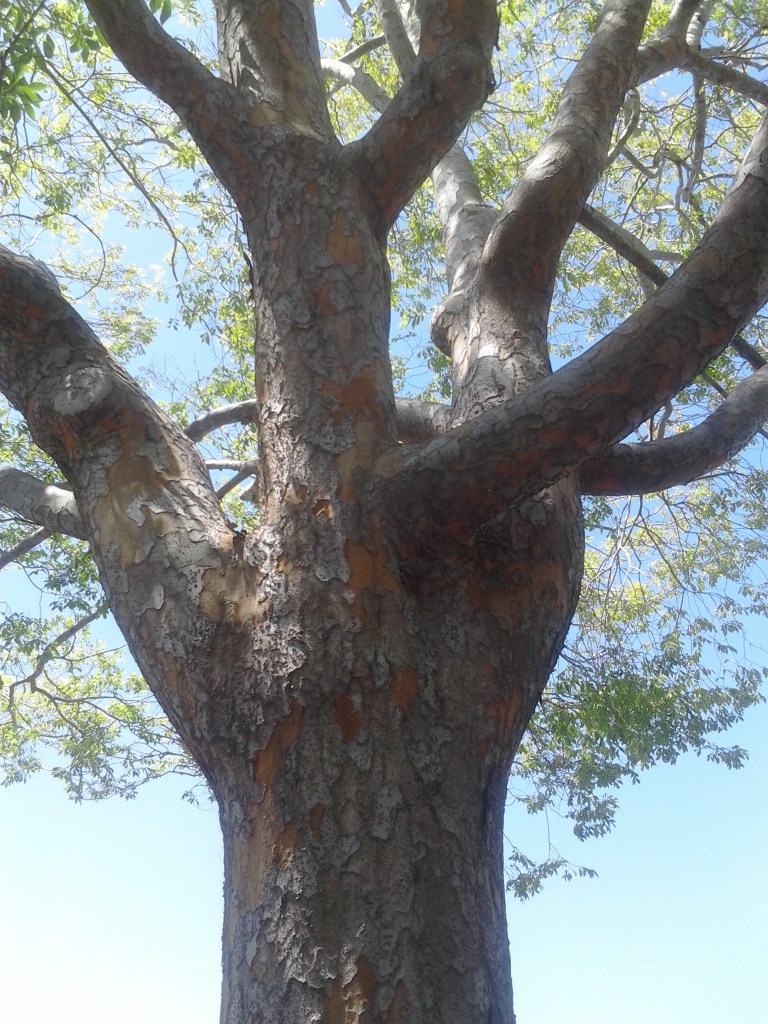
Riparian trees notoriously shed limbs spontaneously.

Winter storms sometimes break limbs or topple trees. Such damage is no surprise during winter because that is when almost all windy weather happens here. Early storms during autumn might be more damaging because deciduous trees are less aerodynamic prior to defoliation. Nonetheless, falling trees and limb failure are typically associated with wind.

That is why spontaneous limb failure is such a surprise when it happens, typically during pleasantly mild or warm weather of spring or early summer. It is more likely without wind than with it. Humidity, although atypical here, is a contributing factor. Healthy trees within riparian situations or lawns are more susceptible than distressed trees in drier situations. 

Particular types of trees are more susceptible to spontaneous limb failure as well. Valley oak, coast live oak, sweetgum, carob, some pines and various eucalypti may shed limbs after an unusually rainy winter or an increase of irrigation. Riparian trees, such as willow, cottonwood, box elder and sycamore are notorious for shedding big limbs unexpectedly.

Spontaneous limb failure occurs if limbs are unable to support their own increasing foliar weight. Bloom can add significant weight too. Warmth promotes the vascular activity that increases foliar weight. Humidity and insufficient air circulation inhibit evapotranspiration (evaporation of foliar moisture), which typically compensates for increasing foliar weight.

As the terminology implies, spontaneous limb failure occurs suddenly, and often without warning. It is therefore potentially very dangerous. It is common among limbs that exhibit no prior structural deficiency. Even experienced and educated arborists who are familiar with vulnerable tree species can not identify and mitigate all potentially hazardous limbs. 

Arborists often suggest pruning to limit the weight of trees that are innately susceptible to spontaneous limb failure. However, limbs that are already sagging from their own weight are risky to engage. Most damage occurs in spring and early summer. Fruit trees that are too productive can succumb to the weight of fruit as it ripens through summer or autumn.

Cold Winters Have Certain Advantages

Winter frost can improve spring bloom.

Even in May, damage from the frosts of last winter is still evident among some of the more sensitive plants. Lemon trees and bougainvilleas that have not yet been pruned may still display bare stems protruding above fresher new growth. Some bougainvilleas did not survive. Those that are recovering will bloom later because replacement of foliage is their priority for now.

However, peonies, although rare, are blooming better than they have since 1991, right after one of the worst frosts in recorded history. Earlier, some lilacs, forsythias and wisterias likewise bloomed unusually well. While so many plants were succumbing to cold weather, many others were enjoying it.

The reason that peonies typically do not seem as happy locally as they are in severe climates is that they really prefer more cold weather while they are dormant through winter. Without it, they may not go completely dormant, or may not stay dormant long enough to get the rest that they need; and then wake up tired in spring. Cold winter weather promotes more adequate dormancy, which stimulates healthier growth and bloom this time of year. It all makes sense considering that peonies are naturally endemic to colder climates.

A preference for cooler winter weather is also why so many varieties of apples and pears that are grown in other regions do not perform well here. The good news is that as the fruit of local apple and pear trees matures through spring and summer, it may be of better quality that it has been for many years. Trees that typically produce sparsely may produce more abundantly this year. The weather that damaged tropical and subtropical plants was an advantage to others.

Nothing can restore cherries, apricots, peaches and any other early blooming fruit that was dislodged by late rain, but any fruit that survived may be just as unusually good as apples and pears. Not only is the best place for gardening, but minor weather problems can have certain advantages.

Wildflowers Are Flowers Gone Wild

Periwinkle is pretty for a weed.

Wildflowers have been quite a fad. Relative to most fads, they are not so impractical. For some situations, they are a good excuse to waste less effort and resources on unrefined parts of the garden. Of course, they all require some degree of effort and resources. Most are neither as wild nor as natural as their marketing suggests them to be. Few are native. 

Wildflowers that lived here centuries ago, prior to the introduction of exotic species, were relatively unimpressive. Although some bloomed spectacularly, they did so within a brief season. Winter is too cool for pollinators that wildflowers intend to attract. Summer is too dry for bloom to last long. Most bloom was limited to the transition from winter into spring. 

The same native wildflowers bloom even less now than they did centuries ago because of competition with exotic species. Most exotic species that compete with wildflowers are feral forage crops that lack colorful bloom. They grow so vigorously that they obscure the natives. Mitigation of such undesirable vegetation ruins wildflowers that mature within it.

Most of the best wildflowers here now are as exotic as feral forage crops. Those that are native might be more reliant on unnatural cultivation. California poppy, evening primrose, and native annual lupines might prolong bloom with a bit of extra water through summer, but need weeding. With the same watering, (non-native) cosmos stands up to the weeds. 

Unfortunately, vegetation management is more important than wildflowers outside of the refined garden. Overgrown weeds are combustible and can be dangerous to pets. Weed whacking too often involves wildflowers before they get their chance to bloom, as well as foliage of spring bulbs after bloom. (It sometimes damages bark of trees and shrubs too.)

Some low and dense perennial wildflowers are more reliable than annual sorts because they exclude annual weeds. Saint John’s wort and periwinkle are invasive exotic plants, but work well as ground covers. Mowing or shearing them late in winter slows their competing weeds, and also enhances their foliar density before competing weeds regenerate.

Shade Is Not Always Cool

Deep shade can be a problem.

Tall Victorian houses make long shadows. Lower ranch houses make shade with broad eaves. Awkwardly big modern homes shade more of their disproportionately small gardens than the others, especially since they have such tall fences to compensate for their minimal proximity to other homes. Even the sunniest of home gardens have some sort of shade.

Like various architecture, various shade trees make different flavors of shade. Silk tree, honeylocust and silver maple make broad shadows of relatively light shade. Because they are deciduous, they allow most sunlight through while bare in winter. Southern magnolia, Canary Island pine and Canary Island date palm make darker shade throughout the year.

Spots that are shaded only by the west side of a fence get warmer afternoon sun exposure than spots that get eastern exposure in the morning. Plants that are only shaded in the morning therefore need to tolerate both warm afternoon exposure and partial shade. Eastern exposures are easier to work with, since most plants that tolerate a bit of shade also like to be sheltered from harsh afternoon exposure.

Because fences lack eaves, southern exposures lack shade, and may enhance exposure by reflecting glare and heat. Southern exposure against houses and garages is determined by the height and width of the eaves. Light colors reflect more than darker colors. Northern exposures are of course the shadiest.

Whether for shade of sunny exposure, plants need to be selected accordingly. Bougainvillea, ceanothus and other plants that like good warm exposure with plenty of sunlight will not do much if shaded. Kaffir lily, hosta, rhododendron and various ferns that prefer partial shade can get roasted if too exposed when the weather gets warm and dry (with minimal humidity).

Eastern redbud, sweet bay, Oregon grape, Heavenly bamboo (nandina), various hollies, various podocarpus and both English and Algerian ivies are some of the few plants that are not too discriminating about their exposure, and will be just as happy with partial shade as with full exposure. Hydrangea, camellia, fuchsia and aucuba are nearly as agreeable, but will get roasted by harsh exposure enhanced by reflected glare from walls or pavement. All palms tolerate shade while young, but adapt to full exposure as they grow above what shades them.

Shade can change as the environment changes. Sun exposure increases if a tree or building gets removed. Remodels or newer and higher fences can increase shade. Even without such obvious modifications, large shrubbery and trees make more shade as they grow.

Lawn Weeds Are Low Down

Lawns require significant maintenance and weeding.

Weeds are constantly a problem here. There is no season in which every sort of weed is inactive. As some annual types finish dispersing seed and die off for winter, others begin their season. Most weeds just happen to be most active as winter becomes spring. They try to stay ahead of desirable plants. Lawn weeds have been proliferating faster than turf. 

Annual weeds were easiest to pull while still dispersing roots, and while the soil was still damp from winter rain. Biennial weeds that grew last year are more firmly rooted, even if their soil is damp. Perennial weeds are most persistent, with extensively dispersed roots. Of course, as lawn weeds, all three types are more challenging than in the open ground.

Separation of weeds from turf grass is significantly more work than pulling weeds alone. It is not so easy to reach down into the roots of the weeds. Nor is it so easy to pull weeds without pulling some of the turf grass with them. The process is likely to leave bald spots. Many of the persistent perennial lawn weeds are more firmly rooted than the turf grass is. 

Dandelion is notorious for leaving bits of root behind when pulled. These bits regenerate into new plants that are even more difficult to pull than the originals. The various species of oxalis persist by various means. Some produce bulbs or offsets that are impossible to separate from the soil. Others develop thick networks of sinewy stolons that break apart.

Some persistent lawn weeds, such as plantain and English daisy, as well as many of the feral grasses, are so difficult to eradicate that they ultimately integrate into the lawns that they infest. It is simply easier to mow over them than to try to eliminate them. They never quite assimilate though, so interfere with the uniformity of color and texture of their lawns. 

Unfortunately, some lawn weeds do worse than merely compromise the visual appeal of turf. Burclover and foxtail can be dangerous to pets. Their seed is designed to stick to fur. Burclover seed structures can tangle and accumulate in long fur, causing dense matting. Foxtail seed structures can lodge into eyes, nostrils, throats and ears, or pierce soft skin.

Iris Blooms Almost Any Color

Such cheerful colors are too easy.

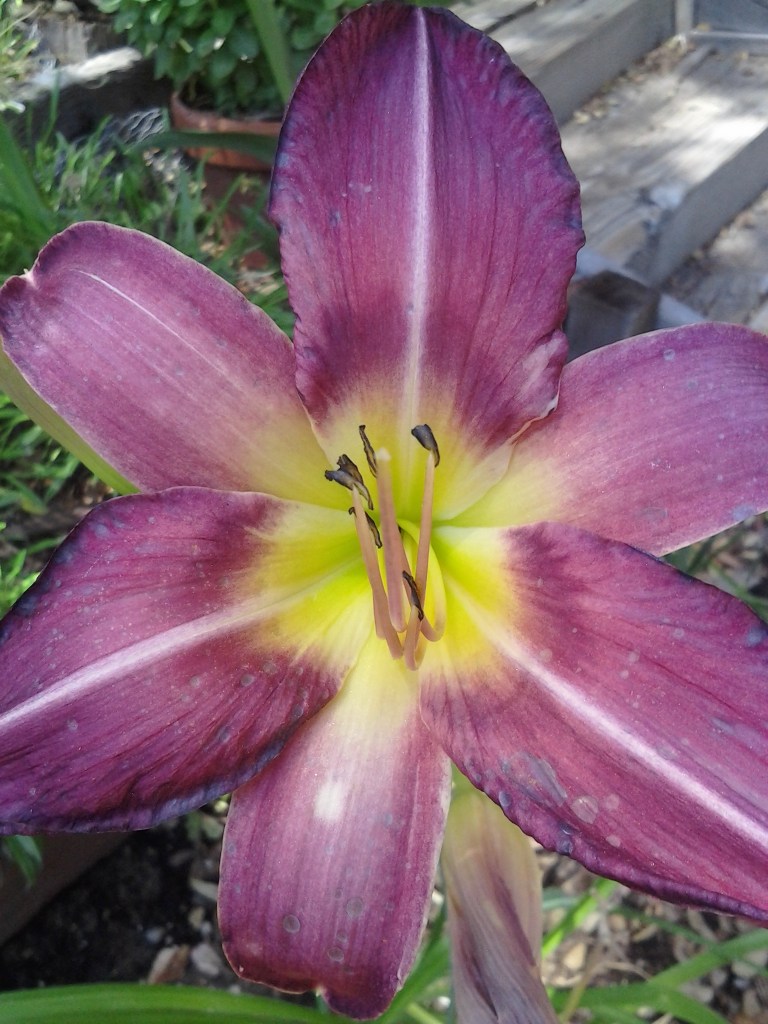
Iris got its name from the Greek word for rainbow, because all the colors are included. There are thousands of varieties of bearded iris alone, to display every color except only true red, true black, and perhaps true green. (However, some are convincingly red, black or green.) Then there are as many as three hundred other specie of iris to provide whatever colors that bearded iris lack.

Bearded iris are still the most popular for home gardening because they are so reliably and impressively colorful, and because they are so easy to grow and propagate by division of their spreading rhizomes. Siberian, Japanese and xiphium iris are less common types that spread slower with similar rhizomes. Japanese iris wants quite a bit of water, and is sometimes grown in garden ponds. The others, like most other rhizomatous iris, do not need much water once established. Dutch iris grows from bulbs that do not multiply, and may not even bloom after the first year.

Iris flowers are so distinctive because of their unique symmetry of six paired and fused ‘halves’ that form a triad  of ‘falls’ and ‘standards’. The ‘falls’ are the parts that hang downward. The ‘standards’ that stand upright above are the true flower petals. As if the range of colors were not enough, the falls and standards are very often colored very differently from each other, and adorned with stripes, margins, spots or blotches. Many specie have fragrant flowers. Each flower stalk supports multiple flowers. Some carry quite a few flowers!

Some types of iris are so resilient to neglect that they naturalize and grow wild in abandoned gardens. Bearded iris are more appealing and bloom better with somewhat regular watering, but can survive with only very minimal watering once established. Some iris multiply so freely that they get divided after bloom, and shared with any of the neighbors who will take them. Newly divided rhizomes should be planted laying flat, with the upper surfaces at the surface of the soil.

Nomenclature Was Designed For Simplicity

Simple standardized nomenclature is getting rusty.

Buick Electra used to mean something. Chrysler Imperial and Lincoln Town Car did also. That was at a time when cars were still distinguishable. Instead of random numbers with a few letters, they had distinctive names. These names, although distinct, conformed to a standardized pattern. This pattern of naming was comparable to botanical nomenclature. 

According to botanical nomenclature, plants are identifiable by genus and species. Their ‘gen’us is a more ‘gen’eral designation than their ‘speci’fic ‘speci’es designation. A family is a larger and more general classification than genus, and in turn, fits into another more general group. Most of us are not concerned with the many classifications beyond family. 

For example, the botanical name of silver maple is Acer saccharinum. Acer is the genus. saccharinum is the species. Acer saccharinum is in the Sapindaceae family. (For botany, genus and species names are italicized, and species names are not capitalized.) Buick Electra is similarly in the General Motors family. Buick is its genus. Electra is its species.

Varieties and cultivars are even more specific designations within species. Some are the products of breeding. Some are naturally occurring. A cultivar is a ‘cultivated variety’ that does not perpetuate naturally like other varieties do. Most cultivars propagate by cloning. (Variety and cultivar names are capitalized and enclosed within single quotation marks.)

For example, Acer rubrum ‘October Glory’ is a cultivar of red maple. It exhibits a distinctly rounded canopy and foliar color in autumn that is superior to that of the simple species in the wild. It might compare to a Buick Skylark Gran Sport, which is essentially a cultivar of Skylark with a stronger engine. Botanical and automotive nomenclature are quite similar. 

Such similarities of nomenclature are no advantage. While cars forfeited their distinctive titles for mundane numeric designations, plants forfeited their species names for cultivar names. Such abbreviation of nomenclature interferes with accurate identification. Those unfamiliar with it may not know if Cercis ‘Forest Pansy’ is an Eastern or Western redbud, or something else.

Late Night Terror For Foliage

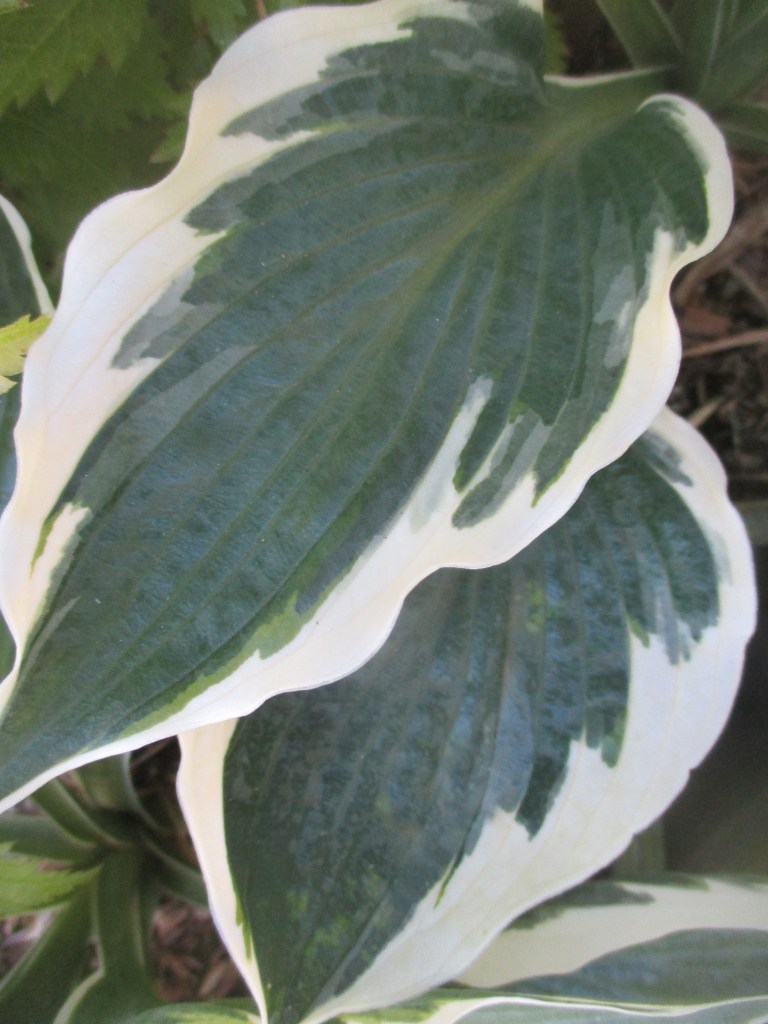
Snails and slugs really crave hostas.

Snails and slugs really enjoy all the new seedlings and fresh foliage that is growing in the garden while the soil is still damp from earlier rain, and the weather is getting warmer. They are neither too smart nor too fast, but they are very hungry, and do their damage at night when no one is watching. They hide before the sun comes up.

The same lush foliage that they eat is also where they often live. However, they also live among lily-of-the-Nile and some ferns that they do not damage very much, as if they think that no one will look for them there. They also hide under any sort of debris and in valve boxes. Removing such debris and unwanted weed foliage diminishes their habitat.

Pieces of damp cardboard intentionally left out in cool and damp spots in the garden overnight can attract snails and slugs as they seek shelter in the morning, and then be flipped over during the day to collect and dispose of the surprised snails beneath. It is sneaky, but effective. People who happen to be up late can hunt for snails while they are out and about. Otherwise, hunting for hiding snails and slugs by daylight takes a bit more diligence.

Saucers or plastic lids containing puddles of beer is supposed to keep snails and slugs out drinking until they get roasted when the sun comes up. The problem is that the beer gets washed away whenever the garden gets watered. Besides, it does not really kill very many victims. Salt around the most susceptible plants likewise gets washed away, and can be toxic to the plants that it is supposed to protect. Keeping water in drainage saucers below potted plants is a problem for drainage, and allows mosquitoes to proliferate.

Copper tape that can be purchased from nurseries or hardware stores is an effective barrier for snails and slugs, but only if the susceptible plants are completely surrounded, and only if leaves or stems that extend over the copper do not touch anything outside. Copper tape can be self adhesive or stapled to wooden planters. Bare copper wire is just as effective. If wrapped around tree trunks, copper tape or wire should have some slack to allow for growth. An extra bit of self adhesive copper tape pressed against itself to form a tab that it can be pulled apart as needed should work well. Copper wire only needs a small loop of extra wire.

Deadheading Spring Bulbs Conserves Resources

What happens when daffodils finish blooming?

Now that the various spring bulbs have finished blooming, or will soon, many will benefit from deadheading. The techniques are simple, and actually benefit many plants besides spring bulbs. In the most basic terms, deadheading is merely the removal of deteriorating flowers after bloom. Ideally, it should happen prior to the development of seed structures.

A most obvious advantage of deadheading is that it eliminates unappealing carcasses of finished flowers. This neatens the appearance of remaining foliage. The foliage of some spring bulbs shrivels soon after bloom, but remains intact through the process, to sustain development of new bulbs. It is easier to ignore without prominently shabby floral stalks.

Deadheading also conserves and redirects resources that would otherwise sustain seed production. Such resources can instead promote vegetative growth, including production of new bulbs to replace the old. Furthermore, depriving bulbs of seed provides an added incentive for vegetative regeneration. If unable to survive by one means, they try another.

Some bulbs are more reliant on deadheading than others. Grape hyacinth and snowdrop are too profuse with bloom for minor seed production to inhibit their performance. In fact, they produce viable and genetically stable seed, which could be an advantage if more of the same are desirable. Although seed production is limited, seed disperses extensively.

Dutch crocus are an example of sterile hybrids that are unable to produce viable seed, or waste associated resources on such efforts. Other extensively bred bulbs that are not so sterile may not be true to type. Consequently, their progeny are likely to be very different. Freesia do not require deadheading, but can produce feral seedlings with insipid bloom.

Lily, narcissus, daffodil, tulip and hyacinth are some of the popular spring bulbs that now are ready for deadheading. Summer bulbs and perennials will get their turn later. Canna, dahlia and perennials that continue to bloom through summer will be tidier, and perhaps bloom more abundantly with efficient deadheading. They need not wait until next year to express their gratitude.

Weeds Are Full Of Surprises

Pokeweed is rapidly becoming more common.

While it was busy naturalizing in Australia, South Africa and southern South America, the California poppy was getting forced out of parts of its own native range by more aggressive exotic plants that were also busy getting naturalized. Technically, any plant that is not native is exotic. Any exotic plant that becomes naturalized in a foreign environment is able to proliferate without any help, as if it were native. Naturalized exotic plants that get too aggressive become invasive weeds.

Weeds are plants where they are not wanted. This is a very broad definition that includes plants ranging from simple little dandelions in urban lawns to humongous bluegum eucalyptus in forests. Naturalized exotic weeds can be much more problematic than weeds that can only proliferate where they get watered in gardens and landscapes, because they can get established where they are not expected.

Water hyacinth that clogs the Sacramento and San Joaquin River Delta is not often a problem in terrestrial landscapes. However, giant reed, pampas grass, Acacia dealbata and blackberry brambles can infest home gardens just as easily as they infest wild lands. Because they do not need to be watered, they can get established and grow quite large in unused parts of the garden before anyone notices.

Many naturalized weeds somehow seem to much more aggressive and problematic than even the most prolific of native plants. Even the common native lupines are relatively docile compared to annual oat grass. Native blackberry may seem impossible to eradicate, but is actually neither as persistent nor as unpleasant to handle as the exotic Siberian blackberry!

Young weeds are easiest to pull now while the soil is still evenly damp, and young roots are only beginning to disperse. They will be more difficult to pull after roots are dispersed and soil hardens. Tree weeds and large perennial weeds that were cut down last year instead of pulled will likely need to be dug. Bermuda grass is a relatively low perennial grass that always seems to be difficult to dig. Mowing or cutting down annual grass weeds with a weed whacker will not eliminate them, but limits the development and dispersion of seed for the next generation. Burclover, sowthistle, bindweed, purslane, spurge and the various oxalis are some of the other common weeds that really get going this time of year.