Autumn Color From Deciduous Foliage

Deciduous foliage can get delightfully colorful.

Autumn does not get cool enough locally to prevent everything from blooming. A few plants can bloom sporadically all year except only during the coolest part of winter. A few plants naturally bloom in autumn. Cool season annuals begin blooming before warm season annuals finish. Flowers can potentially provide plenty of autumn color if necessary. A mild climate can be a major advantage.

It can also be a disadvantage. Minimal chill causes deciduous foliage to start to get messy before it starts to get colorful. Some deciduous plants shed completely before getting chilled enough to develop appealing autumn color. A few others do not even get cool enough to defoliate completely. They instead retain their shabby old foliage through winter until new foliage replaces it in spring.

Nonetheless, several adaptable deciduous plants get sufficient chill to develop impressive autumn color here.

Sweetgum, Chinese pistache, flowering pear and ginkgo are likely the four best deciduous trees for autumn color locally. Sweetgum and Chinese pistache produce the most impressive ranges of vibrant colors. Flowering pear is comparable, but with less yellow, and more rich deep burgundy red. Ginkgo lacks such range of color, but develops the brightest and clearest yellow autumn color.

Boston ivy, crape myrtle and persimmon get about as colorful as sweetgum, even if incidentally to their primary duties. Crape myrtle is popular for its abundant and richly colorful bloom in summer. Persimmon is a fruit tree. Boston ivy obscures graffiti and helps muffle sound on freeway soundwalls. Cottonwood and black walnut turn bright yellow, but in the wild rather than in refined gardens.

Even for the locally mild climate, there are plenty of deciduous plants that provide foliar autumn color. Trees are the most familiar. Vines and shrubbery are also popular. Because this mild climate is marginal for some of them, color is likely to be variable from year to year. Unfortunately, some that perform satisfactorily for inland locations may perform less satisfactorily in coastal conditions.

These Bulbs Are Not Incandescent

Bulbs do not look too impressive.

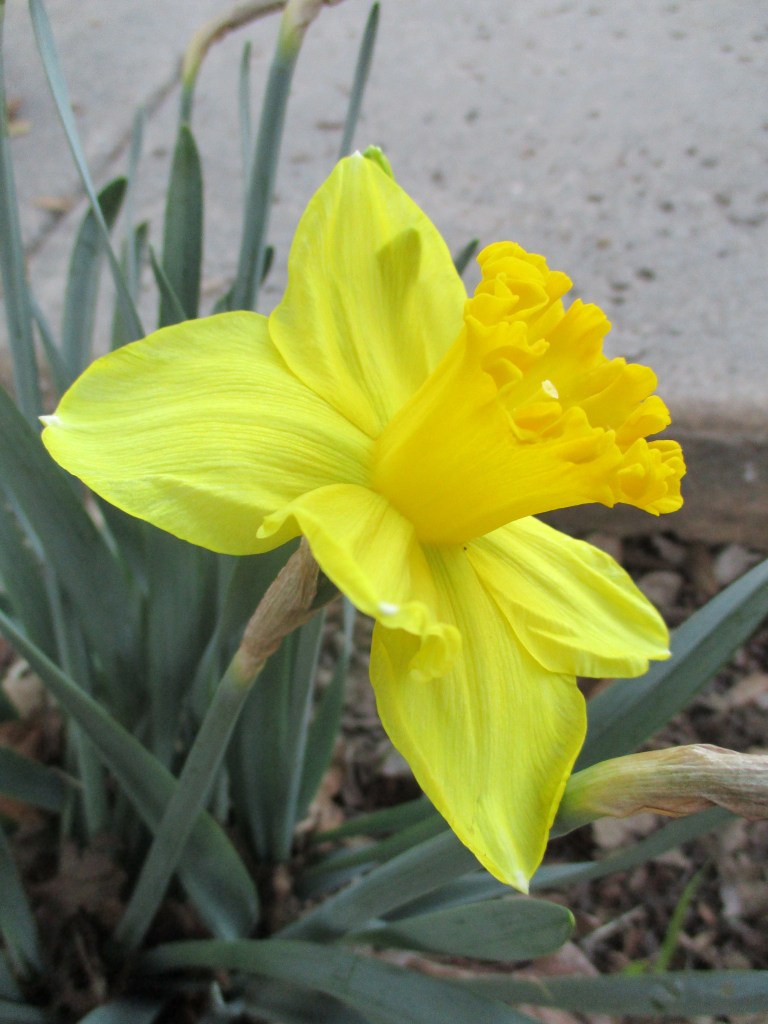
It may seem to be too early to be concerned with narcissus, daffodil and grape hyacinth, but this is when their bulbs go into the garden. Once established, these familiar examples, as well as early bearded iris, can be the most reliable for colorful bloom at about the same time early each spring. Crocus and freesia bloom just as early, but may not naturalize as reliably. Lily, tulip, hyacinth, anemone and ranunculus really prefer cooler winters to bloom reliably after their first spring, even though they are worth growing for just one season.

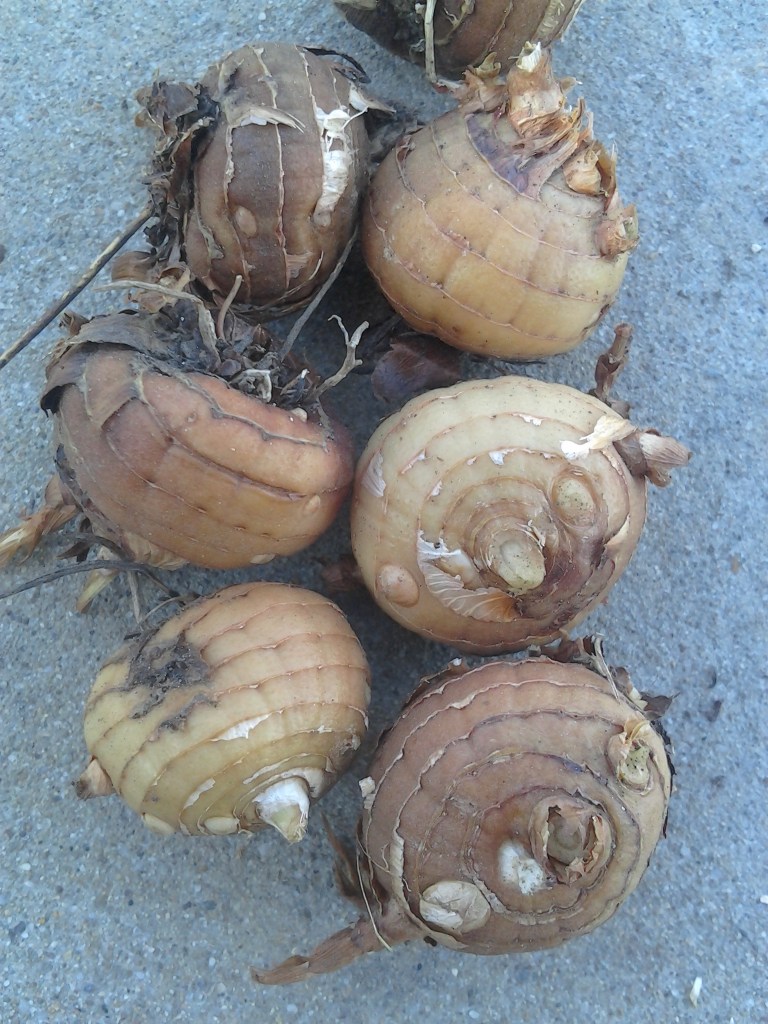
Bulbs, including corms, rhizomes, tubers and tuberous roots, can be found in nurseries when it is time for them to be planted. Gladiolus are not yet available only because they are summer blooming bulbs that should be planted a bit later than spring bulbs. None of the bulbs are much to look at while dormant, and are even less impressive once they get buried out of sight, but they have already stored up everything they need for the blooms that we expect from them next year. Once hidden below the surface of the soil, seemingly dormant bulbs secretly disperse their roots into the surrounding cool and moist soil to be ready to bloom as soon as weather allows.

In their first year, some bulbs can be planted in groups at different times to coincide with the expected durations of their particular bloom cycles. For example, if the flowers of a particular type of bulb can be expected to last two weeks, a second phase of the same bulbs can be planted two weeks after the first phase. As the first phase finishes bloom next spring, the second phase should begin bloom. However, phasing is only effective for the first season, since all bulbs of any particular variety will be synchronized by their second season.

Anemone, ranunculus and bearded iris each bloom synchronously, regardless of when they get planted, so are immune to phasing. Fortunately, the many varieties of bearded iris have different bloom seasons. Some bloom as early as narcissus. Mid-season varieties bloom shortly afterward, and are followed by late varieties. Some modern varieties bloom early, and then again after the late varieties!

Spring Bulbs Begin In Autumn

Spring bulbs bloom months from now.

Spring bulbs lack immediate gratification. They will, of course, justify their habitation of the garden as they bloom next spring. For now, they are not much to look at, and do not stay visible for long. While dormant, they poses neither foliage nor significant roots. Most look something like small and disfigured onions. Burial in shallow graves conceals their uninteresting exteriors through winter.

Cool season bedding plants can effectively obscure the otherwise bare soil over the grave sites of some types of bulbs. Mulch might be best for those that should start to grow immediately or that will develop an abundance of foliage. While plants above them may need watering until the rainy season begins, dormant spring bulbs need no more attention. They disperse roots through winter.

Spring bulbs, including corms, rhizomes, tubers and tuberous roots, are oblivious to the discomforts of transplant while dormant. However, they want to wake from their dormancy in situations that are conducive to normal development and bloom. Some prefer shallow planting. Others require significant depth for stability. Most but not all spring bulbs perform best in small groups or colonies.

Narcissus, daffodil and crocus are the first spring bulbs to bloom as winter ends, or even earlier. Tulip, hyacinth, grape hyacinth, freesia, anemone, ranunculus and some types of iris bloom shortly afterward. Late iris, lily and montbretia bloom later, and some types are considered to be summer bulbs. Spring bulbs become available in nurseries while seasonable. Summer bulbs arrive later.

Most spring bulbs bloom only once. Plaiting them in phases a few weeks apart within their respective seasons can prolong bloom. Each subsequent phase begins bloom as the preceding phase finishes. However, narcissus, daffodil, grape hyacinth and others that can naturalize will bloom simultaneously after their first season. Most spring bulbs unfortunately do not naturalize reliably here.

Gladiolus and allium are summer bulbs that bloom once. Calla, canna and dahlia bloom through summer.

October Brings Cool Season Annuals

Warm season annuals are now passe.

As the name implies, ‘annuals’ need to be replaced ‘annually’. What is worse is that they do not even function for an entire year, but only for a specific season. Cool season annuals mostly work from autumn to spring. Warm season annuals mostly work from spring to autumn. Calendula is a popular cool season annual that may not last even that long, since it can mildew half way through winter.

Now that it is time for cool season annuals, it can be unpleasant to remove warm season annuals that are still performing well. In mixed plantings, new annuals can be phased in through autumn as older annuals deteriorate. Busy Lizzie (impatiens), wax begonia and other warm season annuals that are actually perennials can get cut back and overplanted with cool season annuals. The cool season annuals that temporarily overwhelm them can provide shelter from frost. As the cool season annuals finish next spring, the warm season ‘annuals’ can regenerate

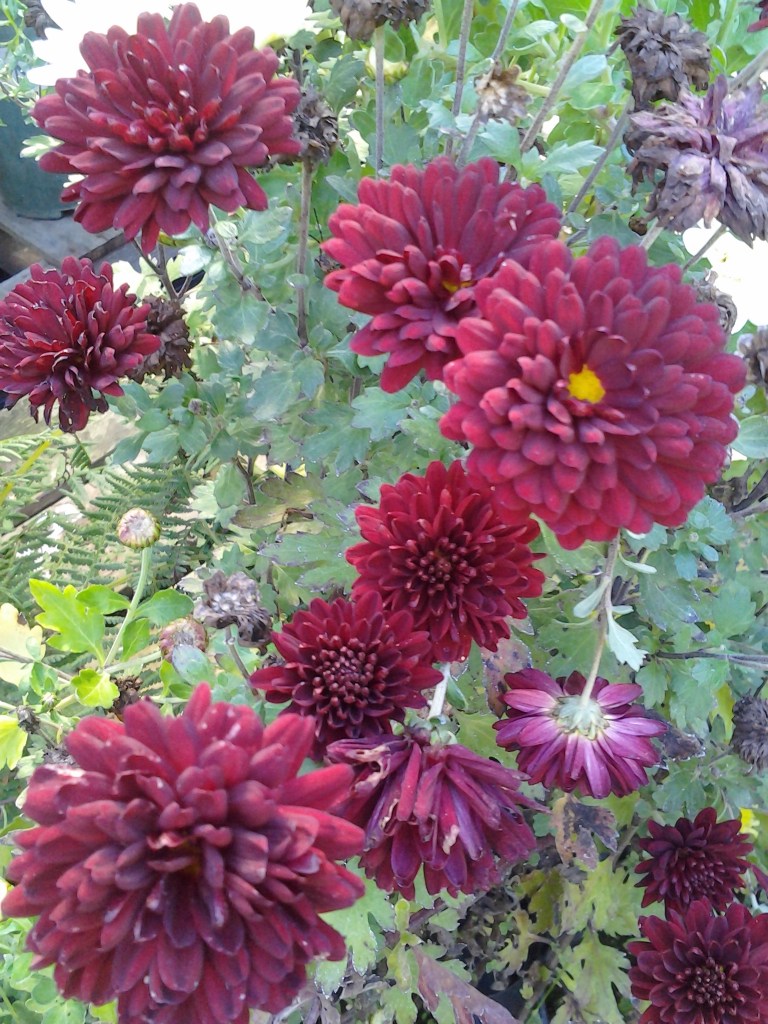
However, not all cool season annuals need to finish next spring. Sweet William, cyclamen, chrysanthemum and the various primroses are popular cool season annals that are actually perennials. When the time comes, they can be overplanted with warm season annuals, so that they can regenerate the following autumn. In cool spots, sweet William and some primroses can actually perform all year. (Some people are allergic to primroses like poison oak.)

Alyssum and nasturtium really are annuals, but can function both as warm season and cool season annuals. They sow their own seeds so that new plants can reliably replace old plants without being noticed. The old plants only need to be pulled as they deteriorate. Alyssum is white, or pastel hues of pink or purple. Nasturtium is just the opposite, with bright hues of yellow, orange and red, with only a few pastel options.

Pansies and smaller violas are the two most popular of cool season annuals, since they function like petunias for cool weather. They lack few colors. Most have two or three colors. Ornamental cabbage and kale produce big and bold rosettes of pink, white or pink and white foliage. Kale has weirdly distinctive foliar texture. White, lavender, pink, purple and rose stock is the most fragrant of cool season annuals, and taller varieties are great for cutting. Iceland poppy has delicately nodding flowers on wiry stems. They can be pastel hues of white, pink, yellow, orange or soft red.

Deciduous Trees Defoliate Through Autumn

Too many fallen leaves get messy.

September 22 was the equinox. Here in the Northern Hemisphere, days will get slightly shorter as nights will get slightly longer. The intensity of the sunlight will diminish as the sun moves farther to the south. The weather will of course get cooler. In this particular climate, the rainy season will begin. Deciduous plants, as well as some evergreen plants, will respond accordingly to the changes.

Deciduous plants defoliate as they go dormant for part of the year. A few defoliate through hot and dry summer weather. Otherwise, almost all deciduous plants defoliate for dormancy through cool and stormy winter weather. They are more resilient without foliage that is sensitive to both frost and wind. While days are short and sunlight is diminished, foliage would not be very active anyway.

The foliage of many deciduous plants gets remarkably colorful during defoliation. Sweetgum, pistache and ginkgo are famously colorful. However, many deciduous plants, such as valley oak and silver maple, are not impressively colorful. Regardless, all deciduous plants that defoliate for winter will eventually start to do so, or have started already. Several evergreen plants shed debris too.

Gravity is a force that is more reliable than weather. It pulls foliar debris downward onto roofs, roadways, decks, patios, lawns and whatever happens to be below deciduous trees.

The timing of defoliation is ironic. Gutters and downspouts that were empty all summer now collect debris as the rainy season begins. They may need cleaning more than once if deciduous trees above defoliate slowly. While patios and decks get less use, they need more raking to avoid staining. Fallen leaves promote rot in turf grass and ground covers, and inhibit penetration of sunlight.

At this time of year, it is difficult to believe that evergreen trees are generally messier than deciduous trees. Deciduous trees tend to defoliate only once annually, although some drop bloom or fruit separately. Evergreen trees drop about as much debris, but do so for a longer season or continuously throughout the year.

Pumpkins Exemplify Ripening Winter Squash

Winter squash are replacing summer squash.

Zucchini is probably the most reliable of warm season vegetable through summer, even when tomatoes are having a bad year. A single zucchini plant produces enough for a household. Two plants produce enough to share with neighbors. Pattypan, crookneck and other varieties of summer squash may not be quite as reliably productive individually, but can be assembled as a delightfully variable team that produces early in summer, and is just now finishing.

The fruit of summer squash is best when immature and tender. It gets tougher and loses flavor as it matures. Because development of seed within maturing fruit exhausts resources, plants are actually more productive if the fruit gets harvested while immature. In other words, they can either make many small fruits, or a few large fruits. The plants have coarse foliage on big but relatively confined annual plants.

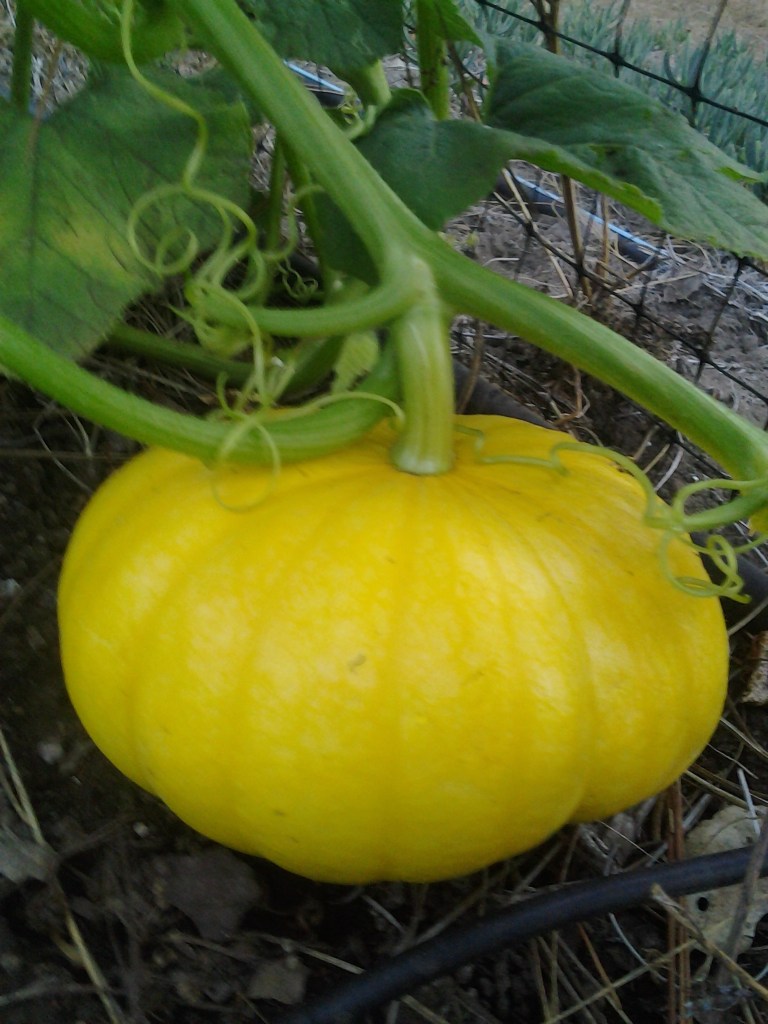
Winter squash is very closely related to summer squash. The shabby annual vines sprawl over much larger areas, and can even climb fences and shrubbery. The main difference though, is that each plant produces only a single fruit or only a few individual fruits that are allowed to mature completely through summer. Their ripening fruit is just now becoming available as summer squash are running out. The fruit is supposed to be best after frost has killed the foliage, which could take a while here.

Hubbard, acorn, turban, spaghetti, kabocha and butternut squash, as well as the many varieties of pumpkin, are the more popular types of winter squash. Unlike summer squash, winter squash can be stored for quite a while, and need to be cooked to be eaten. While winter squash do not produce as many fruiting female flowers as summer squash produce, they seem to make at least as many male flowers that can be harvested while still fresh.

Male flowers can be stuffed, battered and fried, or simply fried. After they have been pollinated and set fruit, female flowers are typically too wilted to be eaten. All squash produce more male flowers than female flowers. Even the most fruitful of summer squash produce about three times as many male flowers as female flowers.

Fertilizer Is A Seasonal Commodity

Fertilizer is about to be passe.

Fertilizer, in simple terms, helps plants grow. It provides a bit more of what growing plants crave. In some situations, it compensates for nutrient deficiencies. Fertilizer can be organic or synthetic. Various formulations serve a variety of purposes. Custom formulations appeal to plants with discriminating taste, such as citrus, orchids and roses. Slow release fertilizer lasts for a month or two.

Of course, proper scheduling of the application of fertilizer is very important. Fertilizer can actually become toxic with excessively frequent application. Fertilizer that provides significant nitrogen to promote vegetative growth after bloom can inhibit floral growth prior to bloom. Fertilizer that promotes root growth for new plants is unnecessary for mature plants. The diets of plants are variable.

Summer lingers later here. Regardless of the weather, it is now autumn. This is when deciduous plants start the process of defoliation for their winter dormancy. Evergreen plants are less obvious about their winter dormancy. Some remain active and even bloom through autumn and winter locally. Nonetheless, cooling weather and shortening days inhibit vascular activity of almost all plants.

Except for cool season vegetables and bedding plants, not many plants benefit from fertilizer applied this late. New plants might appreciate a bit just to help them adjust to their new environment. Some deciduous plants, particularly roses, like a last late application of fertilizer as they get ready for their long winter dormancy. Lawns might want fertilizer this late or perhaps later to stay green.

Otherwise, it is getting late to utilize fertilizer.

Late application of fertilizer can be very detrimental to plants that are sensitive to cool weather. Such plants typically finish growing through summer. By autumn, their mature foliage and stems are either resilient to minor frost, or are dieing back (defoliating) for winter dormancy. Fertilizer can stimulate premature development of new growth that will be much more sensitive to even mild frost.

Leaves Are Starting To Fall

50923thumb
Falling leaves are messy before colorful.

Autumn color is different every year. Sometimes, early and sudden cool weather after a mild summer promotes good foliar color that lingers longer while relaxed trees slowly realize that they should probably start to defoliate. Sometimes, early wind and rain accelerate defoliation of otherwise good color. There are a few variables that trees must adapt their performance to.

Warm and arid weather two weeks ago started the process of defoliation suddenly and a maybe slightly early this year. Even before the weather gets cool, deciduous trees are already starting to shed the oldest of their foliage that they do not need in order to hold their youngest foliage a bit later into autumn. Evergreen trees do the same to limit desiccation.

Slightly breezy weather that was so pleasant after such heat was just enough to start dislodging deteriorating foliage. Now, leaves are already starting to fall before they develop much color. Redwoods and pines are likewise dropping browned needles. Fortunately, trees that are the most colorful in autumn tend to hold their foliage better until the weather gets cooler.

It is impossible to predict how colorful trees will be this autumn; although if storms are as healthy as predicted, the mild temperatures may inhibit color, while wind and rain dislodge colorful foliage. Regardless, it is already time to start raking falling leaves and needles. They can get messy, and when the rain starts, they can stain pavement and clog gutters.

When more foliage falls later in autumn, it will need to be raked from ground cover, surviving portions of lawn, and any other plants that collect it, so that it does not shade out the sunlight.

Hetz Blue Juniper

A juniper with blue spruce color.

Some junipers that were so popular in the 1950s are now somewhat rare, or redundant to modern cultivars. Although not as common as it once was, Hetz blue juniper, Juniperus chinensis ‘Hetzii Glauca’ is still practical for modern gardens. Most junipers with such bluish gray foliage are either low and sprawling, or upright and tall. Hetz blue juniper exhibits an elegant outwardly flaring form.

Mature specimens can get taller than six feet, and as broad as ten feet. The dense evergreen foliage is not quite as blue as that of blue spruce, but is nonetheless striking amongst deeper green. Straight stems point sharply outward at about the same low angle, but in all directions. Removal of lower growth from old and overgrown specimens might reveal peeling bark and sculptural limbs.

Established Hetz blue juniper with warm and sunny exposure is nicely undemanding. Occasional irrigation through the warmest summer weather maintains color and foliar density. However, color naturally fades slightly and slowly through summer. If possible, selective pruning should completely remove obtrusive stems from their origins. Otherwise, stubs might compromise the natural form.

Juniper Turns A New Leaf

Hollywood juniper was formerly overly popular.

Juniperus, which is the entire genus of juniper, had been languishing in a bad reputation for too long. The problem likely began nearly three quarters of a century ago. More people than ever were enjoying leisurely suburban gardening. Many appreciated the resiliency of juniper cultivars. At that time, a few species of juniper were gaining popularity. Evolving cultivars sustained new demand.

Unfortunately, these modern and once distinctive cultivars of juniper eventually became passe and too common. As practical and resilient as they truly are, they collectively shared the stigma of a minority that were problematic. Their problems were disproportionately evident merely because of their commonness. Many matured at the same time, so developed problems at the same time.

Realistically though, the majority of the garden varieties of juniper that grew during that time were quite practical. Those that started in the 1950s, but developed problems in the 1990s, performed satisfactorily for four decades. Not many other types of plants perform as reliably for as long. Many problems resulted from selection of cultivars that were inappropriate for particular applications.

Although all junipers are evergreen foliar plants that provide no obvious bloom, they are remarkably diverse. The most popular sorts are low and dense shrubbery. Others are lower and sprawling ground cover. Some are small trees. A few species grow more than thirty feet tall! Branch structure is mostly densely compact, but can be sculpturally irregular, rigidly upright or gracefully arching.

Foliage is generally rich deep green. Some cultivars exhibit yellowish new foliage that fades to green through summer. A few are variegated with creamy white. Several popular cultivars are gray or bluish gray. Leaves of almost all popular cultivars are scale like. Some have needle like leaves. A few have both. Even without prominent bloom, a few cultivars produce appealing tiny berries.

It is time for the many cultivars of juniper to grow beyond their former bad reputation and turn a new scale or needle.