Pollarding Is Extreme Tree Pruning

50128thumb
Pollarded knuckles look like science fiction.

Most arborists insist that pollarding is horticulturally incorrect. However, most of us who pollard trees in our home gardens are not arborists. Pollarding is technically detrimentally disfiguring to trees. However, some trees that are naturally short lived can live much longer if pollarded properly. That is the trick; doing it properly. Pollarding is certainly a distinctive pruning style that is not for everyone, but can be both practical and sustainable in certain situations.

Pollarding is an extreme pruning technique that involves the removal of all or almost all of the stems that grew since the last time the technique was done. The new growth gets cut back cleanly to distended ‘knuckles’ that develop at the ends of the original stems. Traditionally, one or two strategically aimed stubs from the removed new growth are left on each knuckle to form a new knuckle a bit beyond knuckles of the previous year. Locally though, stubs are typically omitted.

New growth must get cut back cleanly so that the wounds can get compartmentalized (healed over) as efficiently as possibly. Stubs interfere with this process. If one or two stubs are left on knuckles to form new knuckles, they should be long enough to get some distance from the original stubs, but short enough to not be too awkward. Knuckles should not get cut off! Such large wounds do not compartmentalize fast enough to avoid rotting.

Pollarding can only be done in winter, both because plants are dormant, and also because the weather is not so dangerous. New growth starts to shade exposed bark before it gets scalded by intensifying sunlight and heat in summer. Once they come out of dormancy, plants would be seriously distressed by such severe pruning. Because new growth is so vigorous after pollarding, it can become sloppy if pollarded less than annually. Some plants that grow slowly or produce stout stems may get pollarded less frequently.

London plane (sycamore) and fruitless mulberry are the most commonly pollarded trees. Silver maple, silk tree and various elms, willows and poplars adapt well to pollarding as well. Locust and purple leaf plum can be pollarded, but will be deprived of bloom. Bottlebrush can bloom later in the same year after getting pollarded, and probably will not need annual pollarding anyway. Pollarded bay trees can be kept small, and will provide better herbal foliage. Certain eucalyptus can be kept juvenile if their juvenile foliage is more appealing than their adult foliage.

Bulb-Like Perennials For Summer

00205thumb
Dahlias planted now bloom in summer.

Like something of bad science fiction, they are back. The earliest of spring bulbs that were so discourteously buried in shallow graves last autumn are making their presence known. Even before the weather gets noticeably warmer, their foliage emerges above the surface of the soil. Daffodil, narcissus, crocus and snowdrop are already blooming. Hyacinth, tulip and anemone will be next.

We know them as spring bulbs, or alternatively, as hardy bulbs. However, in this climate, many bloom through late winter, so are finished by spring. Also, many are technically not really bulbs. They might be corms, rhizomes, tubers or tuberous roots. They are hardy bulbs because they want to be planted through autumn so that they can get a bit of chill through winter before their early bloom.

Some spring bulbs require a bit more of a chill than they get in the locally mild climate. They bloom very well in their first season because they are pre-chilled before they are sold. Once dormant, they get dug and chilled in refrigeration to entice them to bloom well for subsequent seasons. That happens much later in the year though. For now, long before spring, we get to enjoy their bloom.

Summer bulbs, which are not so hardy, are what gets planted about now. Their planting is delayed, not just because they do not need chill, but also because they dislike it. If their foliage develops too early, it can be damaged by late frost. Once established, summer bulbs are more resilient to minor frost damage of premature foliage. They can therefore remain in the garden for many years.

Canna, dahlia and big old fashioned white calla are the simplest of summer bulb-like perennials to plant now. Those that are already established can be divided if crowded. The smaller and more colorful callas can be a bit more finicky. Gladiolus and various lilies are spectacular, but bloom only once annually, rather than throughout summer. They are also unlikely to establish as perennials.

Bulb-like perennials that bloom only once might be planted in phases to prolong their potentially brief bloom season.

Figs Are Easy To Propagate

50121thumb
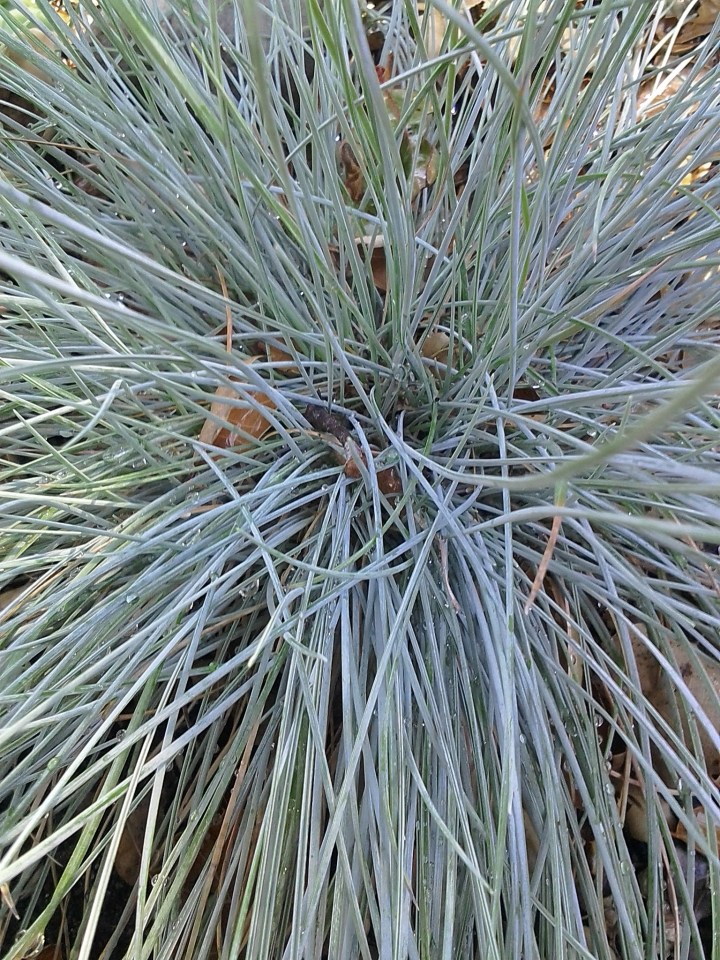
Some grasses can propagate by division.

The easiest way to propagate new fig trees may seem to be violent, but it works. Basal shoots that grew last year from the roots near the trunks of ungrafted trees can simply be torn out of the ground with as many attached roots as possible. These shoots can then be planted directly wherever new trees are desired, and watered in. Larger shoots may need to be dug out, and might do better if pruned down to just a foot or two tall when planted. Smaller shoots can be potted to grow through next summer, and then get planted in the ground next winter.

Tearing the shoots off in this unpleasant manner is effective for two reasons. It gets the most roots for the shoots to help the grow into new trees. It also removes more of the burl growth that produces the shoots than simply cutting the shoots neatly. Even if copies of the original tree are not desired, the basal shoots must be removed anyway. Simply pruning them away leaves more burl growth so that more shoots grow back next summer. Ideally, well maintained trees should actually not produce basal shoots.

Fig trees are innately easy to grow from basal shoots or cuttings while dormant through winter. Basal shoots, even those that get pulled without any obvious roots, will develop roots more efficiently than stem cuttings that were never in contact with the soil. However, if no basal shoots are available, stem cutting work just fine. Furthermore, grafted trees (which are quite rare) can only be copied by cuttings from above the graft. Basal shoots from below the graft will only produce copies of the understock.

Just as unwanted basal shoots and cuttings from pruning scraps can be grown into fig trees, overgrown perennials in need of thinning can be divided to propagate more of the same. Lily of the Nile, red hot poker, daylily, mondo grass, African iris, terrestrial yuccas, some ferns and some grasses are not only easy to propagate by division through winter, but many perform better if divided every few years or so, before they get too crowded. The common giant yucca develops big trunks instead of clumping shoots, but can be propagated just as easily from big cuttings.

Citrus Are Summery Winter Fruits

00129thumb
Kumquats are now at their prime.

Citrus seem like such summery fruits. Chilled lemonade and lemon meringue pie are best during warm weather. There are certainly plenty of lemons that ripen randomly throughout the year, and plenty that last for months on their trees. Most limes, some grapefruits and ‘Valencia’ oranges will be around in summer too. Otherwise, most citrus are at their best right about now, through winter.

Mandarin oranges are traditional ingredients of well stuffed Christmas stockings. Where winters are cold and snowy, far from where they grow, they seem contrary to their natural ripening season.

Of all the citrus, they are the most perishable, so are best as they ripen. Their loosely fitting skins, that are so easy to peel, allow them to oxidize and dehydrate more readily than other citrus fruits.

Tangerines are just Mandarin oranges that were developed in North or South America. ‘Rangpur’ limes are actually sour Mandarin oranges that are somewhat less perishable because their skins happen to fit more firmly. Calamondins, which are odd but likely natural hybrids of Mandarin oranges and kumquats, are diminutive tangy fruits that do not last much longer than Mandarin oranges.

‘Bearss’ limes are preferably harvested right as they grow to mature size, but just before they ripen completely. Their flavor mellows as they ripen and yellow. Fortunately, they develop sporadically through an extensive season, so can be available any time fresh limes are desired. Grapefruits can be left intentionally to mellow on their trees after ripening, although this tactic can inhibit bloom.

Otherwise, many citrus fruits can last for more than three months on their trees without consequence. Some improve with mellowing. ‘Meyer’ lemons, which are a hybrid of an orange and a lemon, ripen like richly flavored lemons, and then mellow like very tart oranges. Since citrus fruits stop ripening when harvested, it is advisable to taste one before harvesting too many that are not ready.

Some ripened Mandarin oranges may have slight green blotches. ‘Valencia’ oranges may be slightly yellowish.

Some Annuals Are Not Annual

50114thumb
Some summer annuals can survive winter.

So many annuals are actually perennials. They just get dug and replaced because they are not pretty enough during their off season. For warm season annuals, winter is the off season. For cool season annuals, summer is the off season. However, if left alone, many annuals that are actually perennials go dormant so that they can survive through their off season to regenerate and perform again for another season, or several seasons

Cyclamen and various primroses are cool season annuals that are in season now. Cyclamen will go dormant and defoliate as the weather gets warm in summer. Primroses do not defoliate, but get rather runty through warm weather. If planted with other light duty warm season perennials that take over for them, no one notices. For example, primroses are colorful enough now to distract from tired fleabane. By the time primroses fade, the fleabane takes over.

Chrysanthemums are among the flashiest of perennial annuals, but also have a short season. They typically get planted while blooming in autumn, but finish their bloom cycle before winter. After all the rain and cool weather . . . and then a bit of warm weather, some are already dying back to the ground; but closer examination might reveal new growth already emerging from the roots!

Nasturtiums can obscure regenerating chrysanthemums nicely. If the frost sets them back, they recovery quickly. They will bloom more colorfully by spring, and continue until summer gets too warm. By that time, the chrysanthemums should be filling out nicely to bloom by autumn. As the chrysanthemums finish, the nasturtiums will have sown their seeds, so that the process can start over again. Neither chrysanthemum nor nasturtium need to be removed while out of season. They only need to be pruned back and groomed accordingly.

Coleus, impatiens, fibrous begonias and maybe even polka dot plant that were only moderately damaged by frost might be salvageable if they can stay put long enough. That is the advantage of growing them in pots with other small perennials that will cover for them when they die back or need to be pruned back.

Fruit Trees Need Specialized Pruning

00122thumb
Even almond trees need some pruning.

For centuries, fruit trees have been bred to produce unnaturally abundant and unnaturally big fruit. That has worked out well for those who enjoy the resulting fruit. It is not such an advantage for the exploited trees that must produce it. Without specialized pruning, most of such trees are unable to sustain healthy development of all the fruit they could potentially produce, or support the weight.

Specialized pruning concentrates resources into less excessive fruit of superior quality. It improves structural integrity of limbs that support the weight of all the fruit too. Trees that produce smaller and lighter fruit, such as cherries, may only need to be trimmed occasionally to eliminate structurally deficient growth. Heavier fruit, such as peaches, necessitates much more aggressive pruning.

Almost all deciduous fruit trees should be pruned about now, before they bloom and foliate at the end of winter. Such pruning is too severe to be done while the trees are active in spring. Summer pruning to maximize production within less space is the only practical option to dormant pruning. Evergreen fruit trees, such as citrus and avocado, should not be pruned or groomed during winter.

The main group of deciduous fruit trees that require dormant pruning in winter are stone fruit, of the genus Prunus. This includes peach, nectarine, apricot, plum, prune, cherry, various hybrids and almond. The second main group are pomme fruit, such as apple, pear and quince. Fig, persimmon and grapevines, as well as roses, need specialized and perhaps very aggressive pruning too.

Dormant pruning of deciduous fruit trees, roses and grapevines is too complex to describe adequately here in just a few paragraphs. Nonetheless, those who grow such plants must be aware of how important it is, and ideally, know how to do it. Nowadays, it is nearly impossible to procure services of horticultural professionals who know or care how to execute such procedures properly.

Frost Is Just Too Cool

31218thumb
Frost makes tender foliage ugly fast.

Is it too late to warn about frost? After all the rain, the recent and sudden cold weather was quite a surprise. Fortunately, these recent frosts were relatively mild. This sort of weather is probably just enough to start to satisfy plants that require chilling through winter without causing too much damage to too many sensitive plants. So far, only the most sensitive plants, like angels’ trumpet, canna and left-out houseplants show symptoms of frost damage. (Cannas should get cut to the ground at the end of winter anyway.)

Doing without all frost sensitive plants would be too limiting. Lemon, avocado, bougainvillea, fuchsia and Australian tree fern would be off limits. Such plants are worth growing, as long as we understand the potential for occasional frost damage. Those that are too big to protect may sometimes need to get pruned for removal of stems that get killed by frost. In milder climates, such damage will be very rare. In cooler spots, damage is more common, and may involve a few tougher plants, like jacaranda.

Smaller plants that are sensitive to frost, such as jade plant, angel wing begonia and the various pelargoniums, can be grown in containers so that they can be moved to sheltered spots before the weather gets too cold for them. The most sensitive sorts need to be moved under a porch roof or eave, or maybe into a garage. More resilient plants may be safe under overhanging trees or against a wall. South or west facing stucco walls radiate a slight bit of warmth at night.

Frost sensitive plants that get too big for containers should be planted in sheltered spots, like below eaves or larger trees. If a severe frost is predicted, young plants can be protected by burlap, paper, trash bags or any convenient sheeting suspended above by stakes. Foliage that touches the sheeting may get frozen, but foliage within should be fine.

Foliage and stems that get damaged by frost should not necessarily get pruned away immediately. Although unsightly, the dead foliage insulates damaged stems below from subsequent frost. Besides, premature pruning can stimulate new growth, which is more sensitive to subsequent frost.

Planting Bare Root Stock Properly

00115thumb
Bare root roses bloom next summer.

Most of the advantages of bare root stock are obvious. Bare root stock is less expensive and easier to work with in regard to installation and pruning to a desired form. What some of us may find difficult to understand is that it actually gets established into a new garden more efficiently than canned (potted) nursery stock does. As incredible as it seems, there are a few simple reasons why.

Instead of dispersing roots within the confinement of cans, bare root stock disperses roots directly an extensively into the soil into which it gets planted. Their initial deficiency of roots encourages them to do so quickly. Roots of canned stock must recover from confinement. Their new roots may be hesitant to leave the comfort of the extra rich medium in which their original roots developed.

The holes dug for planting bare root stock need not be much wider than the roots can be spread apart, and no deeper. If too deep, newly planted stock will sink as the loosened soil below settles. Grafted plants must not sink enough for their graft unions to be below grade. A cone formed of firmly pressed soil at the bottom of a planting hole can be useful for spreading roots out evenly over.

Rich soil needs no amendment. If compost is added to loosen dense soil, it should be as minimal as practical. Too much amendment will tempt roots to stay close rather than dispersing remotely. Fertilizer is not necessary immediately after planting. However, because the soil does not stay very cold here, and roots start growing before spring, mild fertilizer can be applied shortly afterward.

Finally, most bare root stock should be groomed and probably pruned after planting. Fruit trees are often sold with only minimal prior pruning. Superfluous stems function as packing material that buffers the ravages of transportation, and also provide more options for preliminary structural pruning. Aggressive pruning of plants that benefit from it concentrates resources for growth in spring.

Bare Plants With Bare Roots

00108thumb
Dormant plants do not miss soil.

Knowing how colorfully bulbs will eventually bloom can initially make planting them disappointing, since there is nothing to see for all the effort. Planting bare root plants is not much more rewarding. The bare stems are a bit more proof of the effort, but will do nothing until they break dormancy in spring. Now that Christmas trees have vacated nurseries, bare root plants will be arriving, and will need to be planted before winter ends.

As the name implies, bare root plants have bare roots, without the soil they were grown in. Better equipped nurseries ‘heel in’ bare root plants in moist sand, which simply means that the roots get buried temporarily. When purchased, the plants get pulled from the sand and wrapped for the trip to their new home garden, where they get planted permanently into real soil.

Alternatively, bare root plants can be prepackaged in bags of moist sawdust. They only need to be removed from their packaging and sawdust before getting planted into the garden. Mail order plants, including plants purchased online, often get packaged even more simply, with a damp bag around the roots, maybe with a bit of gel or damp paper. The plants are safely dormant, so are not even aware of what is going on.

The main advantage of bare root plants is that they cost about a third of what typical nursery stock in heavier cans of media (soil) cost. Because they are so much less cumbersome, several bare root plants can be purchased at a time, and brought home in a small car without much effort. Since they lack the luxury of the soil they were grown in, they immediately disperse their roots directly into the surrounding soil.

Roots of bare root plants should be spread away from each other at planting. Soil amendment is nice, but should not be so copious that roots will not want to disperse outside of the amended soil. Even if rain is expected, newly planted bare root plants should initially get soaked so that soil settles around the roots. Grafted plants should be planted with the graft union above grade.

Fruit trees such as apricot, cherry, plum, prune, peach, nectarine, almond, apple and pear, as well as roses, are the most popular of bare root plants. Flowering crabapple, flowering cherry, poplar, willow, lilac, forsythia, wisteria and grape are also available.

Bare Root Season Has Begun

00108thumbBefore all the Christmas trees were sold and relinquished their space, the smaller types of bare root stock started arriving in local nurseries. Blackberries, raspberries, blueberries, gooseberries, currants, grapes, strawberries, rhubarb and asparagus, may have been available for a while. More substantial bare root stock, such as roses, fruit trees and ornamentals, may already be arriving.

Bare root stock is known as such simply because its roots are bare. It gets dug as dormancy begins in autumn, and separated from the soil it grew in. It remains dormant as it gets transported to nurseries, and then to home gardens where it ultimately gets planted. It is completely unaware of the otherwise unsurvivable processes until it wakes up to resume growth in a new home in spring.

The roots of some of the smaller bare root plants and roses, as well as some fruit trees, are bagged in damp sawdust. Most bare root fruit trees, as well as some of the smaller plants, are merely heeled-in to damp sand, and upon purchase, pulled from the sand and bagged without packing material. Roots can soak in water for a few days prior to planting, but will not survive dry exposure.

There are several advantages to bare root stock. It is significantly less expensive than canned (potted) stock. It is also easier to get from a nursery and into the home garden. Branch structure can develop directly in a garden, rather than adapt from how it developed earlier in a nursery. New roots disperse directly into the soil, so need not recover from former confinement within a can (pot).

The more popular bare root fruit trees that are now becoming available are stone fruits, pomme fruits, persimmons, figs, mulberries and walnuts. Stone fruits are those of the genus Prunus, which contain single large seeds known as stones. These include apricots, cherries, plums, prunes, peaches, nectarines, almonds and their weird hybrids. Apples, pears, and quinces are pomme fruits.

(Almonds are nuts that are actually stones of leathery fruits that dry and separate from the stones as hulls.)