California Is A Big Place

50311thumb
There are all kinds of natives.

California is a big place, with more environmental diversity than any other state and most other countries. It includes rainy and cool forests of Del Norte County, and dry and hot deserts of Imperial County. The snowy mountains of Placer County and the mild coastal plains of Los Angeles County are here too. There are hundreds of miles of sandy beaches and big fertile valleys.

Consequently, plants that are native to California are just as diverse. Many that are very well adapted to the environments that they naturally live in are not so well adapted to other environments that may be only a few miles away. They really do not want to go to some of the more divergent climates in other regions.

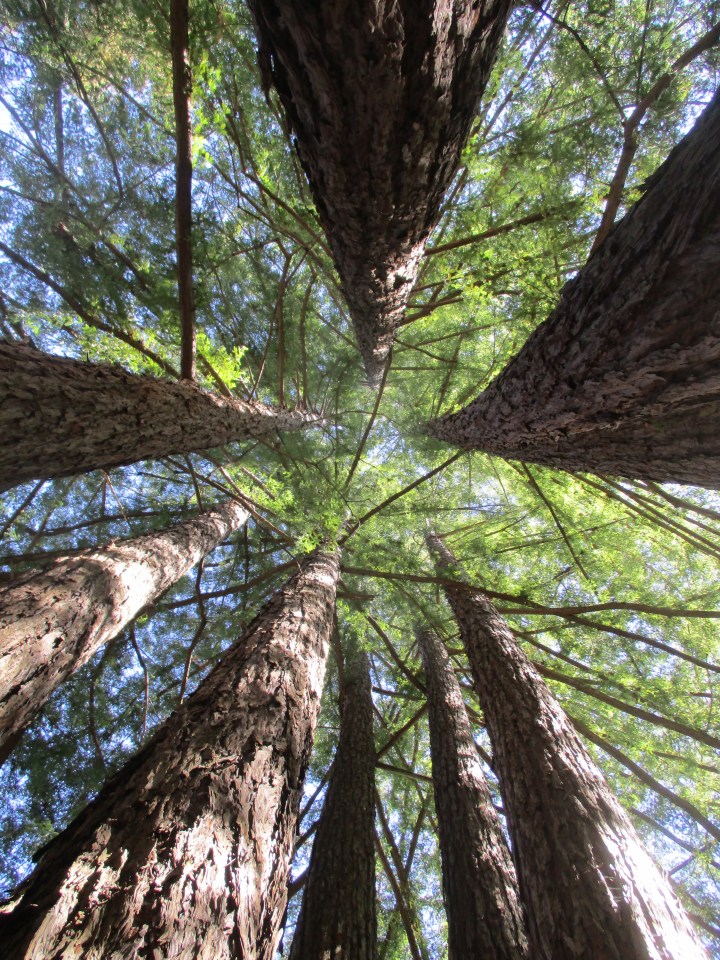
Coastal redwood that is so happy within its natural range on the foggy western slopes of the coast ranges to the north are not so happy on the drier eastern slopes of the same ranges. It probably would not survive for long in the Mojave Desert. California fan palm from the hot and arid region of Palm Springs languishes on the damp and cool western edge of San Francisco.

Most of the popular California native plants are popular because they do not need much water, if they need any at all. However, some are as unhappy with local climate conditions as exotic plants from other continents are. For example, few plants tolerate drought as well as Joshua tree does. Yet, Joshua tree is likely to grow fast and then rot because winters are too damp for them locally.

Of all the excellent plants that are native to California, the most excellent for local gardens are either the few plants that are native to the local region, or the many others that are native to similar regions. They do not need cold Sierra Nevada Winters, hot Death Valley summers, Mojave Desert aridity or San Francisco fog. They are right at home here.

Even natives need some help adapting to a new garden. Confining their roots to cans while they grow in nurseries is very unnatural for them. Once planted, they will need to be watered while their roots disperse enough to survive on rainfall, or with minimal watering.

Cool Vegetable Gardening Goes Warm

00318thumb
Warm season vegetables enjoy warming weather.

The weather agrees with the calendar this year. It is time to start replacing remaining cool season vegetable plants with fresh warm season vegetable plants. In fact, according to how the weather has been through February, the process could have begun quite some time ago. Frost, which is the limiting factor for warm season vegetables, is very unlikely this late, even if wintry rain resumes.

The past month of springy weather makes it easier to replace aging cool season vegetable plants with those that are now in season. Cool season vegetable plants obviously perform best through the cool weather of autumn and winter. They perform into spring where winters are cooler. Unseasonable warmth here accelerated their maturation. They deteriorate if not harvested soon enough.

Most of the the cool season vegetable plants produce vegetables that truly are vegetative. Most individual plants produce only once. For example, one cabbage plant produces only one cabbage. Conversely, most warm season vegetable plants actually produce fruit. Some produce many fruits through their season. Even some warm season vegetative leafy greens can produce repeatedly.

Tomato, pepper, eggplant pole beans and the various summer squash can get planted early to produce until they succumb to frost at the end of the season. Cucumber and pea do not produce for such an extensive season, so might be grown only in spring or the end of summer. Corn and root vegetables produce only once, so their seed get sown in multiple phases to prolong their season.

Corn, root vegetables and most greens grow best from seed sown directly into a garden. There is no need to start them inside here. Confinement can disfigure root vegetables anyway. Because so many individual plants are grown, it is impractical to purchase seedlings.

However, purchasing a few seedlings of tomato, pepper, zucchini and most other warm season vegetable plants is not as impractical. If only a few are desired, they are not much more expensive than seed. They are conducive to transplant, and will continue to produce through the season.

Ferns Are Made For Shade

50304thumb
Ferns are famous for distinctive foliage.

Without color or fragrance of flowers, ferns provide some of the most distinctive foliage in the garden. They do not turn color in autumn. Only a few tree ferns develop sculptural branch structure. Yet, they do their job well, and many are happy to do so in spots that are a bit too shady for other plants.

Almost all ferns are low perennials that produce foliage that arches outward from the center. Some can get quite broad. A few tree ferns grow upward on trunks (although the trunks are merely tough roots that grow through decomposing stems). Australian tree ferns can get quite tall and broad where sheltered from wind.

The staghorn fern is a weird epiphyte that naturally clings to tree trunks or rock outcroppings where it collects organic debris that falls from trees above. In home gardens, it is popularly grown on wooden plaques or as a hanging plant. Hanging plants do not necessarily need pots, or sometimes engulf their pots as they grow.

Leaves of ferns are known as ‘fronds’, and with few exceptions, are intricately lobed or divided into smaller leaflets known as ‘pinnae’, which are arranged on opposite sides of leafstalks known as ‘rachi’ (or singularly as ‘rachis’). The staghorn fern has unusually branched but otherwise unlobed fronds. The bird’s next fern has has distinctively simple fronds without any lobes or pinnae.

Most of the popular ferns are naturally understory plants that grow below larger plants. Even most tree ferns grow amongst larger trees. This is why so many ferns tolerate shade so well. In fact, many prefer partial shade, and will actually fade or scorch if too exposed. However, it is also why so many ferns prefer rich soil with an abundance of organic matter.

Maidenhair, rabbit’s foot, bird’s nest, holly, Boston and a few other ferns are popular as houseplants. Because home interiors are a somewhat arid for them (lacking humidity), some ferns like to be misted daily. Ferns respond well to regular but light application of fertilizer. Too much fertilizer can roast foliage.

Because ferns are not expected to bloom, nitrogen (which can inhibit bloom for some plants) is not a problem. Ferns that are out in the garden can therefore get fish emulsion or a bit of the same sort of nitrogen fertilizers that keep lawns green.

Foliage Is Meant For Weather

00311thumb
Lush foliar houseplants enjoy occasional rinsing.

Foliage needs sunlight for photosynthesis. Foliage needs air for respiration. Roots need moisture to sustain foliage. Houseplants can technically get all of what they need from the confinement of their pots within the interiors of homes and other buildings. They only require sufficient moisture to be delivered to them, and sufficient sunlight from windows. The air is the same that we all utilize.

However, there is no substitute for nature. While hydroponics and synthetic light facilitate yet more deprivation of what is natural, the plants involved would appreciate more consideration. Without exception, domesticated plants are descendants of plants that grew wild somewhere. Those that dislike local weather would be pleased with the weather of their respective ancestral homelands.

Most of the popular houseplants that are grown for their lush foliage originated from tropical forests. Many were understory plants that prefer the shade of larger trees. That is how they tolerate the relatively shaded interiors of buildings. Now that they are here as houseplants, they appreciate shelter from frost. They probably miss rain, humidity, sporadic breezes and tropical warmth though.

Rinsing tropical foliage plants in the shower eliminates some of the dust that they accumulate where air stagnates. Rinsing them out in the garden is even better because it does not make such a mess in the shower. What is even better than both of these options is allowing a gentle rain to rinse the foliage. Plants only need to be moved to a windless spot prior to an expected rain shower.

The weather was much too cool earlier in winter. There will be no rain later in summer. This time of year, and again next autumn, the weather is safely mild; and eventually, a few showers are likely. Timing is critical. Plants should be brought out just prior to rain, and brought in before the weather gets sunny. Foliage that has always been sheltered is very sensitive to scald from direct sunlight.

Saucers and pots can be cleaned while outside. Crowded plant can be repotted.

Cacti Have Bite Without Bark

50225thumb
Cacti exhibit unique and striking form.

The most inhospitable spots in the garden that no one wants to put any work into seem to be the domain of cacti, whether or not any cacti actually live there. “Oh, I will just put some cactus there!” is cliché in regard to shadeless and dry spots that get too hot with glare from a south-facing wall. Yet, such spots typically continue to be neglected, and the cactus never get planted.

Why are such distinctive and interesting plants considered to be so lowly that they should be banished to the badlands? Why should they be expected to endure what not other plants are expected to endure? After all, there are so many other distinctive xeric plants, like yuccas, agaves and some aloes, that are just as resilient, and according to some, just as lowly.

Cacti really are not as independent as commonly believed. New plants should actually get watered occasionally until they disperse their roots. If they get watered regularly, they need coarse soil that drains very well. Cactus plants that were grown in sheltered spots really can get scaled if planted where they are too harshly exposed during hot weather.

The main problem with cactus is their nasty spines. Simply planting small plants without getting poked is a challenge. Moving big potted specimens or removing overgrown cactus plants without getting seriously perforated can be daunting. So, even though they might do well in the harsh exposure at the curb, they do not belong in such a high traffic area.

Without foliage or conventional stems, cactus are either awkward to prune, or can not be pruned at all. Barrel cactus have only one or very few round stems. If one of these stems gets to wide, it can not be pruned back. Prickly pear cactus is easier to accommodate only because it has enough stems to spare those that grow out of bounds.

What makes cacti so excellent is their distinctive form. Some have strictly upright stems that resemble those of the organ pipe cactus. Some grow as clumps of short and fat stems. Others grow upward and outward with rounded and flat stems like those of the beaver tail cactus.

Frost Is Now Old News

00304thumb
Minor frost can cause major damage.

Frost was something of a nonissue for some of us this winter. For those of us in milder climates, in rarely is. Those who limit selection of what grows in their gardens to species that are resilient to frost need not be concerned with it. Those of us who enjoy gardening a bit too much are more likely to grow a few marginal species that would prefer to be somewhere with milder winter weather.

Protection from frost might have been a concern prior to the onset of cold weather. Then, there was more concern for the few plants that might have been damaged by frost. Grooming and pruning of damaged foliage and stems needed to be delayed until after the threat of subsequent frost. Now that it is so late in the season, subsequent frost is very unlikely. It is safe to clean up any mess.

Pruning and grooming of foliage and stems that were damaged by frost is delayed for two main reasons. Firstly, the damaged material, although unsightly, helps insulate undamaged foliage and stems below it from subsequent frost. Secondly, premature removal of damaged material stimulates premature development of new foliage and stems that are more sensitive to subsequent frost.

Not only is it now safe to prune and groom frost damaged plants, but such procedures should not be delayed while affected plants recover. The same frost damaged material that provided a bit of protective insulation earlier would now interfere with the healthy development of new stems and foliage. Pruning can now promote new growth that was preferably delayed through colder weather.

Because the weather has been so pleasantly mild for quite a while already, new growth may already be developing among some frost damaged plants. Damaged material should be removed as carefully as possible to limit damage to such new growth. Many perennials that were not damaged this year might be pruned as if they were, to remove tired old growth, and promote new growth.

Many of the dormant spores of fungal and bacterial pathogens that overwinter in old foliage will be removed as such foliage gets groomed away.

Orchids Have History In California

50218thumb
Breeding has done wonders with orchids.

It is funny how so many different plants get here from all over the world, and then become so popular so far from their natural homes that they seem to have always been here. It is now hard to imagine that some of the more popular cymbidium orchids actually came from tropical and subtropical Asia and northern Australia. Other orchids are from tropical Africa or South America.

As the Nineteenth Century turned to the Twentieth, orchids were popularized by those who profited from industry in the east, and then moved west to escape harsh winters. They arrived in the Mediterranean climate of the Santa Barbara region with resources to spend on outfitting luxury homes with comparably luxurious gardens and exotic plants. Orchids were a natural choice.

At homes in Montecito and Hope Ranch, cymbidium orchids were grown is mass plantings, and maintained by professional horticulturists. The popularity of orchids continued for decades. As the extensive orchid collections of England were threatened by the bombing and fuel shortages of World War II, collectors and horticulturists in California brought them here to be safe and warm.

Many of these refugee orchids were bred extensively by Californian horticulturists to produce many of the countless varieties that are now available. Production of blooming potted orchid plants and cut orchid flowers have become major horticultural industries in California. To this day, the Santa Barbara region produces more orchids than any other region in America. Modern tissue culture cloning technology has made it possible to propagate and grow more orchid plants at a faster rate than ever before. This makes them more affordable.

Even though mass plantings of cymbidium orchids are now rare, orchids are probably as popular as they ever have been, simply because they are so available to more people who can enjoy them. They are not limited to fancy gardens of luxury homes. Cymbidiums are still popular potted plants for sheltered porches. Small but flashy moth orchids are among the most popular of blooming potted plants for homes and offices.

Weeding Earlier Rather Than Later

00226thumb
Rain makes weeds grow like weeds.

Weeding is not much fun. Some of us might enjoy the relaxing monotony of productive weeding. Realistically though, most of us would prefer to do something else in the garden. There is certainly plenty of other chores that need to be done now, after earlier rain, and before the weather gets significantly warmer. However, such weather is why it is important to start weeding earlier than later.

By definition, weeds are weeds, because they are unwanted. They get to be unwanted by dominating space and exploiting resources more aggressively than wanted plants. Some innately grow faster and more aggressively than most other plants. Some are innately prolific with seed. Some employ multiple tactics to gain unfair advantages. Weeding is how we help our gardens compete.

Weeds grow throughout the year. Most slow down through the dry warmth of summer, and many die off then. However, there are always some weeds growing somewhere. When they die off, it is only after they have dispersed seed for their next generation. Some generate a few generation annually. Some are perennial weeds, or even shrubs, vines and trees, which survive for many years.

Weeding is more of a concern now because the majority of weeds grow so much more aggressively after the earliest rain of winter. Warming weather later in winter accelerates their proliferation. This is the time of year that weeds start to crowd desirable plants. If weeding is delayed for too long, weeds eventually bloom and toss seed. Some weeds extend stolons to disperse vegetatively.

The good news is that the same rain that promotes the proliferation of weeds also facilitates weeding. Weeds are easier to pull while the soil is still damp than they will be as the soil dries later in spring and summer. Also, while weeds are still fresh and turgid, they are less likely to leave roots or stolons behind in the soil. They are more difficult to pull intact as they begin to deteriorate later.

Furthermore, weeding should be done before weeds bloom and disperse seed for subsequent generations. Some are sneaky and quick.

Overworked Plants May Recover Slowly

91218thumb
Some potted plants are real overachievers.

Landscaping and growing houseplants really is no way to bring nature closer to home. If it were up to nature, most of our gardens would be relatively bare. Most of the few native trees are less than ideal for home gardens. The few native annuals and perennials with colorful flowers bloom only briefly. Almost all native shrubbery is scrubby and not conducive to pruning. After all, most of us live in what would naturally be coastal chaparral.

This is why home gardens contain so many exotic plants from so many different climates and regions all over the world. These plants get pruned, shorn and mown in all sorts of unnatural ways. Most do better if watered unnaturally through naturally dry summer weather. Many crave unnatural fertilizer. Houseplants and a few others are confined to pots so that roots can not disperse like they want to.

Potted plants that are forced into bloom to decorate home interiors are the most unnatural of all. They are among the most extensively bred of plants. They are grown in contrived environments that coerce them to bloom whenever their blooms are needed. Poinsettias, lilies, azaleas, hydrangeas, kalanchoes, callas, miniature roses, chrysanthemums and some orchids are the more familiar of these sorts of plants.

They are certainly colorful by the time they leave the greenhouses they were grown in. By the time they come home, they are in the middle of full bloom. There is no work to get them to bloom. The work is in keeping blooms as healthy and as colorful as possible, for as long as possible. Most of these plants only want to be watered regularly, and are happy to keep their color for quite a while.

By the time they want fertilizer, blooming potted plants will have finished blooming. Sadly, at that time, most get discarded instead. Realistically though, such systematically abused plants can be rather ugly as they replace their greenhouse foliage with foliage that is better adapted to the garden. The process of forcing them into bloom is just too unnatural and difficult to recover from easily.

Yet, with enough patience and pampering, most blooming potted plants should eventually recover and adapt to a garden lifestyle. Lilies, callas and other bulb-like plants should be put aside in the garden while their foliage fades and eventually separates from the bulbs. The dormant bulbs can then be planted and allowed to grow into their new environments.

Seasonal Pruning Is Precisely That

00219thumb
Some trees get pruned after bloom.

Seasonal pruning is just as the terminology implies, seasonal. It might seem as if it all happens in winter. Most of it begins after cooling autumn weather initiates dormancy. Most of it is completed before warming spring weather stimulates vascular activity and resumption of growth. That is why most seasonal pruning is referred to simply as winter pruning. Winter really is best for most of it.

However, most is not all. Plants that are damaged by frost should not be pruned immediately. Because pruning removes insulating vegetation, and stimulates new growth that is more sensitive to frost, such pruning is delayed until after the threat of subsequent frost. Birches and perhaps maples are popularly pruned in late summer or autumn because they bleed so much if pruned in winter.

Flowering cherry, plum, peach, crabapple and quince do not need the same sort of pruning that their fruiting counterparts rely on. Their exquisite bloom is the priority, rather than fruit. Pruning prior to bloom could diminish their potential. They can instead be pruned immediately after bloom, as new growth is emerging, or later in summer after soft new growth has become a bit more resilient.

Lilac and forsythia should likewise be pruned after spring bloom, but more aggressively than the flowering fruitless ‘fruit’ trees. If not pruned enough, they will produce fewer canes through summer to bloom the following spring. Older and gnarlier canes should be cut to the ground to favor younger and less branched canes. Old Oregon grape and Heavenly bamboo canes can be culled too.

Redtwig dogwood and cultivars of willow that are pollarded or coppiced for their colorful twigs can be pruned later too. There is no need to deprive them of their primary assets prematurely. They should be pruned as winter ends though, before their buds start to pop. Pussy willow is an exception that gets harvested after buds have fuzzily popped, but before new growth begins to develop.

Evergreen plants can be pruned late in winter, just before new growth develops to replace what gets pruned away.