Colorful Autumn And Winter Berries

41126thumbBefore the colorful foliage of autumn falls and gets raked away, a few types of berries and fruit start to provide a bit of color to last into winter, or at least until birds and other wildlife eat them. Technically, the most colorful berries are actually intended for the birds, both those that overwinter and those that migrate south for the winter. The berries are designed by the plants that produce them to both entice birds, and to reward them for dispersing the seeds within.

Pyracantha (or firethorn) is the most colorful of the berries. Cotoneaster is similar, but not quite so prolific. Toyon and English hawthorn, which can grow as small trees, produce open clusters of similar bright red berries. Of these, only English hawthorn is deciduous, and can defoliate before the berries disappear. Although such fruit is abundant, it is not often messy because it gets devoured before it reaches the ground. However, the birds can be messy.

English holly really should produce more berries than it does, but there are not enough pollinators out there. (Hollies are dioecious, which means that plants are either male or female. Female plants need male pollinators to produce fruit.) Decades ago, when horticulture was taken more seriously, male pollinator plants were marketed with female plants. Some other types of holly somehow make a few more berries, especially as they get older.

Loquat, mahonia, pomegranate and some flowering crabapples try to produce colorful fruit, but are not quite as colorful. Pomegranate fruit can be impressive in its own way, but are just rusty reddish brown on the outside. Strawberry tree produces a few red berries throughout most of the year. Many types of pittosporum develop fruit, but most are about as green as their foliage. The sticky amber seeds are ‘interesting’ when the fruit splits open, if anyone happens to look that closely.

Oranges, lemons, grapefruits, mandarins and other citrus will be colorful later in winter, even though they do not care if they attract any birds. For now, persimmons are the biggest and most colorful fruits out in the garden.

Division Renovates Tired Old Perennials

91204thumbAutumn is a time for planting partly because it is when many plants are beginning their winter dormancy. They are, or will soon be, less active than they would be at any other time of year. Some may not start to grow again until after winter ends. Others will want to secretly disperse their roots through the rainy winter weather, while merely appearing to be dormant from above the soil level.

That is why autumn is also the best time for division of many types of perennials. Such perennials should be adequately dormant to not be bothered by the process of getting dug and divided into smaller parts, then replanted. They actually prefer to get it done sooner than later, so that they can slowly disperse their roots through cool and rainy winter weather, and be ready to grow in spring.

Divisions is often done to renovate bulky perennials that have become overgrown, shabby, or too crowded with their own growth to bloom well. Some of the more vigorous perennials may benefit from division for renovation every several years or so. Many complaisant perennials may never benefit from division. Of these, some might be divided merely for propagation of more of the same.

Japanese anemone, bergenia and other perennials that bloom in autumn and winter should get divided later, after bloom. Like perennials that get divided now, they tend to recover and efficiently disperse roots before spring. However, they may need to be watered a bit more than typical if the weather gets warm and dry early next year. Their schedules do not coincide with local climates.

Lily-of-the-Nile, African iris and New Zealand flax can be divided into individual shoots, even if a few shoots get planted together in clumps. Entire plants do not need to be dug if it would be easier to merely pluck a few outer shoots from the perimeters of congested parent plants. Black-eyed Susan and Shasta daisy can be divided into clumps of several dormant basal rhizomes and roots.

‘Pups’, or sideshoots, of agaves and some types of yuccas can be carefully pried from their parent plants without disturbing them.

Arborists Specialize In Tree Horticulture

0

Why is it so difficult to believe that there are so many different kinds of horticultural professionals? No one is ever surprised that surgeons, cardiologists, dermatologists, ophthalmologists and pulmonologists are all physicians. Yet, those who do not know better consider all horticultural professionals to be ‘gardeners’. This is actually more insulting to real professionals than outsiders can imagine, because the gardening industry is more dominated by non-professionals than any other horticultural industry.

Nurserymen, landscapers and florists are also horticultural professionals. Each of these basic categories can be divided into more specialized professions. For example, production nurserymen grow nursery stock or other horticultural commodities, while retail nurserymen maintain plant material only long enough to sell it. Maintenance gardeners are probably the most familiar of horticultural professionals because so many of us use their services around our home gardens.

Arborists are the horticulturists who specialize in trees, and really should be more familiar than they are. The only landscapes that have no possible use for their services are those that are devoid of trees. Even the most proficient of maintenance gardeners should not be expected to maintain large trees or diagnose potential arboricultural problems, not only because arboriculture is so specialized, but also because maintenance gardeners have their own specialties to be concerned with.

Because trees are the most substantial features of a landscape, and they have the potential to cause proportionate problems if not maintained properly, it is very important to have them maintained by qualified arborists. Those who are certified by the International Society of Arboriculture, or ISA, have passed an exam of their expertise, and maintain their certification with regular involvement with the ISA. Such involvement includes attendance to arboricultural seminars and classes.

It is ironic that some of the least familiar of horticultural professionals need to stay so dedicated to the maintenance of their credentials. Certified arborists can be found at the website of the ISA at isa-arbor.com.

Autumn Weather Prompts Foliar Color

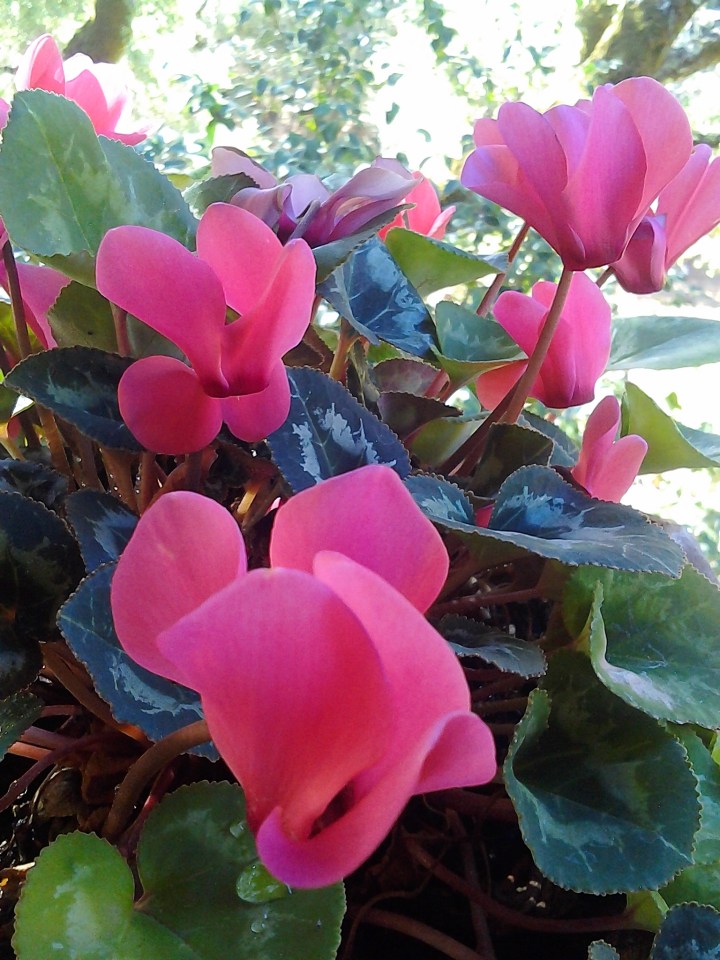
91127thumb(alternate)Mild climates allow more flowers to bloom through autumn and winter here than in most other parts of America. That is why cool season annuals like pansies and violas are so popular. Cyclamen can be planted now too. None will be obscured by snow. By the time cool season annuals start to fade, warm season annuals will be replacing them. There is something to bloom in every season.

There are a few disadvantages to mild climates, though. Many plants rely on significant winter chill to stay on schedule. Inadequate chill limits the cultivars of apples and pears that are productive here. Not many spring bulbs will naturalize. Prior to winter, some deciduous plants are hesitant to resign to dormancy until they experience a chill that is cool enough to convince them it is autumn.

Some deciduous plants recognize a specific temperature as credible evidence of a change of seasons. Others want a specific temperature to be sustained for a specific duration or repeated for a few nights. Shorter days and longer nights are taken into consideration by species who want to confirm what they deduce from the weather. Different plants use different methods of observation.

That is why deciduous plants who develop foliar color before defoliating in autumn do so on their own terms. Weather conditions that promote excellent color among birches may not be the same that cause flowering cherries to color well. Warmth and minimal humidity that sometimes prompt premature and blandly colored defoliation of sycamores might enhance later color of sweetgums.

Sweetgum, Chinese pistache, flowering pear and ginkgo are the most reliable trees for foliar color in autumn. Ginkgo turns only brilliant yellow. The others exhibit an excellent mix of yellow, orange and red. Crape myrtle can be about as colorful, but is not always as reliable.

Of course, there is more to these and other deciduous trees than their colorful foliage in autumn. After all, they are trees. Their particular characteristics and appropriateness must be considered before adding any of them to a landscape.91127thumb

Keep Vegetation Clear From Chimneys

51028thumbFireplaces simply are not what they used to be. Building regulations in many municipalities do not allow for the construction of new fireplaces, except only for pellet stoves. Fireplaces that get damaged by earthquakes are commonly removed instead of repaired. Now that urban sprawl has replaced so many of the rural areas and defunct orchards, firewood is more expensive, even if purchased from a tree service. When a tree needs to be cut down, no one seems to have the time to cut and split the wood.

Modern heating systems are so much more reliable, efficient and just plain easy. Their fuel can actually be less expensive than firewood, and is not nearly as polluting. There is no smoke to offend the neighbors. There are no potentially dangerous sparks. There is no dirty chimney that needs to be cleaned. There is no need for firewood occupying space in the garden. Yet, with all the advantages of other heating systems, many of who still have fireplaces like to use them now that the weather is getting cool.

Because so much heat and a few sparks go out through the chimney, it is extremely important to keep trees and vines away from the top of the chimney. Cypress, pines, cedars, large junipers, eucalypti and fan palms that are not groomed of their dried old leaves are very combustible. Vines like wisteria, bougainvillea, creeping fig and Boston ivy are not unusually combustible, but have a sneaky way of overwhelming chimneys and accumulating debris (and sometimes rat or bird nests!). Any vegetation will be combustible if it gets hot enough. Sparks from burning foliage above can easily ignite old fashioned cedar shingles.

Trees should also be pruned away from roofs, gutters, fences and anything else that can be damaged by the abrasive motion of the stems and foliage in the wind. Stems of deciduous trees lose weight as they defoliate, and may even lift off of roofs that they had been leaning onto just a few weeks ago, but should be pruned accordingly anyway. Branches that have been leaning on a roof for quite a while may have accumulated a bit more debris than would be expected. Gutters and downspouts should be cleared of debris before the rain starts, and may need to be cleared again later where deciduous trees fill them up through autumn and winter.

Evergreen Trees Drop Leaves Too

IMG_20141004_153228As the deciduous trees that will soon be coloring for autumn defoliate for winter, the evergreen trees will become more prominent. Some evergreen trees will drop some of their foliage along with deciduous trees through autumn and winter. Many drop some of their old foliage as new foliage develops in spring, or later in summer. All are on distinct schedules, but are never completely bare.

That certainly does not mean that evergreen trees are not messy. To the contrary, some happen to be significantly messier than some deciduous trees are. They are only evergreen because they do not drop their old foliage until it is replaced by new foliage. Whether individual leaves last just slightly longer than a single year, or for several years, they eventually shed and fall to the ground.

In fact, evergreen trees may shed small but pestering volumes of foliage for a few months or even constantly throughout the year. Some deciduous trees defoliate so efficiently within a very limited time once the weather gets cool, that all of their fallen leaves will be raked away within only two or three weeks. Of course, some trees, both deciduous and evergreen, drop flowers or fruit or both.

Not only do most evergreen trees shed for a longer time than most deciduous trees do, but most shed foliage that is not so easy to rake away. Cypress shed minute and finely textured leaves that are impossible to rake from lawns, but toxic if they accumulate. Juniper and arborvitae are easier to accommodate only because the trees are smaller. Fir, spruce and cedar have bigger needles.

Broadleaf evergreen trees are very different from coniferous trees. Their leaves are considerably easier to rake. They are generally more substantial than those of deciduous trees though. Some may not decompose so readily in deep groundcover. Southern magnolia leaves are notably slow to compost. Instead of producing cones, some broadleaf trees drop acorns or other messy seed.

Nonetheless, where there are compatible with their landscapes, evergreen trees are as practical as deciduous trees are.

Why Autumn Is Also Fall

50923thumbNow that leaves are falling, they need to be raked. Large leaves, like those of sycamore and fruitless mulberry, can shade out lawn, shallow ground cover or dense shrubbery. If shade is not a problem right away, mildew can be after only a bit of rain. If abundant enough, finely textured silk tree or jacaranda foliage that typically sifts harmlessly through shrubbery and most ground cover, can accumulate and damage lawn, dichondra and the densest of ground cover. Walnut foliage has an herbicidal effect on sensitive annuals and some perennials.

Foliage is only beginning to fall. Cooling weather causes deciduous trees to shed more. Rain and wind bring the foliage down even faster. Even evergreen trees that naturally shed throughout the year will likely shed more through the upcoming wintry weather. Some trees start to defoliate early in autumn. Some hold their foliage until frost. Some trees that seem to be evergreen hold their foliage through winter, and then only drop their older foliage as it gets replaced by new foliage as winter ends.

Pavement and decks should be raked of leaves, not only to avoid staining, but also because rotting leaves can become dangerously slippery. Curbside gutters are too visible to get neglected for too long. However, heavy rain can quickly deliver to the cleanest of gutters a mess of fallen leaves as well as any other debris and litter that happens to be up the road. Strong wind can be filtered through hedges, leaving drifts of blowing leaves.

Leaves should also be cleared from roof gutters and downspouts, and may need to be cleared away again later in the season. More debris may need to be removed from awkward spots where it might accumulate, such as behind chimneys. Flat roofs may need to be raked.

There are a few exceptions to the need to rake fallen leaves. Where they get absorbed into coarse ground cover like Algerian ivy, falling leaves are generally not a problem. Pine needles and cypress foliage can be left if it happens to be useful for the natural suppression of weeds. Mature coast live oaks and valley oaks that are accustomed to a layer of their own fallen leaves over the surface of the soil actually want it to stay. For them, the foliar debris is a mulch that adds organic matter, insulates the soil, and retains moisture.

Mulch Is Imitation Of Nature

91113thumbEvery living thing in our gardens came from the wild somewhere. A few plants might be natives trying to adapt to synthetic landscapes. Some might be from similar climates. Some are likely from very different climates. Even houseplants came from the wild somewhere in the World. Regardless of their respective origins, in home gardens, all plants want to behave as they would in the wild.

Many plants want to defoliate at this time of year. Even some evergreens want to shed some of their old foliage before winter. Some perennials die back to the ground. Most summer annuals are already dead. There is an abundance of deteriorating organic material getting discarded by the plants that produce it. In the wild, all this detritus would naturally fall to the ground and decompose.

That might be a problem in parts of our refined landscapes. Fallen leaves must be raked from lawns, decks, pavement and various other flat spaces outside. If left too long, they shade out lawns, ground cover and bedding plans. Fallen leaves can stain decking and pavement too. The worst diseases of roses and fruit trees overwinter in fallen infected debris that does not get raked away.

Unfortunately, raking the mess of autumn away deprives the plants that live in the garden of the abundant decomposing organic matter that they expect to be delivered this time of year. The soil is left exposed and uninsulated, allowing temperature and moisture content to fluctuate more than they would naturally. Nutrients are not replenished as readily as they would be from decomposition.

Mulch, which can be applied at any time of the year, is quite seasonably appropriate in autumn. This is when plants expect decomposing organic matter to arrive from above. Mulch compensates for the loss of what we consider to be a mess, but what plants consider to be an important component to their natural ecology. It gives them what they want, but is neat enough for refined gardens.

The best mulch for the job just might be fallen leaves that were raked last year and composted, perhaps with other debris from the kitchen and garden.

Color Is Lacking This Autumn

41029thumbSweetgum, flowering pear and Chinese pistache are the most reliable trees for flashy autumn foliar color, especially in such mild climates. They may not seem like it this year though. After a late start, only sweetgum is coloring well. Flowering pear trees that are beginning to show color farther inland seem to lack their typical bright yellow and orange, and are showing more dark rusty red.

Like so many flowers that bloom in spring, foliar color in autumn is as variable as the weather. Temperature and humidity can either inhibit or enhance color. It is impossible to say what caused the disappointing color so far, or if foliage that colors later will be just as bland. A sudden chill could change things for Chinese pistache that are still behind schedule.

Maidenhair tree (gingko) is the best for bright yellow, but lacks any other color. Fruitless mulberry, tulip tree and various poplars can be nearly as bright yellow in a good season, and may still color well. Of the various willows, only a few color well, and they tend to be more sensitive to weather. Early rain can rot their leaves before they get much color at all.

Although elms are not known for coloring, some of the modern varieties turn remarkably bright orange. However, the few oaks that color well in colder climates turn only dingy brown locally. The few North American maples that can provide color do not hold their colored foliage very long. All sorts of trees have all sorts of personalities.

Eastern redbud, smoke tree and crape myrtle are shrubs or small trees that color as well as larger trees in autumn. Crape myrtle can be as bright yellow, orange and red as sweetgum. Some Japanese maples color better than others, and some can be quite impressive, but only if their foliage does not get roasted by warm and arid weather through summer.

Where it can be accommodated, Boston ivy is an aggressively clinging vine that provides all the remarkably colorful foliage on freeway sound-walls. It is out on the freeways for a reason though. It can ruin any other surface that it clings to.

Arborists Maintain The Big Trees

91106thumbThe trees know what time of year it is. Even evergreen trees have shed some of their older foliage through late summer. Deciduous trees generally start later, but will be more blatant about their process as they defoliate completely through autumn to winter. Some get strikingly colorful first, as if to brag about it. Foliage is not so important during shorter days and dimmed sunlight anyway.

By the time storms start to arrive later in autumn, trees intend to be ready. There will be less foliage to be blown by wind, or to absorb the weight of the rain. Remaining deciduous foliage is likely to be dislodged by wind and rain before supporting limbs succumb. Trees will be mostly dormant, so will not mind so much if a few minor limbs do happen to get broken. They know their routine.

For many types of trees, this is a the best season for major pruning. While dormant, they are much less likely to be offended by it. In fact, they sort of expect to wake up in spring with a few limbs missing. They do not distinguish what was pruned away from what might have been broken by the weather. Besides, it is better to prune questionable limbs civilly, before they get broken brutally.

Trees that are beyond reach will need the attention of professional arborists.

Arboriculture is merely the horticulture of trees. An arborist is therefore a horticulturist who specializes in trees. They assess the health, stability and structural integrity of trees, and prescribe any necessary arboricultural procedures. They or their associated crews are qualified to perform the work that the trees need. The most proficient of arborists are those who are certified with the ISA.

The ISA is the International Society of Arboriculture. ISA Certified Arborists have passed an examination of their arboricultural expertise, and maintain their credentials by continued involvement with ISA educational seminars, classes and workshops. Information about the International Society of Arboriculture and local certified arborists can be found at their website, www.isa-arbor.com.