Understory Is Made For Shade

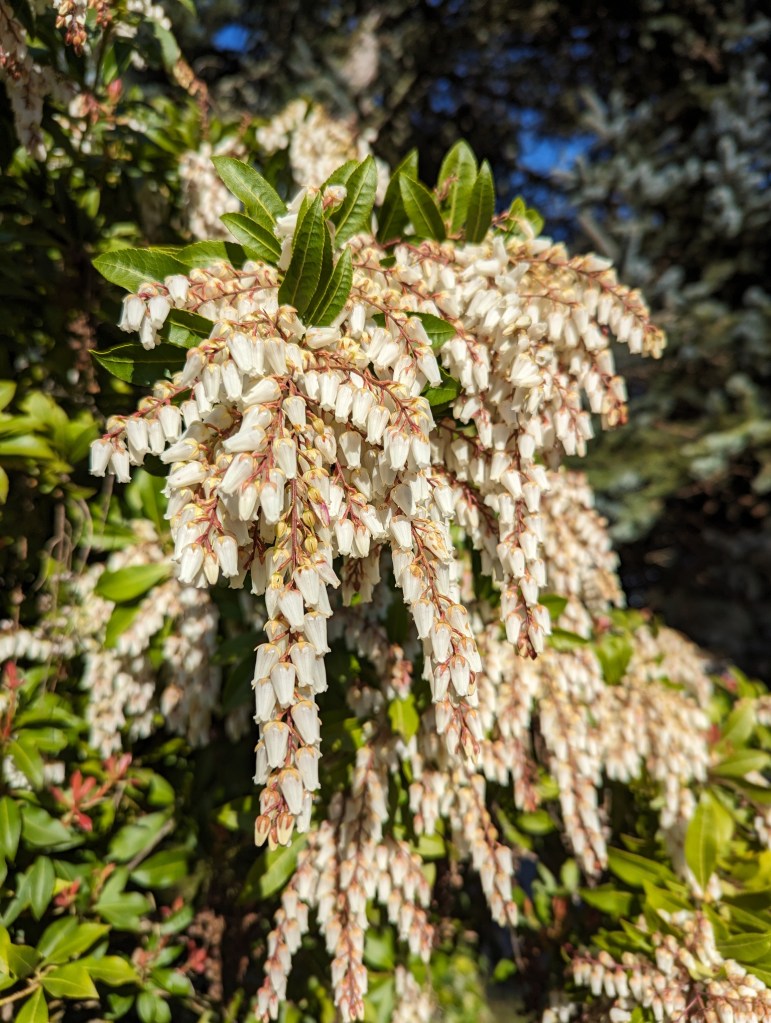
Andromeda tolerates a bit of shade.

Shade influences every ecosystem. Where it is scarce, some vegetation adapts to harsh exposure to sunlight. Some develops glaucous foliar color to reflect some of the sunlight. Some develops tomentum, or foliar fuzz, to shade its foliar surfaces below. Where shade is abundant, understory vegetation adapts as efficiently. Essentially, it is made for shade.

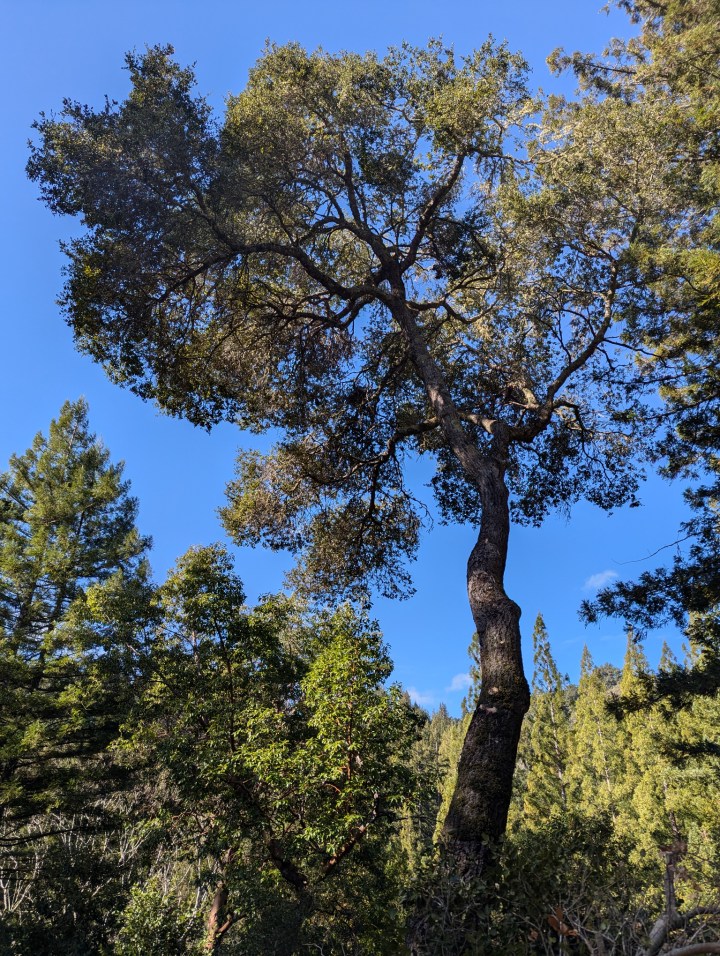
Understory vegetation naturally grows beneath larger trees and shrubbery. It is therefore more tolerant of partial shade. Some tolerates significant shade. Ferns that inhabit forest floors beneath shady redwood trees are notable examples. So are most houseplants that originated from tropical rainforest. Naturally, most live in the shade of bigger forest trees.

Not all understory vegetation is diminutive. Some Japanese maple trees can grow rather large. However, they naturally inhabit forests of trees that grow larger. Some palms begin as understory vegetation to become the tallest trees of their gardens. Their foliage simply adapts as it becomes more exposed. Banana and tree fern foliage might adapt similarly.

Such adaptation is an advantage now that home gardens are becoming shadier. Modern homes are taller, so produce bigger shadows than older homes. They are closer to other tall homes with comparable shadows. Fences are higher to compensate for the proximity of homes. Garden spaces are more compact, with less space that is not partially shaded.

No vegetation survives without sunlight. Understory vegetation is simply more tolerant of partial shade than most other sorts. It is adapted to it, just as some vegetation is adapted to extreme exposure. Generally, understory vegetation is deep green, to absorb as much sunlight as possible. For the same reason, individual leaves are typically large and lush.

Cast iron plant seems to tolerate more shade than any other understory vegetation. Kaffir lily and hosta tolerate almost as much shade as some ferns. Rhododendron, azalea and andromeda prefer only partial shade. Excessive shade inhibits bloom. The same applies to camellia and hydrangea. Realistically, all species of understory vegetation are unique. Each tolerates a particular degree of shade that it is adapted to.

Aphids

Aphid enjoy fresh new growth of roses.

Since the seeds arrived in the mail from Renee’s Garden, I have been waiting for the pale yellowish white ‘Buttercream’ nasturtiums to bloom. The appearance of their first few leaves was quite an event. They then started to grow a bit faster like annuals do this time of year. Then, suddenly and without warning, they where overtaken by a herd of hungry aphids!

These small but prolific insects congregate at the tips of new foliage and flower buds. They pierce fresh tissue and suck out the juices within. They are more often yellowish green, but can be grayish black, pale white or sickly pink. Although minute, the fattest aphids can be as plump as caviar.

Fortunately, aphid are typically not problematic for very long, and are easier to control than other insect pests. Even without insecticides, their festivities will be brief before their natural predators move in and break up the party. Pesticides can actually be detrimental by also killing some of the natural predators, and delaying their conquest of the aphids.

Right now though, I do not care! The aphids are hurting the nasturtiums. They must die!

On tougher plants like roses, aphids can be blasted off with water from a hose. Because roses can get mildew if their foliage stays wet too long, they should get blasted early in the day, so that they can dry in the sun. This procedure does not kill all the aphids, and may not even dislodge all of them, but it slows their proliferation so that the natural predators have the advantage.

Nasturtiums and other annuals that are too soft to get blasted with water can instead be sprayed gently with very slightly soapy water, which efficiently kills aphids. Water with a bit of vinegar, or a ‘tea’ made from cigarette butts, also work. Foliage is less likely to be damaged if rinsed afterward. This likewise does not kill all aphids, but controls them long enough for the predators to take over.

Parasitic wasps, syrphid flies, lacewings, lady beetles and predatory midges all eat aphids. They only need some time to do so because they rely on the primary proliferation of aphids to feed their own proliferation. In other words, there must be enough aphids to feed the predators before there can be enough predators to feed on the aphids.

However, aphids have an ally. Ants dutifully protect aphids from their predators, and actually cultivate aphids on choice plants because they like to eat the ‘honeydew’ excreted by the aphids. (ICK!) That is why lemon trees that are infested with aphids also have an abundance of busy ants commuting up and down the trunks.

Trimming an aphid infested lemon tree so that it does not touch anything else, and circling the base of the trunk with axle grease, will keep the ants out without preventing predatory wasps from flying in. Just like with roses, blasting with water dislodges many of the aphids and  stranded ants; but the wasps simply get out of the way and return when it is safe. It may all seem unfair to the aphids and the ants, but is gratifying for the predatory wasps, the lemon tree and whoever cares for the lemon tree.

Hybrids Of The Botanical Nature

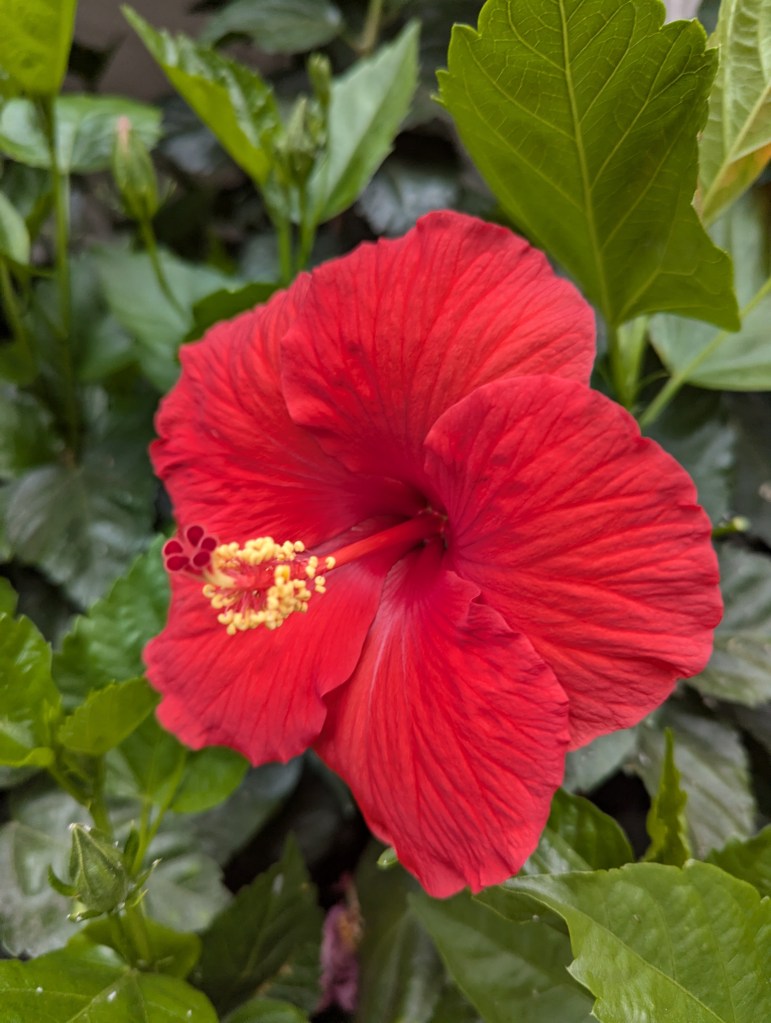
Fancy gladiolus are products of hybridization.

Botanical nomenclature has gotten sloppy. So has breeding. Hybrids of different species are now common. Their botanical names often lack proper species designation. Instead, their names include only their genus names with their variety or cultivar names. This can seem simpler. However, it complicates the simplicity of binomial botanical nomenclature.

Interspecific hybrids involved different species of the same genus. Therefore, any genus name is the same as that of both parents. An “X” precedes its species name to indicate it as an interspecific hybrid. Its species name is as new and unique as the new hybrid. Any cultivar or variety name follows its species name in single quotes. it is all quite sensible.

Intergeneric hybrids involved different genera. Therefore, an “X” precedes a genus name of an intergeneric hybrid to designate it as such. Its entire name is as new and unique as the hybrid. Like for all botanical names, both its genus and species names are italicized. This designates them as ‘Latin’ names. Variety and cultivar names lack such italicization.

Many hybrids are naturally sterile. Most that can produce viable seed are not true to type. In other words, their progeny is very different from them, and commonly of inferior quality. Most hybrids are therefore cultivars, or cultivated varieties. They are reliant on unnatural cultivation for perpetuation. However, some naturally perpetuate vegetatively, like canna.

Tree ivy, X Fatshedera lizei, is an example of an intergeneric hybrid. The “X” in its name precedes its genus name. London plane, Platanus X acerifolia, is an interspecific hybrid. The “X” precedes its species name. Platanus X acerifolia ‘Liberty’ is a cultivar of London plane. Its species name remains, which is proper with botanical nomenclature of hybrids.

Rhododendron and rose hybrids violate nomenclature rules because of their breeding. It is too extensive for their species to be identifiable. For them, the abbreviation “spp.” may substitute for a species name. It is for “species pluralis”, which means “multiple species”. Although it is Latin, it is not italicized. Nor are their more important cultivar names after it.

Real Drought Tolerance

Even native manzanitas, which really are drought tolerant, need water until they disperse their roots.

Nearly every landscaper and gardener brags about using plants that do not need much water. Buzz words like ‘drought tolerant’, ‘native’, ‘sustainable’ and ‘xeriscape’ have become all too common, even though few actually spell ‘xeriscape’ properly. (It is NOT ‘zeroscape’!) Unfortunately though, most gardeners water so frequently and generously that drought tolerant and native plants are less sustainable than plants that want more water.

The difficulty is that drought tolerant plants generally need rather regular watering immediately after planting, while they are still dispersing their roots, but then want to dry out between watering once they are established. Otherwise, they are very susceptible to rot if the soil is constantly moist. Most drought tolerant plants should therefore not be mixed with plants or lawns that want regular watering.

Trees like incense cedar, beefwood, carob, silk oak, olive, California pepper tree and some eucalyptus, pine and oak can be nice shade trees in lawns that are not watered too much, but do not live as long as they would with less water. (Although many are messy in lawns anyway; and carob smells bad when it blooms.) California laurel, African sumac, Australian willow, strawberry tree and most acacia and cypress are less tolerant of lawn irrigation.

Eucalyptus, pine, oak and acacia have sensitive roots, so do better if planted while young instead of as larger specimens. For example, #5 (5 gallon) red ironbark eucalyptus get established faster and grow larger than 24” boxed red ironbark eucalyptus installed at the same time.

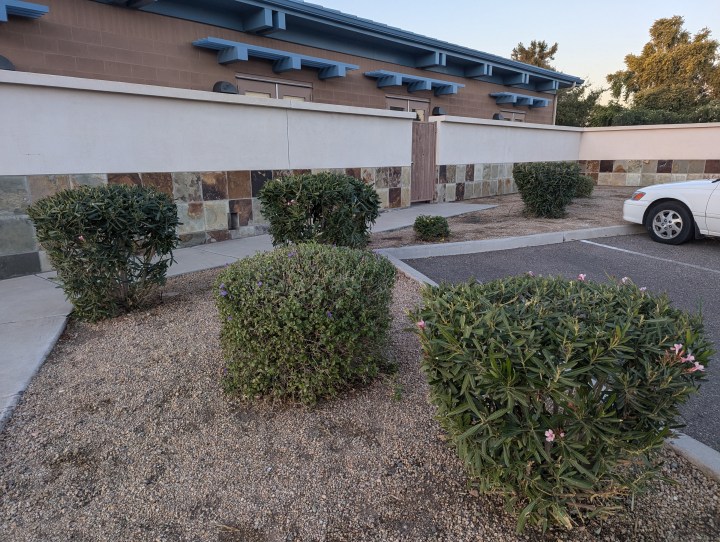
Bottlebrush, oleander, cotoneaster, hop bush, firethorn, grevillea, some types of wild lilac and all sorts of juniper can be happy with or without regular watering. Manzanita, coyote brush, rockrose, flannel bush and western redbud really want to dry out between watering. Like many plants from arid climates, wild lilac, coyote brush, rockrose, flannel bush and western redbud are naturally relatively short lived. Western redbud fortunately has an efficient technique of producing an abundance of seed and replacing itself with new seedlings before if finishes.

Lily-of-the-Nile is one of the most useful perennials, and can survive with annual rainfall or nearly saturated conditions. New Zealand flax is nearly as adaptable, but is more susceptible to rot if watered too much. Rosemary and several iceplants are nice ground covers with or without regular watering.

The various yuccas, aloes, agaves and their other relatives are some of the most practical perennials for arid climates, and many tolerate somewhat generous watering if necessary. However, most agaves and yuccas have nasty sharp leaves; and some agaves get too big to keep at a safe distance. Also, their bold personalities are not adaptable to every garden style.

Aromatic Foliage Has Ulterior Motives

Several Salvia species are splendidly aromatic.

Floral fragrance attracts insect pollinators. Foliar aroma repels insect pathogens. It might repel other herbivores also. For organisms that lack olfactory perception, plants certainly make productive use of it. Fragrant flowers are as attractive in home gardens as they are to pollinators in the wild. However, aromatic foliage has the opposite of intended effects.

In other words, aromatic foliage is popular within home gardens because of its aroma. Its effort to be repulsive to some insects and herbivores makes it attractive to people. Some aromatic foliage has culinary or herbal application. Actually, almost all herbs are notably aromatic, with corresponding flavors. Mint, chive, thyme and sage are popular examples.

Window boxes became popular in ancient European towns because of aromatic foliage. Where garden space was scarce, they were convenient planter boxes for growing herbs. Also, prior to window screens, they sustained aromatic foliage that repelled mosquitoes. Trailing rosemary, ivy geranium and nasturtium are still very traditional accompaniments.

Rosemary has both culinary and aesthetic application. Culinary cultivars exhibit the best flavor. Landscape cultivars are either trailing or more densely shrubby. Some cultivars of fennel are similarly better for either culinary or landscape application. Bronze fennel has become popular for both. Varied lavenders are more popular as home garden shrubbery.

Native bay is very aromatic when its foliage is disturbed, but is not culinary bay. It is a big and obtrusive tree that is proportionate only to large landscapes. Culinary bay is another smaller species that is more proportionate to home gardens. Also, it has a distinct aroma. Incense cedar is another very aromatic native tree, but is quite rare within home gardens.

Most aromatic foliage can not exude its aroma like fragrant flowers exude their fragrance. Most does so only when disturbed. Some, such as that of many conifers and eucalypti, is beyond reach. It is therefore easy to dismiss within some landscapes. Lavender, lantana, diosma, rockrose and salvia stay within reach. Warmth and humidity amplify their aroma.

Why Hire An Arborist?

Arborists work with the big trees.

Like the many different kinds of physicians who work in a hospital, there are many different kinds of horticultural professionals who specialize in particular disciplines. Although too commonly considered to be ‘landscapers’, and even though many do not work directly with landscapes, there are nurserymen, gardeners, landscape architects, horticulturists and arborists, to name a few.

Arborists specialize in the horticulture of trees. Only a few decades ago, arborists were known as tree surgeons, since they perform surgery on trees. Of all the horticultural physicians that attend to concerns in the landscape, arborists and their associated technicians are the most qualified to properly maintain trees.

Expecting a gardener to maintain large mature trees is like expecting a pediatrician to perform major surgery. Even the most proficient and educated gardeners are too specialized with maintaining other plant material in the garden to also be specialized with arboriculture, or the horticulture of trees.

Arborists who are certified by the International Society of Arboriculture, or ISA, have successfully passed and examination of their arboricultural aptitude. Certification must be maintained by attendance to educational seminars, workshops and other relevant events approved by the ISA.

The website of the International Society of Arboriculture, or ISA, at www.isaarbor.com, is the best resource for finding certified arborists and the tree service establishments that they are affiliated with. Arborists can be found within particular regions by city or ZIP code, or identified directly by name or certification number.

The ‘Public Outreach’ category at the ISA website features links to www.TreesAreGood.org, and ‘Why hire an arborist?’, as well as a few other links for consumers. After all, the website exists not only for professionals, but also to help consumers find professionals and to make responsible decisions about their trees, from the time they get planted, throughout their lifetime, and until they get old and eventually need to be removed.

The www.TreesAreGood.org link has all sorts of information about trees and their maintenance. There are many and various articles about the benefits of trees, the value of trees, tree selection, planting new trees, proper pruning techniques, insects and diseases, tree hazards, why topping hurts trees, and even an article about palms. Incidentally, the Fun Facts link mentions that the tallest tree is the coastal redwood, the biggest tree is the giant redwood, and oldest tree is the bristlecone pine, all of which are native to California.

Trees are of course the most substantial components of a landscape. Some will be around for years. Some will be around for more than a century!

Hedging Produces Foliar Green Fences

Proper hedging technique is not complicated.

Motorized hedge shears are the most overused home garden power tools. They are very useful for hedging evergreen shrubbery into hedges and privacy screens. However, they too often shear vegetation that requires different types of pruning. They are fast and easy but not appropriate for all pruning applications. Even hedging is a specialized technique.

Unfortunately, the rules of hedging are too often ignored. Hedges are utilitarian features. Many provide privacy. Many obscure unwanted scenery. Some divide large gardens into smaller and cozier spaces. Most continue to function as they should even without proper maintenance. Consequently, problems associated with maintenance may not be evident.

Unshorn informal hedges are mostly simpler to maintain, but only if they remain unshorn. Ideally, they use species or varieties that mature to a desirable size and form. Therefore, they should not become too large or Obtrusive. Only a few wayward stems need pruning. Of course, species or varieties that grow too large for such application will need hedging.

Shorn or formal hedges are more likely to develop problems. They need regular hedging to maintain their size and strict form. Yet, even with the most diligent maintenance, many become overgrown. Many gain depth from front to back, to become obtrusive. Many gain more height than they should. Most become distended up high while subdued down low.

This happens because pruning cuts can be slightly farther out than they were previously. They are a bit farther out higher up because that is where most growth is. Hedging within former cuts can renovate overgrowth, but damages hedge facades. Fortunately, damage should be temporary. Severely overgrown hedges might require severe pruning, though.

As mentioned, hedges are utilitarian. They should perform their primary purpose without encroachment into usable spaces. Their typically evergreen foliage is generally external. Their interiors are generally bare stems and empty space. Therefore, a hedge can be as effective whether two or four feet from front to back. Four feet is merely a waste of space.

Spring in Guadalupe Gardens

Spring is in the air.

(This article is recycled from many years ago, so contains outdated information.)

Spring in Guadalupe Gardens on April 23 is the big local gardening event of the Santa Clara Valley! Not only will it be within Guadalupe Park, surrounded by the various Guadalupe Gardens, but Spring in Guadalupe Gardens gathers together an impressive variety of local gardening clubs and vendors. There will be workshops, lectures, trail walks and garden tours, as well as fun activities for children, music and entertainment.

The Heritage Rose Garden, which is the most extensive public collection in the United States of America, designed for the preservation of the ancestors of modern roses, will be in full bloom. The Historic Orchard is a tree museum of the many fruit and nut trees that inhabited the vast orchards that once filled the Santa Clara Valley; many of which can be productive in modern suburban gardens.

Representatives of many local gardening clubs will be at Spring in Guadalupe Gardens, with information about their respective expertise, as well as membership. The John E. Stowell Dahlia Society, the American Fuchsia Society and the Master Gardeners of Santa Clara County will all be there, to name a few. I will be at the Gardening Advice Booth throughout the event, to discuss any gardening issues and questions.

When I can get away from the Gardening Advice Booth, I like to see what I can purchase from the many vendors. There will be more than forty. Most of my fuchsias, and some of my aloes and cacti were obtained at Spring in Guadalupe Gardens. It is common to find many uncommon tomato plants and roses.  There will also be garden art and paraphernalia. The Master Composters of Santa Clara County will be giving away free compost. One never knows what to expect at Spring in Guadalupe Gardens.

Earth Care Recycling will again host a free electronic waste drop off at the Visitor and Education Center, to collect all sorts of computer components, televisions, stereos, fax machines and telephones. Proceeds benefit the Guadalupe River Park Conservancy.

Spring in Guadalupe Gardens will be from 10:00 a.m. to 3:00 p.m. this April 23, just north of the Guadalupe Gardens Visitor and Education Center, which is located at 438 Coleman Avenue in San Jose.  Admission and parking are free. Just follow the signs from Coleman Avenue or East Taylor Street. More information about Spring in Guadalupe Gardens can be found at www.grpg.org or by telephoning 298 7657.

Native Species Are Natural Choices

California lilac grows wild throughout California.

Wildflowers are only part of the story. They are happy enough with the chaparral climate here to bloom for spring or summer. A few are naturalized exotic species, though. In other words, they are not native to California. They merely behave like they are, likely because they are from similar climates. Native species are happy here because they are at home.

More than the most abundant wildflowers are native. Many trees, vines, shrubs, annuals and perennials are also. They were here long before Spanish explorers imported the first exotic plants after 1542. They were as satisfied with local soils and climates then as they are now. This is why many are more suitable for home gardens than many exotic plants.

Native plants are less popular than exotic plants only because a few are a bit too natural. Since they are from chaparral climates, some may get a bit scraggly and dry by summer. They survive arid weather by being partially dormant through some of it. Most appreciate irrigation through summer. However, some are susceptible to rot with generous irrigation.

Conversely, there are several advantages to native plant species. They naturally require less irrigation than most exotic species. Once established, some expect none at all. Only species from other chaparral or desert climates might be less demanding. Landscapes of exclusively native species therefore conserve water. Some get all they want from rainfall.

Also, native species are more compatible with natural ecosystems. Any that self sow into nearby wildlands will be where they belong. They do not compete unfairly for pollinators that other native species rely on. Nor do they compete unfairly for possibly limited space and resources. Furthermore, they contribute habitat and sustenance to wild native fauna.

California poppy and sky lupine are probably the most familiar of native annuals. Various salvias and bush lupines may be the most familiar native perennials. California lilac and flannel bush are familiar native shrubs. California sycamore, coastal redwood and coast live oak are familiar native trees. Many native species are practicable for home gardens, and landscaping.

Slugs & Snails

hor d’oeuvres

The British Invasion by the Beatles may not have been much of a problem to American gardens; but the French Invasion by brown snails is. Since getting imported as escargot, they eat much more than they get eaten, tearing apart flowers and foliage and devouring young seedlings completely. They tend to hide during the day, and emerge after sunset to graze voraciously until dawn.

Snails as well as slugs are most active this time of year, while the garden is still damp from winter rain, but getting warmer with springtime weather. Fresh vegetation that grows and starts to bloom about now is more than abundant enough to sustain them. Slugs and snails may be slow and ‘sluggish’, but have immense appetites.

Unfortunately, lush foliage that is most susceptible to the wrath of snails and slugs is also the most conducive to their proliferation. Overgrown foliage and plants with large leaves provide plenty of cool damp shade for snails and slugs to hide in during the day. Removing big weeds, fallen leaves and any debris eliminates some of the shelter that they crave while the sun is up.

Snails and slugs are neither elusive nor fast. Hunting them should be easier than it actually is. They are of course easiest to catch while they are out at night. Shallow containers, like saucers for potted plants, containing puddles of beer purportedly get snails to stay out drinking until the sun comes up and roasts them, but this technique is probably more work than it is worth. It wastes beer and seems to catch only a few victims at a time. Besides, the beer gets washed away whenever the garden gets watered.

It is easier and just as sneaky to leave boards or cardboard out overnight for snails and slugs to hide under in the morning, and then surprise the deceived snails and slugs during the day by depriving them of their shelter. They are objectionable to handle, but otherwise easy to collect. Your imagination is probably more useful than any recommendations about how to dispose of them once collected.

Copper tape that can be found in nurseries and hardware stores is a barrier to snails and slugs. It can be self adhesive, or stapled to wooden planter boxes. Plants must be contained within a copper barrier to prevent slugs and snails from getting over the barrier on any plant part that extends within their reach.

Bare copper wire can also be effective. Because trees are actively growing this time of year, copper wire wrapped as a barrier around tree trunks should have some slack, such as a flat ‘S’ shaped curve, to accommodate for trunk expansion.

Salt should not be used to control snails and slugs because it can be harmful to plants. Too much would be needed to surround susceptible plants, and like beer, it would get rinsed away when the protected plants get watered. Keeping drainage saucers filled with water as protective moats for potted plants inhibits drainage, and provides a place for mosquitoes to proliferate.