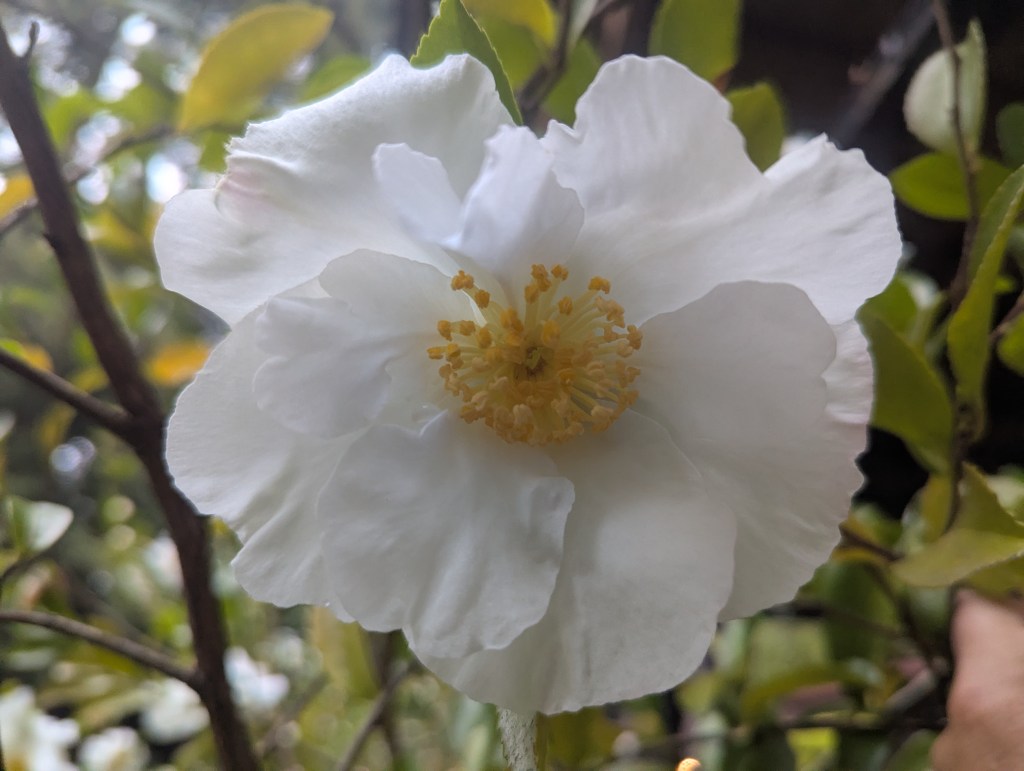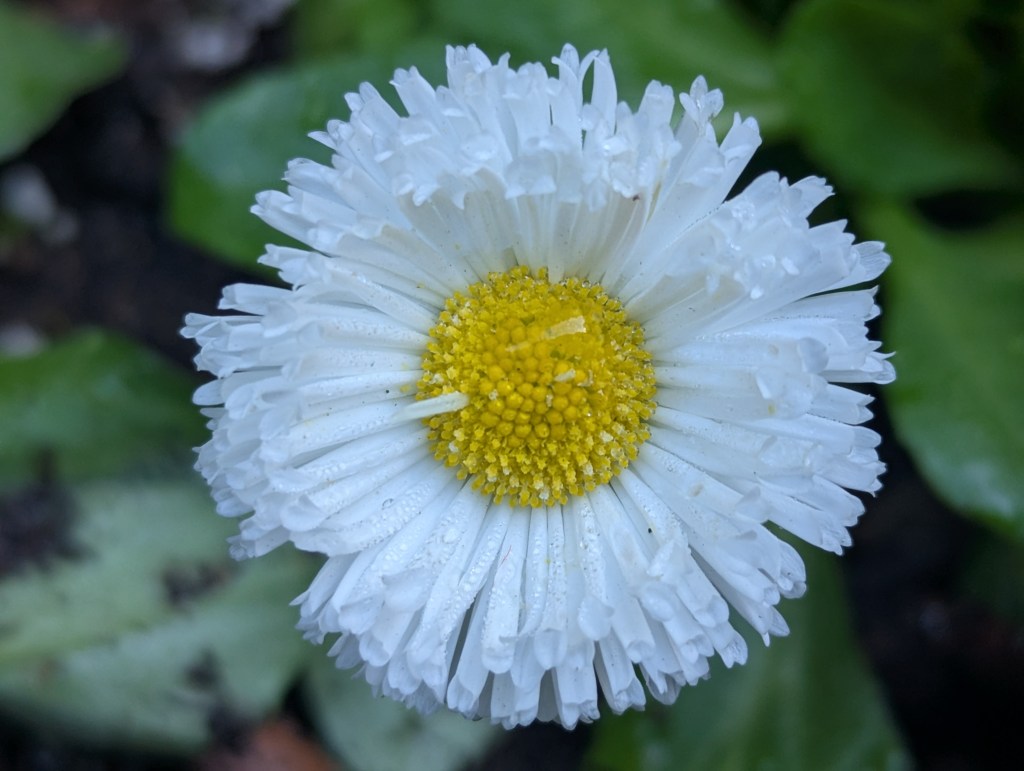
Sunday Best – English Daisy
As bloom of most other plants decelerates for late autumn and winter, the floral color of common annuals becomes more prominent in the landscapes at work.
1. Viola X wittrockiana, viola blooms with smaller but more profuse flowers than pansy. I am not certain if they are the same species. Also, most of the flowers face one direction.
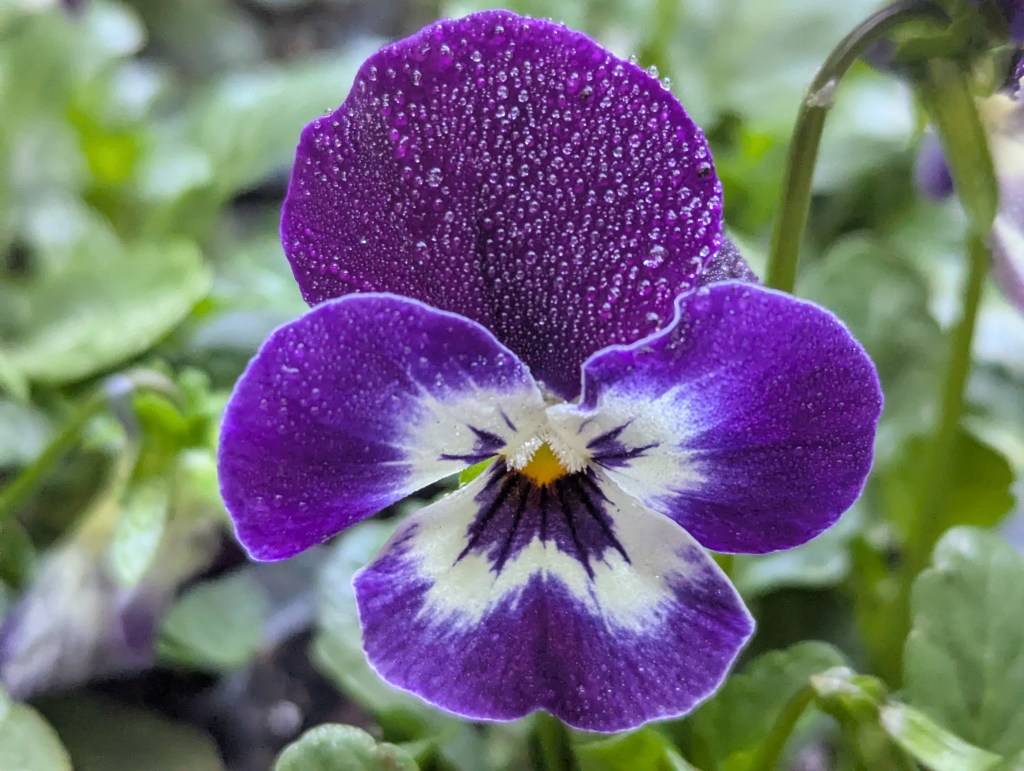
2. Viola X wittrockiana, pansy blooms with bigger but less profuse flowers which mostly face random directions. We got only two six packs to add to other flowers in a small bed.
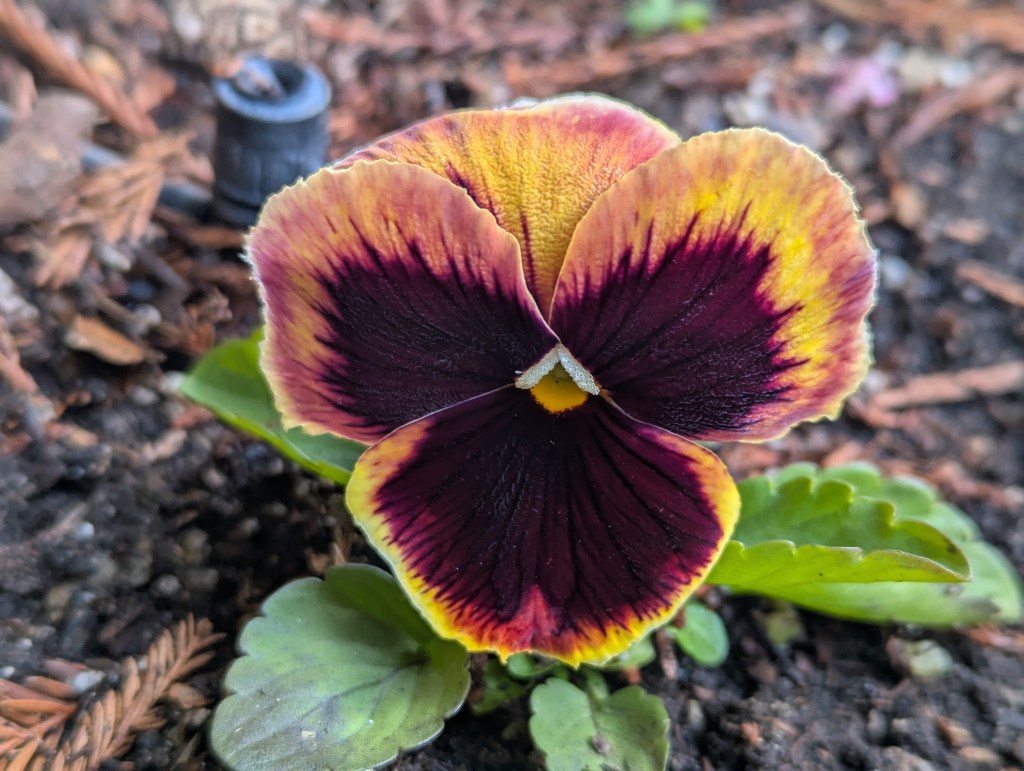
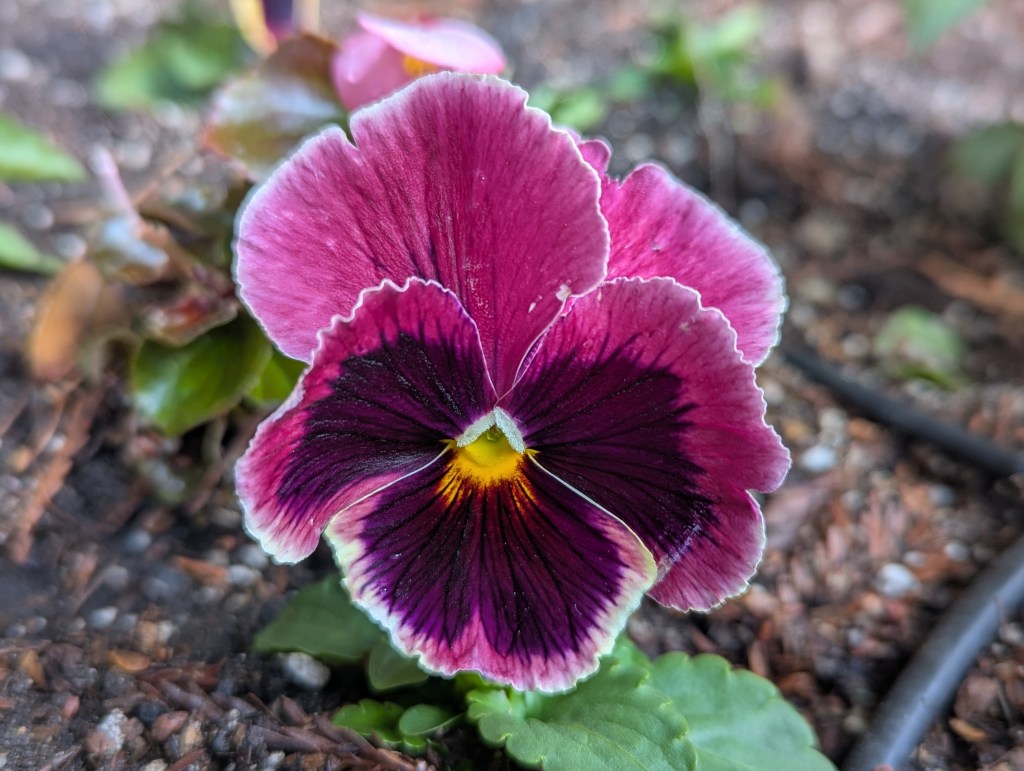
3. Viola X wittrockiana, pansy is redundant to the picture above, but is a different color. The plants are so dinky that they are scarcely visible behind their relatively wide flowers.
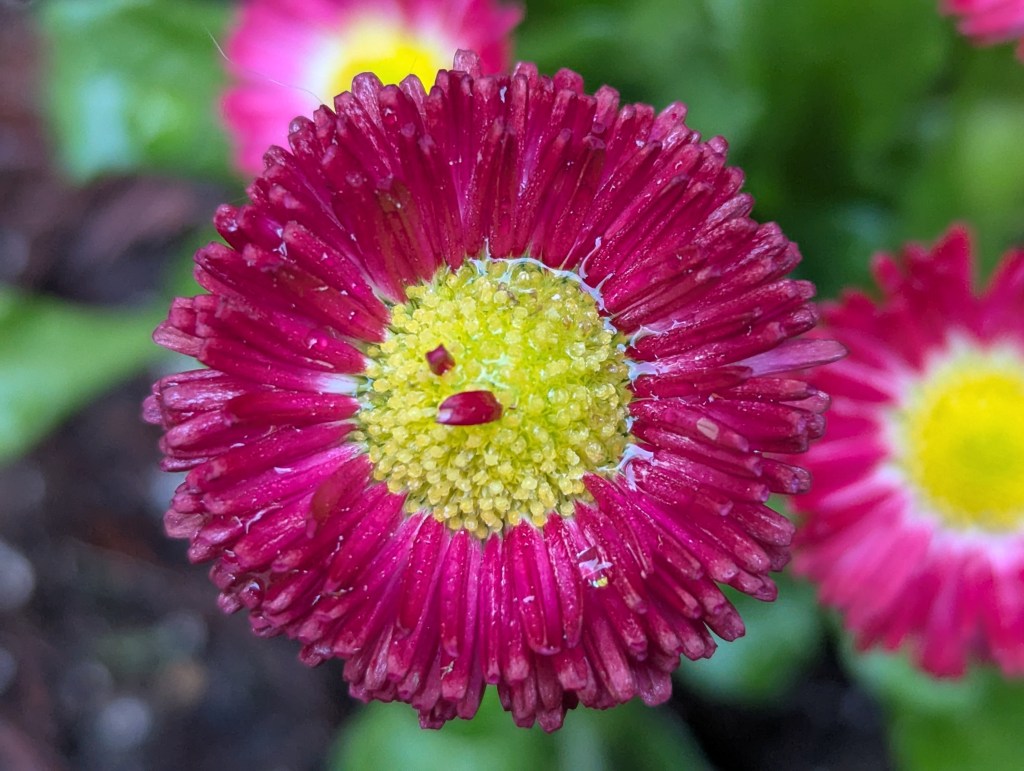
4. Bellis perennis, English daisy ranges in color from this rosy red to white like the color scheme of candy canes. I am fond of it because it is not so overly bred like other annuals.
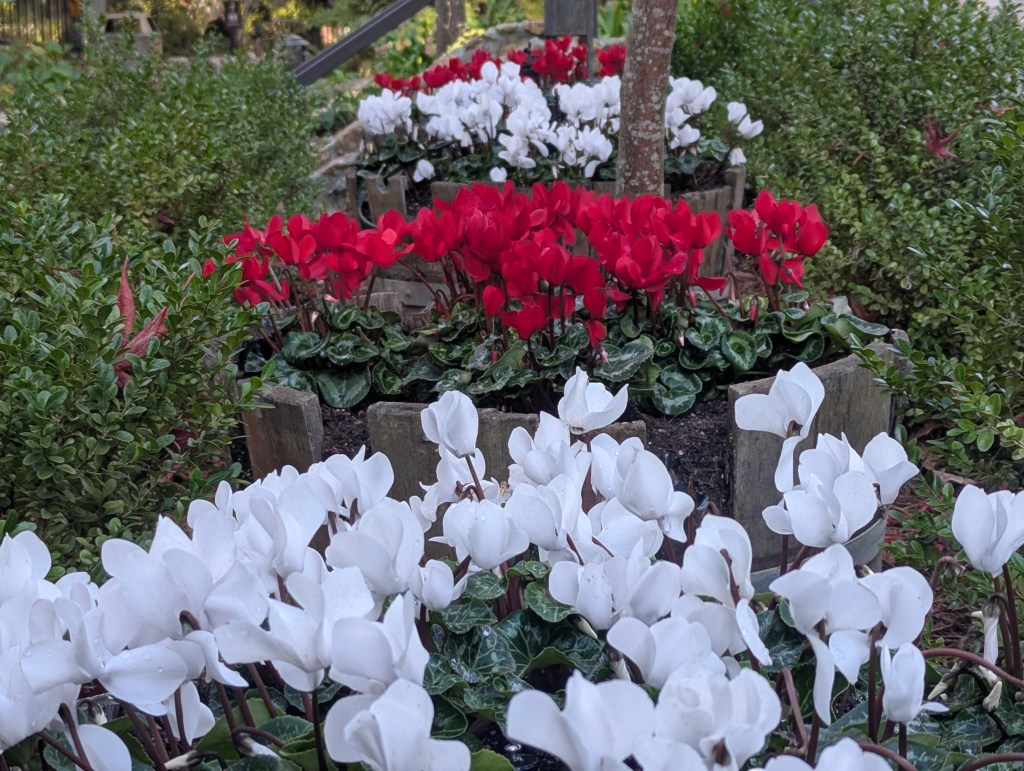
5. Cyclamen persicum, florist’s or Persian cyclamen is cheapened as an annual. I used to grow mine as cool season perennials. I also grew colors other than simple red and white.
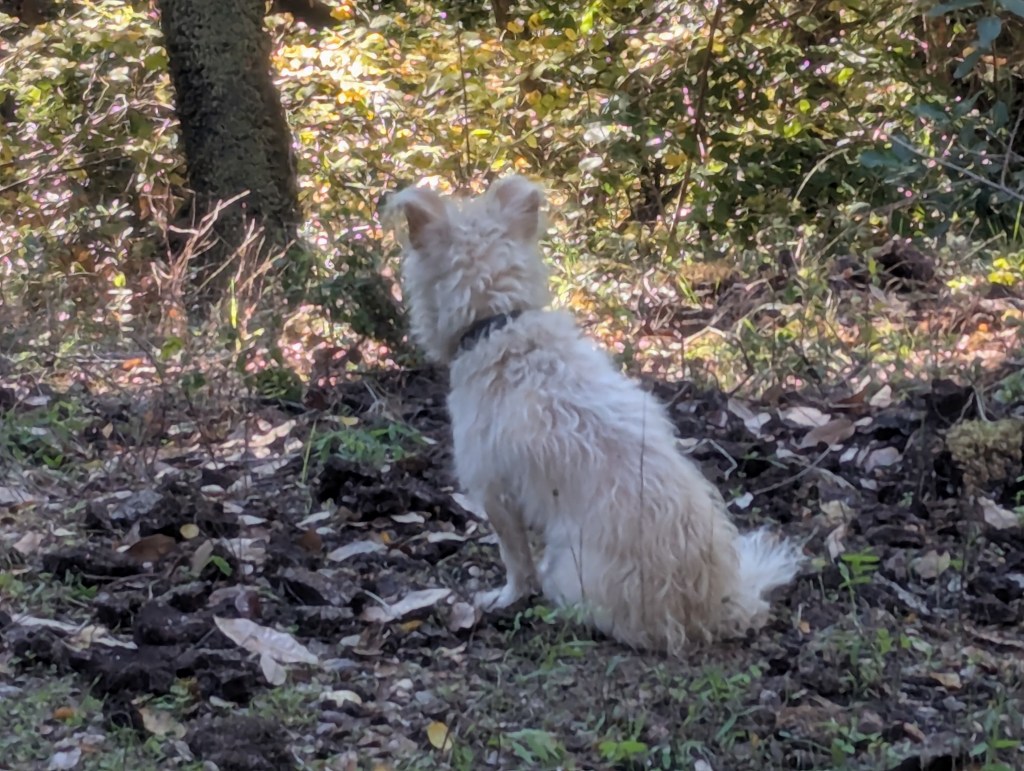
6. Rhody was unconcerned with these common annuals as he surveyed his domain early last Monday, while I burned forest green waste. He is not overly horticulturally oriented.
This is the link for Six on Saturday, for anyone else who would like to participate: https://thepropagatorblog.wordpress.com/2017/09/18/six-on-saturday-a-participant-guide/
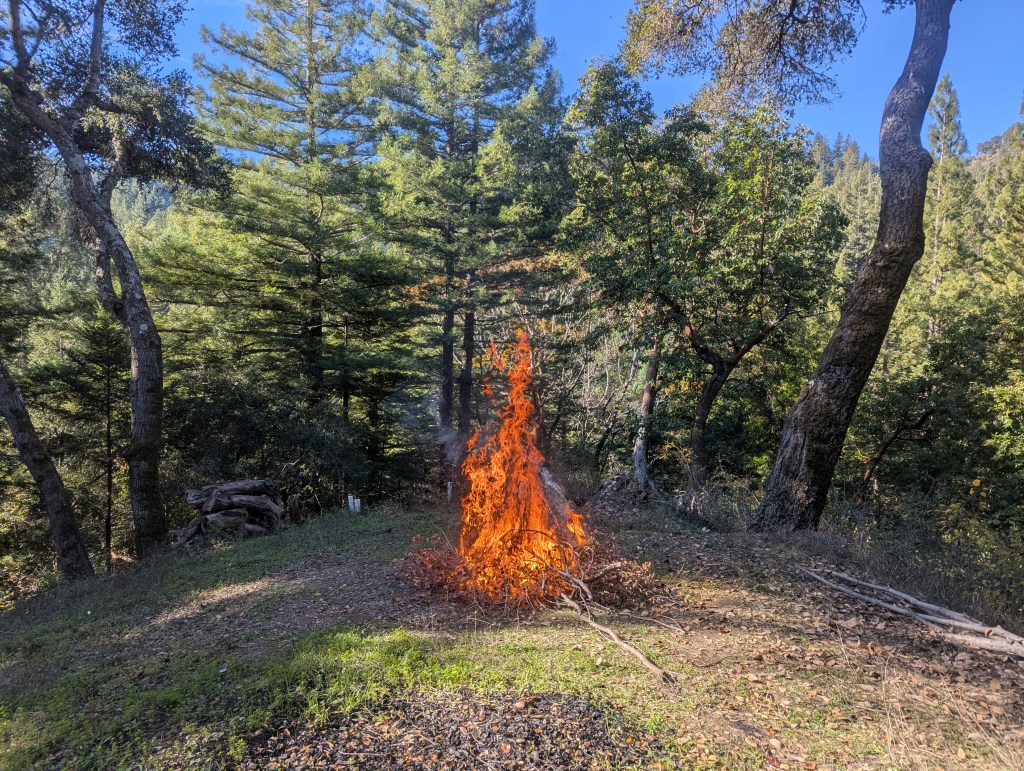
Monday was the first day of burn season, which continues from December 1 until April 30. On designated burn days within burn season, we can burn green waste that would otherwise make our properties more combustible during fire season, which is generally the opposite of burn season. The designation of burn days is determined by multiple meteorological factors, such as temperature, humidity, wind, atmospheric pressure and air quality. It is also limited by the moisture content of the forest, so can be delayed until after the first soaking rain storms. So, not only was Monday the first day of burn season, it was also the first designated burn day within burn season. I took the opportunity to burn some of the green waste that has been accumulating since the previous burn season. It was tedious but gratifying. A chipper would have been faster, but that is something that I lack here. Besides, a chipper can not go where some of the green waste remains. It is so far down steep hillsides that I may try to burn it where it is, rather than drag it up to where this primary burn pile was. There is a lot of green waste!
It is looking a bit more like autumn as a few more species respond to cooling weather by discoloring or deteriorating before defoliation.
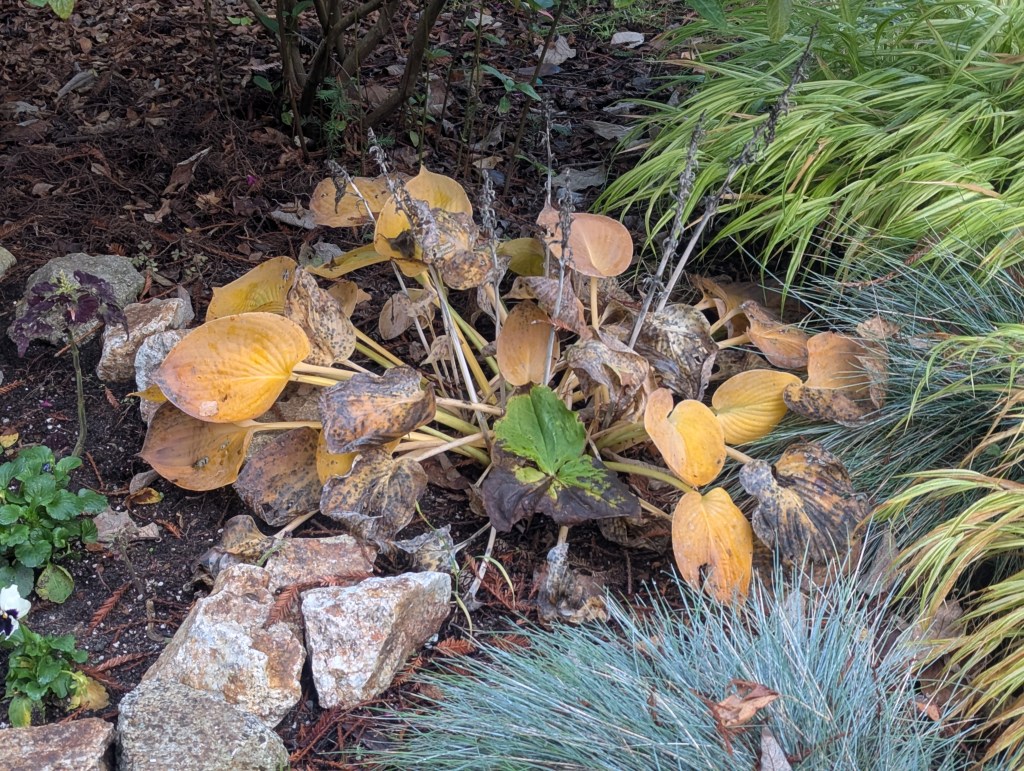
1. Hosta plantaginea, hosta is really looking shabby now. Actually though, it never really looked all that good. The difference is that this shabbiness is because of cooling weather.
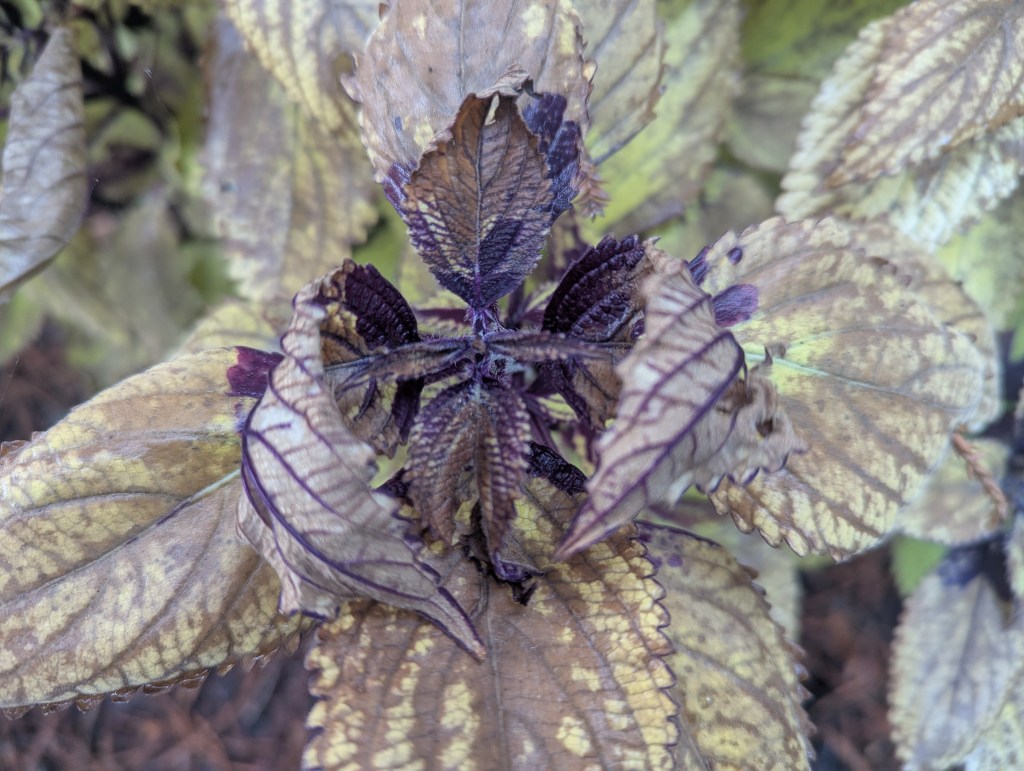
2. Plectranthus scutellarioides, coleus, which looked so splendid for Six on Saturday two weeks ago, is beginning to succumb to cooling weather, as is typical for this time of year.
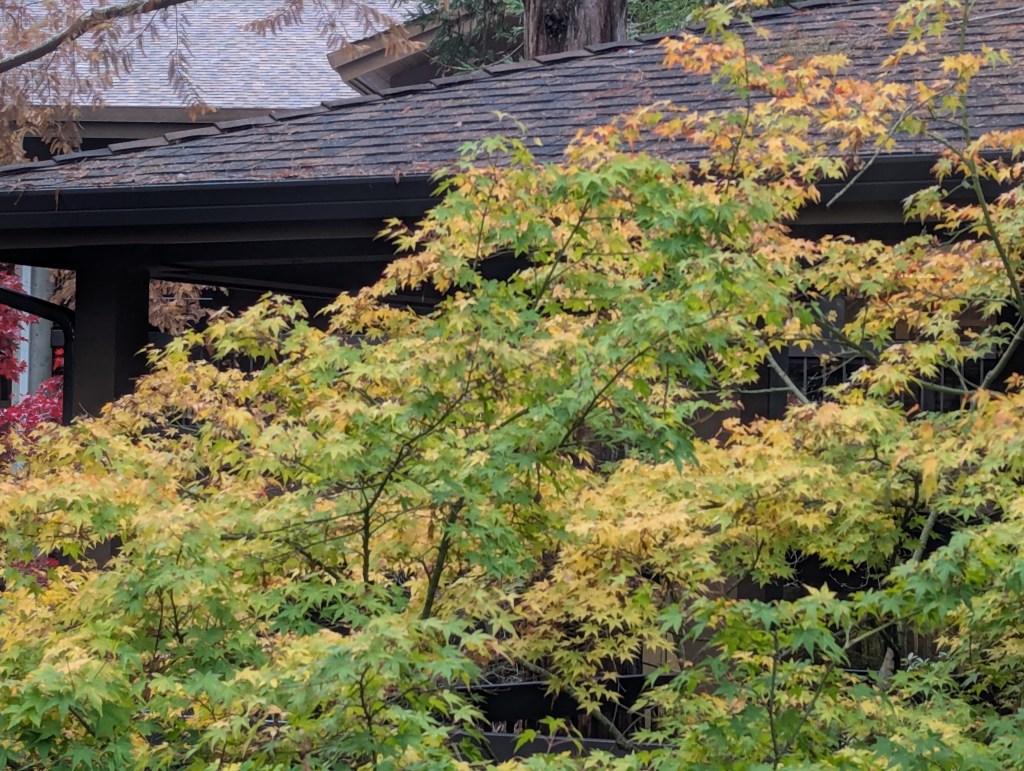
3. Acer palmatum, Japanese maple, which was still green for Six on Saturday two weeks ago, is now beginning to yellow in response to cooling weather, as it should for autumn.
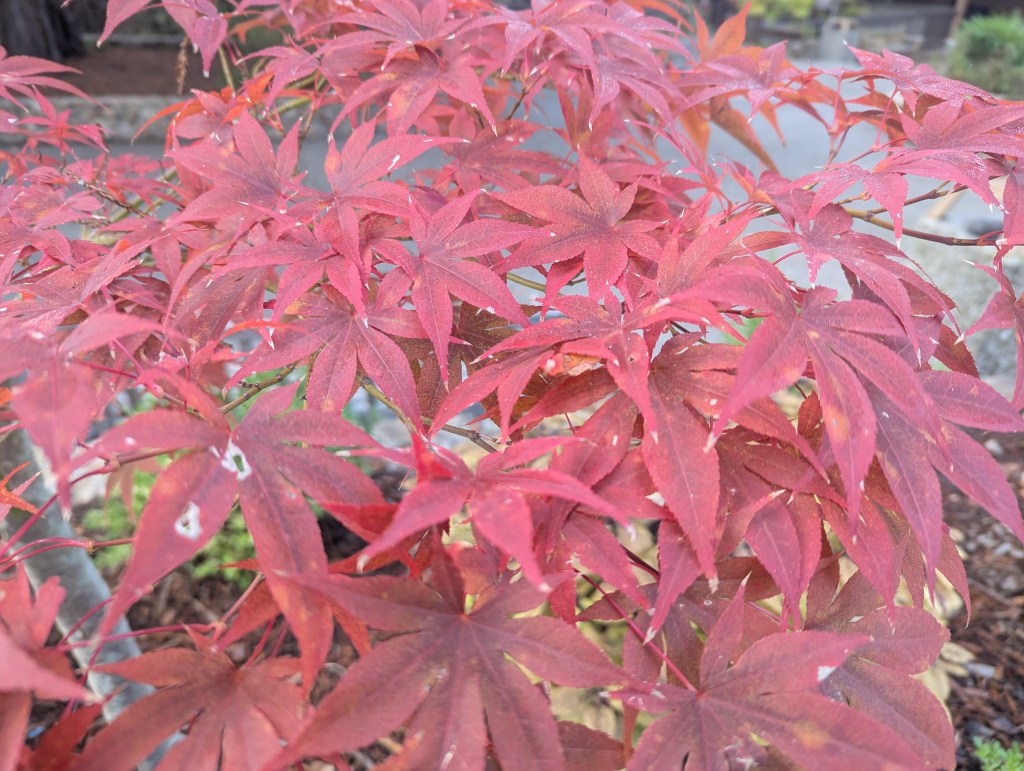
4. Acer palmatum ‘Bloodgood’ Japanese maple was already bronzy red, but is beginning to turn a bit brighter red because of the cooling weather. Its color may linger for a while.
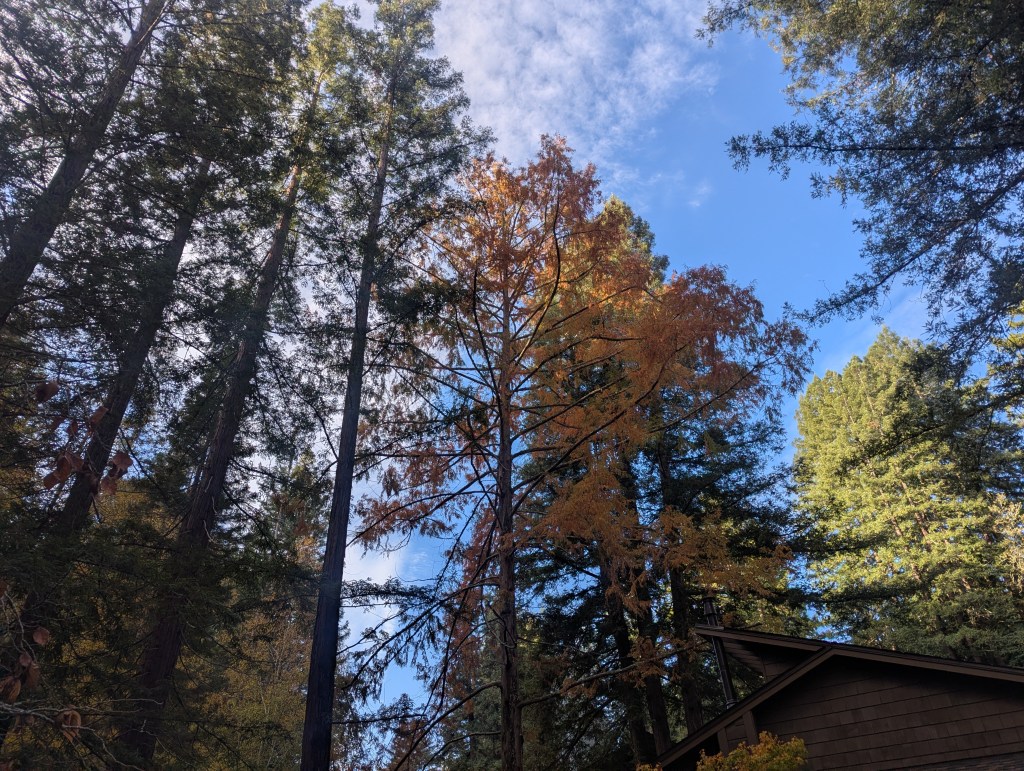
5. Metasequoia glyptostroboides, dawn redwood is likewise beginning to yellow because of cooling weather. It eventually turns brown while all the other redwoods remain green.
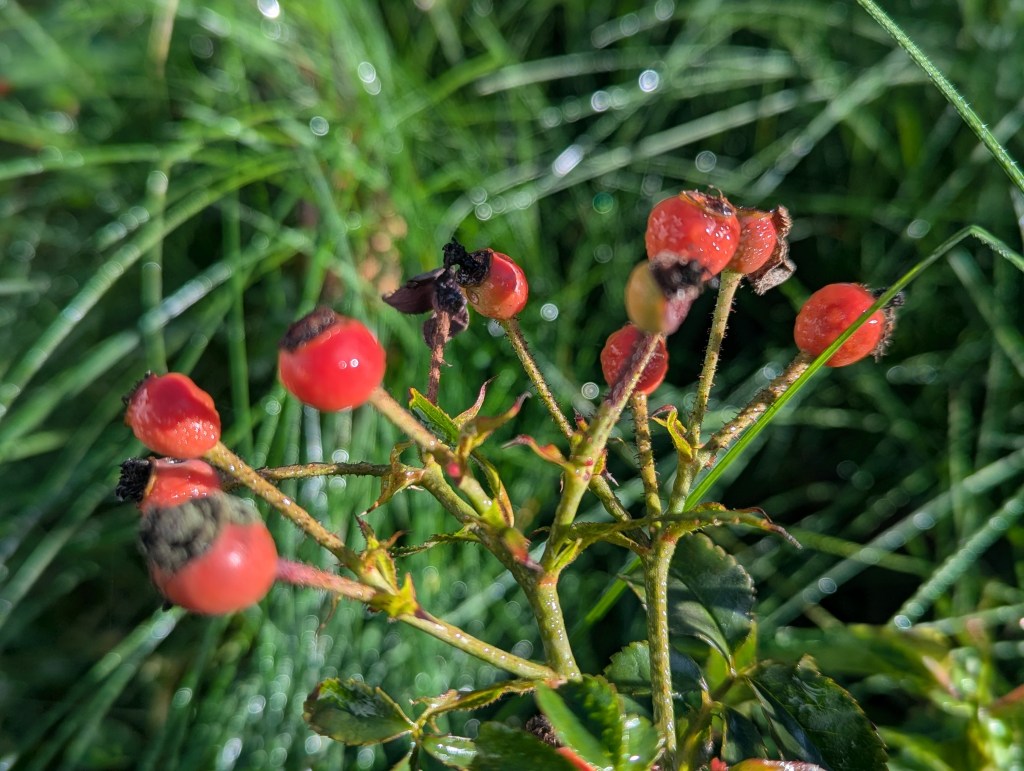
6. Rosa, carpet rose is the only one of these six that is not responding to cooling weather as it produces a few rose hips. I did not expect this. Rose hips are rare in our landscapes.
This is the link for Six on Saturday, for anyone else who would like to participate: https://thepropagatorblog.wordpress.com/2017/09/18/six-on-saturday-a-participant-guide/
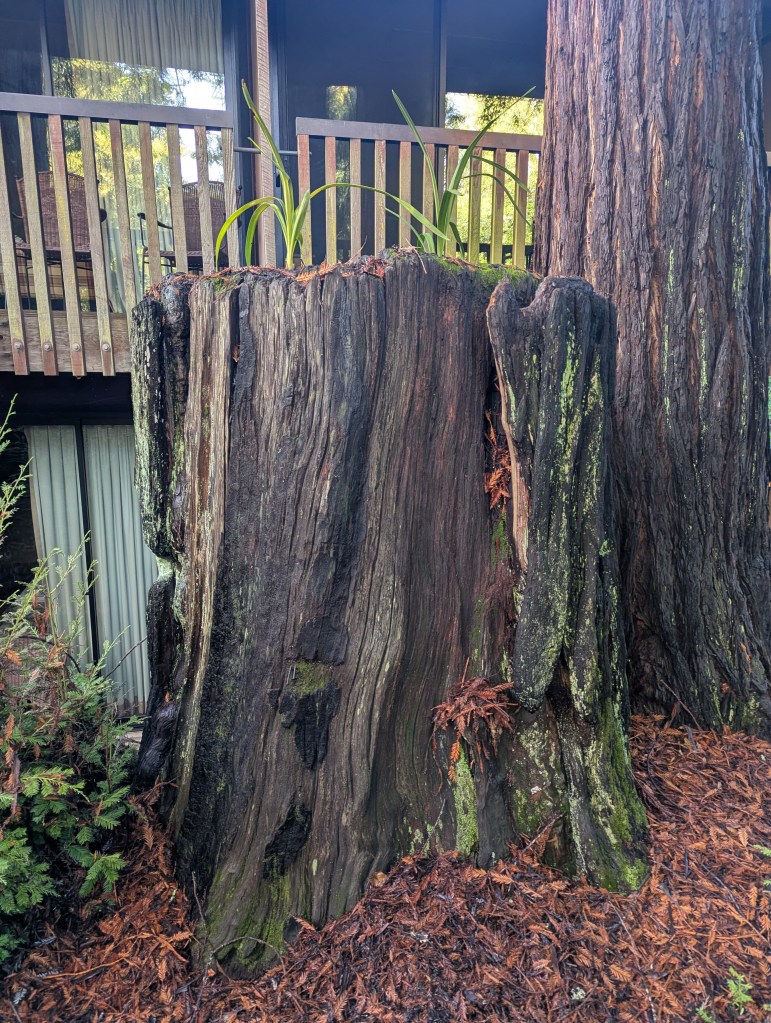
Redwoods give new meaning to stumperies. Their stumps are massive, and remain intact for decades. After all, coastal redwoods are among the largest trees in the world, and their wood is famously resistant to decay. Although redwoods had been harvested here for a very long time, most were harvested soon after 1906 to rebuild San Francisco after the Great San Francisco Earthquake and Fire. The stumps of some of them were subsequently hollowed by forest fire in the 1950s. An outhouse at home was built on top of one such hollow stump. A showers was built within another. A third is big enough to be built into a guest cabin. Stumps at work are not so useful, so remain only as monolithic garden sculpture. One short stump was planted with Billbergias a few years ago. More recently, we installed a few Cymbidium orchids on one short stump and one taller stump. The taller stump is about five feet wide and about eight feet tall, so looks rather silly with a pair of relatively small orchids protruding from the top. The orchids could be happy there, though. They should fill out and become more proportionate to the stump that they inhabit.
Flowers are starting to succumb to cool and rainy weather. So, it is beginning to look like autumn here. Summer is truly over.
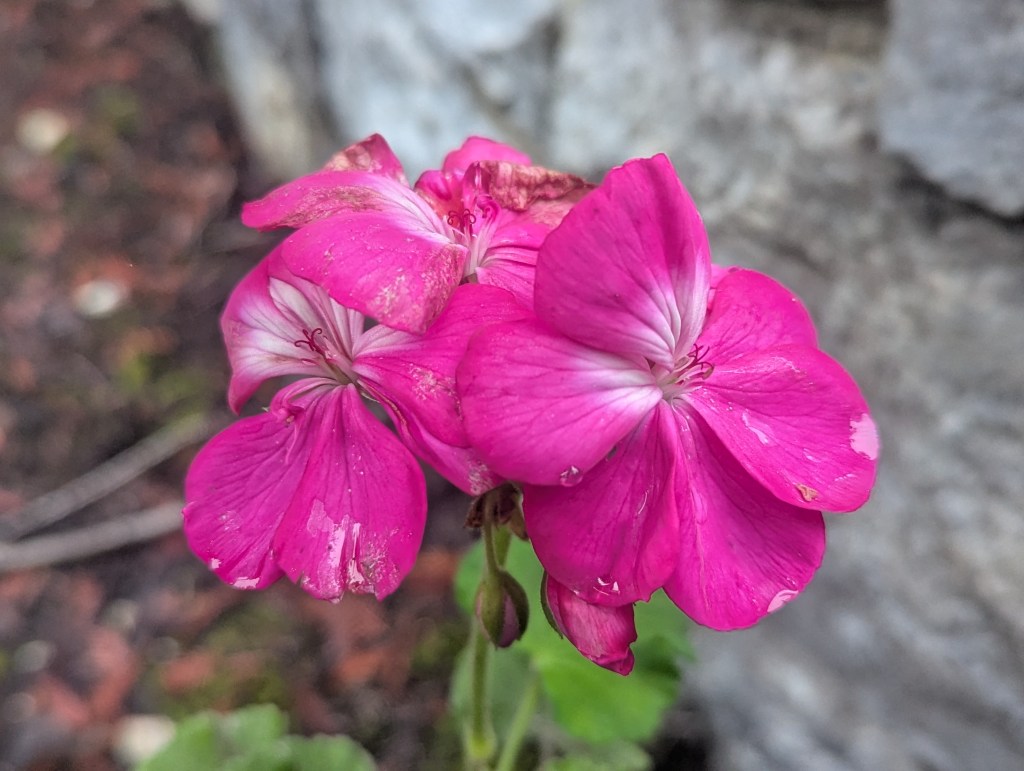
1. Pelargonium X hortorum, zonal geranium is finally starting to look somewhat shabby after the recent rains, although several others continue to bloom as if nothing happened.
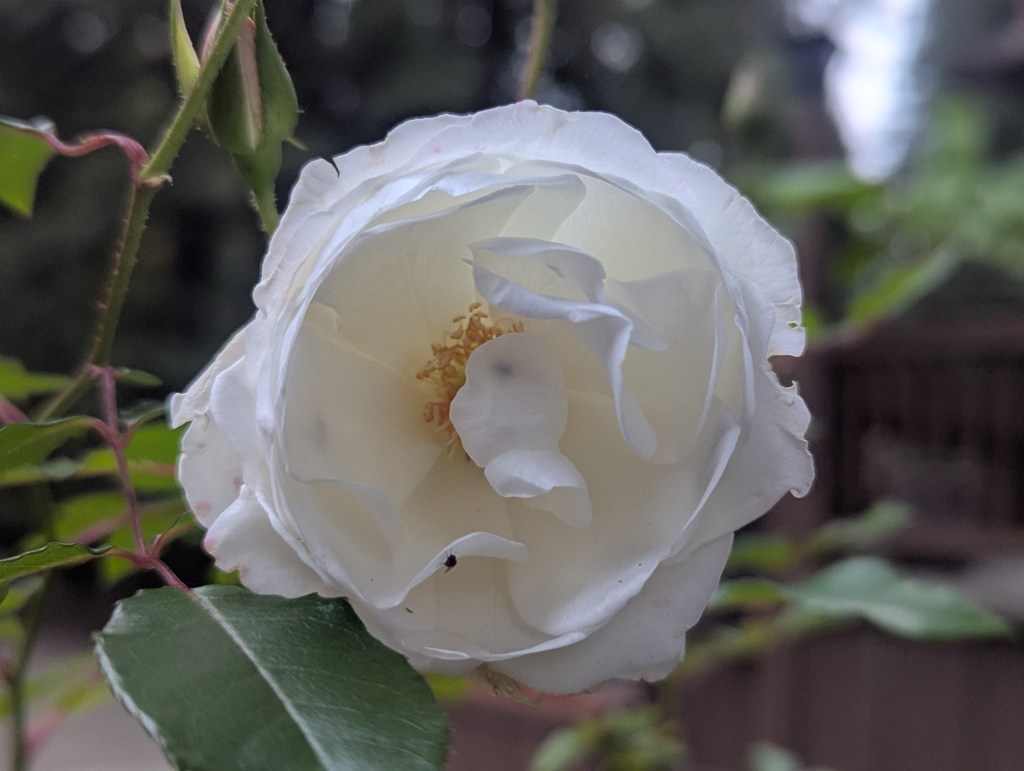
2. Rosa spp. ‘Iceberg’ rose is probably the last rose to bloom for the season. A few young floral buds are molding before they bloom. The roses get pruned before New Year’s Day.
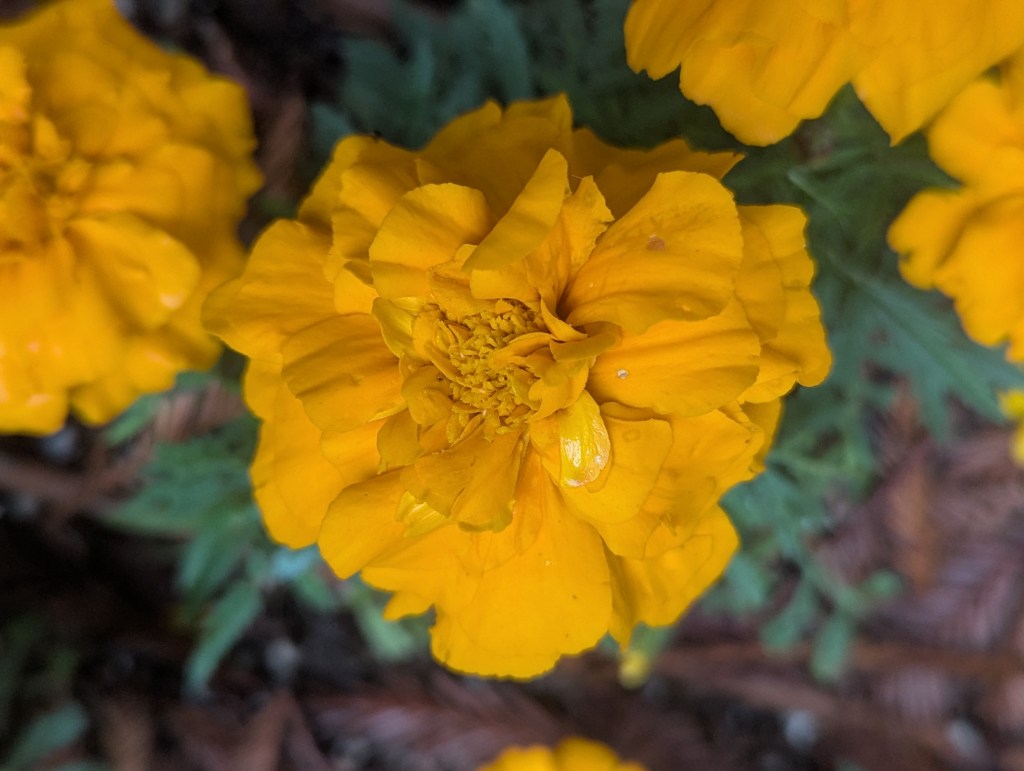
3. Tagetes patula, French marigold is more seasonable. It is expected to bloom through autumn, and could continue until replacement with warm season annuals during spring.
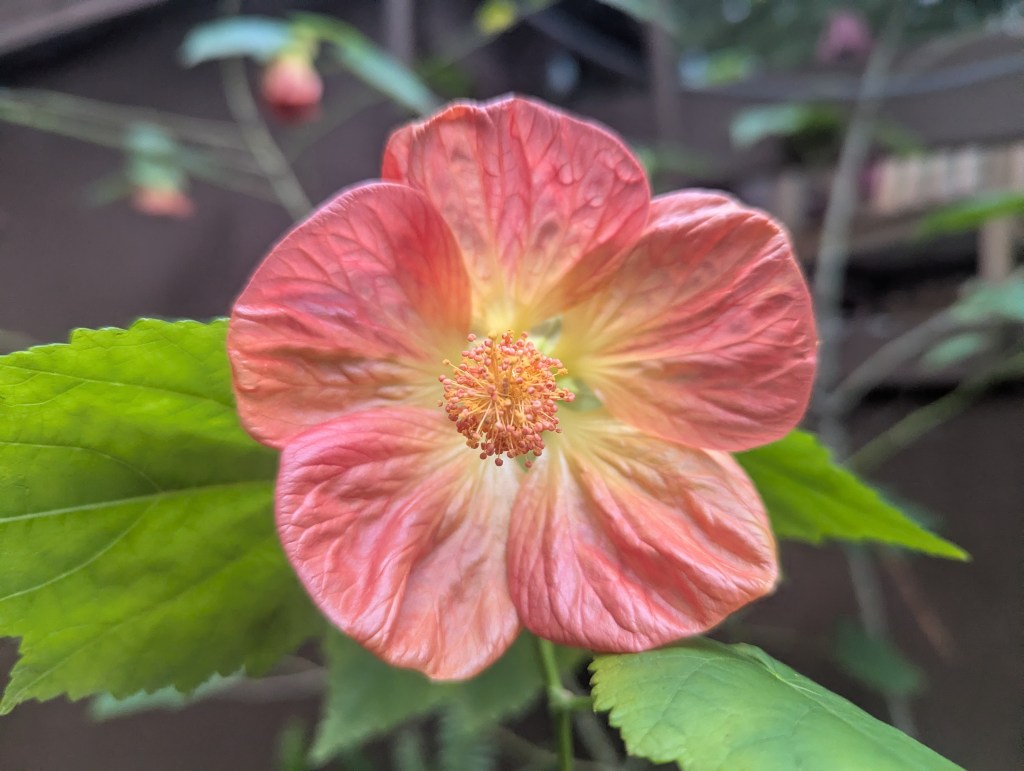
4. Abutilon X hybridum, flowering maple does not seem to know when to stop blooming for autumn. Its bloom should probably decelerate now that the weather is getting cooler.
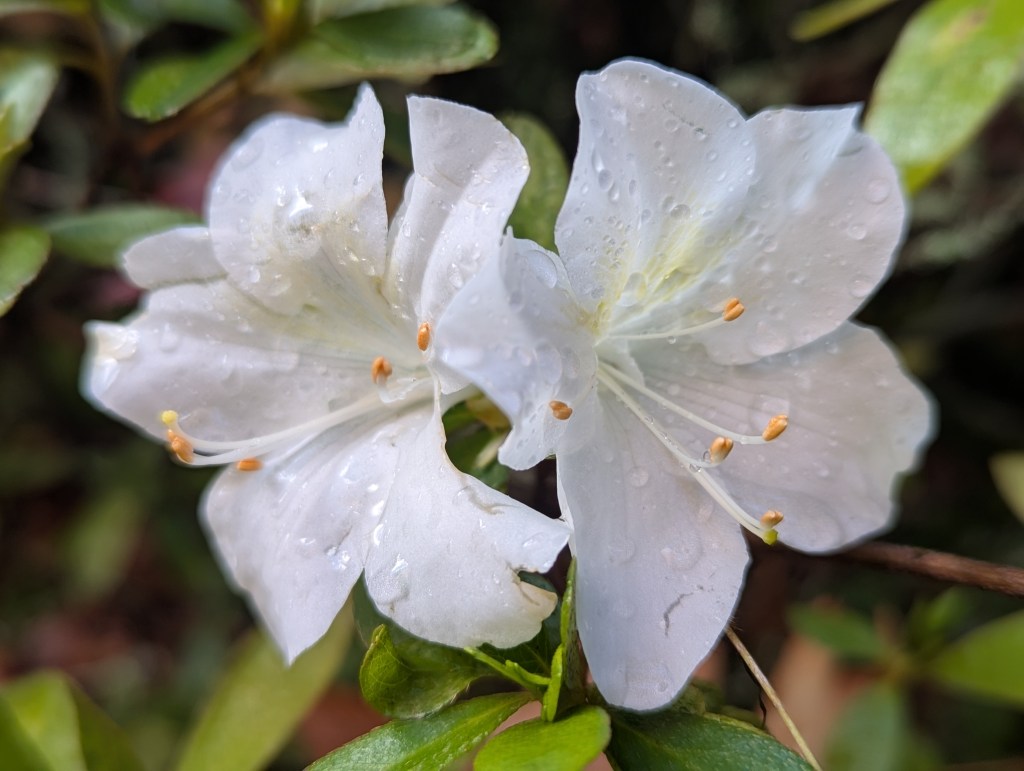
5. Rhododendron spp., azalea is even more confused than the ‘Duc de Rohan’ azalea that bloomed not so long ago. It is blooming more abundantly and even later, or not so early.
6. Rhody curls up somewhat tighter while the weather is cool. His fur should get fuzzier, but does not seem to be doing so. He insists on coming to work with me, out in the cold.

This is the link for Six on Saturday, for anyone else who would like to participate: https://thepropagatorblog.wordpress.com/2017/09/18/six-on-saturday-a-participant-guide/

Autumn is the time for planting. So is winter. It is difficult to resist new acquisitions for the garden. However, there is already so much in the nursery that needs to be planted into the garden that I should not consider acquiring more.
I like to think that I purchase almost nothing for the garden. I grow just about everything that I want to grow from bits and pieces from other gardens. I purchased sugarcane, though, because I could not find any of a cultivar that I wanted in another garden. Now that it has been growing like a weed here, I returned to the online catalogue of one of the nurseries that sells sugarcane to see what else I want.
Planting Justice grows and sells many fruit and vegetable plants that I want to purchase. Because the primary nursery is in Oakland, only about an hour and a half away, I could purchase directly, rather than by delivery. My wish list from them includes medlar, yacon, currant, sunchoke, lingonberry, moringa, kangaroo apple, raisin tree, earth chestnut, chestnut, cinnamon vine, tree collard, sea berry, aronia and highbush cranberry. The twenty items that I want cost only $316, but are contrary to my tradition of purchasing almost nothing for the garden. Fortunately and unfortunately, I will most likely refrain for another year, when I expect the garden to be refined enough to accommodate them.