 I really believed that I had something special here. A few fruit trees that are either remnants or descendants of remnants of fruit trees of the old Zayante Rancho have survived on a vacant parcel east of town.
There are two pear trees, a prune tree and an apple tree. The pear and prune trees are too overgrown to make much fruit. Almost all of the fruit that they manage to produce is too high to reach, and of inferior quality. They could be renovated, but the process would require severe winter pruning for several years.
However, the apple tree is still somewhat compact and quite productive. Much of the fruit is within reach for the ground. Much of the rest can be shaken from the tree without damaging it too much. Although abandoned for decades, someone actually put the effort into pruning the apple tree a few years ago. It still needs some major pruning, but would be easier to renovate and restore than the other trees.
I can not identify the cultivar of the apple, or even the type. The fruit looked and tasted like some sort of Pippin apple earlier in the season, but is now slightly more blushed than other familiar Pippin apples in the region. It could of course be another cultivar of Pippin. It is not very juicy, but is quite richly flavored. Winter pruning to concentrate resources would probably improve the quality of the fruit.
Until recently, anyone who wanted to forage for a bit of fruit from these few fruit trees had open access to them. Both prunes and pears needed to be knocked out of their trees, and collected from the ground. Timing was critical for the prunes. They would be unripe if a few days early, or squishy and on the ground if a few days late. Apples were the most popular because they were more abundant and easiest to collect from the tree.
Unfortunately, the vacant parcel needed to be fenced. Only those who are involved with maintenance of the parcel have access to the trees now.
Well, I happen to occasionally work for one of those privileged few, which indirectly gives me access to the distinguished trees.
Of course, I could not resist bragging to my Pa about my privileged access to these now private heritage trees, especially the apple tree. As I said earlier, I really believed that I had something special here.
To my surprise, and perhaps disappointment, my Pa is very familiar with my special apple tree! I had nothing to brag about that he could not also claim! He actually picked apples from it with his mother when he was a little tyke living on Ashley Street in town!
Vahz, Vawz or Voz
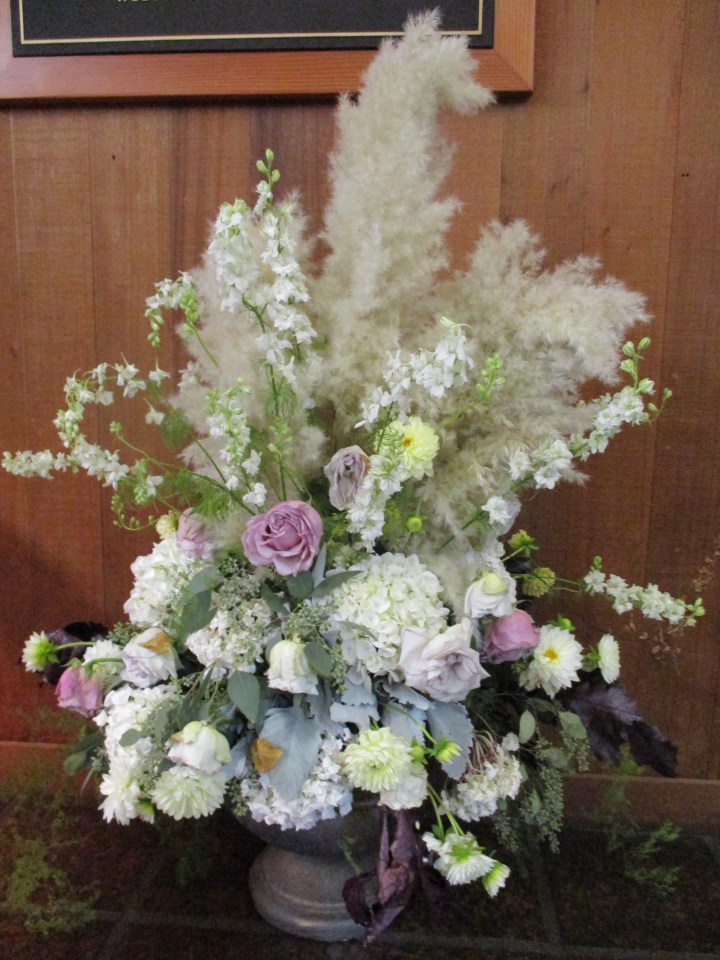 ‘V-A-S-E ‘ is probably how it is spelled, just like that which is pronounced exactly as it looks, or ‘vays’. ‘Vahz’, ‘vawz’ or ‘voz’ just sounds fancier, . . . or bigger.
That is how I learned it. ‘Vays’ is the smaller version that is designed to contain one or only a few flowers and maybe some foliage. ‘Vahz’, ‘vawz’ or ‘voz’ is the much larger version that is designed to contain entire bouquets or ‘floral arrangements’. Those that contain only dried flowers and foliage do not even need to hold water.
I learned this from those who were experts on the subject. My Aunt Betsy and her best friend Cathy were ‘flower children’. They rented an apartment in a hip and trendy neighborhood in western San Jose back in the early 1970s. The neighborhood was so trendy and hip that the neighbors were known as ‘hippies’. Aunt Betsy and Cathy outfitted their apartment accordingly, with wicker, shaggy rugs, and a big spider plant hanging from beaded macrame.
Of course, there was also a rather big ‘vahz’, ‘vawz’ or ‘voz’. It was cheap molded plaster painted glossy chocolaty brown. It contained a billowy abundance of only two species of dried cut flowers, cattails and pampas grass, that had been sprayed with hair spray to prevent them from sharing their seed. It was as gloriously hideous as it sounds, and more than adequately expressed impeccable cultural refinement and a keen appreciation for the remarkably distinctive and exquisitely tacky style of home decor that was so prevalent at the time.
The cattails might have been collected on the side of Highway 80 in Auburn, near the home of Aunt Betsy’s Great Aunt Mamie. The pampas grass might have been found in Vasona Lake County Park in Los Gatos.
Six on Saturday: Expect The Unexpected
There will be no more bragging about how late the nice summer weather continued into autumn here. Foliage and berries are already coloring for autumn. During this past week, there were a few other unexpected discoveries in the garden, and one that was not in the garden.
1. Pampas grass is an old fashioned cut flower that was popular when I was a kid in the early 1970s. It lost popularity as the style of floral design became less informal and more refined. The pampas grass plants that produce the blooms were beginning to be recognized as seriously invasive exotic specie at about the same time. Those that produce the biggest and most billowy white blooms are not as invasive as those that produce the leaner pinkish tan blooms. Well, I could write another article about pampas grass; but presently, I only need to say is that I did not expect to see these big billowy pampas grass flowers up above and in the background of this big floral display that was left at work from a wedding there last Saturday.
2. Red hydrangea is too modern for my taste. Deep blue or deep purple are no better. I believe that hydrangeas should be white or pastel hues of pink or blue, or perhaps lavender. You can’t improve on perfection. I did not expect to take a liking to this rich maroon hydrangea.
3. Dogwood foliage, as well as other foliage that colors in autumn, should develop color later here in our mild climate that in most of America. I did not expect to find such bright red foliage on a dogwood tree already.
4. Cotoneaster berries should likewise develop color as they ripen a bit later than they do elsewhere. I did not expect to find such ripe red cotoneaster berries already.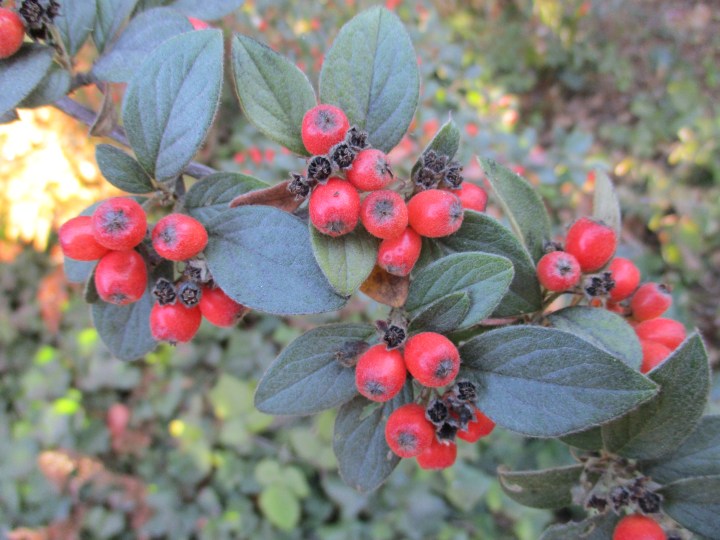
5. Star magnolia was in rough condition after being relocated over summer. It was in an area that was in the process of being landscaped, so the relocation could not have been delayed until after defoliation in autumn or winter. The little magnolia initially seemed to tolerate the process rather well, but about two weeks later, started to wilt and discolor in warm weather. Subsequent defoliation was a slow process that continued into the end of summer. Axillary buds swelled slightly, as if the tree was getting ready for premature autumn dormancy. That was what I was hoping for. I did not expect the now seemingly happy little star magnolia to develop a second phase of new foliage that it will now need to shed later in autumn.
6. Apples ripen at various times. Some cultivars finish as early as late July. Others are just finishing now, and might hang on the trees until early November! These apples are from an old tree on a vacant parcel that I do not get to very often. I intend to prune the tree over winter so that it can be renovated and cultivated as such a distinguished old tree should be. I will be recycling this picture tomorrow, and writing more about it. You will understand why if you read that article. Because I do not know what cultivar this tree is, I did know what to expect from it, but after ignoring it for a while, I did not expect that there would be so many apples remaining.
This is the link for Six on Saturday, for anyone else who would like to participate:
https://thepropagatorblog.wordpress.com/2017/09/18/six-on-saturday-a-participant-guide/
Horridculture – Arborists Are . . . Unique.
 There are many different types of horticulturists. We are all unique, both individually as well as collectively within our respective professional group classifications. For some of us, individuality interferes with conformity to the collective generalizations that are so commonly associated with our collective groups. For some of us, the stereotypes are a perfect fit.
‘Primarily’, I am a nurseryman. We are the intellectual ones. Well, at least we get most of the credit for being the intellectual ones. Most of us really are quite intellectual. Most of us are rather humble about it.
My excuse for nonconformity to the latter is that I am ‘secondarily’ an arborist. Arboriculture is something that I have never been able to get away from. I did an internship with the most excellent arborists in the entire universe in the summer of 1988. After all these years of mostly growing horticultural commodities, I still sometimes conduct inspections and compile reports for trees that other arborists and their clients are concerned about.
You see, arborists are the passionate ones. One might say that we are enthusiastic, fanatical and zealous. Nurseryman might say that we lack restraint and cultural refinement. It is not such a simple task to distinguish between exuberant dedication and primitive efficiency. Regardless, most arborists do not like to write reports. It is easier to get a nurseryman to do it.
In fact, arborists do not like to write much of anything. There are several elaborate blogs that are written by nurserymen; but blogs written by arborists are rare, with brief and infrequently posted articles.
The irony of this is that it is more important for arborists to express professionalism with clients than it is for nurserymen. Arborists are out in the real world, working directly with clients. Nurserymen work on the farm, isolated from those who purchase the horticultural commodities that are grown there.
Arborists are horticulturists who specialize in the horticulture of trees. The best are just as educated and experienced as nurserymen are. In fact, much of my education was derived from arborists. Yet, arborists are so often regarded as mere gardeners who go up trees.
That is where I get offended. Yes, I am aware that there are hackers out there. I am also aware of what clearance pruning of utility cables entails. I also know how serious my arborist colleagues are about their profession. They are not to be compared to gardeners.
There are many gardeners who are just as educated, experienced and proficient with horticulture as arborists and nurserymen. However, the majority of gardeners are not. I will not elaborate on this presently. It will be the subject of other rants. I have written articles about my professional experience with gardeners already, and none of them go well. (I lack experience with good gardeners simply because they have no need for my expertise.)
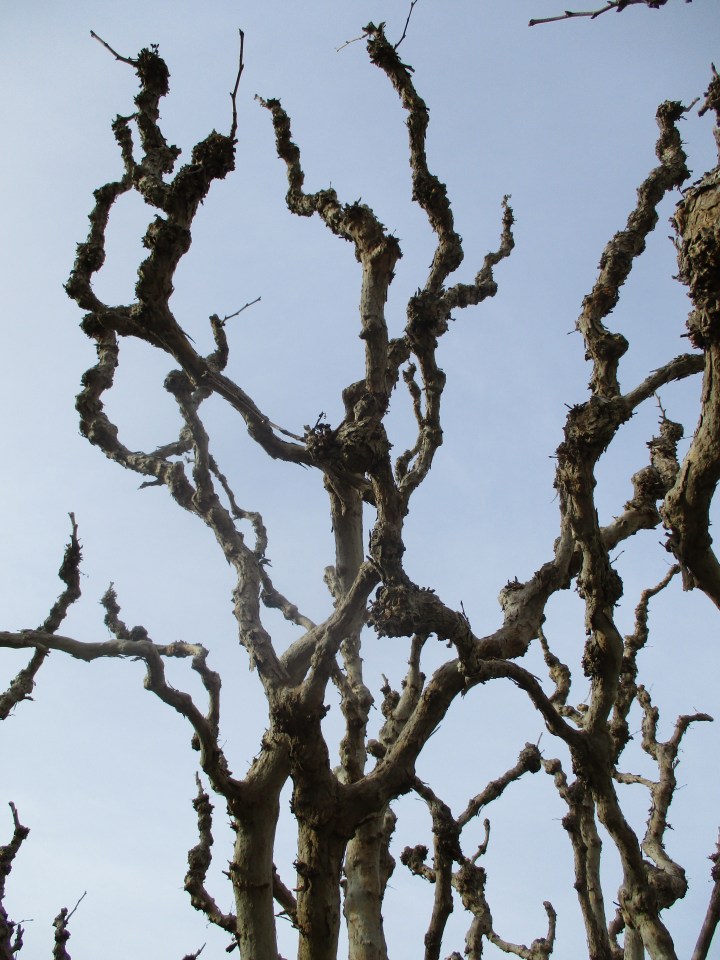
The picture above is an example of a sycamore that is pollarded in the traditional English style. The work is exemplary, and is repeated annually every winter. It is no simple task. I certainly would not want to do it. I can not think of any other nurseryman who would know how to do it properly. It is the work of a very skilled and very experienced arborist.
Memorial Memorial
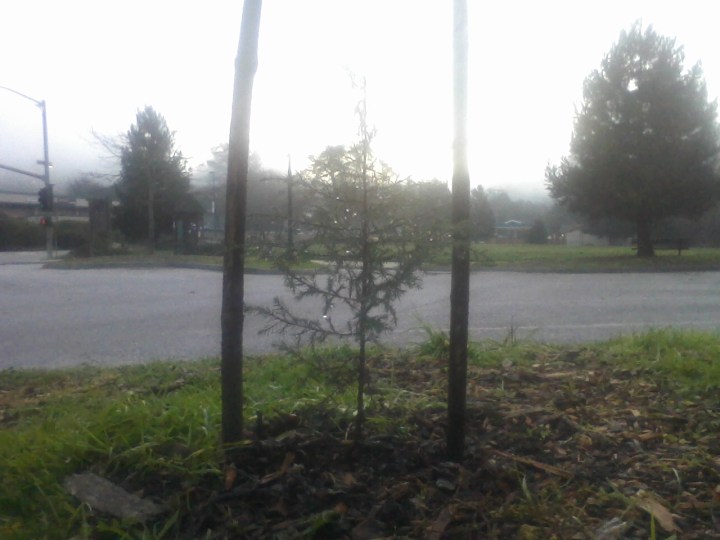 The little Memorial Tree in Felton Covered Bridge park that I so frequently write about is not the first to be planted there in its parking lot island. It is actually the fourth! The first was a California black oak like the other four in the other islands. They were all planted with the original landscape. It did not live there long before getting run over by a car. The island was empty for many years.
The second tree (above) was an Eastern red cedar that I brought from Oklahoma. It arrived here very early in the morning on the last day of 2012, in a bag with a few others that I pulled out of the ground the day before we left. They may be nothing special within their native range, but they are very exotic to me. At the time, I had no plans for the small trees. I just wanted to grow them.
I was downtown and up late the following night when I realized that it was nearing midnight between 2012 and 2013. I took out a trowel, dug a small hole in the island, and planted one of the Eastern red cedars right at the moment that one year changed to the next. I did not give it any more thought than that. Otherwise, I would have preferred a native species like the Park was originally landscaped with.
Sadly, that tree lasted only a few months before succumbing to what dogs do to young trees in parking lot islands. It was a bare root tree, so was not very resilient.
The third tree (below) was a native bigleaf maple that was planted the following winter between 2013 and 2014. It did not get much more planning than the Eastern red cedar. I found it growing on the side of the road where it would have been killed by vegetation management within the utility easement. Like the little Eastern red cedar, I pulled it up and planted it bare root. It was a better choice in some ways, but would have needed to be watered by bucket for the first few years. It survived through the first year and half way through 2015 before it too succumbed to what dogs do. I was being optimistic by thinking that a bare root tree would survive that.
The fourth tree is the little native valley oak Memorial Tree that is there now. I found it for just a few dollars at a local nursery. It was planted in the winter between 2015 and 2016, so this was its third summer. It was a canned tree, so started with more of a root system than the previous two trees that were planted bare root. Nonetheless, life out in that exposed parking lot island is not easy. The tree was severely damaged by weed whackers both in 2016 and in 2017, so barely grew, and is recovering slowly. It is quite well rooted now, so should have a much better season next summer.
https://tonytomeo.com/2018/09/22/illegally-planting/ – This is a link to one of the more recent articles about the Memorial Tree. It includes a link to another previous article, which also links to other older articles. I really do not remember how many updates I have written about the Memorial Tree.
Fall
 I prefer to call it ‘autumn’. It sounds prettier. Perhaps it even sounds a bit more exotic, like something that happens in far away climates were the seasons are more distinct, and the weather gets a bit cooler this time of year.
‘Fall’ sounds more like a simple verb. It is merely what outdated leaves do when deciduous trees no longer have use for them. Many trees in mild climates do not even bother to indulge their foliage with a bit of color first.
Exotic places like Pennsylvania, Minnesota and Kentucky get autumn. Oklahoma, Oregon and Alaska get it as well, although it is commonly mistaken for fall because the deciduous foliage of most native specie turns brown in Oklahoma, and yellow in Oregon and Alaska, with significantly less of the oranges, reds and other bright colors that are so prominent in other regions.
Rather than complain about the minimal variety of color among out native specie, and how the best color is provided by very accommodating exotic specie that color well even in our locally mild weather, I prefer to brag about how excellent the weather is through our fall. Except for the longer and cooler nights, our fall is like an extension of summer. It is often referred to as Indian summer. While others share pictures of their colorful autumn foliage, I get to share pictures of fall roses that continue blooming until frost,or even right through winter. Yes, in some regards, fall can be better than autumn.
Then, this happened. While dahlia, zinnia, black-eyed Susan and even rose continue to bloom for those whom I would otherwise shame with my superior blooms, fall moved in, and is already defoliating a few trees! Sweetgum is starting to turn orange and red, but cottonwood, box elder, various willows and other riparian trees are beginning to defoliate without much color at all. This black oak is significantly farther along. At least it turned a nice rusty brown before defoliating.
How embarrassing! I can brag neither about extended bloom through a late fall, nor the bright foliar color of autumn!
Six on Saturday: Clearance
Clearance can get one into some interesting situations. Yes, with the necessary clearance, one can get into penitentiaries, protected military facilities, sensitive areas of the White House, or even Area 51.
The sort of clearance that I was concerned with this past week and the week prior was not so interesting. Now that roofs and gutters of the buildings at work are in the process of being cleaned before wintry weather, trees must also be pruned for clearance. As they grew through summer, some got detrimentally close to the roofs and gutters that are getting cleaned, as well as chimneys, windows, outdoor lighting and walkways. Such clearance is a concern throughout the year, but becomes more of a priority as we get ready for winter. No one wants to go back onto the roofs any more than necessary.
1. Before. The redwoods must be pruned for adequate clearance from the roof, chimney, lamppost, and even the umbrella on the patio that can not be opened without pushing a bit of foliage aside.
2. After.
3. Soot on the tip of one of the redwood limbs demonstrates why clearance from chimneys is so important. Foliage that gets too close to chimneys can ignite and fall back onto the roof below, where it has the potential to ignite any foliar debris that might have accumulated behind the chimney since last year.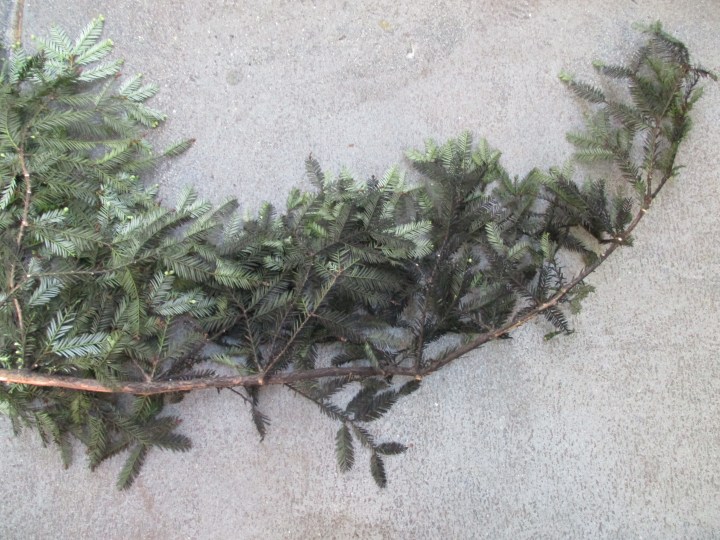
4. The belfry of the chapel next door really bothered me. Clearance was barely adequate. Although I am not worried about the shingles or painted surfaced getting damaged as wind starts to blow during winter, I think that the chapel would look better with more clearance from the encroaching redwood limbs. The problem was that I could not reach the limbs. Because this clearance was not a priority, the pruning here was postponed. A colleague who is not as plump as I am suggested that I get onto the roof through that gap between the top of the louvered sides of the belfry, and the underside of the roof above. Now, even if I could somehow get through that little gap, where would I go on the outside?! Let Quasimodo do it!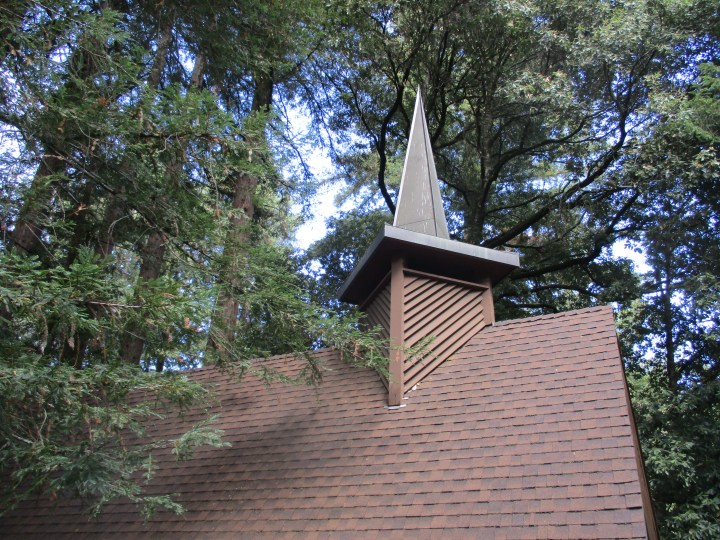
5. The chapel was built among the redwoods, very literally. Expanding trunks are beginning to displace the foundation and utilities. I can not prune for the sort of clearance that is needed here. Because the chapel is such an important building, and the redwoods are such important trees, it would be feasible to move the chapel over onto a new foundation. The problem with that idea is that the redwood trunks are pressing up against the building on three sides! There is no place to move the building without cutting something out!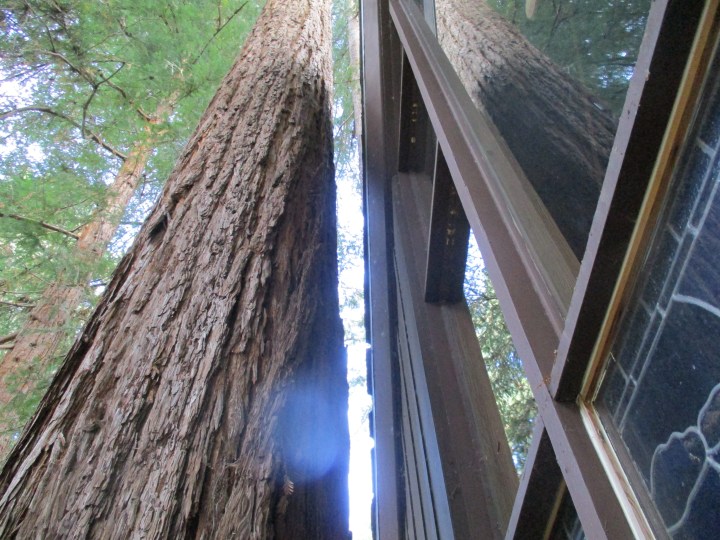
6. Phytophthora ramorum, which is commonly known as Sudden Oak Death Syndrome, or SODS, continues to kill tanoaks, (Notho)lithocarpus densiflorus, and coast live oaks, Quercus agrifolia. These trees do not need to be pruned for clearance, but must be removed before they start to deteriorate and drop limbs onto adjacent buildings or whatever happens to be below.
This is the link for Six on Saturday, for anyone else who would like to participate:
https://thepropagatorblog.wordpress.com/2017/09/18/six-on-saturday-a-participant-guide/
Horridculture – Lessons From Motivational Posters
 I work for the best. I do not intend to be too terribly pompous about it. I am just being honest.
This is not first time I have worked for the best. I have worked for at least three of the best arborists in the Santa Clara Valley, and two legendary horticulturists. I intend to eventually return to work for one of those legendary horticulturists back on the farm.
The main work I do now is part time and temporary. That means that I work less than four days each week, and will not be working there forever. I try to not think about leaving because it is saddening. I enjoy those whom I work for so much.
I work for only one other horticulturist, and one who is studying to be an arborist. Neither of them grow any significant quantity of nursery stock like I intend to spend the rest of my career doing. They maintain landscapes and facilities. The others of our elite group are very specialized professionals who work with everything else that is not relevant to horticulture. One is a carpenter. One is an electrician. One is a plumber; and so on. Although impeccably specialized, any one of us would do what he must to accomplish whatever needs to be done, even if it is beyond his respective specialty. Collectively, we are the ‘maintenance staff’.
How is this relevant to horticulture? I suppose it is not very relevant. However, everyone else on the maintenance staff respects what the other horticulturist, the other arborist, and I do. Anyone who needs vegetation pruned for clearance from a project contacts us to get it done properly. Anyone who sees obvious problems in the landscape informs us about them. Everyone on the maintenance staff respects everyone else and their respective professions.
To describe what makes the maintenance staff the best, I could use any combination of those inspirational words that are so ungraciously followed by an overly simplified dictionary definition on those insultingly inane motivational posters that so many other employers display prominently in the workplace. They are all relevant. However, we have nothing to prove.
Besides, this is not about the best. It is Wednesday, when I write within the context of my ‘Horridculture’ theme.
I have also worked for the worst. One of these worst was portrayed to be a very professional landscape maintenance company. We had a much larger staff, spread out over nine counties. We had a good variety of those motivational posters in our main office. Unfortunately, I did not realize when I went to work there, that those posters merely defined what we lacked.
Integrity – Dedication – Perseverance – Discipline – Teamwork – Excellence – Strength – Endurance – Accountability – We had none of that. I was the only horticulturist in the big staff of a big landscape maintenance company that simply did not care. I do not know how to describe it more accurately. We simply did not care. We were there to make a buck any way we could. We swindled, cheated and lied. I was only there as their token horticulturist and arborist, to help them get away with more of their illicit activity, and to make a good impression for their victims.
It is so backward. The big and seemingly reputable landscape maintenance company has less regard for horticulture than a maintenance staff who has other completely different priorities.
The Great Pumpkin
 The Third Day of Creation was when it all started. Plant life was created just two days after Heaven and Earth, and Night and Day. It must have been a pretty big deal. Humans were not created until three whole days later!
After all this time since Creation, the flora of the World is still just as important as it has always been. Vegans can survive without the consumption of animal products, but no one can survive without the consumption of plants, or the consumption of animals who were sustained by plants. We breath oxygen generated by plants. We live in homes made of wood. We wear clothes made of cotton. Until relatively recent history, wood was the primary fuel for cooking and warmth through winter. Even modern fossil fuels that have replaced wood are derived partly from fossilized plants. There seems to be no end to the long list of what plants do for us.
As if all that were not enough, plants provide pleasure. Some are dazzling desert wildflowers. Some are majestic forest trees. Most are something in between. Many are invited to inhabit our gardens, landscapes and even our homes and offices. Some are bred to do what they do even better than they did originally.
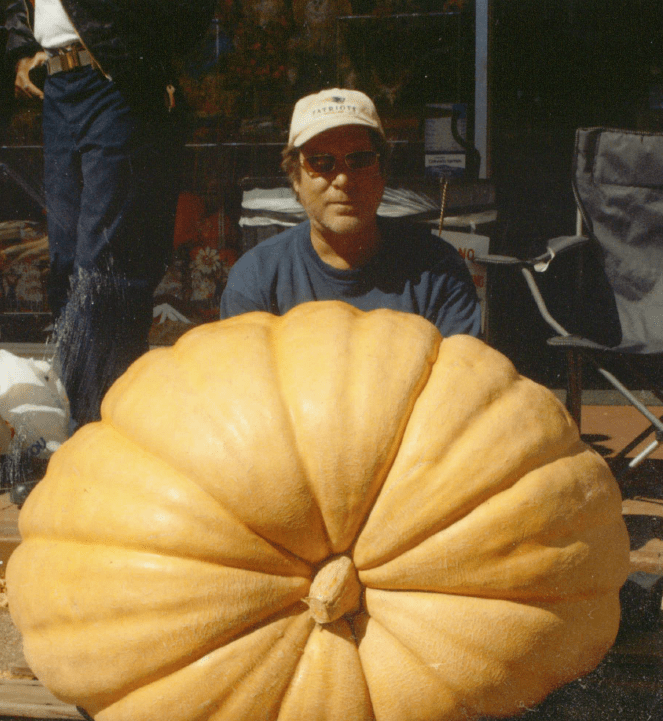
David Paul, in the picture above, made a career of cabinetry, which involved all sorts of fancy and exotic woods. Most of these woods were derived from genetically unimproved trees that would have been found growing in the wild. Most were from eastern North America. Some were from other continents. Some of the favorite maple burls were specifically from New England and the Pacific Northwest. David Paul was no horticulturist, but he knew quite a bit about the flora that produced the fancy woods that he worked with.
The pumpkin is another story. David Paul grew giant pumpkins for several years in Colorado Springs merely because he enjoyed doing so. It required serious dedication throughout the entire long growing season. Yet, the pumpkins were grown only for the fun of competition. As huge as they were, they were not to be eaten. That is the epitome of growing something merely for the fun of it. This is such an excellent picture of that epic pumpkin that it was the illustration for the obituary of David Paul.
No Rain
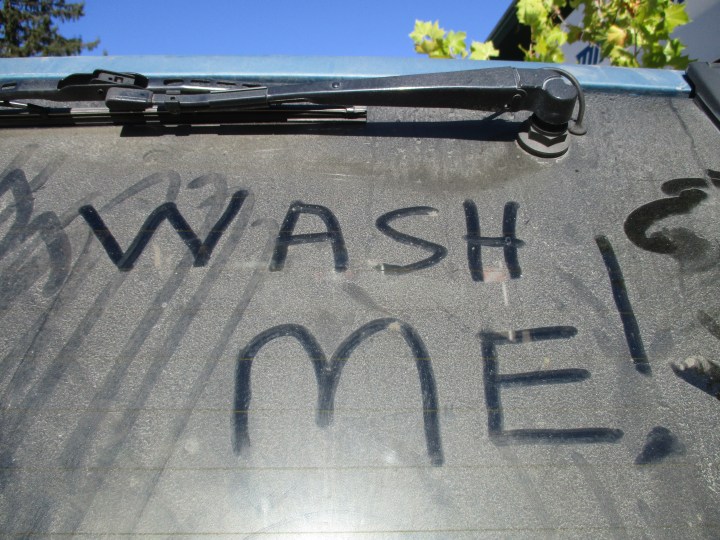 For the first time since last winter, a few raindrops were heard on the roof early last Monday morning. It was over by the time I realized that the odd and unfamiliar noise really was that of raindrops. By the time the sun came up, everything was dry. I do not even know if these few raindrops could be considered to be the first rain of the season. There were a few similar raindrops on my windshield a while back, but they were dismissed as such; merely a few random raindrops rather than a confirmed rain shower.
That is how our climate works here. The Santa Clara Valley is in a chaparral climate. Much of Southern California is in a desert climate. We do not get much rain, and it is almost exclusive to a limited rainy season that is centered around winter.
Dust and crud that accumulates on foliage through the long dry season tends to stay there until the rain rinses it away. Oddly, many native plants do not mind, and a few seem to appreciate it. Some have tomentum (fuzz) on their leaves that collects dust, particularly during the warmest and driest summer weather when foliage is most sensitive to desiccation and scorch. Others have sticky foliage that does the same. However, such foliage is remarkably efficient at allowing such crud to rinse away in the first rain. Both deciduous foliage that will be shed shortly after the rainy season starts, and evergreen foliage that will be replaced through winter, seem to prefer to start the rainy season clean. Is this just coincidental, or do the plants intentionally collect dust and crud to shade and insulate their foliage through the harshest summer weather, and then wash up for a good sunning at the last minute?
 Tony Tomeo