Six on Saturday: Town Tree and Town Flower for the Kitty City

P80124I just can not resist; although I do not intend to make a habit of this.

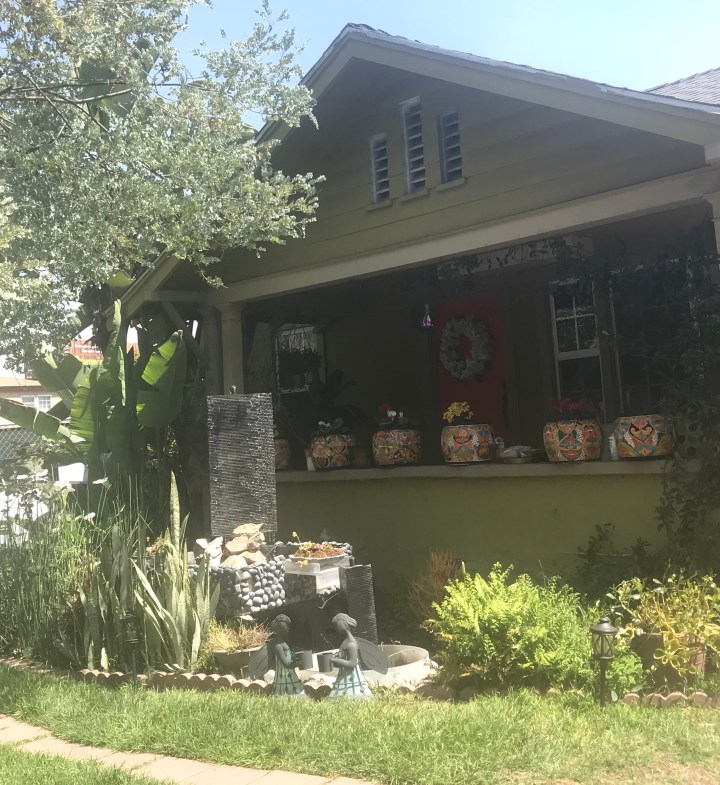
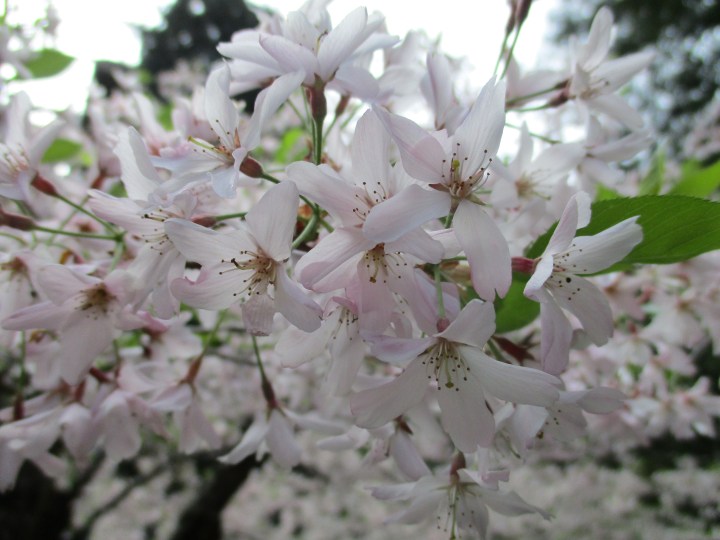
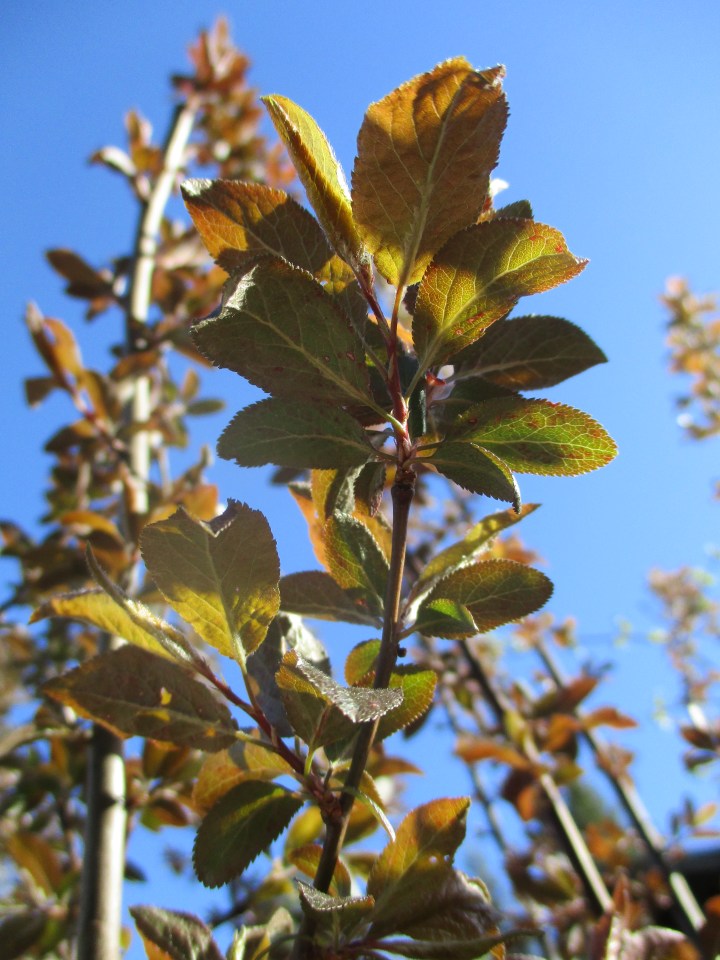
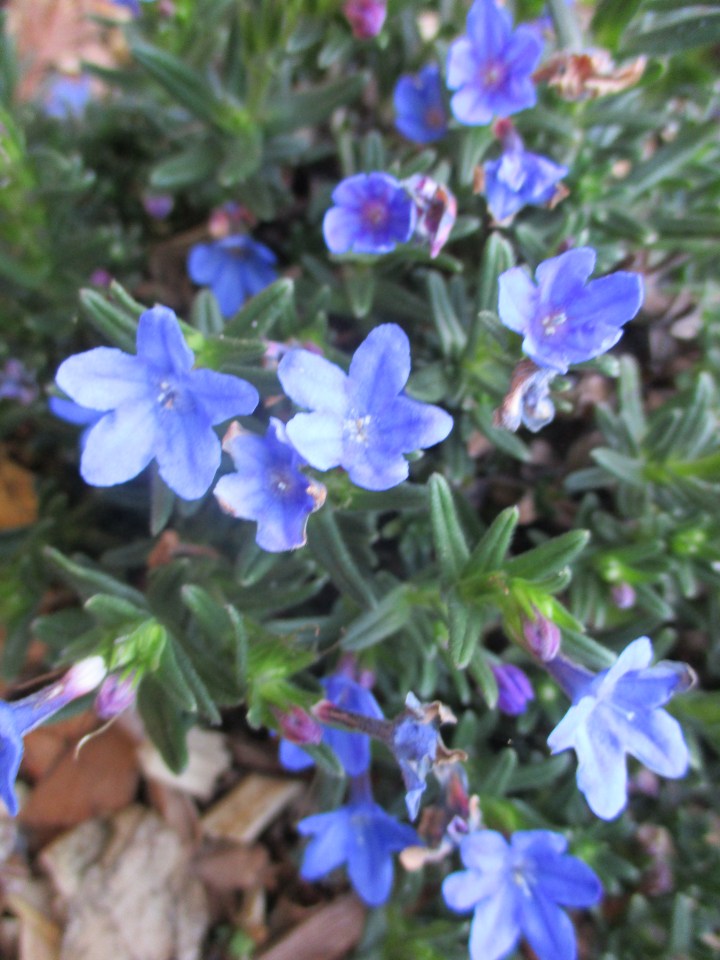
I know I am sending this late, and that it is already Sunday east of India. It is still before noon on Saturday here. These pictures are not mine, but were used as illustrations for the selection of a town tree and a town flower for Los Gatos. There were more, but these are my six favorites; four trees and three flowers. I know that sounds like seven instead of six, but that is only because apricot can be either the town tree ‘or’ the town flower. Selection is limited to specie that are either native, or of cultural significance. The three trees besides apricot are native here, where the Santa Cruz Mountains meet the Santa Clara Valley, and the Los Gatos Creek forms a small alluvial plain. Apricot trees, which bloom with apricot ‘flowers’ were the main orchard crop here longer than anyone can remember, until only a few decades ago. Arroyo lupine is native on the alluvial plain of the Los Gatos Creek; and cat tails are native to the marsh surrounding Los Gatos Creek.

1 – California sycamorePLATANUSRACEMOSA

2 – valley oakQUERCUSLOBATA

3 – coast live oakQUERCUSAGRIFOLIA

4 – apricotPRUNUSARMENIACA

5 – arroyo lupineLUPINUSSUCCULENTUS

6 – cat tailTYPHALATIFOLIA

Cat tail would be my favorite choice for the town flower because this is the town of the Cats. Apricot would be my second favorite flower, only because cat tail is so appropriate, and also because apricot is my favorite for the town tree (and we can not have it do double duty). coast live oak is my second favorite for the town tree because it is native to both the Santa Clara Valley ‘and’ the Santa Cruz Mountains.

This is the link for Six on Saturday, for anyone else who would like to participate:

https://thepropagatorblog.wordpress.com/2017/09/18/six-on-saturday-a-participant-guide/

CAUTION!

P80127Halston was quite the rage when I was a little tyke.

I did not know exactly what that meant.

I can remember elegant ladies wearing Halston pill box hats. From the back seat of the new 1967 Chevelle, I could admire my Mother’s, while my younger brother on the other side of the car got tangled in our flower child Aunt’s abundant and long hair blowing in the wind.

Although I had never seen a Halston before, I could determine from hats made from them that they were soft, fuzzy and cylindrical. I knew that apricots, walnuts and oranges grew on trees, so I would sometimes look into unfamiliar trees, including the silk oaks next door, to see if I could see Halstons ripening in them.

My older sister eventually explained that Halston was they guy who made the hats. He was very busy. His hats were very popular. Apparently, he made the hats from coats formerly worn by small rodents known as minks. The minks were not really plumply cylindrical. In fact, they were so small that the coats of several of them were sewn together to make each hat. The thought of so many small rodents scurrying about naked until they got new coats was quite disturbing. It made me ponder the origin of the cuddly stole that Redd Foxx gave to Aunt Mary.

I certainly did not believe everything that my sister told me. Heck, she once tried to tell me that the dead bugs in Aunt Mary’s amber jewelry were trapped in tree sap millions of years ago. I know cheap Lego plastic when I see it. However, I do believe that fur obtained from animals lost popularity through the 1970s. The minks must have protested or something. My sister got a stylish coat with a furry collar made of imitation fur. Splendid; so now little kids will be cuddling naked teddy bears!

I have a better idea.

The pelts of all those nasty gophers that ruin lawns and gardens could be recycled into pill box hats . . . or maybe something more appropriate to modern fashion. Perhaps they could be sewn into reusable grocery bags. What an exquisitely stylish expression of environmental awareness that would be! Because gophers get killed when trapped, they could not protest the use of their pelts later.

Using gopher pelts in this manner would:

Protect our lawns, gardens, landscapes and green spaces from environmental annihilation

Recycle by-products of environmental protection

Provide stylish accessories that express our concern for environmental stewardship

Promote the use of materials that are completely organic, natural, non-toxic, biodegradable, sustainable and very renewable

Help save the Planet!

We only need to learn to be more efficient with trapping. What is the point of setting traps if gophers are warned to ‘KEEP AWAY’?

Kitty City

P80124Los Gatos is named after bobcats. More specifically, it is named after an interchange that was named after bobcats; La Rinconada De Los Gatos. There are a few theories about how and why it was named after bobcats. The most popularly accepted theory involved the remarkably violent demise of everyone involved, leaving no one to document it as accurately is it has been repeated for generations. Don’t question it if you ever hear it. It is quite entertaining. I prefer to think that we do not need an elaborate excuse for naming our town after native wildlife. The bobcats were here. People noticed them. BINGO – La Rinconada De Los Gatos.

Regardless and contrary to what my colleague Brent would tell you, ‘Los Gatos’ does not mean ‘The Ghettos’ in Spanish.

Other towns in California have horticultural names. Some are named for horticultural commodities that were grown there. Others are named for native flora. Some are named after native flora that was harvested as a horticultural commodity!

Apple Valley, Citrus Heights, Greenfield, Lemon Grove, Orange, Orange Cove, Prunedale, Rosemead, Roseville and Wheatland might have been named after what was grown there commercially, although Orange was probably a recycled name from somewhere else. Calabasas is a Spanish name for pumpkins that were grown there. Hesperia is derived from citrus.

Del Rey Oaks, Live Oak, Oakdale, Oakland, Oakley and Thousand Oaks were probably named for the native oaks that grew there naturally. Paso Robles was named El Paso De Los Robles, and Roble is the Spanish name for the valley oak. Encino is the Spanish name for coast live oak, and a few small ones are Encinitas.

La Palma, Palm Desert, Palm Springs, Palmdale and Twenty Nine Palms are obviously named for palms, both the native desert palm and exotic palms. Yucca Valley is of course named for the native specie of yucca. Cypress, Hawthorne, Palos Verdes Estates, Rancho Palos Verdes, Walnut, Walnut Creek, Willow Glen and Willows should be easy to figure out, although some are not as obvious as they would seem to be.

Redwood City was probably named for the mills that processed redwood lumber there, rather than the trees.; just like Mill Valley. Madera translates into wood; and Corte Madera is a place to cut wood. Palo Alto translates to something like ‘high stick’, but was really derived from a tired old redwood tree with a dead top. Fresno translates into ash tree.

Bell Gardens, Bellflowers, Cloverdale, Elk Grove, Ferndale, Garden Grove, Gardena, Grass Valley, Hawaiian Gardens, Laguna Woods, Lake Forest, Larkspur, Lawndale, Pacific Grove, Tulelake, Woodland, Woodlake and Woodside are open to interpretation. Then there is Weed. After all, this is California.

Okie Mowers

P80120They are excellent at weeding and vegetation management too, particularly where brambles are too thick to get through. They also convert unwanted vegetation into useful fertilizer. Goats are remarkably versatile and useful machines around the garden.

The goat in this picture is no ordinary goat. She is a pygmy fainting goat. Her kind were bred to faint when startled, in order to keep a predator occupied instead of eating other more desirable livestock in their herd. What a strange job description! When we went to Oklahoma a few years ago, we stayed on a farm with quite a herd of these small and pleasantly mannered goats.

It was winter while we were there, so there was not much to do in regard to vegetation management or gardening. There were a few blackjack oaks near the homes that I pruned up for clearance and just to neaten them up a bit. The goats came over to watch what I was doing, and seemed to know to stay back when branches fell. Nonetheless, the commotion of some of the larger branches falling was enough to cause some of the closer goats to faint and fall to the ground. They would get back up within a few seconds and proceed to eat the twigs from the branches. By the time I was finished pruning, only the larger stems remained to be dragged off and staged next to a burn pile of other debris that had accumulated earlier in the year.

Late one evening, my friend Steven decided to burn the burn pile. ( https://tonytomeo.wordpress.com/2017/11/19/oklahoma/ and https://tonytomeo.wordpress.com/2017/12/13/birthday/ ) I do not know why Steven thought that it would be a good idea to burn it in the dark. The neighbors off in the distance were probably wondering the same thing. Once it was started, there was no point in extinguishing it for a more convenient time. I went out to help him finish the job.

The initial pile flared up pretty well, and then took some time to die down. All the goats who happened to be in the main pasture at the time came over and gathered around to watch. They all seemed to be so interested, and formed a very neat and uniform circle around the fire. Their happy faces glowed like those of a really big troop of Boy Scouts.

It took a while, but the fire eventually died down enough to start throwing on the staged limbs of the blackjack oaks. The goats did not seem to mind as Steven shooed a few of them aside to get a nice hefty limb. From a few feet back, Steven innocently dropped the limb onto the fire.

The limb went down.

The flurry of sparks went up.

The entire herd of goats went down.

Neither Steven nor I saw much of what happened after that. As fast as the goats got back up, we both went down, laughing too hard to stand. The neighbors must have thought we were crazy. The goats were more certain of it. By the time we recovered and got back up, all the goats were gone . . . off into the distance and the darkness of that cool winter night in Oklahoma.

Litter Box

P80120+++++Perhaps I should elaborate on the ‘litter boxes’ in the ‘Six on Saturday’ post earlier this morning. As I already mentioned, they are in the same parking lot as the Leo and Leona sculptures. They were formerly inhabited by Italian cypress trees that would now be like those nearby if they had survived.

This is no joke. Someone really selected the tree that provides the least shade for hot pavement, and attracts the most birds to do what birds do on parked cars.

Because they were installed as large boxed specimens, and were watered generously enough to maintain swampy conditions in the surrounding soil, most of the cypresses could not disperse their roots fast enough, and consequently got blown over onto parked cars in their first or second winter. The survivors took many years to get established, and were bound to big and unsightly lodgepole stakes for years.

Rather than getting outfitted with ‘shade’ trees or perennials, . . . or anything, these litter box planters remain as blank and uselessly small rectangular lawns, requiring regular mowing, edging and lots of watering. Incidentally, many of us around town let our lawns die to conserve water. Brown is the new green.

Because they are in such a high traffic area, and sometimes get run over by cars, the sprinkler heads are always in need of adjustment. They are quite generous with sharing their water with the surrounding pavement and any cars that might be parked there early in the morning, which makes the waste of water more blatant. The curbs are tripping hazards.

So, what are these litter boxes good for? Are they reserved for grave sites? ‘Very’ miniature golf perhaps? No one knows. This is not exactly a nice spot for a picnic or a game of volleyball.P80120k

Six on Saturday: Cat Walk in the Kitty City

P801201. What have we here?

P80120+
2. Oh, directions.

P80120++
3. Oh my! What is THAT!

P80120+++
4. Another one!

P80120++++
5. Meet the parents.

P80120+++++
6. These must be their litter boxes.

The Cat Walk is a rather ingenious exhibit of several concrete cat sculptures displayed in various street trees on the two main streets of downtown. The locations of these sculptures are cited on a map available to anyone who wants one. Most of us prefer a light duty challenge of trying to find all of the sculptures without the map. Some are hidden better than others, but all are easily visible from the sidewalk. What a fun way to utilize our otherwise unremarkable downtown street trees! Unfortunately, some of the sculptures have been dislodged from their original positions, which is why the two pictured here in opposite sides of the same holly oak seem to be be out of sorts. I am sorry for the bad quality of the pictures, especially #4.

The parents are not sculptures of the Cat Walk, but are modern reproductions of the famous and historical ‘Cats’ flanking the driveway of the old Wood Residence. No one knows which one is Leo and which one is Leona. The only difference between the two is that one has his or her eyes closed, and the other has his or her eyes open. They flank the driveway of a shopping center just north of Highway 9 on North Santa Cruz Avenue.

The sixth picture of the grassy ‘litter boxes’ is included as an almost funny example of really bad landscaping. They are in the same parking lot as the Leo and Leona sculptures, and formerly contained Italian cypress trees like the the one in the foreground and the two in the distance.

This is the link for Six on Saturday, for anyone else who would like to participate:

https://thepropagatorblog.wordpress.com/2017/09/18/six-on-saturday-a-participant-guide/

Winter Coat

P80117Wire haired terriers know how it works. They wear wiry hair through summer to shade their skin while allowing cooling air circulation. Their softer and fuzzier undercoat that develops in autumn provides better insulation from cold weather through winter.

Beards are not naturally so adaptable, but can be manipulated to function better. Thick beards might insulate and deflect wind through winter. Short beards may not work as well in that regard, but might absorb warmth from sunlight if still darkly colored. As weather gets warmer in spring, beards can simply be removed to optimize cooling air circulation, and eliminate the extra insulation. However, long and gray beards can provide shade without absorbing much warmth from sunlight.

Have you ever noticed that plants that live near foggy coasts or in the lower levels of shady jungles and forests are the darkest green? They want to absorb all the sunlight they can get. Monterey pine, Monterey cypress, coast redwood and the many ferns that live on the ground below them are classic examples.

Plants that live in exposed situations or high elevations are lighter green. Some have glaucous foliage that is shaded gray or blue to reflect a bit of sunlight. Colorado blue spruce, silver leaved mountain gum, century plant and silver sage exemplify this technique. The old man cactus actually shades itself with weirdly elongated spines that resemble gray hair.

English walnut, maple, apple and pear have sensitive bark that would get burned if too exposed during summer. Yet, they are all deciduous and bare through winter. They do not mind, because the intensity of the sunlight through winter is inhibited by the low angle of the sun. By the time the sun is higher in the sky, and the sunlight is more direct (passing through less of the atmosphere at the higher angle), the sensitive bark will be shaded by new foliage.P71019

Vasona

P80114Only a few bits and pieces of natural native vegetation can be found on the floor of the Santa Clara Valley. They are primarily in spots that were not useful for some sort of development. Almost all of the big coast live oaks and valley oaks that lived in the flat areas are gone. Riparian vegetation still survives on the banks of creeks, and in adjacent areas where it has not yet been cleared.

Vasona Lake Park is a Santa Clara County Park situated around the small Vasona Reservoir just north of town. Although much of the natural vegetation was cleared a very long time ago, and exotic vegetation was either added or naturalized, several big native trees remain, including several California sycamore trees.

Because these grand sycamores were more common here than anywhere else in our childhood world, and we did not know what they were, my younger brother knew them simply as ‘Vasona’ trees. They were tall and gnarly, with big holes in their bulky leaning trunks. The lowest branches were far too high for us to reach, so we cold not climb them. The leaves were not clean and smooth like maple leaves, so we did not mess with them too much.

Unlike most deciduous trees that drop their leaves within a limited time in autumn, California sycamores drop their leaves whenever they want to. Most leaves fall in autumn. Some linger into winter. If the summer is exceptionally dry or warm, many leaves fall very early. Anthracnose can make the first spring leaves fall almost as quickly as they develop.

Somewhere along the line, my younger brother learned that catching a falling leaf before it reaches the ground is lucky. Consequently, we often ran after leaves that we saw falling from high up in the sycamore treees, if they were falling slowly enough for us to get to where they were going before they did.

I ignore them now. I notice the patterns of defoliation just because I am an arborist, but that is about the extent of it. However, I happened to see this leaf falling slowly from near the top of a massive California sycamore, and just had to catch it; my lucky Vasona tree leaf.

Anti-‘Environmentalism’

P80112++There will be no more updates after this last one for the dead box elders that had been leaning onto the historic Felton Covered Bridge. ( https://wordpress.com/read/blogs/135014809/posts/747 ) They are gone. A pile of logs and some debris are all that remain.

Because the area is a protected riparian zone, the remaining debris and logs may have been left there intentionally, as an important component to the ecosystem. Nearby dead trunks that will not reach the Bridge when they fall also remain, as well as many other larger dead box elders several yards upstream.

For now, the Felton Covered Bridge is reasonably safe from falling trees.

We can only hope it stays that way.

Environmentalism has a way of complicating things.

Environmentalism should be more concerned with prioritizing the natural ecosystem than preserving vegetation that is interfering with it. Much of the exotic (non-native) underbrush and even a few exotic trees should be eliminated to allow at least some of the displaced native vegetation to recover. Where necessary and appropriate, environmentalism must also make accommodations for safety within an innately hazardous natural setting that happens to be very accessible to the public. More of the dead box elders should be removed or at least cut down to reduce the risk of falling limbs to those visiting the adjacent Felton Covered Bridge Park.

Preservation of assets like the historic Felton Covered Bridge is also important. Trees that are likely to damage the bridge should not be salvaged merely because they are within the protected riparian zone. Because the Felton Covered Bridge is such a landmark for tourists, the view of the Bridge is an important asset as well. Vegetation that would obscure this view should therefore be managed, so that it does not eventually obscure the view as it regenerates within the area vacated by the now absent box elders. There is nothing unnatural about open spaces. Old photographs demonstrate how visible the Felton Covered Bridge had been in the past, and how the flood of 1982 eliminated much of the obscuring vegetation within the riparian zone in a very natural way.

In many situations, planting new trees to replace those that are now gone is actually more unnatural than natural. It certainly does not contribute to the efficiency of a natural ecosystem. The installation of new sycamores, coast lives oaks and bay trees adjacent to the nearby Graham Hill Road Bridge are superfluous to new tree seedlings that appeared naturally in the area vacated by fallen box elders. They were planted with soil amendment, fertilizer and a synthetic polymer gel to retain moisture, and then protected from deer with stakes and mesh cages. They require unnatural supplemental irrigation until they get established, and are so close to each other and other trees, that they will become an unnaturally crowded thicket as they mature. There is nothing natural about such installations!

Nor are such installations inexpensive! They require resources that could be more responsibly allocated to more practical projects.

Environmentalism is another one of those very important concepts that has been compromised by extremism.P80112+++04

Pebbles

P80113My little planter box downtown that I wrote about last week and earlier must be the weirdest garden that I have ever tended to. ( https://tonytomeo.wordpress.com/2017/11/04/my-tiny-downtown-garden/ ) I certainly enjoy it. There are not many horticultural problems that can not be remedied by simply removing plants that should not be out there anyway. The weirdness though is just . . . weird . . . and unique to the situation of a tiny garden in such a public space.

I have had weird neighbors before. Hey, I live where I do. Well, a resident of Nicholson Avenue saw me working on my garden one day and stopped to tell me what I should plant in it for compatibility with the color scheme of the front garden of her home a block and a half to the west. You see, she payed a lot of money for her home, and I payed nothing for my planter box that belonged to the town that her expensive taxes sustain. I just smiled and nodded my head until she drove away. I then continued to plant flowers that were compatible with the color scheme of Mike’s Bikes, the bicycle store that my planter box happens to be in front of.

Being in front of a bicycle store, the planter box collects quite a bit of discarded bicycle parts. Just about any part that can be purchased in the store and changed on the sidewalk out front has ended up in the planter box. I also find nice beer and wine glasses discarded by patrons of local bars. A worse aspect of the proximity to bars is that those who imbibe excessively sometimes barf into the planter box. Speaking of puddles, a contractor who was doing some tile work at Mike’s Bikes dumped a bucket of slurry from the mortar into my planter box, leaving a puddle of mortar that solidified into a round concrete disc about two and a half feet wide and an inch and a half thick. Cannas, housleeks, aloes and nasturtiums were all encased, and had to be removed with the concrete!

I prefer to grow flowers that are small and abundant rather than larger flowers that would be missed when they get taken. My bronze houseleek has been trying to grow as long as the green houseleeks, but gets broken off and taken as soon as it starts to look good. I figured that nasturtiums were too abundant to be missed if someone too a few. Yet, I noticed that so many were getting taken that the blank flower stalks were more evident than developing flowers. When I confronted someone who was taking them and putting them in a big plastic bag full of plucked nasturtium flowers, she told me that they are edible. So? I certainly do not mind sharing; but if anyone wants to eat THAT many of them, they should grow them in their own garden!

On another occasion, someone stopped to tell me that rosemary is a useful culinary herb, as if it were not something that a horticulturist would know about, and then yanked a huge chunk of it from the meticulously tailored rosemary that cascaded so nicely over the wall of the planter box before I could chase him away. Another chunk of rosemary was burned by the exhaust of a car that was left idling in the loading zone while a client of Mike’s Bikes was inside retrieving his bicycle from the repair shop. The drama just never ends.

But there is one oddity that I neither mind nor tamper with. It has not become a problem yet. On the north side of the planter box, adjacent to the backside of a park bench, pebbles and small stones have been gathering for a few months. Some disappear as new ones arrive, so that there are never too many at any one time. At first, I thought that they were just some of the detritus that someone flung aside after sweeping out their car while parked at the curb. Yet, there is no other trash or debris associated with the stones. They happen to be in the only spot that has been undefiled by discarded bicycle parts, glasses or barf. They seem to be placed quite deliberately in small groupings and patterns. They reminded me of those small stones that some people like to place in gravel Zen Gardens. I really do not know why they are there; but if someone is able to enjoy this little garden downtown in that way, than I probably should not interfere. The pebbles remain.P80113+