Six on Saturday: Bluem

Blue is the rarest floral color. Furthermore, many flowers that appear blue are somewhat purplish, or perhaps more purple than blue. These six all look blue to me, although I can not see blue very well.

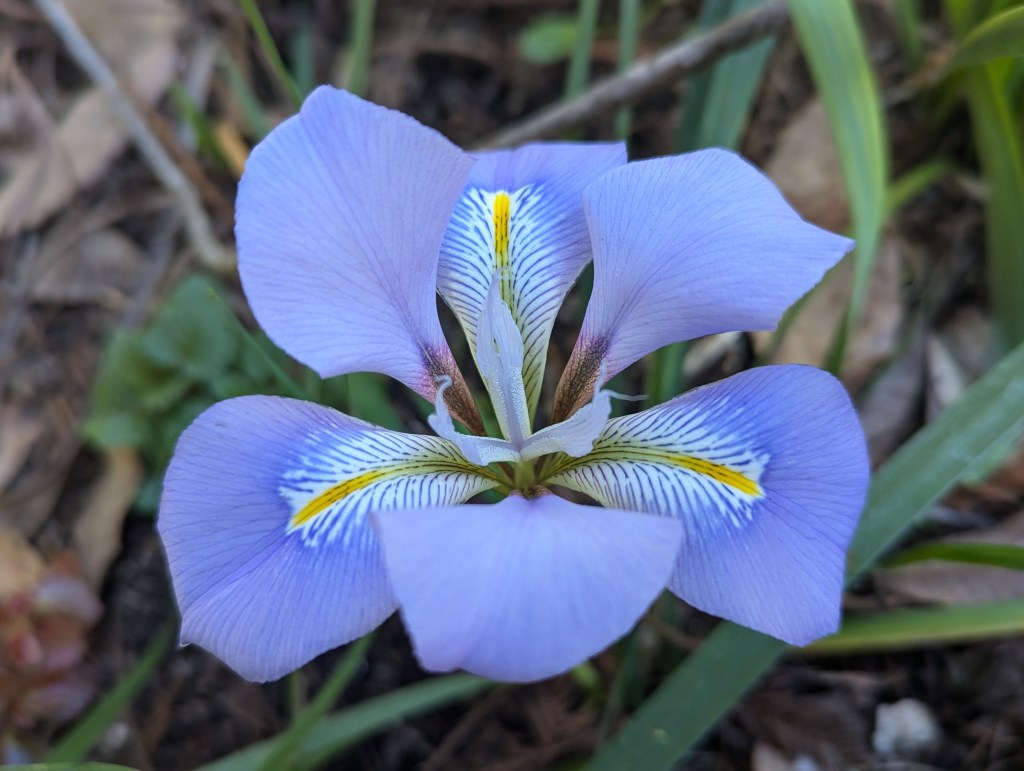
1. Iris unguicularis, Algerian iris has been blooming long enough for a third appearance here in four months. That may seem to be redundant, but it is my favorite for this week. I still do not know when to expect its last blooms. It is from Tangley Cottage Gardening.

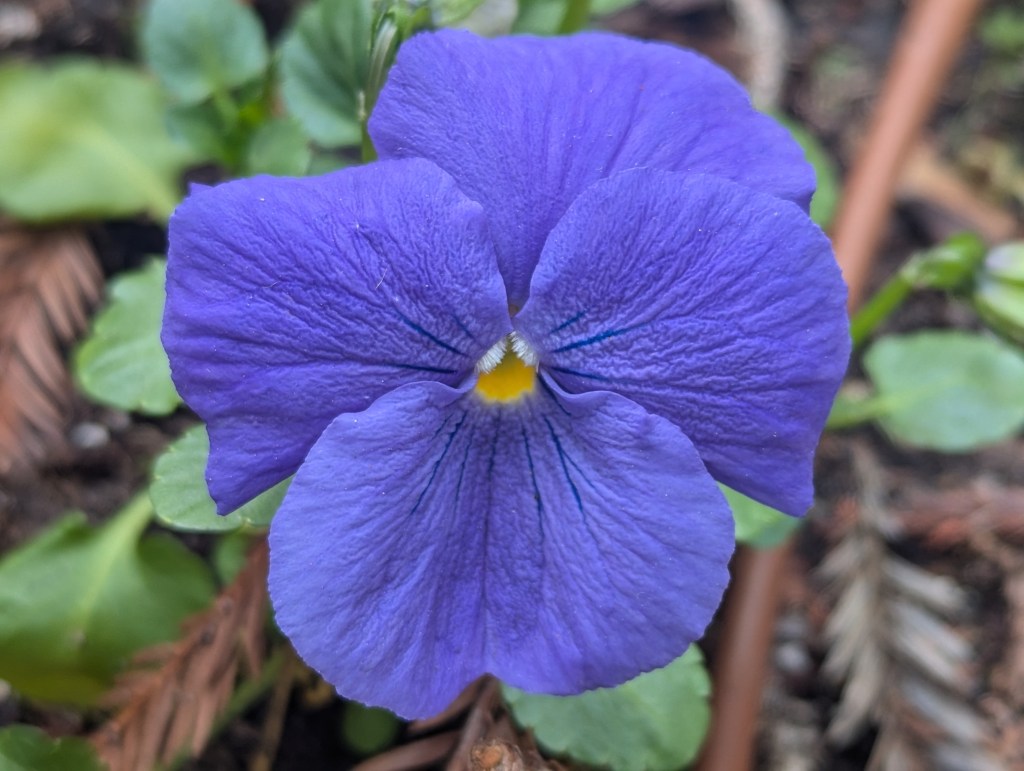
2. Viola cornuta, viola exhibits more insect damage than I was aware of when I took this picture. Well, this is embarrassing. I do not select annuals at work, but I do enjoy taking credit for them. These bloom longer here than they would within the Santa Clara Valley.

3. Viola X wittrockiana, pansy also performs better here than in the Santa Clara Valley. These blue pansies alternate with white pansies, which I prefer; but I took this picture to conform to the blue theme. We have not yet found any color that is not appropriate here.

4. Hyacinthus orientalis, hyacinth blooms thinly on floppy stems in partial shade, but is impressively reliably perennial. We should probably move the bulbs while dormant, but would prefer to instead remove an unwanted bay laurel tree that shades their landscape.

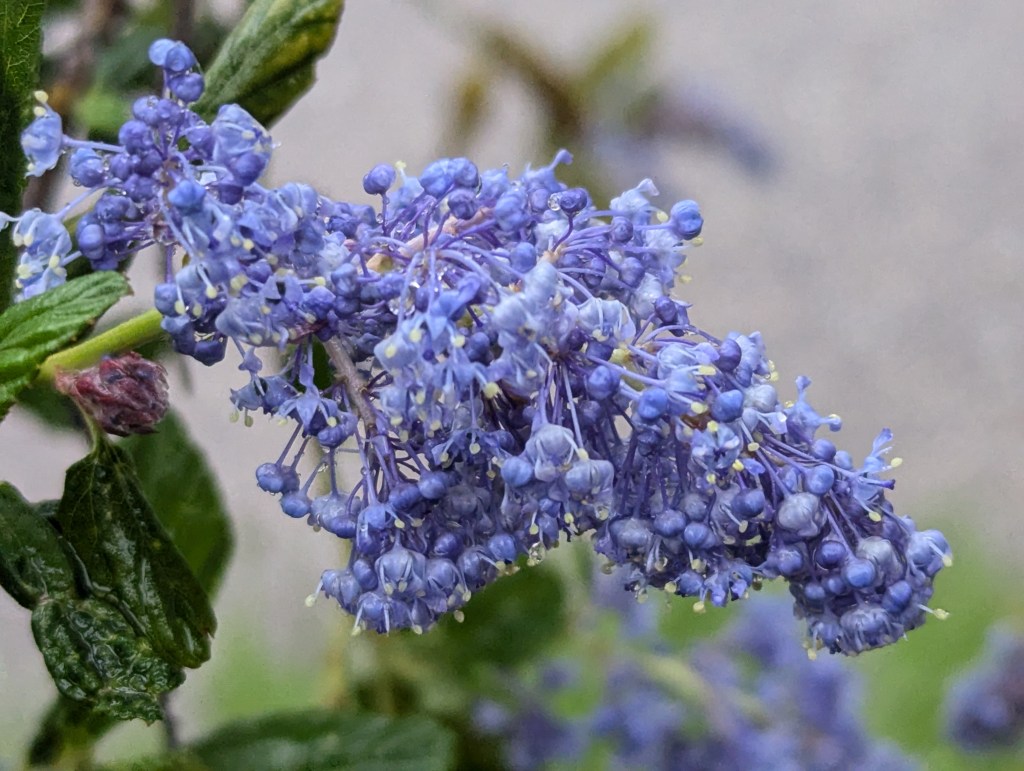
5. Ceanothus thyrsiflorus, California lilac is both locally native and added to at least one of our landscapes. Unfortunately, it is not easy to accommodate. It grew too large for its particular applications, but is difficult to prune properly without removing its best parts.

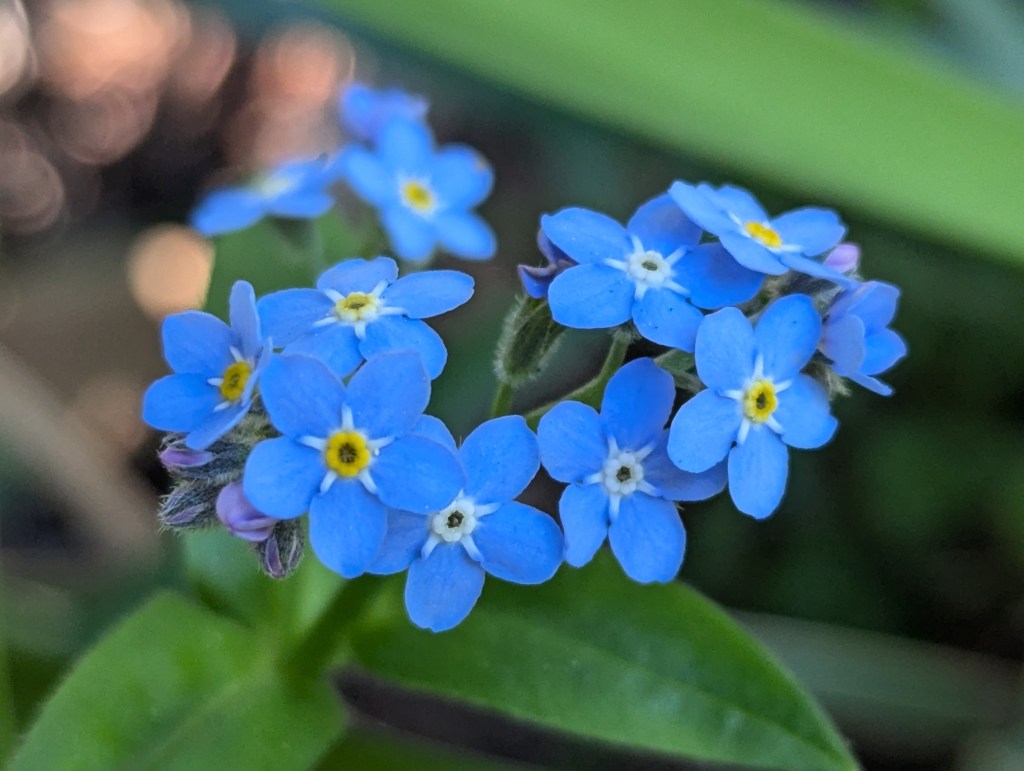
6. Myosotis sylvatica, forget-me-not is naturalized here, but not too aggressively so. It is pretty near but not within cultivated landscapes, where it can benefit from supplemental irrigation without incurring damage from weeding, raking and other gardening activity.

This is the link for Six on Saturday, for anyone else who would like to participate: https://thepropagatorblog.wordpress.com/2017/09/18/six-on-saturday-a-participant-guide/
Stick

‘Beurre d’Anjou’

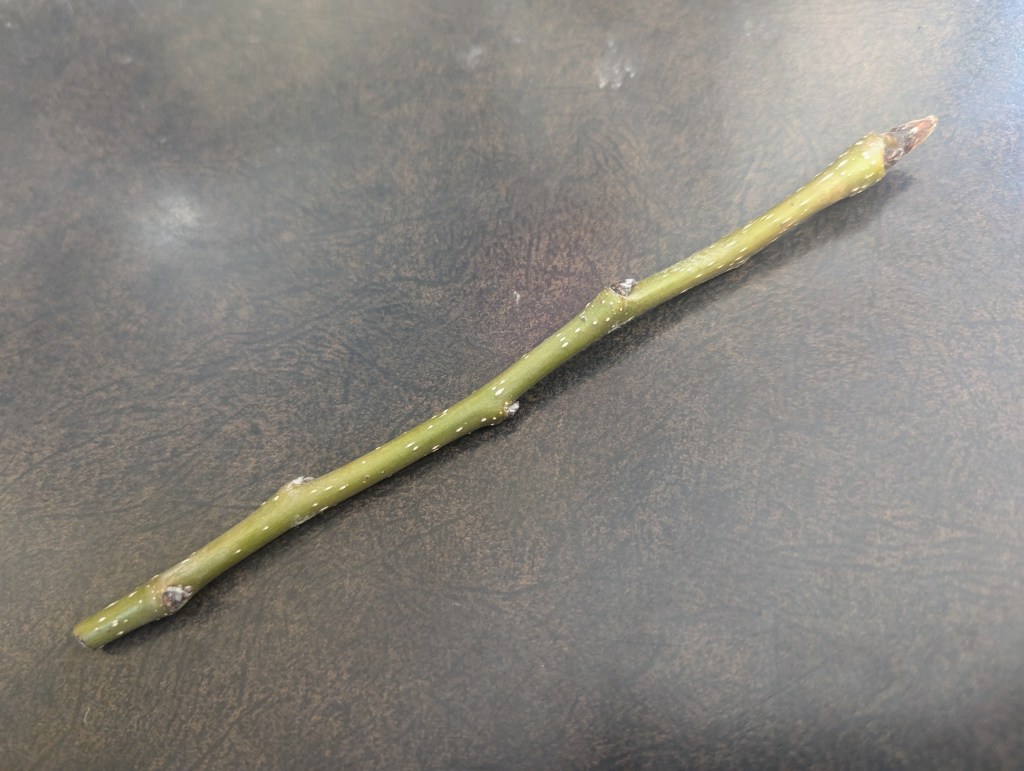
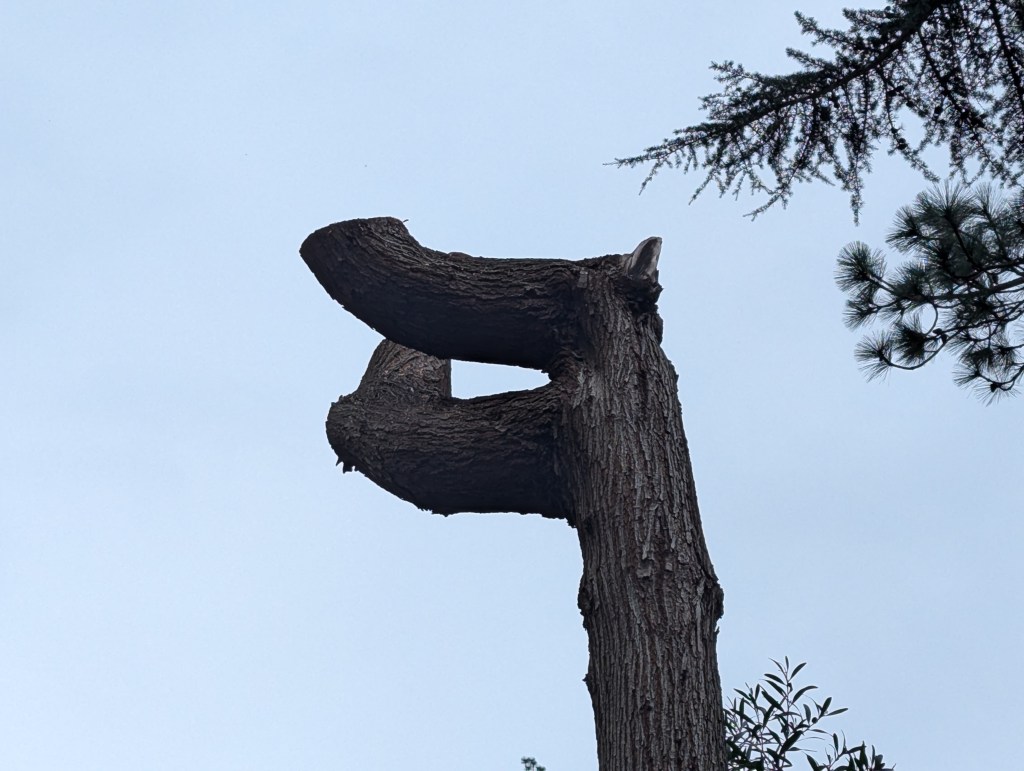
Here it is. The stick! I paid $7.79 for it with delivery from San Leandro, and waited a few days for its arrival last Wednesday. Since then, it was processed into two scions and a cutting, each with two buds. The terminal bud of one of the scions is actually accompanied by a few smaller buds. The scions were grafted, and the cutting was plugged, last Thursday, less than a day after the Stick arrived. I am very pleased with the results, and hope to be even more pleased with their favorable performance in the future. Ultimately, the finished product will be at least one pear tree. More specifically, it will be a ‘Beurre d’Anjou’ pear tree, which is more often known as ‘d’Anjou’ or ‘Anjou’. It and ‘Seckel’ were the only two cultivars of pear that I wanted to acquire this winter. After obtaining scions for ‘Seckel’ pear from the Scion Exchange of the Monterey Bay Chapter of the California Rare Fruit Growers on the first of February, ‘Beurre d’Anjou’ remained elusive. Every pear tree that I could get scions from was either another cultivar, or not identifiable by cultivar. I really thought that the process would be simpler. I could have purchased a tree from bare root stock at a nursery, but that would have been comparable to cheating, and would have cost about $40. The well rooted quince understock for grafting was already here and waiting. I grew a few specimens of it from suckers of an established pear tree, and already used one for the previously acquired ‘Seckel’ scions. Because I was so confident that I would eventually acquire the only pear cultivar that I craved more than ‘Seckel’, I retained the biggest and best of this understock for these recently acquired scions of ‘Beurre d’Anjou’.

Six on Saturday: Late Winter Color

Color is relatively scarce as spring bloom is only slowly beginning. A bit of winter bloom remains. Not all flowers bloom earlier here than in other regions. Some could actually be a bit later than expected.

1. Lemna minor, duckweed does not grow much during cool winter weather, but lingers until sloshed by rain. After surviving through a dry January, it finally succumbed to rain during early February. Its monochromatic green revealed this more vibrant color below.

2. Viburnum tinus, laurustinus is not among my favorites. I seriously do not understand why it is as popular as it is. Nonetheless, several feral specimens inhabit some of the less refined landscapes. I do appreciate how the white bloom of this specimen is not blushed.

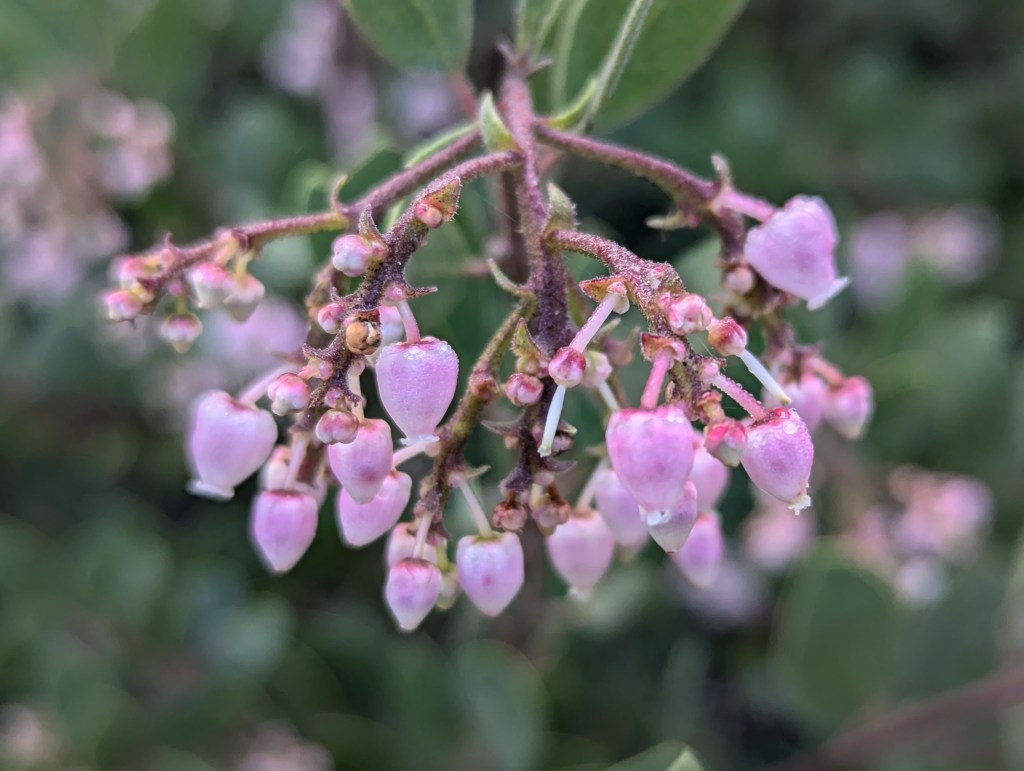
3. Arctostaphylos X densiflora ‘Howard McMinn’ manzanita qualifies as a locally native species, but is actually an unnatural hybrid of two species that, although native close by, are not locally native. I should not be so critical. It performs well within our landscapes.

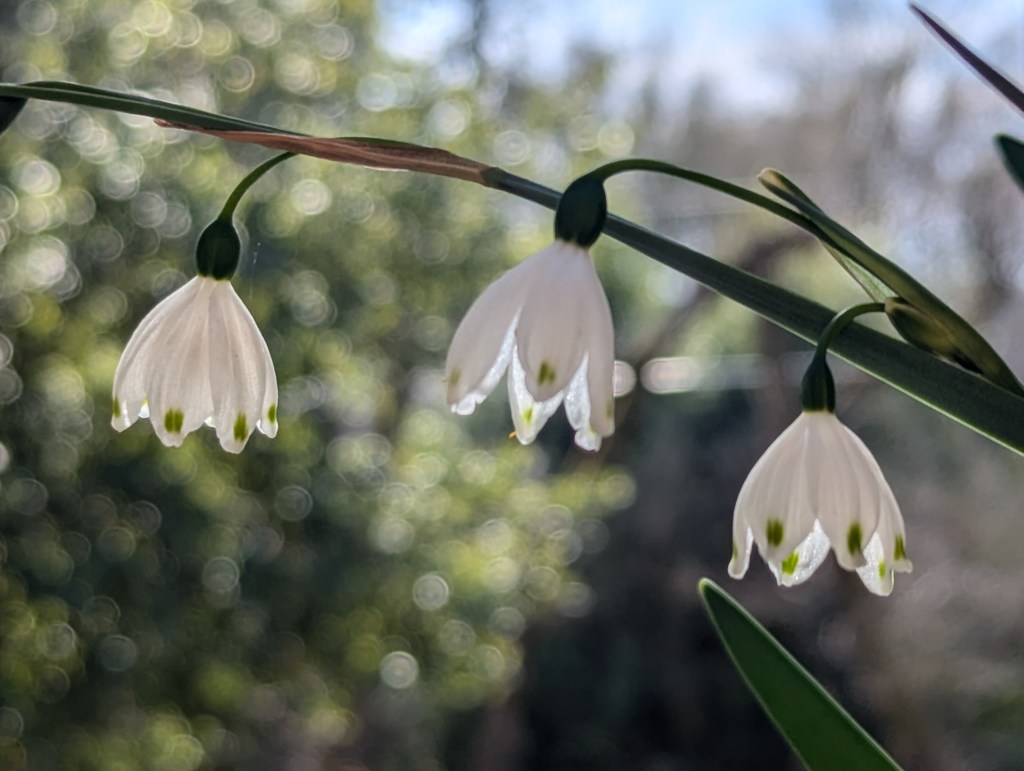
4. Leucojum aestivum, summer snowflake does not wait for summer to bloom. We know it as snowdrop because it blooms when real snowdrop, Galanthus nivalis, would bloom. There is no confusion since real snowdrop is very rare here. I have actually never seen it.

5. Iris X germanica ‘Rosalie Figge’ bearded iris is redundant to a similar picture two and a half months ago, but continues to bloom. I am beginning to wonder if it ever stops now that it has been doing so continually for so long. Fortunately, no one is bored with it yet.

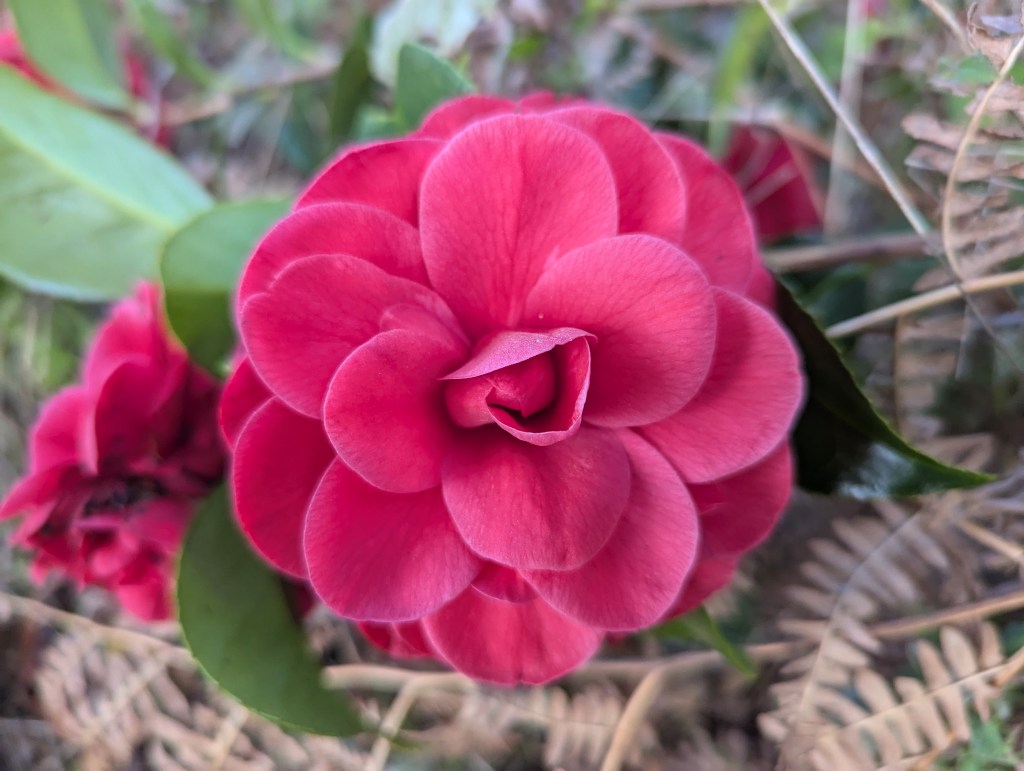
6. Camellia japonica, camellia is a different unidentified cultivar than that which posted with ‘Rosalie Figge’ bearded iris two and a half months ago, so is not so redundant. Most camellias were not blooming then, and even now, many are only beginning their bloom.

This is the link for Six on Saturday, for anyone else who would like to participate: https://thepropagatorblog.wordpress.com/2017/09/18/six-on-saturday-a-participant-guide/
Horridculture – Common Names

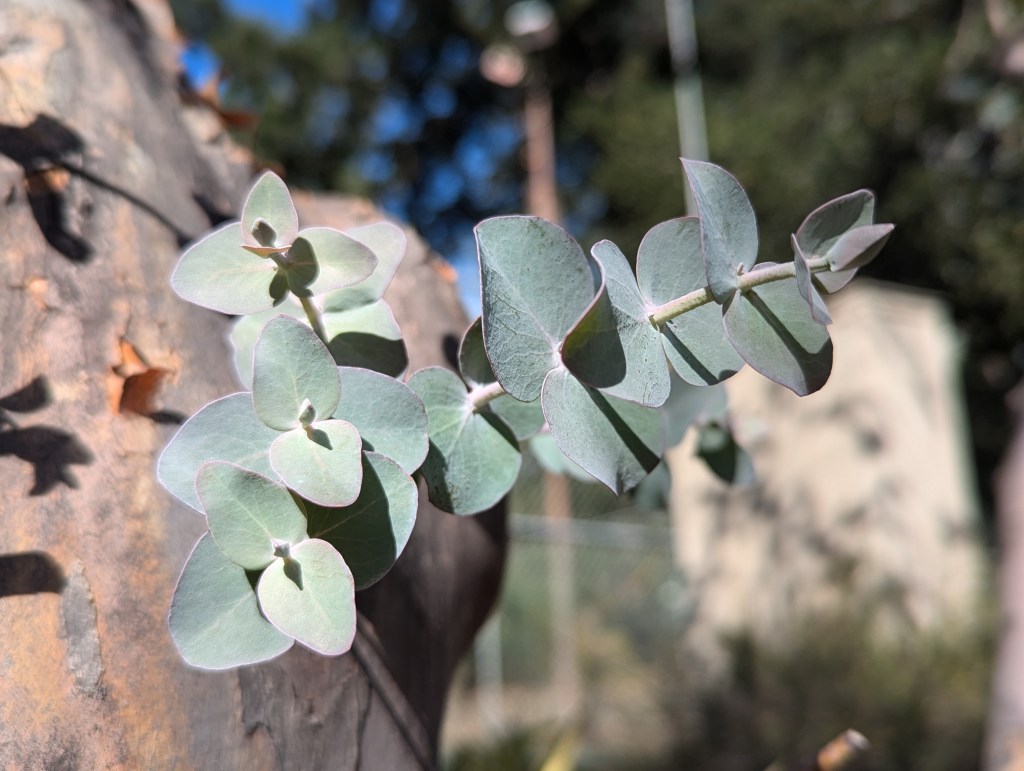
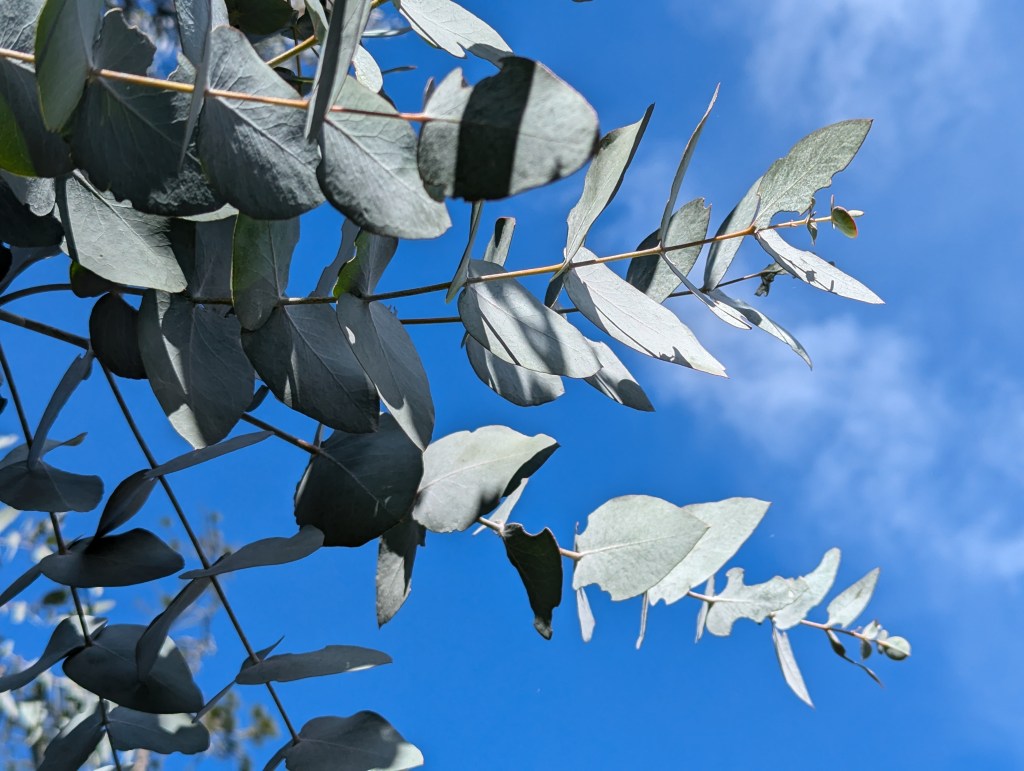
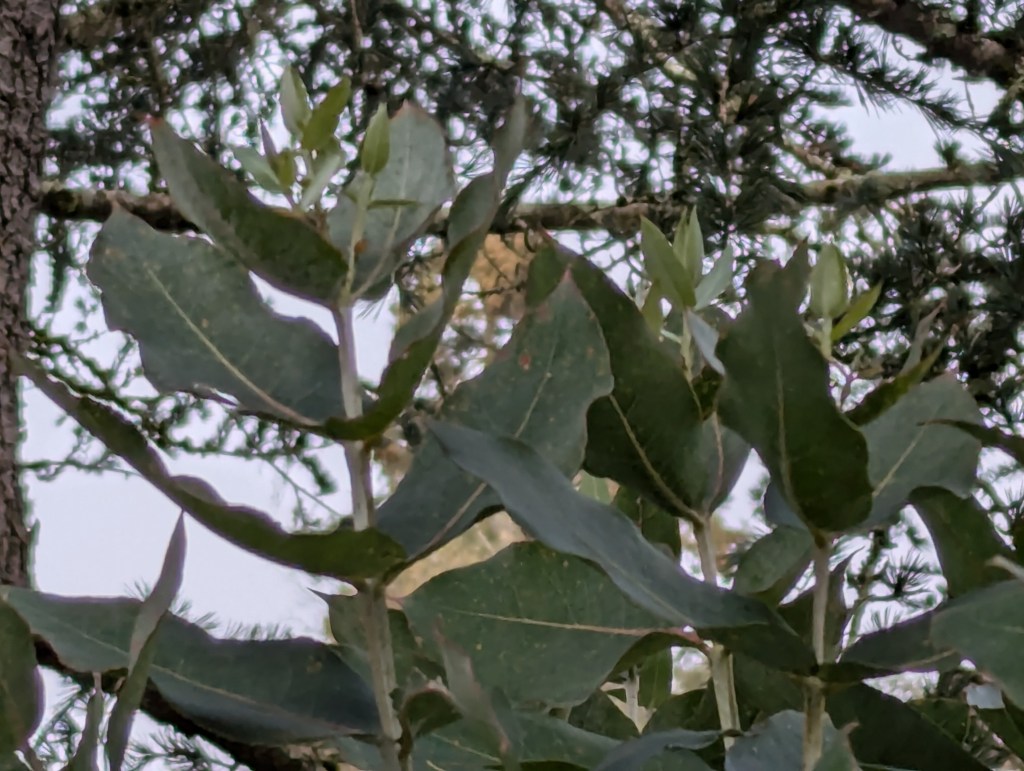
Snowdrop is Galanthus nivalis. Snowflake is Leucojum vernum. Snowdrop is the rarer of the two. I have seen it only in pictures from other regions. The potential for consequences of its misidentification are therefore quite minimal. That is fortunate. I learned Leucojum vernum as snowdrop. Locally, no one ever corrected this transgression, probably because no one here was aware that it was a transgression. Most likely learned it the same as I did. Similarly, we learned heaths as heathers. Since heathers are very rare here, there is not much to compare heaths to. Fortunately, snowdrop, snowflake, heath and heather all have botanical names, which are universally the same everywhere. Well, at least they should be. During the past few years, I have noticed that the tree that I leaned as Eucalyptus pulverulenta is now Eucalyptus cinerea, and what I knew as Eucalyptus cinerea is now Eucalyptus pulverulenta. It is as if the two have simply traded names. Now that more information than ever in history is so readily available online, it is amazing what information is unavailable. I can confirm the identity of neither species of Eucalyptus! Many modern cultivars, particularly hybrids, lack species names between their genus name and cultivar name, as if such designations are no longer important. In that regard, their botanical names are no more defining than their common names. At least some of the common names are entertaining, such as pig face, pig squeak, chicken liver plant, brazen hussy, naked lady, twisty baby, mother-in-law’s tongue, sneezewort, shaggy soldier, corpse flower, sticky monkey flower, bear’s breeches, sticky willy, turkey tangle frog fruit, laurel-leaf snail seed, love in a mist, love in a puff, dead nettle, butter and eggs, teasel, fleabane and yesterday, today and tomorrow. Goodness, that is a big list, and it could go on.

Six on Saturday: Scion Exchange

‘Beurre d’Anjou’ pear has been elusive. I visited the Scion Exchange of the Monterey Bay Chapter of the California Rare Fruit Growers to find scions, but none were unavailable. I got the few other scions and cuttings of the first three of these Six instead. That was two weeks ago. Some other deciduous vegetation is beginning to demonstrate that there was not much time to spare. Oddly, one banana tree did not bother with dormancy this year. It seemed to be comfortably sheltered.

1. Pomegranate, persimmon, caprifig, white mulberry and black mulberry cuttings are a bit too numerous to cite with their botanical and cultivar names. Most lack labels since I can identify them as they grow. They are plugged into the same can to occupy less space.

2. ‘Allegheny’ pawpaw scion is hopefully happily grafted onto seed grown understock. It is longer, with more buds than I would have preferred, but is rather thin. ‘Mango’ to the left is even dinkier. Three other small seed grown trees remain ungrafted without scions.

3. ‘Seckel’ and ‘Beurre d’Anjou’ pear were what I came for. I did not find ‘Beurre d’Anjou’ but this is ‘Seckel’. The quince understock is big enough for a pair of cleft grafted scions. Basal scraps from the scions were plugged as cuttings. Redundancy could be useful later.

4. Sambucus racemosa, red elderberry reminds me that winter dormancy will be ending soon for most deciduous plants. Grafting, bare root planting and dormant pruning must therefore be done sooner. Norway maple might be the last deciduous species to refoliate.

5. Musa acuminata, banana trees look so shabby after even minor frost that their foliage gets cut back. This unidentified specimen stayed nicely foliated under the eave and close to those uninsulated walls of the associated building, which happens to be a coffee shop.

6. This happens to be on the menu board of the coffee shop, which happens to be within view from where the banana tree that did not get frozen is situated. Another banana tree that is just a few feet away but unsheltered was deprived of the last of its frosted foliage.

This is the link for Six on Saturday, for anyone else who would like to participate: https://thepropagatorblog.wordpress.com/2017/09/18/six-on-saturday-a-participant-guide/

Horridculture – Mail Order Glitch

Of a dozen or so items of a mail order purchase that included various cane berries, mulberries, grapes and mayhaws, only a ‘Cumberland Black’ raspberry was less than exemplary. Unfortunately, it was majorly less than exemplary. It was broken at the base of its newest cane, just above where it extended from the older cane that the cutting was made from. If only it had not been broken, it would have been an excellent bare root specimen, with more roots than typical, and a substantial cane with several plump and turgid buds. I realize that it could either extend new canes from latent buds just below where it broke, or extend new roots from the base of the younger cane just above where it broke; so I should simply wait to see what it does. It could even do both, to provide me with two specimens for the price of one. However, I also realize that it could potentially do neither, but instead succumb to its damage. Regardless, its recovery from such damage should not be my concern. It is not in a condition that I intended to purchase it as. The provider should either provide a replacement, or refund what was paid for this particular item. Instead, I was instructed to wait to see if this damaged raspberry cane recovers. Well, at least I got a response. Perhaps that is all that is necessary. I am now more intent on keeping this raspberry cane alive, partly because I doubt that its purchase would be refunded if it succumbs to its damage, and partly because I would likely be to embarrassed to request such a refund if it becomes justifiable. Besides, as I mentioned, all other items of the purchase are of exemplary quality. I should be satisfied with that.

Six on Saturday: Eric

Ericaceae is a prominent family here. Rhododendrons, azaleas and pieris inhabit several of the landscapes. Manzanitas, madrones and, within some situations, huckleberries, are common within the surrounding forests. Even two of my associates, although unrelated to Ericaceae, are named for two members of the family that are popular for landscaping. Half of my Six for this Saturday are azaleas. Just one other is another ericaceous species. Later, I can get better pictures of azaleas as well as rhododendrons. Several impressively large rhododendrons bloom spectacularly in season. Heather would be nice, but is quite rare. I know where abandoned fields of it grew wild, but I have never seen it available in nurseries.

1. Heath is a masculine name. It is of the Erica genus, though; and Erica is the feminine form of Eric. Heather is a similar but feminine name, but is of a different Calluna genus.

2. ‘Coral Bells’ Azalea, like all azaleas, is of the Rhododendron genus, so like heather and heath, is in the Ericaceae family. All of them are also related to madrone and manzanita.

3. Azaleas generally bloom for early spring. These that bloom somewhat too early during the rainy season can get a bit thrashed. They would be prettier if they could delay bloom.

4. Florist azaleas are delightful as fully blooming potted specimens, but generally do not adapt well to landscapes. This specimen is floppy, but otherwise performs impressively.

5. Heather is named for Calluna, which, actually, I have not seen in many years. It grew as a cut flower crop in Montara more than half a century ago. It was abandoned by 1980.

6. Rhody is short, and his name is short for Rhododendron. But of course, he is a terrier, so ignores me regardless of what I call him. He can actually ignore me in four languages!

This is the link for Six on Saturday, for anyone else who would like to participate: https://thepropagatorblog.wordpress.com/2017/09/18/six-on-saturday-a-participant-guide/