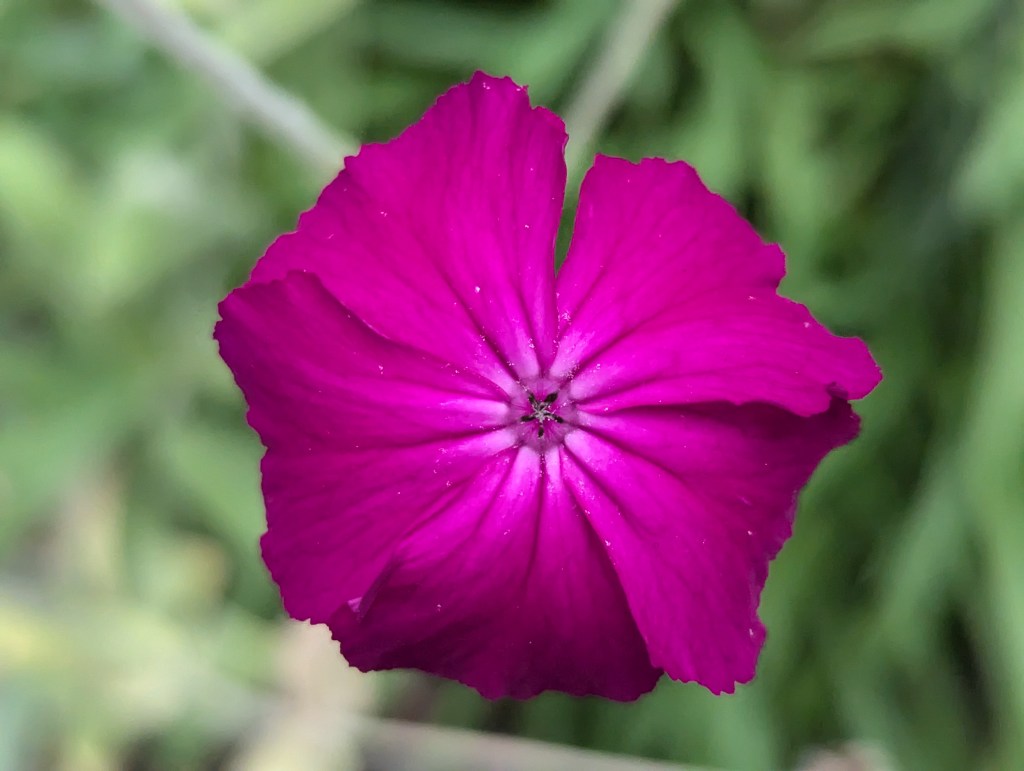
Sunday Best – Campion
Purple is not as easy as white. White is either white or not white. Purple can be bluish or reddish. I am not totally certain if all Six of these are purple or lavender, which is merely pastel purple.
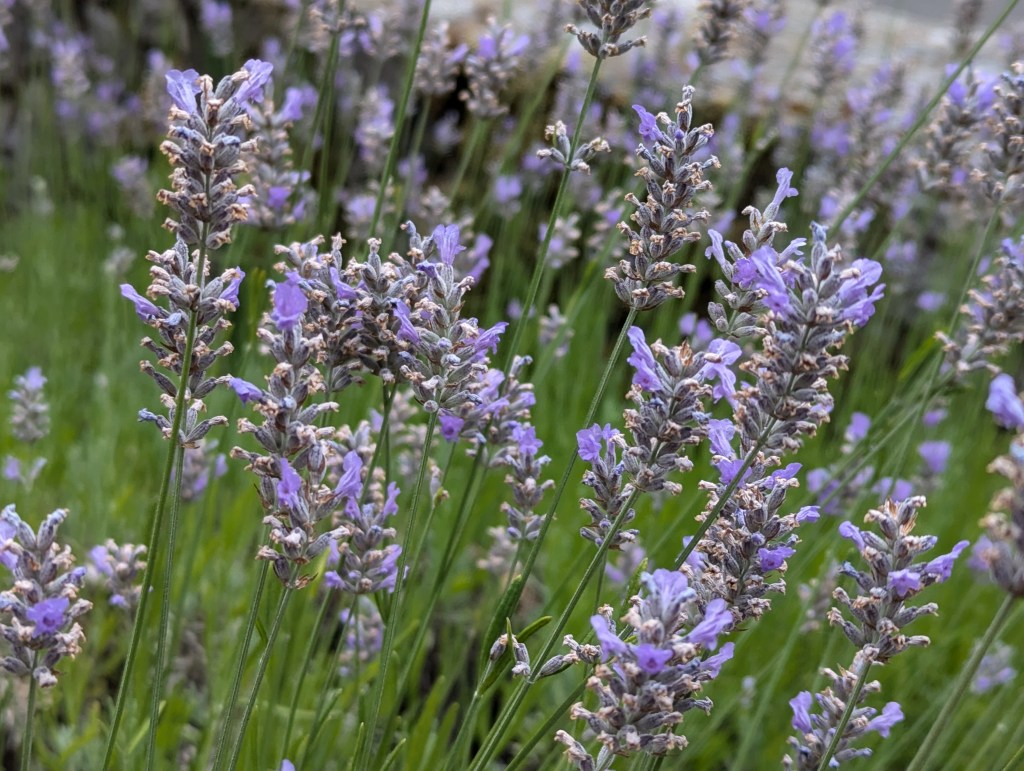
1. Lavandula angustifolia, English lavender blooms, as its name suggests, with lavender floral color, which is really just pastel purple. It looks blue to me, though. I do not know what cultivar this is, but it has survived here longer than lavender should be expected to.
2. Phlox paniculata, garden phlox also blooms lavender, although it looks pink to me. It is a feral progeny of the already feral garden phox with pure white bloom that I posted a picture of last Saturday. Although white is my favorite, I find this odd variant appealing.

3. Lobularia maritima, sweet alyssum also resembles its white counterpart that I posted a picture of last week, but is not a progeny of it. It is a common garden variety, although I do not remember its name. It survived through last winter for another summer season.

4. Lantana montevidensis, trailing lantana survives within a badly neglected landscape. It really is worthy of consideration for other sunny and warm landscapes here. Lantana camara also performs well in an adjacent landscape, and was recently added to another.

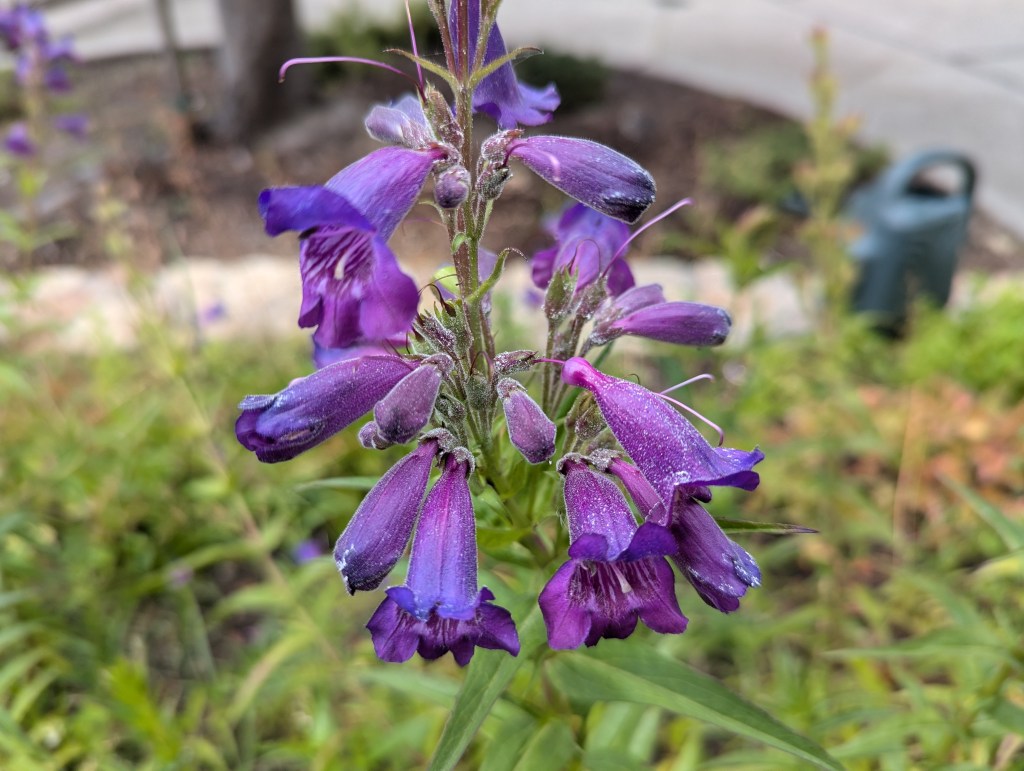
5. Penstemon gloxinioides, beard tongue blooms sparsely for now only because it is new in this particular situation. It grew from several rooted bits that were separated from old specimens as they were cut back last winter. These might produce similar bits next year.
6. Petunia X hybrida, petunia is always reliable for bright color through summer. These have been growing somewhat slowly this year only because the weather has been so mild and even weirdly cool sometimes. Gophers consumed quite a few in a landscape nearby.

This is the link for Six on Saturday, for anyone else who would like to participate: https://thepropagatorblog.wordpress.com/2017/09/18/six-on-saturday-a-participant-guide/

Giant bird of Paradise may not look so good in its picture, but started the trend for these Six for this Saturday. White is my favorite color.
1. Strelitzia nicolai, giant bird of Paradise did not pose for a good picture, but impresses with its fancy bloom nonetheless. It bloomed nicely last year too, just three months after getting relocated from another garden. It is still canned, so is not even in the ground yet.

2. Nerium oleander, oleander reminds me that, contrary to the mild weather, it really is the middle of summer. This particular oleander was so overgrown and shabby from bad pruning for many years that it was coppiced. It worked so well that we could do it again.

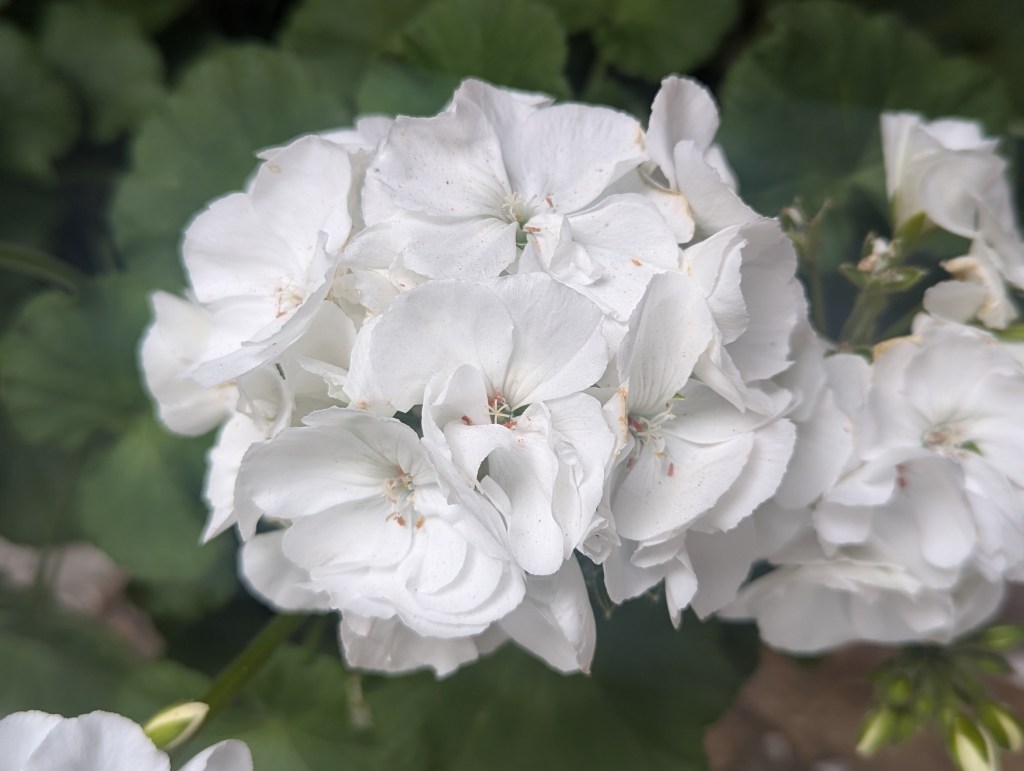
3. Pelargonium X hortorum, zonal geranium is a short term perennial, but provides too many replacement cuttings for extinction. I do not know how long it has been here, but I do enjoy propagating it now, not just because it blooms white, but also because it is easy.
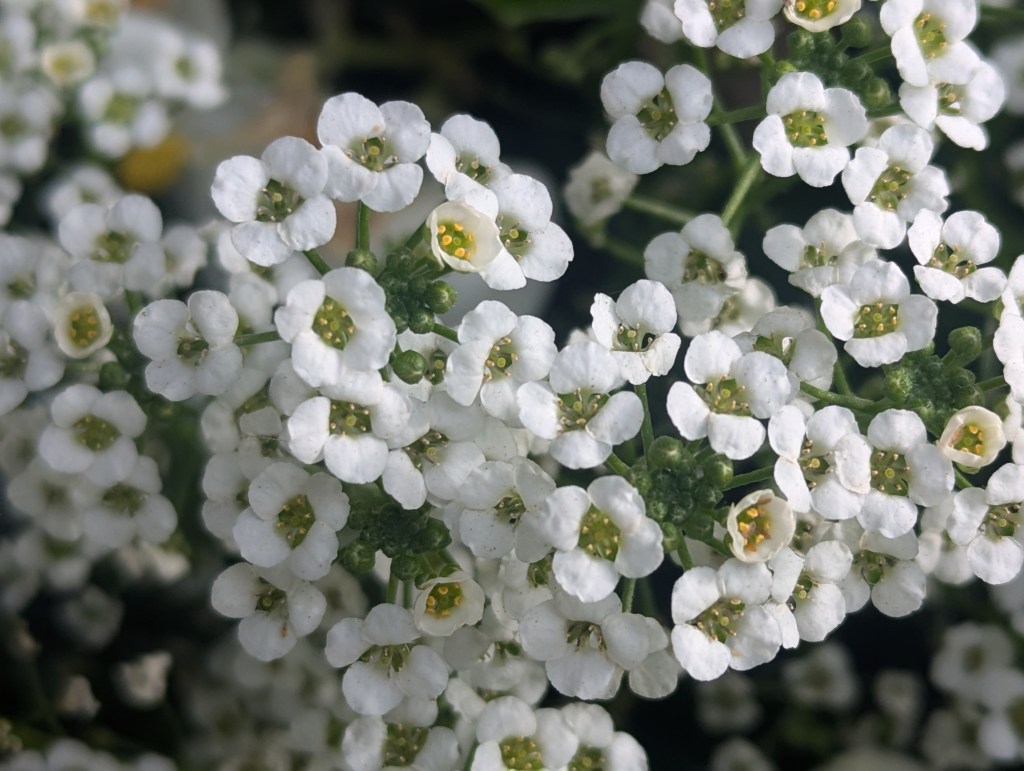
4. Lobularia maritima, sweet alyssum has been here a bit longer than expected also, but is not as perennial as zonal geranium. It was planted as a warm season annual early last summer. Because wax begonia is growing around it, it will not be replaced, but removed.
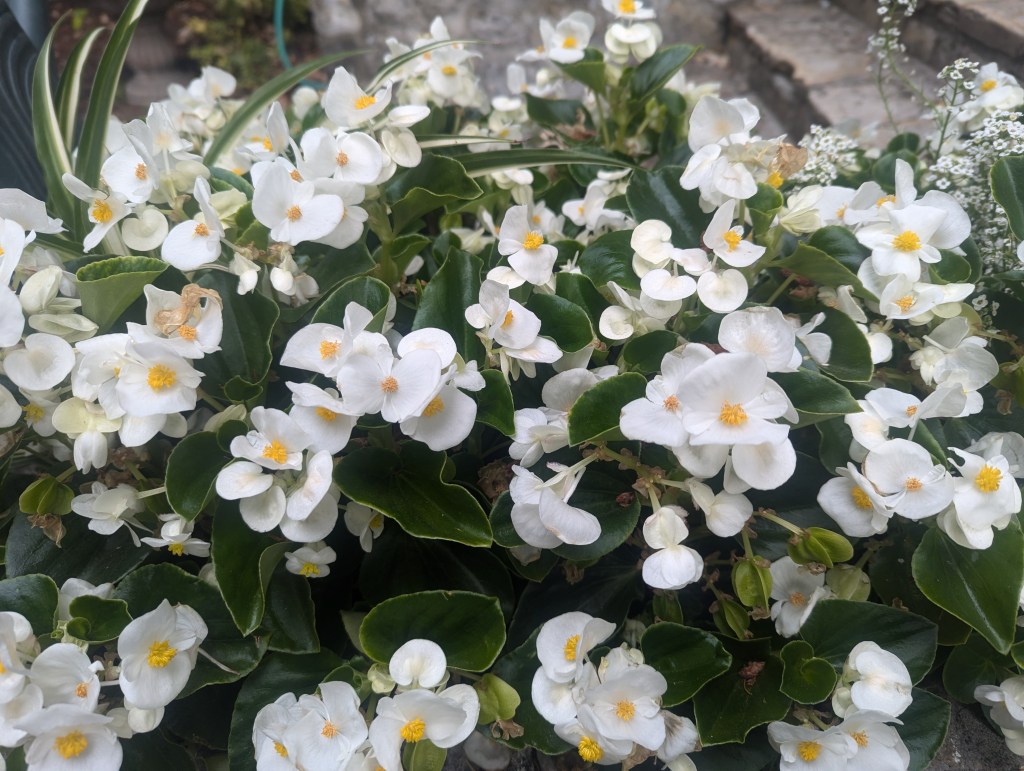
5. Begonia X semperflorens cultorum, wax begonia has been doing remarkably well now that it has its planter boxes within planter boxes to exclude aggressive redwood roots. It has been growing slowly but surely since last summer, so it now needs no replacements.
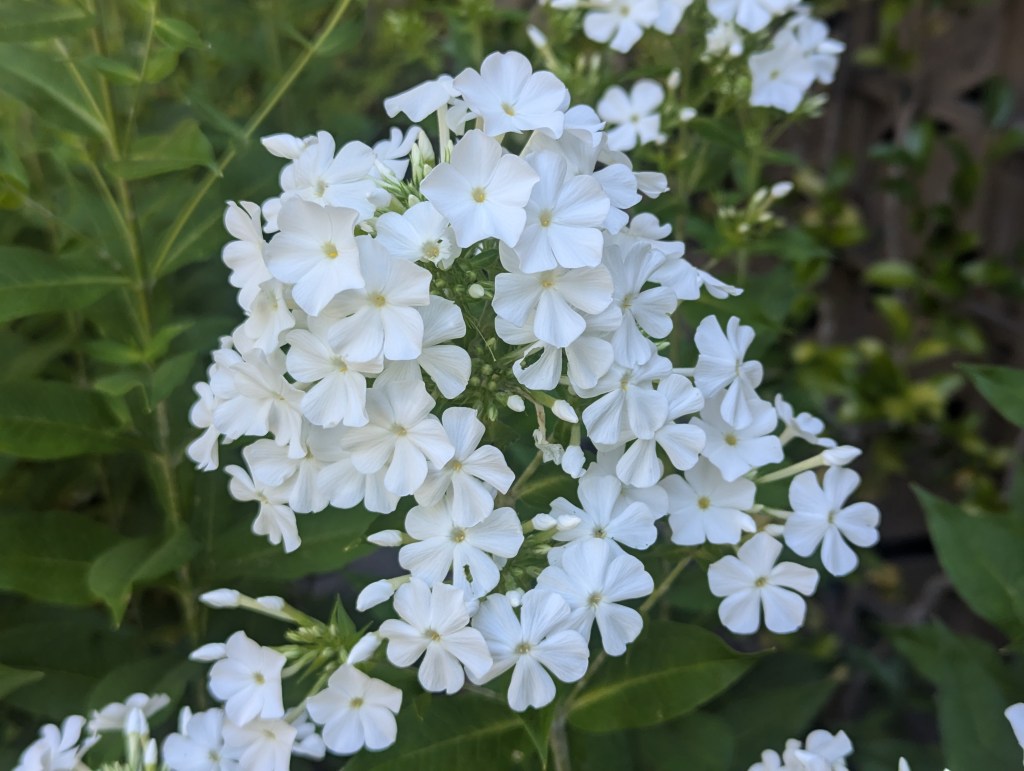
6. Phlox paniculata, garden phlox self sowed from an unknown source several years ago. It continued to self sow with such vigor that we thought it could become invasive. Then, it unexpectedly became docile, and now grows only where it is an asset to the landscape.
This is the link for Six on Saturday, for anyone else who would like to participate: https://thepropagatorblog.wordpress.com/2017/09/18/six-on-saturday-a-participant-guide/

Platanus, or sycamore, supposedly derives its botanical name from the Greek word “platys”, which means “broad”, and describes its wide leaves. However, some believe that its name was derived from “Plato”, who lectured about philosophy within the shade of a sycamore grove, rather than an olive orchard, outside of Athens. The Tree of Hippocrates, is an individual Platanus orientalis that was planted centuries ago, supposedly where Hippocrates lectured about medicine under a much older tree of the same species. Trees grown from cuttings and seed from the Tree of Hippocrates have been shared with medical institutions, schools and libraries all over the World. One seedling was planted at Dominican Hospital in Santa Cruz in 1968. Until only the last few years, it had been pollarded in an exemplary manner, which left no twigs for me to get cuttings from during winter. Only last summer, a gardener left me a few twigs, which I plugged as early cuttings. Of course, most succumbed to summer warmth. Some of the survivors did not root through winter. Now, though, there are four surviving rooted cuttings! So, we have four copies of a seedling of the second Tree of Hippocrates! Does that count for anything?

Several of these Six were featured here before, and some only recently. They continue to surprise.
1. Musa ingens, oem, or giant highland banana, produced two pups. This is the larger of the two. Although I was told that this is oem, I am not certain. It behaves like the species in some ways, but not others. For example, oem should only occasionally produce pups.

2. Heuchera sanguinea, coral bells does not look coral to me. This looks like simple red. I think of coral as more orangish pink. Is that correct? I can not complain, since I prefer this color. Some of the fancy foliar cultivars here bloom with colors other than coral too.

3. Canna X generalis ‘Cannova Mango’ canna and feral Antirrhinum majus, snapdragon that I posted pictures of two weeks ago are blooming even better together now. Why are some of the best flowers as unplanned as these were? Perhaps I should unplan for more.

4. Helenium autumnale, tickseed was yellow last week. This is literally the same flower. Is this new color orange or red? Was it supposed to be this color, or is this what happens to yellow flowers as they fade? I will need to see how the other two varieties bloom later.

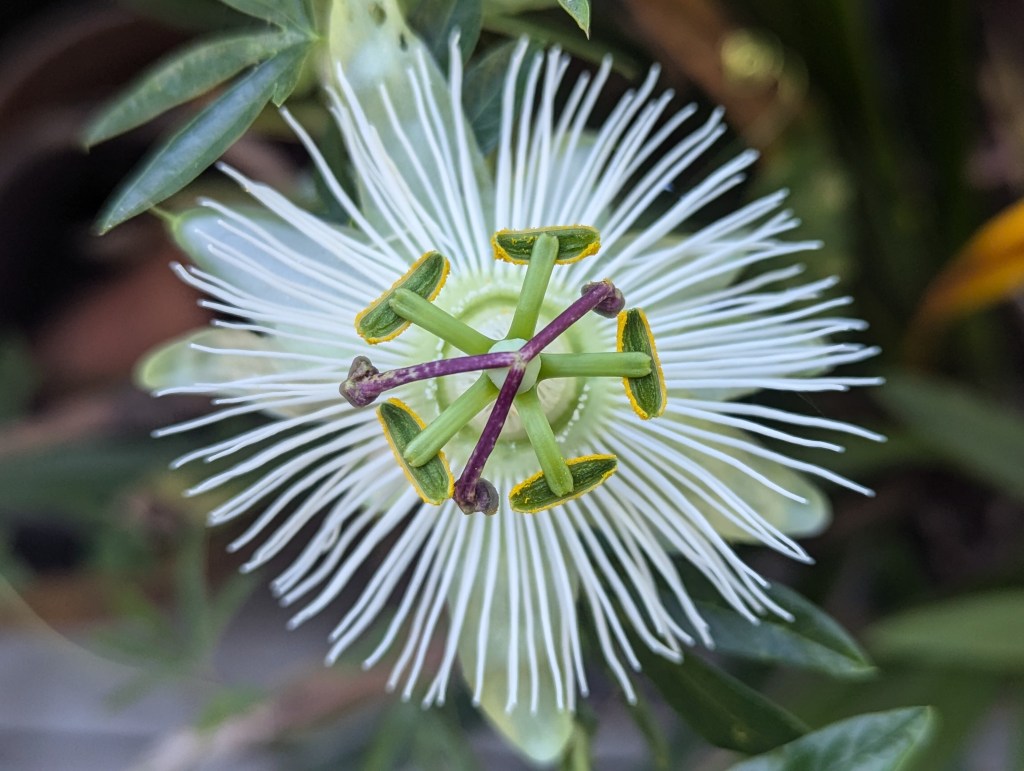
5. Passiflora caerulea ‘Constance Elliott’ passion flower smells like pineapple guava, but only briefly. Its fragrance is gone before I can get someone else to confirm the similarity. The garishness of this bloom does not last very long either. This flower is wilted by now.
6. Rhody rarely cooperates for pictures. He should though, since he is who we all want to see here for Six on Saturday. I would post six pictures of him weekly if he would allow it. Perhaps I should have gotten a picture of Heather too. She cooperates more for pictures.

This is the link for Six on Saturday, for anyone else who would like to participate: https://thepropagatorblog.wordpress.com/2017/09/18/six-on-saturday-a-participant-guide/

Tangly Cottage Gardening made good use of obsolete water meter lids as stepping stones. Now that I procured quite a bunch from where I work part time, I can try something similar. Because they are rectangular and of standardized dimensions, they can alternatively function as contiguous pavers. I intend to eventually pave a small patio with them. Forty-three are identical, 20.75 inches long by 10.5 inches wide, which is approximately 1.5 square feet. One is slightly different, but of the same dimensions. Two are smaller. Because they are not exactly twice as long as wide, all must be set in the same orientation, but that will not be a problem. They can be arranged in five rows of nine, or nine rows of five, as an almost square patio of approximately 68 square feet, with approximately eight foot long sides. Only one lid will be different, and one lid, likely in a corner, will be lacking. If necessary, I can add the two smaller lids to awkwardly fill the otherwise lacking corner, or simply find another lid somewhere. More will be available later. Although it is not yet constructed, I am already pleased with this recycled cast iron patio.

Horticultural dysfunction can be, from one to six, annoying, frustrating, very infuriating, entertaining, confusing and pleasantly surprising. Much of this is more natural than it is dysfunctional.
1. Arundo donax, giant reed is not as giant as expected. Four potted specimens look like big grassy weeds amongst these lily of the Nile. They will be removed if they do not grow as fast as they famously should. They are here only temporarily for this summer anyway.

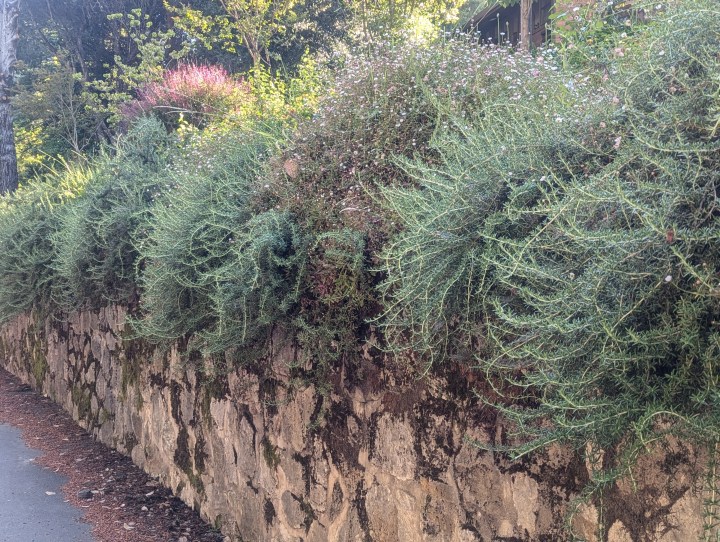
2. Rosmarinus officinalis ‘Prostratus’ creeping rosemary is not as prostrate as expected. I thought that it would cascade more limbry from the top of the wall rather than become fluffy but barely pendulous shrubs on top of the wall. In a row, they look like Soul Train.
3. Agapanthus orientalis, lily of the Nile are expected to bloom for summer. Here on the edge of a trafficked walkway, they are too tempting to kids with sticks. Fortunately, their evergreen foliage is a nice border even without bloom. We try not to be too discouraged.

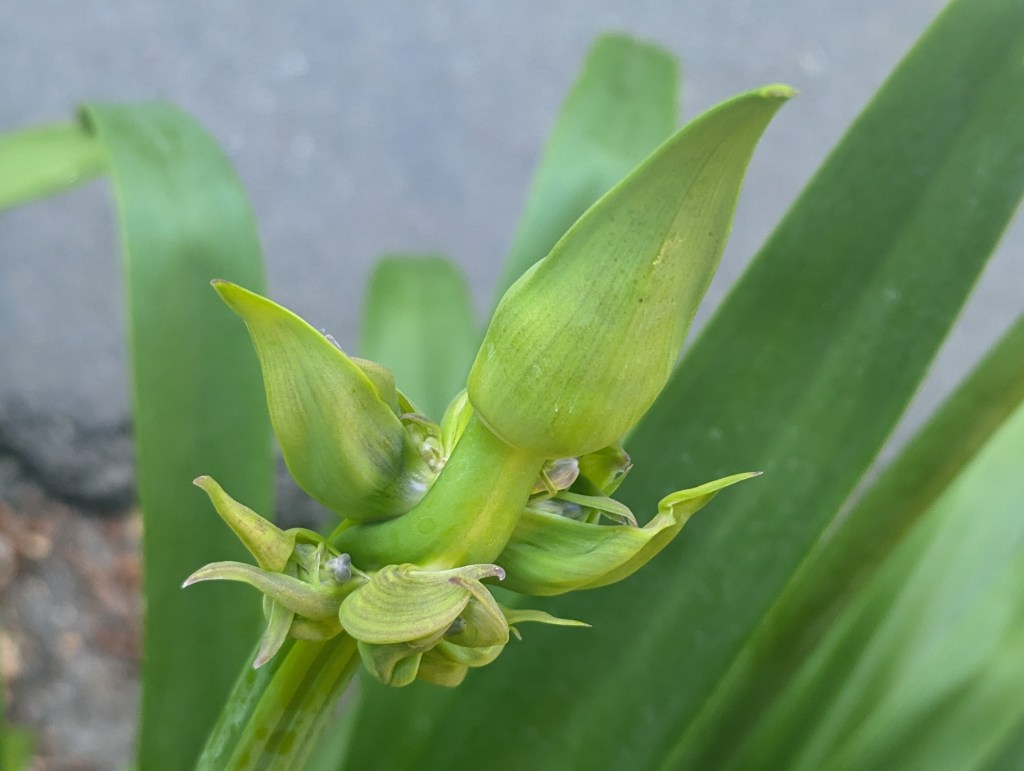
4. Agapanthus orientalis, lily of the Nile is trying to bloom a bit more than expected, by fasciation. Perhaps it is trying to compensate for the destruction of so much other bloom nearby. Ultimately, a fascinated bloom will be no more substantial than a normal bloom.
5. Echinops sphaerocephalus, globe thistle is unexpectedly solitary. This is the first that I have grown since my second summer after high school, so I do not remember how they typically bloom. Yet, I expected a branched bloom stem. Maybe that is what it does next.

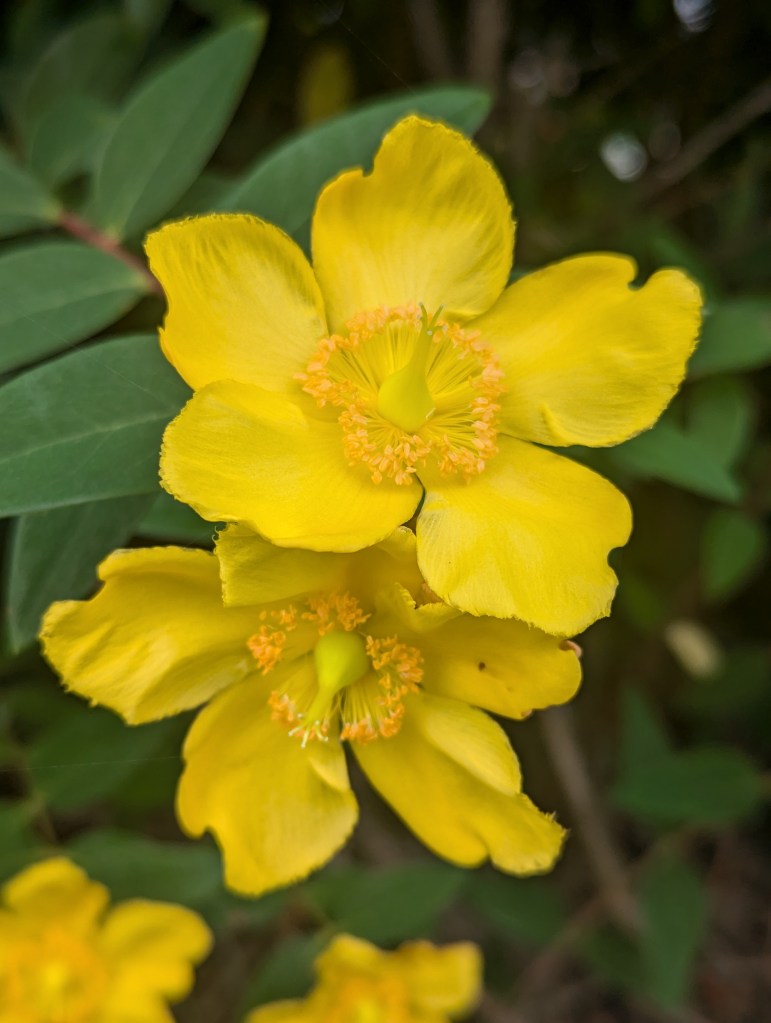
6. Helenium autumnale, sneezeweed was expected to bloom later in summer. This is the first for me, so I can neither complain nor question its timing. Two other varieties bloom red and orange. They, the globe thistle and others came from Tangly Cottage Gardening.

This is the link for Six on Saturday, for anyone else who would like to participate: https://thepropagatorblog.wordpress.com/2017/09/18/six-on-saturday-a-participant-guide/

