Out with the new, in with the old

Canna ‘Cannova Mango’

Canna ‘Cannova Mango’ is a relatively recent introduction to the landscapes here. I inadvertently brought it back from Southern California about two and a half years ago, without realizing that it is exactly the sort of modern cultivar that I am not at all keen on. It is new. It is improved. It blooms with a strange but trendy color. The problem is that it performs too well to not be an asset to the landscapes. Because it is so short and compact, it starts blooming early, while old fashioned Canna are still only foliar. Because it replaces older stalks with newer stalks so efficiently, it is rarely without bloom until frost. Other cultivars of the series bloom yellow, lemon (which is implied to be distinct from yellow), orange shades (?), red golden flame (?!), rose, scarlet with bronze foliage or orange with bronze foliage. The tallest are less than five feet tall. Regardless of my disdain for modern cultivars, I do not doubt that all of them perform as impressively as ‘Cannova Mango’. Nonetheless, I prefer the older and formerly common sort. A relatively compact cultivar that stays less than about four feet tall with simple green foliage and billowy but simple red bloom has been relocated through a few landscapes here since the early 1980s. Although not many rhizomes survive, I intend to grow more of it, even if not so much within the landscapes at work. Its bloom begins a bit later, and is neither as profuse nor as continuous as that of ‘Cannova Mango’, but it has history here. Besides, its more relaxed foliar texture and bloom somehow seem to be more compatible with the surrounding forested setting than the almost too refined modern cultivars, with their perfectly compact form, overly profuse bloom, and strangely modern floral color.

Unidentified old fashioned red Canna with green foliage.

Yucca whipplei Seed

Yucca whipplei seed is likely more rare in cultivation than in the wild.

Yucca whipplei, which is now known as Hesperoyucca whipplei, should not be so difficult to procure. It is the most common species of the genus within the next few hundred miles south of here, and was quite common in the hills around San Luis Obispo, where Brent and I studied horticulture at California Polytechnic State University (Cal Poly). I should have taken pups from wild specimens within the region, but I know of no one with wild specimens within their gardens. I can only see them from a distance, and, although within view, they are far enough away to necessitate quite a hike to get to. I never bothered to procure pups from specimens that I encounter directly in the Santa Monica Mountains north of Beverly Hills because they might be a different variety, or related to such a variety. Contrary to dramatic bloom, seed of the species is supposedly rare because the larvae of its very specialized pollinating moth devour almost all of the seed that develops from successful pollination. (The moth pollinates a flower only to provide seed for its larvae to eat.) Seed should be even more rare here because the specialized pollinating moth has no business so far from the natural range of its sustaining species. Somehow, a specimen that bloomed at work produced these few seed capsules. Someone else besides the specialized pollinating moth apparently took interest in its bloom. Although I have no idea what variety of Yucca whipplei the particular specimen is, I am pleased with the seed, and will try to grow them if they are viable when their capsules dry. (I hope that removal from their deteriorating stalk does not compromise their development.) Furthermore, I will get at least one pup from the original parent now that it will generate a litter after its monocarpic bloom. It is likely the variety that I want and am most familiar with anyway, because that particular variety happens to be the most common. Of course, I will procure a pup from a wild specimen within the region of San Luis Obispo if I ever get the opportunity to do so, just in case it is any different from what is growing and now blooming here.

Six on Saturday: Off Color

Perennial pea, lily of the Nile and dahlia displayed aberration of color earlier and started a trend.

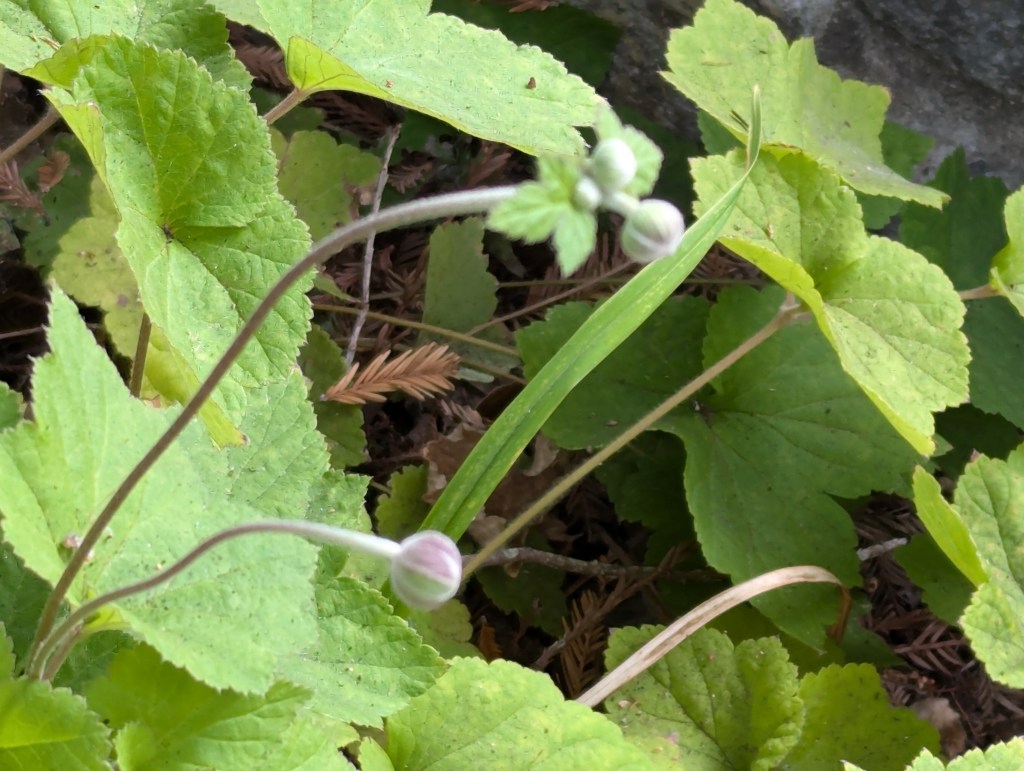
1. Eriocapitella hupehensis, Japanese anemone is enviable in other gardens. I neglect to remember that a minor bit of it survives in one of our landscapes. I ignore it because it is such a grungy almost grayish white without enough blush to be pink. I should see how it blooms now and then relocate it to a better situation where it might develop better color.

2. Hypoestes phyllostachya, polka dot plant is typically spotty with either white or pink. Two of seventy-two cell pack plugs exhibited this darker pinkish red. I got copies of it to perhaps grow as houseplants, at least until they will be happy in the garden next spring.

3. Chrysanthemum X morifolium, florist’s chrysanthemum seems to change color like a dahlia that I got a picture of last week. I thought that it bloomed orange last year, which was a surprise after it bloomed rusty red two years ago. I must not remember accurately.

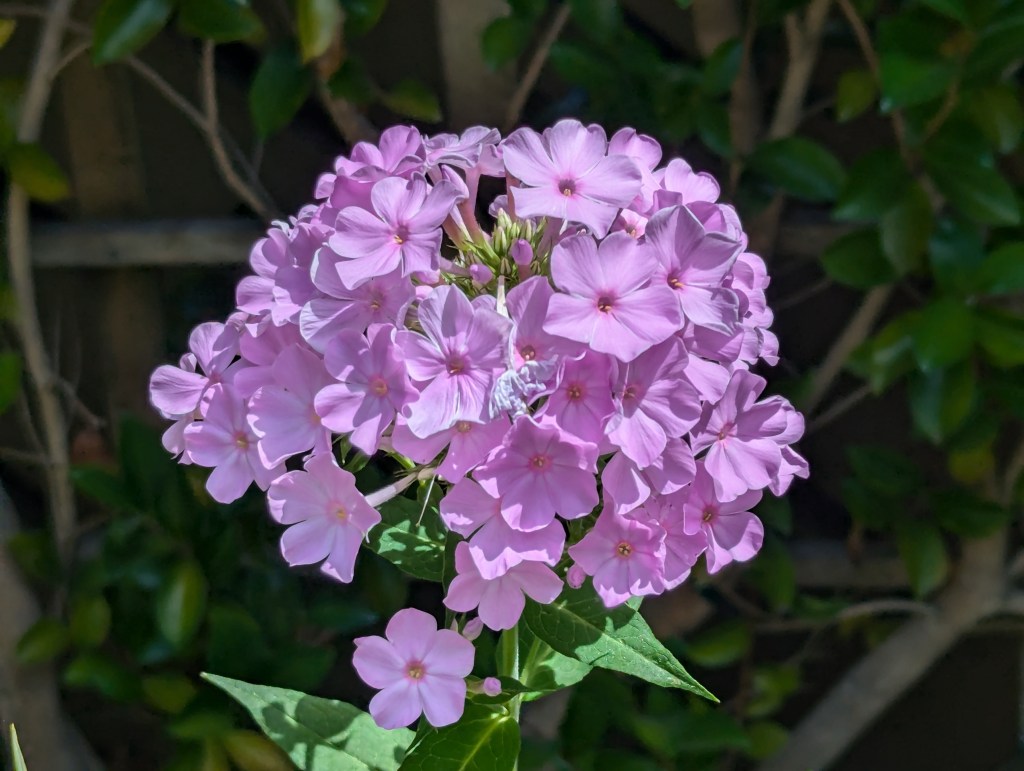
4. Phlox paniculata, garden phlox has bloomed exclusively white since it arrived here by unknown means a few years ago. Although I have been very pleased with its white color, and white happens to be my favorite color, I am also pleased with this new pink variant.

5. Amaryllis belladonna, naked lady did the opposite. It had always bloomed exclusively bright pink. Then, I found and isolated a few bulbs of a white blooming variant last year. An associate found two more in the same location this year. I like it much more in white!

6. Rhody is canine so lacks perception of red, which is the basis of these off colors. Most have more than they should, and one has none. Rhody sees them only as shades of gray.

This is the link for Six on Saturday, for anyone else who would like to participate: https://thepropagatorblog.wordpress.com/2017/09/18/six-on-saturday-a-participant-guide/

Tabasco

Dahlia ‘Tabasco’

Annuals, as their designation implies, complete their respective life cycles within one year. Perennials, as their designation implies, can survive perennially, for more than one year. However, some bedding plants that are enjoyed as annuals actually have potential to be perennials. They are only as disposable as annuals because they are less appealing during dormancy or whatever season in which they do not perform so exemplarily. Most who enjoy gardening do not mind. Perennials that are designated as perennials but do not perform for more than a year are more disappointing. Of a few dahlias that the other horticulturist here purchased a few years ago, four were two pairs of bedding dahlias, which typically function as annuals, and one was a rather expensive perennial ‘Cafe au Lait’ dahlia. ‘Cafe au Lait’ rotted within its first season of minimal bloom. I was not at all keen on it anyway, and was even less keen on its lack of perennial performance. One pair of bedding dahlia, which I do not remember the name of, bloomed for two years, with bright yellow flowers against light green foliage. They would have bloomed again this year if I had stored them better and put them back into the landscape sooner. I forget about the stored dahlia tubers because we typically do not dig and store them here. The other pair of bedding dahlia was ‘Tabasco’. It originally bloomed with red flowers striped with orange, against dark green foliage. For the following year, it blooms with yellow flowers blotched with orange, against simpler green foliage. Now, for its third year, it blooms more like it appears in pictures, with simpler red flowers against bronzed foliage. I do not mind its variability, and actually find it to be interesting. I am more impressed by its perennial performance.

Exposure

Sunshine promoted bloom to the left. Shade inhabited bloom to the right.

Naked ladies like exposure. Amaryllis belladonna can certainly survive and actually develop lushly healthy foliage in partial shade. However, it needs sunshine to bloom. This picture above, which was recycled from yesterday when I mentioned that I might elaborate on it later, demonstrates how discriminating this species is. As mentioned yesterday, a row of naked lady bulbs extends completely across the picture from left to right. It does not extend only from the left to the middle of the picture, as the bloom might imply. Now that bloom is finishing, foliage will develop throughout the entire row, including the portion of the row that currently lacks bloom, so that the extent of their herd will be more apparent. The lack of bloom to the right is the result of the shade of a densely foliated coast live oak above. Because coast live oak is evergreen, it shades the area below its canopy through winter, when naked lady is also foliated and storing resources for subsequent late summer bloom. Those that do not get sufficient sunshine to initiate bloom within any particular season will be unable to bloom for the beginning of their subsequent season. When we installed these recycled bulbs here, we considered that bloom would likely be inhibited below the coast live oak, and that we would relocate bulbs that were too shaded to bloom, but we expected more of a transition between the shaded area and the sunnier area. This is so blunt, with bloom to the left, but none to the right. At least we now know precisely which bulbs to relocate while they are dormant next summer. Although there is technically no need to relocate them, and they can be adequately healthy here, they would be more appealing within a sunnier situation that would promote bloom.

Madonna & Black Lace II

Sambucus nigra ‘Black Lace’ can produce a few berries without pollination from another cultivar.

The internet never ceases to amaze with its inefficiency of providing information that should be more readily available. Old fashioned horticultural texts and even encyclopedias were more reliable. I remember reading that elderberry could be self pollinating, but that it would be more productive with another cultivar of the same species. Because I could not remember what species of the genus that information was relevant to, I more recently tried to determine the requirements of each of the few species that I grow. Ultimately, it seems to me that all are about the same in regard to both their ability to self pollinate to a minimal degree, and their ability to pollinate more efficiently with other cultivars. However, I still do not know. Furthermore, I am now confused about the identity of American elderberry, which many sources insist is merely a variety of common black elderberry of Europe.

Sambucus caerulea, blue elderberry is native and too common for me to know or care if it is more productive with other genetically distinct specimens, which, since the species lacks cultivars, are merely other wild specimens. In other words, blue elderberry specimens here can not be adequately isolated from other specimens to determine how reliant they are on others for pollination. Regardless, I will grow about four together within my garden.

Sambucus racemosa, red elderberry is supposedly native here, but I have never seen it in the wild. Consequently, I do not know if other specimens are close enough to pollinate specimens within my garden. Rather than experiment with single and potentially isolated specimens, and because there is no need to separate the four specimens here anyway, I will grow all of them together within my garden. I am considering adding ‘Sutherland Gold’ or other ornamental cultivars in the future.

Sambucus canadensis, American elderberry is not native, so could be grown in isolation here. However, I want berries more than I want to know how reliant this species is on pollination from other genetically distinct specimens. Before I grow cultivars, I will grow about four specimens within my garden from seed. I might consider cultivars in the future, but for now, would prefer to grow them as most people within their native range experience them, and as I grow blue and red elderberries.

Sambucus nigra, black elderberry is a species that I find to be less interesting than the three North American species that I actually want to grow. However, I have grown ‘Black Lace’ at work for a few years, and recently got it ‘Madonna’ as a pollinator so that the two can make berries together. Because I grew several more copies of each than we can accommodate at work, I will likely grow a pair of each within my own garden. Both are ornamental cultivars that happen to also produce berries. However, formerly without a pollinator, ‘Black Lace’ has been fruitless. This year, one of the copies managed to make these few berries in the picture above without bloom from ‘Madonna’. I suppose that this is consistent with what I read about its ability to self pollinate somewhat. Now, I want to see what it does next year if ‘Madonna’ blooms well.

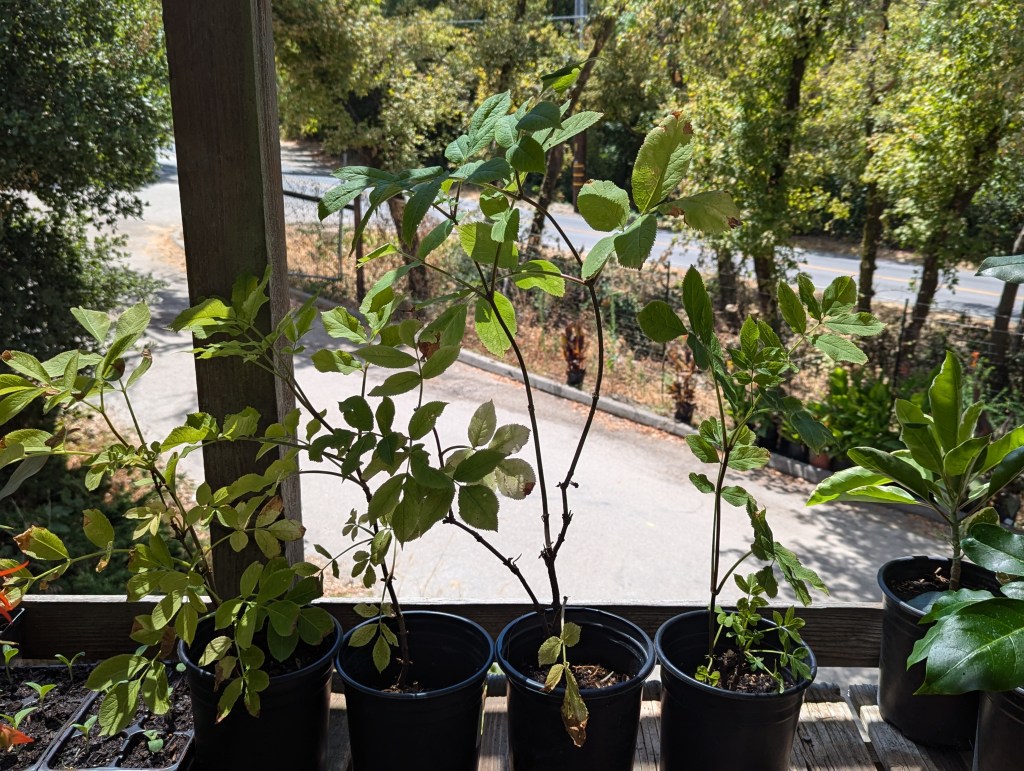
Four wild seed grown specimens of Sambucus racemosa, red elderberry that were a gift from Tangly Cottage Gardening have been canned for too long, and want to get into the garden.

Six on Saturday: More About This Later

Brevity is not always easy with Six on Saturday. I might elaborate on some of these later. There is no common theme. These are merely six random pictures from last week.

1. Sambucus nigra ‘Black Lace’ European black elderberry got ‘Madonna’ as a pollinator only this year. ‘Madonna’ will not bloom until next year. ‘Black Lace’ makes a few berries anyway. I hope that they are prettier when more abundant. I can elaborate about it later.

2. Amaryllis belladonna, naked lady is demonstrating is preference for sunny exposure. This row of bulbs extends from left to right across this picture, but blooms only half way, with no transition to where bulbs are too shaded to bloom. I can elaborate about it later.

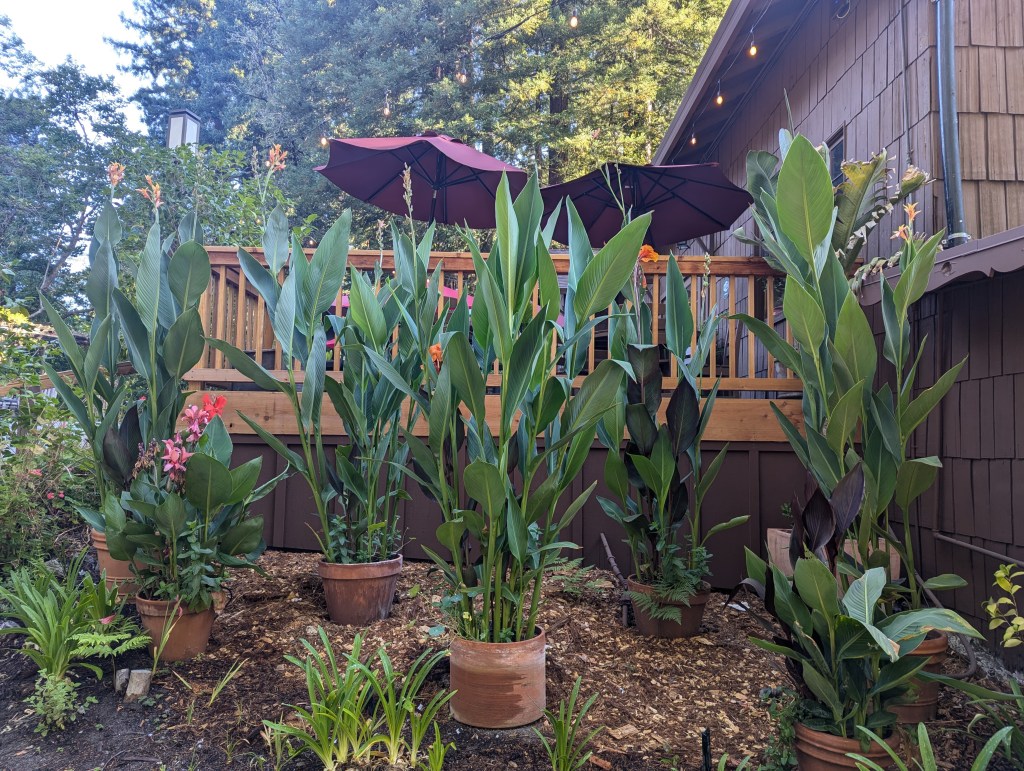
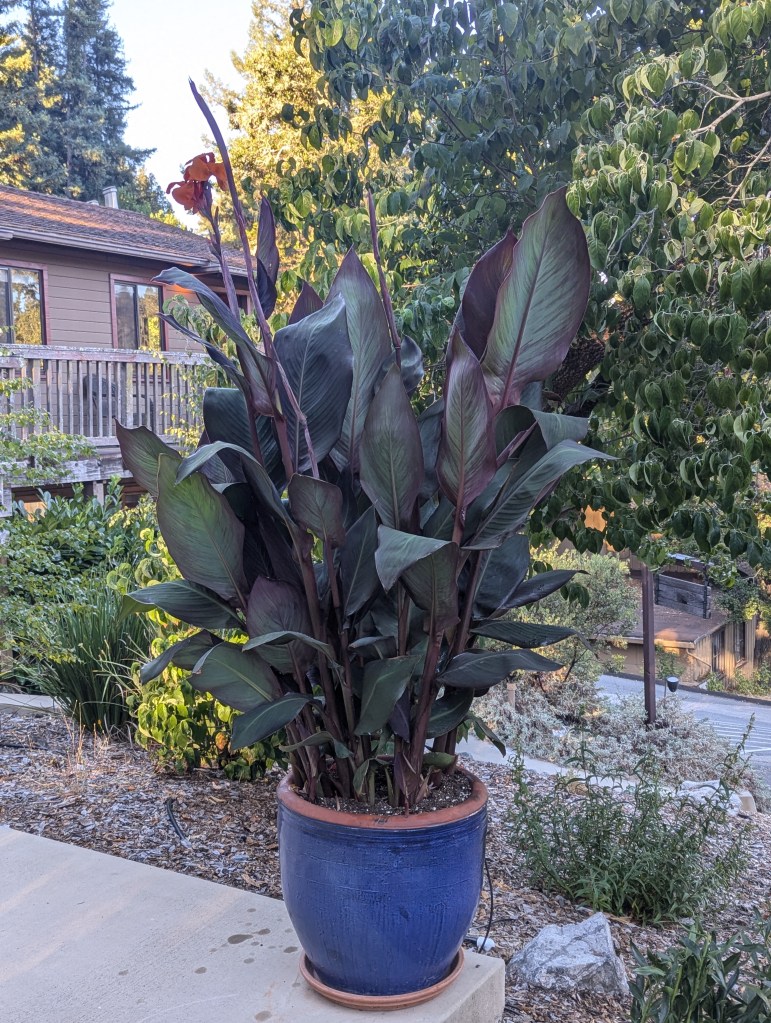
3. Canna musifolia, canna, which has been very fun to grow, was a gift from a neighbor, but not practical for our landscapes. These, with a few fancier cultivars, were potted here temporarily until a new landscape develops this autumn. They earn many compliments.

4. Canna X generalis ‘Inferno’ canna arrived with Canna musifolia. I think that it looks like ‘Wyoming’. Without a plan, we put this specimen into this ugly cobalt blue pot from a very dead Ficus benjamina houseplant that someone left for us, and now it looks RAD!

5. Hymenocallis festalis, Peruvian daffodil had been in the nursery for too long when we finally put all ten into three landscapes shortly before bloom. It is supposedly as reliably perennial as some of the more reliable types of Crinum. If so, it should be more popular.

6. Dahlia ‘Tabasco’ dahlia was purchased as a bedding dahlia, which implied that it is as disposable as annuals. However, this is its third season. It was originally red with orange stripes. Then, it was yellow with orange blotches. Now, it is this delightfully simpler red.

This is the link for Six on Saturday, for anyone else who would like to participate: https://thepropagatorblog.wordpress.com/2017/09/18/six-on-saturday-a-participant-guide/

Travel

This does not happen often. Actually, it is quite rare, which is one of the consequences of enjoying my horticultural professions a bit too much. I almost never crave travel as I have been lately. Why should I? I live and work in such an excellent region which is excellent for horticulture and just about anything else. It is the sort of region that those who are not here travel to. Furthermore, there is nothing here that I want to get away from. In order to travel, I must first make obligations where I intend to travel to. Then, I can not change my plans for such travel. Even then, some of my obligations are horticultural pursuits, as if I must make work where I intend to go to compensate for my inability to take all of my work with me. I prune apple trees when I go to the Pacific Northwest. I procure regionally rare species where they are more available when I go to the Southwest. While vacationing in the region of Los Angeles last May, I spent a day greeting guests at one of Brent’s three landscapes that were featured on ‘Blooms With a View’, the Spring Garden Tour of View Park and Ladera Heights. I have no such plans anywhere yet. Now that it is late summer, it would be inconvenient to leave here for more than three days anyway. So, why should I so arbitrarily want to travel? I do not know. I suppose that I could go to the region of San Luis Obispo for Monday and Tuesday. I would like to find a pup of the regional variety of Hesperoyucca whipplei spp. whipplei that I first encountered while studying horticulture at Cal Poly there. But of course, I need no excuse to travel.

Down On The Corner

Yucca elephantipes at Taco Bell in San Luis Obispo in 1968.

Down on the corner, or at least next door to the western corner of Olive Street at Santa Rosa Street in San Luis Obispo, Creedence Clearwater Revival stopped at Taco Bell, supposedly about the second of August of 1968, on their way from Palo Alto to Santa Monica. They were famous for such horticultural songs as ‘Run Through The Jungle’, ‘Have You Ever Seen The Rain’, ‘Cotton Fields’ and ‘I Heard It Through The Grapevine’, which I incidentally remember playing on the radio as I drove over the Grapevine Highway on my second trip to Los Angeles sometime in about 1987. This particular Taco Bell is conveniently located for travellers, since its corner location is also the interchange of southbound Highway 101 and Highway 1. The two highways are concurrent to the south. The original Taco Bell building has been replaced with a larger modern building that also occupies the parcels to its left and right, so that it really is down on the corner now. A bit more than eighteen years after the picture above was taken, in autumn of 1986, Brent and I became very familiar with the original. It was the scene of one of his more notorious adventures, which is too naughty for me to describe here. Another tamer incident involved the relatively small giant yucca, Yucca elephantipes, to the lower right in the picture. It was larger by 1986, and prior to one of our visits to Taco Bell, it had suspiciously deposited a few small limbs onto the sidewalk. Upon closer inspection, we found bits of pulverized chrome plated plastic and an emblem from what was likely a relatively new Cavallier of the early 1980s. Of course, we could not just leave the yucca canes there on the sidewalk to eventually be disposed of. We loaded them into the trunk and took them back to our dormitory, where we shared them with neighbors. The smallest shoot grew in a can of soil in our dorm room until it matured enough to also be given away. Because I sort of enjoyed it while it was there, Brent gave me a larger and more impressive specimen with an even more scandalous history a few years later. I have grown hundreds of giant yucca specimens since then, but the original that Brent gave me before 1990 is still here. I wonder if any of the others survive.

Still Going Bananas!

Most of the banana pups and plugs are manageable, . . . for now.

Three more cultivars of banana arrived this week. There are now as many as twenty here. Three are unidentified. Of these three, two could be redundant to others. Of these two, one is merely dormant corms that could rot before generating new foliage. Another is already generating pups. Another is represented by a pair of pups. Eight grew from pups. Twelve grew from tissue culture plugs. Five have already grown too big to remain in the nursery where this picture was taken. At least three can grow more than twenty feet tall. At least two can grow more than forty feet tall. One is Musa ingens, which is the largest species of banana in the World, which can grow more than sixty feet tall! This sounds like fun, but so far, we only intend to add one of these twenty to only one of the landscapes! Three other small cultivars might remain potted in other landscapes, but are merely a minority of the total. Banana ‘trees’ are not exactly easy to accommodate. They want generous irrigation. Their ‘trunks’ grow very fast, but do not last long. Because they can not be climbed, every ‘trunk’ requires a radius that is comparable to its potential height to free fall when it gets cut down. None of the refined landscapes can forfeit areas that are large enough for ‘trunks’ of the larger cultivars to fall. Riparian areas that can accommodate them, and even without irrigation, are forested with redwoods, which banana ‘trees’ are not aesthetically compatible with. I would say that we will figure this out as they grow, but banana ‘trees’ grow very fast. They can remain canned for the rest of this season, but would be very displeased with such confinement next year. It is about to get even more interesting.