Six on Saturday: Frosty Forecast

Frost is not a problem here. The several species here that are not resilient to frost are the problem. The first of my Six actually has no problem with frost, but does have a problem with starting too late to finish prior to frost next winter. The second also has no problem with frost, but does not want to bloom as weather cools into autumn. The other four are from a frostless region of Los Angeles. I neglected to protect them from the earliest frost last winter because I did not expect it. Their recovery was slow through mild spring and summer weather. They are now growing vigorously rather than decelerating for autumn. This increases their vulnerability to frost next winter.

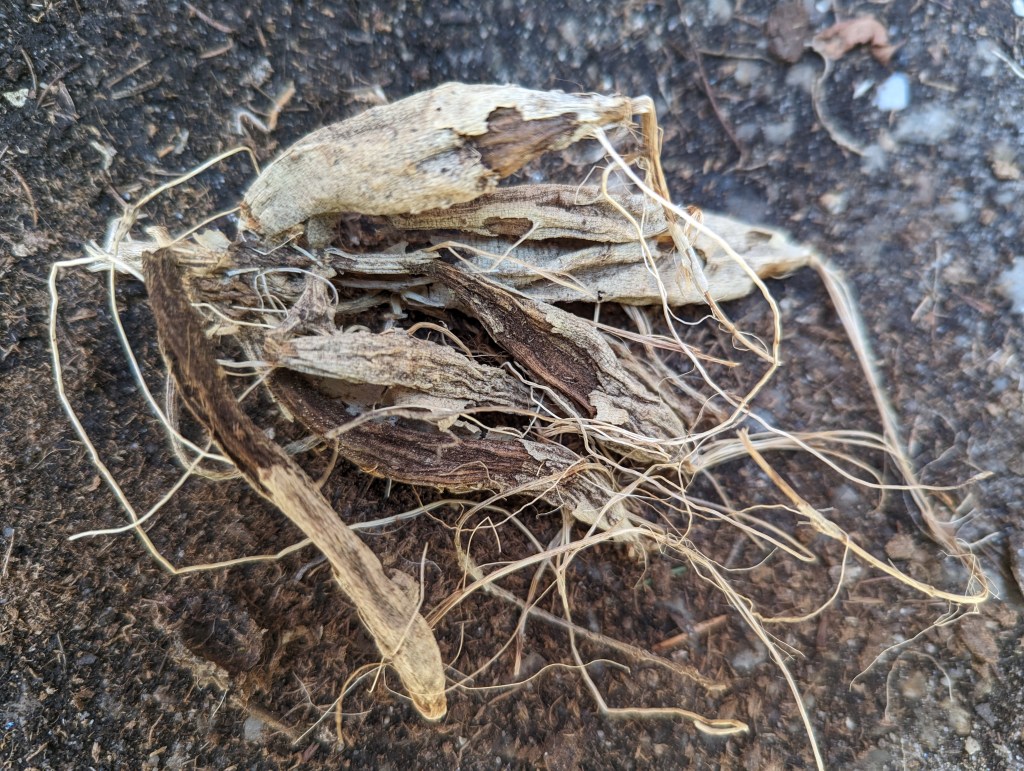
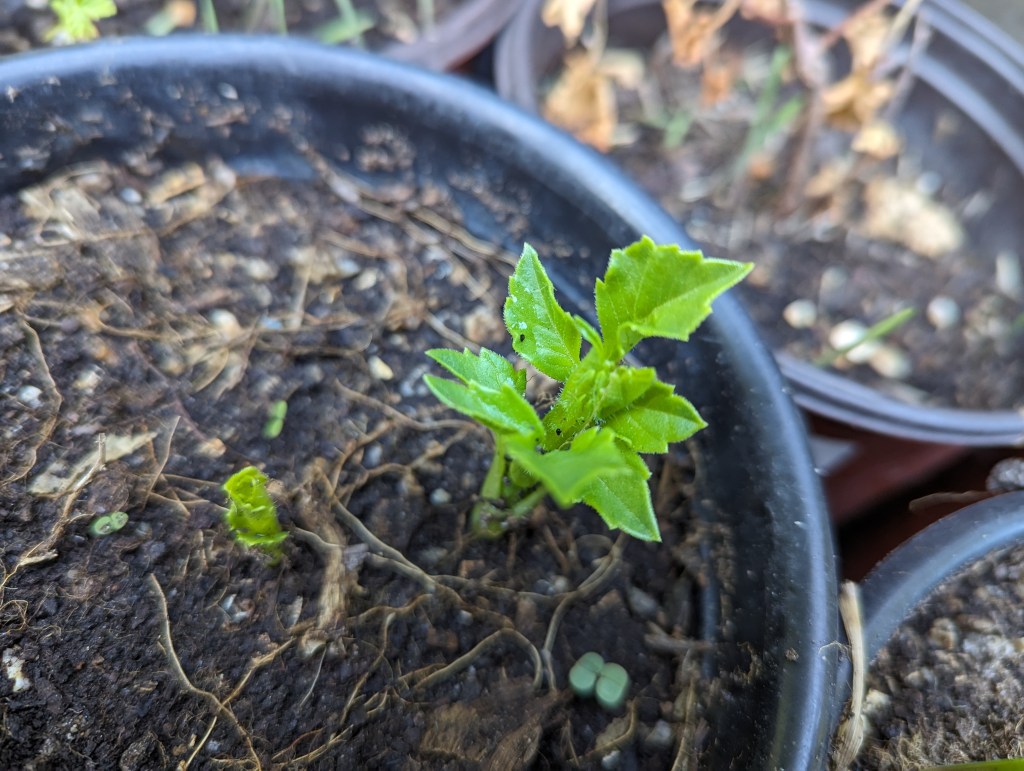
1. Dahlia X pinnata, mixed dinnerplate dahlias are starting to grow, with only a third of their season left. I described the delay last week. Only three of two dozen survived so far.
2. Gardenia jasminoides, gardenia seems to be healthy, and generated a typical number of floral buds, but is now shedding such floral buds, likely in response to cooling nights.

3. Solandra maxima, cup of gold vine was new here when it got frosted last winter, then grew slowly through atypically cool weather last spring, and is now growing like a weed!

4. Platycerium bifurcatum, staghorn fern also waited a bit too long to start growing like this. It could eventually enjoy rain and humidity through winter, but not even mild frost.

5. Heliconia psittacorum, parakeet flower has done well since last winter. I brought nine rhizomes from Los Angeles. They are still a bit too small to survive average frost though.
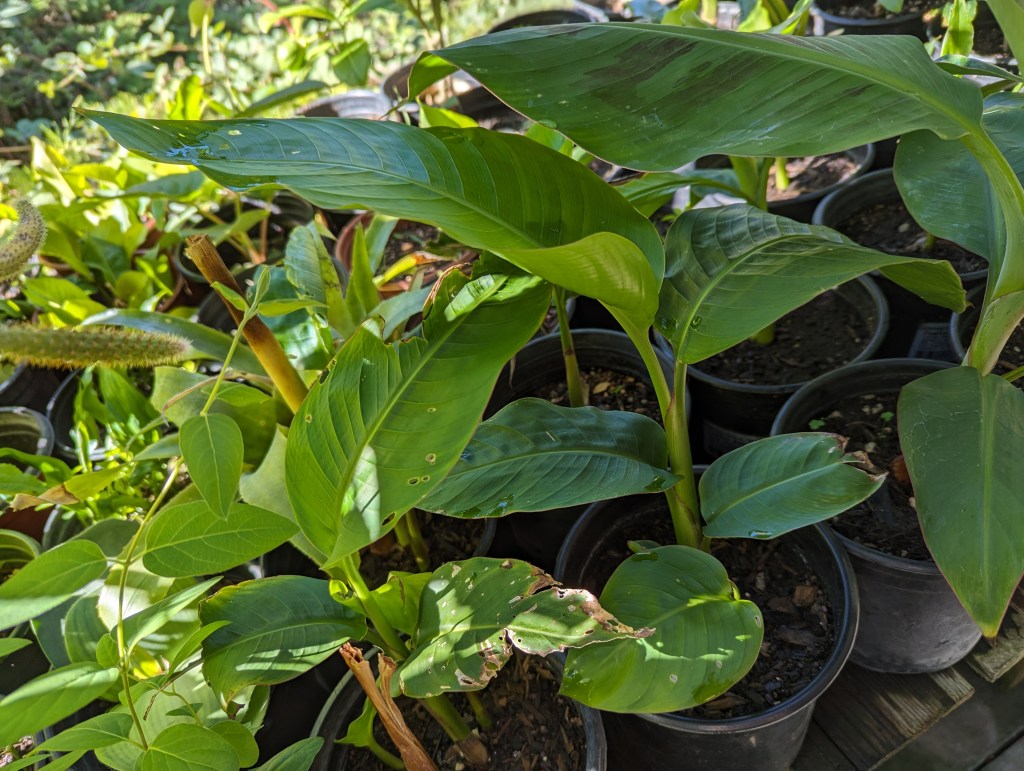
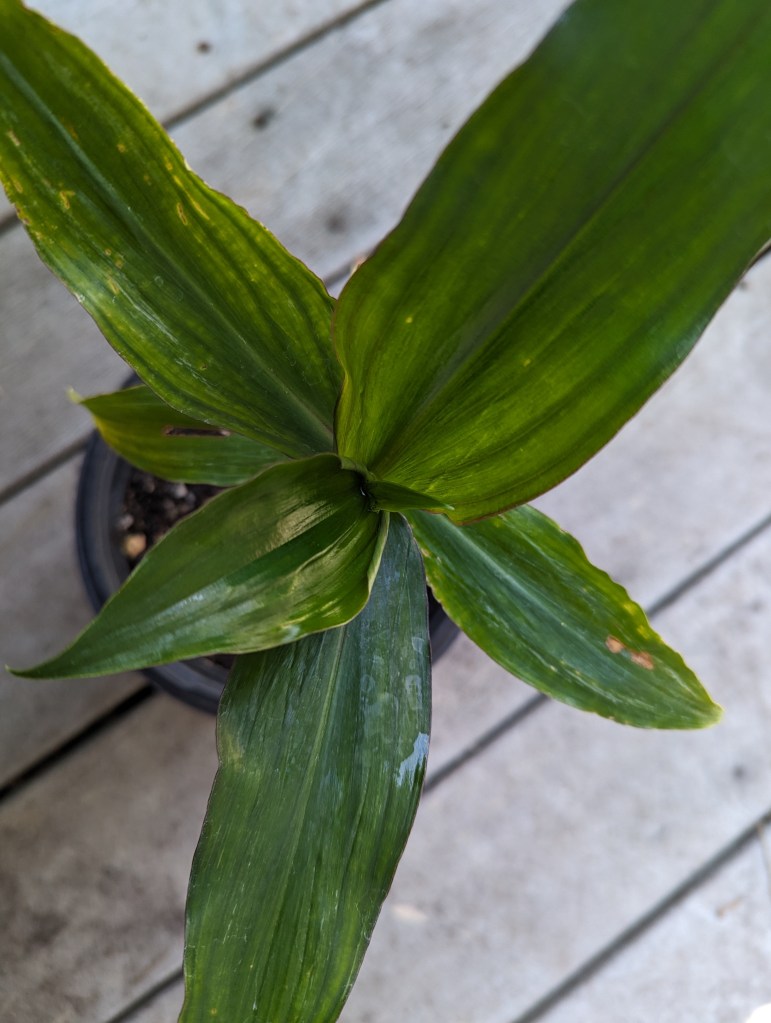
6. Dichorisandra thyrsiflora, blue ginger is likely even more vulnerable to frost. Most of its cuttings did not survive last winter. I am impressed and pleased with the six that did.
This is the link for Six on Saturday, for anyone else who would like to participate: https://thepropagatorblog.wordpress.com/2017/09/18/six-on-saturday-a-participant-guide/

Horridculture – Nature

Nature is dysfunctional.

Horticulture is unnatural. It involves unnatural manipulation of exotic species that were unnaturally imported from all over the World. It provides unnatural irrigation and unnatural chemical fertilizers and amendments. It involves unnatural containment of many plants within unnatural synthetic media within unnatural plastic cans or other containers. It strives to eliminate much of what is natural, such as pathogens and competition. It is ironic that so many believe that a simple but totally unnatural houseplant brings a bit of nature into their particular environment.

Nature, although quite natural, is dysfunctional. It is messy. It is dirty. It is tragic. It is potentially dangerous. It is overrated. Realistically, it is a hot mess of problems. Somehow though, it seems to be appealing.

That is why so many of us strive to incorporate more nature into our respective lifestyles by very unnatural means. We crave a sort of idealized version of what we believe nature should be. It would likely be easier and more efficient to accept such attempts as unnatural, and exclude what nature might try to contribute.

Some are quite happy to live and work in high rise homes and offices with minimal natural influence. They still breathe natural air, and appreciate natural sunlight and the stabilizing effects of natural gravity, but shelter themselves from what is most bothersome about nature outside, such as weather, wildlife and most insects.

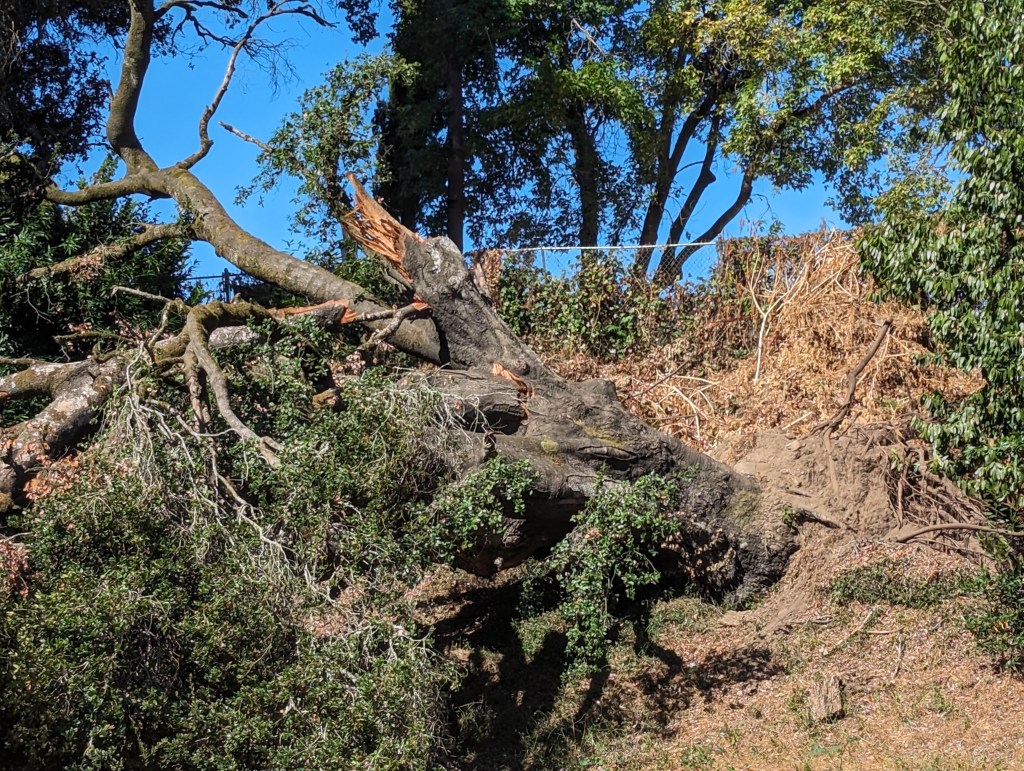
This unfortunate old coast live oak is an exemplary victim of nature. It grew here naturally for two centuries or so. It obtained all that it needed from the natural soil, air and weather. It survived natural insect infestations, and long ago, may have survived natural forest fires. Ultimately though, perhaps in conjunction with a bit of natural wind and natural fungal organisms associated with decay, it succumbed to natural gravity.

This old oak finally succumbed to the same nature that it exploited for centuries.

Jungle Update

New foliage is already beginning to replace older foliage.

Strelitzia nicolai, giant bird of Paradise is growing! It is not much growth, but it is more than expected. The specimens were heeled in about a month ago to begin the slow process of recovery from division and relocation. Within the damp soil of their temporary situation, they should begin to develop rudimentary roots without actually dispersing them too remotely prior to another relocation to their more permanent landscape after the beginning of the rainy season of autumn. In other words, the roots should begin to grow, but not grow too much.

They can grow more when they get settled within their permanent situation. This is done in two separate processes because the specimens are easier to monitor and irrigate prior to rain within the confined space where they are heeled in. Besides, they would not be very appealing within their permanent landscapes until they begin to recover. Once they begin to recover, they should grow faster, so will not be too unappealing for too long, and even if they are, it will be through winter, when fewer people are here to notice.

Anyway, while they begin the process of recovery and development of rudimentary roots, foliar growth is expected to be minimal. It was expected to stagnate for at least a month or so, and then to slowly resume as the minimal foliage that was retained deteriorates. Like root growth, foliar growth should accelerate after final relocation.

Instead, foliar growth is already accelerating, perhaps as a response to removal of so much of the original foliage while foliage is necessary to sustain rudimentary root growth. Perhaps these specimens actually are as healthy and as vigorous as they seem to be. Although this fresh new foliar growth will be more vulnerable to frost through winter, it is nonetheless gratifyingly encouraging.

Proud Land

Proud Land

‘La France’, in 1867, was the first hybrid tea rose to be hybridized. ‘Peace’, in 1945, was the first hybrid tea rose to be classified as a hybrid tea rose. Yes, it took quite a while.

Afterward, hybrid tea roses became very popular both for the cut flower industry and home gardens from the 1950s through the 1980s. Because of their single bold flowers that bloom on tall and sturdy stems from spring until autumn, they are still very popular as florist flowers. However, more florific floribunda roses became more popular for home gardens through the 1990s. Since the turn of the Century, all sorts of simpler shrubby roses, such as carpet roses, became more popular than all of the other types of roses. Hybrid tea roses and other types that produce comparably exemplary cut flowers require more specialized maintenance than most people want to commit to. Sadly, hybrid tea roses are now passe.

‘Proud Land’ was the first of the hybrid tea roses that I installed into my mother’s new rose garden in 1984. It came from Jackson & Perkins while Jackson & Perkins was still based out of Medford in Oregon. Unfortunately, it suckered so profusely during its first season that I wrote a letter to Jackson & Perkins about it. Jackson & Perkins generously replaced it for the following season. Also, my mother, who was unaware of the replacement, purchased another replacement. As if that were not enough, I managed to abscise all sucker and burl growth from the original while it was dormant for the following winter. So, three individual specimens of ‘Proud Land’ bloomed at the center of the small rose garden for 1985, which was the year that I graduated high school.

Technically, hybrid tea roses are at their best after about five years, but should probably be replaced before about ten years. ‘Proud Land’ continued to perform though, with no indication of deterioration, until I finally removed them in 2020. They live here now. I grew a few ungrafted copies from their pruning scraps. I should properly graft a few copies also. Realistically, there is no need to retire the originals.

Some consider hybrid tea roses to be passe. I consider them to be historical.

Six on Saturday: You Get What You Pay For

It all started when I succumbed to the temptation of cheap but out of season bulbs. They were actually canna rhizomes that did not work out so well. The supplier gave me credit, which I used to purchase cheap but out of season dahlia tubers. I suppose that I can not blame the supplier twice. I should have known better from the beginning than to violate my most basic rule against purchasing plant material, even if I try to justify doing so for work. Contrary to the title of these Six, ginger, elderberry and a dinky lime tree that cost nothing are working out quite nicely.

1. Dahlia X pinnata, mixed dinnerplate dahlias were purchased with the credit that I got for the ‘Red King Humbert’ Canna that were both virused and not ‘Red King Humbert’. I again fail to be impressed. I canned any that were not completely desiccated, but do not expect any survivors. I should have requested a total refund after the primary purchase.

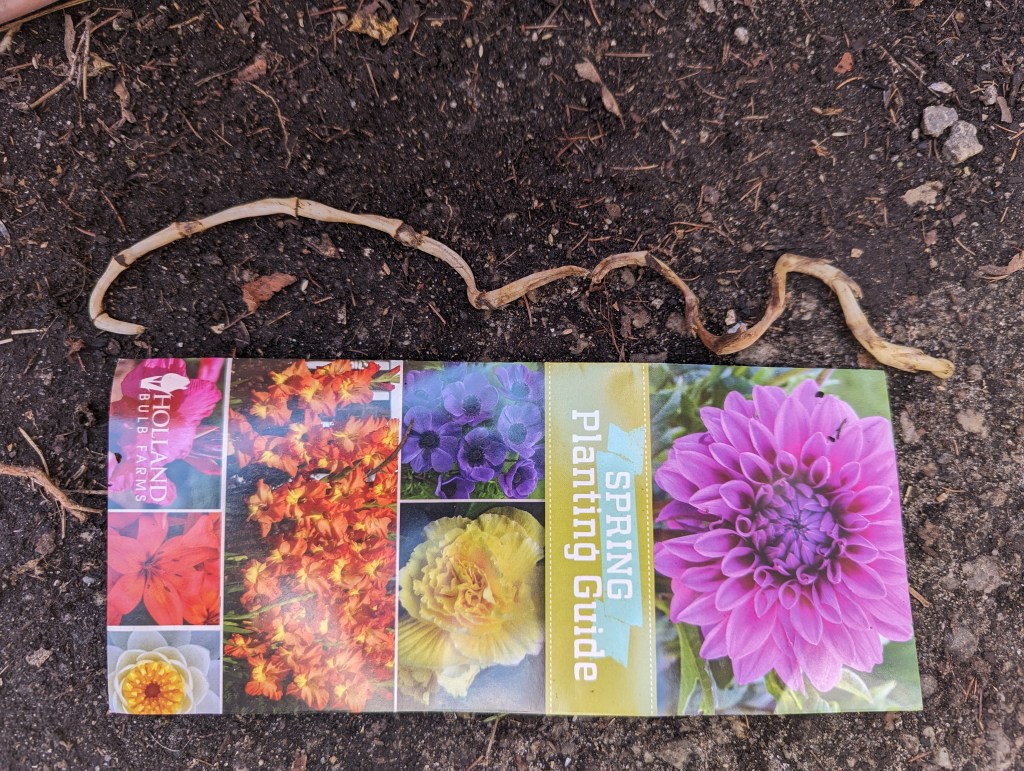
2. Dahlia X pinnata, mixed dinnerplate dahlias grow through spring for summer bloom. I figured that, even without enough time to bloom, they could grow enough to replenish their resources before winter dormancy, and then grow and bloom next year. I assumed that tubers that are available this late had been refrigerated to maintain their dormancy. Instead, a few diligently tried to grow earlier, but could not escape from their packaging.

3. Zingiber officinale, ginger is not so limited by seasons. It grows whenever it wants to.

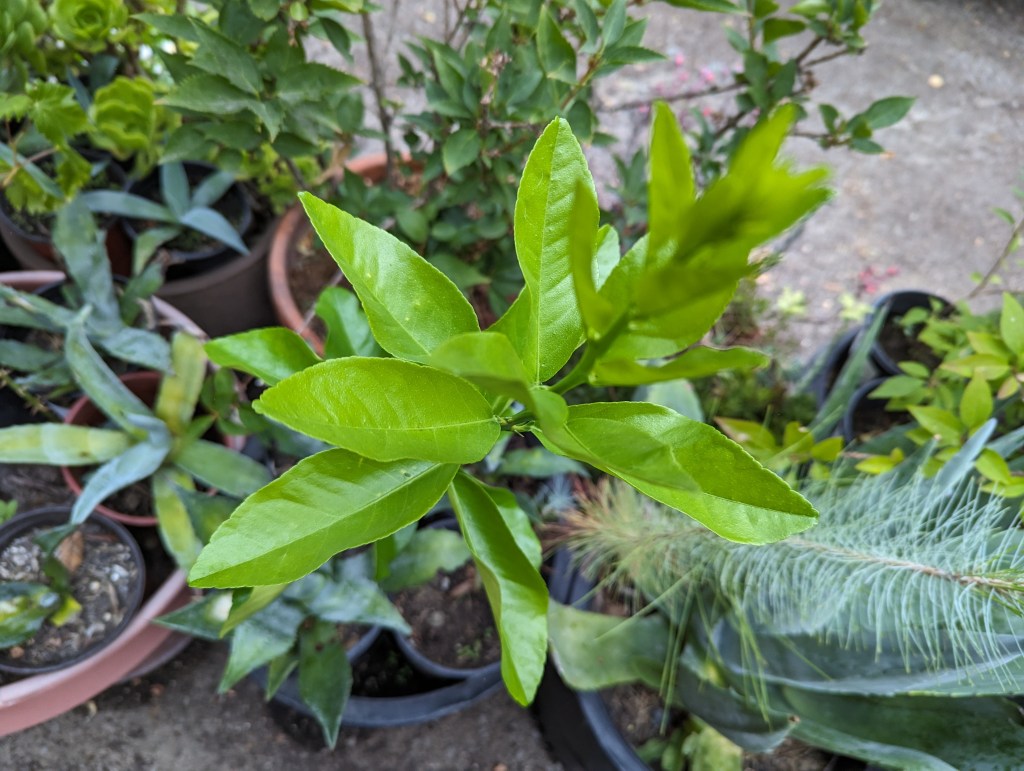
4. Citrus X latifolia ‘Bearss’, Persian lime grew from the stump of a tree that I pulled out of a neighbor’s yard. It cost nothing, but will eventually be worth more than I paid for it.

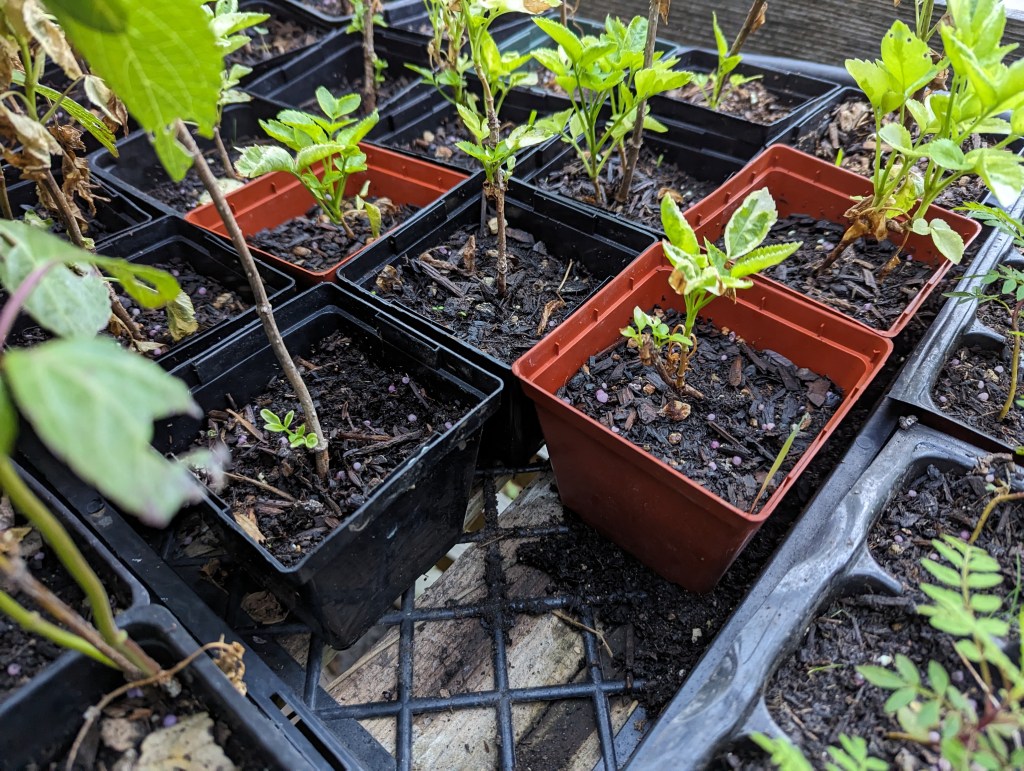
5. Sambucus nigra ‘Madonna’, European black elderberry likewise cost nothing, and for a while, it looked as such. It provided sixteen copies though, and the first found a home.

6. Rhody is irrelevant to the previous five of these six, but everyone wants to see Rhody.

This is the link for Six on Saturday, for anyone else who would like to participate: https://thepropagatorblog.wordpress.com/2017/09/18/six-on-saturday-a-participant-guide/

Horridculture – Nice Trellis

Heard but not seen it through the grapevine.

This is such a visually appealing trellis at the Cavallaro Transit Center in Scotts Valley. It is so very visually appealing that no one wanted to obscure its visual appeal with the two vines that it was intended to support. It is very well designed also. Neat holes were left in the concrete pavement for the two vines that were not planted. Capped terminuses of the irrigation system that was intended to provide the absent vines with water are ready for installation of emitters. The otherwise exposed ground was covered neatly with gravel. It is all well executed.

All that is missing is the vines.

Realistically though, who notices? It really is a visually appealing trellis. Vines would be visually appealing also, but would also clutter the landscape more. Besides, they would require more maintenance, and the surrounding landscape already lacks adequate maintenance. The empty trellis actually seems to be an asset to the otherwise bland landscape. I only notice the absence of vines because I am a horticulturist.

I will say that I am not so keen on such structures in other landscapes. Most are overbuilt. Many such as this are within situations that trees would be more practical.

I have encountered several similar structures, but with single pillars, in downtown Livermore. Grapevines climbed them to form inadequately and improperly pruned grape trees to flank the main streets. Honeylocusts that flanked the same streets would have been more than adequate alone. The grapevines were intended to commemorate the formerly vast regional vineyard that were replaced by equally vast tracts of home, but their shabbiness was too insulting.

Landscape designers and architects should realize that vines require significant specialized maintenance. Architects rely on landscape designers to select vines for their trellises. Landscape designers rely on gardeners to maintain their vines.

What a splendid hole in the concrete!

White Perennial Pea

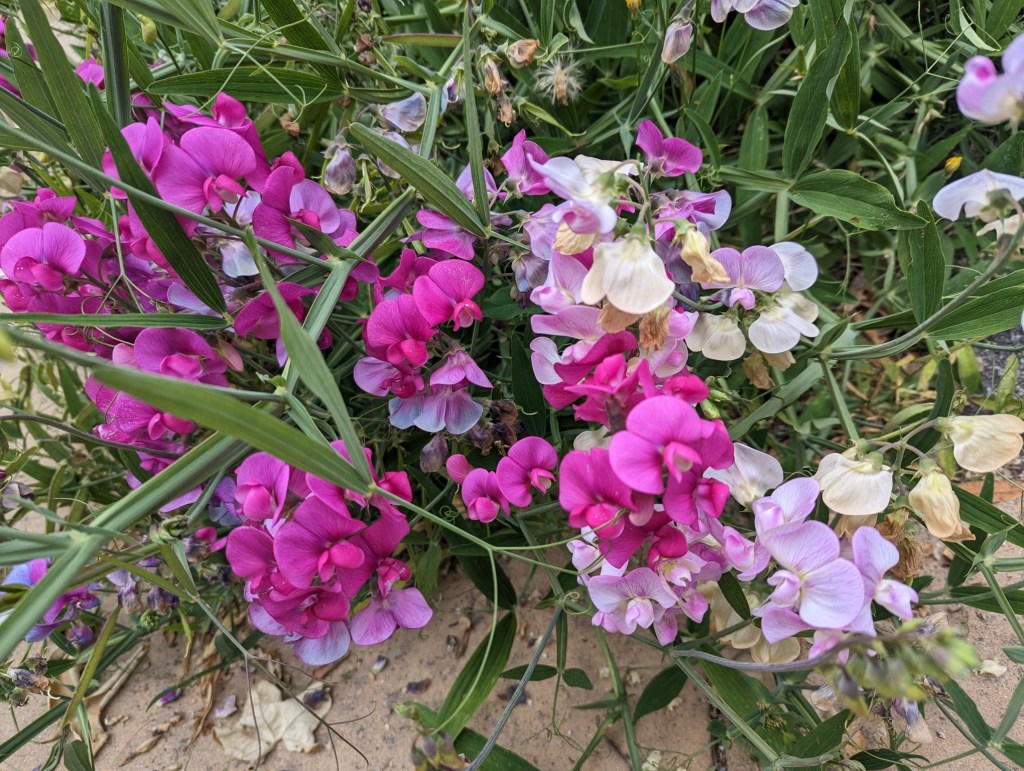
Bright pink, light pink, but no white here.

Perennial pea is a somewhat naturalized exotic species here. It may not be aggressively invasive enough to be classified as a weed though. However, I would classify some of it that I can not exterminate from at least one of our landscapes as weeds. Once it gets established, it is very persistent.

It seems to prefer to grow on roadsides or fences. It is not so common in flat open spaces. It rarely gets big enough to overwhelm or otherwise damage other vegetation. It dies back when the weather gets too inhospitable for it. It regenerates when the weather is more comfortable.

Perennial pea certainly is pretty. Almost all of it blooms with typical bright purplish pink flowers. A few uncommon specimens bloom with variations of lighter pink. White is even more rare. Only red is more rare than white. I have never seen it growing wild. Although seed for red perennial pea is available, I know of no one who has actually grown it.

Therefore, until someone can prove that red actually exists amongst naturalized perennial pea, white is the rarest color. It might also be my favorite. I can not decide. White is my favorite color. Also, perennial pea happens to look great in white. Yet, the familiar obnoxiously bright pink is so typical of the species. It is the color that everyone expects to see growing wild on local roadsides.

I was fortunate to find a specimen at work that blooms white. I grew a few copies of it, but kept them canned. I shared some with colleagues in other regions until only two remained here. I was not too alarmed when these last two were overwhelmed by other vegetation and died, since I thought I could grow more copies from the original specimen. That was until I found that the original was destroyed by excavation to mitigate erosion from last winter!

I believe that another specimen that blooms white lives nearby. Its particular colony has already finished bloom for the season. I must therefore wait for it to resume bloom, or look for errant bloom through winter. After getting so involved with it, perhaps it really will be my favorite.

Muskogee?

This is not a color I had expected.

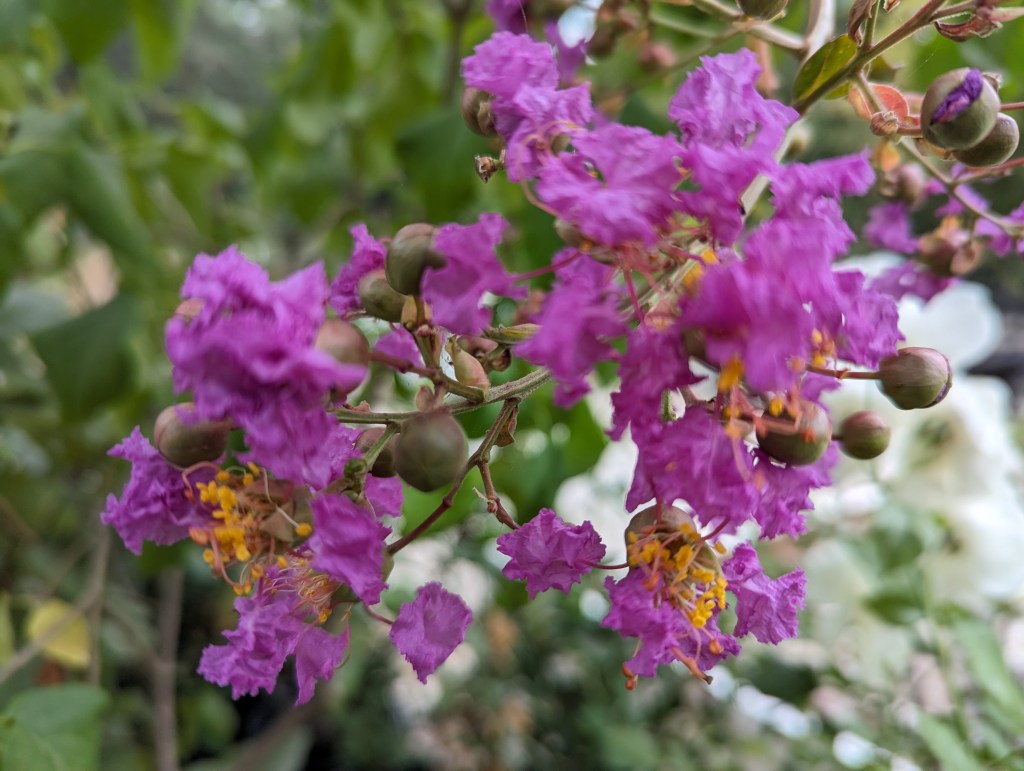
What cultivar of crape myrtle is this?! I realize that this picture is blurred, which is why it was not included within my ‘Six on Saturday’ post this morning, but it is the floral color that is important. Is it purplish pink, or just bright pink? What cultivar does it look like?

I expected this crape myrtle to be one of the old reliable cultivars because it was a gift from the Arbor Day Foundation. The primary old reliable cultivar that blooms with similar floral color is ‘Muskogee’. Yet, even with my limited ability to discern color quality, this floral color seems to be a bit too rich. I sort of expect a milder and scarcely purplish pink from ‘Muskogee’. I suppose that the Arbor Day Foundation can also grow modern cultivars like the rest of us.

Regardless of its identity, it is certainly pretty. The foliar color during autumn is comparable to that of old reliable cultivars. Because neighbors like it, I grew a few copies for them. We would like to incorporate more crape myrtles into the landscapes at work. The abundance of spring color from other species there mostly finishes prior to the summer bloom of crape myrtle. Summer is the busiest season, so justifies flashy color.

Embarrassingly though, I am still none too keen on crape myrtle. If I did not typically spell ‘crape’ as ‘crepe’, I would prefer to spell it without the ‘e’ at the end. I was impressed with it when I first started to notice it through the 1980s, but then realized that it was becoming too common through the 1990s. That was long after Brent told me that it had become too common throughout the Los Angeles region significantly earlier. Decades later, it is still too much of a good thing.

Six on Saturday: ?

So much of the vegetation that we work with is unidentified. I know most of the species, but not all. Cultivars and varieties are more difficult to distinguish. There are too many! I am completely unfamiliar with some of the most modern of them. Of my Six this week, only the second might be a cultivar. The others are likely straight species. I am uncertain of their identities though, because I am unfamiliar with them. Actually, the third is not as labeled! That is because I thought it was something else until it foliated last spring. This Six on Saturday is about six questions of identity. I hope that someone might identify #1 for me.

1. Opuntia littoralis, prickly pear came from the Bat Cave in Los Angeles County, where a few other species of this genus are also native. I do not know if I identified it correctly.

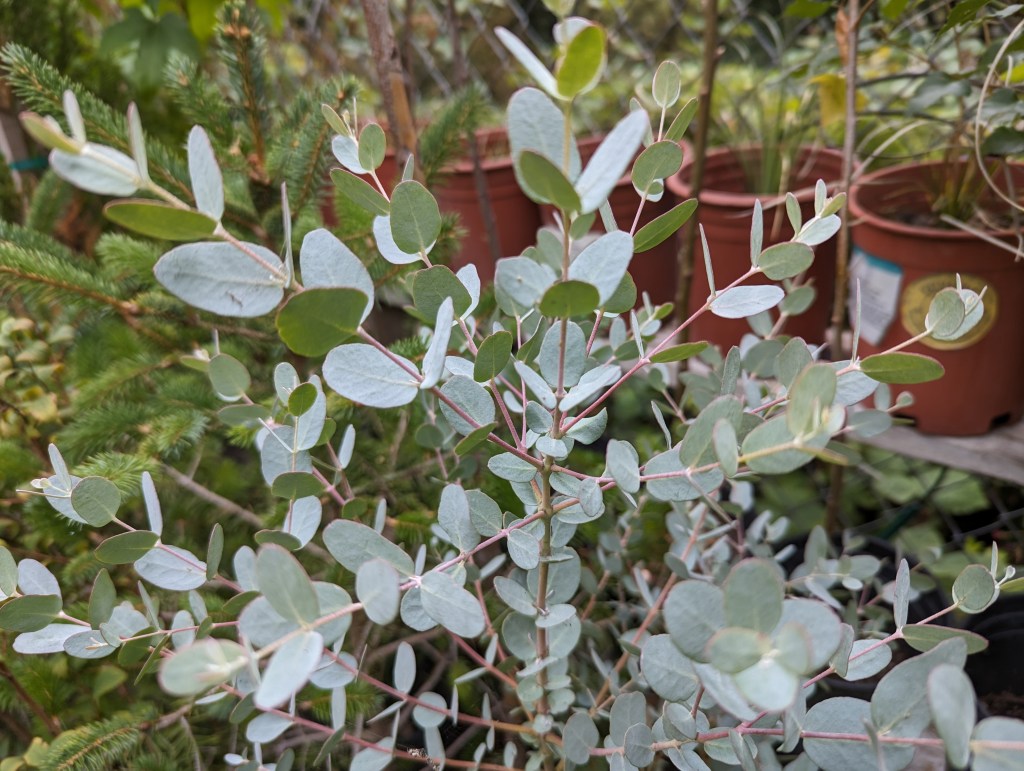
2. Eucalyptus gunnii, cider gum looks just like this while young, but so does the juvenile foliage of a few other species. Adult foliage and associated bloom is easier to distinguish.

3. Vitus californica, California grape looks nothing like this. I brought this here from the roadside while it was defoliated for winter. I hoped that it would be the California grape.

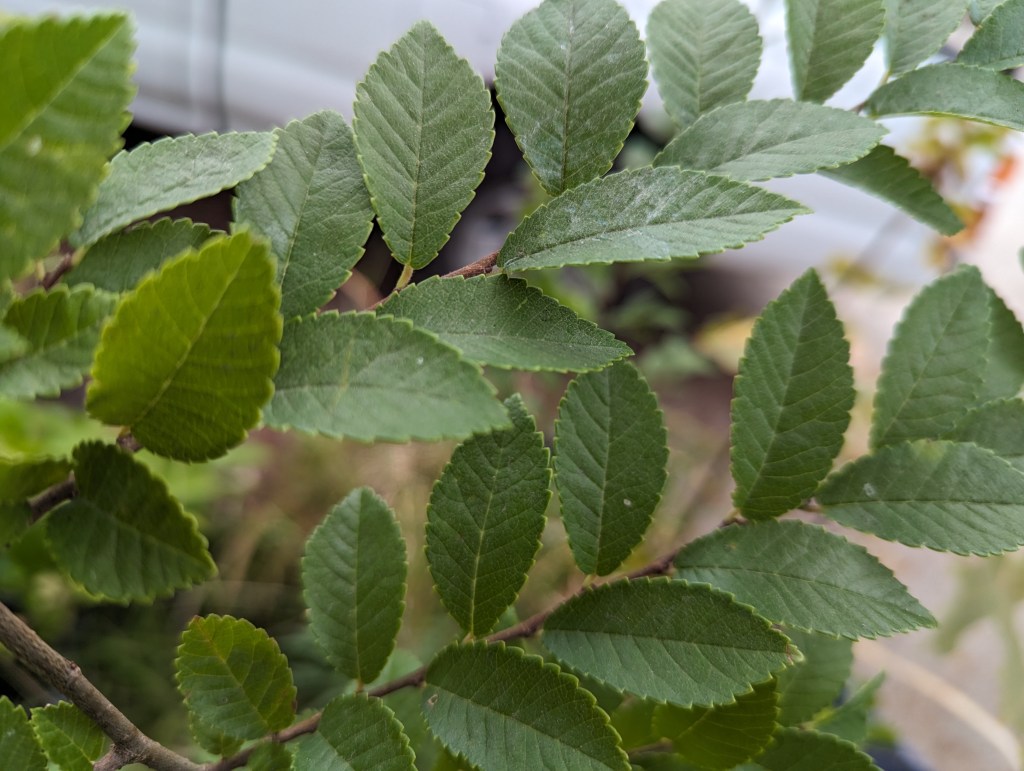
4. Ulmus parvifolia, Chinese elm was common when I was a kid. Only modern cultivars and hybrids are available nowadays. If this is common Chinese elm, it is now quite rare.

5. Populus alba, silver poplar is what I believe this might be. I grew it from cutting from a tree that I met in San Jose a few years ago. I am unfamiliar with this particular species.

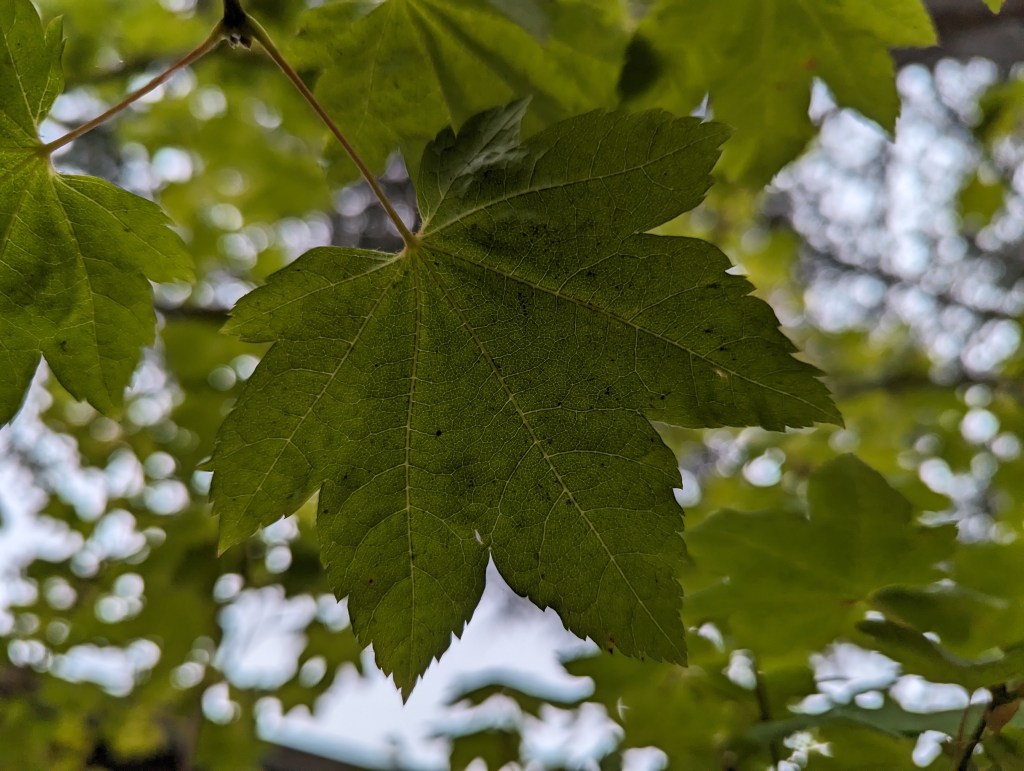
6. Acer circinatum, vine maple should be a gratifying alternative for another ubiquitous Japanese maple. I could be disappointed if this is merely another passe Japanese maple.

This is the link for Six on Saturday, for anyone else who would like to participate: https://thepropagatorblog.wordpress.com/2017/09/18/six-on-saturday-a-participant-guide

Hurricane Hillary

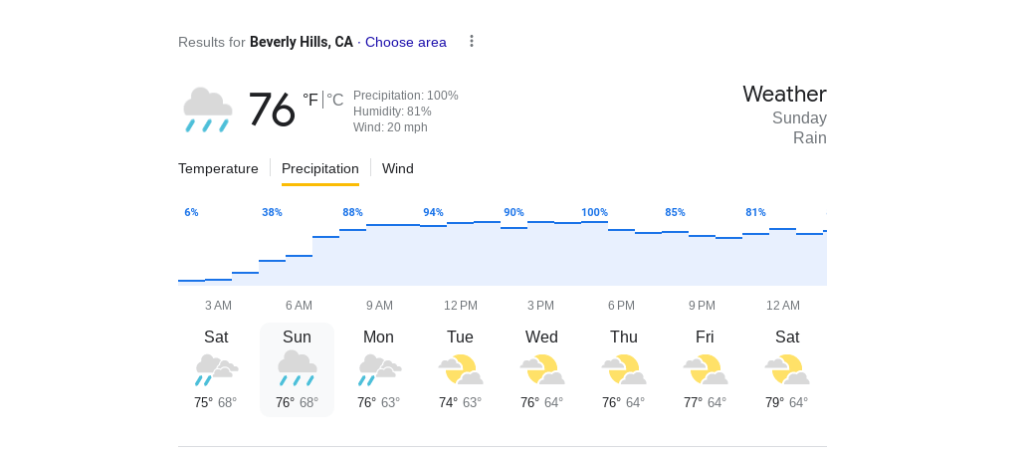
Rain is expected to start about six or seven in the morning in Brent’s neighborhood.

California is so big that, from here, it extends about four hundred miles to the north and four hundred and fifty miles to the south. That is where San Diego County is, in the southwestern corner of California. It is so far away that the weather there can be very different from here, as it is now that Hurricane Hillary is coming up from the coast of Baja California. While a tropical storm warning is in effect there, typical summer weather is expected here.

Typical summer weather here is dry. Not much rain happens after early spring. Not much happens prior to late autumn. Every few years, a single odd and brief thunderstorm goes through in the middle of summer, leaving no evidence of its downpours two days later. If it were to happen this year, it should happen about now, like it is in Southern California.

Forecasts for the weather in Southern California are quite unpleasant. A friend in Palm Springs was filling sandbags today. Floods and mudslides are expected through a huge area. This is the first tropical storm in California since 1939, and the first ever tropical storm warning. Yet, we will miss it completely here.

I try to remind myself that the historically torrential rain of last winter was no fun. Flooding was a mess, and caused significant damage even in this neighborhood. Nonetheless, even native Californians can start to miss rain late in summer.

Brent will likely telephone at about seven in the morning. It might be raining by that time. It should finish by noon on Monday. Realistically, it will not rain for long. The problem is that rain will be torrential, especially at high elevations out in the deserts, which do not absorb much water. It will be interesting to see what transpires.