Six on Saturday: Cooling Weather

It is looking a bit more like autumn as a few more species respond to cooling weather by discoloring or deteriorating before defoliation.

1. Hosta plantaginea, hosta is really looking shabby now. Actually though, it never really looked all that good. The difference is that this shabbiness is because of cooling weather.

2. Plectranthus scutellarioides, coleus, which looked so splendid for Six on Saturday two weeks ago, is beginning to succumb to cooling weather, as is typical for this time of year.

3. Acer palmatum, Japanese maple, which was still green for Six on Saturday two weeks ago, is now beginning to yellow in response to cooling weather, as it should for autumn.

4. Acer palmatum ‘Bloodgood’ Japanese maple was already bronzy red, but is beginning to turn a bit brighter red because of the cooling weather. Its color may linger for a while.

5. Metasequoia glyptostroboides, dawn redwood is likewise beginning to yellow because of cooling weather. It eventually turns brown while all the other redwoods remain green.

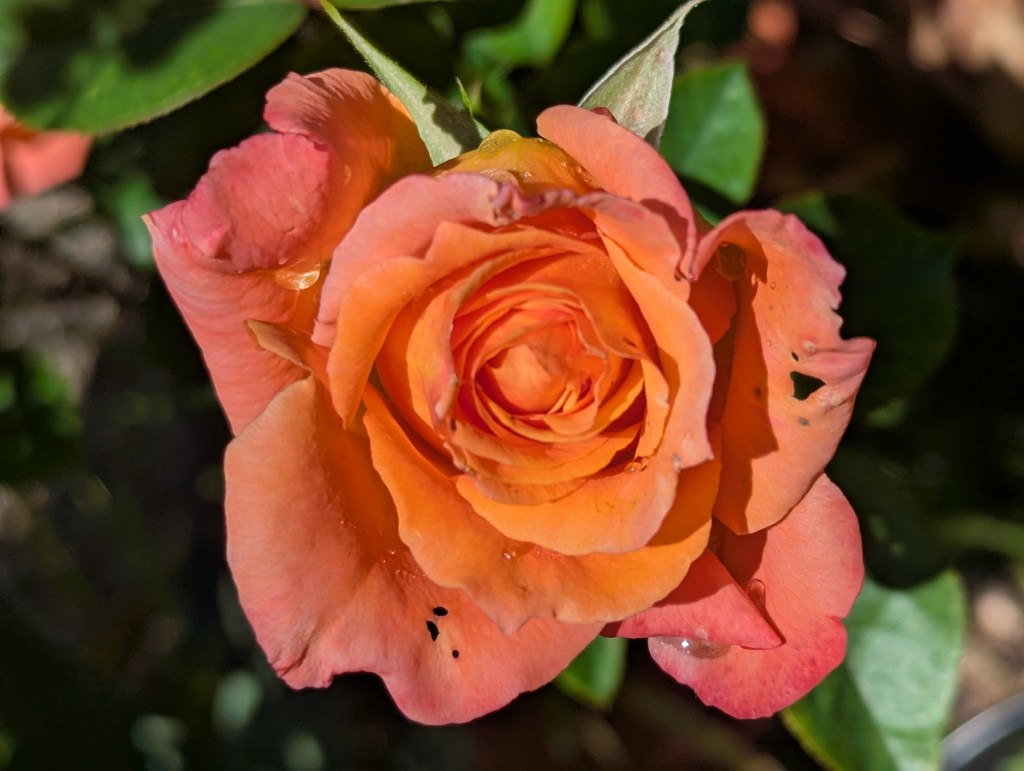
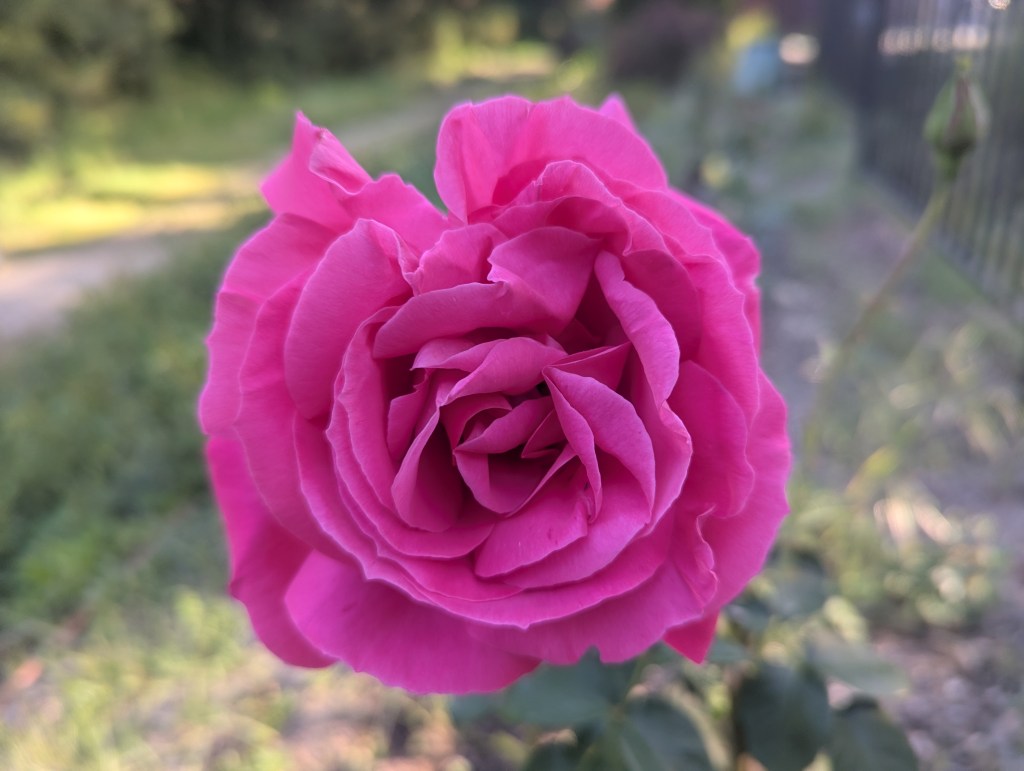
6. Rosa, carpet rose is the only one of these six that is not responding to cooling weather as it produces a few rose hips. I did not expect this. Rose hips are rare in our landscapes.

This is the link for Six on Saturday, for anyone else who would like to participate: https://thepropagatorblog.wordpress.com/2017/09/18/six-on-saturday-a-participant-guide/
Stumpery

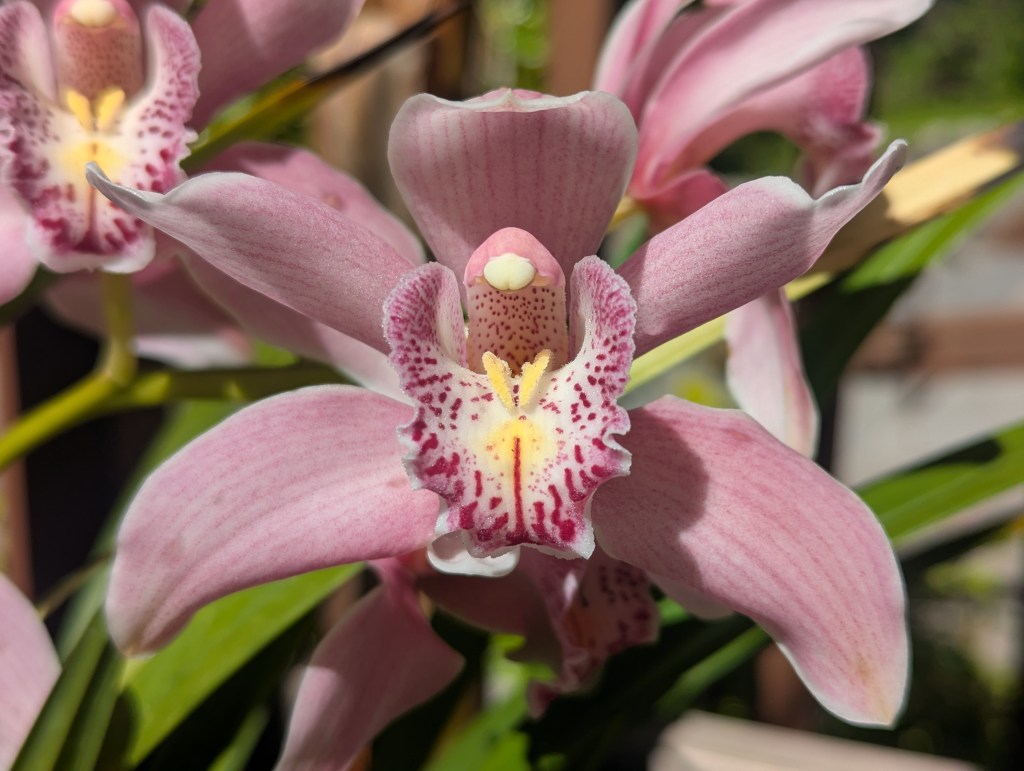
Redwoods give new meaning to stumperies. Their stumps are massive, and remain intact for decades. After all, coastal redwoods are among the largest trees in the world, and their wood is famously resistant to decay. Although redwoods had been harvested here for a very long time, most were harvested soon after 1906 to rebuild San Francisco after the Great San Francisco Earthquake and Fire. The stumps of some of them were subsequently hollowed by forest fire in the 1950s. An outhouse at home was built on top of one such hollow stump. A showers was built within another. A third is big enough to be built into a guest cabin. Stumps at work are not so useful, so remain only as monolithic garden sculpture. One short stump was planted with Billbergias a few years ago. More recently, we installed a few Cymbidium orchids on one short stump and one taller stump. The taller stump is about five feet wide and about eight feet tall, so looks rather silly with a pair of relatively small orchids protruding from the top. The orchids could be happy there, though. They should fill out and become more proportionate to the stump that they inhabit.

Six on Saturday: More Late Bloom

Flowers are starting to succumb to cool and rainy weather. So, it is beginning to look like autumn here. Summer is truly over.

1. Pelargonium X hortorum, zonal geranium is finally starting to look somewhat shabby after the recent rains, although several others continue to bloom as if nothing happened.

2. Rosa spp. ‘Iceberg’ rose is probably the last rose to bloom for the season. A few young floral buds are molding before they bloom. The roses get pruned before New Year’s Day.

3. Tagetes patula, French marigold is more seasonable. It is expected to bloom through autumn, and could continue until replacement with warm season annuals during spring.

4. Abutilon X hybridum, flowering maple does not seem to know when to stop blooming for autumn. Its bloom should probably decelerate now that the weather is getting cooler.

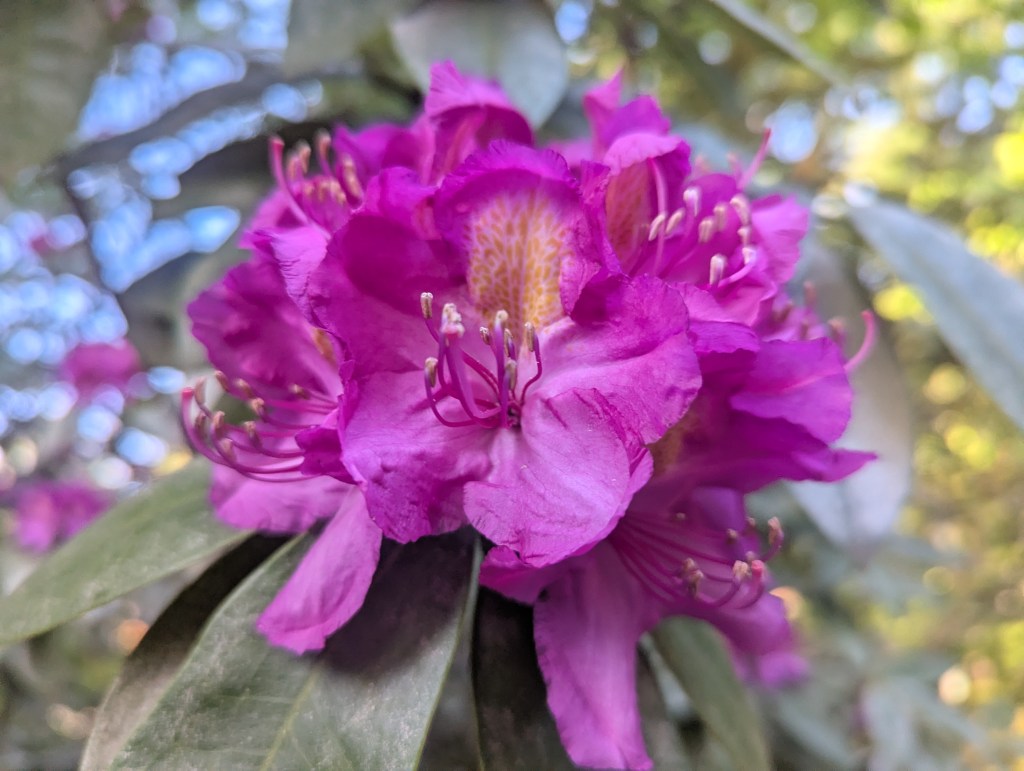
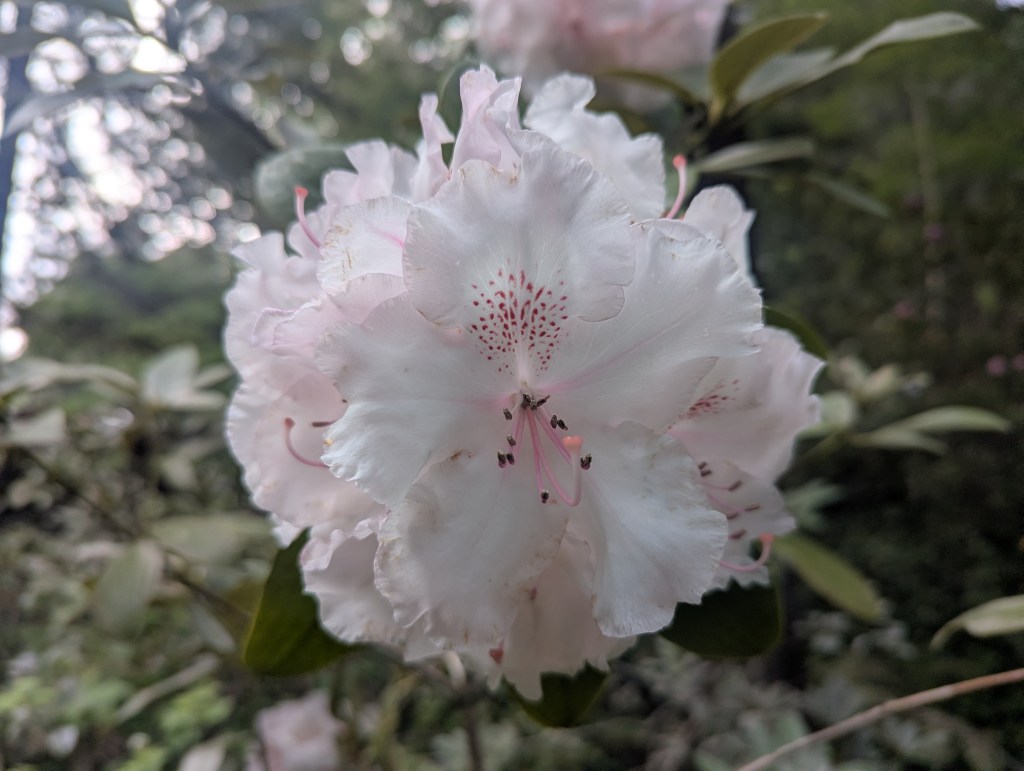
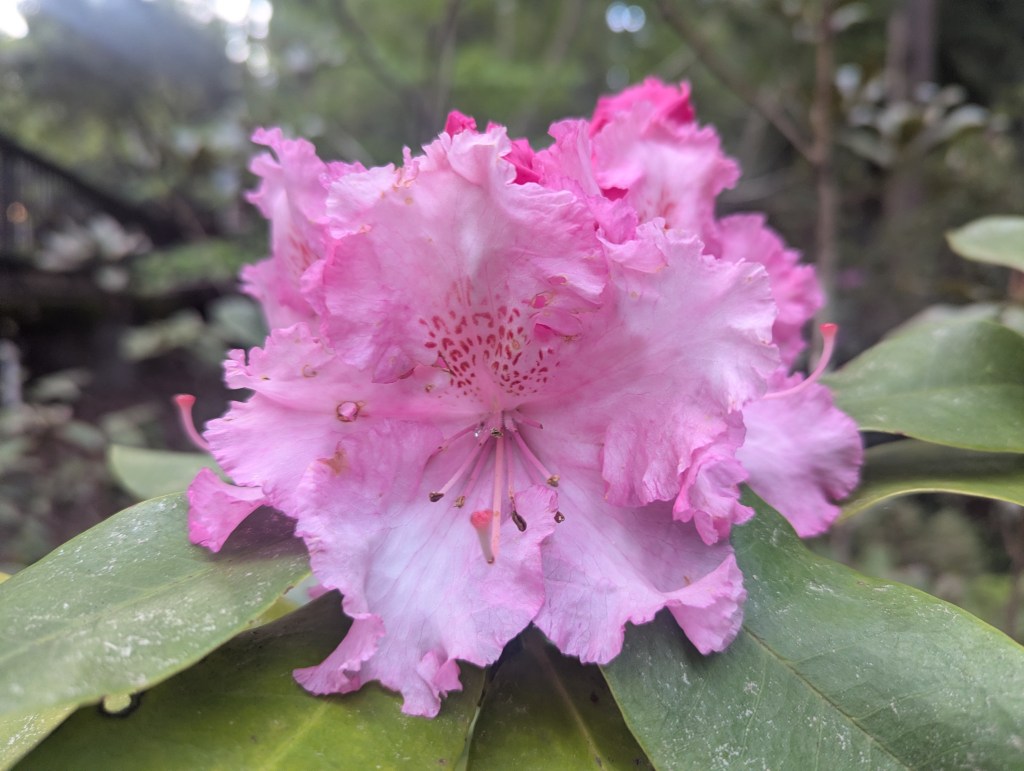
5. Rhododendron spp., azalea is even more confused than the ‘Duc de Rohan’ azalea that bloomed not so long ago. It is blooming more abundantly and even later, or not so early.

6. Rhody curls up somewhat tighter while the weather is cool. His fur should get fuzzier, but does not seem to be doing so. He insists on coming to work with me, out in the cold.

This is the link for Six on Saturday, for anyone else who would like to participate: https://thepropagatorblog.wordpress.com/2017/09/18/six-on-saturday-a-participant-guide/
Autumn Fever

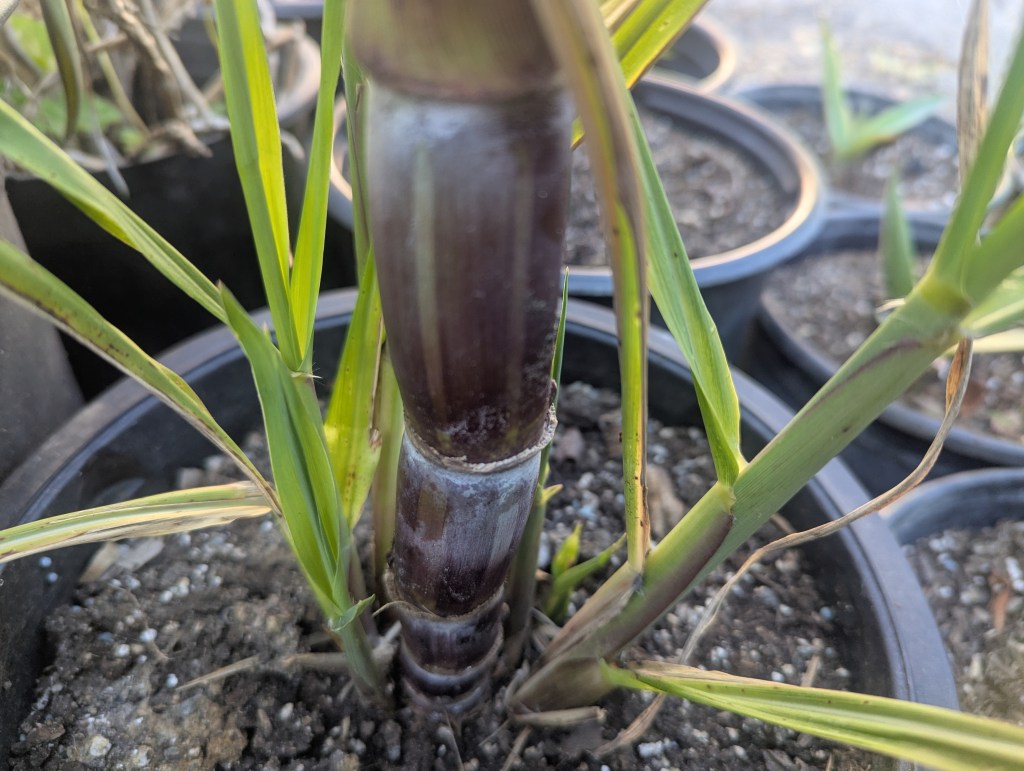
‘Purple Ribbon’ sugarcane has been growing like a weed, but should go into the garden.

Autumn is the time for planting. So is winter. It is difficult to resist new acquisitions for the garden. However, there is already so much in the nursery that needs to be planted into the garden that I should not consider acquiring more.

I like to think that I purchase almost nothing for the garden. I grow just about everything that I want to grow from bits and pieces from other gardens. I purchased sugarcane, though, because I could not find any of a cultivar that I wanted in another garden. Now that it has been growing like a weed here, I returned to the online catalogue of one of the nurseries that sells sugarcane to see what else I want.

Planting Justice grows and sells many fruit and vegetable plants that I want to purchase. Because the primary nursery is in Oakland, only about an hour and a half away, I could purchase directly, rather than by delivery. My wish list from them includes medlar, yacon, currant, sunchoke, lingonberry, moringa, kangaroo apple, raisin tree, earth chestnut, chestnut, cinnamon vine, tree collard, sea berry, aronia and highbush cranberry. The twenty items that I want cost only $316, but are contrary to my tradition of purchasing almost nothing for the garden. Fortunately and unfortunately, I will most likely refrain for another year, when I expect the garden to be refined enough to accommodate them.

Six on Saturday: Autumn Or Not?

Some vegetation is responding to cooler autumn weather as it should while some refuses to concede. Autumn foliar color is not so spectacular this season.

1. Canna musifolia, canna foliage is beginning to discolor in response to cooling autumn weather. I will groom such foliage out through the season until there is nothing left of it.

2. Plectranthus scutellarioides, coleus is not so easily convinced that it really is autumn. It is as vigorous now as it was for summer. I suspect that it will not last for long like this.

3. Cornus florida, flowering dogwood is already defoliated, and it did so quickly without much color. Others were somewhat more colorful, and were retaining their color better.

4. Acer palmatum, Japanese maple, like coleus, is not convinced that it really is autumn. This particular specimen is as green as it was for summer. Others are beginning to color.

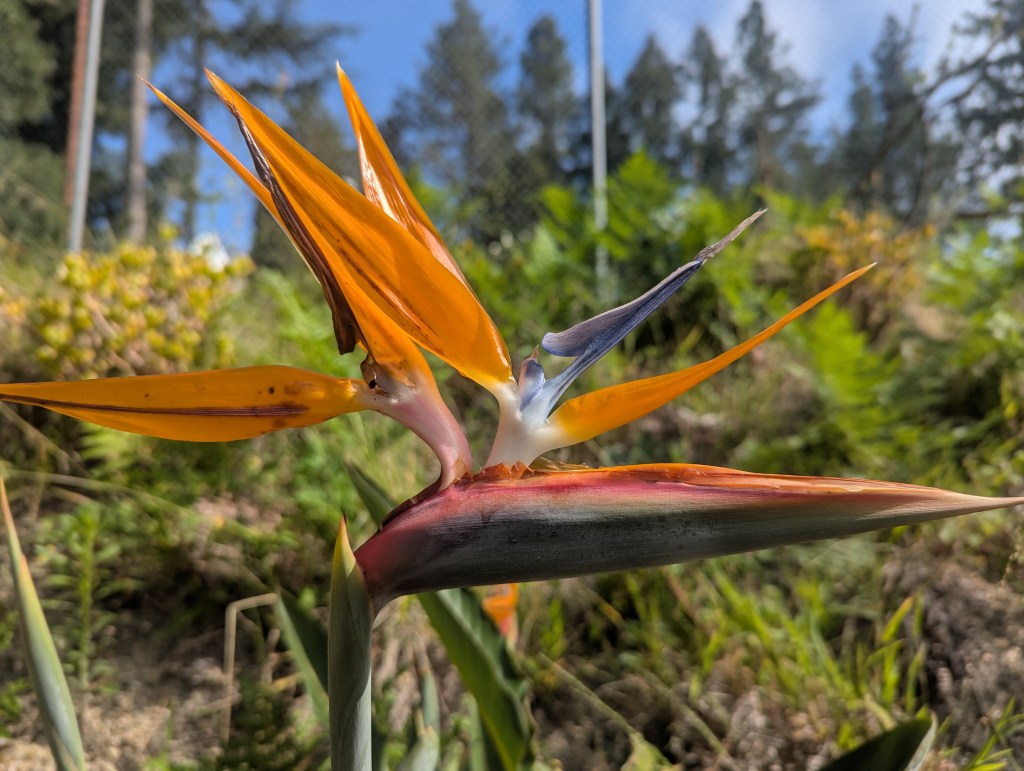
5. Strelitzia nicolai, giant bird of Paradise supposedly blooms randomly. However, ours prefers to bloom through summer and finish about now, so is actually right on schedule.

6. Impatiens hawkeri, New Guinea impatiens, like coleus and Japanese maple, is not yet convinced that it is autumn. It will likely succumb to autumn chill when the coleus does.

This is the link for Six on Saturday, for anyone else who would like to participate: https://thepropagatorblog.wordpress.com/2017/09/18/six-on-saturday-a-participant-guide/
Why Bother?

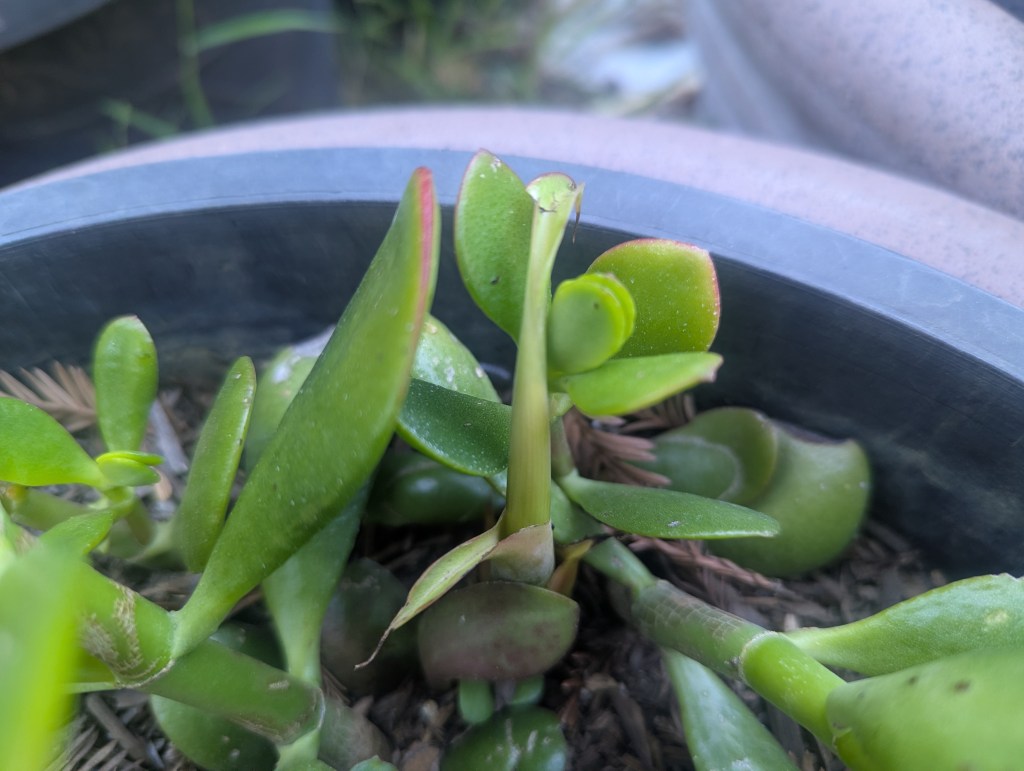
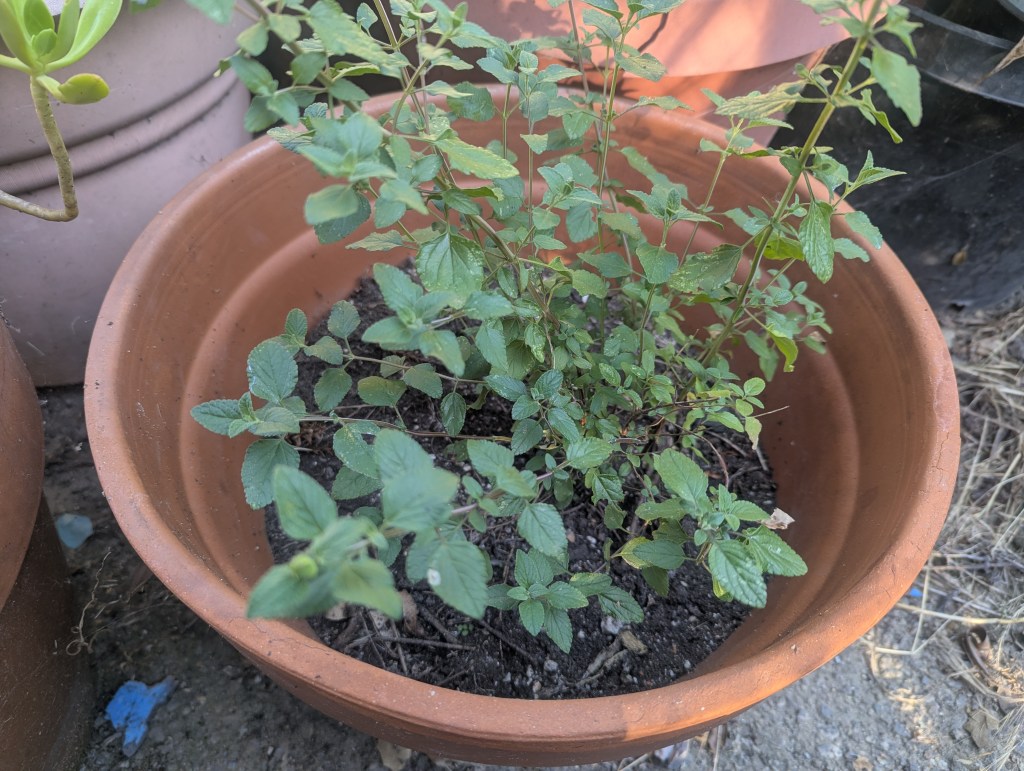
Nasturtiums were a good choice for my downtown planter box, or so I thought. I know that people pick flowers from such planter boxes. I figured that nasturtiums bloom so abundantly that no one could possibly pick all the flowers from them. Technically, I was correct. Technically, not all of the flowers were picked. However, there were times when only a few of the abundant flowers remained. I replaced them with some sort of compact aeonium like perennial that I can not identify. It forms dense mounds of yellowish green succulent foliage that I figured no one would bother. I do not mind when I notice a few pieces missing. There is enough to share. What I do mind is that someone clear cut harvested enough to leave this bald patch. The left half of the picture demonstrates what it should look like. What is worse is that there is so much of it extending outside of the railing that would not have been missed if it had been taken. Also, as the picture below shows, the more prominent common aeonium is not exempt from such pilferage. So, why do I bother? Well, I still enjoy my downtown planter box.

Six on Saturday: Pots

Pots are a bit more common within our landscapes than they should be, but they can be justified.

1. Philodendron selloum ‘Lickety Split’ split-leaf philodendron grew efficiently enough to obscure its pretty green pot within a few months, but does not seem to grow much now. It seems to merely replace old foliage with new foliage. The stems do not elongate much.

2. Dianella caerulea, blueberry lily is named Sigmund because it looks like a shabby sea monster. It is in a large terracotta pot that it now completely obscures. It visually softens the blunt end of a low stone retaining wall that separates a few stone steps from a ramp.

3. Cymbidium, orchid with a few small bits of Vinca minor ‘Alba Variegata’, small white variegated periwinkle are in a cheap plastic urn, with Sigmund in the background to the left. I know neither the species nor the cultivar of the orchid, but it blooms white nicely.

4. Alocasia odora, taro, or whatever species this is, has grown quite nicely to obscure its pot, just like the split-leaf philodendron and Sigmund. It was taken from a vacated home with an Australian tree fern two years ago. Sadly, the old home will soon be demolished.

5. Brugmansia, angel’s trumpet really is getting to be redundant, but is also really quite pretty. Like the orchid, both its species and cultivar are unknown. I grew it from a scrap from a green waste pile in East San Jose. Its big terracotta urn was a gift a few years ago.

6. Eucalyptus globulus ‘Compacta’, dwarf blue gum is certainly not a typical houseplant. Yet, here it is within an antique coffee shoppe lounge at work. We do not know how long it can survive here without direct sunlight, but will eventually find out. It is quite grand.

This is the link for Six on Saturday, for anyone else who would like to participate: https://thepropagatorblog.wordpress.com/2017/09/18/six-on-saturday-a-participant-guide/