Six on Saturday: Welcome to the Jungle

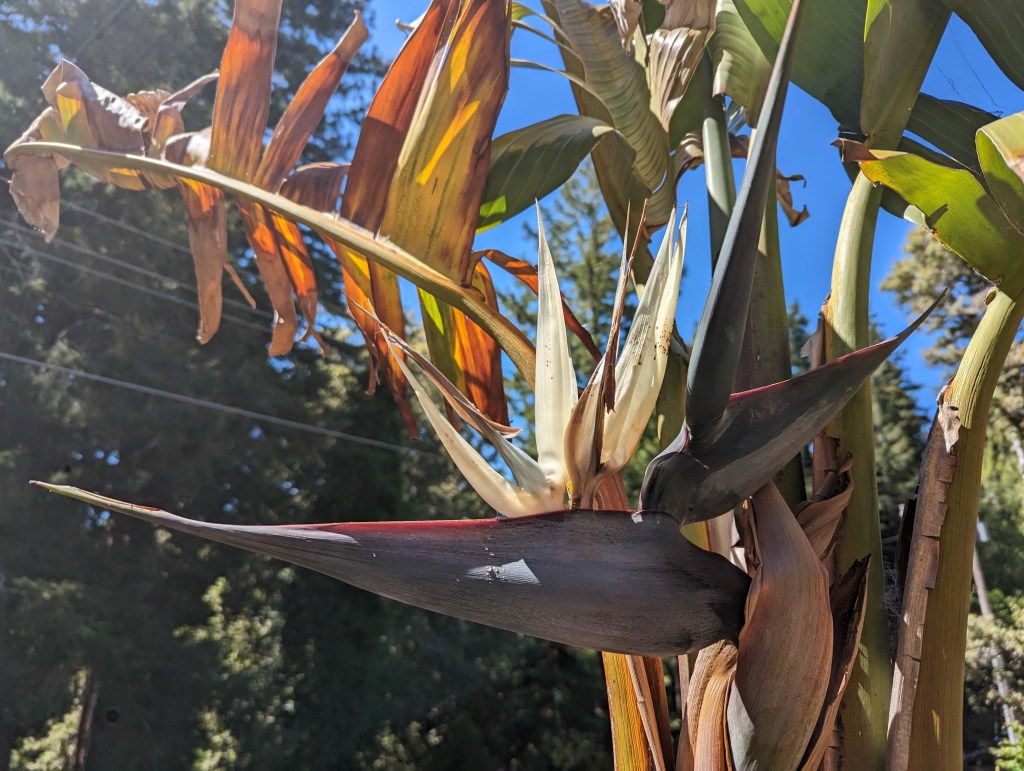
Giant bird of Paradise, Strelitzia nicolai, is a grand perennial. It develops several trunks like those of palms, with lush leaves like those of bananas, and bold white flowers. Their bloom can be messy with its sticky and viscous nectar though. Brent and I refer to them as drooling seagulls. For this reason, these giant bird of Paradise needed to be removed. I was pleased to recycle them. They look pathetic now that most of their foliage has been pruned away to minimize evapotranspiration during their recovery. Most should begin to regenerate roots through summer, and then resume growth for next spring and summer.

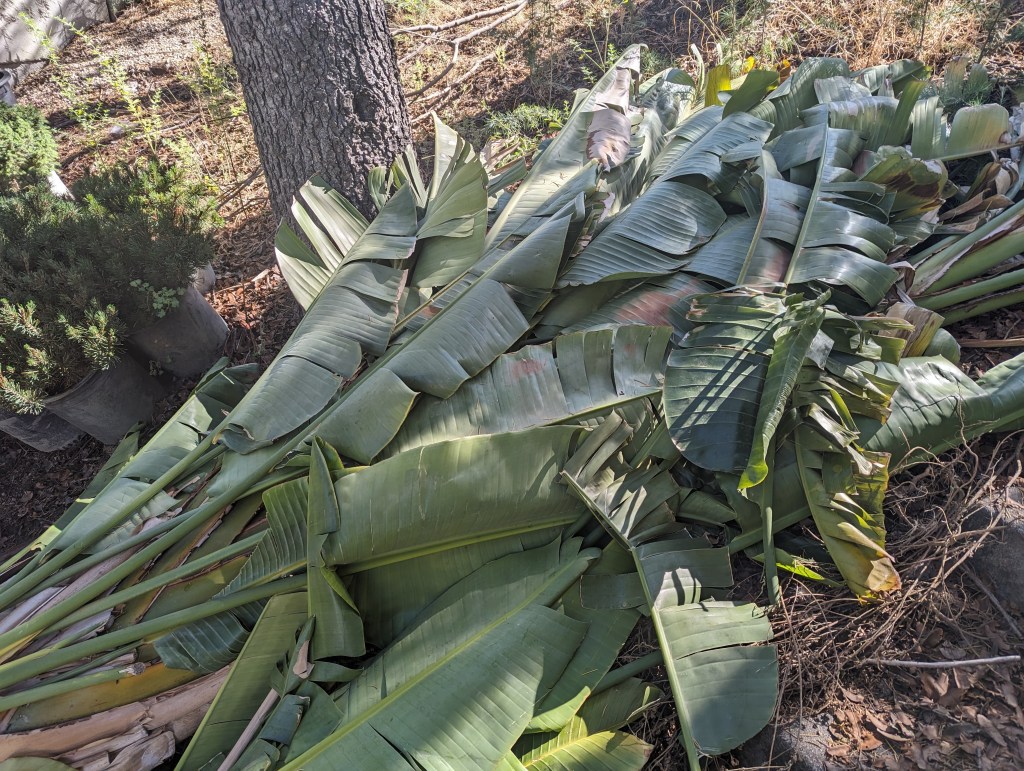
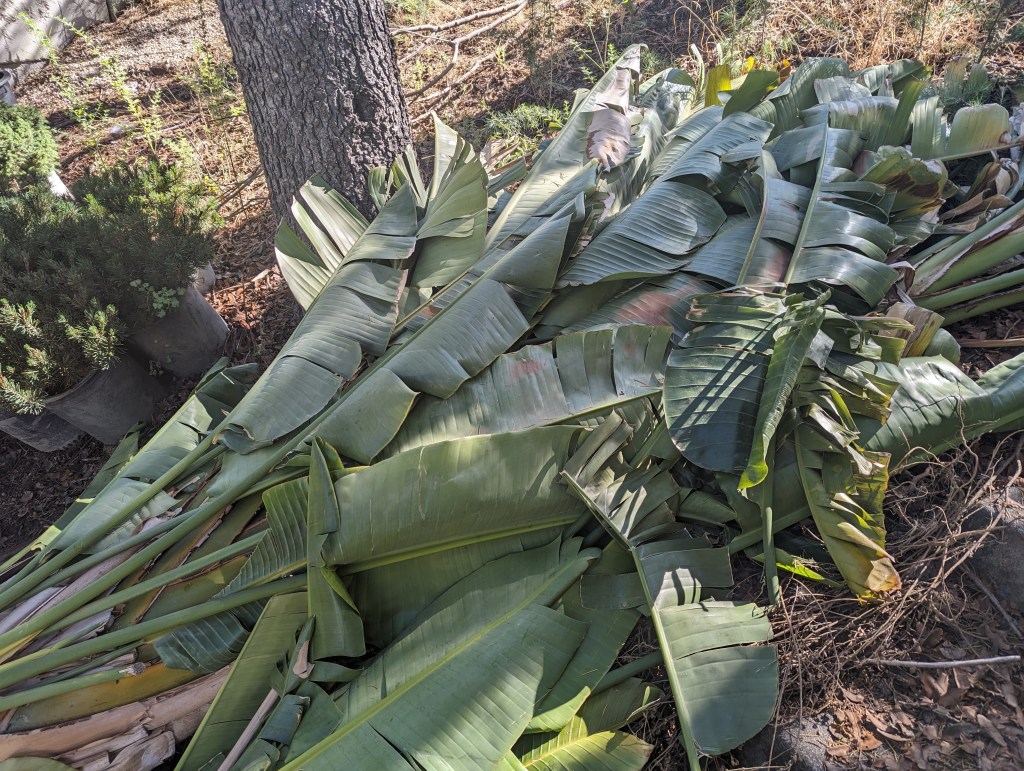
1. Giant bird of Paradise does not look so impressive laying on the ground. This is one of two piles of well foliated trunks that must be processed and heeled in until next autumn.
2. ‘A Flock of Seagulls’ demonstrates how abundantly these mature specimens bloomed. They are not just any seagulls, but are dead drooling seagulls. I will glean them for seed.

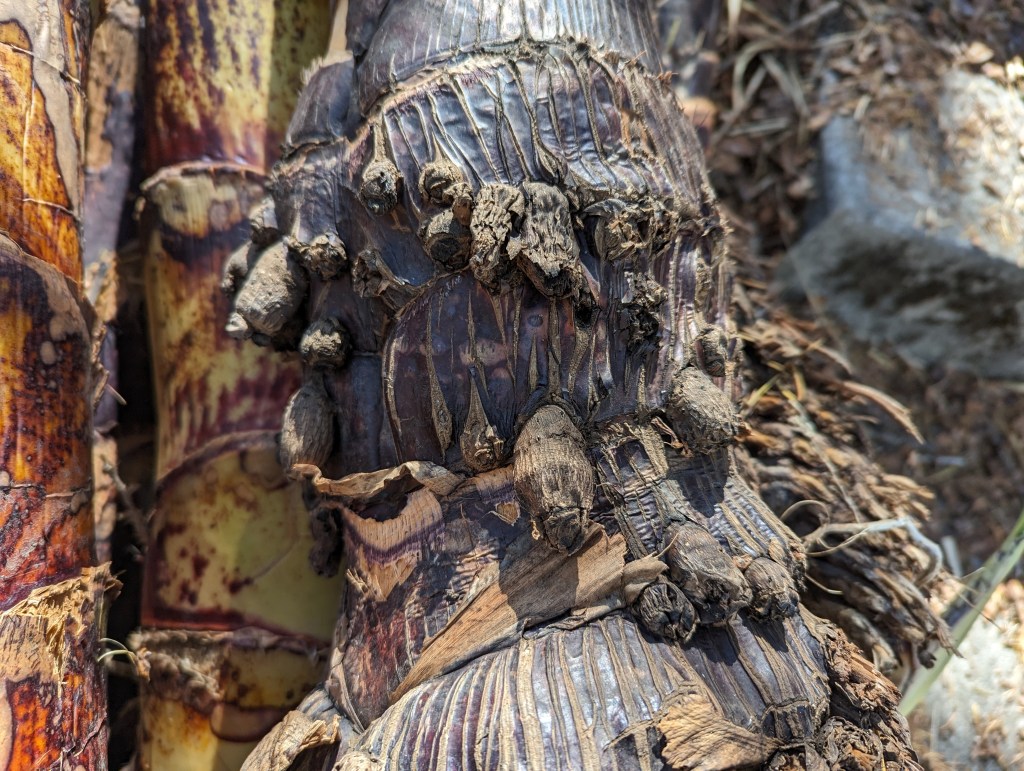
3. Husks make the trunks seem to be bigger than they are. They are the bases of petioles of leaves that were pruned off over the years. Trunks are leaner and tidier without them.

4. Severed roots are unimportant. They merely indicate that a portion of a subterranean rhizome remains attached to the base of a trunk. Trunks are neater without their husks.
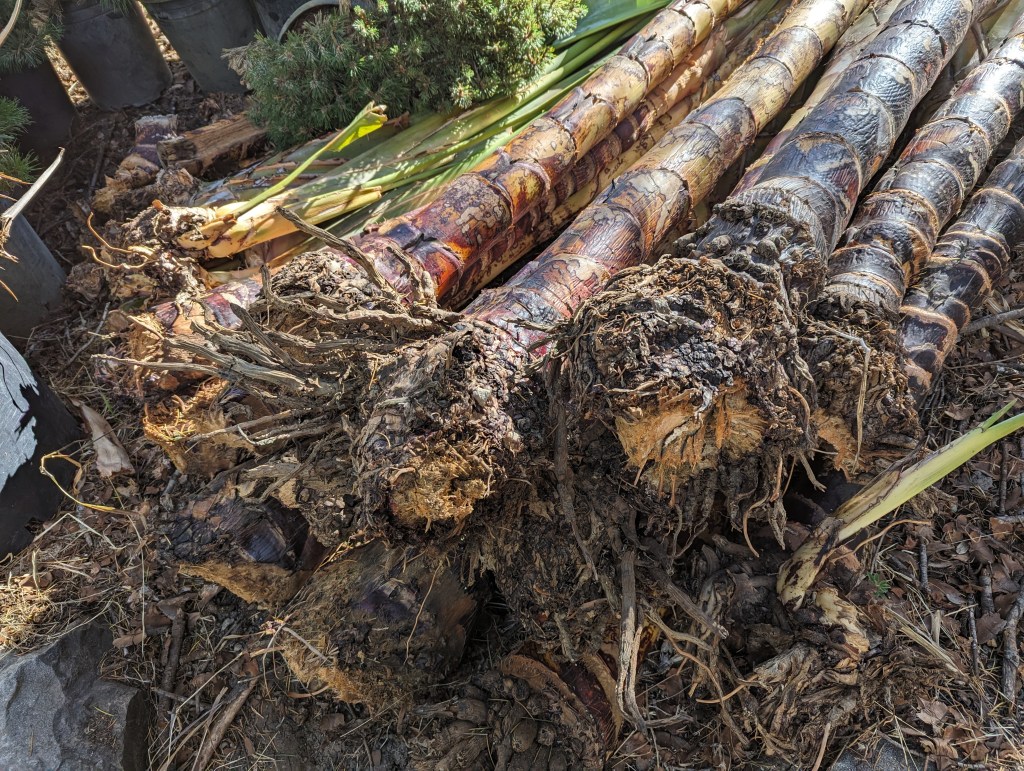
5. Adventitious roots grow from portions of rhizome that remain attached to the bases of the trunks, and from the bases of trunks near the rhizomes. These roots are now buried.
6. Lineup shows that there are about a dozen significant trunks, a dozen shorter trunks, and half a dozen pups. They are heeled in here to begin rooting with frequent irrigation. They will be relocated to their permanent landscape after the rain starts during autumn.

This is the link for Six on Saturday, for anyone else who would like to participate: https://thepropagatorblog.wordpress.com/2017/09/18/six-on-saturday-a-participant-guide/

Horridculture – Post Office

Posted!

The Post Office in town is where I go to post or collect mail. For the past few years, this small coast live oak has been getting so low that I must duck under it to get onto the sidewalk from the parking spaces, or even to get past it on the sidewalk. It is particularly annoying because it is in such a prominent location where many other people park and enter the Post Office. I have sometimes considered bringing my pole saw and other pruning tools to prune it for clearance, but because I have not driven the pickup into town for a very long time, and do not intend to do so anytime soon, I would have no means with which to dispose of the debris.

Well, someone else pruned it. Well, sort of pruned it. Well, let us just say that I no longer need to duck under it. What a hot mess of stubs, or should I say, ‘posts’. This is after all, the Post Office. How could anyone think that this was acceptable?! How difficult would it have been to cut these lower limbs properly, without leaving these horrid posts?! Even someone who is not at all concerned about the tree or proper arboriculture can see how hideous this is. Seriously, this goes beyond negligence. Someone put considerable effort into doing this so extremely improperly!

I brought my pole saw the following week to remove these posts without doing any more pruning. I figured that without all the foliage, I could fit them into the trunk of the Roadmaster. However, by the time I go there, someone, likely from the Department of Public Works, had already repaired the damage. The tree could be pruned a bit more, but at least it is not so mutilated.

Giant Bird Of Paradise Migration

A Flock Of Seagulls

Giant bird of Paradise is not actually from Paradise, and if it were, it would not be the Paradise in Butte County that burned five years ago. This particular species, Strelitzia nicolai, is from South Africa, Mozambique, Botswana and Zimbabwe. These particular specimens are from none of these places though. They came from Morgan Hill. Nor are they actually birds, although they seem to be migratory like so many species of birds that migrate about the southwestern portion of Africa, and apparently Morgan Hill, but not Paradise. Oh, this is getting confusing.

Giant bird of Paradise, which is unrelated to Big Bird of Sesame Street, is a grand perennial that can get twenty feet tall. It resembles the more common bird of Paradise, but with tall trunks that resemble those of small palm trees. Also unlike the common bird of Paradise, their appeal is more foliar than floral. In other words, their primary attribute is their lush foliage, rather than their bloom. Actually, their bloom can be undesirable within some situations.

In fact, that is why these particular specimens needed to be removed. Their bloom was drooling messy nectar onto the pavement below. In horticultural slang, they are known as ‘drooling seagulls’ because of this habit, and also because their bulky white flowers look like seagulls peeking from the lush foliage, and of course, drooling while they do so.

Morgan, the old F250 who coincidentally is named after Morgan Hill, and I brought these giant bird of Paradise here, where they await processing. They are supposed to be left out of the ground for about two weeks anyway, so that they will be less susceptible to rot when planted and irrigated. After their processing, they will get heeled in here so that I can monitor them more directly as they begin their recovery. The best of them will migrate again to their permanent landscape after the rainy season starts. I should get better pictures of them and their processing for Six on Saturday.

No More Reblogs

My blogging discontinued quite a while ago. Articles from my gardening column still post in two parts on Mondays and Tuesdays, with the primary topics on Mondays, and the featured species on Tuesdays. Older articles still post in the same format on Thursdays and Fridays. These articles are not actually blog posts though. They are gardening column articles.

Originally, my only blogging had been on Saturdays, Sundays and Wednesdays. ‘Horridculture’ topics posted on Wednesdays. ‘Six on Saturday’ contributions posted on Saturday mornings. Random topics posted at noon on Saturdays and on Sunday mornings. Then, with the exception of ‘Six on Saturday’ contributions, all of these blog posts were recycled from earlier posts, so no longer qualified as actual blogging.

Now, as was inevitable, there are no more blog posts to recycle. Articles from my gardening column will continue to post on Mondays and Tuesdays. Older articles from the same column will continue to post on Thursdays and Fridays. I will likely continue to participate in the ‘Six on Saturday’ tradition on Saturday mornings. Otherwise, except for occasional random posts, regularly scheduled but recycled posts for Saturday afternoons, Sundays and Wednesdays will not continue.

In the future, recycled gardening articles may also be omitted, and new gardening articles may not be divided into two sections. If so, intact articles from my gardening column may post only weekly here. After all, the original purpose of this blog was to be another minor venue for the gardening column, . . . and obviously, pictures of Rhody.

Six on Saturday: Better Late Than Never

As I explained earlier, unusual weather has interfered with the growth and bloom cycles of many species. Winter weather was exceptionally wintry. Spring and summer weather was exceptionally mild until only recently. Many flowers bloom precisely on schedule, as if oblivious to the unusual weather. Many flowers bloom significantly later than normal. Lily of the Nile seems to be about a month late. So does garden phlox, although I do not remember if it bloomed simultaneously with lily of the Nile last year. Nor do I remember when butterfly gladiolus bloomed. Hybrid gladiolus seemed to bloom right on schedule, so are finished.

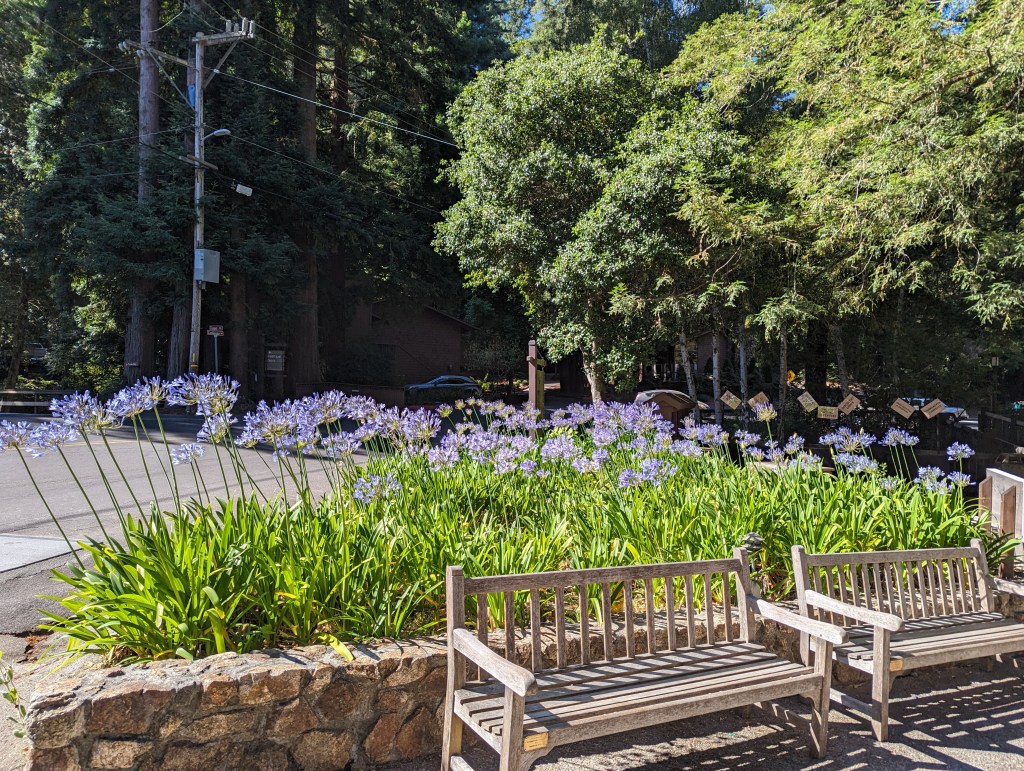
1. Agapanthus orientalis, lily of the Nile should have been blooming like this more than a month ago, and at least for Independence Day. Some buds are only beginning to open.

2. Agapanthus orientalis, lily of the Nile does not bloom abundantly in the shade, but it blooms grandly. This picture can not show that this one floral truss is about a foot wide.

3. Agapanthus orientalis, lily of the Nile, although genetically variable, had always been exclusively blue within all of the landscapes here. This is the first of three white blooms! I grew the originals in the early 1990s, but needed to relocate their herd a few years ago.

4. Phlox paniculata, garden phlox seems to be even more delayed than lily of the Nile is. I can not be certain though, since I got acquainted with its seasons only a few years ago.

5. Gladiolus X hortulanus, hybrid gladiolus was not so delayed, so bloomed precisely on schedule, and now needs deadheading. I am pleased by how many are reliably perennial.

6. Gladiolus papilio, butterfly gladiolus is Skooter approved, and is from Tangly Cottage Gardening! I do not know if it was delayed, because I am still getting acquainted with it.

This is the link for Six on Saturday, for anyone else who would like to participate: https://thepropagatorblog.wordpress.com/2017/09/18/six-on-saturday-a-participant-guide/

Six on Saturday: Late for Summer

Summer was late this year. This is sounding redundant, so I will not mention last winter again. Nor will I mention last spring or early summer. Now that summer is about a third over, it seems as if it is merely beginning. Lily of the Nile, which never fails to bloom for Independence Day, began to bloom only a few days ago. Bloom is catching up though, or at least trying to. These summer flowers are doing well, and were actually doing well last week, when I was unable to post these pictures because of bad reception. Easter lily was done right after I got these pictures. The preponderance of red here is mere coincidence, but summery.

1. Lilium longiflorum, Easter lily was likely left behind after a wedding in the old Chapel. It lives in a garden across the road now. It is the only of these six that finished blooming.

2. Hydrangea macrophylla, hydrangea is pleasantly pink even without the fertilizer that maintains its pink color. Blue hydrangea faded to lavender without their pH adjustment.

3. Pelargonium hortorum, zonal geranium is quite a bit more prolific in bloom than the old fashioned sorts that I am accustomed to growing. The floral color is impressive also.

4. Gerbera jamesonii, Transvaal daisy is as bright and bold as 1984. However, I still fail to be impressed. It is certainly pretty, but looks like a squirting daisy that a clown wears.

5. Papaver rhoeas, poppy grew from seed that got sown prior to the last torrential storm of last winter. I thought that all the seed got washed away. This was a delightful surprise.

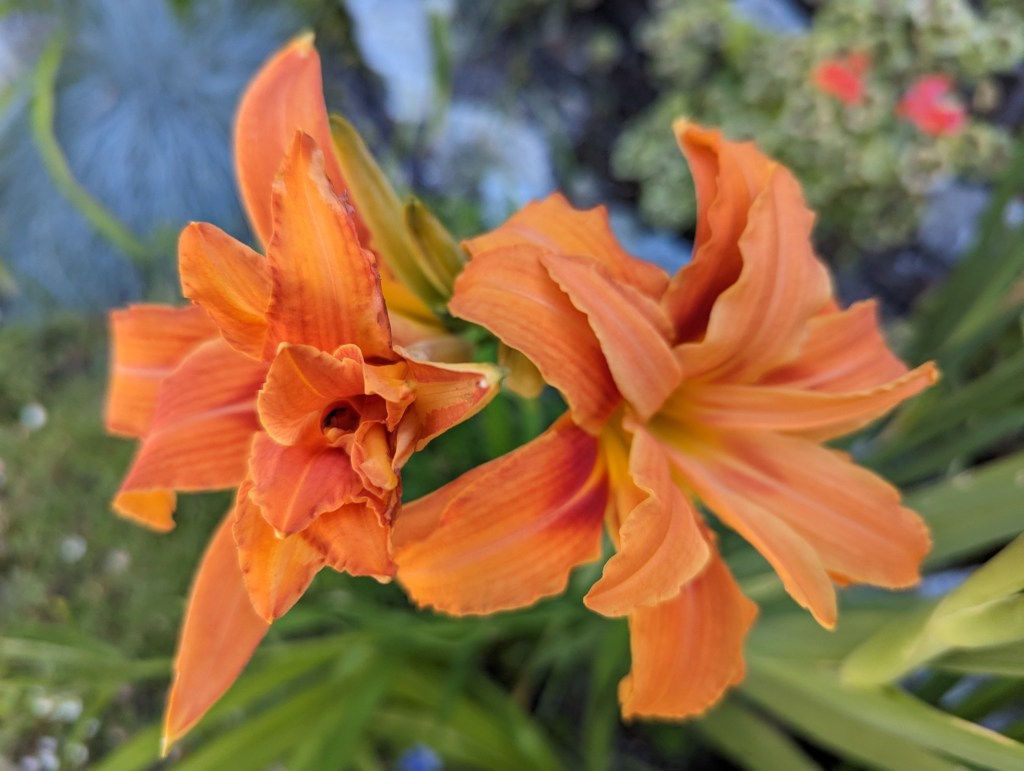
6. Hemerocallis fulva, daylily grows like a weed. We move it from one garden to another as it outgrows its space. This double orange cultivar may be ‘Kwanso’, but I do not know.

This is the link for Six on Saturday, for anyone else who would like to participate: https://thepropagatorblog.wordpress.com/2017/09/18/six-on-saturday-a-participant-guide/
Six on Saturday: Not So Bad

The wrong flowers are nonetheless pretty. Pretty flowers distract from unsightly foliage. Neighborly ground squirrels are people too.

1. ‘Red King Humbert’ Canna was one of only two canna that I ever purchased. I still feel guilty about spending about $6 for ‘Australia’ years ago. This second purchase for thirty rhizomes late last season was not so inexpensive. I was so displeased as virused foliage emerged. I tried to believe that this discoloration was from starting so late in the season.

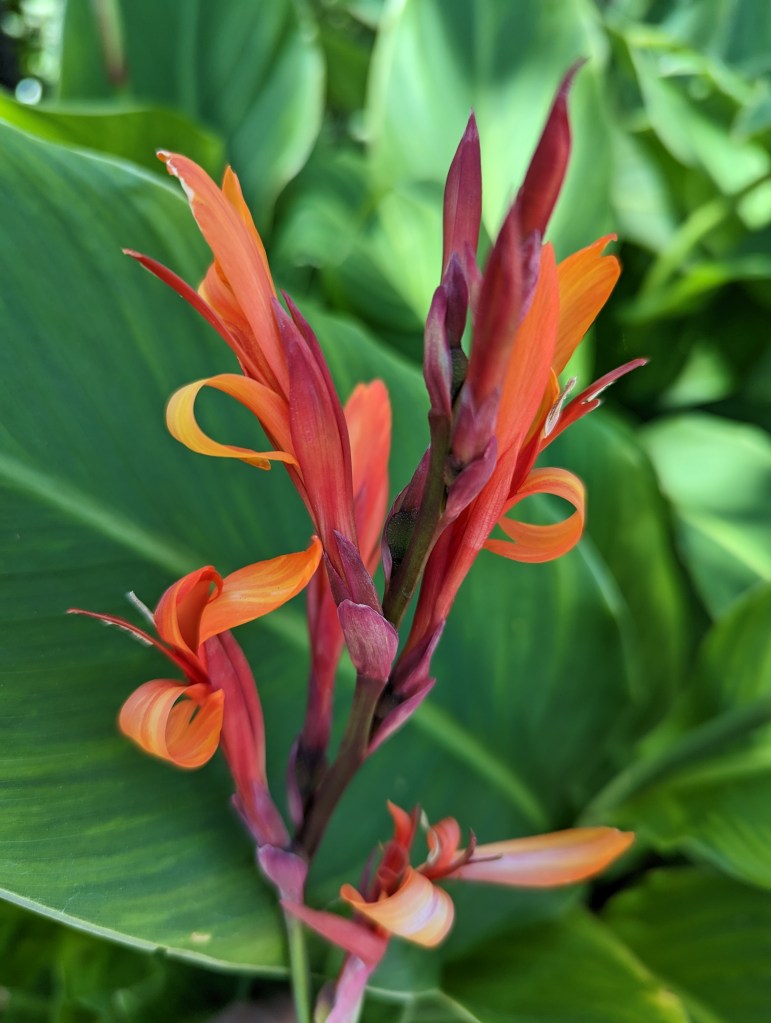
2. ‘Red King Humbert’ Canna gets about six feet tall, with billowy and bright red bloom. Because it started so late last year, it barely grew, and did not bloom. Now it blooms like this, and is only about two feet tall. It is all virused. It definitely is not what it should be.

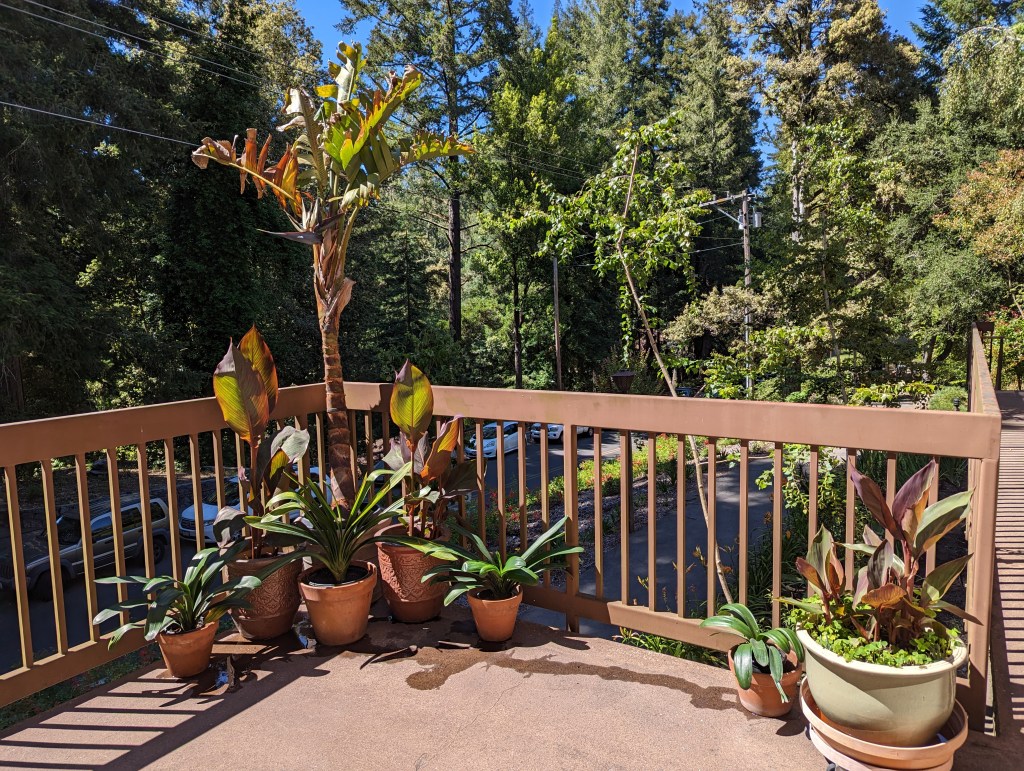
3. An assortment of formerly unappreciated canna, Kaffir lily and giant bird of Paradise temporarily inhabit this otherwise uninteresting deck at work. A gardener found them to be too appealing to leave in obscurity within the nursery yard, so brought them here and set their cans into more appealing pots. Only the canna to the right is original to the site.

4. Strelitzia nicolai, giant bird of Paradise is shabby though. The worst of its few roasted leaves is to the upper left. However, only I notice it! Everyone else notices its rad bloom.

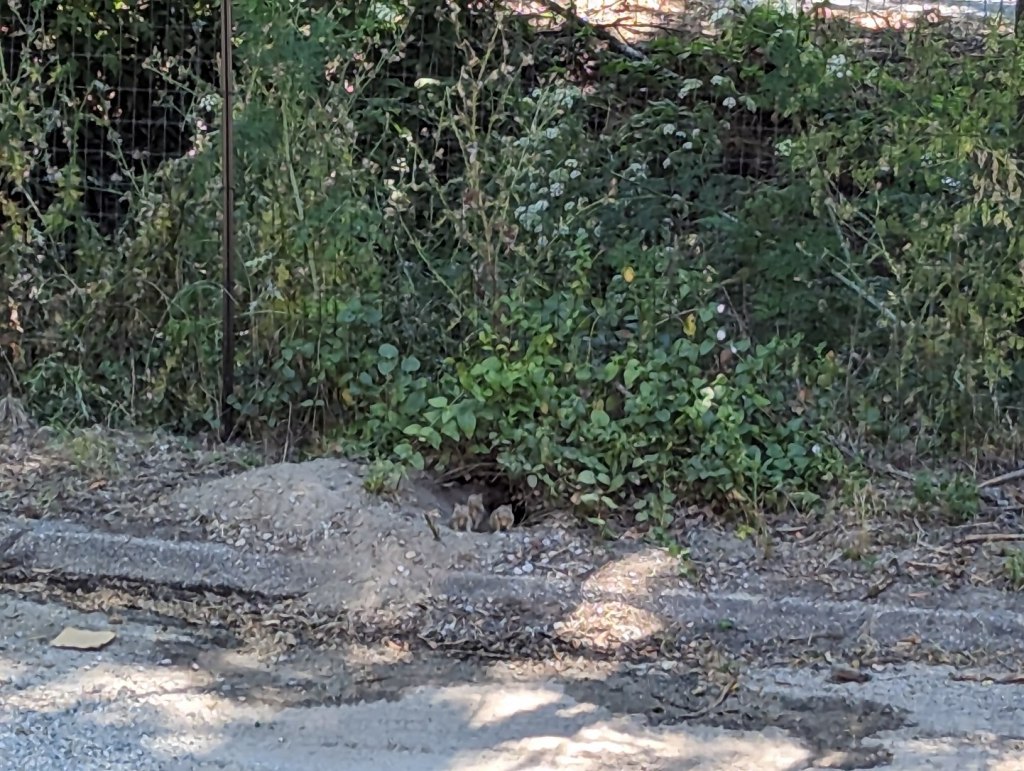
5. Alvin, Simon and Theodore are the new neighbors. I yelled at them initially. They just came out to stare at me. More of their friends and family moved in. They do not damage desirable vegetation though. Actually, they are eating undesirable weeds with brambles!

6. After recycling an article about the vandalism of the Memorial Tree in Felton Covered Bridge Park two Wednesdays ago, I should post this new picture of how happy it is now.

This is the link for Six on Saturday, for anyone else who would like to participate: https://thepropagatorblog.wordpress.com/2017/09/18/six-on-saturday-a-participant-guide/

Six on Saturday: Again – No Signal

Since the camera died, all my pictures are taken by telephone and then sent to my email. The primary problem with this procedure is that the telephone signal here is unreliable. I actually had six timely pictures to post today, but could not get them here. Instead and again, these six are merely five random pictures that I had no other use for, as well as an illustration that I copied from a magazine. Incidentally, the illustration from a magazine is not of particularly good quality. Actually, most of what is shared on Six on Saturday is of superior quality, and more interesting.

1. My Los Angeles homeless camp made the New York Times! This is it in an illustration for an article about hedges. It is why I have never stayed at the famously eccentric Hotel del Flores, which incidentally, has less Flores. It is in the back yard of Brent’s Jungalow.

2. ‘Tropicanna Black’ Canna was ‘borrowed’ from my Los Angeles homeless camp during a previous trip late last summer. It now lives happily with five other fancy cultivars here.

3. Morea iridioides, African iris is nothing special. This and three others were split from an overgrown specimen that I planted at my mother’s garden in the early 1990s though.

4. This is where they live now. They will not look so silly as the Dodonaea viscosa grows. I should pluck bits from the biggest specimens to add to the small specimen this winter.

5. Acer platanoides, Norway maple resembles ‘Schwedleri’ Norway maple that I grew up with. I can not remember the name of this modern cultivar. I prefer the original though.

6. Rhody approves of these unplanned Six on Saturday, although this sixth older picture may have been featured earlier. He and I both know how popular any of his pictures are.

This is the link for Six on Saturday, for anyone else who would like to participate: https://thepropagatorblog.wordpress.com/2017/09/18/six-on-saturday-a-participant-guide/

Six on Saturday: Occupational Hazards

Work is too much fun! It was supposed to be temporary work until I returned to work in a few months, but that was a few years ago. Well, that is another story. Work can be very frustrating at times also though. Unlike the farm, where only a few of us work on many acres, many very different people work on less acreage here. We all have very distinct priorities.

1. Training this grapevine like this was a lot of work. It extends from a rail fence on top of the retaining wall at the lower left, to the bottom of the upstairs banister at the upper right. This is my second attempt after someone who works in the building to the upper right cut it off the banister as if it was not obvious that someone meticulously trained it.

2. Now, decorations for the summer involve fake ivy stapled to half century old wooden pillars. This is near both the grapevine and walls that we needed to remove real ivy from.

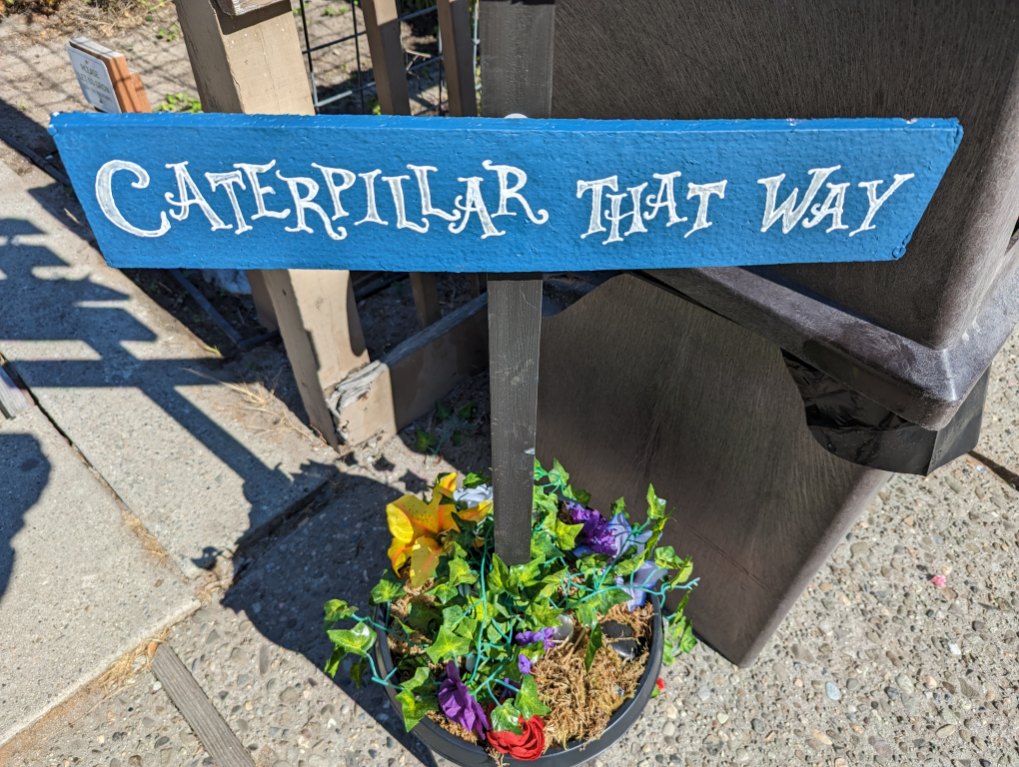
3. Is this some sort of insect repellent? Which way is ‘that’? Are fake flowers effective?

4. Ficus microcarpa ‘Nitida’ makes a great hedge. This is a picture of a picture of such a hedge, sideways, on a wall. Up is right. Down is left. It is effective but needs no shearing.

5. This is all sorts of wrong! The small sign to the lower right has never been so relevant. Someone who was hired for weed whacking whacked all the Canna here, as well as a few Clematis to the right. Weeds are now growing faster than the Canna. To compensate for the lack of bloom, fake roses were installed. It gets weirder. The fake roses glow at night.

6. Chorisia speciosa nearby seems like it really should be the worst occupational hazard.

This is the link for Six on Saturday, for anyone else who would like to participate: https://thepropagatorblog.wordpress.com/2017/09/18/six-on-saturday-a-participant-guide/

Six on Saturday: Like Totally!

Val culture developed within the Santa Clara Valley prior to its assimilation into the San Fernando Valley. I totally know how to use “like” in a sentence, and can do so repeatedly if I like. These Six are not about Val culture during the 1980s though. They are just a few items that are sort of like each other, and five items that I like. Eventually, I will like the item that I do not yet like. Totally!

1. Sambucus nigra ‘Black Lace’ is an ornamental cultivar of European elderberry. As the name implies, it has darkly bronzed and intricately lobed foliage. All but two of the herd of cuttings that I plugged rooted. I wanted a few, but got forty-eight. I was not at all fond of this cultivar or even this species when I met it a few years ago, but I now sort of like it.

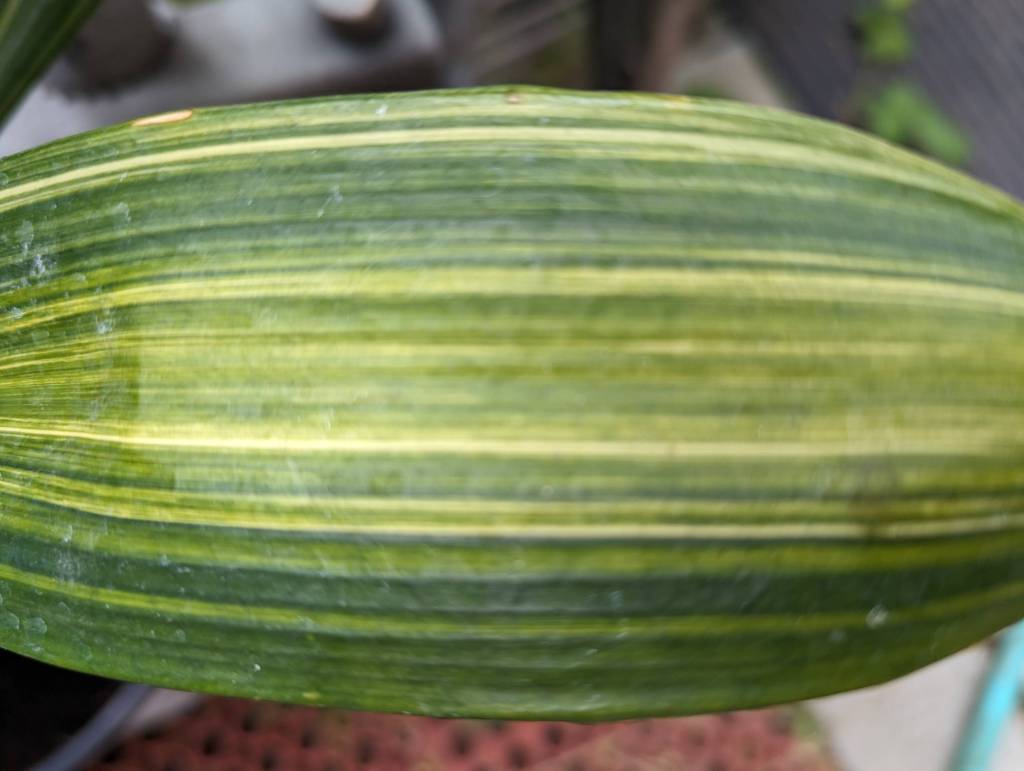
2. Clivia miniata, Kaffir lily lacks bloom now, but like ‘Black Lace’ European elderberry, provides colorfully ornamental foliage. It is variegated with these narrow yellow stripes. I believe it blooms orange. I do not know what cultivar it is. It came from Brent’s garden.

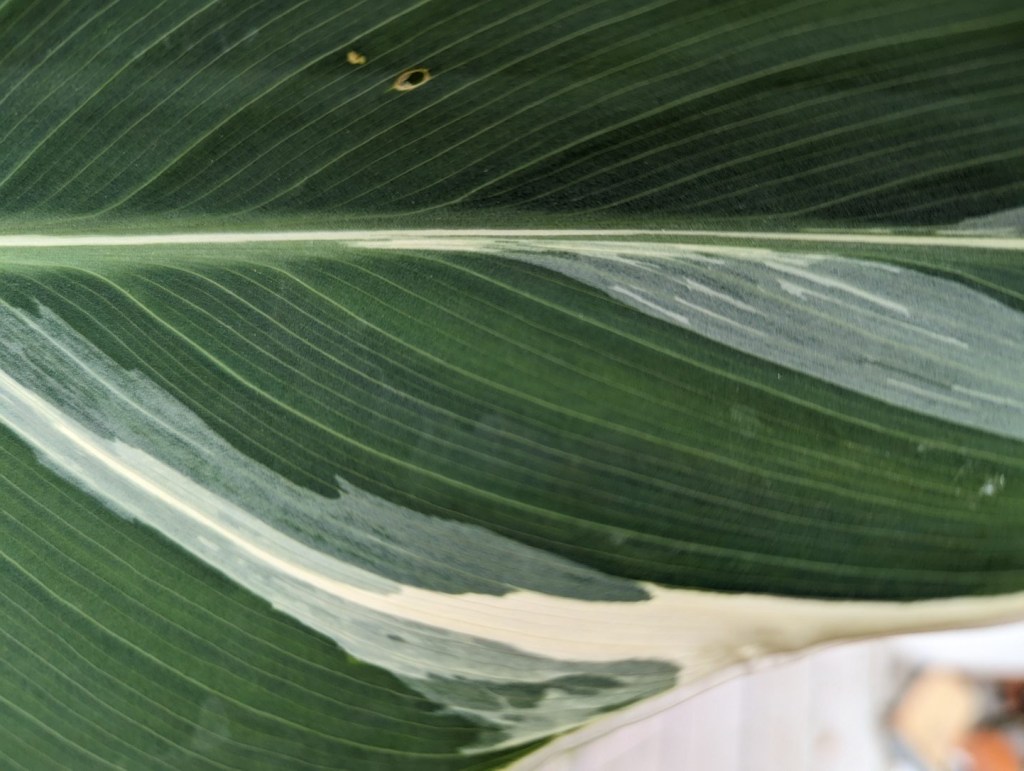
3. Canna ‘Stuttgart’, like the Cymbidium and the other two Canna, lacks a species name. Like 1, 2 and 4, it provides colorful foliage. Like 4 and 5, it is a Canna. It has a lot to like. Most importantly, it came from Tangly Cottage Gardening, and is approved by Skooter!!

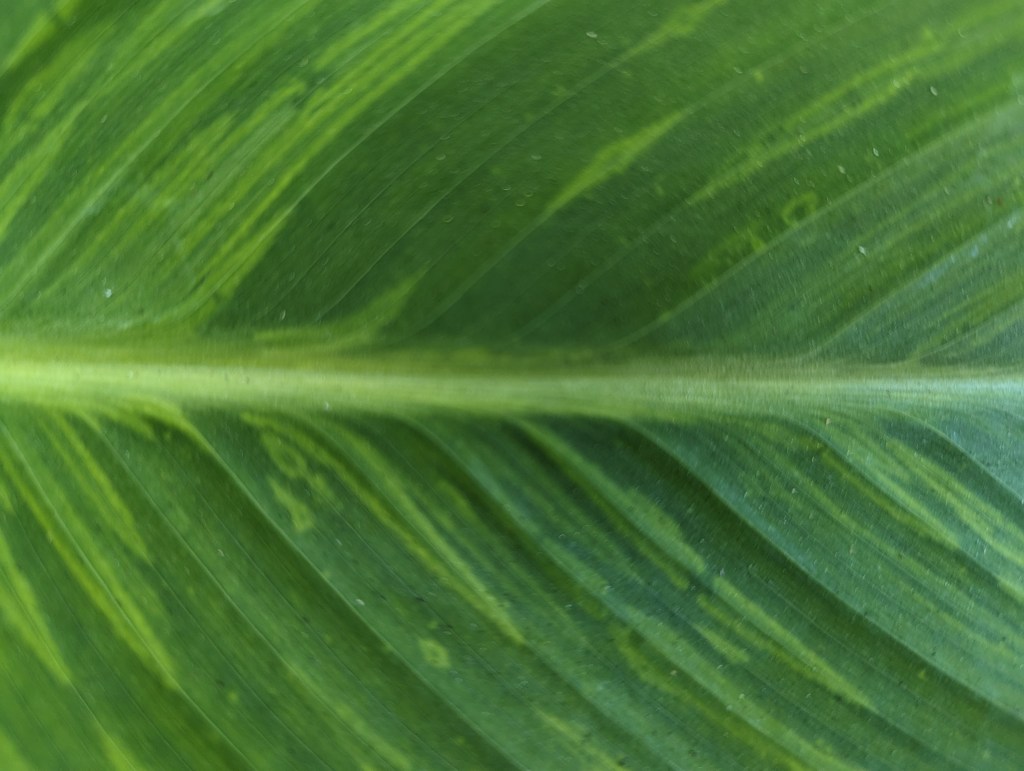
4. Canna ‘Australia’ might be described like ‘Stuttgart’ Canna above, but is not approved by Skooter. Its colorful foliage is darkly bronzed, but this specimen is striped with green.

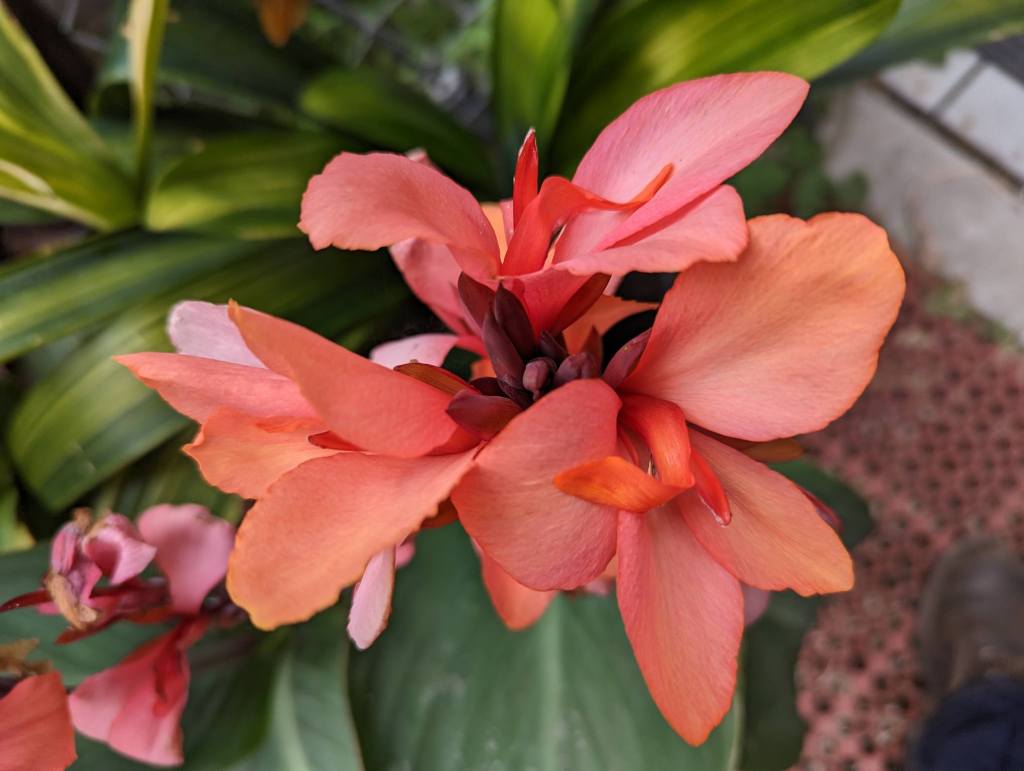
5. Canna ‘Cannova Mango’, like 3 and 4, is a Canna, but that is about its only similarity. I do not like it much because it is a modern cultivar, and it blooms with this weird color.

6. Cymbidium orchid, like 3, 4 and 5, lacks a species name. I like it because I have grown it since the early 1990s. Bloom began in March, but is only now beginning to deteriorate.

This is the link for Six on Saturday, for anyone else who would like to participate: https://thepropagatorblog.wordpress.com/2017/09/18/six-on-saturday-a-participant-guide/