Six on Saturday: Aspen

Aspen are not native here like they are around Aspen in Colorado. Common cottonwood is. While bare, it almost resembles aspen, and really seems to be a species from a climate with colder winters. Actually, all of my Six this week seem to be from colder climates. All but #1 and #2 are native however.

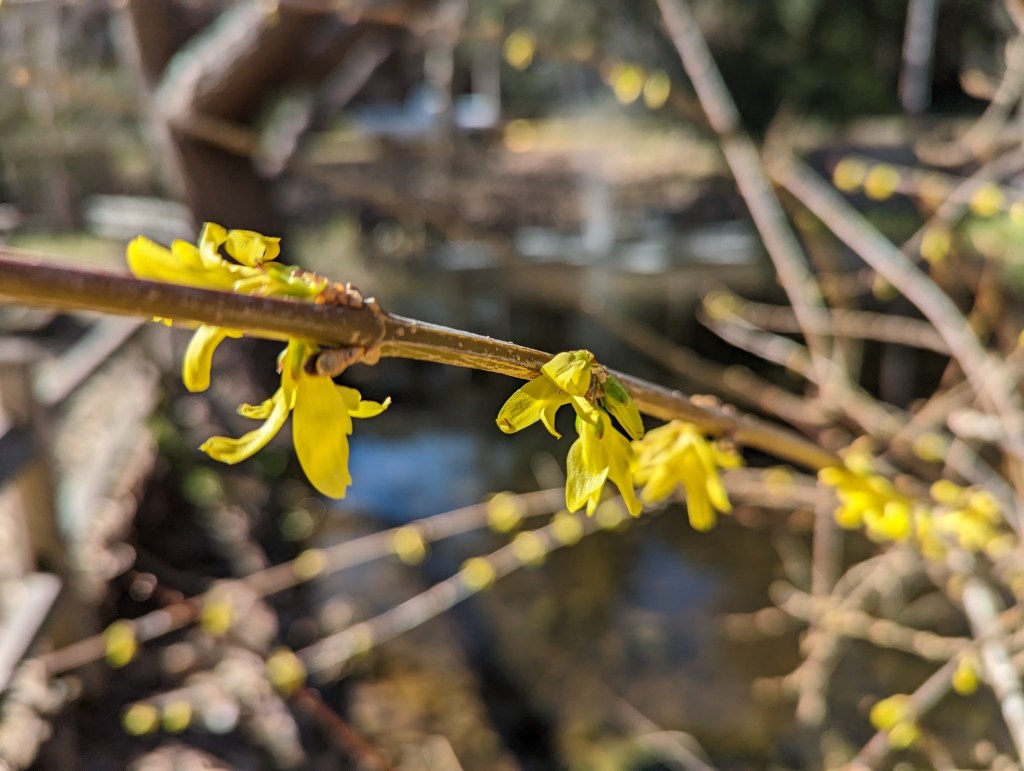
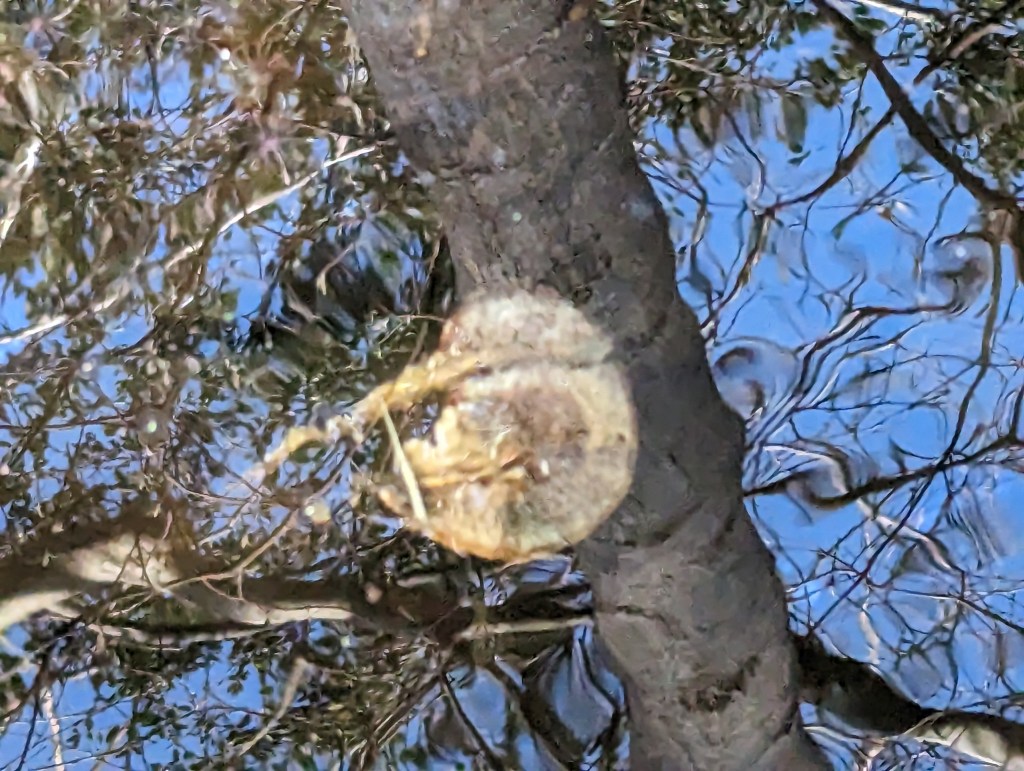
1. Forsythia X intermedia, forsythia looks like it belongs in a colder climate where it can bloom as the snow melts. Only a few inhabit our landscapes, and they are blooming late.

2. Leucojum aestivum, summer snowflake blooms whenever it wants to here. I had been wanting some for here when a few mysteriously appeared near a ditch of the main road.

3. Corylus californica, beaked hazelnut is native, but also looks like it should bloom like this as the snow melts in a colder climate. The nuts are rare and tiny, but richly flavored.

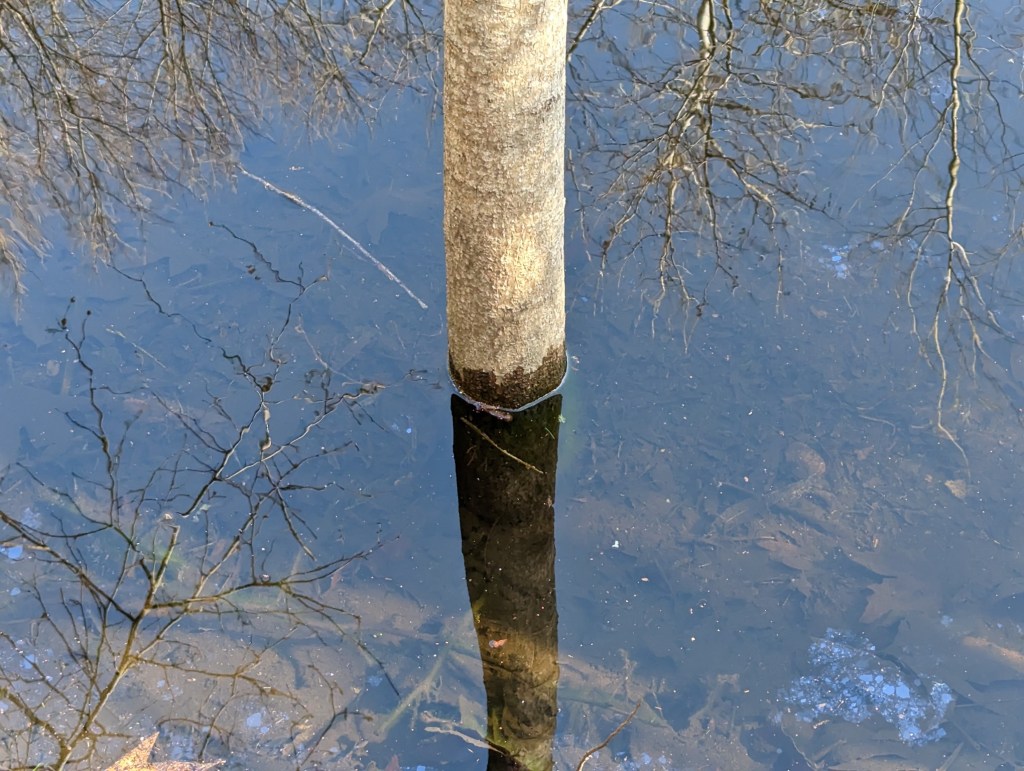
4. Populus deltoides, cottonwood grew as a small colony from roots of a tree that got cut down. This colony got thinned. This stump is under water that reflects a remaining tree.

5. This is that reflected tree, which is the only one of seven remaining trees that is out in the water. Its colony grew before the formerly drained pond filled more than a year ago. Platanus racemosa, California sycamore is reflected to the lower left and the upper right and, I believe, Salix lasiandra, red willow or shining willow is reflected to the upper left.

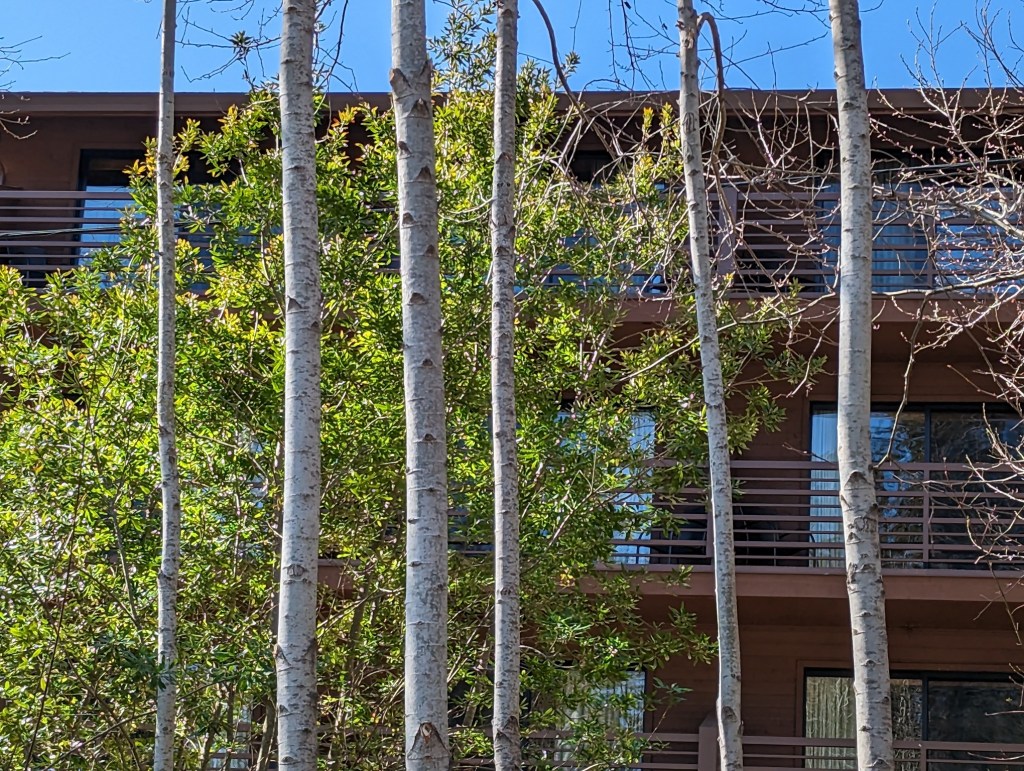
6. These are the other six cottonwood trees. The seventh is beyond the right edge of this picture, where more twigs of California sycamore are visible. Myrica californica, Pacific wax myrtle is in most of the background to the left, with a lodge building farther behind. Such elegantly straight trunks of common cottonwood seem to resemble those of aspen.

This is the link for Six on Saturday, for anyone else who would like to participate: https://thepropagatorblog.wordpress.com/2017/09/18/six-on-saturday-a-participant-guide/
Horridculture – “Help! I’ve fallen and I can’t get up!”

The landscape maintenance industry attracts apathetic idiots. There is no nice way of saying it. Those who have flunked out of everything else and simply do not care can push a mower. I can not imagine how infuriating this must be for gardeners who take their work seriously. It must be more difficult for them to observe than it is for me.

More to the point, the jacaranda tree in the median pictured above fell down and stayed that way long enough for the canopy to try to grow into a normal tree. It likely got run over by a car. No one bothered to try to stand it up and stake it, or more simply remove it, and maybe replace it. It just stayed there, for YEARS. So-called maintenance ‘gardeners’ just mow around it, and weed whack the grass that they can not mow below the horizontal trunk. Arborists might eventually groom the canopy. Apparently, they all find this to be acceptable horticultural procedure.

The Brazilian pepper tree pictured below is almost as weird. It is slightly more tolerable only because it has not been in this position as long. Perhaps SOMEONE or ANYONE will realize how inappropriate its horizontal orientation is for the parking lot that it inhabits, and remove it. It had been falling over slowly, which is why the exposed roots are already weathered. No one bothered to prune it for weight reduction or to improve the clearance on the side that it was falling toward. Otherwise, it might have been able to support itself, even with a bit an irregular but tolerable lean. Now that it is on the ground, some so-called ‘gardener’ pruned it around the parking spaces that it fell between. Seriously! The bumper of the pickup is against a now hedged portion of the canopy of the fallen tree. The branches to the left in the picture were pruned between adjacent parking spaces so that they can actually accommodate parked cars as they were intended to. Seriously, rather than simply cut the tree ‘down’ and remove it, someone devoted that much effort into something as crazily dysfunctional as this. IT WOULD HAVE BEEN MUCH EASIER TO DO THIS PROPERLY!

Six on Saturday: SNOW?!

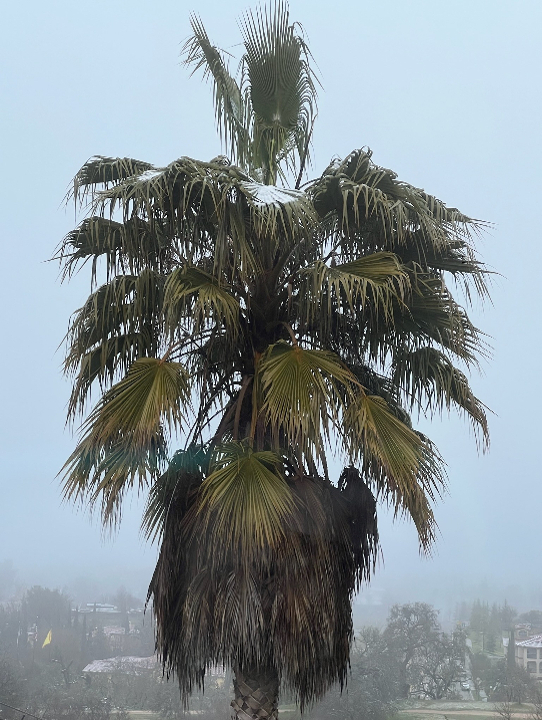
Snow is extremely rare here. It falls every few years in my neighborhood, which is about 1,500 feet above sea level, but this is nearly nine hundred feet lower. For the Santa Clara Valley, just over the Santa Cruz Mountains, it has not snowed since 1976. A forecast that included a possibility of snow was quite a surprise. Actual snow early Thursday morning was more of a surprise. It resumed overnight and into Friday morning with thunder and lightning. Of course, almost all of it melted, so that it was no more than two inches deep. I can understand why those who contend with it regularly during winter dislike it. Yuck! Rhody stayed inside all day.

1. Clivia miniata, Kaffir lily is the most recent and shameless acquisition from Craigslist. Someone in Santa Clara wanted them thinned, so I got a trunkload, totally without guilt.

2. Clivia miniata, Kaffir lily really was justified! More than two dozen split and groomed shoots are a bit more than enough and very appropriate for this shaded and narrow bed.

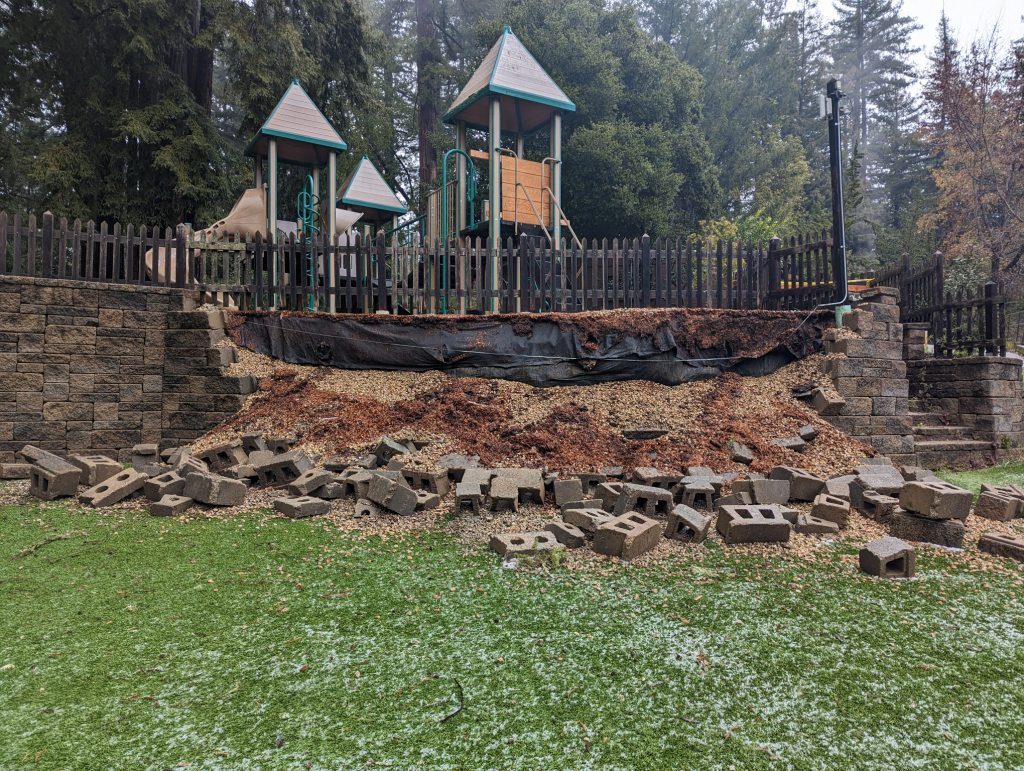
3. Jericho was not the inspiration for this landscape. It merely succumbed to all the rain. The upper few courses of stone got hastily but futilely removed as the wall began to lean.

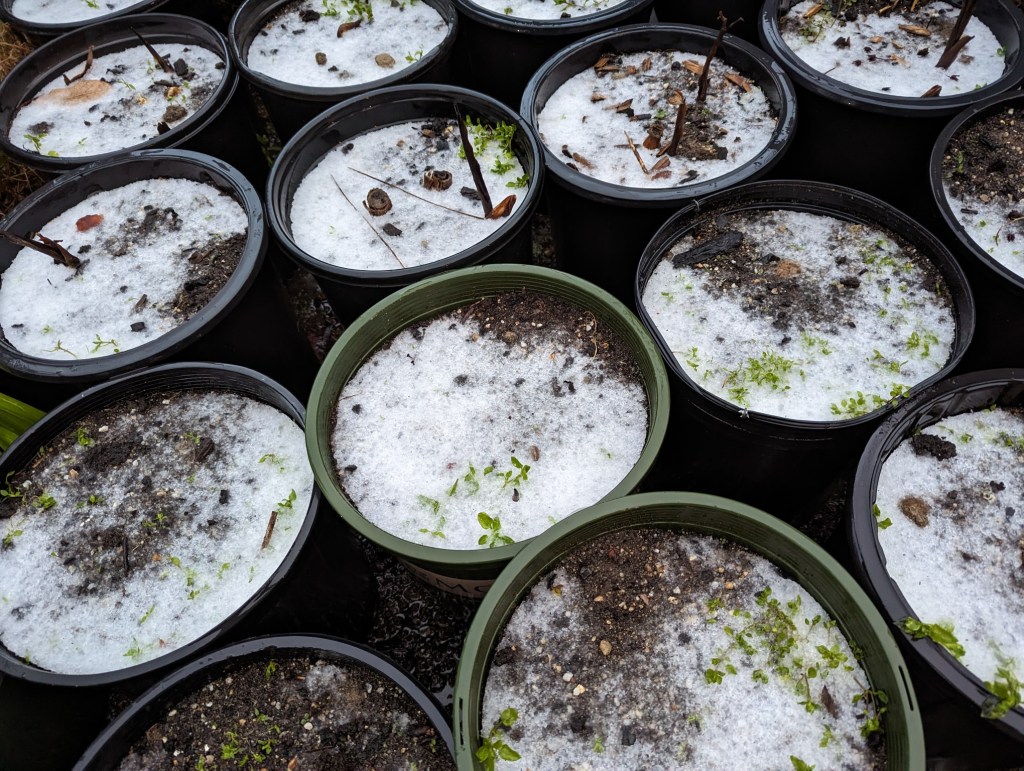
4. Digitalis purpurea, foxglove does not do much now, and is merely incidentally to this strange picture anyway. Snow from Thursday and Friday is the major development here.

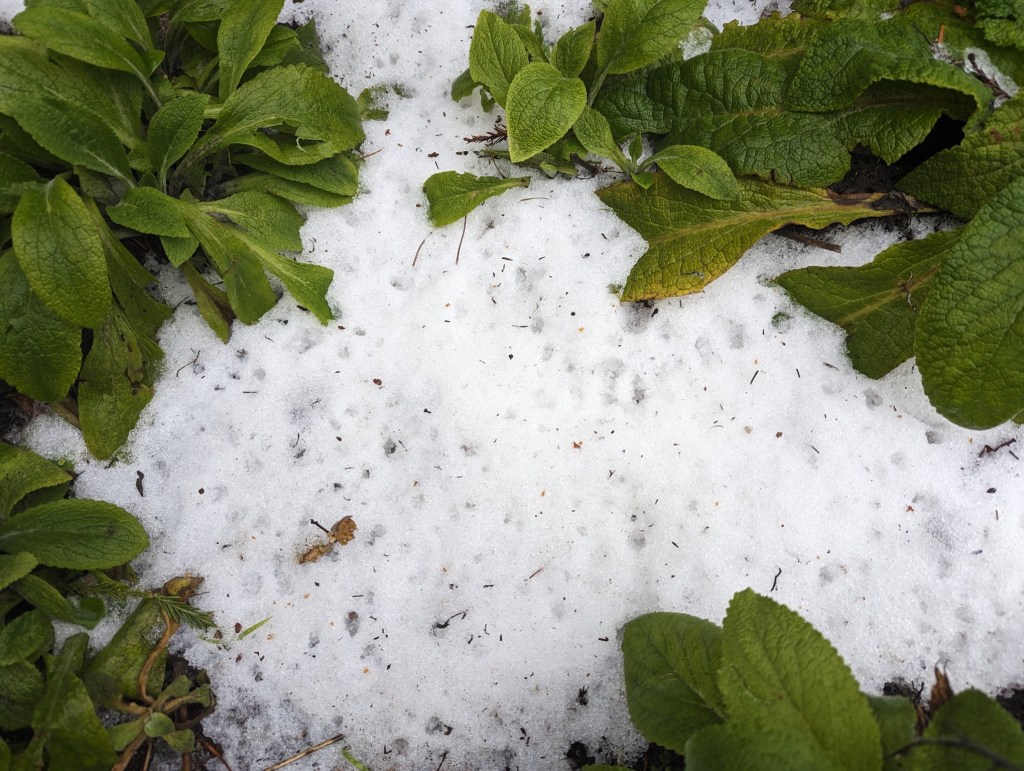
5. Canna is likewise incidental to this picture of what seems to be snow, but may merely be hail, which remained after the snow mostly melted. Canna are still dormant anyway.

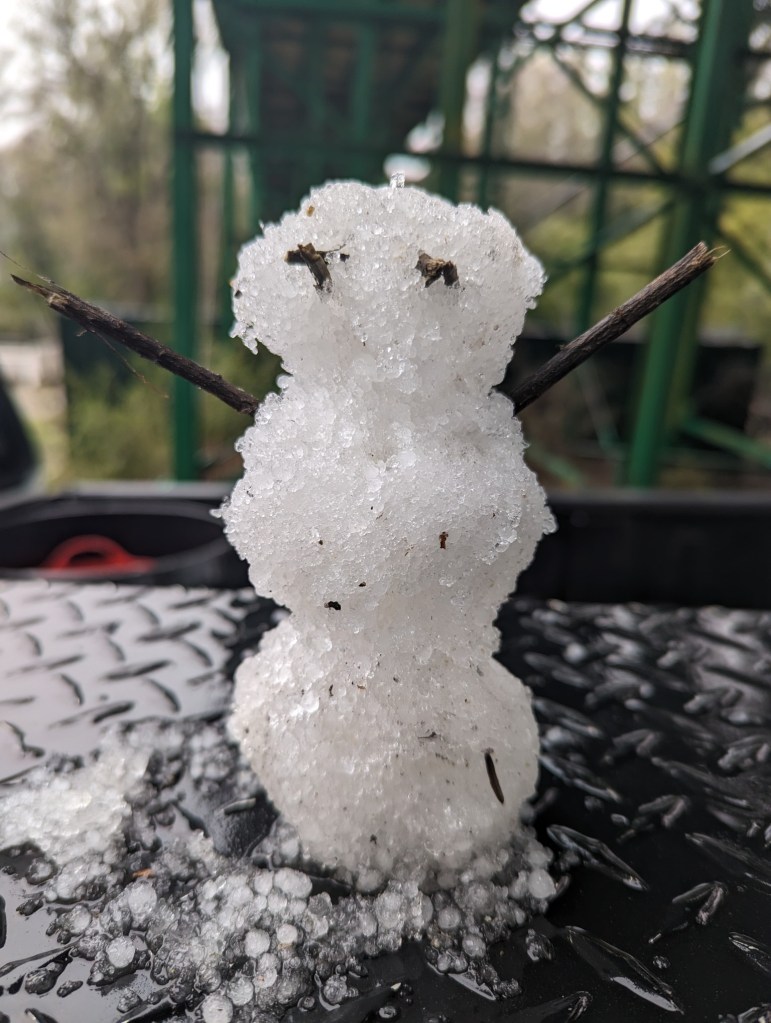
6. Snowman of three handfuls of slush and sticks is here just so that I can brag about the snow here. However, I find that snow is cold, wet and icky. I can see why it is unpopular.

This is the link for Six on Saturday, for anyone else who would like to participate: https://thepropagatorblog.wordpress.com/2017/09/18/six-on-saturday-a-participant-guide/

Horridculture – Reading Palms

Few arborists read palms like they should. Most simply do not care like those I worked for so many years ago. Some of their butchery is deplorable, and some even kill the palms that they are paid to maintain.

Fortunately, the first example here might be explainable.

It is not uncommon for palms to wear beards of old fronds. Some beards extend all the way to the ground from the viable tops of the associated canopies.

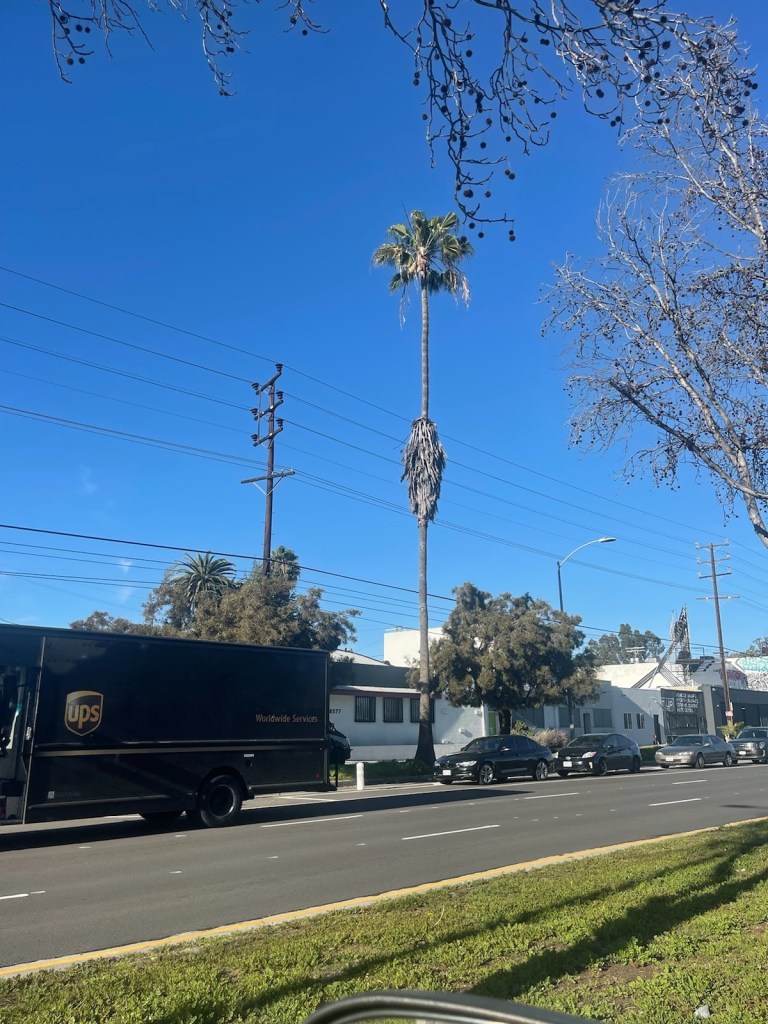
This beard is very different. The canopy is neatly trimmed, without a bead directly below. However, a portion of beard remains on the middle of the trunk. Why would an arborist leave such an impassable obstacle between the ground and the canopy that will likely need grooming again?

I suspect that the tree had been neatly groomed until it got dangerously close to the high voltage cables. Arborists who are not certified for ‘line clearance’ are not allowed to work so close to cables, so were unable to groom the trunk any higher.

However, with boom lifts to avoid climbing, arborists who are certified for such clearance pruning removed the portion of the beard above so that dead fronds do not fall onto the high voltage cables. Such arborists who perform minimal utility clearance pruning are not allowed to do any more than necessary, so can not remove the portion of the beard that is not a threat to the cables, although it is out of reach for other arborists. Therefore, as silly as this looks, this may not be as egregious as it seems to be.

The second example can not be explained so easily. These three Mexican fan palms are very dead. They have been dead for so long that they are now decaying too severely for arborists to climb them safely for removal. Their death was certainly not natural. They were decapitated. Someone climbed to the tops of each of these three palms and cut their single terminal buds off, but left the trunks to die.

Did someone think that they would regenerate new terminal buds or branches like yuccas? If so, why were the trunks left so high? This really defies explanation.

These dead trunks can not be left here. They are so tall that if one falls, it could damage the apartment building across the street, and anything else that happens to be in between. They could kill someone! There are three of them! They are unsafe to climb, so must be removed by crane, which is very expensive.

Six on Saturday: Narcissism

That is such an objectionable word. Perhaps that is why so many of us prefer to describe narcissus as daffodils or paperwhites. Both bloom at work, and as much as I prefer white bloom, I do not maintain favorites in this regard. I enjoy paperwhites for their whiteness as well as their fragrance. However, I enjoy classic yellow daffodils, such as ‘King Alfred’, because they are so traditional. All are blooming late this year. So is winter daphne. The weather has been cooler than it typically is, but only for the past month or so. It seems to me that if chill were to enhance bloom, it would have needed to begin somewhat earlier. Also, it seems to me that narcissus do as they please.

1. Frost is generally minor and uncommon here. However, a wet jersey that was hung to drain overnight froze solid enough to lean against this pickup. Its hanger is not hanging.

2. Cupressus macrocarpa, Monterey cypress is nothing special, but I happen to be fond of its foliage and bark. This is a hedge that never got hedged, but grew as crowded trees.

3. Daphne odora ‘Marginata’, winter daphne is still blooming! It blooms slowly through winter, but should be finished by now. Furthermore, it blooms remarkably well for here.

4. Narcissus grows wild in soil that was dumped on the perimeter of our industrial yard over the years. No one sees them there, so I collect some to bring into our meeting room.

5. Narcissus are much more abundant within the landscapes where they belong. Several sporadic colonies are sparsely naturalized. However, several new bulbs bloom only once.

6. Narcissus are even prettier close up. I consider these to be daffodil, although I do not know what the distinction is. They are blooming late, and more are beginning to bloom.

This is the link for Six on Saturday, for anyone else who would like to participate: https://thepropagatorblog.wordpress.com/2017/09/18/six-on-saturday-a-participant-guide/

Six on Saturday: Brief Winter

Winter is the busiest season here. There is no more to do during winter here than here is anywhere else, but there is a bit less time in which to do it all. Dormant pruning must be done prior to the last frost, and the first bloom. Planting should be done prior to the last rain, especially for small plants and seedlings such as most of these. Even after the most torrential weather since 1982, winter weather here can not maintain dormancy for long. Even if it would do so for more species, canna may not cooperate. I suspect that some of its ancestral species were familiar with frost without winters in the tropical Andes. They survive frost, but are too eager to grow immediately afterward.

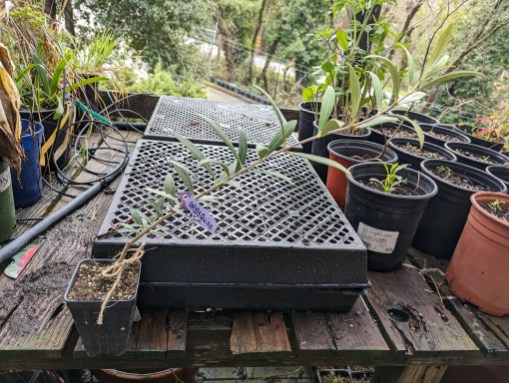
1. Lupinus arboreus, bush lupine is a gift from a local nursery that grows native species. They were getting too mature to be marketable. We got a dozen. They grow wild nearby.

2. Lantana camara, lantana is coppiced annually after getting a bit frosted, but prior to regeneration. This unexpected seedling was also coppiced, but relocated in this process.

3. Canna indica, canna does not seem to know what winter is. It survives frost, but tries to regenerate immediately after experiencing it, instead of waiting for the end of winter.

4. Scilla peruviana, squill seems like it should be just as familiar with winterless frost in Peru, near the Equator, but is actually a Mediterranean species. Three are blooming late.

5. Amaryllis belladonna, naked lady generates too many seed. I again made the mistake of collecting some two seasons ago. What now? These actually get put out while foliated.

6. Cedrus deodara, deodar cedar is as prolific, but without my intervention. I pulled and plugged several a few years ago, but most of them were killed by weed whackers anyway.

This is the link for Six on Saturday, for anyone else who would like to participate: https://thepropagatorblog.wordpress.com/2017/09/18/six-on-saturday-a-participant-guide/
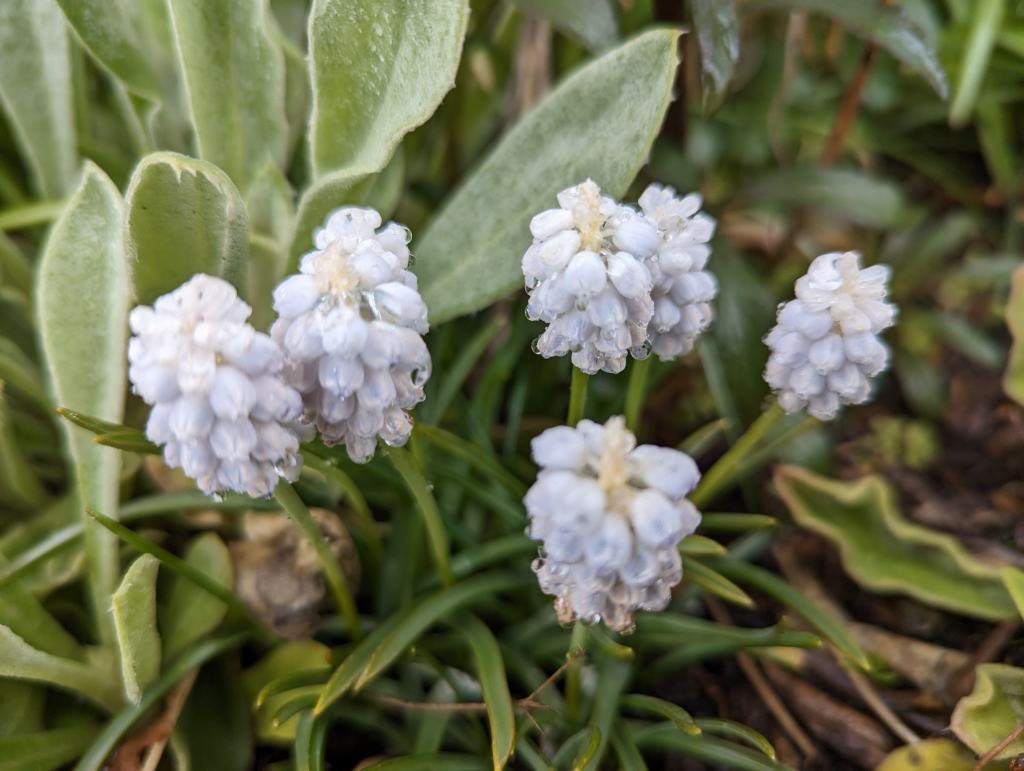
Six on Saturday: After The Storm

Rain is expected for today and Sunday. It rained a bit yesterday morning. This is normal for winter here. It will not prevent us from resuming seasonal work that was interrupted by the not so normal and epically torrential rain and associated flooding earlier. A bit of the mess associated with that earlier extreme weather remains, but is not so much of an encumbrance. Spring flowers such as daffodil have been blooming for a while. Flowering cherry buds are plumpening. One flowering cherry and the only flowering apricot are in full bloom. Meanwhile, other crews work to keep the power on.

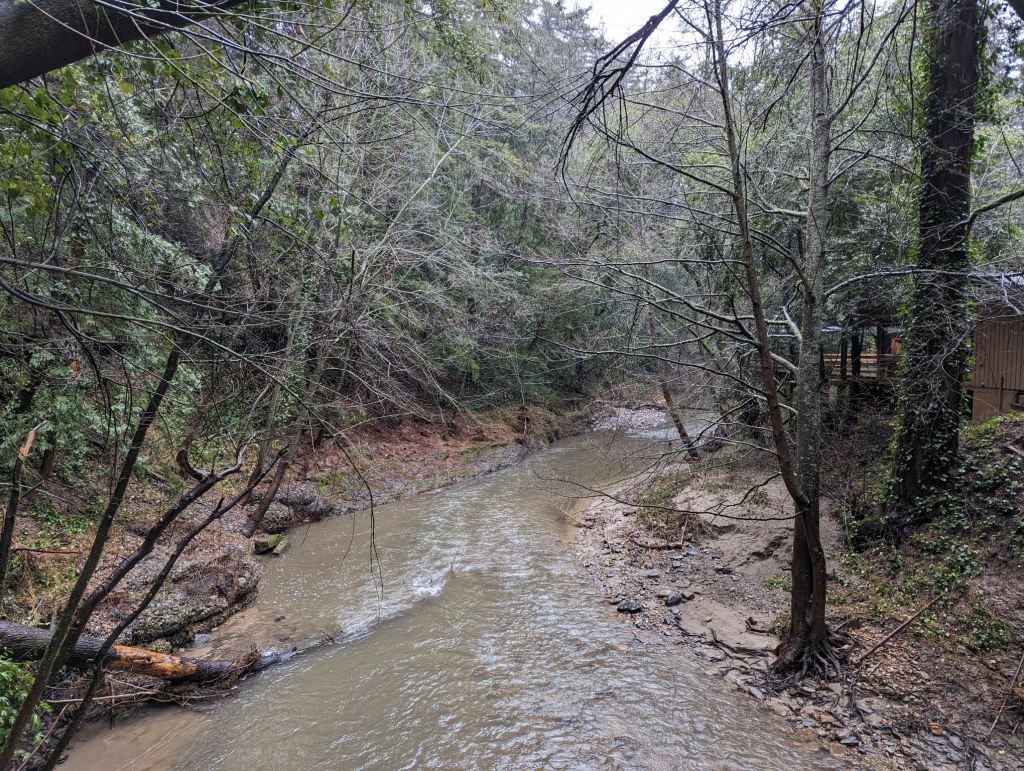
1. Debris of all sorts remains on the banks of Zayante Creek downstairs. This might be a futon. I hope that it came from an exterior patio, and not from within a home upstream.

2. Zayante Creek is right where it should be now. It was slightly above the arch just prior to midnight of New Year’s Eve. The crew’s galley is inside the windows to the upper left.

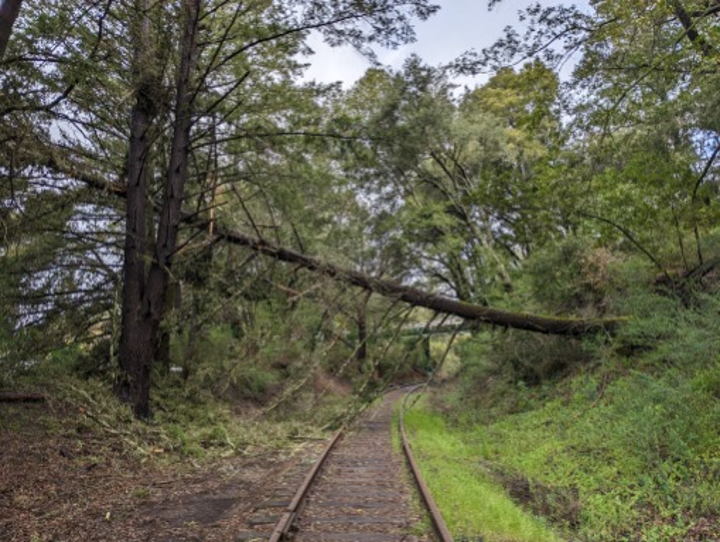
3. After all that torrential rain, another crew came to prune trees for clearance from new utility cables. The work was not bad, but they could not remove this log from the cables.

4. After the crew finished pruning a particularly large coast live oak that survived all that torrential rain, the big oak fell. Yes, it fell AFTER the storms, and AFTER it was pruned.

5. As if that were not bad enough, it left this big limb hung precariously on the new cable that they installed immediately prior to the rain! It is heavy and hooked by a small stub.

6. Landon’s Tree blooms as if none of this drama ever happened. It is a flowering apricot that grew from the understock of a purple leaf plum that was cut down several years ago.

This is the link for Six on Saturday, for anyone else who would like to participate: https://thepropagatorblog.wordpress.com/2017/09/18/six-on-saturday-a-participant-guide/

Six on Saturday: Bloom!

Bloom has been conspicuously absent from my Six on Saturday posts for the past several weeks. Severe weather had prevented me from performing my horticultural obligations, and then prevented me from processing pictures after resuming my obligations. As I was able to post last week, I merely posted six pictures of why I neglected to share pictures of horticultural relevance for previous weeks. Finally, I can share a few pictures of some of the bloom that I have neglected. I am impressed that some of it survived so much severe weather. Incidentally, the weather has been totally awesome since the storms stopped as suddenly as they started. Zayante Creek flows as it typically does for this time of year, as if nothing happened. The water seems to be unusually clear.

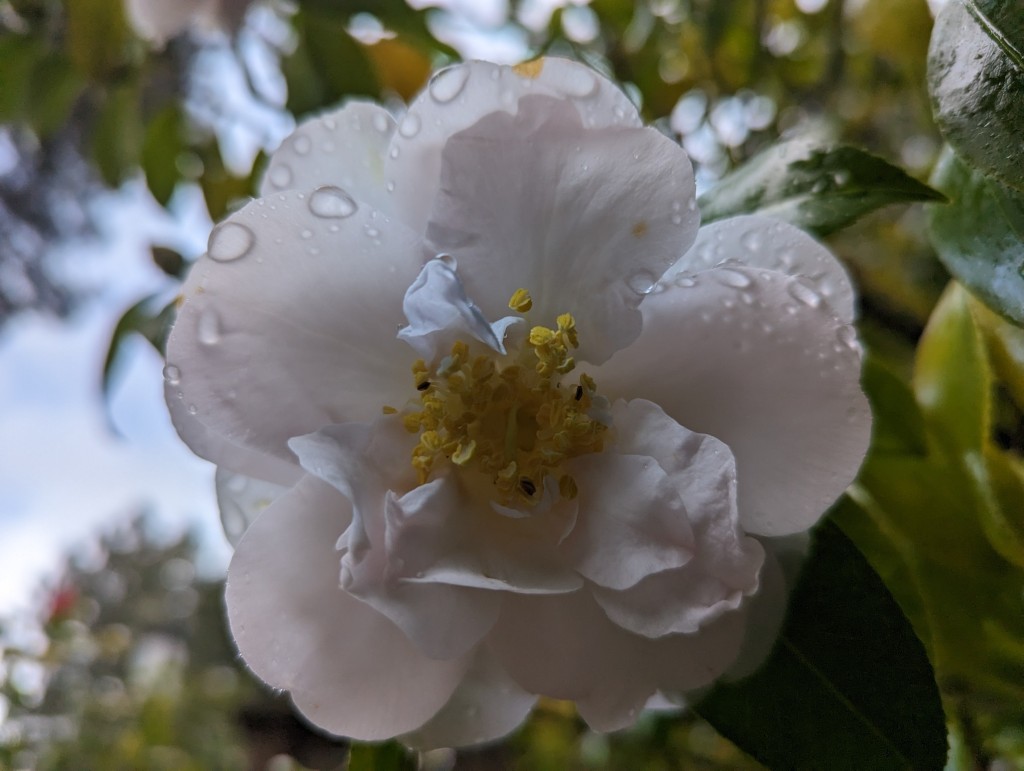
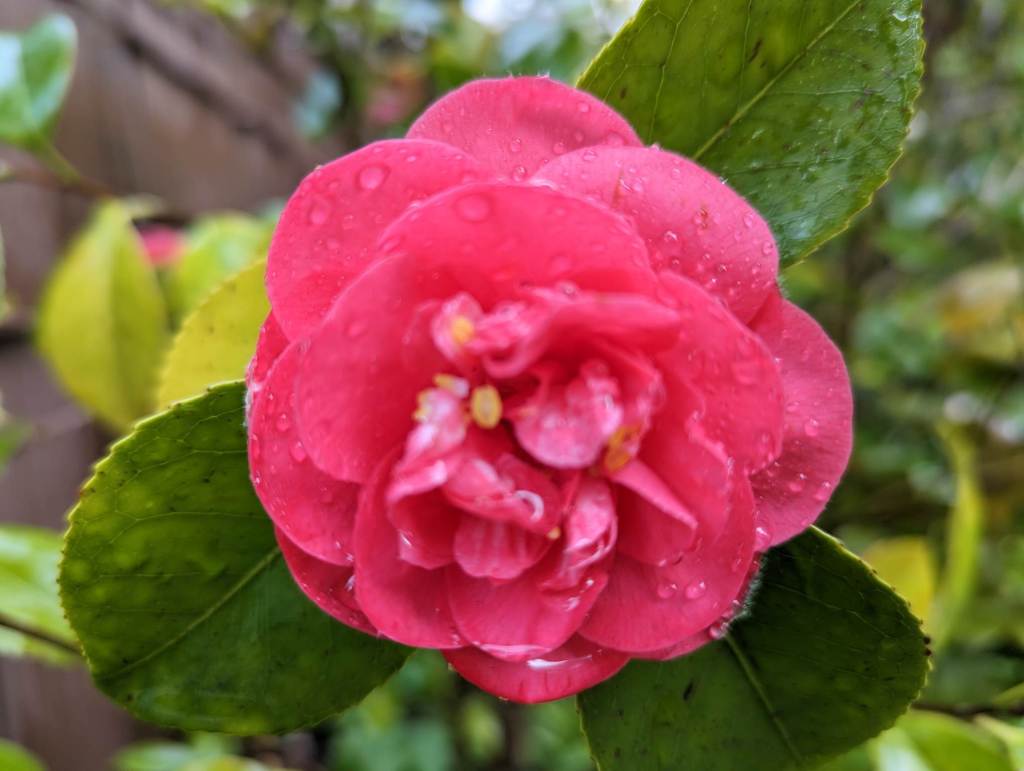
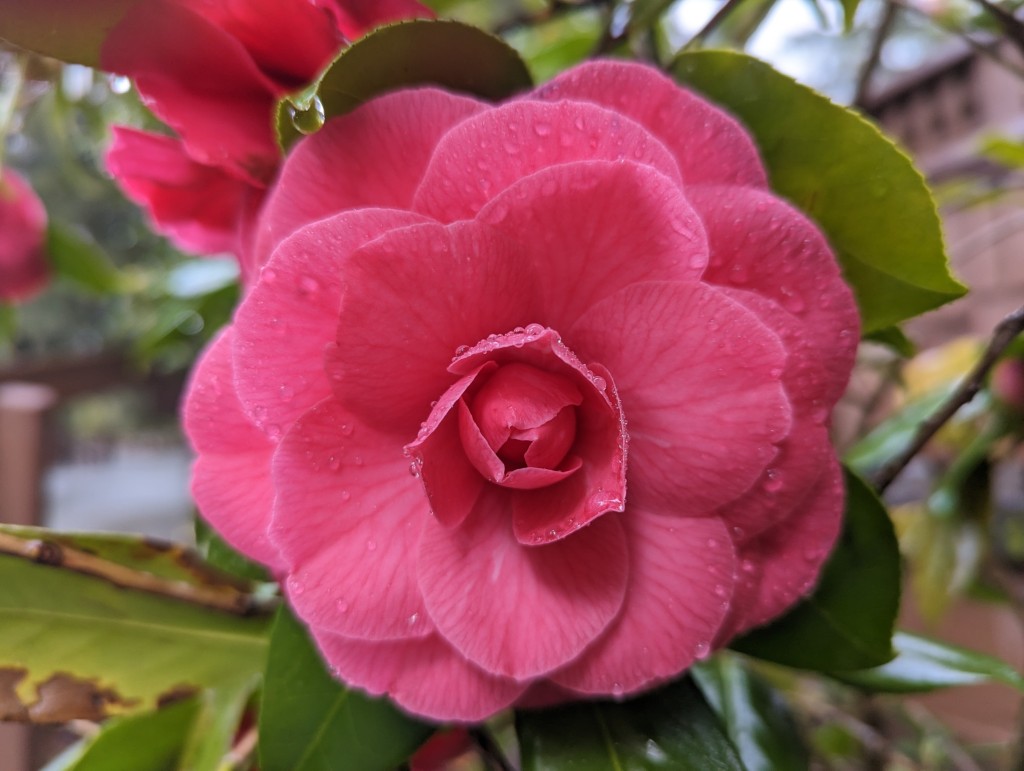
1. Camellia japonica cultivars are sufficiently numerous here for a month or so of Six on Saturday. Some bloom profusely but briefly. Some bloom sporadically for a long season.

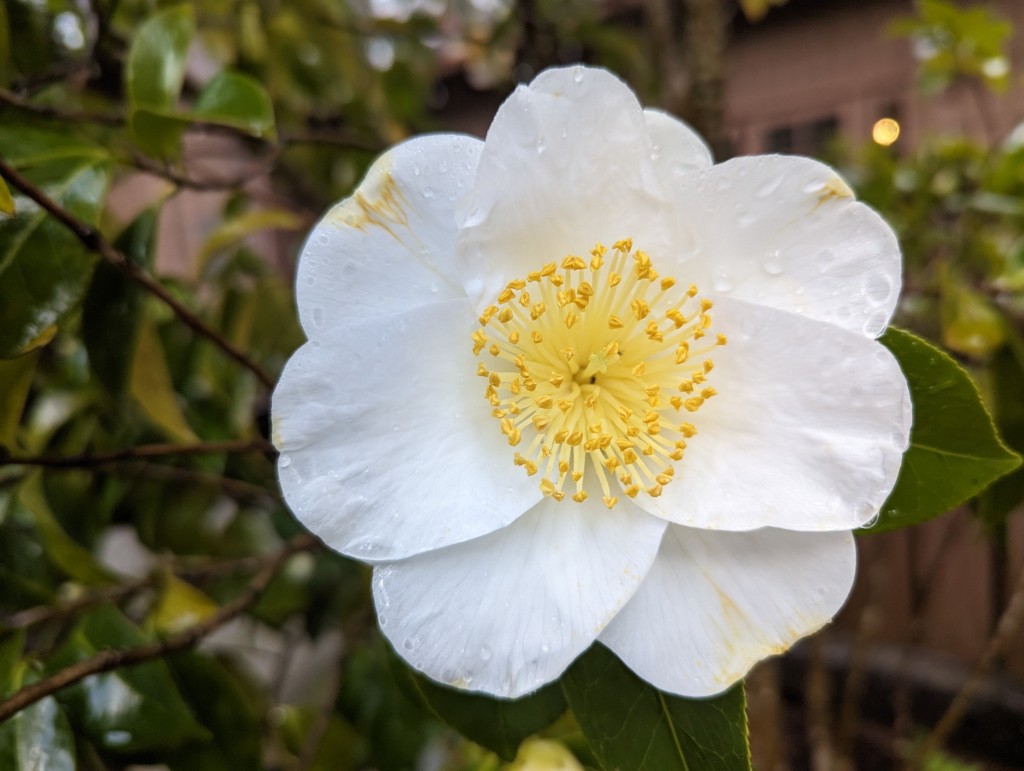
2. Camellia sasanqua cultivars are less numerous, but might be sufficient for two weeks of exclusive Six on Saturday presence. This one is ‘Christmas Cheer’ blooming a bit late.

3. Narcissus is too botanically complicated for species designation. This is possibly ‘King Alfred’. Experts might be able to identify its species or hybrid. I know it only as daffodil.

4. Iris X germanica is also botanically complicated. This unidentified cultivar wastes no time recovering from seemingly early division last September. I am very pleased with it!

5. Scilla peruviana, squill was still canned when we noticed it blooming! We neglected it while busy with the weather. The best is now planted. The rest awaits gopher mitigation.

6. Rhody is very pleased that his crew has been able to resume their normal duties, such as providing treats and petting, without all the stress associated with the severe weather.

This is the link for Six on Saturday, for anyone else who would like to participate: https://thepropagatorblog.wordpress.com/2017/09/18/six-on-saturday-a-participant-guide/

Horridculture – Bend The Truth

This bender board does nothing that the curb should not do.

The truth of this bender board is that it is not necessary. Seriously, what it is supposed to accomplish there that the curb should not already be doing? That stake wedged between the curb and the bender board to the upper left makes it seem even sillier than it already is. I realize that bender board is designed to bend, but this just draws attention to bad design. Perhaps this is one of those rare situations in which the stake should be on the inside, with the bender board screwed onto it, like might have been the intention for the unattached stake to the lower right. Heck, the curb does almost all of the work of holding the bender board in place anyway.

The dyed chipped wood to the upper right of the bender board seems to rely on the bender board for containment. That would be a realistic application for bender board in a situation that lacks a curb. For this situation, the curb should be adequate. If the soil below the chips is too high, it should have been excavated to a lower level prior to the installation of the chips. As one can see in this picture, such excavation would have been minimal.

Bender board certainly has practical application, such as separating chips like these from turf grass or ground cover. It might contain or provide a neat edge for vigorous ground cover. However, it does nothing that a curb does not already do. In some landscapes it merely adds another component to an innate tripping hazard. It gets dislodged or damaged if vehicles drive over it, or if enough people trip over it.

Unfortunately, for so-called ‘landscape professionals’ it is too easy to install; and such installation is too lucrative. Simplicity is much less lucrative.

Junk In The Trunk

It is exactly what it looks like; more Canna rhizomes. I am very aware that there are already too many Canna here. I grew them. I do not care. I saw these in a neighbor’s garden, and asked for a few copies. She told me that I only needed to dig them myself, as if that might be a problem. As she pointed out those that were migrating a bit too close to her home, I dug many more than I should have. Since she was so generous to share so many, I felt obligated to remove all that were superfluous. Besides, to me, they are not junk. I am very pleased with them, even if they are a bit excessive.

There are two cultivars, and perhaps seed grown rhizomes of one of the two cultivars. The shorter sort are ‘Inferno’, which is the same as ‘Tropicanna’ and ‘Durban’. Some Canna cultivars seem to develop several synonyms. Its bright orange bloom stands tall above distinctively striped and bronzed foliage. It gets about six feet tall, so is only the shorter of the two cultivars because the other is so much taller. Although it is one of the more popular cultivars, I only recently acquired a single can of it from Brent last year. I am pleased to grow much more.

The other cultivar seems to be comparable to the unidentified cultivar at work that resembles and might actually be Canna musifolia. It has similar scrawny orange bloom on top of very tall canes that I must bend over for deadheading. Because I did not notice them until after frost, I do not know how bronzed the foliage is, or if it is bronzed at all. The neighbor who gave them to me says that they are ‘lightly’ bronzed. The newly emerging buds seem to be green without any bronze. I will be pleased with any color, but simple green would be awesome! Some of these may have grown from seed, so may be slightly different from the original.

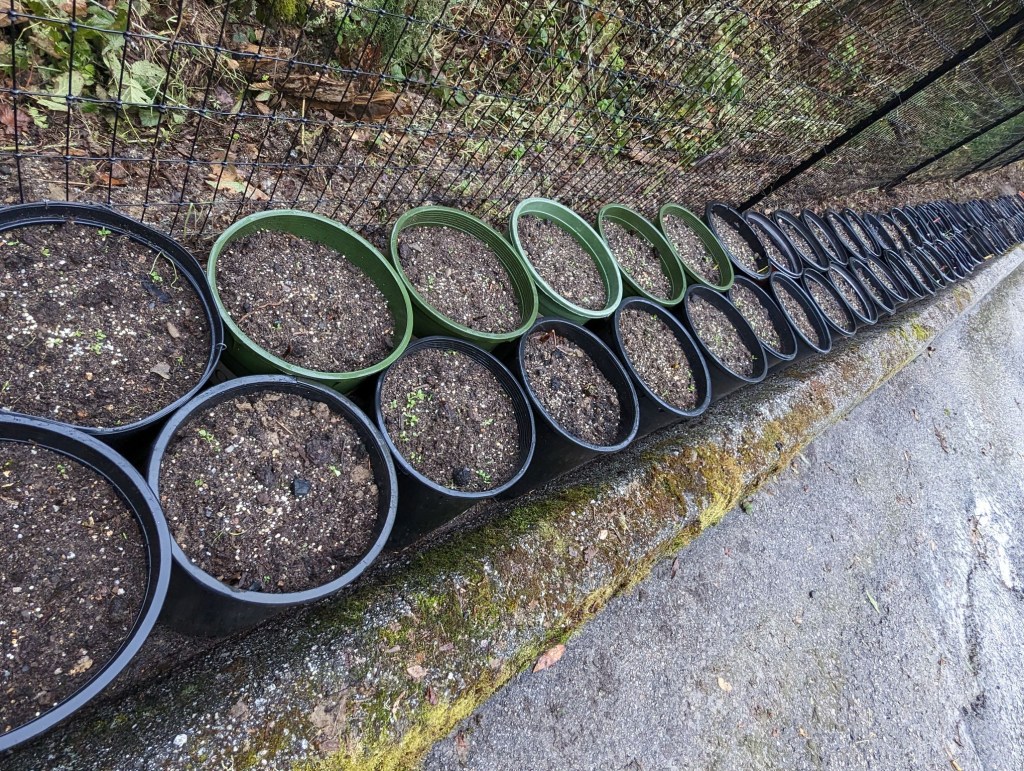
There were enough rhizomes of ‘Inferno’ for a dozen #5 cans with about four rhizomes each. There were enough rhizomes of the taller sort that might be Canna musifolia for sixteen #5 cans with about three very plump rhizomes each. That was after sharing some with others at work, and leaving some for a neighbor of the neighbor who shared them with me. I intend to take some to the Pacific Northwest before the end of winter, but canned them all because I do not yet know when I will leave. I can always remove some from their cans, or just take them in their cans.

Since they fit into the trunk more easily than a previous batch of ‘Wyoming’ and a cultivar that resembles Canna flaccida that I obtained from another neighbor, they seemed to be less numerous. However, the previous batch included foliage. These rhizomes lacked foliage, and were actually a bit more numerous. Regardless, I am very pleased with them, and intend to enjoy growing them. As I closed the tailgate after unloading them, I could see that Rhody did not share my enthusiasm.