Horridculture – Clinging Vines

P91113Ivy often climbs into trees, buildings and all sorts of other situations where it becomes problematic. It might have been planted intentionally. It might have grown from seed left by birds. When it gets into trouble, we can easily blame it on the ivy. Even that which was planted was intended to be mere ground cover. It only climbs out of control because that is what ivy does.

BAD IVY!!!

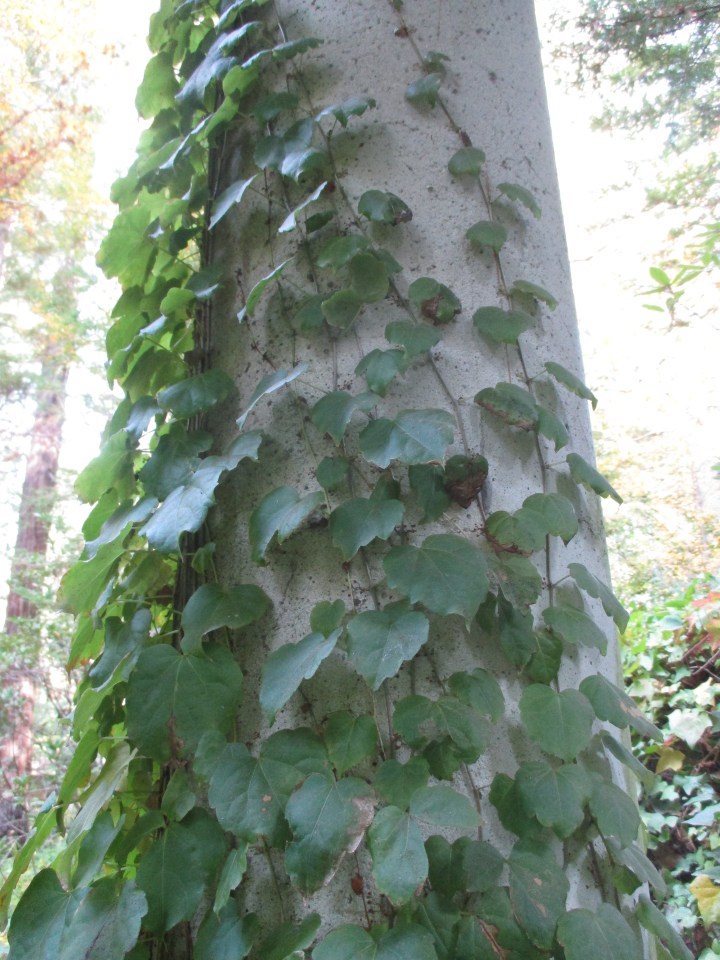
This Boston ivy that . . . ‘someone’ planted almost a year ago was actually expected to climb. That is what Boston ivy does. Even if it would be willing to grow as a ground cover, it would not work well as such because it is deciduous. As a climber, it covers freeway sound walls and any associated graffiti with vibrant green foliage that turns fiery orange and red this time of year.

The problem with it is that there are not many practical applications for it. Yes, it does well on freeway sound walls. It also does well on concrete parking structures, where it can not reach painted or wooden surfaces. There are a few unpainted reinforced concrete building out there that it would work nicely on, as long as it gets trimmed around windows, doorways and roofs.

It has no business on painted wooden surfaces, or even stucco. It clings with these weird ‘suction discs’ that never let go! (They do not really use suction, but an adhesive instead.) You can see a few to the right in this picture below. When vines get pruned back every few years, the suction discs remain attached. Although not a problem for concrete, they promote rot in wood.P91113+

What concerns me with the Boston ivy in these pictures is that it grew to the top of the pillars that they were planted on in less than a year. Even if they get pruned down this winter, they will grow farther next year, and will reach the wooden bridge above. It will be a lot of work to keep them pruned back from the bridge.

As you can see I the picture below, Boston ivy is quite pretty on the concrete. Fall color is delayed this year. P91113++
Slow Color

P91110Autumn is not much to brag about here. It supposedly got just cool enough at night for the minimal requirement of frost, at 32 degrees, but no one noticed. It has been getting to the low 80s during the day. There has been no rain yet, and none is in the forecast. As bland as such weather seems, it is not at all out of the ordinary. Autumn often arrives later than it does elsewhere.
Consequently, autumn foliar color is not much to brag about either. There are only a few trees that reliably develop good color, such as sweetgum, pistache, flowering pear, crape myrtle and maidenhair tree (ginkgo). As reliable as it is, maidenhair tree provides only bright yellow, without the oranges and reds that the others exhibit. None are exhibiting significant color just yet.

There are several other trees that have potential to develop good color, but are not as reliable about doing so. Birch can get almost as brilliant yellow as maidenhair tree does, but does not do it every year. Red oak may turn brilliant orange with a bit of brownish red mixed in, but only every few years or so. On rare occasion, even London plane (sycamore) shows off burnt orange.

Every species has a distinct personality. They each respond differently to different variables. Weather conditions that stimulate good color among flowering cherries may not stimulate good color for bigleaf maples. Dogwoods that colored so well at about the same time last year as the tulip trees, are already nearly bare after minimal color, while the tulip trees are mostly green.

Every few years, if mildly but suddenly chilled, these cottonwood develop a brighter yellow, with less blotching. With slower and drier chill this year, they are deteriorating and falling without much yellow at all.P91110+

Buckeye

P91109KCalifornia flora is remarkable. It all does what it must to live comfortably in every ecosystem, climate and geographical region here.
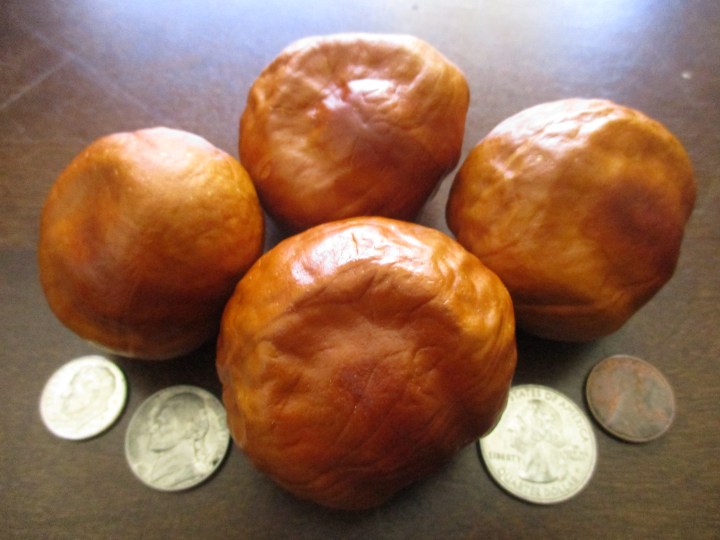
California horsechestnut or California buckeye, Aesculus californica, is one of the more unusual native species. It is so in tune with the climate that it makes other deciduous trees seem to be inexperienced. Of course, to those who are unfamiliar with it, it just looks dead right now.

In chaparral climates of California, some deciduous trees start to defoliate early, before the weather starts to get cool in autumn. California sycamores, for example, can start to defoliate late in summer if the weather gets too warm and dry for them to want to hold their foliage any later. Such defoliation is more the result of minimal humidity than the result of chill.

California horsechestnut takes this technique one step further, by shedding spring foliage even earlier in summer, then refoliating once the rain starts in autumn, and then defoliating again as the late autumn foliage succumbs to frost through winter. It is ‘twice-deciduous’. It is a weird process that should not work, but obviously does.

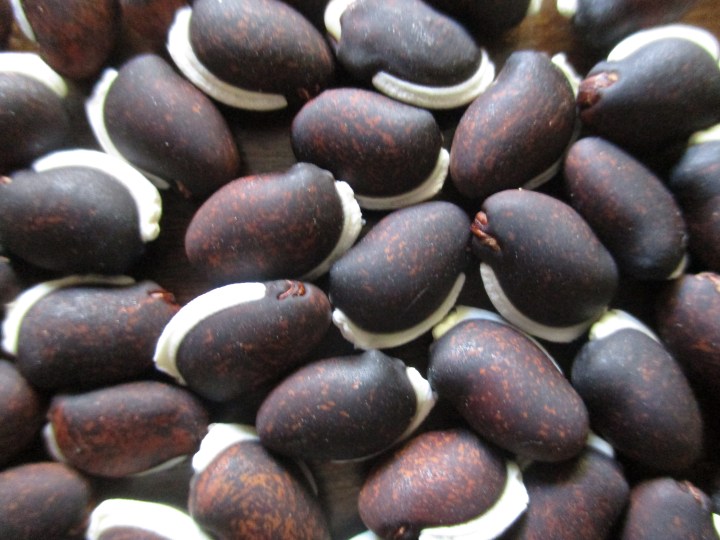
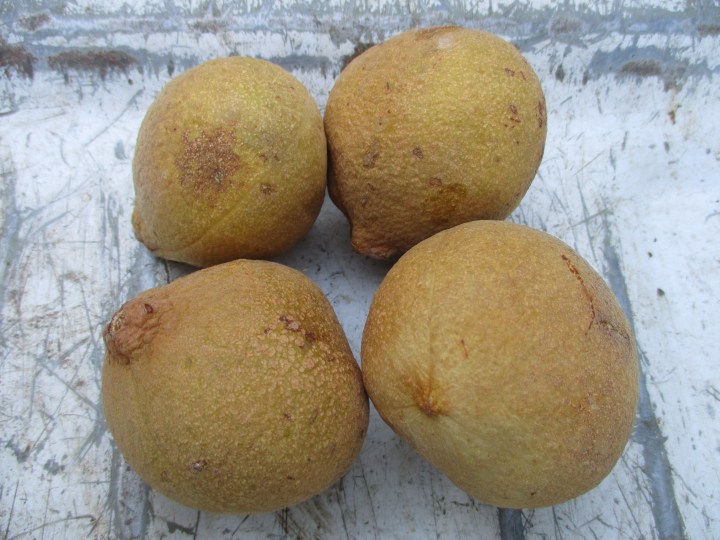
It seems like a tree that is defoliated most of the time would exhaust its resources and wear itself out. However, California horsechestnut somehow stores enough resources to produce weirdly big seeds. These in the picture above are the same that were featured in ‘Six on Saturday‘ last week, while they were still in their husks.

Squirrels might chew on a few of these seeds, but do not bother storing them. They are mostly ignored by wildlife, perhaps because of their objectionable flavor. So, without squirrels to bury them, they fall to the forest floor near the trees that produce them, where they are too bulky to sift through the detritus to reach the soil below.

It makes one wonder why they put so much of their limited resources into seeds that are too big to reach the soil, but unappealing to wildlife that might otherwise disperse and bury them.

They know what they are doing.

Once the rain starts, and the seed sense that the weather is damp, they germinate on the surface of the detritus on the forest floor, and extend their tap roots through the detritus to the soil below. The seeds are too bulky to reach the soil directly, but contain all that their primary tap roots need to survive without desiccation until they reach the damp soil.


Six on Saturday: Tree Removal


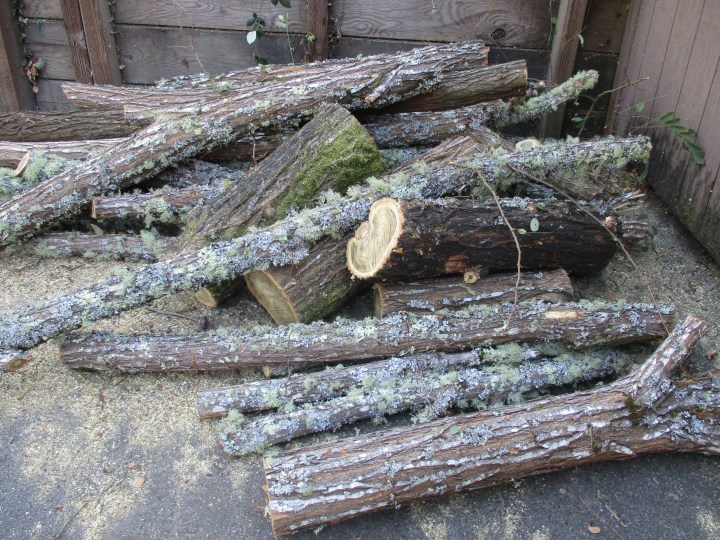
The forest is constantly producing trees faster than we can cut them down. Even if we were not too busy with our many other tasks, we are not equipped to safely remove all of the large trees that become hazardous as they mature. Therefore, a crew who is so equipped is sometimes hired, and was here just this last week to remove several locusts, a few bays and a live oak.

1. The 80s are over. Someone painted this water pipe like this so that a crew cutting trees down nearby would not drop anything on it. The crew would have just put an orange cone over it.P91109

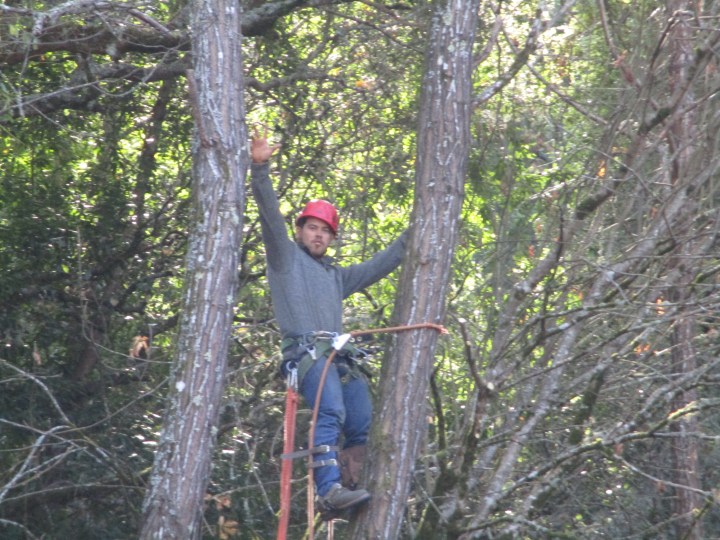
2. I was much younger and healthier back in the summer of 1988, when I did an internship with some of the most excellent arborists in the Santa Clara Valley, but I never climbed like this.P91109+

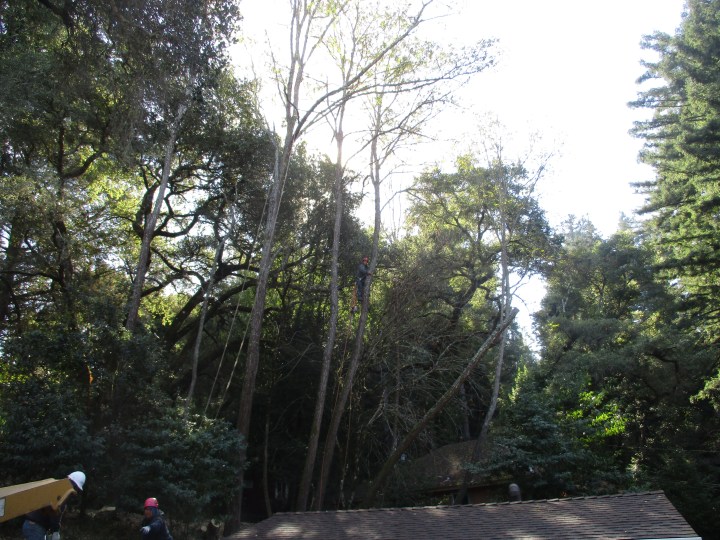
3. These trees are not much more than eighty feet tall, but needed to be parted out over those roofs. They are less than forty years old, from the 1980s or so. The arborist is in the middle.P91109++

4. Locust is unpopular firewood. These locust trees were therefore cut into logs less than seven feet (or 84 inches) long to fit into a pickup for removal, but were then instead chipped on site.P91109+++

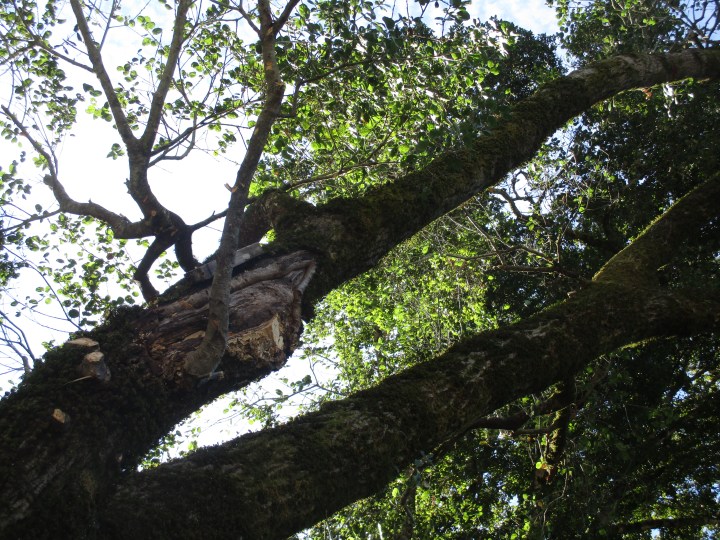
5. This structurally deficient oak will eventually need to be removed. For now, it is groomed and lightened for winter storms. It was a nice day at the time, with temperatures in the low 80s.P91109++++

6. Mature bay trees develop distended lignotubers. The trunk of this bay tree was significantly narrower just two feet above this stump. The tree was not much more than eighty years old.P91109+++++

This is the link for Six on Saturday, for anyone else who would like to participate:

https://thepropagatorblog.wordpress.com/2017/09/18/six-on-saturday-a-participant-guide/

Horridculture – Sealant

P90810++++Grafting compound is a thick sealant applied to a fresh graft union to limit desiccation while the graft knits. A bit more typically gets applied to the cut distal end of the scion. There are various formulations of grafting compound, ranging from something resembling roof patch to a something with the consistency of thick paint.
The stuff, as sloppy and icky as it is, really is helpful. I can not imagine how big orchards were grafted before it was invented.

It is also useful for keeping cane borers out of the cut ends of freshly pruned roses. For those of us who remember how to prune roses properly, leaving only a few thick canes, grafting compound really is practical. I just don’t use it on roses because cane borers are not a problem here.

Since I do not use grafting compound on roses, and the plants that I graft do not need grafting compound, I presently have no use for it. I suppose I could use it on apple and pear trees, but it really is not necessary. When I get around to grafting apricots and peaches, it will only be for a few trees in my own garden, so I will just use candle wax.

This surprises people. At work, I am often asked about ‘painting’ pruning wounds and shiners as trees get pruned, presumably with sealant. Decades ago, it was actually commonly done. Even when I did my internship in arboriculture in 1988, some arborists were applying sealant because it was easier than arguing with their clients about it not being necessary.

The problem with applying sealant to large wounds is that is actually seals moisture within the otherwise exposed wood, and promotes rot. It is best to do nothing, and allow the affected trees to compartmentalize their wounds as they would do naturally if limbs were broken off by the weather. Trees know more about their processes than we do.

The Bad Seed Redemption

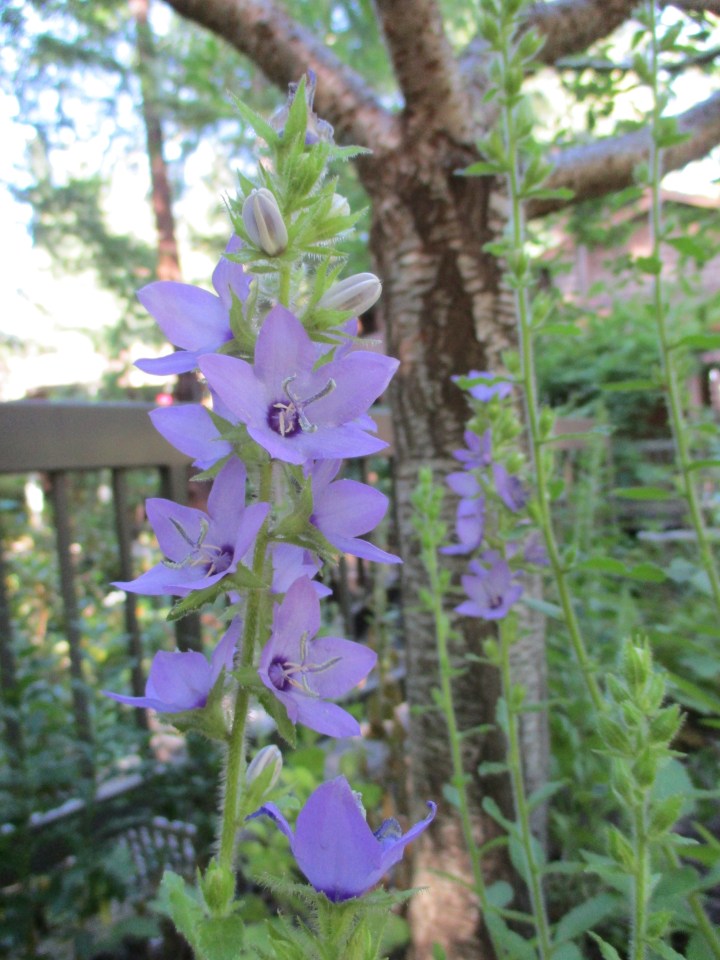
P91103The seed is not really bad. At least I do not think that it is. It is merely misunderstood. Perhaps it would be more accurate to say that it is simply unidentified. I really do not know what it is. I do not say that very often, especially about seed that I bother to collect to sow elsewhere. I believe that it is of American bellflower, Campanula americana. If not, it is very closely related.
It appeared in part of one of the landscapes at work. Because it looked like some sort of campanula, we left it to see what it would do. It got quite tall, but never started to look like something we did not want to take a chance on. We were rewarded for taking the risk when it bloomed with these elegant spikes of small sky blue flowers. That was a little more than a year or so ago.

No one bothered to deadhead it immediately after bloom. It was only a few plants on the back edge of rather relaxed landscape, so was easy to ignore. By the time the dried floral stalks were noticed and removed, the seed had already been tossed. Consequently, there were many more of them through this last season, both in the same area, and in adjacent parts of the landscape.

In fact, there were too many to ignore when their floral spikes had finished blooming. I deadheaded them myself so that I could collect the dried floral carcasses in a small bucket. Some seed had already been tossed for next year. Nonetheless, there is enough dust-like seed in the bottom of the bucket to share with other landscapes. I intend to sow it just prior to winter storms.

So, this unidentified seed should be an asset to the landscapes.

X Marks The Spot

P91102KHorticulture is not all about growing things. If everyone was out planting trees, the World would eventually be overwhelmed with forest. It is sometimes necessary to cut trees down. There are several at work that we have been wanting to cut down for quite a while. Some are structurally deficient enough to eventually become hazardous, which is unacceptable in public spaces.

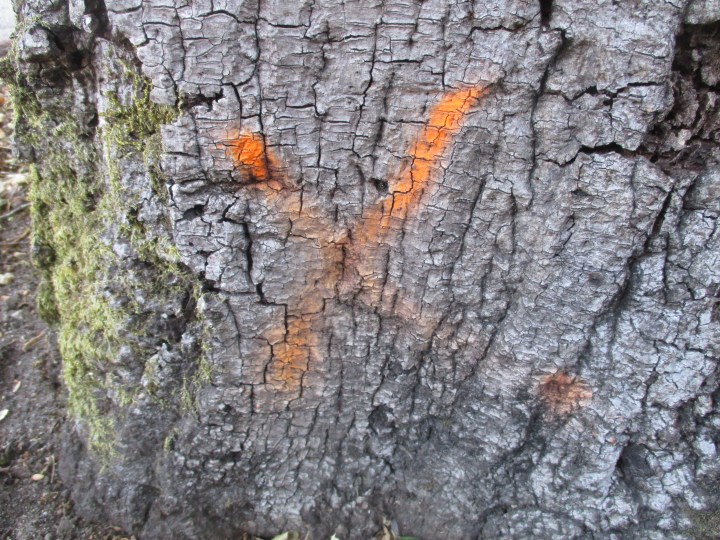
Even here among some of the oldest trees in the World, nothing last forever. Coast live oak, like that in the picture above, has potential to survive for centuries, but eventually succumbs to decay and disease. If fact, this particular specimen is doing it right now. If not cut down soon, it will eventually fall onto an adjacent building and a parking lot below. Its days are numbered.

Literally, it will be cut down on Monday morning, along with a few other coast live oaks and bay laurels in the neighborhood. The orange ‘X’ on the trunk is so faded from the delay of getting this done, that is it barely discernible. (Actually, the can of spray paint was empty.) The trunk and even the main limbs are so rotten that there will not be much firewood left to cut and split.

Cutting this tree down may seem to be unnatural, but so was pruning it for decades so that it would not fall down. It is impossible to say what situation this tree would be in now without past or present intervention. I am more concerned with how it and other trees interact with their surroundings, and the safety of everyone involved. We can not always let nature do as it pleases.

Forest fires are very natural components to our local ecosystems, but because so many of us live here, significant effort and resources are expended on containment!

Six on Saturday: Light Duty Autumn


Autumn is mild here. There has been no rain yet. None is in the forecast. Nights are only beginning to get cool. A thermometer outside claims that it has been cool enough for frost, although none has yet been observed. As pleasant as such mild weather is, it can be boring in the garden. The few deciduous trees that develop good color are only beginning to do so, and in no rush. Some chores that rely on chill or rain get delayed.

1. 32 degrees! Does this qualify as frost? This is the same thermometer that said it was 96 degrees last week. I do not believe everything it says, although cold is not as easy to fake as heat.P92202

2. Krispy Kritter had a bad day. It is not from frost though. This formerly exemplary Heavenly bamboo succumbed to warmth and aridity, . . . . and unintended disconnection of irrigation.P92202+

3. California buckeye defoliated through the warmth of summer, and should foliate for early winter, only to defoliate as winter gets cooler. I knock these big seeds out because they look silly.P92202++

4. African iris, Morea bicolor, got split early where it crowded a walkway. We did not want to plug it until the rain starts, so soaked it in a bucket of water, where the roots started growing!P92202+++

5. Mrs. Pollock zonal geranium, Pelargonium hortorum ‘Mrs. Pollock’, likewise needed to be pruned back prematurely. I was able to process cuttings from the scraps, and plug them directly.P92202++++

6. Such intricate variegation is genetically unstable. Mrs. Pollock zonal geranium often gets less variegated mutant growth that must be plucked. Well, . . . . I sort of plugged some as cuttings.P92202+++++

This is the link for Six on Saturday, for anyone else who would like to participate:

https://thepropagatorblog.wordpress.com/2017/09/18/six-on-saturday-a-participant-guide/

Horridculture – Soaking Seeds

P91030Hooey! It’s a bunch of hooey! Sweet pea seed that gets sown this time of year for next spring does NOT need to be soaked before sowing. In fact, unless there is some strange species of plant that has become that dependent on human intervention, NO seed need to be soaked prior to sowing. Not only is the technique completely unnecessary, but it is completely unnatural as well.

Think of it. In the wild, plants grow, bloom and produce seed. This seed does what it can to disperse and get into or onto the soil to germinate and grow into new plants to repeat the process. Some seed appeal to squirrels for burial. Some prefer to be partly digested by animals who eat their tasty fruit. Heck, some are reluctant to germinate until heated by a cleansing forest fire.

Plants employ quite a range of techniques to disperse their seed and promote germination. As strange as some of these techniques seem to us, they are all justified. They all exploit processes of the respective ecosystems they naturally inhabit. For example, seed that crave heat know that the fire that provides such heat also incinerates competing plants, leaving them vacant soil.

Regardless, there are NO plants that produce seed with an expectation that anyone will collect and soak them. Dry seed that need to rehydrate can and actually prefer to collect the moisture they need from the moist soil in which they grow. If the soil is too dry for them to rehydrate, they do not waste effort trying. They merely assume that they should wait for rainier weather.

Furthermore, seed that are needlessly soaked prior to sowing must be sown shortly after rehydrating. Unlike dry seed, rehydrated seed can not be returned to their original packet and stored for later.

Midnight Oil

P91027The electricity is still on here at 8:20 p.m.. I just turned the lights off to get the cool picture above. The outages in this region were scheduled to begin twenty minutes ago, so the electricity could be disconnected here at any moment. I may not finish writing and scheduling this to post later at midnight before that happens. So, if you are not reading this presently, you know why.

Before you waste another second thinking about that, I will tell you now that it makes no sense.

Scheduled electrical outages are now one of the consequences of living in this excellent place. We live with trees. Some of these trees are the biggest in the World. Some are very combustible. Regardless of the diligence of those who prune trees to maintain clearance from utility cables, big trees are likely to drop limbs onto cables, causing sparks that can ignite combustible trees.

The electricity just went out at 8:40 p.m..

As I was saying, we also live with weather. It happens to be excellent weather. It is pleasantly warm through summer, with minimal humidity and an almost constant cooling breeze. When the weather gets a bit too warm, it compensates with lower humidity and increased breeze. Unfortunately, this combination of weather is precisely what accelerates the worst of forest fires.

Scheduled electrical outages are intended to coincide with forecasts of weather conditions that are dangerously conducive to the initiation and perpetuation of forest fires. As inconvenient as they are, such outages are a sensible precaution.

The smoke that made such a colorful sunset earlier is from a fire in nearby forests, on the southern coast of San Mateo County.

Now, I will go to town to see if I can find someplace to get online to schedule this for midnight.