Ghost Ivy

Adult ghost ivy growth is shrubby rather than vining. Also, it blooms and produces seed.

Ghost ivy is actually just a fancy name for variegated Algerian ivy, Hedera canarienses ‘Variegata’. Their glossy six inch wide leaves with three or five ‘corners’, are irregularly blotched with dark green, very pale green and white. Like all ivies, ghost ivy can grow as a ground cover, climb like a vine, and eventually develops self supporting branches that bloom and set seed. It may be somewhat less aggressive than unvariegated Algerian ivy, but can still overwhelm perennials, small shrubs, and even small trees.  

Ivy can be allowed to climb tree trunks only if it is not allowed to wrap around and graft onto itself. Otherwise, tree trunks will become constricted as they grow and expand within their ivy wrappers. Because they climb by aerial roots, the various ivies should not be allowed to climb painted or wooden surfaces that can be damaged or succumb to rot. However, some people like the look of ivy cascading down from hefty arbors and porches enough to not mind replacing rotten parts occasionally.  

Contrary to the deep green of Algerian ivy, which adds a cooling effect to sunny landscapes, ghost ivy lightens up dark areas. Ghost ivy is only rarely available in ground cover ‘mud’ flats, or in #1 (1 gallon) cans. Larger plants are not practical, since they take too much time to recover from transplant. New plants are very easy to propagate from cuttings made from pruning debris. Cuttings from shrubby adult growth become shrubby plants.

‘Karpooravalli’ Banana

‘Karpooravalli’ is a relatively undemanding cultivar.

‘Cavendish’ and its variants have always been the most familiar types of banana locally. They are the most popular that are available from produce markets. From nurseries, they remain the most commonly available cultivars. A few other options are only beginning to become available. A few of these could be more reliably productive within local climates.

‘Karpooravalli’ has been available here for quite a while, but remains uncommon. Those who are familiar with it often describe it as wanting ‘only sunshine and water.’ It tolerates soil of inferior quality better than other cultivars, and craves less fertilizer. Within rich soil, it may crave none. It should likely stay away from fences that its pups could sneak under.

‘Karpooravalli’ is supposedly the sweetest of the Indian bananas. Although its fruit is a bit shorter than more familiar bananas, it is often a bit plumper. Ripe fruit is yellow with pale green blush, and delightfully aromatic. Foliage is more resilient to wind than that of most other cultivars. It can stand more than fifteen feet tall on its very vigorous pseudostems.

Dwarf Alberta Spruce

Dwarf Alberta spruce is more like a strictly conical shrub than a small tree.

Unlike other related white spruce, which get more than fifty feet tall, dwarf Alberta spruce, Picea glauca albertiana ‘Conica’, stays smaller than its Latin name, rarely getting more than seven feet tall. It is so dense and conical that it should never need to be pruned. Shearing only damages its short light green to grayish green needles. Dwarf Alberta spruce is compact enough to live in large tubs or urns, as long as its sensitive roots are well insulated. (Concrete or wooden planters are well insulated, so do not transfer too much heat to the roots within. Ivy or ground cover cascading over and shading planters also helps.) Foliage should be sheltered from harsh exposure, since it can be desiccated by warm breezes or reflected glare, like from large windows or light colored south facing walls.

California Fan Palm

California fan palm is almost native.

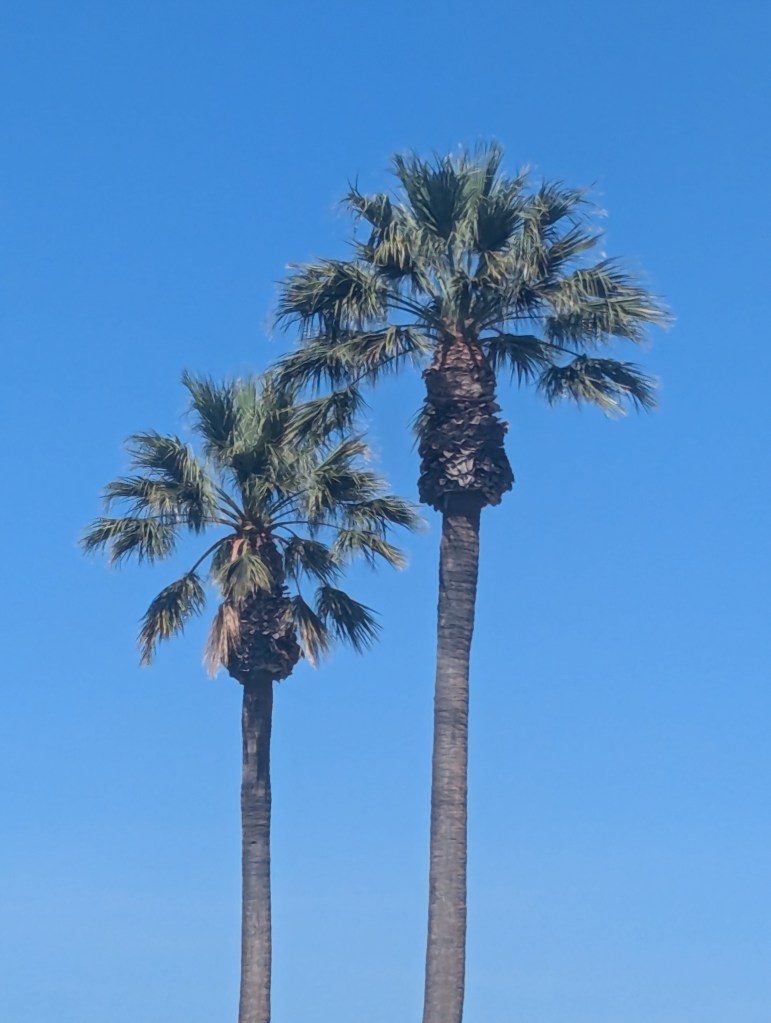
California fan palm, Washingtonia filifera, is the only palm that is native to California. It is naturally exclusive to very distinct ecosystems, though. It inhabits isolated riparian oases of the Colorado Desert. Some also inhabit the Mojave Desert and the Sonoran Desert. It prefers arid warmth. Unfortunately, it may not perform as well within milder climates here.

Otherwise, it is a stately palm that is more adaptable than most are to formal landscapes. It resembles Mexican fan palm, but is shorter and stouter, with a fluffier canopy. It tends to stand straighter, with neatly bare gray trunks. Groomed trees rarely retain petiole stubble. Alternatively, they are handsome, although combustible, with full beards of dried leaves.

California fan palm grows about fifty feet tall, and taller in the wild. Its canopy may be ten to fifteen feet wide. If flattened, its fronds, or complete leaves, might be more than ten feet long. Stiff petioles, with rigid and sharp teeth, are a bit more than half of their total length. The species name filifera describes filaments that hang from the clefts of fronds, and new bud growth.

Money Plant

Money plant becomes more prominent after bloom.

As their coarse, foot wide basal clumps of foliage turn yellow and start to die down, the solitary two foot tall stalks of money plant, Lunaria annua, develop open clusters of flat, inch wide seedpods that resemble coins. The thin outer casing and seeds within fall away as soon as these coins ripen, leaving tan, tissue paper thin discs that are ideal for dried flower arrangements. Seeds self sow reliably enough to naturalize where conditions are right, but not aggressively enough to be noxiously weedy. Money plant does not need good soil, and wants only a bit more water than related mustard and wild radish. Their small, purple or white flowers that bloom in spring look like radish or mustard flowers but are not as colorful.

Windmill Palm

Windmill palm can disperse copious seed.

Palms take commitment. Some of the most popular grow too big for their situations. Most grow so tall that only arborists can maintain them. None are conducive to pruning to limit their natural height. Individual palm trunks rely on their single terminal buds, which grow only upward. Diversion is not an option for any palm that encroach into electrical cables.

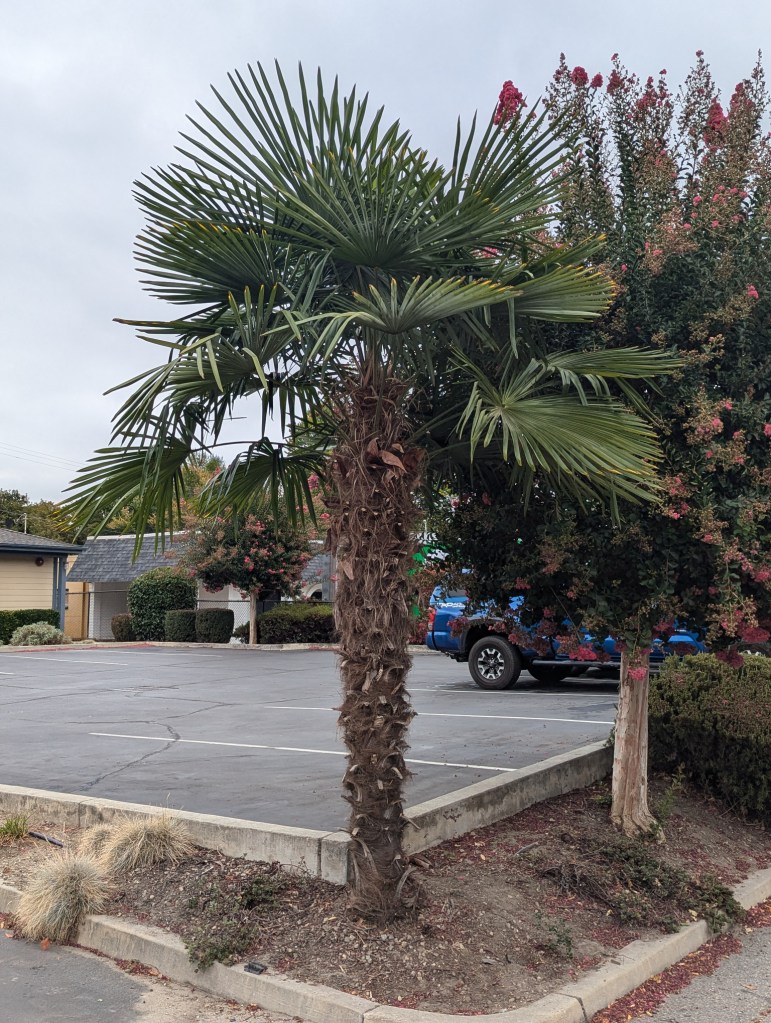
Windmill palm, Trachycarpus fortunei, is one of the more complaisant of palms. It can not grow around utility cables, but otherwise does not grow obtrusively big. Young trees can grow fast to fifteen feet tall, but then grow slowly to double their height. Only a few elderly trees grow as tall as forty feet. Their foliar canopies are generally less than ten feet wide.

Trunks of windmill palms are distinctively shaggy. Pruning dead fronds as closely to their trunk as possible promotes a neater appearance. Because growth decelerates with age, trunk shag is typically wider higher up. Trunks are about half a foot wide, but seem twice as wide since they are so shaggy. Gathering seed from pollinated female trees is simple.

Black Chokeberry

Black chokeberry is already popular within its native range.

The recent popularity of fruits that contain antioxidants is restoring the popularity of an old classic deciduous shrub with an odd name. ‘Black chokeberry’ obviously does not sound very appetizing, so is more commonly known by its Latin name Aronia melanocarpa, or simply ‘Aronia’. It has always been popular within its native range east of the Appalachians and just north of the Canadian border, and is becoming more popular everywhere else since becoming available from mail order catalogues. Although it is not well rated for local climates since it prefers cooler winters, it can sometimes be found in local nurseries.

Shiny, black chokeberries are about half an inch wide, and ripen about now. They are purported to taste something like cranberries. Mine taste more like pithy crabapples so far; but I do not mind. I grow the three or four foot high shrubs just as much for their remarkable autumn color later in the year. The rather unremarkable inch or two wide trusses of small white flowers that bloom in spring can be slightly fragrant.

Pruning is rather simple, as long as chokeberries do not get shorn. Vigorous stems that may get considerably taller than four feet may be pruned back to promote shrubbier growth. Aging stems can be cut to the ground in winter, and will be readily replaced by new sucker growth.

Mustard

Mustard can be a weed also.

Mustard is not easy to classify. It is a cool season vegetable here, although it grows until summer gets too hot. In cooler climates, it is a warm season vegetable. Whether warm or cool season, it provides more than greens. For agricultural applications, it is also a cover crop and livestock fodder. Its seed and seed oil have culinary and medicinal application.

Also, some consider mustard to be a wildflower, and some consider it to be a weed. Most but not all species that naturalized here are of the genus Brassica. None are native. Wild turnip and wild radish are similar and are also naturalized, but not as aggressively. Their bloom may be pink or creamy white. Most mustard varieties display bright yellow bloom.

Garden varieties of mustard have milder flavor and finer texture than wild sorts. They are sometimes available as cell pack seedlings, but grow like weeds from seed. Varieties for mustard seed might only be available online or from mail order catalogs. Mustard greens develop bitter flavor with age or bloom. Bigger lower leaves can develop coarser texture.

Silverberry

Most modern silverberry is variegated with yellow or white.

Old fashioned silverberry, Elaeagnus pungens, has always been useful for large informal hedges and barriers in difficult locations. It may not be as refined or as bright green as other plants that are more commonly used for formal hedges; but it is more adaptable to harsh exposure, since it has no problem with heat and reflected glare.

If necessary, silverberry can be shorn like privets, but is at its best with only occasional selective pruning to keep it within bounds. Without pruning, it can grow to more than ten feet high and nearly as wide. Despite its slower growth at maturity, it grows faster and fills out quite efficiently while young.

All parts of silverberry are covered with slightly raspy and silvery or ‘rusty’ tomentum (fuzz – although it is not exactly ‘fuzzy’). The one to two and a half inch long leaves often have undulate margins. The less than abundant, half inch long brownish berries taste better than they look. Somewhat spiny vigorous stems efficiently deter intrusion. Trespassers that might get through them once will not try again. 

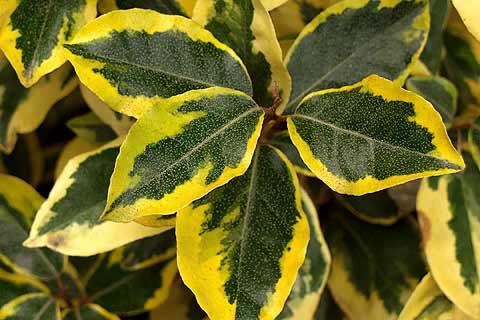
Modern cultivars (cultivated varieties) are neither as rugged as the straight species, nor as large, but have more colorful foliage. Leaves of ‘Variegata’, which is shown in the illustration, have lemony yellow or nearly white margins. ‘Marginata’ has brighter white leaf margins. ‘Maculata’ leaves are instead equipped with bright green margins around bright yellow centers. ‘Fruitlandii’ has larger silvery leaves.

Cucumber

Cucumbers dislike the warmth of summer.

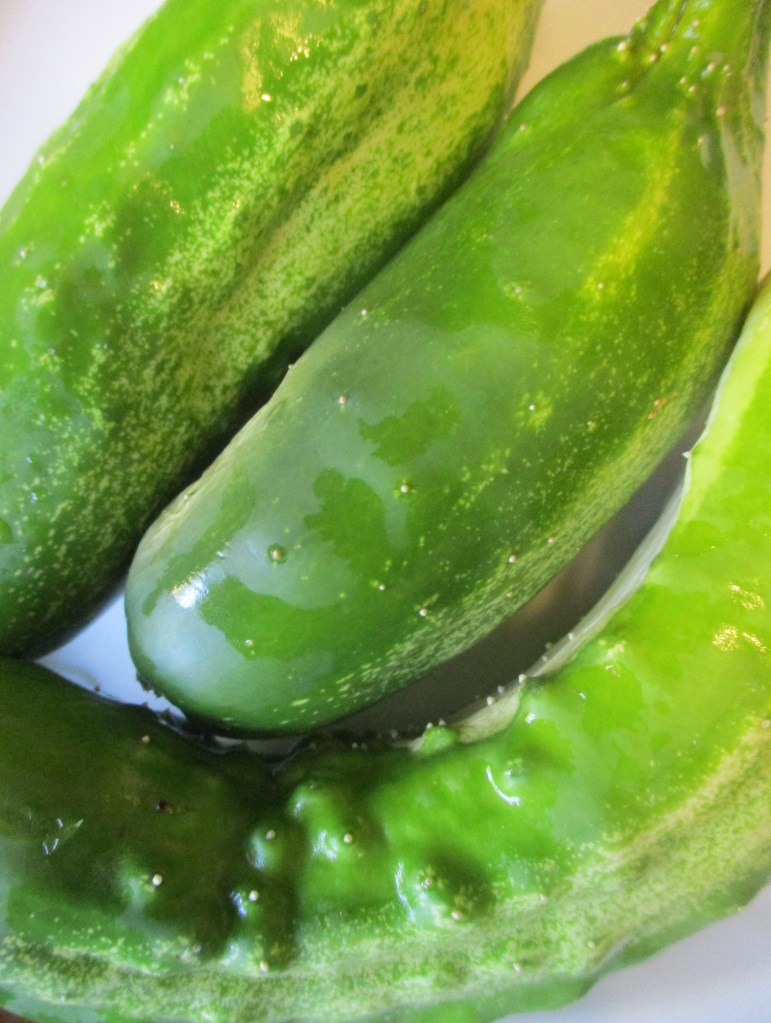
Cucumber, Cucumis sativus, technically qualifies as a summer vegetable. Several types can be productive through the warmest of summer weather. However, locally arid warmth can cause fruit of many varieties to be bitter. Such varieties perform better through spring or autumn instead of summer. Their seed should start a month or so before their season.

Individual cucumber vines are productive for less than a month anyway. Those that grow through summer will need occasional replacement to stay productive. Even within a brief spring or autumn season, more than a single phase is possible. Summer aridity does not limit performance for all varieties, but winter frost does. Consistent irrigation is important.

Most of the many cucumber varieties classify as slicing, pickling or seedless cucumbers. The biggest can potentially grow two feet long or four inches wide. The most popular are best before they mature, though. They are ready for harvest when just a few inches long. Regular harvesting promotes continuous production. Vines can climb about six feet high.