Valley Oak

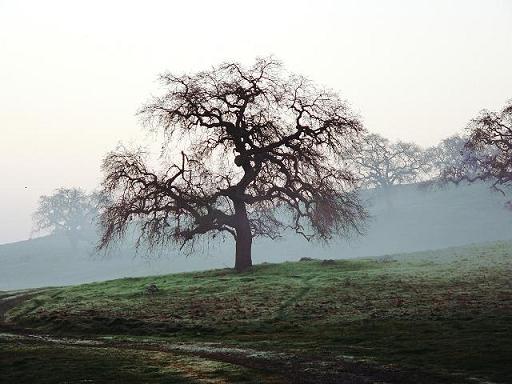
‘Foggy Oak Morning’ by Karen Asherah

‘Foggy Oak Morning’ by Karen Asherah, is another example of the local scenery that I miss while not taking a bus or walking. I drove past this scene for years on my way to work outside of San Martin without ever bothering to take a look at it. This happy tree is a native valley oak, Quercus lobata, like those that had been common throughout the Santa Clara Valley until only about two centuries ago. It is not exactly the sort of shade tree that everyone wants in a compact suburban garden, but is grand enough for large spaces like parks.

Mature specimens may not seem to get as tall as oaks in the Appalachian Mountains, but are actually the largest oaks in North America, and live more than five centuries. The tallest trees are mostly less than seventy feet tall, but can get taller. Trunks of the oldest trees are commonly six feet wide or wider. The distinctively and uniformly furrowed bark is as classically ‘oakish’ as the rounded prominent lobes of the deciduous leaves, and the sculpturally irregular branch structure. Odd stem galls, commonly known as ‘oak apples’, are home to the larvae of tiny wasps that rely on valley oaks for everything they need. Incidentally, Paso Robles, or ‘El Paso de los Robles’ is named for the valley oaks in the area, which Spanish immigrants thought resembled the ‘robles’, the European oaks that inhabit Spain.

More information about ‘Foggy Oak Morning’ can be found at the website of Karen Asherah at karenasherah.com.
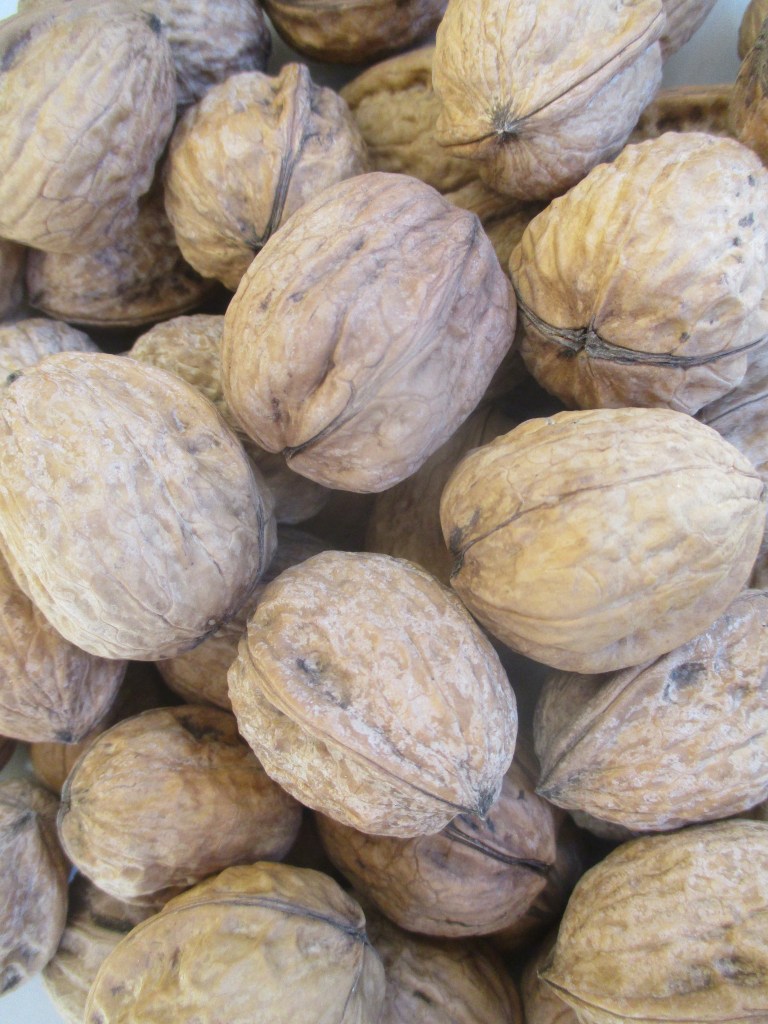
English Walnut

English walnuts are popular among squirrels.

It has been in cultivation for several thousands of years. Throughout that time, it escaped cultivation to naturalize in many regions between the Balkans and the Himalayas. It most likely originated from a much smaller natural range within Persia. An interesting certainty of its dubious original range is that English walnut, Juglans regia, is not actually English.

English walnut likely arrived at Spanish Missions of California prior to 1800. It became a major agricultural commodity of both the Sacramento Valley and the San Joaquin Valley. A few old trees survive within urban areas that were formerly orchards of the Santa Clara Valley. Newer trees are unfortunately rare within home gardens because they get messy.

English walnut trees rarely grow more than forty feet high and wide here. Their abundant foliar, floral and fruit debris is toxic to young plants though, and stains hardscapes. Each type of debris sheds during a different season. Squirrels might claim most or all nuts, but drop shredded hulls. The deciduous and pinnately compound leaves can be a foot long.

Mondo Grass

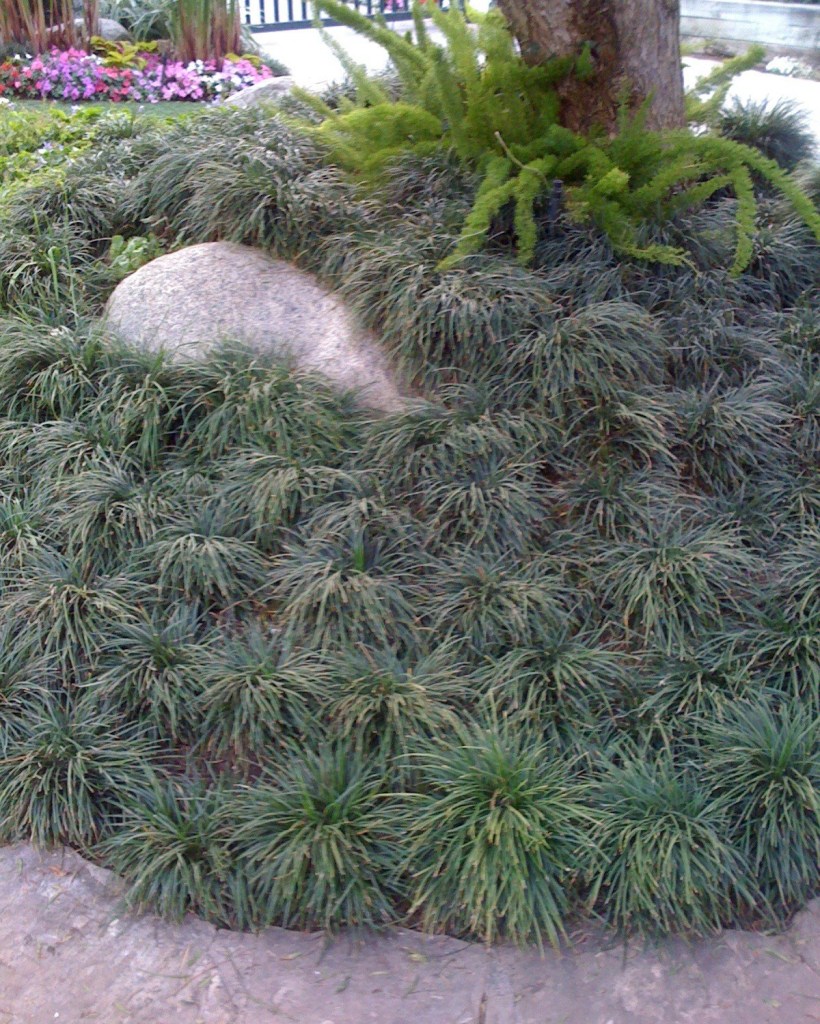
This simple green (unvariegated) mondo grass has been doing well.

The thick clumps of evergreen grass-like foliage of mondo grass, Ophiopogon japonicas, make a nice lumpy ground cover for small spaces. Because it is rather tolerant of shade, and actually prefers partial shade to full sun, it works nicely under Japanese maples or highly branched overgrown rhododendrons. It gets only about half a foot deep. Narrow stems with small pale purplish blue flowers that bloom in summer are not too abundant, and are generally obscured below the foliage, but can actually get taller. ‘Silver Mist’ is variegated with white.

New plants are easily produced by division of large clumps. Overgrown or tired looking clumps can be shorn down at the end of winter, before new growth begins. Slugs and snails can be problematic.

Weeping Blue Atlas Cedar

Gray foliage and fluidly pendulous form.

In the wild, Atlas cedar can get almost a hundred feet tall. Bluish gray or rarely yellowish cultivars which are popular for home gardens are generally more compact. Perhaps they could get as grand as wild trees after a few centuries. Weeping blue Atlas cedar, Cedrus atlantica ‘Glauca Pendula’ is an strange one. It can barely stand fifteen feet tall and wide.

The trunks and limbs of weeping blue Atlas cedar are initially so pliant that they sag onto the ground without support. New stems try to grow upward, and may do so for a few feet, or may hang downward after achieving only a few inches of height. Trunks need binding for either straight or serpentine form. They lignify slowly as they mature and gain caliper.

Weeping blue Atlas cedar requires commitment. Indiscriminate pruning or shearing ruins the naturally sculptural form. Such pendulous growth necessitates meticulous grooming, although it may not be necessary very often within spacious situations. Expanding trunks eventually absorb the curves of serpentine form. Low stems can sprawl over the ground.

Coffee

Coffee was more popular as a houseplant decades ago.

The White Raven Coffee Shop, the best little pourhouse in Felton, has an interesting but old fashioned houseplant on the counter. This group of four small but rapidly growing coffee trees, Coffea arabica, was a gift from a loyal customer.

Mature plants can get to thirty feet tall in the wild. Fortunately, coffee trees are easy to prune to fit interior spaces. Pruning for confinement is actually better than relocating big plants outside, since they do not like cold weather and are sensitive to frost.

Like various species of Ficus, coffee is appreciated more for lush foliage that happens to grow on a tree that can be trained by pruning to stay out of the way, overhead or in other unused spaces or corners. The simple remarkably glossy leaves are about two and half inches long or a bit longer. The very fragrant small white flowers are almost never seen among well groomed houseplants, and only rarely and sporadically bloom among less frequently pruned larger trees in greenhouses and conservatories.

The half inch wide coffee fruit, which is known as a ‘cherry’, is even more rare than flowers among houseplants because of the scarcity of both pollinators and pollen (from so few flowers). Those fortunate enough to get flowers sometimes pollinate them with tiny paintbrushes or clean make-up brushes to compensate for a lack of insects about the house. The resulting bright red or somewhat purplish cherries barely taste like cherries and only make two coffee ‘beans’ each; not enough to bother roasting and grinding for coffee, but great for bragging rights.

Honeybush

Bold color, texture, form and scale.

Where winter weather is cooler, honeybush, Melianthus major, is likely to be deciduous. If so, it annually sheds all growth that is above ground. It can not bloom where deciduous because only growth of a previous season can bloom. That is no problem here. Dark red floral spikes bloom boldly about two feet above jungly evergreen foliage for early spring.

This silvery gray foliage can grow taller and wider than six feet, even if deciduous during winter. Foliar texture is both luxuriant and elegant. Pinnately compound leaves are more than a foot long with serrate leaflets. Evergreen plants are tidier with grooming to remove deteriorating older foliage as new foliage replaces it. Deciduous plants are always fresh.

‘Antonow’s Blue’ is a bit bluer than the straight species. ‘Purple Haze’ is slightly purplish, with a slightly finer foliar texture. Some notice that the rich fragrance of honeybush bloom resembles that of honey. Also, some notice that the foliar aroma can be rather grungy. All parts of honeybush are toxic. Honeybush wants regular watering and abundant sunlight.

Yaupon

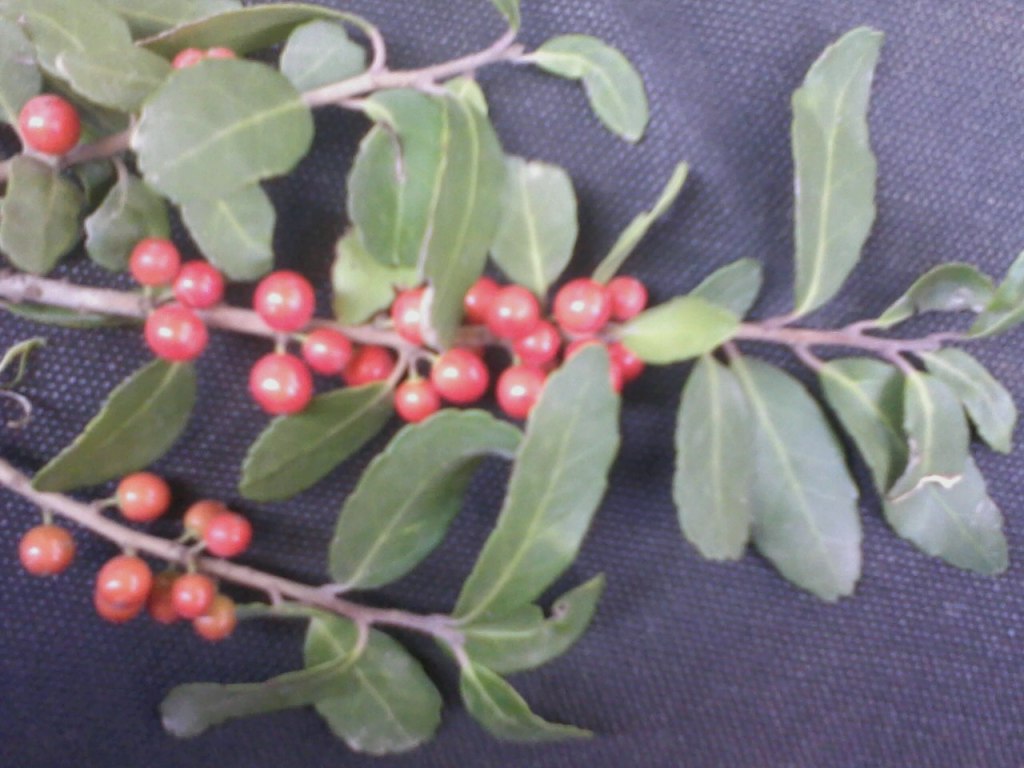
The unflattering Latin name does not suit the yaupon, which can make a tailored formal hedge of dense foliage, or a neat informal (unshorn) screen that may occasionally produce a few colorful winter berries.

Hollies are innately uncommon in California. Yaupon (holly), Ilex vomitoria, happens to be one of the least common. Ironically, because of its small leaves and dense growth, it is more tolerant to frequent shearing by maintenance gardeners who ruin other hollies. It can actually make a nice shorn hedge.

Hedged yaupon can eventually get up to the eaves of a single story. Unshorn plants can reach the eaves of a second story, and might display showy red berries about an eighth of an inch wide. The small and often randomly serrate leaves are only about half to an inch long, and maybe half an inch wide.

Arborvitae

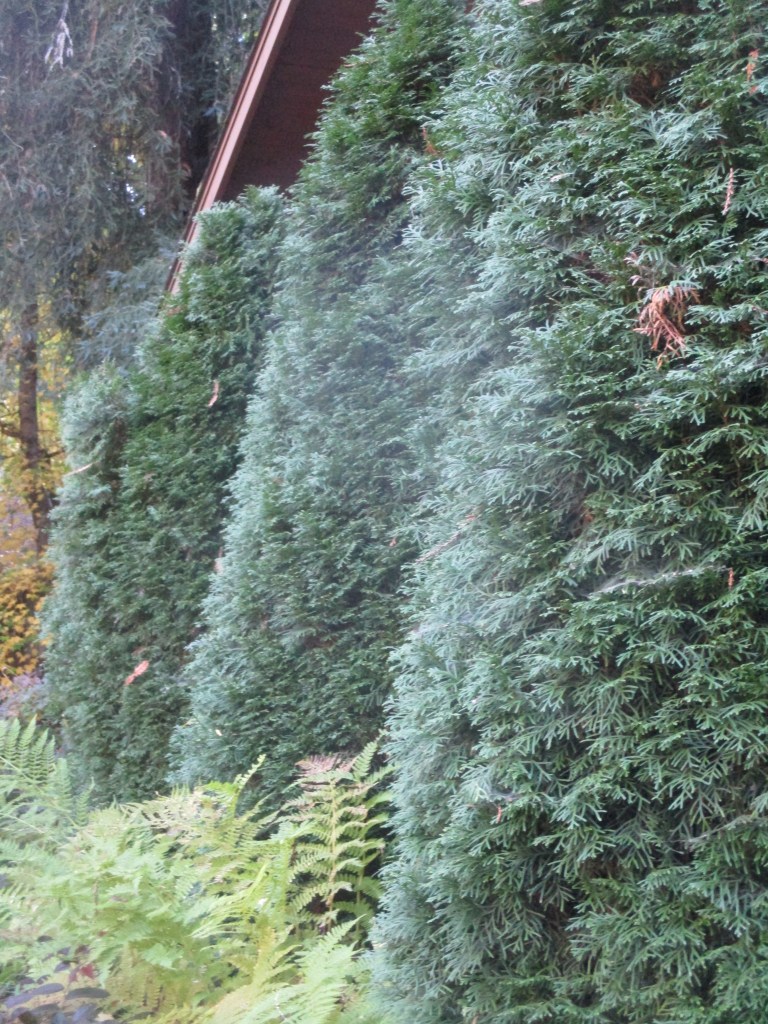
Arborvitae is mostly tall evergreen shrubbery.

During the Colonial Period of America, American arborvitae, Thuja occidentalis, was one of the first native species to become popular for home gardening. It is native as far south as the Great Smoky Mountains, and as far east as Minnesota. Wild trees can be fifty feet tall, with trunks as wide as three feet. They might grow larger to compete with other trees.

Of course, the oldest cultivated varieties, as well as relatively modern cultivars, are much more compact. Many modern cultivars are hybrids. Some are different species. They are densely evergreen shrubbery that work well as hedging. Their distinctly ruddy or grayish brown bark is barely visible. Their bloom is unimpressive. Foliage is their primary asset.

It is quite an asset. Although arborvitae is conducive to shearing, its billowy foliar texture is too appealing to compromise by frequent shearing. Scale leaves are barely more than an eighth of an inch long, like those of junipers, but are more pliable on soft and flattened foliar sprays. Such sprays are delightful coniferous evergreens for wreaths and garlands.

Bald Cypress

Although very rare here, bald cypress is prominent enough in the South to be the state tree of Louisiana.

There are very few coniferous (cone bearing) trees that are deciduous; and because most prefer cooler winters, very few are ever seen in local gardens. The bald cypress, Taxodium distichum, happens to be one of the few deciduous coniferous trees that really could be more popular than it is, since it seems to be right at home in mild climates. It is native to coastal riparian regions from Maryland to Florida to eastern Texas, and up the Mississippi and Ohio Rivers as far as Indiana.

The soft foliage resembles that of coastal redwood, but is more finely textured. It is still mostly light green, but will soon be turning paper bag brown before trees go bare. The tiny individual leaves are shaped like flat pine needles, and are not much more than half an inch long. The ruddy or grayish brown bark is finely shaggy.

In the wild, mature bald cypress trees can get more than a hundred feet tall with trunks more than five feet wide. Some of the largest trees have buttressed trunks as wide as fifteen feet! Trees in swamps develop distended growth from their roots known as ‘knees’, which can stand several feet tall! Fortunately, bald cypress rarely get half as tall or develop such massive trunks locally.

Bald cypress is one of the few deciduous conifers; so the finely textured light green foliage will soon be gone.

Firethorn

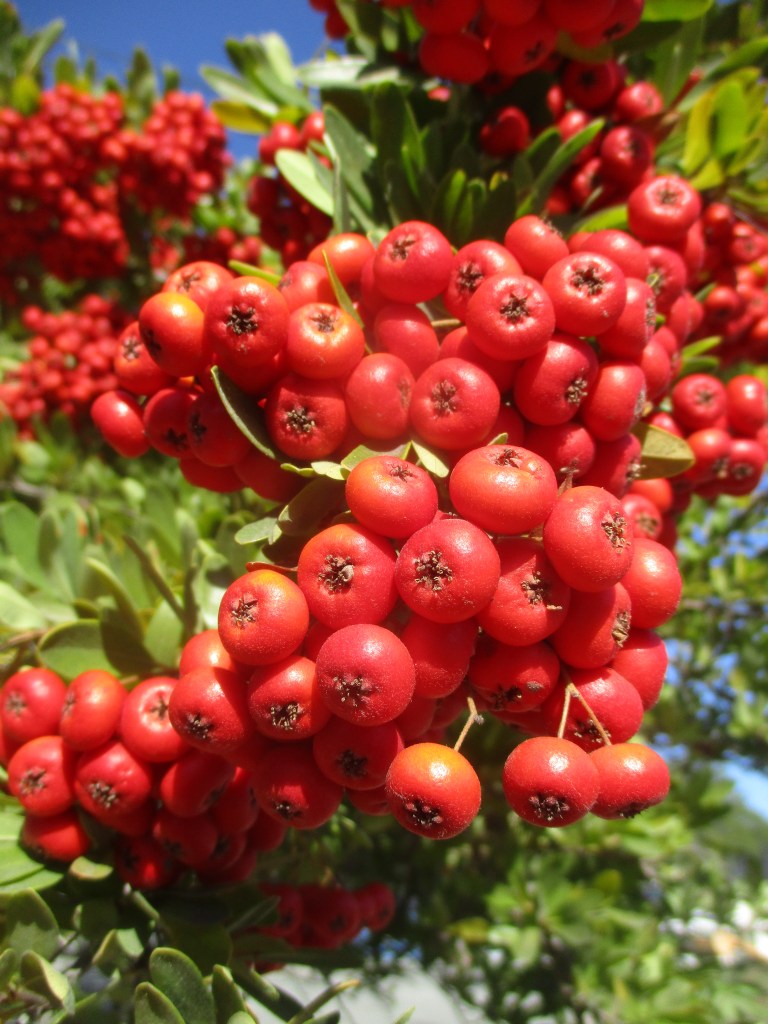
Firethorn is a familiar wintry berry.

Its name says it all. Firethorn, Pyracantha coccinea, produces an abundance of fiery red berries on unavoidably thorny stems. A few old fashioned cultivars produce equally fiery orange berries. Cultivars with fiery yellow berries are now rare. Berries ripen for autumn, in time to feed migratory birds. Late berries can last longer after migratory birds are gone.

The rigid and wickedly thorny stems of firethorn work well as impenetrable hedges. They are rather difficult to prune and handle without impalement though. Unfortunately, simple shearing deprives formal hedges of some of their new growth that blooms and fruits most abundantly. Selective pruning is tedious and more hazardous, but might enhance bloom.

Shrubby cultivars of firethorn can grow higher than first floor eaves. Mature and vigorous hedges with hefty interior trunks at such height can generate spirelike growth that almost reaches second floor eaves. With pruning, some cultivars that sprawl close to the ground can stay quite low. Without pruning, some slowly form thickets that are several feet deep.