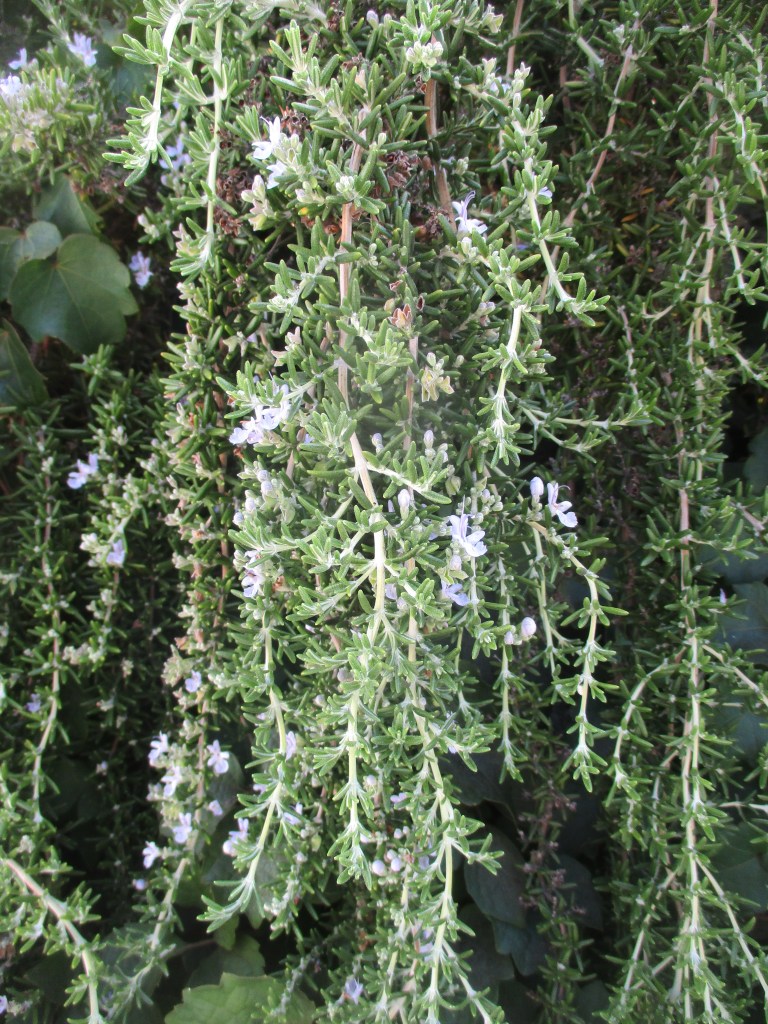
It is as familiar for culinary application as it is for home gardens, even with its new name. Rosmarinus officinalis is now known as Salvia rosmarinus, but the common name is still just rosemary. Like many Mediterranean culinary herbs, it is a member of the Lamiaceae Family. Since it is native to Mediterranean regions, it is quite happy within local climates.
While many culinary cultivars of rosemary are shrubby or upright, the most popular home garden cultivars are trailing types. Trailing rosemary disperses its woody stems laterally, but can eventually get deeper than two feet. Shrubbier cultivars get at least twice as high in less time. The finely textured dark green foliage is evergreen and pungently aromatic.
Bloom is generally most profuse from late spring through the middle of summer, but may never really stop. It can continue in sparser sporadic phases whenever the weather gets warm, and even throughout the year. The tiny flowers are various shades of blue. Purple, white and pale pink bloom is very rare. Bloom is appealing to bees and other pollinators, including hummingbirds.